
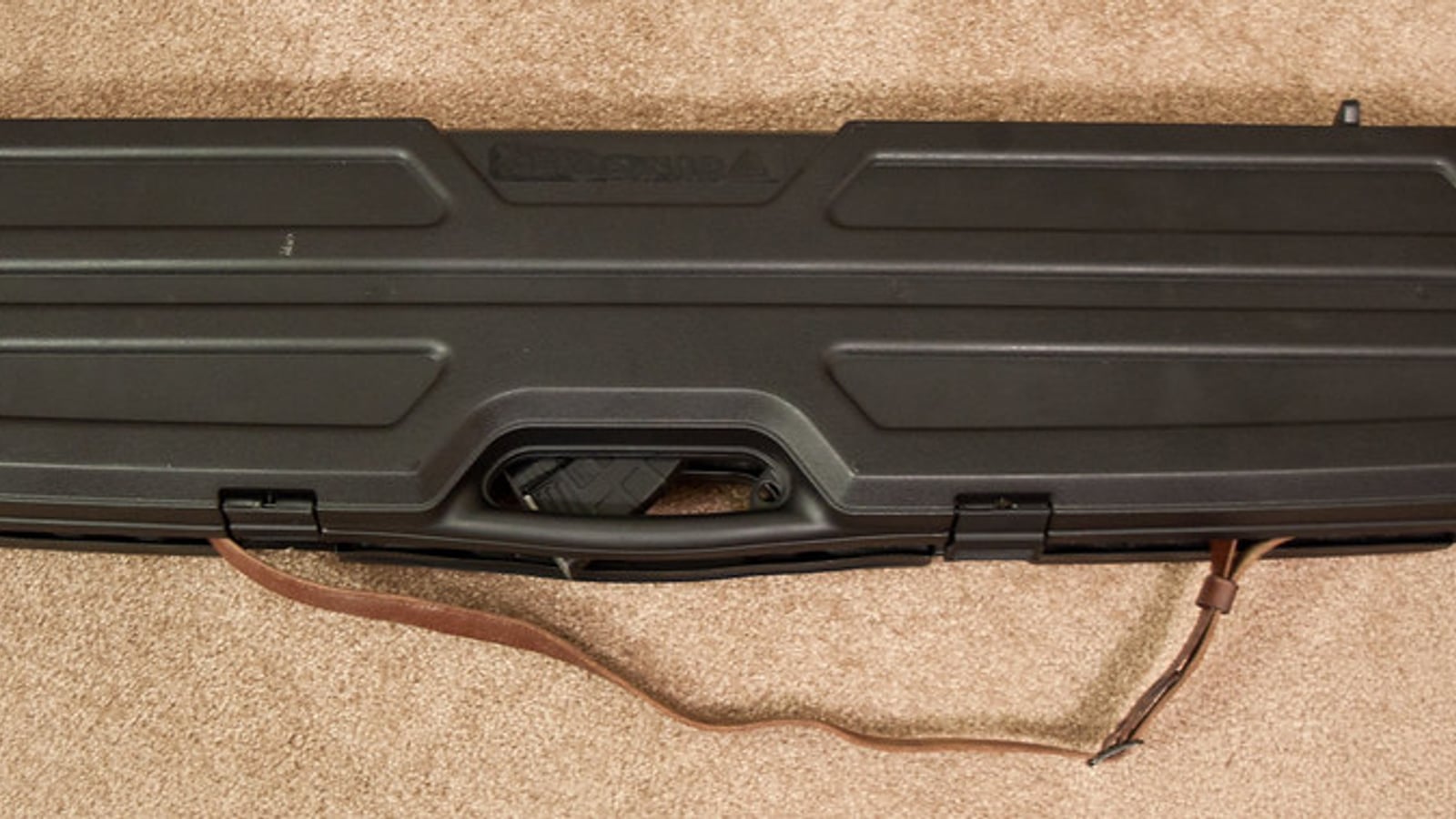
Why this question keeps coming back
A licensed shooter who drives to the club, comes back, or stops at the gunsmith inevitably transports a firearm on public roads at some point. It’s a mundane situation, repeated every week by tens of thousands of practitioners in France, and yet it remains one of the most misunderstood areas of the regulations.
The confusion often comes from a mix of what you heard at the club, what you read on a forum, and what the law actually requires. Some shooters think putting the gun in the trunk is enough to be compliant. Others believe, on the contrary, that a simple trip between home and the range needs specific written authorization. Reality sits between these two extremes, with precise rules that aren’t so complicated once you understand them.
This article details what the law really says about firearm transport by a licensed private individual: the disassembly requirements, the “out of sight” question, authorized routes, differences by weapon category, and what actually exposes you to sanctions. The goal isn’t to replace a legal text, but to give a clear, everyday-usable foundation.
This question deserves even more attention because it concerns both the beginner and the shooter who’s been practicing for years. A habit picked up during the first club outings, good or bad, tends to set in and never get questioned again. Better that it’s correct from the start.
The general principle: discreet and secured transport
The foundation of the entire firearm transport regulation comes down to one simple idea: a firearm transported by a private individual must be rendered not immediately usable and must not be visible from outside the vehicle. These two requirements, disassembly and discretion, form the backbone of all the rules that follow.
Rendering the firearm not immediately usable means it can’t be brought into action quickly. In practice, this usually means partial disassembly: removing the bolt, the bolt carrier, or any element that prevents an immediate shot if the weapon were seized by a third party. A firearm stored in a closed case but fully assembled and loaded doesn’t meet this requirement.
Visual discretion is just as central. The firearm must be placed out of sight, typically in the trunk or an opaque case, never on the back seat or in plain view. The underlying idea is simple: no one outside the vehicle should be able to identify that a firearm is inside, whether a passerby, another driver, or anyone looking through a window.
These two principles apply whether the shooter travels by car, train, or on foot. The mode of transport changes the practical details, but not the underlying obligation: partial disassembly and lack of visibility remain the rule, whatever the route.
You also need to distinguish transport from possession. Simply having a firearm at home, in a place designed for that purpose (safe, gun cabinet), falls under different regulations than transport outside the home. It’s movement on public roads that triggers the obligations detailed in this article.
Ammunition and route: the separation rule and the notion of a direct route
Ammunition transport follows a logic close to that of the firearm itself, but with its own requirement: ammunition must be transported separately from the firearm, in a distinct container. The goal is the same as for disassembly: preventing a found or stolen firearm from being immediately loaded and used.
In practice, this means the ammunition box must not be stored in the same case as the firearm, nor within immediate reach of it in an open compartment. A separate carry bag, or at minimum a distinct closed compartment, meets this logic.
This separation rule applies both to new ammunition bought at the gunsmith and to reloaded cases intended for personal use at the club, when this practice is allowed by the range’s rules. The quantity transported must also remain consistent with personal use for a session: this isn’t a framework for moving a commercial stock.
A shooter coming back from the club with unused ammunition shouldn’t drop their guard on this point simply because the session is over. The separation rule applies both on the way there and back, as long as the firearm and ammunition are moving outside the home or range.
One of the most misunderstood points concerns the notion of a route. The regulation frames firearm transport between precise, legitimate places: the holder’s home, the range where they practice, the gunsmith where they buy, repair, or service their firearm, and possibly a competition venue or an authorized exhibition.
The idea of a direct route doesn’t mean it’s forbidden to stop for an errand along the way or take a different road on the return trip. It means the trip must have a justification consistent with one of these legitimate purposes, and not turn into an extended outing with a firearm in the vehicle unrelated to shooting practice or a visit to an authorized professional.
Concretely, a shooter who goes to the range, then stops to buy bread, then heads home stays within a reasonable framework. A shooter who leaves in the morning with their firearm in the trunk for a work trip unrelated to shooting, before stopping by the club at the end of the day, steps outside the framework the regulations intend.
This logic of legitimate purpose also explains why the shooting logbook and the competition entry, when they exist, have a concrete use beyond simple performance tracking: they let you immediately justify the nature of the trip if the question comes up during a check.
The route to the gunsmith follows exactly the same logic as the route to the club. Whether for a purchase, a repair, a technical inspection, or a simple service, the trip remains covered by the same framework of discreet and secured transport.
The documents to carry
A shooter transporting a firearm must be able to present certain documents in case of a check. The first is their valid federal license, which attests to shooting practice organized under an approved federation.
The second essential document is the firearm’s ownership title: for a category B firearm, this is the prefectural authorization; for a category C firearm, the declaration receipt. This document proves the possession of the firearm is fully legal and registered.
A valid ID naturally completes this file, since it links the person being checked to the documents presented. An up-to-date medical certificate, when current regulations require it for possession of the category concerned, must also be produced if needed.
It’s recommended to keep a copy of these documents in the vehicle or in the transport case itself, rather than relying solely on a digital version. A dead phone battery or a no-signal area should never complicate a check that, in the vast majority of cases, resolves quickly once the paperwork is in order.
For a trip to a competition organized by the federation, the official entry notice or event registration is a useful additional document that unambiguously justifies the exceptional or longer nature of the trip.
Differences by weapon category
The disassembly and discretion obligations apply to all categories of firearms legally held by a private individual, but some nuances exist depending on the category involved.
For a category B firearm, subject to prefectural authorization — that is, most handguns and many semi-automatic firearms — vigilance must be at its highest: this is the most heavily checked category, and the one for which possession documents must be strictly up to date and presentable without delay.
For a category C firearm, subject to simple declaration, such as certain manually operated repeating hunting rifles also used in sport shooting, the same principles of partial disassembly and out-of-sight transport apply, with a declaration receipt to present instead of an authorization.
For a category D firearm, freely sold or subject to simplified registration, such as low-power air weapons or certain replicas and historical firearms, the underlying obligations regarding common sense and safety stay the same, even though the administrative formalities are lighter since no prior authorization or declaration is required for these categories.
Category A, that of war weapons and military equipment, remains in principle forbidden for possession by a private individual, except for very tightly controlled exceptions unrelated to ordinary civilian sport shooting. It is therefore not subject to ordinary transport by a license holder.
In all cases, the safest reflex stays the same: treat every transported firearm with the level of rigor associated with category B, even when the formal regulation is more lenient for a category C or D firearm. This reflex avoids any misjudgment and protects the shooter from a doubt they wouldn’t have to resolve themselves on the road.
Not all firearms are transported the same way in practice, even though the underlying legal principles (partial disassembly, visual discretion, ammunition separation) remain identical. A handgun and a long gun, such as a rifle used at 50 or 300 meters, pose different practical constraints.
A handgun fits easily into a compact case, slipped into a bag, which makes discretion almost natural: the object is indistinguishable from ordinary luggage once closed. The main risk remains forgetting the partial disassembly out of overconfidence, precisely because the case already looks secure enough on its own.
A long gun requires a dedicated case or bag, often bulkier, which must nonetheless remain completely opaque. The elongated shape characteristic of a rifle case can, on its own, hint at the nature of its contents to a trained eye: better to avoid leaving it on the rear shelf or against a window, even wrapped in fabric.
Transporting several long guns at once, for example for a training session combining several disciplines, requires extra organization: each firearm in its individual case, disassembled, with each one’s ammunition clearly separated and identified to avoid any mix-up when reloading on the firing line.
Transporting another shooter’s firearm, and the case of antique firearms
A situation comes up regularly at the club without the answer always being clear: can you transport another license holder’s firearm, for example to help out a club partner who doesn’t have a vehicle that day?
The underlying principle doesn’t change depending on who’s driving: the firearm must remain disassembled and out of sight, and the ammunition separated, regardless of who actually owns the transported firearm. On the other hand, the question of liability and justification for the transport becomes more sensitive, since the person checked isn’t the one whose name appears on the ownership title.
In this case, it’s recommended that the firearm’s owner be present in the vehicle or, failing that, that their ownership title and license physically accompany the firearm, with a simple, verifiable explanation of the context: carpooling to the same club, same training slot, same return trip. Transporting a third party’s firearm in their total absence, with no direct link to a shared shooting activity, is a situation to avoid.
This caution isn’t excessive: it prevents a friendly arrangement between license holders from turning, in the event of a poorly handled check, into a difficult question to settle on the roadside rather than calmly at the club.
Shooters practicing disciplines related to antique firearms, whether black powder replicas or historical firearms classified in category D, often wonder whether the same transport rules apply to their equipment.
The answer is yes in spirit: even a historical firearm or a replica should travel disassembled as much as possible and out of sight from outside the vehicle. The fact that the category is less administratively controlled changes nothing about the principle of discretion and safety that applies to any object resembling a firearm.
Black powder itself, used to load these firearms, follows specific transport and storage rules linked to its nature as an explosive material, separate from firearm regulations. A shooter practicing this discipline should look into this separately with their club or the prefecture, as the question goes beyond firearm transport alone.
Antique firearm competitions often run over several days and sometimes involve transporting a significant number of pieces. In this case, organizing transport in advance, with methodical storage of each firearm in individual cases, considerably simplifies any potential check and reduces the risk of handling errors.
Transport by plane, by train, at competitions, and during a move
Transporting a firearm by a means other than a personal car follows additional rules that add to the general principles rather than replacing them.
By plane, transporting a sport shooting firearm is possible but strictly governed by the airline and airport security rules. The firearm must be declared at the counter, transported unloaded in a locked rigid case, and checked in, never carried on board. Ammunition travels separately, in a container approved for this type of transport, with quantity limits set by the airline.
It’s strongly advised to contact the airline several days before the flight to learn its exact procedure, as practical details (forms to fill out, specific check-in times, dedicated counter) vary from one airline to another even though the underlying legal framework stays national.
By train, the situation is less formalized than by plane, but the principles of disassembly and discretion remain fully applicable: the firearm travels in a closed case, inside a bag, never visible to other passengers.
For a competition held far from home, over several days, the shooter must plan the entire trip, including intermediate steps like a hotel night. In this case, the firearm must remain secured in the vehicle or in a locked place, never left visible in a room or shared space, and ideally in a container that discourages opportunistic theft.
A shooter stringing together several competition legs on the same trip, for example a regional circuit run over two consecutive weekends, benefits from planning a well-thought-out itinerary in advance rather than improvising each leg at the last minute. Anticipating stopping points, meal spots, and any overnight stays lets you always know where and how the firearm stays secured, including during moments when the shooter isn’t directly behind the wheel.
How a check unfolds, and unexpected events on the road (breakdown, accident)
A traffic check involving a legally transported firearm goes, in the vast majority of cases, simply and quickly once the underlying rules are respected. Understanding how it concretely unfolds helps approach the situation calmly rather than with apprehension.
Spontaneously mentioning the presence of the firearm in the vehicle, right from the start of the exchange with law enforcement, remains the healthiest reflex. This immediate transparency defuses most of the tension such a check could generate, and avoids any misunderstanding about the nature of the object later discovered in the trunk.
Then presenting, in order, the federal license, the ownership title, and an ID covers the essentials of the expected checks. It’s useful to leave the firearm stored in its closed case during the exchange, and only handle it if explicitly asked to, clearly explaining each move before doing it.
A check that starts with hasty handling of the firearm or a defensive attitude from the driver almost always gets needlessly complicated, regardless of how compliant the situation actually is. The best protection remains the combination of a complete file and composed behavior.
A mechanical breakdown or a road accident, even a minor one, changes things: the vehicle suddenly becomes accessible to third parties — a tow truck operator, other drivers involved, or emergency services — which wasn’t anticipated when setting off.
In this situation, it remains essential never to lose sight of the container holding the firearm, and to inform anyone who has to work on the vehicle of its presence, whether a tow truck operator or emergency services, before they discover the object themselves while searching the trunk.
If the vehicle has to be impounded or taken over by a third party for an extended repair, it’s better to retrieve the firearm and bring it home or to a secure place yourself, rather than leaving it in a vehicle that’s temporarily beyond your direct control.
These situations remain rare, but they’re a reminder that discretion in transport isn’t just an administrative formality: it also protects against opportunistic theft in unforeseen circumstances where the owner’s attention is naturally drawn elsewhere.
A move, even over a modest distance, raises a specific question: the trip connects neither the club nor the gunsmith, but two homes. This situation remains covered by the same underlying logic, since transporting a firearm between two legitimate residences of the holder constitutes a coherent purpose, provided the same disassembly and discretion rules are respected.
If moving to a different department, it’s recommended to report the change of address to the relevant authorities as soon as possible, since authorizations and declarations are tied to a prefecture. This administrative point is separate from the transport itself but closely linked to it in timing.
Changing clubs after a move follows a similar logic: the first trip to the new range to register or practice there answers the same legitimate purpose as a trip to the usual club, as long as the federal license remains valid and affiliation with the new organization is being finalized.
Sanctions for non-compliance
Failing to comply with firearm transport rules exposes you to sanctions that vary depending on the severity of the breach found. A simple lack of disassembly or discretion, without any other aggravating factor, can already constitute an offense punishable by a fine.
The consequences become considerably more serious when the transport is accompanied by a more serious failing: no valid ownership title, an undeclared firearm, or transport in a context that suggests misuse of sport shooting practice. These situations then fall under criminal offenses and can lead to prison sentences and fines far heavier than a simple fine, in addition to seizure of the firearm and a possible suspension or withdrawal of the possession authorization.
Withdrawal of the authorization or the right to possess firearms remains one of the most damaging consequences for a sport shooter, since it ends the practice itself, well beyond the immediate criminal or financial sanction. That alone is an argument for never compromising on these rules, even out of mere carelessness or a habit picked up over time.
It’s also worth keeping in mind that good faith and an otherwise irreproachable sporting practice don’t erase a breach found during a check. A perfectly compliant possession file, an up-to-date license, and a serious club never exempt you from complying with transport rules at the precise moment the firearm is moving outside the home.
Temporary storage at the club, and what to do in case of theft
Once at the range, the transport question doesn’t stop completely: the firearm simply moves from a transport state to a temporary storage state for the duration of the session, and this moment also deserves particular vigilance.
Many clubs have a secure room or a shared cabinet where shooters can leave their equipment before and after their slot. Using this facility when it exists remains the safest solution, rather than leaving the firearm in the vehicle in the club’s parking lot for several hours, even disassembled and out of sight.
On the firing line itself, the range’s internal rules generally impose their own handling rules, often even stricter than the general transport regulations: firearm placed with the barrel pointed toward the backstop, magazine removed between runs, safety engaged as soon as the shooter is no longer actively shooting. These club-specific rules add to the legal obligations without replacing them.
A poorly locked locker room or club storage room, where several shooters leave their equipment without direct supervision between two rotations, remains a point of collective vigilance: reporting a door that closes poorly or a cabinet with a faulty lock is as much everyone’s responsibility as it is the club board’s role.
Theft of a firearm, whether it happens from a parked vehicle or during a home burglary, must be reported without delay to the relevant authorities. This report isn’t a mere administrative formality: it protects the holder by officially establishing that they are no longer in possession of the firearm from the date of the report.
The absence of a prompt report exposes you to a delicate situation if the firearm is later found involved, even indirectly, in a context that has nothing to do with its original owner. A dated police report remains the best protection in this type of scenario, however rare it may be.
Beyond the administrative step, a theft of this kind should also prompt a review of transport and storage habits: a shooter facing this situation benefits from identifying, with their club or gunsmith, what allowed the theft to happen (vehicle visible from the street, prolonged unsupervised parking, absence of an anti-theft device on the case) in order to avoid repeating the same weakness.
The best prevention remains, once again, limiting to the strict necessary the time a firearm stays in a stationary vehicle, particularly in a public parking lot, a highway rest area, or any place where the vehicle escapes the owner’s direct supervision for an extended period.
The most common mistakes among licensed shooters
Certain mistakes come up regularly, even among experienced shooters who know their practice well. The first is considering that the vehicle’s trunk alone is enough to satisfy the discretion requirement, without worrying about the partial disassembly of the firearm itself.
The second classic mistake is leaving the ammunition in the same bag as the firearm out of sheer habit or lack of space, thinking separation is only a recommendation and not a genuine underlying obligation.
The third, more insidious mistake concerns trips that stretch out: a shooter who takes advantage of a trip with their firearm in the vehicle to string together several activities unrelated to shooting takes on a real risk, even if their intention is absolutely not to circumvent the law.
Finally, many shooters neglect to keep a paper copy of their possession documents, relying solely on a photo on their phone. This seemingly harmless habit needlessly complicates a check if the battery dies or the storage app doesn’t open right away.
An experienced club instructor regularly reminds new members of these four points at the start of the season, precisely because they come back every year among some of the new license holders, however serious they otherwise are.
A fifth mistake, rarer but just as avoidable, concerns the gradual loosening of vigilance among shooters who have been practicing for a long time. A seasoned club shooter, confident in their habits after years of incident-free practice, may end up considering these rules as secondary simply because they’ve never faced a check. This overconfidence changes nothing about the actual exposure in the event of a check, and the number of years of practice has never constituted a mitigating factor for a breach found.
Insurance and liability: a frequently overlooked aspect
A sport shooter’s federal license generally includes civil liability insurance tied to shooting practice, but its exact scope regarding firearm transport outside the range deserves to be checked rather than assumed.
In case of theft of the firearm from a vehicle, or damage caused to a third party in a circumstance involving transport (a road accident where the firearm plays a role, even indirect), coverage may depend on precise clauses about the storage conditions required at the time of the incident. A standard home insurance policy doesn’t always cover theft of a firearm from a vehicle the same way it covers theft from home.
It’s useful to reread the terms of your federal license and, if needed, your home or car insurance, to know precisely what’s covered in case of theft during transport, and what security conditions (type of case, vehicle locking) are required for the guarantee to fully apply.
A shooter who invests in quality transport equipment therefore isn’t doing it only to comply with the regulations: they’re also, in effect, protecting their ability to be compensated in case of an incident, which is far from a minor detail when the value of the transported equipment is significant.
Checking directly with your insurer or your federation’s dedicated service remains the only reliable way to get a precise answer to this question, as contracts and their clauses vary widely from one organization to another.
Best practices for stress-free transport
Adopting a few simple habits turns these legal obligations into automatic gestures that no longer require any particular thought before each trip.
Investing in a rigid, opaque transport case sized for the firearm in question remains the best material foundation. A quality case makes partial disassembly easier by offering a dedicated compartment for the removed part, and prevents any visibility from outside.
Systematically storing ammunition in a separate container, placed in another part of the vehicle or carry bag, avoids the most common mistake noted above. This habit, once adopted, no longer requires any conscious effort after a few outings.
Preparing in advance a pouch grouping the license, ownership title, and ID, tucked into the case or the vehicle’s glove box, guarantees you’re never caught unprepared during a check, even after a long time without thinking about it.
Finally, keeping a digital shooting logbook up to date, with session dates and clubs attended, provides a concrete, dated record of regular practice, useful for justifying the consistency of a trip if the question ever comes up.
Once integrated, these few reflexes no longer require any particular mental effort before setting off. They become as natural as checking that the front door is properly locked, and turn a potential source of stress into a simple departure routine.
If lingering doubt remains about a specific point of your personal situation, whether about a particular firearm category or an unusual trip, the most reliable reflex remains to turn directly to your club, your federation, or the relevant prefecture. These contacts know the local specifics and can provide a tailored answer that no general article can fully replace.
FAQ
Q: Can you transport a loaded firearm in your vehicle? A: No, a transported firearm must be rendered not immediately usable, which rules out any loaded transport. Ammunition must also be stored separately from the firearm, in a distinct container.
Q: Does the home-to-club route have to be the shortest possible? A: The notion of a direct route doesn’t mean a single mandatory path, but a trip whose purpose stays consistent with shooting practice. Stopping along the way for a reasonable errand remains compatible with this logic.
Q: Do you need specific authorization to transport a category C firearm? A: No, a category C firearm is subject to simple declaration rather than prefectural authorization, unlike category B. The declaration receipt is enough as the possession document to present during a check.
Q: Can you transport your firearm without your federal license on you? A: It’s strongly discouraged to travel without your valid license, since it justifies the sporting nature of the possession and the trip. Its absence during a check needlessly complicates an otherwise perfectly legal situation.
Q: Do the rules change for air transport to a competition? A: Yes, air transport adds requirements specific to the airline and airport security, such as a locked rigid case and check-in as hold luggage. It remains essential to check directly with the airline before the flight.
Q: What’s the risk during a check with an undisassembled but perfectly declared firearm? A: A breach of the disassembly or discretion requirement alone can already constitute a punishable offense, even if the firearm is otherwise legally held. Administrative compliance of possession never exempts you from complying with transport rules.