
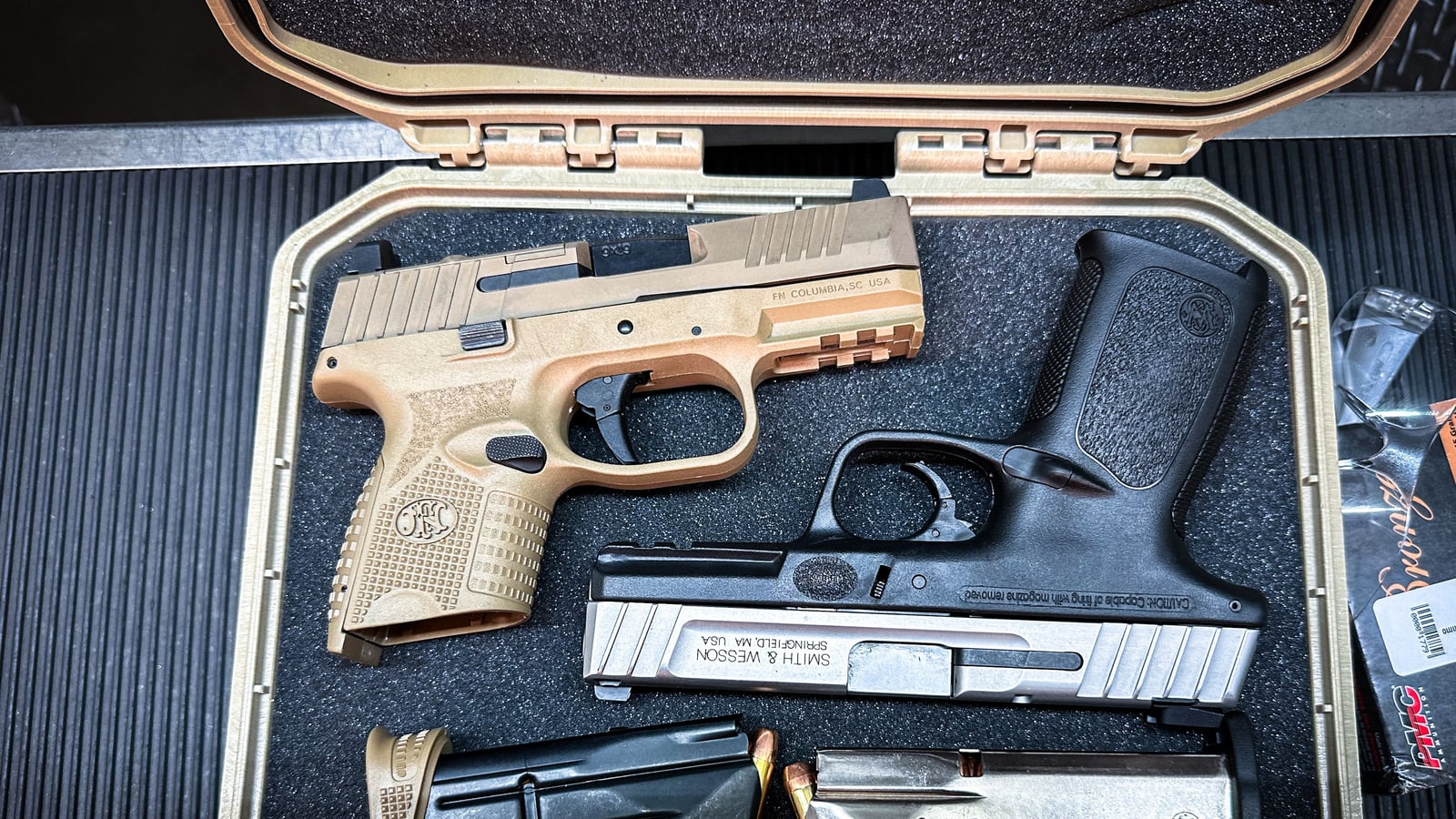
Why the case isn’t a minor detail
A poorly transported gun eventually pays the price: a fall in the trunk, a knock on the stock, dust in a scope mechanism. The case isn’t a comfort accessory — it’s the first line of defense against knocks and moisture between your home and the range.
It’s also a practical necessity in most places. Traveling with a disassembled or unloaded gun in a closed container that isn’t immediately accessible is the baseline for any relaxed outing, whether you’re headed to the club or to a competition. The container you choose directly determines how much time you spend worrying about your gear instead of shooting.
This comparison covers the main families on the market, the criteria that actually matter depending on your use case, and budget ranges by protection level. The goal: so you know exactly what to look for before buying, not so you get sold a specific model.
The main families of cases
The market splits into three broad categories, each with its own logic. Understanding this distinction avoids the classic beginner mistake of grabbing the first case available without thinking about actual use.
Hard cases made of molded polymer are built around a rigid shell, usually with foam padding inside (often pre-cut “pick and pluck” foam you customize yourself). They offer the best protection against impact and crushing, at the cost of more weight and bulk.
Semi-rigid bags combine a reinforced internal structure (aluminum or hard plastic frame) with a soft outer covering, often ballistic nylon. They aim for a compromise between protection and light weight, with the advantage of a more ergonomic handle and shoulder strap than a hard shell.
Soft covers, made of padded canvas or nylon, are the lightest and most visually discreet. They protect against scratches and light knocks but offer no resistance to crushing or a violent impact. They suit occasional use with careful handling, not intensive use.
Hard cases: the choice for maximum protection
A hard case becomes worthwhile once your travel frequency increases or your route involves repeated handling: car trips on rough roads, air cargo transport, extended storage in an unheated space. The shell absorbs crushing and lateral impacts far better than fabric, even reinforced fabric.
The key thing to check: the quality of the latches. Sturdy metal latches are far better than plastic clips that eventually break after a few dozen openings. Some models offer loops for padlocks or a built-in combination lock, a real plus if the gun has to stay in a vehicle for the duration of a trip.
The interior foam also deserves attention. Dense foam with customizable cutouts protects better than thin factory-glued foam, especially for a gun with a mounted optic: the scope needs its own compartment so it doesn’t take lateral pressure during transport.
The downside: weight and bulk. A hard case for a rifle with a scope can weigh several kilos empty, which becomes cumbersome if you have to walk a distance between the parking lot and the firing line, or if you travel by public transit.
Semi-rigid bags: the versatile compromise
This is the category best suited to regular club use, several times a month, without the constraints of a full hard case. The internal frame (often thin aluminum or structured high-density foam) prevents crushing while keeping the handle and shoulder straps comfortable to carry.
This format suits a shooter who alternates between several disciplines and needs to carry a gun, ammunition, and accessories in the same bag. Many models include dedicated external pockets: magazine holders, a tool pouch, a compartment for safety glasses and hearing protection.
The weak point remains waterproofing. Unlike a hard case with an O-ring seal, a semi-rigid bag rarely protects against driving rain or accidental submersion. If your trip includes extended waiting outdoors, plan for a supplementary rain cover or check for a water-repellent treatment on the fabric.
Price-wise, this is often the category with the best balance of quality, protection, and weight for recreational or regional competitive use, without the extreme demands of frequent air travel.
Soft covers: light weight and discretion
The soft cover appeals for two reasons: its feather-light weight and its discretion. A gray or black canvas cover without eye-catching branding draws much less attention than a logoed hard case — a meaningful argument for a home-to-club commute on public transit.
It works well for a gun already stored in an internal rigid holster (like certain pistol or revolver holsters) or for use where the risk of a violent impact is low: a car trip with careful placement in the trunk, no rough handling.
However, a soft cover doesn’t protect against crushing (a heavy object set on top of it in a packed trunk) or a hard knock against a corner. It’s also not suited for air cargo transport, where airline rules generally require a lockable rigid container.
Check the lining: a cover with thick interior padding (not just a thin fleece) makes a real difference in absorbing everyday minor knocks, particularly for a mounted scope or a delicate front sight.
Cases specific to each type of gun
The market offers dedicated formats depending on the discipline, and the right choice depends directly on your practice. A case designed for a 25m pistol doesn’t have the same geometry as a holster for a long-range precision rifle.
For pistols and revolvers, short hard cases with foam padding dominate, often with a separate compartment for magazines and space for the ammo box. Compact format, easy to fit inside a larger club bag.
For rifles, length becomes the deciding factor. A rifle with a mounted scope needs a case long enough to avoid removing the optic for every transport, which saves time and limits handling that could throw off a zero.
For clay disciplines (hunting or trap shotguns), double-barrel sleeves or long rigid cases with padding specific to the barrel and stock are the norm, often with a dedicated space for shells set apart.
For archery and crossbow, dedicated technical bags with compartments for arrows or bolts, pulleys, and sights form a category of their own, generally made of reinforced canvas with a semi-rigid structure around the bow itself.
Selection criteria based on how often you travel
The number one criterion, even before brand or price, is how often you actually travel. A shooter who goes to the club once a month doesn’t have the same needs as a competitor who runs regional matches every weekend.
For occasional use (less than once a week, trip in a personal car, no flights), a decent-quality soft cover or an entry-level semi-rigid bag is more than enough. There’s no point investing in protection designed for air freight if the gun never leaves the trunk of the car.
For regular use (several times a week, club and local competitions), the semi-rigid bag remains the best compromise, possibly with a good rain cover as a supplement if your region’s climate calls for it.
For intensive use with frequent travel by train, plane, or long road trips, a lockable hard case becomes nearly essential. This also applies if the gun stays stored in the case between outings: the hard shell then doubles as secure storage at home.
Budget by protection level
Prices vary enormously depending on the desired protection level, and it’s better to think in tiers rather than by specific brand, since ranges evolve quickly from one season to the next.
At the entry level, basic soft covers in thin canvas offer minimal protection against dust and surface scratches. They suit a tight budget and very occasional use, but don’t invest in an expensive gun and then protect it with the cheapest container on the shelf.
At the mid-range, semi-rigid bags with a frame and decent-quality foam offer the best protection-to-price ratio for the majority of club shooters. This is the category where most regular practitioners find what they need without breaking the bank.
At the high end, certified hard cases with a watertight seal, a pressure equalization valve (useful on planes), and custom-cut foam cost significantly more, but are justified for professional-level transport, high-value weapons, or frequent air travel.
Either way, it’s better to put your budget into the interior foam and the quality of the latches than into the outward appearance. A flawless shell with thin foam and fragile latches doesn’t protect better than a simpler shell properly equipped inside.
Interior padding, often overlooked
Many shooters buy a case and then forget to customize the interior padding, even though it’s often the element that makes all the difference in the event of an impact. A gun that can shift several centimeters inside an otherwise rigid container absorbs far more violent shocks than a perfectly cradled gun.
“Pick and pluck” cut foam lets you precisely fit the cavity to the exact shape of your gun and accessories. Take your time cutting gradually rather than removing too much foam at once: you can’t undo it.
For a gun with a mounted optic, always plan a separate compartment for the scope, with enough foam around it to absorb vibrations without the optic touching a wall. Losing a zero to a transport knock is avoidable wasted time at your next training session.
Also remember to leave space for accessories you always bring along: magazines, hearing protection, ear plugs, a paper shooting log if you use one. Well-thought-out padding saves you from juggling multiple bags on the big day.
Waterproofing and weather resistance
If you shoot outdoors or your trip regularly exposes you to the elements, waterproofing deserves a serious look before buying. Not all cases are equal here, far from it, even among rigid models.
A rubber O-ring around the entire rim of the lid, combined with latches that apply real closing pressure, protects effectively against driving rain or splashing water. Without that seal, a hard case is no more watertight than an ordinary suitcase, despite its rugged look.
For soft covers, look for a water-repellent treatment applied at the factory rather than raw fabric. This treatment fades over time and with washing, so periodic re-treatment with a suitable product extends effective protection.
The humidity level stored inside also matters long-term, particularly for wooden guns or those with metal parts sensitive to corrosion. Some practitioners add a silica desiccant sachet inside the case to limit condensation during temperature swings, a simple and inexpensive habit.
Air travel and airline regulations
Air transport of a firearm comes with rules specific to each airline, on top of the general legal framework. Checking directly with the carrier before booking avoids unpleasant surprises at the check-in counter, since policies vary significantly from one airline to another.
Most carriers require a lockable hard case, the gun unloaded, transported in the hold and never in the cabin. Ammunition generally has to travel in a container separate from the gun itself, with quantity and packaging limits specific to each airline.
Also check locking requirements: some airlines require that only the owner hold the key or code, others accept a TSA combination lock for inspection. A case with at least two locking points is generally recommended for this type of trip.
Build in extra time at check-in: declaring a firearm in the hold often requires a visit to a dedicated counter, with inspection of the case and its closure state. This isn’t the moment to discover a broken latch.
Maintenance and lifespan of the case
A quality case, properly maintained, lasts for years, but maintenance is often the big thing people forget. Regularly cleaning the interior foam, especially after an outing in the rain or dust, prevents the buildup of moisture that promotes corrosion of metal parts.
For hard cases, periodically check the condition of the hinges and latches: these are the parts that wear out first with frequent use. A latch that closes poorly should be replaced quickly rather than compensated for with a makeshift fix, or you risk losing all protection in the event of an impact.
For soft covers, inspect the seams and zippers, classic weak points after several years of use. A zipper that starts sticking gets worse fast and can end up failing at the worst possible moment, in the middle of the street or a parking lot.
Store the empty case in a dry place between outings if you don’t keep the gun in it permanently. Foam compressed too long under the weight of a gun gradually loses its cushioning ability, a slow but very real phenomenon over several years.
Cases for takedown guns and long barrels
One particular case deserves separate treatment: guns designed to be disassembled quickly, like certain takedown-barrel rifles or certain replicas used in precision disciplines. The choice of case follows an entirely different logic than for a gun carried whole.
A gun broken down into two or three pieces lets you use a much more compact case than the total length of the assembled gun. That’s a real advantage for anyone traveling by public transit or with a small trunk. The downside is the need for even more precise padding: each piece (barrel, receiver, stock if removable) needs its own compartment, otherwise the parts knock against each other during transport and eventually mark surfaces or, worse, throw a precision thread out of alignment.
For long barrels that don’t come apart, like on a 300m rifle or certain bench rest setups, the market offers so-called “long” cases whose length far exceeds the standard. Before investing in this format, check two things: the space available in your vehicle for a container that can approach 1.3 m, and compatibility with public transit luggage racks if you take the train to a competition. Some train stations and networks apply size rules on bulky luggage that can catch out a shooter traveling to a regional match for the first time.
A common trick among shooters who own several long-barreled guns is to invest in a single oversized hard case with modular padding, rather than several dedicated cases for each gun. The economics make sense mainly from three guns or more stored in the same place.
Individual case or shared club bag
The question rarely comes up for a beginner with just one gun, but it becomes relevant once practice intensifies and gear accumulates: multiple magazines, spare scopes, adjustment accessories, ammunition in several calibers. At that point, a single case dedicated to the gun is no longer enough to hold everything heading to the club at once.
The most common solution is to separate the functions: a hard case strictly for the gun and its optic padding, and a classic compartmented range bag for everything else (hearing and eye protection, magazines, adjustment tools, shooting log, ammo boxes). This separation limits unnecessary handling of the gun itself every time you need an accessory, and reduces the risk of accidental impact while digging through the bag.
Some clubs provide lockers or shared storage space for members who leave part of their gear on-site between sessions. If your club offers this option, a lighter, less protective case may be enough for the sole trip between home and club, since long-term protection is then mostly handled by storage at the club rather than by the transport container. Still, check the insurance terms of this type of storage before relying on it entirely: liability for theft or damage isn’t always covered the same way as at home.
Checklist before heading to a competition
On competition day, the case becomes an unavoidable checkpoint where forgotten items can ruin an entire outing. A simple checklist, taped inside the lid or tucked in a pocket, avoids this recurring hassle for many practitioners.
Before closing the case, systematically check for the gun itself of course, but also enough magazines, ammunition in its separate compliant container, your license card and qualification booklet if your discipline requires it, hearing and eye protection, and the adjustment accessories specific to your gun (a specific screwdriver, torque wrench, spare thread for a support part).
Also remember to check the state of the latches before leaving rather than upon arrival. A latch that closes poorly or a padlock whose key can’t be found while loading the trunk turns a calm departure into avoidable stress. A few minutes of checking before leaving the house is far better than improvising in the club parking lot, or worse, in the competition range’s lot on the other side of the region.
One last useful habit: mentally weigh the full case before closing it. An unusually light weight often signals something forgotten — a spare scope left on the shelf or an unloaded ammo box in the bag. It’s a quick check that costs nothing and saves you many pointless trips.
Customizing and maintaining the foam padding yourself
Beyond the simple initial cutting covered above, a few techniques let you go further in customizing the padding, especially for shooters who regularly change their gun configuration (mounting or removing a scope, adding a bipod, swapping an adjustable stock).
A common method is to double the original pre-cut foam with a second, thinner layer of foam laid on top, which lets you adjust the fit without having to buy a whole new block for every configuration change. This economical trick works well for a shooter testing several setups before settling on a final configuration.
For final cuts, a well-sharpened utility knife with gradual passes gives a cleaner result than a dull tool that tears the foam instead of slicing it cleanly. Trace the outline with a marker by carefully placing the gun on the foam beforehand, rather than estimating dimensions by eye.
Over time, foam compresses and loses density, especially at repeated contact points with the heaviest parts of the gun. A visible sag of several millimeters is the signal that it’s time to replace the block, without waiting for the gun to touch the bottom or walls of the case. Replacement foam blocks are easy to find from the same manufacturers as the cases themselves, saving you from buying an entirely new container for this one issue.
Common mistakes when buying
Certain mistakes come up again and again among shooters buying their first case without taking the time to compare, and they generally cost more to fix afterward than they would have cost to avoid from the start.
The first mistake is buying based on the current gun without anticipating gear evolving. A case fitted down to the millimeter for a rifle without a scope becomes unusable the moment an optic gets mounted, for lack of room to fit it properly. Building in a reasonable margin when choosing size avoids this kind of unpleasant surprise.
The second mistake is neglecting empty weight in favor of protection alone. A case overbuilt for occasional use quickly becomes dead weight you hesitate to bring, which paradoxically pushes some shooters to carry their gun in a less protective container “to move faster” — the exact opposite of the original intent.
The third, very common mistake is focusing on outward looks (color, pattern, visible branding) at the expense of the elements that actually determine protection: latch quality, foam density, presence or absence of a watertight seal. A case that looks rugged in photos can hide fragile hinges or thin foam glued on the cheap.
Finally, many shooters underestimate the value of physically trying the case before buying when possible, for example at a gun shop or a trade show. Hefting the container, testing the opening and closing of the latches, checking the perceived sturdiness of the handle: these few gestures in-store save a lot of disappointment upon delivery of a purchase made from photos alone.
Materials: polymer, aluminum, wood, and alternatives
The choice of shell material directly influences the weight-protection-price triangle, and deserves a closer look than the simple hard-vs-soft opposition covered earlier. Each material has its own strengths and limits, independent of the general category the case belongs to.
Molded polypropylene, the most common material for consumer hard cases, offers an excellent strength-to-weight ratio and resists impact well at room temperature. Its limit shows up in extreme cold: some polymers become more brittle below zero, a point to watch for shooters who practice outdoors in winter or store their gear in an unheated space.
Aluminum, used as a frame or a full shell on certain high-end models, delivers greater rigidity for equal weight compared to a thick polymer, but transmits more thermal shock: an aluminum case left in full sun heats up faster than a polymer shell, which can affect ammunition stored inside during a heat wave.
Old wooden cases, still seen among some collectors or practitioners of historical disciplines like black powder shooting, have real aesthetic charm but offer neither the waterproofing nor the crush resistance of modern materials. They suit heritage or display use rather than repeated transport to a range.
Finally, some manufacturers now offer shells made from recycled or partially bio-based materials, a trend that’s still niche but growing. Performance remains comparable to classic polymers on serious models, with the difference mainly playing out on price and availability rather than actual protection.
Transport by bike, motorcycle, and short urban distances
An angle often forgotten in typical comparisons: not every shooter travels by car. An urban practitioner heading to their club by bike, scooter, or on foot for a short distance faces very different constraints than a shooter loading up a car trunk.
For a bike trip, weight and load balance take priority over everything else. A bulky hard case easily throws off a bike rack or backpack, with a risk of falling if the center of gravity is off. Compact soft covers with a wide, padded shoulder strap, worn cross-body rather than by hand, are strongly preferred by shooters who travel this way, provided the trip stays short and storage is careful on arrival.
On a motorcycle, things get more complicated: most top cases and saddlebags weren’t designed to hold a standard hard case, and engine vibration along with possible tip-overs at a stop demand particularly careful padding. Better to check the exact dimensions of the storage available on the bike before investing in a case, rather than the other way around.
Either way, foot or soft-mobility transport calls for heightened attention to the visual discretion of the container, a matter governed more by general firearm transport regulations than by the choice of case itself, but one that directly influences what type of container makes sense for this kind of trip.
Special case of black powder guns and historical replicas
Historical shooting and black powder reenactment disciplines come with somewhat different transport constraints than modern guns, notably because of the often atypical shape of the parts (long stocks, external hammers, ramrods) and the possible presence of powder or flammable accessories in the same bag.
The first habit to adopt is always separating the gun itself from the powder and primers, in separate containers, even though the specific regulation of these products isn’t the subject of this article. A case dedicated to the gun, with no compartment for ammunition or powder, limits risk and also simplifies storage at home between outings.
For the shape of the gun itself, standard off-the-shelf cases don’t always fit: the external hammer on many percussion or flintlock models sticks out beyond the usual profile of a modern gun, which requires either custom-cut foam with a dedicated recess, or a longer-than-normal cover to leave room for this protruding mechanism. Some manufacturers specializing in historical shooting offer suitable formats, but the market remains narrower than for modern guns.
Accessories specific to this practice (a long cleaning rod, powder horn, bullet molds for some practitioners) often need a separate compartment rather than a simple generic space, otherwise they end up knocking against the gun during transport.
Complementary accessories that extend protection
Beyond the case itself, a few complementary accessories significantly extend the lifespan of your gear and the quality of protection, at generally modest cost compared to the price of the main container.
Silica desiccant sachets, already mentioned for the humidity issue, slip easily into a corner of the foam and can be reactivated in the oven or replaced cheaply once saturated. A colored indicator on some models visually signals when the sachet has reached its absorption capacity and needs changing.
Removable rain covers, designed to slip over a semi-rigid bag in case of unexpected rain, effectively fill in this category’s native lack of waterproofing without having to invest in an entirely new case. They fold up into an external pocket and weigh almost nothing once folded.
A small dry lubricant spray suited to metal hinges and latches, applied two to three times a year, prevents these mechanical parts from gradually seizing up, particularly for cases stored in a humid environment or used in all weather. A latch that squeaks or sticks is often an early warning sign of a part about to break.
Finally, a discreet ID tag inside the case, rather than displayed on the outside, makes it easier to find your gear in case of loss or mix-up at a competition where several similar cases sit side by side in the locker room, without advertising the contents on the outside of the container.
Some practitioners also add a discreet reflective strip on the handle, useful for spotting your own case in a pile of similar gear left in a poorly lit club hallway, without compromising the discretion of transport in public. A simple piece of colored tape, stuck somewhere not very visible, is often enough to avoid confusion with a container belonging to another club member, especially when several cases of the same brand and color end up lined up on the same competition day.
FAQ
Q: Is a soft cover enough for going to the club once a week? A: Yes, if the trip is by car with careful storage and no risk of a violent impact. For more peace of mind, a semi-rigid bag remains a better investment over time.
Q: Do you absolutely need a lockable case to transport a gun by car? A: A closed container that isn’t immediately accessible is the baseline for any trip. Check with your gun shop or federation for the exact rules that apply to your situation.
Q: Is the pre-cut foam that comes with the case sufficient? A: It works for basic use, but a customized “pick and pluck” cut protects a gun with mounted optics or accessories better. It’s worth spending an evening on it.
Q: Can you transport several guns in the same case? A: Some long hard-case models allow this with separate padding for each gun, but make sure each spot stays properly individualized to avoid any contact between the guns during transport.
Q: How do you know if a case is suitable for air travel? A: Look for mention of two-point locking compliance and check for a watertight seal. Also contact the airline directly before traveling, since requirements vary from carrier to carrier.
Q: Is price always proportional to actual protection? A: Not always. The quality of the latches and interior foam often matters more than the displayed brand. Compare these concrete elements rather than price alone before deciding.