
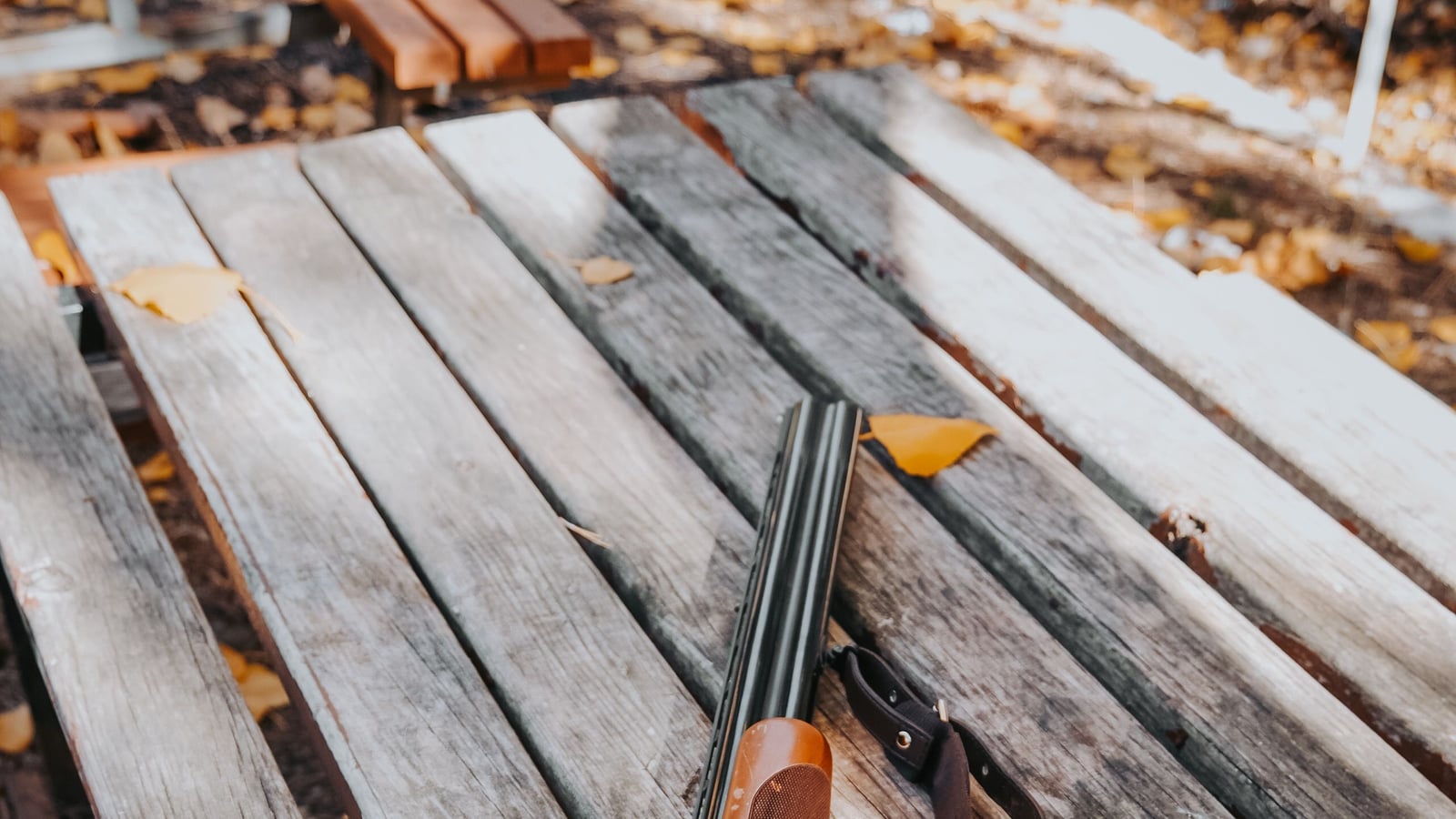
Why the shooting bench really changes your precision
A folding shooting bench isn’t a comfort accessory. It’s the element that turns your position into a stable platform, capable of isolating your shot from parasitic micro-movements. Without a rigid base, even the best rifle and the best optic never express their real potential.
Many shooters underestimate this item and put their whole budget into the rifle or the scope. The result: they shoot average groups on a wobbly camp table, when the same gear would give clearly better results on a well-set rigid bench.
The folding bench market has diversified a lot in recent years. There are now models designed for the trunk of a car, others built to stay put at the club, with considerable differences in price and stability. This comparison helps you choose based on your actual use, not the price tag on the shelf.
What we’re talking about here is the bench itself: the folding frame and the tabletop you rest your support on. It’s neither the loading table some use in parallel to handle their ammunition, nor the fixed concrete firing point found on some permanent ranges. The folding bench stands out precisely for its ability to be set up and packed away quickly, which makes it a piece of equipment in its own right with its own design constraints.
This comparison is aimed both at the shooter starting out in precision rifle who’s looking for their first stable rest, and at the experienced shooter who wants to replace an aging model or add equipment for a different discipline. The two profiles don’t share the same priorities, and that’s exactly the point of the sections below: helping you place your own use case before looking at technical specs.
The criteria that really matter in a comparison
Before comparing models, you need to know what to look at. Raw weight alone isn’t a reliable indicator: a light but structurally well-designed bench can be more stable than a heavy, poorly balanced one.
The criteria that make a difference on the ground:
- Tabletop rigidity: a top that vibrates or flexes under forearm pressure ruins precision, even with a quality bipod sitting on it.
- Support width: a narrow top forces a cramped position, tiring over a long session.
- The folding mechanism: some mechanisms develop play after a few dozen open-close cycles, others stay stable for years.
- Actual carry weight: the figure given by the manufacturer rarely includes the carry bag or accessories sold with it.
- Adjustable height: essential if several shooters of different sizes share the same bench, or if you shoot both seated and standing.
- Wind resistance: a light bench can become unstable outdoors as soon as the wind picks up, especially with an elevated top.
- Compatibility with your build: a tall shooter will need a longer top and a more generous seat height than a shorter one, a point rarely highlighted in spec sheets.
Another point deserves clarifying before comparing prices: two benches advertised in the same price bracket can have opposite design philosophies. One will favor lightness at the expense of rigidity, the other will do the reverse. Comparing only the sticker price without looking at these internal trade-offs amounts to comparing products that, in practice, don’t answer the same needs at all.
Keep these criteria in mind for each price range covered next.
Entry level: what you can really expect
In the entry-level bracket, you’ll find folding benches made of thin steel tube or light aluminum, with a plywood or molded plastic top. The price stays attractive, but the trade-offs are real.
What these models do well: transport. They’re light, fold quickly, and fit in a trunk without taking up much room. For occasional use, two or three benchrest outings a year, they do the job without needing to invest more.
What consistently falls short: rigidity under load. As soon as you rest your forearms with firm pressure, some tops flex slightly, introducing variability that’s hard to correct even with a good shooting bag. Folding also develops play faster, especially if the bench is stored damp.
For a beginner discovering precision shooting, or simply looking to stabilize their first attempts before investing more heavily, this range remains a reasonable entry point. The key is not to expect competition-level rigidity.
Another point often overlooked in this range concerns the assembly hardware. On the cheapest models, bolts and nuts are sometimes of borderline quality, and regular tightening becomes necessary to keep the structure from developing play prematurely. It’s not a dealbreaker, but it requires some follow-up on your part, unlike higher ranges where the assembly stays stable without particular maintenance.
Top width is also a specific point of attention in this range. To fit within a tight budget, some manufacturers reduce the support surface rather than lightening the structure uniformly, which shifts the trade-off toward positional comfort rather than pure rigidity. If you shoot with a bulky rifle or a large-diameter scope, check that the top leaves enough room for symmetric support of both forearms without one side hanging over the edge.
Mid-range: the most popular compromise
This is the best-selling category, and for good reason. Mid-range benches generally use a thicker steel or reinforced aluminum frame, with a wider top often coated with a non-slip finish.
Stability is clearly better than entry level. Flex under load becomes marginal, and groups directly benefit for anyone already shooting at 50 or 100 meters with a properly sighted-in rifle.
Carry weight climbs accordingly. Expect more bulk in the trunk, and folding sometimes requires two hands rather than one motion. For regular club use, that’s not a problem: the bench typically stays stored on site or in a dedicated vehicle.
Setup time also increases slightly compared to entry level, without becoming a burden. Count on a few extra moments to unfold the structure, lock each safety point, and stabilize the feet, versus an almost instant motion on a very light model. Over a session lasting several hours, this difference stays negligible; it can matter, however, if you frequently change firing points within the same session.
This range suits perfectly a shooter who practices benchrest regularly without aiming for top-level competition. The stability-to-price ratio here is generally the most favorable in the whole market.
This range is also where the diversity of finishes is widest: treated wood tops, ribbed aluminum, or dense composite. This diversity sometimes complicates the choice, but it also lets you find a model that matches precisely your build and your usual shooting position, something harder to adjust for at entry level where the offering stays standardized.
High-end: when every detail counts
High-end benches target a specific audience: benchrest competitors, long-range precision shooters, or enthusiasts who’ve already optimized the rest of their gear and are chasing that last percent of stability.
These models use massive structures, sometimes welded thick steel, with fine height and tilt adjustment systems for the top. Some feature independently adjustable feet to compensate for uneven ground, a real plus outdoors.
Weight becomes an accepted factor rather than a flaw: these benches aren’t designed to be lugged along on every outing, but to stay in fixed configuration on a firing point or in a trailer dedicated to competition gear transport.
Price follows logically, and the investment is only justified if your use is genuinely regular and demanding. For occasional use, this range represents an overinvestment that won’t bring any measurable benefit to your groups.
Setup time is also longer on these models, due to the number of available adjustments. A high-end bench set up once properly, on a fixed spot, poses no issue. The same bench set up and packed away every outing loses part of its appeal, since every fine adjustment has to be redone from scratch at each new installation, which can quickly become more of a hassle than a simpler model calibrated correctly once and for all.
These models are also often modular: interchangeable top, side extensions, or dedicated mounts for competition accessories like spirit levels or chronograph mounts. This modularity comes at a cost, but it lets you adapt the same bench to several disciplines without buying a second one, which can justify the investment for a shooter who competes in several formats over the year.
Carry weight: the real trade-off to make
Weight is often the criterion that tips a decision, and it deserves specific attention. A bench under 10 kilos is easy to carry, loads into a trunk single-handed, but almost always sacrifices some rigidity.
Conversely, a bench over 20 kilos offers much greater stability, but forces you to rethink the whole logistics: carry straps, loading it with two people if the range is far from the vehicle, wear on your back over time.
There’s an intermediate zone, between 12 and 18 kilos depending on the model, that stays manageable alone while offering markedly higher rigidity than entry level. It’s often the best compromise for anyone torn between transport comfort and shooting quality.
Also think about the distance between your vehicle and the firing point. A club with parking right next to the firing line changes things completely compared to an outdoor range where you have to walk several hundred meters with the gear.
If you regularly shoot alone, without anyone to help carry the gear, this criterion deserves extra weight compared to a shooter who always comes with company. A bench you can’t comfortably lift alone will end up staying in the garage on the days when motivation is a bit lacking, which, over time, costs more in missed sessions than the rigidity gap with a lighter model.
If you take your benchrest gear out a few times a year, your priority should go to ease of transport and setup, more than absolute rigidity. A too-heavy bench that stays in the garage nine months out of twelve is useless.
In that case, favor an entry- or mid-range model, light, with a quick and reliable folding mechanism. Complement it with a good shooting bag under the forend and under the buttstock: this accessory partly compensates for the rigidity limits of a lighter top.
Occasional use also implies less careful storage: garage, car trunk, sometimes exposure to humidity. Check that the metal parts are treated against corrosion, a detail manufacturers don’t always highlight in their product sheets. Don’t neglect the carry cover either: an unprotected folding bench wears out quickly in a trunk among other gear, and the folding hinges are the first parts to suffer from repeated knocks.
For a shooter who practices benchrest every month, or even every week, the equation changes entirely. The bench becomes a work tool, not an occasional accessory, and its rigidity directly influences progress and reading the adjustments.
In this setup, aiming for upper mid-range, or even entry-level high-end, is fully justified. The difference in stability translates concretely into tighter, more repeatable groups from one session to the next. Regular use also helps absorb a higher carry weight: the bench is often stored in the vehicle or at the club, reducing the logistical constraint tied to weight, which then becomes secondary compared to stability.
It’s also in this use profile that adjustable height takes on its full meaning, especially if several disciplines are practiced at the same station: 50-meter rifle, 300-meter rifle, or seated position for certain FFTir animal silhouette events.
Between these two profiles, there’s also a frequent intermediate case: the shooter starting a regular practice without yet knowing if it will last. In that case, better not to commit immediately to high-end. A mid-range model will let you confirm your interest in the discipline over several months, before considering a heavier investment if the practice genuinely holds over time.
Stability: beyond the bench itself
A rigid bench doesn’t do everything. Final stability also depends on the ground it rests on, often overlooked in comparisons. An excellent bench set on soft or sloped ground loses a good part of its advantage.
Check that the bench feet offer a wide stance and, ideally, non-slip or individually adjustable pads. On an outdoor range with grass or gravel, this feature often makes more difference than the bench’s raw weight.
The shooting bag remains the indispensable complementary accessory, whatever bench you choose. A well-filled bag under the front of the forend absorbs residual micro-movements and evens out the support, even on an entry-level top.
Finally, how you set yourself up matters as much as the gear. An experienced club shooter often points out that an average bench, well set up and well used, beats an excellent bench poorly positioned, poorly wedged, or used with an unstable position.
A common bias is to judge a bench’s stability purely by feel in the hand, shaking it empty before buying. That impression doesn’t always reflect its actual behavior under the load of a shot with recoil. The real test happens under real conditions: seated position, forearms resting firmly, several consecutive shots to observe whether the point of impact drifts over the course of the string.
An experienced instructor often advises comparing the groups obtained at the same station with two different benches, identical rifle and ammunition, rather than trusting the specs advertised by manufacturers. That’s the only test that truly eliminates subjective variables. If you don’t have that option, favor experience reports from shooters who practice the same discipline as you, in conditions similar to yours, rather than generic reviews that specify neither the distance nor the rifle used.
Good setup, by the way, matters just as much as the gear itself. Fully unfold the structure and check that every locking point is properly engaged before resting any load on it: a half-locked fold can seem stable empty and give slightly on the very first shot. Then stabilize the four feet on the ground, especially outdoors on uneven terrain, adjusting each foot individually rather than trying to compensate for a leveling flaw with your body position alone.
Set up your shooting bag or bipod, then place the rifle and check the eye-scope alignment before loading anything. If the bench has adjustable height, this is the time to set it: a position too high or too low forces you to compensate with your neck or shoulders, introducing fatigue and variability over a long session. Also get in the habit of retesting overall stability after a few shots, especially with a still-new folding mechanism: slight play can appear while the mechanical parts settle in under recoil vibration.
How to test a bench before the final purchase
If you get the chance to see the bench in a store or at another shooter’s before buying, a few simple checks will tell you more than any spec sheet. Press firmly with both hands on a corner of the top and watch whether the whole structure follows the movement or only the pressure point flexes slightly.
Fold and unfold the bench several times in a row to feel whether the mechanism stays smooth or already shows play, even on a new display model. Play noticeable already in the store will only get worse with real use.
If possible, set the bench to the height matching your build and simulate a shooting position without a rifle, watching whether your natural rests (elbows, forearms) fall naturally onto the top without strain. A position that requires compensating effort right from the empty test will be worse still after several dozen shots.
If you’re at a club, ask other members who’ve already been using this or that model for several seasons. Their feedback on real-world durability is worth far more than any sales description, since they’ve already gone through the phase where a bench’s early flaws reveal themselves.
Finally, if the purchase happens online without any chance to test it physically beforehand, favor sellers with a clear return policy. A bench that looks perfect in photos can reveal stability flaws only in use, and being able to return it without hassle spares you from being stuck with a bad choice.
Common mistakes to avoid when buying, and final checklist
The first mistake is choosing solely on the sticker price, without looking at the actual weight or top width. A cheap bench that’s too narrow for your favorite rifle will never work properly.
The second, very common mistake is skipping the test before buying. When possible, test the bench at the club or borrow one from a fellow shooter before investing. Rigidity sensations vary enormously from one model to another, and spec sheets don’t tell the whole story.
The third mistake is overinvesting for occasional use. Buying a high-end bench for two outings a year ties up a budget better spent on quality ammunition or a more precise optic.
Conversely, underinvesting for regular use ends up costing more: an entry-level bench that develops play after a year of intensive use will need replacing, whereas a well-chosen mid-range model lasts considerably longer.
Before confirming a purchase, go back through every criterion covered in this comparison and check it against your actual use rather than the enthusiasm of the moment:
- Actual planned frequency of use over the year, not the ideal one you envision.
- Carry weight under real conditions, carry bag and accessories included.
- Top width and length relative to your rifle and your usual position.
- Presence or absence of a rail or mounting system for a bipod.
- Storage conditions available at home between outings.
- Total budget including complementary accessories, shooting bag included.
Once these points are clarified, the choice between the ranges presented above becomes much simpler, and above all much more consistent with your actual precision shooting practice.
One last mistake deserves mention, more subtle than the previous ones: choosing a bench based on a hypothetical future use rather than your current practice and your actual needs of the moment. Anticipating a move toward competition can be justified, but buy according to what you practice today, even if it means reassessing later. A bench matched to your actual current use will always serve you better than an oversized model for a project that hasn’t started yet.
Materials, construction, and generic off-the-shelf benches
The choice of structural material directly influences the weight-to-rigidity ratio, and therefore the bench’s positioning within a price range. Steel remains the reference for pure rigidity, but it makes the whole thing significantly heavier and requires serious anti-corrosion treatment.
Aluminum saves weight without fully sacrificing rigidity, provided the tubes are thick enough and the joints well designed. It’s the compromise favored by most mid-range models intended for regular transport.
Composite or reinforced plastic tops appear mostly at entry level. They resist moisture well and never rust, but their rigidity under load stays lower than a thick wood top or solid aluminum. Some manufacturers combine materials: aluminum frame for lightness, thick plywood or reinforced composite top for surface rigidity. This hybrid approach often gives the best compromise for mixed use, between occasional outings and more regular sessions at the club.
A common temptation among beginners is to buy a camping or DIY folding table instead of a dedicated shooting bench, to save on the initial budget. The result is rarely satisfying: a general-purpose table isn’t designed to take the firm, repeated pressure of forearms, nor to withstand recoil vibration. The top flexes, the legs quickly develop play, and the height is often not suited to a proper seated shooting position.
Models specifically designed for shooting build in, from the outset, a top height thought out for eye-scope alignment in a seated position, enough width to rest forearms flat, and a structure reinforced at the contact points with the arms. The extra cost between a general-purpose table and a real entry-level shooting bench stays limited: better to invest in a dedicated model from the start than to have to replace a makeshift solution after a few disappointing outings.
Surface finish also deserves a word. A cleanly varnished or painted top ages better than a raw surface exposed to the elements, particularly at the zones of repeated forearm contact. On wood models, check that the edges are sanded and treated: a poorly finished edge quickly becomes uncomfortable after several dozen minutes of continuous support during a zeroing session.
Compatible accessories, maintenance, and long-term durability
A folding bench is never used alone. Compatibility with wedging accessories makes a real difference in setup comfort and in the reproducibility of your shooting position from one session to the next. Some tops include a Picatinny rail or a dedicated mounting system for a bipod or front rest, avoiding the need to reposition it at every setup.
The rear shooting bag, placed under the buttstock, remains the most universal accessory. Check that the top’s width lets you comfortably rest a good-sized bag without it hanging over the edges or sliding during recoil. Some more complete benches also offer a cup holder, a mount for an ammo box, or a small ledge for a pair of binoculars: comfort details that count over a long session at the club or in competition.
On the durability side, a folding bench takes repeated mechanical stress with every open-close cycle. Hinges and locking systems are the first wear points, particularly on entry-level models. Simple maintenance extends lifespan noticeably: clean off sand and dust after every outdoor outing, check the tightness of structural bolts, and apply a bit of grease to the moving joints once or twice a season.
Storage also plays an important role. A bench stored folded in a dry space lasts much longer than a model left open outdoors or stored in a humid environment that promotes corrosion of untreated metal parts. If you notice play in the folding mechanism, don’t wait for it to get worse: that play carries straight through to the top’s stability, and therefore to your groups, well before it becomes visible to the naked eye.
Some manufacturers offer spare parts for the most common wear points: hinges, locking pins, foot pads. Before buying, quietly check whether that type of part stays available over time, by checking the manufacturer’s site or asking the seller directly. An otherwise excellent bench where no part can be replaced individually will force you to buy the whole thing again at the slightest incident, which weighs on the real cost of ownership over the long run.
Adapting your choice to the discipline practiced
The choice of bench also depends on the discipline targeted. A shooter who mainly practices 10-meter indoor air rifle doesn’t have the same needs as a 300-meter rifle shooter setting up their station outdoors.
For short distances in a covered range, wind resistance doesn’t come into play, and a lighter model is more than enough since the station generally stays fixed and sheltered. Priority then goes to positional comfort over the length of a session.
For long outdoor distances, wind resistance and rigidity become priorities, since the slightest vibration carries over more into the group as distance increases. A heavier bench, better anchored to the ground, becomes a real advantage.
For mixed use, combining several FFTir disciplines over the same competition weekend, versatility comes first: adjustable height, a top wide enough for different positions, and a weight that stays manageable for moving between successive firing points.
Air rifle shooting, practiced in category D, also deserves separate mention. The short distances and absence of significant recoil clearly reduce the stresses on the bench, which lets very light models work perfectly, even for regular practice. It’s often a good entry point to test the comfort of a folding bench before investing more for calibers with heavier recoil.
The used market also offers great opportunities, particularly on mid- and high-range models that are expensive new. A well-maintained bench loses relatively little rigidity over time if it hasn’t suffered any structural impact. Before buying, systematically inspect the folding and locking points: noticeable play there is often a sign of intensive use or unsuitable storage, and this flaw isn’t easily corrected once installed.
Also check the condition of untreated metal parts, particularly if the bench has been stored outdoors or in a humid environment. Surface corrosion remains acceptable; corrosion that has attacked the load-bearing structure should send you running. Don’t hesitate to ask to test the bench before buying, folding and unfolding it several times and resting firm pressure on it: a serious seller, whether private or a club renewing its gear, should never refuse this simple check.
Budget: how to allocate your equipment investment
The price of folding benches varies widely from one manufacturer to another, and the ranges shift regularly depending on raw materials and distribution channels. Rather than fixating on a precise figure that will quickly be outdated, think in proportion to your overall precision shooting budget, and always compare several retailers before deciding, as the differences can be significant for similar features.
A good approach is not letting the bench absorb a disproportionate share of the total budget, at the expense of the optic or quality ammunition, which influence final precision just as much. A balance between line items remains preferable to a single oversized element, especially when building out a complete precision shooting setup.
If your budget is tight to start with, an entry-level bench complemented with a good shooting bag beats a mediocre bench with a low-end bag. The combination of bench plus wedging often counts for more than each element taken separately, and a quality bag stays reusable even the day you switch to a better bench.
As your practice intensifies and you precisely identify your friction points, gradually reinvesting into a higher range remains a safer strategy than aiming too high from the start without knowing whether the use will hold over time.
One last useful reflex before finalizing your purchase: ask for advice from shooters already using a folding bench at your club, if you attend one. An experienced club shooter has often tested several models over the years and can point you toward what actually works under your range’s local conditions, grass, gravel or concrete slab, far better than a generic product sheet that knows neither your terrain nor your everyday storage and transport habits.
FAQ
Q: What weight of folding bench should I choose for occasional use? A: Aim for a lighter model, under 10-12 kilos, easy to load alone into a trunk. Rigidity will be a bit lower than a heavy model, but a good shooting bag largely makes up for it for occasional use.
Q: Is an entry-level folding bench enough to start benchrest? A: Yes, to discover the discipline and stabilize your first attempts, an entry-level model does the job. You’ll feel its rigidity limits mainly as you progress toward very tight groups.
Q: Should I favor a wide top even if the bench gets heavier? A: A wide top clearly improves positional comfort and support stability. If your use is regular, this criterion deserves to outweigh carry weight in your decision.
Q: How can I tell if a folding bench has developed play in its structure? A: Rest your forearms firmly on the top and watch for noticeable movement or vibration. If play appears after a few months of regular use, check and tighten the fixing points before it affects your groups.
Q: Is a high-end folding bench useful for a non-competitive club shooter? A: Not really, unless you shoot very regularly and are trying to eliminate the smallest variable. For leisure use, even intensive, mid-range largely covers the need without overinvestment.
Q: Does the non-slip coating on the top make a real difference? A: Yes, it limits the forend or shooting bag sliding during recoil, which improves the repeatability of your position from one shot to the next. It’s a detail worth checking systematically before buying.
Q: Can the same folding bench be used for several shooting sport disciplines? A: Yes, provided it offers adjustable height and a top wide enough for different positions. A versatile mid-range model generally suits better than an overly specialized bench if you practice several FFTir formats over the year.
Q: How do I know if instability comes from the bench rather than my technique? A: First rule out the other variables (ammunition, optic zero, front support) then watch whether the top moves visibly when firing or whether play appears when folding and unfolding. If the structure itself vibrates or shifts, the bench is at fault, not your technique.