
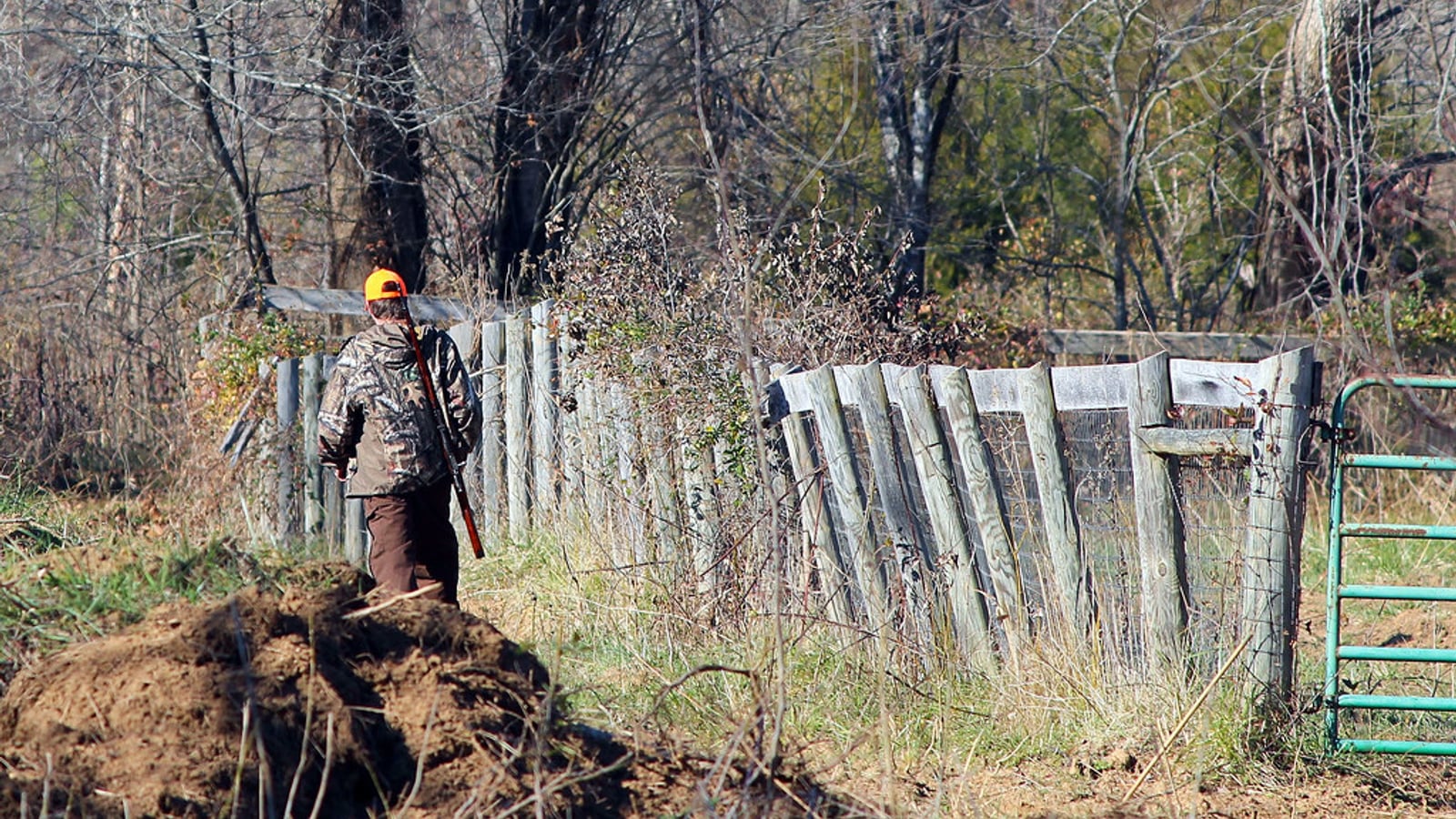
Two practices, two administrative logics
Many new shooters mix up the two worlds without meaning to. They think a hunting permit gives access to sport shooting, or that an FFTir license lets you hunt. Neither is true, and this confusion comes from a common root: both activities involve a firearm, so intuition pushes you to think one authorization covers everything.
In reality, French law strictly separates sporting practice from hunting practice. These aren’t two shades of the same thing: they’re two separate legal regimes, with different laws, different federations, different supervising authorities, and different documents to present at the prefecture.
Sport shooting falls under the sports code and the internal security code for anything related to owning firearms. It’s overseen by the French Shooting Federation (FFTir), which issues licenses and organizes competitions. Hunting falls under the environmental code, overseen by departmental hunters’ federations and subject to the hunting permit exam.
This distinction isn’t merely administrative — it runs through everything: the types of weapons usable, the authorized practice locations, the seasons, the ammunition, and even the vocabulary used by both worlds. A sport shooter talks about “discipline” and “weapon category,” a hunter talks about “hunting action” and “territory.” Understanding this separation up front avoids costly setbacks, both in time and paperwork.
This also holds true the other way around: nothing stops a hunter from wanting to improve their shooting through sport shooting, or a licensed sport shooter from wanting to discover hunting. It’s even a fairly common crossover. But it requires starting from scratch administratively, with no shortcut between the two statuses.
The FFTir license: a sporting sesame, not a hunting one
The FFTir license is above all a document affiliating you with an approved sports federation. It certifies that a shooter is covered by civil liability and personal accident insurance, is attached to a club, and can take part in competitions and activities run by the federation.
In practice, the license is obtained after registering at a club, presenting a medical certificate showing no contraindication to shooting, and paying an annual membership fee that includes the federal share. The club verifies the applicant’s identity and forwards the file to the federation, which issues the license.
This license plays a central role for owning category B weapons as a sport shooter: it’s part of the prefectural authorization application, alongside a specific medical certificate and a practice attestation issued by the club. Without an active license and demonstrated regular practice, category B ownership authorization for sporting purposes is not granted.
What the FFTir license absolutely does not do is authorize any hunting action. It grants no right over hunting territory, no authorization to take game, and no recognition with a departmental hunters’ federation. A licensed sport shooter who goes onto hunting grounds without a hunting permit is committing an offense, regardless of their seniority or skill level at the range.
The license’s scope is also geographically limited: it grants access to approved shooting facilities (ranges, homologated outdoor firing lines), not to any natural space. A sport shooter can’t set up with their weapon in a wood or field just because they’re licensed.
The hunting permit: an exam, not a simple registration
The hunting permit works on a completely different logic. It relies on a theoretical and practical exam organized by the French Office for Biodiversity (OFB), which validates specific knowledge: safety, species recognition, hunting regulations, behavior when shooting at game.
This exam isn’t an administrative formality comparable to club registration. It certifies a real level of knowledge, with a non-negligible failure rate for poorly prepared candidates. The practical part notably assesses safe weapon handling on a simulated course, with concrete scenarios.
Once the permit is obtained, it must be validated each season with a departmental hunters’ federation to hunt legally. This validation includes mandatory insurance and conditions access to hunting grounds, whether private or within a communal hunting association.
The hunting permit opens rights that the FFTir license never opens: the ability to carry out a hunting action on a territory during authorized periods, with authorized species, under conditions set by prefectural order each year. These conditions vary by department and type of game, which requires regularly checking local regulations.
Conversely, a hunting permit never replaces an FFTir license to access an affiliated sport shooting range, to take part in a homologated competition, or to support a weapon ownership application for sporting reasons. The two administrative files remain separate even if the same person holds both.
Which weapons for which practice
The question of which weapons are involved is another frequent point of confusion, partly because some models can technically serve both purposes, which blurs the picture for beginners.
As a reminder, the French system classifies weapons into four categories: category A groups weapons banned for private individuals, war material; category B groups weapons subject to prefectural authorization, notably handguns and most semi-automatic weapons; category C groups weapons subject to declaration, including some manually-operated repeating hunting weapons; category D groups weapons freely sold or subject to simple registration, such as low-power air weapons or certain replicas.
Civilian sport shooting covers a wide spectrum: category B rifles and pistols for Olympic and precision disciplines, category D air weapons for introduction and certain disciplines, category C rifles for long-range precision shooting in some clubs. The common point is that these weapons are used on a homologated firing line, within a sporting framework governed by strict federal rules.
Hunting relies mostly on category C weapons, particularly manually-operated repeating rifles and shotguns, adapted to different hunting methods depending on the targeted game. Certain specific configurations may fall under other categories depending on their precise technical characteristics, which justifies checking a weapon’s exact classification before any purchase.
The same rifle can, on paper, serve both purposes if its owner holds both required authorizations. But the ownership purpose declared to the prefecture (sporting or hunting) determines the file to build and the documents to renew, even though the physical weapon remains identical.
Ammunition and how it’s used also differ greatly. In sport shooting, the goal is a precise grouping on a fixed or moving target, under standardized conditions. In hunting, ammunition is chosen based on the game, the likely shooting distance, and the desired effectiveness, under field conditions that vary with each outing.
Combining both practices: possible and even common
Nothing in the law prevents the same person from holding both an FFTir license and a validated hunting permit at the same time. It’s even a fairly common path among firearms enthusiasts who want to explore several facets of the practice.
A hunter who wants to improve their shooting precision has every reason to join an FFTir-affiliated club to train outside hunting season. Supervised sport shooting lets you work on stance, breath control, and trigger release in a safe, repeatable setting, which then translates into more controlled shooting in the field.
Conversely, a sport shooter who wants to discover hunting must take the full permit exam, with no exemption for range experience. The skills aren’t interchangeable: safety during a driven hunt, species recognition, or hunting regulations aren’t learned on a sport shooting range.
Administratively, combining both statuses means managing two separate renewals: the annual FFTir license on one side, hunting permit validation on the other. That’s two deadlines, two membership fees, two federations to deal with, even though the end goal (handling a firearm well) overlaps.
For weapon ownership, the same individual can have authorizations justified differently depending on use: one weapon declared for hunting, another authorized for sport shooting. The files remain separate at the prefecture, each with its own up-to-date documents, but nothing prohibits this dual role for the same holder.
An experienced club instructor often recounts seeing members take this path both ways: hunters coming to sharpen their precision at the range, sport shooters curious about hunting once introduced by a friend. This crossover is normal and even encouraged by both worlds, which see it as a vector for stronger safety among their respective practitioners.
This dual practice also affects the budget to plan for. Two federal fees, two insurance policies, potentially two different weapon categories to fund — that’s a real financial commitment better planned over the year than discovered along the way at renewal time. A shooter who only budgets for their club license sometimes forgets the annual permit validation, which falls at a different point in the calendar.
Available time is another factor worth honestly considering before taking on both practices in parallel. Serious sporting training requires weekly or at least monthly regularity to progress, while hunting is organized more by season with precise opening periods. Stacking both calendars without thinking it through can quickly lead to neglecting one, or even both, for lack of real time devoted to each.
Safety: two cultures that align in spirit, not in form
Safety is the point where the two worlds most resemble each other in spirit, while diverging sharply in practical application. Both practices share the same universal basic rules: a weapon is always treated as loaded, the finger stays off the trigger until the decision to fire has been made, and the muzzle never points at anything you don’t want to destroy.
On a sport shooting range, these rules translate into very codified behavior: a single firing line, commands from the range officer pacing each phase, safety zones clearly marked out by officials. The setting is fixed, predictable, and repeated identically at every session, which allows strong automation of safety reflexes among regular practitioners.
During a hunting action, safety relies on a dynamic, ever-changing reading of the terrain. The notion of firing angle becomes central: a hunter must constantly assess what’s behind and around the targeted game, in a moving environment, with other hunters potentially positioned in spots that need to be known and respected. This field awareness isn’t learned on a sport shooting range, however rigorous it may be.
The respective federations have developed different pedagogical tools to instill these reflexes. The FFTir relies on repetition at the club under an instructor’s eye, with progressive training paths per discipline. Hunters’ federations rely more on scenario-based training during safety courses, notably through firing-angle simulators for driven hunts that have become widespread in recent years in several departments.
One point deserves emphasis: safety in both sport shooting and hunting never depends solely on the regulatory framework. It first depends on the individual practitioner’s discipline, on their ability to never let attention slip even after years of practice. A seasoned club shooter knows a moment of inattention remains possible at any experience level, and it’s precisely this vigilance that distinguishes a serious practitioner from a merely experienced one.
The seasons and timing of each practice
Sport shooting operates on an almost continuous year-round calendar. An FFTir-affiliated club organizes its training slots every week, its internal competitions and championships on dates spread across the twelve months, sometimes with a slight drop in activity in midsummer depending on the region. A shooter can therefore train regularly without strong seasonal constraint, aside from occasional range closures.
Hunting follows a radically different timing, paced by opening and closing periods set each year by prefectural order, themselves framed by a national reference calendar. These dates vary by species, hunting method, and department, which requires hunters to check the regulations applicable to their territory each season rather than rely on memories from the previous year.
This difference in rhythm has a concrete effect on how each maintains their practice. A sport shooter can smooth their progress over the year through regular sessions, with fine tracking of their groupings and scores over the months. A hunter concentrates most of their field practice into a window of a few months, which makes shooting practice outside that period all the more useful to avoid losing precision from one season to the next.
This calendar complementarity explains why many hunters naturally turn to sport shooting out of season: it lets them keep their hand in year-round on a supervised range, rather than picking up their weapon after several months without firing a single shot before opening day.
The role of the club and the territory in learning
The sport shooting club is a place of structured collective learning. A beginner is generally accompanied there by a certified instructor, follows a pedagogical progression defined per discipline, and benefits from immediate feedback on their technique thanks to the presence of coaches on the firing line. This structure fosters fairly rapid skill development, since mistakes get corrected session after session by someone qualified.
The hunting territory works on a different model, often more communal and less formalized from a purely pedagogical standpoint. Learning happens a lot through passing on knowledge between hunters, particularly during the first outings supervised by an experienced hunter of the territory, in addition to the theoretical and practical training received during the permit exam. Detailed knowledge of a territory (game habits, terrain layout, risk zones) is acquired over time and through regular visits to the same area.
This pedagogical difference also influences how each progresses over time. A sport shooter can objectively measure their progress through competition scores or groupings measured session after session. A hunter measures their progress more through their growing autonomy in the field, their ability to anticipate game movement and handle safety situations alone, which is harder to quantify but just as real.
These two forms of learning aren’t opposed — they complement each other quite well for someone who practices both activities. The technical rigor acquired at the sport shooting club transfers directly to shooting quality in a hunting situation, even though the decision-making context remains completely different between the two environments.
What the law really says about combining statuses
There is no hybrid “shooter-hunter” status in the texts that would simplify the process for both practices at once. Each credential (FFTir license and validated hunting permit) remains legally autonomous, with its own conditions for issuance, renewal, and withdrawal in case of violation.
This legal autonomy also means that suspension or withdrawal of one credential doesn’t automatically affect the other. Suspension of a hunting permit for a hunting offense does not by itself call into question a valid FFTir license, and vice versa. That said, certain broader administrative measures, such as a weapon ownership ban issued by a competent authority, can have a cross-cutting impact on both practices since they affect the right to own a weapon in general, regardless of sporting or hunting purpose.
The weapon ownership file at the prefecture clearly distinguishes the stated purpose, and it’s this purpose that determines the supporting documents to provide. A sporting purpose relies on the license, the club’s practice attestation, and the sport-shooting-specific medical certificate. A hunting purpose relies on the validated permit and hunting-related documents. Presenting the wrong file for the wrong purpose simply delays processing of the request, with no benefit to the applicant.
This administrative rigor isn’t pointless red tape: it reflects the legislator’s intent to maintain precise traceability between the declared type of practice and the weapon owned, which contributes to the overall safety of the French firearms control system, one of the strictest in Europe.
A stubborn misconception holds that an old hunting permit, obtained decades ago, grants more rights than a recent one. In reality, what matters for lawful hunting practice each season is the current validation, not the age of the original permit. A permit obtained thirty years ago without an up-to-date validation does not allow legal hunting.
Another misconception is thinking sport shooting is a “more regulated” or “more serious” practice than hunting, or the reverse depending on which camp the idea comes from. This informal hierarchy rests on nothing solid: both practices each have their own level of demand, their specific risks, and their dedicated training framework. Pitting the two worlds against each other in terms of seriousness is more about tribal rivalry than regulatory reality.
A third frequent confusion concerns the notion of a “weapon carry permit,” which does not exist as such in French law for private individuals practicing sport shooting or hunting. Neither the FFTir license nor the hunting permit constitutes an authorization to carry a weapon outside the precise framework of their respective practice (a homologated range for one, a hunting action on authorized territory during legal periods for the other).
Finally, some wrongly believe that owning a category C weapon for hunting exempts you from any declaration or administrative follow-up. Category C remains subject to mandatory declaration; it is not a freely sold category. This confusion with category D, which corresponds to free sale or simple registration, comes up regularly among new owners.
The most common traps of confusion
The first trap, already mentioned, is believing one of the two credentials is enough for the other practice. That’s never the case: no automatic bridge exists between the FFTir license and the hunting permit, regardless of how many years of practice have accumulated on one side.
The second trap concerns weapon transport. Transport rules (disassembled weapon or in a case, ammunition kept separate, direct route) apply to both practices but with nuances: a trip to an affiliated shooting range doesn’t require exactly the same documents as a trip to a hunting action. If checked, the reason for the trip must be consistent with the equipment carried and the documents presented.
The third trap concerns practice locations. A homologated sport shooting range is an enclosed, secured space with precise ballistic safety rules. Hunting territory is an open space where safety relies on the organization of the hunting action itself, knowledge of the terrain, and respect for firing angles. Confusing the safety reflexes of the two environments is risky: what’s acceptable on a controlled range isn’t necessarily so during a hunting action, and vice versa.
The fourth trap concerns insurance. The FFTir license includes coverage tied to the sporting practice supervised by the federation. Hunting permit validation includes insurance tied to the hunting action. These two coverages don’t substitute for one another: hunting while covered only by sport shooting insurance exposes you to a coverage gap in the event of an incident.
The fifth, more subtle trap concerns the vocabulary of weapon categories. A hunter used to talking about a “hunting gun” without distinguishing categories can find themselves lost facing a prefectural file that requires specifying whether the weapon falls under category B or C. Getting familiar with this classification ahead of time, whatever the intended ownership purpose, avoids back-and-forth with the administration.
The sixth trap concerns confusion between the targets used. Sport shooting uses cardboard targets, metal plates, or, in FFTir-style recreational shooting, exclusively animal silhouettes (chicken, pig, turkey, sheep) on certain regulated courses. Hunting targets real game in the field. These two target worlds have nothing to do with any human representation, which has no place in either civilian practice.
The FFTir is the single point of contact for everything related to organizing civilian sport shooting: issuing licenses, homologating disciplines, managing shooter rankings, organizing competitions from departmental to national level. It operates on a classic associative model, with affiliated clubs forming the base of the federal pyramid.
Departmental hunters’ federations play a different role: they validate the permit each season, manage part of the game regulation on their territory, and represent hunters’ interests before local authorities. Each department has its own federation, with specific orders that can vary considerably from one territory to another.
This structural difference also explains why the processes don’t resemble each other. Registering at an FFTir club is a fairly uniform process across the whole national territory, with minor variations from club to club. Validating a hunting permit means dealing with the local specifics of each departmental federation, which requires finding out precisely where you intend to hunt.
One common point exists nonetheless: both structures play a role in safety and ongoing training of their members. The FFTir trains its instructors and oversees shooters’ technical progression. Hunters’ federations organize safety training, notably on managing firing angles during driven hunts, which remains one of the major points of vigilance in hunting practice.
What to check before getting into either practice
Before joining a sport shooting club, it’s best to check that the club is indeed affiliated with the FFTir, that the disciplines offered match what you’re looking for (precision, dynamic, clay pigeon, etc.), and that the required medical certificate matches current requirements. These simple checks avoid incomplete or rejected files.
Before registering for the hunting permit exam, it’s useful to find out the precise terms from the relevant departmental federation, since training sessions, exam dates, and certain practical arrangements vary by territory. Serious preparation, often through courses or self-study with official materials, clearly increases the chances of passing on the first try.
In both cases, the question of weapon ownership deserves to be anticipated separately from registration itself. Getting a license or permit is one thing; getting authorization or filing a weapon declaration at the prefecture is another, with its own timelines and its own file. These are two distinct steps that are better not confused in the preparation calendar.
For those considering combining both practices from the start, the logical order is often to begin with the one that best matches the initial goal (sporting precision or hunting action), then add the other component once solid foundations are acquired. Trying to run everything at once in the first year can dilute the learning, since both disciplines each require real time to master.
Finally, keeping a rigorous log of your practice, whether range sessions or hunting outings, helps measure your own progress and document your consistency, an element sometimes requested in certain administrative files related to renewing ownership authorizations. A well-kept digital shooting logbook can indeed serve this purpose for the sporting side, by centralizing sessions, disciplines practiced, and progress measured over time.
Equipment and maintenance, two different logics
The sport shooter’s equipment is designed for repeatability and maximum precision in a stable setting. A finely adjusted scope, weapon weight and balance optimized for a precise shooting stance, ammunition chosen for its ballistic consistency shot after shot. Everything is oriented toward reproducing the same motion, under the same conditions, session after session.
The hunter’s equipment answers to other constraints: field ruggedness, ease of carrying over long walking distances, adaptation to changing weather conditions and vegetation. A hunting rifle must stay reliable after hours in humidity or mud, which influences the choice of materials, surface treatments, and routine maintenance.
Maintenance itself illustrates this difference in logic well. A sport shooter cleans their weapon after each session according to a fairly stable protocol, in a controlled environment where they know exactly how many rounds were fired and the type of ammunition used. A hunter has to deal with much more variable usage conditions (rain, mud, sub-zero temperatures), which requires increased vigilance about corrosion and fouling after each field outing.
This difference also carries over into tracking the equipment’s service life. In sport shooting, the number of rounds fired is often precisely known thanks to rigorous session tracking, which allows anticipating barrel wear or replacing certain parts before they become a problem. In hunting, this tracking is less systematic, as the weapon is used more irregularly depending on outings and shots actually taken at game.
Why this distinction also protects both practices
Separating the two regimes this strictly isn’t just bureaucratic constraint: it actually protects each of the two communities. Sport shooting benefits from a stable, predictable framework, which makes it easier to welcome new practitioners into a secure environment, without the unpredictability and responsibilities specific to practicing in an open natural setting.
Hunting, for its part, benefits from a selective exam that guarantees a minimum knowledge base before letting a practitioner operate alone or in a group on a territory, with the risks inherent to an outdoor environment shared with other users (walkers, other hunters, local residents). This selectivity contributes to the credibility of hunting practice with the general public, in a context where it’s sometimes still poorly understood.
This strict separation finally protects both practices in terms of their respective public image. By maintaining separate rules, federations, and controls, each world can showcase its own safety and seriousness standards without being lumped in with any excesses or incidents from the other practice. A poorly covered hunting incident doesn’t directly tarnish the reputation of club-supervised sport shooting, and vice versa, precisely because the two worlds are legally and administratively distinct in the eyes of both the public and the authorities.
For someone just starting out, keeping this logic of mutual protection in mind helps understand why the procedures sometimes seem redundant or heavy: they aren’t due to pointless administrative weight, but because each practice carries its own safety stakes that justify dedicated oversight rather than a single, diluted framework.
FAQ
Q: Does an FFTir license allow you to hunt legally? A: No, these are two completely independent authorizations. The FFTir license only covers the sporting practice supervised by the federation; it opens no right over hunting territory or taking game.
Q: Does a hunting permit give access to affiliated sport shooting ranges? A: No, access to an FFTir-affiliated range and participation in competitions require a separate federal license, distinct from the hunting permit, even if the permit holder already handles shooting well.
Q: Can the same weapon be used for both sport shooting and hunting? A: It depends on the model and its classification, but in some cases yes, provided the owner holds the authorization or declaration at the prefecture corresponding to each declared use, which remains two distinct processes.
Q: Do you have to retake an exam if you’re already FFTir-licensed to get the hunting permit? A: Yes, the hunting permit exam remains fully mandatory, with no exemption for sport shooting experience, since it validates knowledge specific to hunting (safety in action, species recognition, hunting regulations).
Q: Do the insurances for both practices automatically complement each other? A: No, the coverage tied to the FFTir license concerns supervised sporting practice, and the one tied to hunting permit validation concerns the hunting action. You need to check that each practice is properly covered by the corresponding insurance before engaging in it.
Q: Are there targets common to both practices? A: No, sport shooting uses cardboard targets, metal plates, or regulated animal silhouettes depending on the discipline, while hunting is practiced on real game in a natural setting. These are two completely different shooting contexts.