
Shooting sports don’t have a single starting age
This is the first misconception you need to clear up: there’s no single legal age to start shooting sports in France. The question comes up constantly at the club, often asked by a parent accompanying their child to an open day. The honest answer is “it depends on the discipline and caliber,” which frustrates those looking for a simple number.
The French legal framework doesn’t think in terms of absolute age. It’s organized by weapon category, energy level, and the type of license issued by the FFTir (French Shooting Federation). A child can legitimately practice air rifle shooting for several years before being allowed to touch a category B firearm.
This gradation isn’t arbitrary. It reflects a logic of progression: the weapon’s power, the level of responsibility it carries, and the maturity needed to handle it safely all increase together. A serious club structures its youth program exactly on this principle, moving the child from one category to another season after season.
What follows details the actual thresholds, discipline by discipline, along with supervision requirements and the specific licensing regime for minors. The goal is to give a complete picture to a parent or young shooter considering enrollment, without glossing over any aspect of the framework.
Air rifle shooting: the earliest entry point
The discipline most accessible to young children is air rifle or air pistol shooting, category D, with power under 20 joules. This equipment is freely sold or only requires simple registration, which considerably simplifies administrative steps for a club welcoming minors.
In practice, most FFTir clubs open their shooting school from age 8 or 10 for this category of equipment, sometimes a bit earlier depending on the club’s internal policy and the child’s observed maturity. There’s no legal threshold specifically set at a precise age for air guns themselves; it’s more a question of physical ability to hold the weapon and understand safety instructions.
The equipment used at this stage is generally lightened and adapted to a child’s build: shortened stock, reduced weight, 4.5 mm pellet ammunition. The energy developed stays low, which limits risks while allowing real learning of posture, aiming, and breath control.
This initial period also acts as a natural filter. An instructor quickly notices whether the child follows instructions, keeps the barrel pointed in a safe direction, and waits for instructions before handling anything. It’s this observation, more than age itself, that determines the rest of the journey.
The FFTir youth license: a system of its own
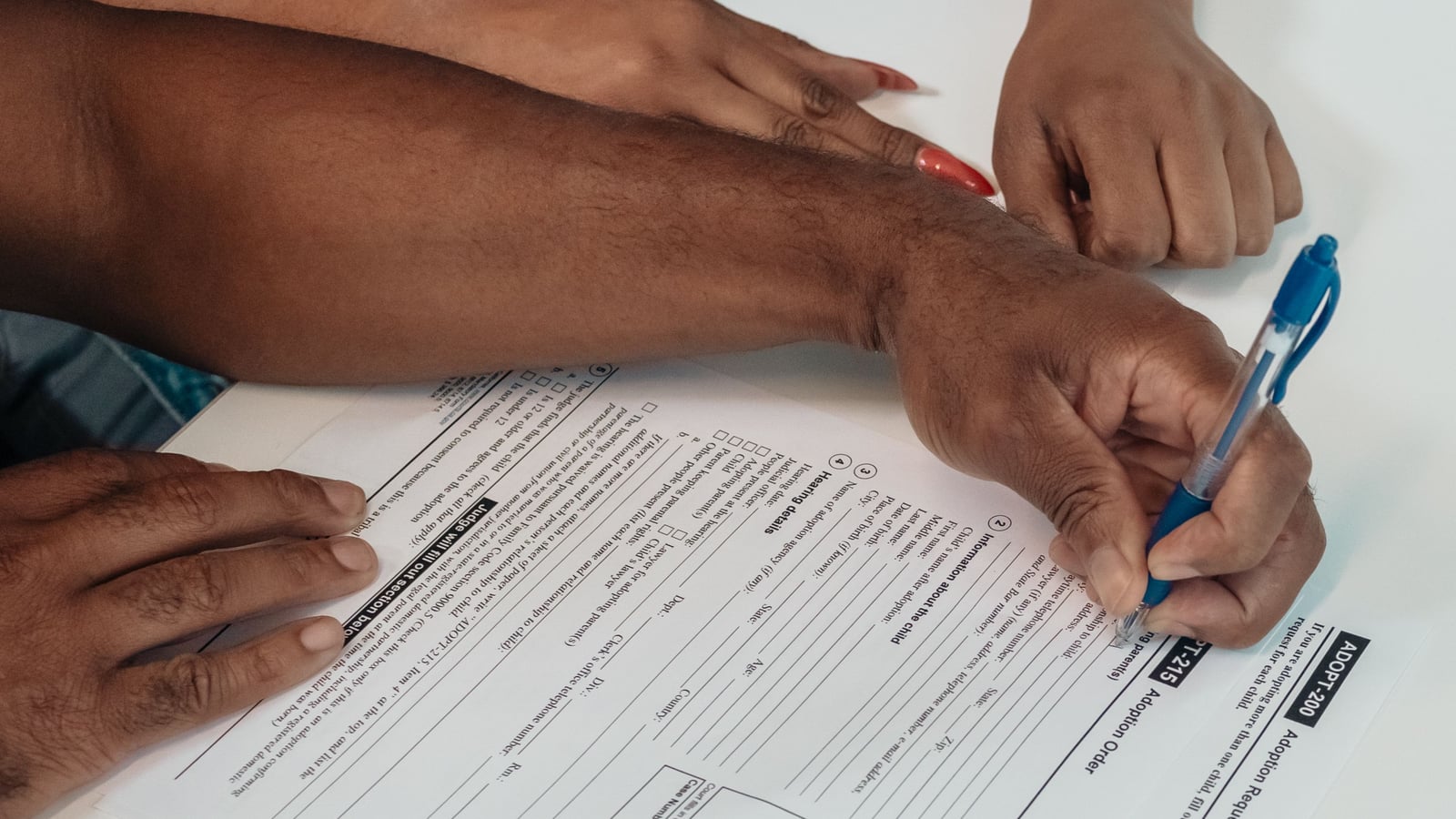
The FFTir offers a specific license for minors, distinct from the standard adult license. It always comes with a written parental authorization, a non-negotiable condition for any minor’s enrollment in an affiliated club. Without this authorization signed by whoever holds parental authority, no supervised practice is possible.
A minor’s enrollment file generally includes a medical certificate of no contraindication to shooting sports, in addition to parental authorization. This certificate follows the same requirements as for an adult, with the doctor paying particular attention to the child’s visual and hearing acuity.
Some clubs also request a meeting with the parents before the first session, to clearly explain safety rules, how the shooting school works, and the planned progression stages. This isn’t nationally mandated but is a widely followed good practice.
The youth license opens access to sanctioned competitions in the corresponding age categories, as defined by the federation. These categories allow structured sporting progression, with scoring and events adapted to age, rather than direct confrontation with experienced adult shooters.
Age thresholds for category C weapons
Beyond air guns, the logical progression goes through certain category C weapons subject to declaration (for example, certain manually-operated repeating hunting rifles used in an adapted sporting context). Access to this category for a minor is necessarily more supervised than for air guns, since energy and caliber change scale.
In club practice, the move to this type of equipment generally happens once the teenager has demonstrated, over several seasons of shooting school, consistent rigor in following safety rules. The exact transition age varies by club and discipline; some introduce it around the start of middle school, others wait longer.
The instructor stays permanently at the minor’s side during these sessions, without exception. It’s never a question of letting a teenager handle a category C weapon alone without direct supervision, regardless of apparent skill level. This rule of continuous supervisor presence is at the heart of the entire FFTir shooting school philosophy.
The .22 Long Rifle occupies a special place in this progression. It’s a low-recoil weapon widely used in Olympic and Paralympic competition, which often serves as a transition between air guns and more powerful calibers. Many clubs make it a central pivot in training young shooters.
Category B weapons: the question of legal adulthood
Category B weapons, subject to prefectural authorization (handguns, most semi-automatics), fall under a strict administrative regime that in practice concerns acquisition and possession by a license holder. This administrative dimension of the authorization itself is reserved for adults.
This doesn’t mean a minor can never touch a category B weapon during a supervised club session, but that such use remains strictly confined to supervised practice, under the club’s license, with no personal acquisition process conceivable before reaching adulthood. The distinction between “practicing under supervision” and “holding under one’s own authorization” is fundamental here.
A club offering a progressive path for its most advanced young shooters sometimes introduces the category B pistol toward the end of adolescence, always within a supervised range setting, with equipment belonging to the club and never personally owned. This remains a minority practice, reserved for the most dedicated and best-trained shooters.
The question of the exact threshold for this type of transition is worth asking directly to the club and the referring instructor, since practices vary and also depend on each club’s internal policy, which remains free to be more restrictive than the legal minimum.
Mandatory supervision: what federal practice actually requires
Regardless of the minor’s age and the equipment category used, the presence of a qualified supervisor is a non-negotiable constant. This is generally an instructor holding a federal certification recognized by the FFTir, specifically trained in supervising shooting sports and, for supervising youth, often sensitized to the pedagogical specifics of this age group.
The supervisor-to-student ratio isn’t a single number set in stone nationally; it depends on the club’s internal rules, the discipline practiced, and the layout of the shooting range. What remains constant is that the instructor keeps a direct line of sight on every position occupied by a minor at all times, with no blind spots and no informal delegation to an older, unqualified shooter.
An experienced instructor always insists on one point: supervising a minor isn’t limited to watching during shooting. It includes welcoming the child, repeating instructions at the start of every session, and systematically verifying that the child has properly absorbed basic safety rules before loading a single round.
This vigilance translates concretely into rituals: checking hearing and eye protection before each series, verifying barrel direction with every handling, verbally repeating safety instructions at the start of every session, even for a child who has been practicing for months. Repetition is never seen as superfluous in this context.
Parental authorization: content and real scope
Parental authorization isn’t a simple administrative formality signed without a second thought. It engages the parent’s or legal guardian’s responsibility for their child’s practice, and it conditions the minor’s entire access to club activities, including competitions and training camps.
In most clubs, this document specifies the minor’s name, the signatory’s identity, acknowledgment that the parental authority has read the club’s internal rules, and sometimes a specific clause about image rights in case of photographed or filmed competitions. Each club adapts the form to its own needs within the federal framework.
This authorization must be renewed every season, along with the license. It’s not a document signed once and for all upon joining the club; the annual renewal also allows checking that parents’ emergency contact information stays current and that the medical certificate remains valid.
A parent hesitant to sign has every interest in attending an observation session before committing. Most serious clubs encourage this approach, since it helps ease concerns by concretely seeing the level of rigor applied on the range, rather than relying solely on verbal explanations.
The medical certificate and fitness checks
The medical certificate of no contraindication is a prerequisite for issuing any FFTir license, including for a minor. The doctor evaluates general fitness for sport practice, paying particular attention to vision and hearing, two senses directly engaged in precision shooting.
For a younger child, some clubs recommend an informal eye dominance check even before the first session, since a right-handed child with a dominant left eye (or vice versa) may need posture or equipment adjustments from the very start of their training. This isn’t a regulatory requirement but a good pedagogical practice.
The certificate isn’t valid indefinitely: it must be renewed at a frequency set by the federation, which can vary according to regulatory changes in effect at the time of enrollment. The club or the treating physician remains the best source to confirm the exact frequency applicable at a given time.
Beyond the certificate itself, an attentive instructor stays alert to signs of fatigue or discomfort during a session: a child who squints excessively, seems to have trouble hearing instructions despite protection, or shows signs of excessive tension deserves extra attention, regardless of what the certificate says on paper.
Age categories in competition: youth, junior, and cadet classes
The FFTir structures its youth competitions by age category, allowing sporting confrontation between shooters of comparable maturity rather than a direct matchup with experienced adults. These categories broadly cover the period from elementary school through the end of adolescence, with intermediate tiers.
This structuring has a dual benefit. On one hand, it protects the child from disproportionate competitive pressure against seasoned adult shooters. On the other, it allows progress tracking over several seasons, with scoring targets adapted to each age bracket rather than a single discouraging scale for the youngest.
The events themselves are often identical in format (same distance, same target type), but the number of series or the duration may be adjusted to account for a young shooter’s concentration stamina. A ten-year-old doesn’t maintain the same focus over a long series as an experienced adult, and federal regulations take this into account.
Participating in these competitions from a young age is never mandatory. Many clubs leave the choice to the child and family to remain purely recreational, never entering a single official event, which remains just as legitimate a path as the competitive one.
Transport and storage: responsibility stays with adults
A point often overlooked in discussions about minors’ shooting concerns the transport and storage of weapons and ammunition used during sessions. This responsibility falls exclusively on adults, whether that’s the club, the instructor, or a parent who owns a personal weapon used in a supervised setting.
A minor never transports a weapon or ammunition independently, whether between home and the club or within the range itself. The equipment is handled by the responsible adult at every stage, from the locked transport bag to being handed over during the session itself under direct supervision.
This rule also applies to storing the personal equipment of a licensed minor who already owns, for example, their own air rifle at home. Storage must meet the same safety requirements as for an adult (locked cabinet, ammunition kept separate), with heightened parental vigilance over the child’s actual access to that cabinet outside supervised sessions.
A club that structures its youth program well takes the opportunity to explicitly raise parents’ awareness on this point, often during the season’s welcome meeting. A minor’s safety doesn’t stop at the range door — it extends to the family home whenever equipment is stored there.
The role of a shooting log in tracking a young shooter
A young shooter starting out often struggles to perceive their own long-term progress, lacking perspective and precise memory of past sessions. Keeping a shooting log, even a simplified one, helps make that progress tangible: groupings that tighten, distance that gradually increases, discipline that evolves over the seasons.
This tracking isn’t just a performance tool. It also helps the instructor and parents spot an occasional regression that might signal fatigue, an undetected vision issue, or simply a period of lower motivation better addressed early rather than left to settle in.
An app like a digital shooting log lets a parent keep an organized record of their child’s sessions without spending a disproportionate amount of time on it: date, discipline, results, the young shooter’s own impressions. This regular tracking highlights progress and gives the minor a concrete sense of improvement, which sustains motivation over time.
This kind of tool remains complementary to the tracking done by the club and instructor, never a substitute. Direct human supervision remains, at every stage of a minor’s journey, the central and non-negotiable element of practicing shooting sports.
Protective equipment: a chapter of its own for a child
Hearing and eye protection are never optional on a shooting range, but they pose an additional challenge when the user is a growing child. Ear protection sized for an adult often leaves gaps at a young shooter’s temples, reducing actual noise attenuation and sometimes prompting the child to wear it incorrectly out of discomfort.
Some clubs keep a stock of ear muffs and shooting glasses in several sizes, specifically designed for their youth shooting school. Others ask families to invest in child-sized equipment once practice becomes regular, particularly for corrective or tinted glasses adapted to a young shooter’s facial shape.
Wearing this protection correctly is one of the points continuously checked by the instructor, even before posture or aiming technique. A child who removes their ear protection between series as a game, or pushes it back onto their neck because they find it heavy, must be corrected immediately, since repeated noise exposure without adequate protection has more pronounced consequences on hearing still developing than on an adult’s.
Equipment choice also extends to clothing: a shooting jacket or competition glove sized for an adult hinders a child’s posture more than it helps. Many clubs therefore steer young shooters toward simple, flexible gear in the first seasons, reserving full technical equipment for shooters committed to a genuine competitive path.
The psychological dimension: managing frustration and pressure
Shooting sports are a precision discipline that quickly exposes a young shooter to frustration: a grouping that spreads out again after several sessions of progress, a missed series in front of the other kids in the group, a competition ranking that doesn’t reflect the training put in. This psychological dimension is just as much a part of supervising a minor as physical safety.
An instructor trained in youth supervision carefully avoids comparing results between children in the same group. The pedagogical goal remains individual progress, measured against the same shooter’s previous sessions, not a permanent ranking that could discourage children who are slower to improve.
Managing competition stress deserves specific preparation, separate from technical training. Some clubs organize internal matches or friendly meetups with neighboring clubs before entering a young shooter into a real federal competition, precisely to gradually get them used to the pressure of the clock, the audience, or the presence of a referee.
Parents play a decisive role here, often without fully realizing it. An awkward comment after a poor performance, a comparison with another child at the club, or implicit pressure about results can durably damage the enjoyment of practicing. The clubs that best succeed in keeping their young shooters engaged are generally the ones that take the time to align parents’ messaging with the instructor’s on this exact point.
The role of parents during sessions and competitions
A parent’s presence at the club isn’t limited to logistical support. Many clubs explicitly ask parents to stay in the reception or observation area during sessions, rather than approaching the shooting line, so as not to disrupt the group’s concentration or interfere with instructions given by the instructor.
This imposed distance isn’t a lack of interest in parents; on the contrary, it protects the coherence of supervision. A child receiving simultaneous instructions from their instructor and a worried parent at the edge of the line finds themselves in a contradictory situation, potentially dangerous if the two instructions diverge on a safety point.
In competition, the parent’s role shifts slightly: they can generally follow the event from a spectator area, cheer their child on between series, and help with logistics (registration, equipment, food). But refereeing, equipment checks, and range safety remain entirely the responsibility of the club’s officials and supervisors, without exception or parental intervention.
A parent who wants to get more actively involved with the club can, in many structures, eventually consider training to become a volunteer instructor or referee. This path requires its own training track, distinct from simply being an accompanying parent, and grants no shortcut or exemption just for being the parent of a license holder.
From the youth section to adult practice: the transition to adulthood
Reaching legal adulthood changes the administrative nature of practice without necessarily changing much day-to-day for a young shooter already well integrated into their club. The adult license replaces the youth license, parental authorization becomes moot, and the shooter can now personally undertake weapon acquisition procedures justified by their practice, within the legal framework applicable to adults.
This transition is generally anticipated by serious clubs, which help their most advanced young shooters understand the administrative framework awaiting them: putting together an acquisition file, the role of license seniority and regular practice in certain procedures, the importance of maintaining a shooting log and a coherent competition history.
A shooter who grew up in a club’s youth program generally reaches adulthood with years of deeply ingrained safety experience already in place, which is a real advantage compared to an adult discovering the discipline without that gradual path. Instructors see it regularly: safety reflexes acquired early and repeated over several seasons become second nature, much more stable than accelerated learning as an adult.
This transition is also, for many clubs, an opportunity to offer the young adult a gradual role as assistant instructor during shooting school sessions, subject to a dedicated training path. It’s a natural way to pass on acquired experience while keeping a qualified supervisor directly responsible for every session.
Adaptive and para shooting sports for young shooters
Shooting sports are among the most accessible disciplines for practitioners with disabilities, including minors, since the shooting position can be adapted without distorting the precision exercise at the heart of the activity. A young shooter in a wheelchair, for example, can practice rifle or pistol shooting with adapted support, within the same equipment categories as other license holders their age.
Affiliated clubs that welcome this population generally benefit from specific federal support to adapt shooting positions, support equipment, and sometimes competition evaluation methods. This adaptation changes nothing about safety requirements: the same handling rules, the same hearing and eye protection, and the same level of direct supervision apply, with no relaxation whatsoever due to disability.
Integrating a young shooter with a disability into a mixed shooting school group is encouraged by many clubs, rather than systematically forming separate groups. This approach, however, depends heavily on available facilities and the specific training of the instructor present, which explains real disparities from one club to another depending on resources and experience gained in this area.
A parent of a child with a disability considering enrollment has every interest in contacting the target club directly to concretely assess the possible adaptation of facilities, rather than relying on general communication about accessibility, which can vary significantly from one structure to another.
Budget and equipment: what practice represents for a family
The cost question remains secondary to safety and supervision, but it concretely influences many families’ enrollment decisions. Youth shooting sports remain, in principle, an accessible discipline: air rifle shooting school requires no personal equipment investment in the first seasons, with the club generally providing the weapon, ammunition, and basic protection included in membership fees.
Costs naturally grow as the young shooter progresses: annual federal license, club membership, then possibly the purchase of personal equipment (fitted hearing and eye protection, shooting attire, even a personal air rifle) once practice becomes regular and the family wants to move beyond club-loaned equipment. These amounts vary significantly from one club to another and one region to another, which makes any general cost estimate unreliable; it’s best to ask the target club directly for its price list.
Some clubs offer reduced rates or family packages when several children from the same household practice, or when a parent is themselves a license holder. Other local programs (sports vouchers, municipal or regional aid for youth sports) can ease the burden for families, under conditions and amounts that depend entirely on local policies in effect at the time of enrollment.
Investing gradually rather than buying everything in the first season remains the logic most widely recommended by clubs: a young shooter discovering the discipline can perfectly well thrive for several seasons using only the club’s equipment, before a personal investment truly makes sense in light of their actual commitment and progress.
Parents’ misconceptions about the dangers of the practice
Many parents arrive at the club with apprehension shaped by portrayals far removed from the reality of civilian shooting sports, with no direct knowledge of how a supervised shooting school actually works. This apprehension is legitimate and deserves to be addressed with facts rather than mere verbal reassurance.
Shooting sports supervised at an FFTir-affiliated club show a safety profile built on an architecture of cumulative rules: age-appropriate equipment, continuous presence of a qualified supervisor, systematic protective gear, strictly codified handling procedures repeated at every session. This accumulation of safeguards explains why supervised club practice fundamentally differs from simply owning or informally handling a weapon outside this framework.
A point many parents are unaware of before their first visit: at no point does a child find themselves alone with a loaded weapon, even between two shots in the same series. Loading, firing, and unloading follow a sequence overseen by the instructor, who keeps control of the session’s pace rather than letting the young shooter manage the sequence on their own.
The best response to these concerns remains direct observation: attending a shooting school session, asking the instructor precise questions about how a class actually unfolds, and comparing what’s observed to initial preconceptions. Serious clubs welcome this approach readily, as it benefits both parent and child by clarifying mutual expectations before any commitment.
Choosing the right club: questions to ask before enrolling your child
Not all FFTir-affiliated clubs organize their youth shooting school the same way. Some have had a structured youth section for years, with a dedicated instructor and a clear progression path; others occasionally welcome minors without a formalized program, depending on demand. This variability justifies preparing a few precise questions before committing, rather than defaulting to the club closest to home.
A first question concerns the actual qualification of the instructor in charge of the youth group: what federal certification do they hold, how long have they been supervising this specific age group, and have they completed additional training in pedagogy applied to children. An instructor who supervises both experienced adults and a group of ten-year-olds doesn’t necessarily use the same pedagogical approach in both cases, and it’s legitimate to make sure of that.
A second question concerns group size and the actual supervision ratio during a typical session. A club that welcomes twelve children in one time slot with a single supervisor cannot offer the same level of individual vigilance as a structure that limits its groups to five or six young shooters per instructor. It’s reasonable to ask for this number directly, rather than figuring it out after the fact at the first session.
A third question concerns available equipment: does the club have weapons and protective gear sized for children, or does the young shooter use adult-sized equipment from the start. This equipment adaptation directly affects the quality of initial learning and the minor’s comfort in their first sessions.
Finally, it’s worth asking how the club handles long-term communication with parents: regular progress reviews, seasonal meetings, instructor availability for questions outside of sessions. A club that invests in this communication generally reflects a broader investment in the quality of its youth section’s supervision.
Olympic disciplines and a young shooter’s path to elite level
Shooting sports have been on the Olympic program since the first modern Games, with several rifle and pistol events that today structure world-class competition. For a young shooter discovering the discipline at shooting school, that summit obviously remains distant, but it provides a coherent progression horizon that many clubs use to frame their pedagogical approach, without ever turning it into pressure on the youngest.
The path to elite level, when it exists, systematically goes through the federal age categories mentioned above, then through gradual identification carried out by regional committees and the federation itself. This identification relies on consistent competition results over several seasons, never on an isolated performance, which gives every young shooter time to mature their practice without rushing.
It’s important for a family to keep in mind that a path to elite level remains the exception rather than the norm, and that the vast majority of young shooters practice above all for enjoyment, the personal discipline the sport demands, and the club’s social setting. A club that presents elite-level achievement as a systematic goal rather than one possibility among others risks discouraging young shooters who practice for other, equally legitimate reasons.
The programs that genuinely support young people toward elite level (talent development centers, sport-study programs associated with certain clubs) involve heavier commitments for the family: increased training volume, more frequent travel for regional and national competitions, sometimes a specific school schedule arrangement. These programs remain reserved for a small number of young shooters identified at the end of an already well-advanced path, and have absolutely nothing to do with the profile of a minor just starting out at shooting school.
FAQ
Q: From what age can a child start shooting sports? A: There’s no single legal age: it depends on the discipline and caliber. Most FFTir clubs open their shooting school with air rifles (category D) from around age 8 to 10, depending on the club’s policy and the child’s maturity.
Q: Can a minor shoot with a category B weapon (pistol, semi-automatic)? A: Only in supervised club practice, under an instructor’s direct supervision and with equipment belonging to the club. Acquiring and holding a category B weapon under one’s own authorization remains reserved for adults.
Q: Is parental authorization enough to enroll a minor at a shooting club? A: No, it must be accompanied by a medical certificate of no contraindication to shooting sports. Both documents are generally renewed each season along with the license.
Q: Can a minor transport their own weapon or ammunition? A: No, this responsibility falls exclusively on adults (club, instructor, or legal parent), from transport through to being handed over under direct supervision during the session.
Q: Are there competitions reserved for young shooters? A: Yes, the FFTir structures its youth events by age category, which allows for an adapted sporting confrontation without direct matchups against experienced adult shooters.
Q: What happens if a minor doesn’t follow safety rules? A: The instructor immediately stops the session for that shooter and repeats the rules before any resumption. Repeated violations can lead the club to temporarily suspend the minor’s practice until the rules are properly understood.