
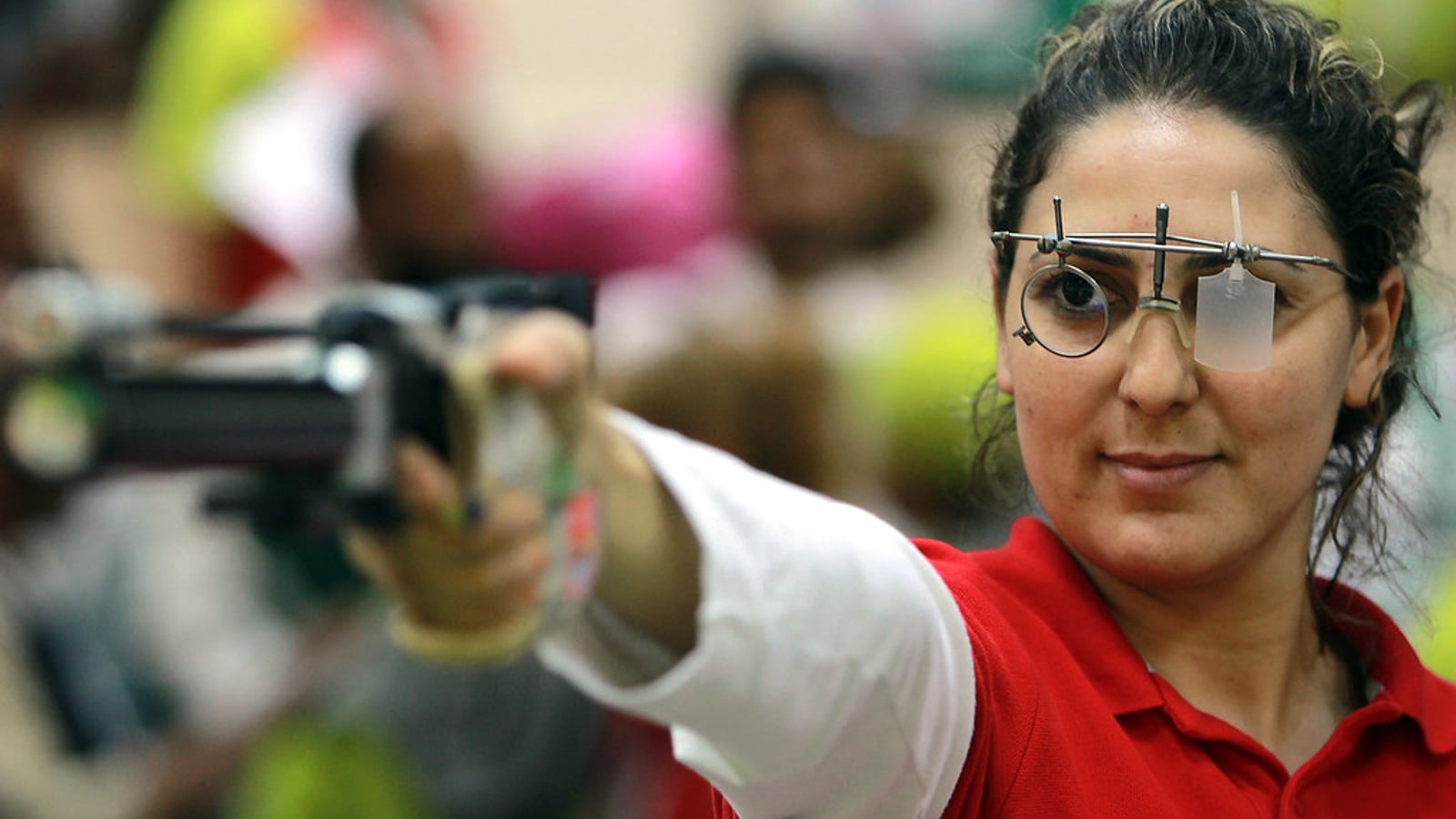
A locker room with a changing face
Ten years ago, showing up alone on a shooting line as a woman often drew a few curious looks. That’s no longer the norm today, at least not in most active clubs. The makeup of shooting lines has evolved, discipline after discipline, season after season.
This change didn’t happen on its own. It’s the result of concrete decisions: dedicated time slots, specific training, more inclusive communication, and above all a new generation of female instructors who make other women want to sign up. Nothing magic about it, just repeated groundwork.
This article takes stock of this trend: what’s changed in clubs, what the numbers of licensed shooters show, the obstacles that still persist, and the initiatives that actually work. The goal isn’t hollow storytelling, but a useful snapshot for anyone who wants to understand or support this movement.
What the numbers on licensed shooters show
The share of women among FFTir (French Shooting Federation) license holders has grown steadily in recent years, though you can’t really call it a sudden explosion. It’s a slow, underlying trend, carried by several disciplines at once: rifle, pistol, recreational sport shooting, and dynamic disciplines.
You have to stay cautious about exact figures: the precise proportion of women shooters varies by source, by year, and by how you count (active license holders, new registrations, competitors). What is solid, though, is the direction of the trend: the female share increases year after year, driven mainly by the arrival of new practitioners rather than by retention of existing ones alone.
This growth isn’t uniform across the country. Some well-structured urban clubs show a mix close to balanced, while others, often more rural or set in older habits, remain overwhelmingly male. The national trend hides very different local realities.
Age group also plays a role in this picture. New female registrations are especially concentrated among young adults and among women in their forties going through a sporting reinvention — two profiles with different expectations and different amounts of time available to train. A club trying to reach both audiences at once has to adapt its offering rather than propose a one-size-fits-all formula.
Another interesting indicator: the female presence is also growing on the coaching side, not just in practice. More and more trained instructors are women, which mechanically changes the image new arrivals have of a sport still perceived as male-dominated.
This growth also shows up indirectly in the diversification of disciplines practiced by women. While 10-meter rifle used to concentrate most female practitioners, we now see a broader spread toward precision pistol, dynamic shooting, and clay target shooting — a sign of integration that goes beyond the entry discipline traditionally considered the most accessible.
Why clubs play a decisive role
The club is the entry point for almost every new female license holder. That’s where the first impression happens, often decisive for what follows. An awkward welcome or an environment that doesn’t put people at ease can scare off a beginner in a single session, while a supportive setting turns a trial into a membership.
The clubs that succeed best on this front have generally set up single-gender taster sessions, at least for the first few sessions. The idea isn’t to segregate permanently, but to remove social pressure while learning the basics: handling the firearm, safety, stance, breathing. Once the fundamentals are acquired, integration into regular mixed slots happens much more naturally.
An experienced female instructor I was able to observe in a club explains that real change doesn’t come from a speech, but from concrete examples: seeing other women progress, aim accurately, gain confidence. The visibility of women who are comfortable on the shooting line acts as a far stronger signal than any communication campaign.
The role of the club’s board matters enormously too. A steering committee that includes women in decision-making positions sends a clear signal, different from simply announcing an inclusive policy. These are two distinct things, and new license holders sense it quickly.
Generic but representative portraits
Without attributing any specific path to a real, identifiable person, we can sketch out typical profiles that come up very often in clubs, simply because they’re so common in current practice.
First there’s the sporting reinvention: a former practitioner of another precision sport, like archery or fencing, who finds a natural continuation in sport shooting. She often arrives with good stress management and an already-honed capacity for concentration, which speeds up her technical progress.
Then there’s the mother who first accompanies her child to the shooting school, then signs up herself after watching a few sessions. This indirect path in is very common and often underestimated in clubs’ recruitment strategies, which mostly rely on direct communication.
Finally there’s the competitor aiming for regional-level performance, an anonymous regional champion whose goal is clear from the moment she signs up: progress in rifle or precision pistol, aim for qualifications, structure a rigorous training program with a dedicated coach. This profile remains a minority but it raises the whole club’s standards through demand and example.
These three profiles obviously don’t cover the whole reality, but they illustrate a diversity of motivations that goes well beyond the cliché of “the woman who tags along with her husband at the club.”
The disciplines that attract the most
Some disciplines show a more advanced mix than others, for fairly logical reasons once you look closely.
10-meter rifle shooting remains a very accessible entry point: quiet equipment, technical rather than physical movement, a calm setting that favors gradual learning. It’s often the discipline through which a beginner takes her first steps before possibly branching out to other practices.
IPSC-style dynamic shooting is also attracting more and more women, especially those with a more general athletic background who are looking for physical engagement in addition to precision. Targets used in this discipline remain generic cardboard or metal plates, never human silhouettes, which doesn’t make the discipline any less demanding or spectacular.
Clay target shooting is also growing, carried by a friendlier image and a practice often perceived as less solitary, with groups that naturally help each other on the line.
Conversely, some historical or highly technical disciplines like antique firearms shooting remain for now more male-dominated, often because the pool of practitioners is older and turnover slower. Nothing suggests this will stay frozen, but progress there is logically slower to arrive.
The barriers that still persist
It would be dishonest to present this evolution as complete. Several real barriers continue to limit progress on gender mix, and ignoring them wouldn’t help anyone.
The first barrier is material: standard equipment, from gloves to shooting jackets to certain grips, was long designed for male body shapes. The situation is improving with better-adapted ranges arriving, but supply remains limited in certain segments, particularly high-end precision shooting.
The second barrier is social: in some clubs, the atmosphere is still built around very masculine codes, sometimes without ill intent but exclusionary enough to discourage a newcomer. A locker room not designed for both sexes, or simply the absence of any other woman on the line, can be enough to scare off a hesitant beginner.
The third barrier is administrative and logistical: the paperwork tied to Category B, particularly for pistols, requires a prefectural authorization and a file that can seem intimidating to someone discovering the sport. This barrier actually affects all new license holders, men and women alike, but it weighs more heavily on those who don’t have an already-licensed contact in their circle to guide them through the process.
Finally, the barrier of media visibility remains real. Women’s competitions in sport shooting are still poorly covered, which limits the inspiring role models available to the general public compared with other, more widely broadcast sports.
The initiatives that actually work on the ground
Several types of initiatives come up regularly in the clubs progressing fastest on gender mix, and they share a common trait: being concrete rather than declarative.
Taster sessions reserved for women, organized occasionally throughout the year, remove the barrier of the first session in a reassuring setting. They often fill up quickly, a sign of real demand that exists but needs a dedicated setting to turn into a membership.
Informal mentoring between female license holders, where an established club member takes a beginner under her wing during the first few months, works remarkably well. It’s not an institutional program, just a habit that naturally takes hold in clubs where the mix is progressing best.
Training female instructors is another powerful lever. A club with several active female instructors mechanically sees its capacity to welcome new practitioners in good conditions increase, without this being the result of any particular activist rhetoric.
Finally, some clubs organize mixed internal competitions with balanced categories, allowing newcomers to face competition without waiting to reach a level deemed “sufficient.” It’s often this first internal competition, however modest, that sparks the desire to keep going seriously.
The role of well-adapted gear and equipment
Equipment plays a bigger role than you’d think in retaining practitioners. A firearm poorly suited to body shape, a stock that’s too long, or a trigger that’s too heavy can turn a session into a frustrating experience, without the beginner always understanding that the problem is the fit rather than herself.
The most attentive clubs now systematically offer fitting time before the first sessions: stock adjustment, choosing the most comfortable caliber to start with, checking the grip. This extra time, often neglected due to instructors’ limited availability, changes a lot for initial confidence.
On the market side, the supply of hearing protection, shooting glasses, and jackets better tailored to varied body shapes is also growing, even if it still lags behind other sports. This varies a lot by brand and retailer, so it’s worth trying several pieces of equipment at the club before investing personally.
This equipment topic also ties into the question of tracking progress: noting your settings, sensations, and results session after session lets you objectify what actually works, rather than relying on a single day’s impression. It’s a useful habit for any shooter, but especially valuable for a beginner still finding her footing.
Competition as an accelerator of gender mix
Competition plays an ambivalent but overall positive role in this evolution. On one hand, it can intimidate a beginner who doesn’t yet feel legitimate against seasoned competitors. On the other, it offers an objective setting where only performance counts, regardless of gender.
More and more clubs are highlighting categories and rankings dedicated to female competitors, allowing progress in stages rather than a direct confrontation with the whole field from the very first competition. This gradual approach delivers good results in terms of retention.
Sport shooting has been part of the Olympic Games since 1896, and women’s events have held a recognized place there for several decades. This Olympic legitimacy indirectly helps the credibility of female competitive practice, even though most of the on-the-ground momentum plays out at club level rather than at the elite level.
An anonymous regional champion met at a club sums up this dynamic well: it’s not competition that scares people, it’s the idea of not belonging that discourages them. Once that idea is dispelled through experience, progress often follows naturally.
What a club can concretely do to make progress
Clubs looking to accelerate their gender mix have several simple levers available, without needing exceptional resources or a grand communication plan.
- Offer taster slots at varied times, including during the day, to reach a public that can’t always free up evenings.
- Clearly display, on the club’s communication materials, varied photos and testimonials rather than a homogeneous image.
- Actively train female instructors, including by helping fund part of the federal training path.
- Set up voluntary mentoring between established license holders and newcomers.
- Check the availability of appropriate locker rooms and restrooms, a point often neglected in clubs housed in older facilities.
- Organize a systematic equipment fitting session before the first shooting sessions.
None of these levers require a big budget. They’re mostly organizational choices and priorities, driven by club boards convinced that gender mix strengthens the structure rather than complicating it.
Passing it on between generations of women shooters
A less visible but equally important phenomenon concerns the passing on of knowledge between generations of female practitioners. Even fifteen years ago, a licensed woman at a club often found herself isolated, without another female reference to ask questions about equipment, mental preparation, or simply managing a competition season. This relative solitude naturally dampened the desire to invest over the long term.
Today, in the most dynamic clubs, there’s a sufficient critical mass of women license holders for informal exchanges to spontaneously form between beginners and established practitioners. An established club shooter who shares her fitting tips or her training organization with a newcomer often does more for retention than any official mentoring program.
This passing on also goes beyond the club itself. Some regional leagues organize inter-club meetings specifically designed to let license holders from different backgrounds share their experiences, particularly on subjects still rarely discussed publicly, like resuming practice after pregnancy or adapting training to a busy professional schedule.
This informal network plays a role almost as important as clubs’ structural decisions. A federation of individual goodwill, once it reaches a certain size, produces a snowball effect that far exceeds the sum of separately taken initiatives. This also explains why progress on gender mix accelerates once a certain threshold of female presence is reached in a club: the network effect takes over from the initial deliberate effort.
Female instructors act here as a natural hinge. Many of them themselves benefited, when starting out, from the help of a more experienced practitioner, and they reproduce this pattern with the new license holders they coach. This virtuous loop, once triggered, sustains itself without any particular communication effort.
Progress tracking and digital tools
The way women shooters track their progress has also changed with the arrival of digital tools dedicated to sport shooting. A paper shooting log remains useful, but it limits the ability to compare sessions over time, to spot trends over several months, or to easily share results with a coach.
Tracking apps let you systematically log groupings, rear-sight and front-sight adjustments, session conditions, or even how you felt with a particular caliber. For a beginner who still lacks reference points, this kind of objective history is valuable: it avoids judging progress on a single day’s impression alone, often misleading in case of fatigue or momentary stress.
This structured tracking particularly benefits practitioners aiming for serious competitive progress. Being able to compare a March grouping to a September one, with the same settings or different ones, lets you objectify what actually works rather than relying on shifting impressions from one session to the next.
The community aspect of some digital tools also plays an interesting role. Being able to exchange with other practitioners about settings, ammunition choices, or training strategies, even remotely between two different clubs, extends the mentoring dynamic mentioned above. It never replaces the experience of the shooting line, but it usefully complements it between two sessions.
A club instructor asked about this topic notes that new license holders who adopt rigorous session tracking early generally progress faster than those who rely solely on how they feel. This isn’t specific to women, but it nicely illustrates how modern tracking tools indirectly help retain a practice that requires discipline to pay off.
Balancing regular practice with personal life
A rarely discussed but very concrete topic for many license holders concerns balancing regular sport shooting practice with personal or family constraints. Unlike other sporting hobbies you can practice anywhere, shooting requires traveling to an approved range, often fixed time slots, and sometimes equipment transport logistics that aren’t trivial.
Clubs that have best succeeded in retaining female practitioners have often adjusted their hours accordingly, for example by offering midday slots on weekdays, less in demand from a full-time working public but perfectly suited to those managing a more flexible schedule or school-age children.
The question of personal equipment also comes into play. Many new license holders start with club equipment before gradually investing in their own gear, once their practice is stable. This choice, far from anecdotal, allows testing several configurations before committing to a purchase, limiting bad budgetary and material surprises.
Some clubs also offer shared equipment storage systems or carpooling between license holders living in the same area, which greatly simplifies the logistical organization of regular sessions. These solutions, often born from individual initiatives rather than official board decisions, once again illustrate how gender mix progresses first through practical adjustments rather than big announcements.
This organizational dimension, though it seems far removed from the sporting topic itself, largely determines a license holder’s ability to maintain regular practice over several years rather than stopping after a season or two for lack of available time.
The weight of representation in media and communication
The image conveyed by the media and by clubs’ own communication plays a non-negligible role in the appeal of sport shooting to women. For a long time, visuals used in federal or association materials showed almost exclusively male practitioners, often in staging that unintentionally reinforced the idea of a sport reserved for one type of profile.
This situation has evolved, notably thanks to a conscious effort by some clubs and by the federation itself to diversify the visuals used in their communication materials. Showing women of all ages and all levels on a club poster or website may seem like nothing, but it concretely changes the perception of someone still hesitating to walk through the door of a shooting range for the first time.
Social media has also accelerated this movement, giving direct visibility to practitioners who share their passion without going through classic institutional communication channels. A post from an amateur club shooter, showing a training session or an internal competition result, often reaches an audience that would never check an official federal website.
This informal visibility has an interesting cumulative effect: the more content exists showing women practicing sport shooting normally and routinely, the less exceptional or out-of-the-ordinary the step of signing up herself seems. It’s a slow virtuous circle, but one that seems to reinforce itself year after year.
Some clubs have also understood the value of directly asking former beginners who have become regular practitioners to share their journey, rather than relying solely on generic institutional messaging. These testimonials, grounded in real experience even though not attributed by name to any specific person in this article, often resonate more with a hesitant audience than a simple poster campaign.
Safety, coaching, and trust: an essential triad
The question of safety deserves a place of its own in this discussion, because it directly conditions the trust a new practitioner can feel, regardless of gender. Sport shooting remains an activity where strict adherence to safety rules is never negotiable, and it’s precisely this rigorous framework which, once well explained, reassures rather than frightens.
Quality coaching relies on clear teaching from the very first minutes: systematic presentation of safety instructions, explaining the why behind each rule rather than just a list of prohibitions, and above all a coach who’s genuinely available to answer questions without judgment. A beginner asking a question others might consider “obvious” should never feel embarrassed to do so.
The clubs that succeed best at retaining new license holders, men and women alike, are often those where this safety teaching is applied consistently, without shortcuts or excessive familiarity that might suggest certain rules are optional depending on the circumstances. Rigor, far from being a barrier, is precisely what builds trust over time.
This safety requirement goes hand in hand with careful management of the pace of progress. Skipping steps, whether on caliber choice, shooting distance, or targeted competition level, often leads to negative experiences that discourage a budding practice. An experienced instructor knows how to calibrate this progression to keep it stimulating without ever exceeding the actual comfort level of the person being coached.
The confidence built by this rigorous coaching extends well beyond the shooting line. Many practitioners informally report that the mastery gained in sport shooting — stress management, concentration, rigor in applying precise rules — proves useful in other aspects of their daily or professional life. This side effect, rarely highlighted in clubs’ communication, is nonetheless a solid and sincere argument for convincing new practitioners to take the leap.
Disparities between urban and rural areas
Progress on gender mix doesn’t happen at the same pace everywhere, and it would be misleading to present a uniform picture of the French landscape. Urban clubs, often newer or recently renovated, generally benefit from infrastructure better suited to welcoming a mixed public: separate locker rooms, comfortable reception areas, more polished social media communication.
Clubs located in rural areas, sometimes housed in older facilities and run by volunteers with limited resources, often move more slowly on these issues, not out of bad will but for lack of resources to undertake renovation work or structured communication. This doesn’t mean gender mix progresses proportionally less there, just that the available levers are different.
In these rural clubs, momentum often rests almost entirely on the personality and commitment of one or two driving volunteers, particularly when a female instructor personally invests herself in welcoming new practitioners. This kind of individual dynamic can produce very positive local results, but it remains more fragile than a structured welcoming policy at the scale of an entire club.
Some regional leagues have become aware of these disparities and now offer specific support to small clubs wanting to progress on this front: ready-made communication materials, partial funding for female instructor training, or shared open-house days organized between several clubs in the same geographic area. These schemes remain unevenly deployed depending on the region, and their real effectiveness would deserve to be measured over several years before drawing definitive conclusions.
It should also be noted that the size of the surrounding population pool mechanically plays a role. A club located near a large urban area has a much larger pool of potential female license holders than an isolated club in a sparsely populated area, which correspondingly eases the rapid formation of a critical mass of practitioners capable of triggering the network dynamic mentioned above.
How new practitioners view their own journey
Beyond the numbers and the schemes, it’s worth dwelling on how new female license holders themselves describe their entry path into sport shooting, without attributing these words to any specific real person but drawing on recurring firsthand accounts observed at clubs.
Many report an initial apprehension linked less to the practice itself than to the fear of not belonging in an environment perceived as codified and sometimes intimidating from the outside. This apprehension generally fades very quickly, often as early as the first coached session, once the reality of the teaching framework takes over from prior assumptions.
Another frequent piece of feedback concerns the surprise at the technical and mental dimension of the discipline, largely underestimated before the first experience. The concentration needed to steady an aim, control your breathing, and synchronize the release with the trigger requires work much closer to active meditation than to the sometimes-conveyed image of a purely physical or impulsive sport.
Some new practitioners also highlight the rewarding aspect of measurable progress specific to sport shooting: unlike other activities where the feeling of progress stays vague, a grouping that tightens session after session offers concrete and immediate proof of the effort put in. This quick gratification, coupled with reassuring coaching, largely explains why the license renewal rate rises among new members once the first year has passed.
Finally, several accounts gathered at clubs mention the unexpected social dimension of the practice: far from the solitary image often associated with precision shooting, many practitioners discover a warm club community, where mutual help and exchanges about equipment or techniques create bonds that go beyond the purely sporting setting. It’s perhaps this aspect, more than any marketing argument, that best explains why so many women who try sport shooting once choose to come back for good.
A trend set to continue
Nothing suggests this progress will stop. New generations of license holders arrive with different expectations than those of twenty years ago: they want a professional setting, serious coaching, and a structure that doesn’t turn their gender into a permanent topic of commentary.
Clubs that understood this early reap a direct benefit: more new license holders, better retention, a more modern image that also attracts younger male profiles receptive to this shift in overall atmosphere. This benefit also shows up in the club’s community life: more volunteers available to organize internal competitions, more applications for instructor positions, and a more open general atmosphere that eases the integration of all profiles, regardless of age or prior shooting experience.
The subject goes well beyond the mere question of numerical parity. It touches on how civilian sport shooting presents itself to the general public: a sport of precision, rigor, and safety, open to anyone willing to seriously invest themselves, regardless of gender. It’s this image that, in the long run, benefits the entire discipline.
For a club, investing in this dynamic is nothing like an uncertain bet: every lever mentioned in this article, from systematic equipment fitting to training female instructors to adapted time slots, actually benefits all new license holders, men and women alike. Gender mix isn’t therefore a goal separate from a club’s overall development — it’s a direct driver of it, measurable over time by the number of licenses renewed from one season to the next.
FAQ
Q: What proportion of FFTir license holders are women today? A: The exact share varies by source and by year, so it’s best to check the federation’s official statistics for an up-to-date figure. What’s certain is that this share has been growing steadily for several seasons.
Q: Are there women-only slots at clubs? A: Yes, many clubs offer taster sessions or single-gender slots for the first few sessions. This varies a lot from one club to another, so it’s best to check directly with the club you’re interested in.
Q: Is standard equipment suited to women? A: The supply is improving but remains uneven depending on brand and equipment category. A fitting session at the club before buying your own gear helps avoid unpleasant surprises.
Q: Do you need a particular level to join a club? A: No, no level is required to start out, learning happens gradually with a coach. Most clubs organize introductory sessions specifically designed for complete beginners.
Q: Can you get into competition quickly after starting out? A: It mainly depends on the discipline and each person’s training pace, there’s no universal timeframe. Many clubs offer internal competitions accessible within the first few months to get familiar with that setting without excessive pressure.
Q: How do you become a sport shooting instructor? A: The path goes through dedicated federal coaching training, generally accessible after several years of licensed practice. The precise terms and prerequisites vary by discipline, so it’s best to check with your club and regional league.