
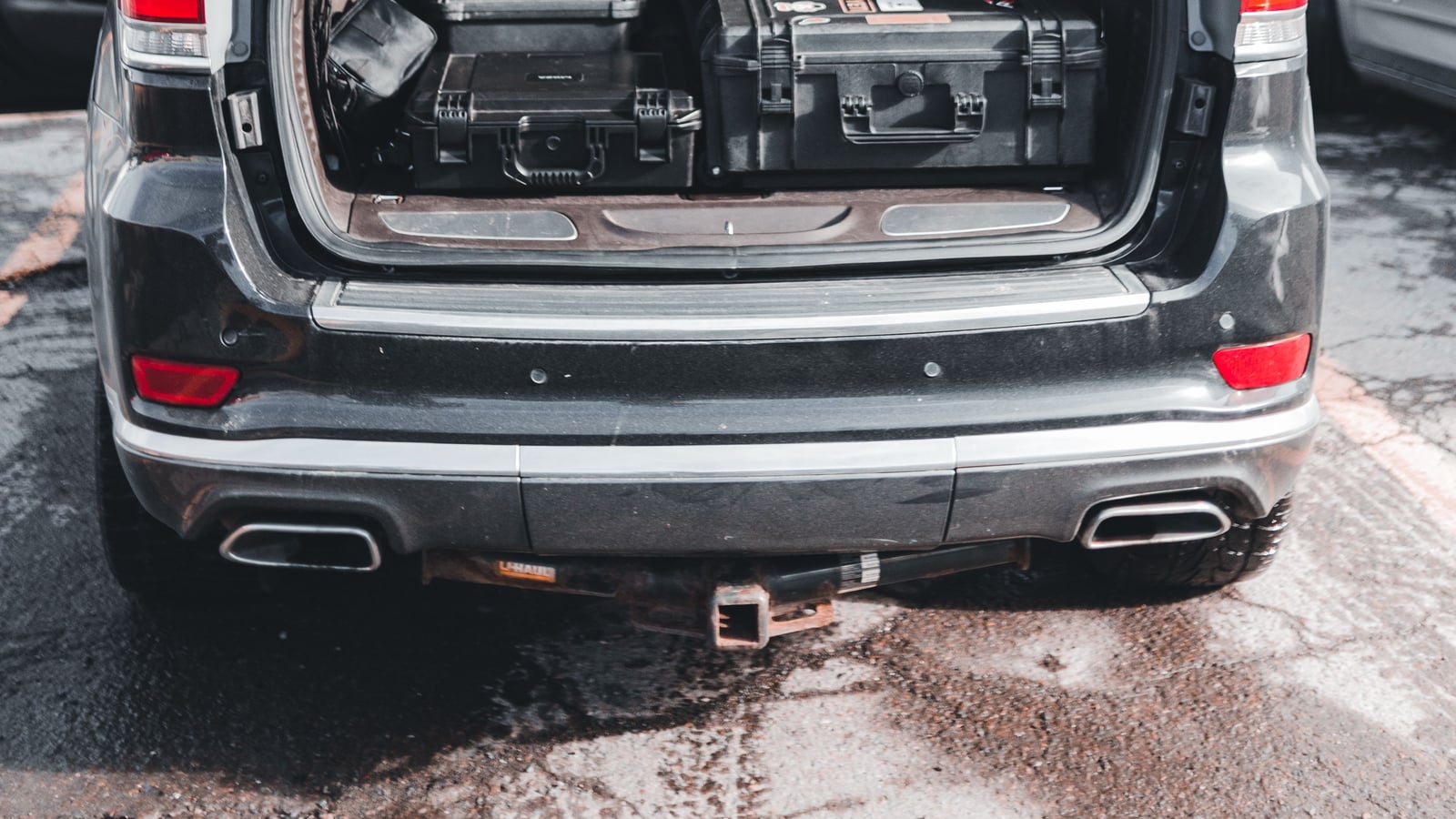
The legal framework is only a starting point
You already know the basics: firearm unloaded, transported in a case or bag, separated from ammunition in most cases, with your permit or licence on you. This framework exists and must be respected, but it isn’t enough to protect you from theft, a check that goes wrong, or a stupid slip-up while loading the car.
This article doesn’t go back over the legal transport obligations in detail, which vary depending on the firearm category and which you’ll find in official texts or with your gunsmith. It focuses on what makes the difference between a transport that goes smoothly and one that turns into a nightmare: securing the load in the vehicle, discretion, choice of route, and handling stops along the way.
An experienced club shooter will tell you bluntly: most transport incidents don’t come from forgotten paperwork, but from a firearm sliding around in the trunk, a case left in plain sight on the back seat, or a highway rest-stop break that should never have lasted more than five minutes.
Why securing the load changes everything
A case rattling around freely in a trunk during a drive is a problem on several levels. First, a pure safety problem: at the slightest sharp braking, an object weighing several kilos hitting the back seat or jamming under a seat is never trivial. Then a discretion problem, because a case sliding and banging around can be heard, and draws attention right when you open the trunk to load something else.
Securing the case or bag means physically preventing it from moving for the whole trip, not just wedging it roughly between two bags. Ratchet straps fixed to the trunk’s anchor points do a far more reliable job than simply leaning it against folded-down seat backs.
If your vehicle has a net or a partition between the trunk and the cabin, use it systematically for this kind of transport. It stops the case from being thrown forward in an emergency stop, and it also limits visibility from outside when someone peers through the rear windows.
Also think about stability during maneuvers, not just while driving in a straight line. A roundabout taken a bit too fast or a tight parking maneuver can be enough to tip over a poorly wedged object. The securing needs to hold in every situation of the drive, not just on the highway.
Discretion, your best ally, and choosing the right case
A firearm case sitting in plain view on the back seat or the passenger seat, visible from outside through the windows, is an invitation. Even locked, even fully compliant, it immediately signals to any ill-intentioned passer-by that there’s something potentially interesting in that vehicle.
The basic rule is simple: nothing should be visible from outside, at any point during the trip. That means in the trunk rather than on the seat, and if possible in a trunk that isn’t a glazed hatchback exposing all its contents at a glance.
This discretion also applies to the moments when you load and unload the vehicle. Avoid pulling out a clearly identifiable firearm case in a crowded parking lot in broad daylight, in an area you don’t know — that’s common sense rather than a written rule. An experienced instructor often recommends loading the vehicle in a private or quiet spot, a garage or a courtyard, rather than on a public street right before leaving.
Also avoid stickers, discipline or club decals, or any exterior element of the vehicle that could hint at its presence to an attentive observer. This isn’t paranoia, it’s simply refusing to hand out free information to someone who has no reason to know it.
The choice of the case itself directly contributes to this discretion. Not all cases are equal when it comes to the repeated use that regular trips to the range require: a rigid model, with custom-cut foam or modular compartments, protects the firearm from impacts better than a simple soft case, and it also limits the metallic rattle that gives away the presence of metal gear when carrying or setting it down.
The closure matters too. A combination or key lock gives an extra layer of protection compared to a simple snap latch, particularly for stops where the case stays in the vehicle unattended for a while. It’s no absolute guarantee against a determined theft, but it strongly discourages opportunistic theft, which remains the most common scenario.
Also think about the size and colour of the case. A neutral model, without a flashy gunsmith brand logo or a loud colour, blends in more easily among other luggage or sports gear if you have to carry it across a parking lot or a lobby. An experienced club shooter often chooses a case that could just as easily contain photo equipment or a musical instrument, rather than a model that screams its function. Also regularly check the condition of the hinges, handles, and latches: a case that opens poorly or whose latch is worn out becomes a weak link in the whole chain of precautions you’ve otherwise put in place.
The direct route, a habit worth building
Driving straight from your home to the range or the hunting area, with no detour or stop, mechanically reduces the number of occasions where the firearm is exposed to risk. Every extra stop, every vehicle change, every moment the car sits alone in a parking lot is one more window of vulnerability.
That doesn’t mean a direct route is always possible: real life sometimes forces a detour to the bakery or a fuel stop. But it does mean that when you can plan the route, you choose the shortest and most continuous version rather than the one that multiplies stops for comfort reasons.
Planning the route ahead of time also avoids last-minute improvisation, like a detour through an area you don’t know because the GPS found a shortcut. Sticking to familiar routes, or at least ones you’ve already scouted, lets you know in advance where you could stop if genuinely needed, rather than picking a spot at random.
This minimal-route logic applies especially on competition days, when you often carry more gear than usual: several firearms, larger quantities of ammunition, protective equipment. The more the volume of sensitive material increases, the stricter the discipline on the route needs to be.
Handling intermediate stops without overcomplicating things
A stop is sometimes unavoidable: needing fuel, a fatigue break on a long drive, unexpected traffic. The point isn’t to avoid every stop at all costs, it’s to handle each stop with the same rigour as the rest of the trip.
The most important point: never leave the vehicle unattended with the firearm inside if you can avoid it. At a highway rest area, that means limiting the stop to the strict minimum, parking in a visible, well-frequented area rather than isolated at the back of the lot, and coming back quickly.
If the stop needs to be longer, like a meal break or an overnight stay, the question gets significantly more complicated. Leaving a firearm in a parked vehicle for several hours, especially at night, multiplies the theft risk compared to a five-minute stop at the pump. In that case, it’s better to plan the accommodation ahead and check there’s a secure storage option, a hotel safe or a locked space, rather than leaving everything in the trunk in a public parking lot all night.
Also avoid stopping in areas you identify as unsafe — a poorly lit neighborhood, an isolated parking lot with no camera — simply because it was the closest gas station. A detour of a few minutes to a busier area is often the better call, even if it lengthens the trip slightly.
Finally, never let your behaviour betray that you’re carrying something sensitive. A jittery stop, repeated trips back to the trunk, visibly and repeatedly checking the lock, draw far more attention than an ordinary, quick stop.
Theft risks to know and avoid
Vehicle theft involving a firearm follows patterns that recur regularly, and knowing them helps you guard against them. The first is opportunistic theft: a case visible from outside, a vehicle parked in the same spot for a long time, a poorly watched area. This type of theft doesn’t specifically target gunsmiths or shooters, it targets any vehicle showing an obvious weakness.
The second pattern concerns the parking lots of ranges or hunting areas themselves, particularly during major competitions or season openings, where many vehicles park in the same place and the presence of firearms on board is almost assumed by anyone lingering nearby. An experienced club shooter avoids leaving gear visible even in the range’s own parking lot, between rounds or during the lunch break.
The third pattern, rarer but real, affects long-distance trips to a regional or national competition, where the vehicle stays parked for several days in an unfamiliar place. In that case, double your vigilance on the choice of parking, favour watched areas or gated hotel lots, and avoid leaving anything in the vehicle if a storage solution exists on site.
One simple reflex limits a big part of these risks: never treat a stop as “just two minutes” to the point of lowering your guard. Most opportunistic thefts happen precisely during those stops that were thought too short to be a risk.
Competitions and long trips: travelling in groups
Travelling for a competition changes things compared to a classic outing to the local range. The trip is longer, the vehicle is sometimes loaded with several firearms and a larger quantity of ammunition, and the route often crosses less familiar areas.
In this context, upfront preparation matters even more. Checking the route in advance, scouting busy rest areas along the way, and planning stop points that correspond to watched areas rather than improvising on the go reduces a good part of the risk.
A regional champion used to long trips systematically organises her vehicle loading the night before, in her garage, rather than the same morning on the sidewalk outside her house. This detail changes little on the surface, but it avoids exposing the gear precisely when attention is lowest, early in the morning, rushed by the departure time.
If the competition requires a hotel night, plan the storage question before leaving rather than discovering it on site. Some hotels offer a big enough safe, others don’t, and it’s better to know before arriving tired at the end of the day with a loaded vehicle.
These trips are also often made in groups. When several shooters travel together to the same range or the same competition, the transport question gets a bit more complicated: who carries what, in which vehicle, and who stays responsible for watching over things during stops.
The simplest rule remains clarity: a single person stays identified as responsible for the gear present in their vehicle, even if several shooters carpool. This avoids situations where nobody really feels concerned about watching during a break, each assuming the other is handling it.
Spreading the gear across several vehicles rather than concentrating it all in one can also limit the scale of an incident if a vehicle ever gets targeted, even if it complicates the group’s logistics a bit. It’s a trade-off to make depending on the number of participants and the distance to cover.
Finally, a group travelling together has a real advantage in discretion and mutual watch during stops: someone stays near the vehicles while the others go get coffee, rather than leaving all the vehicles unattended at the same time.
A shooter who practices several disciplines, or who travels to a competition with several firearm configurations, has to manage a larger volume of gear than a simple weekly outing. Several cases in the same vehicle multiply the points requiring attention: each must be secured, each must stay invisible, and the whole often takes up more space than expected. Bulky gear like a shooting rest, a tripod, or a large ammunition box also deserves its own securing, not just the firearm cases, otherwise a poorly wedged heavy object could strike and damage an otherwise well-secured case.
For trips with several shooters and several firearms in the same vehicle, like a club minibus heading to a team competition, clearly assigning who loads what and jointly checking the securing before departure limits oversights. A cross-check, where a second person verifies the securing done by the first, catches inattention mistakes you don’t always see in your own loading.
If you’re not travelling alone, other passengers in the vehicle — family, non-shooting friends, children old enough to understand — also need to know some basic rules, even without going into the technical detail of transport. The first is simple: never open the case out of curiosity during the trip, even with good intentions or wanting to show something to someone. Also explain why the trunk stays closed and why certain topics shouldn’t be discussed loudly in a crowded parking lot or a queue: it’s not about excessive secrecy, it’s simply avoiding drawing unnecessary attention to what the vehicle contains.
For carpooling trips with less experienced shooters, taking two minutes before leaving to explain the group’s basic rules — no unplanned extended stop, nobody stays alone near the loaded vehicle during a stop — avoids misunderstandings once on the road. An experienced instructor often takes this time with new students they’re bringing to a competition for the first time, precisely because these reflexes aren’t yet second nature.
Anticipating mechanical mishaps
A breakdown, a minor accident, or an unexpected checkpoint change things compared to the planned trip. In these situations, the first thing to do remains staying calm and continuing to handle the firearm with the same rigour as usual: it stays stowed, unloaded, and closed, whatever the context.
If the vehicle has to be handled by a tow truck or immobilised on the roadside, never leave the firearm on board unattended while waiting for help if you can take it with you in a compliant manner. Many shooters keep their case with them rather than in the trunk precisely for this kind of scenario, when the vehicle’s configuration allows it.
Also keep in mind that when facing law enforcement, cooperation and calmly presenting your documents (permit, European firearms pass depending on the case) defuse almost every situation. A routine traffic check never becomes a problem when the transport is compliant and the papers are up to date and easily accessible, without needing to search for them for long minutes.
An accident, even a minor one, also deserves particular vigilance about what happens around the immobilised vehicle. A crowd sometimes gathers quickly on a roadside or a hard shoulder, and it’s better to keep the trunk closed and avoid exposing the vehicle’s contents to curious onlookers while you sort out the accident report or wait for help. The priority remains the safety of those involved, but that doesn’t stop you from keeping an eye on the gear once the situation has stabilised.
Organising the rest of the vehicle
Transporting a firearm isn’t limited to the case itself: everything around it in the trunk also plays a role. Stacking bags, targets, or cleaning gear around the case may seem harmless, but loose, disorganised storage increases the risk that the case moves, gets crushed, or simply becomes visible if a bag slides during the trip.
Storage thought out in advance, with dedicated bins or pouches for ammunition, hearing and eye protection, and cleaning gear, lets you load the vehicle faster and more consistently from one outing to the next. This routine also reduces the risk of forgetting something, because each item has a fixed spot you check almost automatically.
Keep ammunition in a separate, closed container, ideally stored in a different part of the trunk from the case itself. Beyond the regulatory aspect, this physical separation limits the consequences if only one of the two items were to be discovered or stolen.
If your vehicle has a false trunk floor or hidden storage under the floor, that’s often the most suitable spot for the case itself, provided it fits without forcing. This space is invisible from outside even with the hatch open, adding an extra layer of discretion compared to simply placing it at the bottom of a visible trunk.
This organisation also applies to the return trip, often neglected because attention drops once the session or competition is over. Physical tiredness, wanting to get home quickly, gear stowed in a hurry: the return trip actually concentrates just as much risk as the outbound one, sometimes more if the shooter is tired and less alert about securing or discretion of the load. Taking the same care packing the vehicle when leaving the range as on arrival avoids letting your guard down at the exact moment it matters just as much.
Insurance, the vehicle used, and high-traffic days
Daily transport to the range isn’t just a matter of discretion and securing the load, it’s also a topic that directly touches your insurance contract. Many shooters discover after the fact that their standard home or auto insurance doesn’t cover, or poorly covers, the theft of a firearm from a vehicle.
It’s better to check this point in cold blood, before any incident, rather than discovering it exactly when you’d need it. Some contracts specific to gunsmiths or sport federations offer dedicated coverage for shooting gear, with sometimes more favourable conditions than standard auto insurance, but also exclusions you need to read carefully, for example regarding the type of securing required for the coverage to apply fully.
Keeping precise records of your gear — serial numbers, photos, purchase invoices — greatly eases any process in case of theft, whether it’s the report to authorities or the insurance file. An experienced instructor often advises keeping this information in a place separate from the vehicle, for example on a secure digital storage or at home, rather than in the glovebox where it would be lost along with the theft itself.
This forward planning obviously doesn’t replace the transport precautions themselves, but it limits the damage if, despite all the good practices, an incident happens anyway. Zero risk doesn’t exist, and preparing for the consequence is part of a serious approach to safety.
Not all vehicle configurations present the same natural risk level. A wagon or SUV with a rigid cargo cover hides the trunk’s contents better than a small hatchback with a fully glazed tailgate, where the trunk is almost entirely visible from outside as soon as you get near the rear windows.
If you drive a vehicle that exposes its trunk more, it’s worth investing in a removable opaque cargo cover or a specific cover that fully wraps the case once it’s placed. It’s a simple adjustment that compensates for a structural weakness of the vehicle without changing it.
For shooters using a van or a fully open hatchback vehicle, like certain converted hunting wagons, securing the load becomes even more central, since the loading space is often bigger and allows more movement without solid anchoring. Extra straps or a removable partition system then become almost essential rather than mere comfort options.
If you regularly change vehicles, for example in case of a loaner or a rental for a long trip, take the time to check the available anchor points before loading the gear, rather than discovering along the way that no strap can be properly secured.
Certain times of the year naturally concentrate more shooter traffic toward ranges and practice areas: season openings, major regional or national competitions, club open days. On those days, vigilance about transport deserves to be stepped up, simply because the statistical probability that a vehicle carrying sensitive gear gets spotted increases with the general crowd.
On these high-attendance days, improvised roadside parking or temporary vacant lots, often used for lack of enough space, present a naturally lower level of surveillance than a usual, equipped, well-known club parking lot. Planning your arrival time to avoid extreme rush periods often lets you find a closer, more visible, and therefore safer spot.
These days also often involve a longer waiting time between arriving on site and the moment you can actually unload your gear toward the shooting area itself, for example during a welcome or a group briefing. During this delay, the vehicle stays loaded and parked longer than usual, which justifies consciously choosing a parking spot that’s a priority close to the watched entrance rather than at the back of an improvised field.
Weather conditions also influence how you need to handle transport, beyond the simple question of theft safety. Intense summer heat turns a vehicle parked in full sun into an oven within minutes, which is bad both for optics mounted on a firearm and for certain temperature-sensitive ammunition if you’re carrying any.
In this context, favouring a spot in the shade, even if slightly less close to the entrance, protects both the gear and the vehicle itself as much. A windshield sunshade limits the rise in cabin temperature, which has a positive side effect on everything left right next to it in the trunk.
Winter poses a different problem: snow and ice lengthen travel times and increase the risk of an incident on the road itself, independent of the theft question. Solid securing of the gear then matters even more, because an emergency stop on a slippery road is more likely than in dry conditions, and the consequences of a poorly secured object suddenly shifting inside the cabin are more serious.
Rain also deserves particular attention when loading and unloading. A case that gets rained on while sitting on a wet sidewalk while you stow the rest of the vehicle can damage its contents over time, even if the case is advertised as weather-resistant. The simple habit of keeping it sheltered until the very last moment before putting it in the trunk avoids this inconvenience.
The checklist before every departure
Making a habit of systematically checking a few points before setting off, rather than trusting memory, reduces the risk of forgetting or negligence, especially on days when you’re rushed or tired:
- The case is closed and properly secured to the trunk’s anchor points.
- Nothing is visible from outside the vehicle, neither on the back seat nor on the parcel shelf.
- Ammunition is stored separately, in its own closed container.
- Necessary documents (permit, licence, European firearms pass depending on the case) are accessible and up to date.
- The route is known or prepared in advance, with an idea of possible stop points in case of genuine need.
- The planned parking on arrival, especially for a competition with an overnight stay, has been anticipated.
This check rarely takes more than a minute once it becomes second nature, but it catches precisely the oversights that happen when loading the vehicle in a rush, an early morning before a competition or after a long workday before a simple range session.
An experienced club shooter who has practised for years often runs this checklist almost unconsciously, but it remains worth formalising for anyone starting out or resuming regular transport after a break, for example after a move or a vehicle change.
The most common mistakes to avoid
Certain mistakes come back year after year among shooters, beginners and experienced alike, and deserve to be listed clearly:
- Leaving the case visible on the back seat rather than in the trunk.
- Neglecting the securing, especially on short trips deemed “risk-free.”
- Stopping for a long time in an isolated parking lot out of mere habit or lack of planning.
- Loading the vehicle on a public street in plain view rather than in a private location.
- Underestimating the risk in range or competition parking lots, particularly during major events.
- Letting behaviour (nervousness, repeated checks) betray that there’s something sensitive on board.
- Not planning ahead for secure storage during a trip with an overnight stay.
Going back over this list before an unusual trip, like a first drive to a distant competition, helps avoid being caught off guard by a lapse that, taken in isolation, always seems minor. None of these mistakes is spectacular on its own, which is exactly why they easily settle into a routine, outing after outing, without ever being questioned.
Building a routine that lasts
Transport safety doesn’t rest on a one-off effort before a big trip, it rests on a routine applied to every outing, even the most mundane. It’s precisely on the usual trips, the ones you make without thinking because you know them by heart, that bad habits set in most easily.
Systematically securing the case, checking the discretion of the load, choosing a direct route when possible, and treating every stop with the same vigilance: these are gestures that take a few extra seconds each time, but which, repeated over years of practice, considerably reduce the risk of an incident.
An experienced instructor often sums it up like this to their students: transporting a firearm never really stops until the vehicle is parked at its destination and the firearm is put away in its usual storage place. Treating every minute of the trip as an integral part of handling the firearm, rather than as a mere administrative move between two points, durably changes the way you approach every outing.
This rigour, once established, no longer really requires conscious effort. It becomes a natural chain of gestures, on par with checking that the firearm is unloaded before storing it or wearing hearing protection at the firing line. That’s exactly the level of automaticity to aim for: a transport routine that depends neither on fatigue, nor on being rushed, nor on the idea that “just this once, it doesn’t matter.”
FAQ
Q: Do you always have to keep the firearm separate from the ammunition during transport? A: The precise rules vary depending on the firearm category and should be checked with your gunsmith or the current regulations. In any case, physically separating firearm and ammunition in the vehicle remains a good safety practice that limits risks in case of theft or unauthorised access.
Q: Can you leave a firearm in a vehicle parked outside your house overnight? A: It’s never ideal, even in a familiar neighborhood. If you have no other one-off choice, favour parking in a closed garage rather than on a public street, and avoid letting it become a repeated habit.
Q: How do you handle a mandatory fuel stop on a long drive? A: Choose a busy, well-lit station rather than the closest one if you have the choice, park the vehicle in a visible area, and limit the stop to the strict minimum without lingering unnecessarily near the vehicle.
Q: Is the theft risk higher in a shooting range’s parking lot? A: Range or competition area parking lots can concentrate several vehicles carrying sensitive gear at the same time, which justifies particular vigilance, especially during major events with high attendance.
Q: What should you do in case of a breakdown with a firearm on board? A: Keep handling the firearm with the same rigour as usual: stowed, unloaded, closed. If possible and compliant with your situation, take it with you rather than leaving it unattended in a vehicle handled by a tow truck.
Q: Does travelling with several shooters change the precautions to take? A: Yes, it requires clarifying who’s responsible for which gear and avoiding a situation where nobody watches the vehicles during shared stops. Spreading gear across several vehicles can also limit the scale of an isolated incident.