
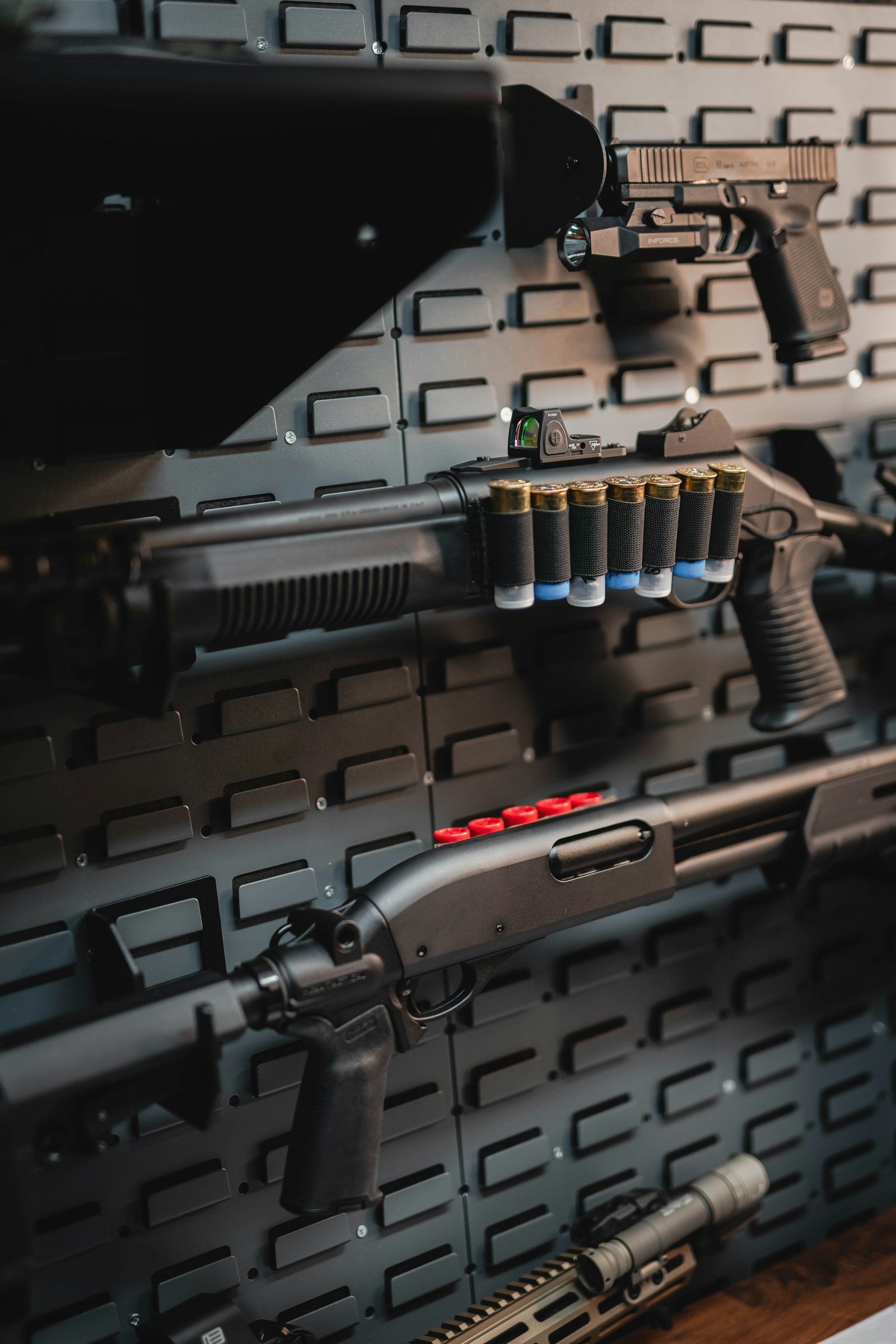
Why storage matters most
You can do everything else right — license, training, range safety. If your gun ends up in the wrong hands because storage was sloppy, you’re liable. Criminally, civilly, morally. And you’ll lose your license for good.
Legal storage in France is a simple frame to follow. Here’s the breakdown.
The legal principle
French regulation for category B firearms (most handguns and certain long guns) requires either disassembly with the essential part stored separately, OR storage in a safe or armored cabinet bolted to floor or wall.
In practice, every serious shooter picks the safe. Simpler, faster, safer.
What to know about a safe
Three main norms:
- A2P 1, 2 or 3 stars: insurance-recognized in France. More stars = more break-in resistance (and more expensive).
- EN 1143-1: European norm, classes 0-VI. For the standard sport shooter, class 0 or I is plenty.
- NF / Q34: French historic norm, still valid for firearms.
For 3-5 firearms, target a 60-100 liter safe, A2P 1-star, ~€600-1,200. Hard on the wallet, but a 30-year investment. Solid brands: Hartmann Tresore, Phoenix, Burg Wachter, Stark.
The safe must be bolted. Floor with 4 expansion bolts 12mm minimum, or wall if concrete. An unbolted safe is gone in 10 minutes regardless of lock quality.
Ammunition
Can be stored in the same safe as the firearms, or in a separate container. The law is silent on the detail for individuals — common sense says keep it locked.
For safety reasons (fire, overheat), many shooters keep ammo in a separate metal box, inside the same safe. Not mandatory but good practice.
Transport to the range
On the home-to-range trip, the firearm must be:
- Disassembled or stored separated from ammunition: both in distinct vehicle compartments (case + separate bag), or ideally in one closed case with gun + empty mags + ammo in another case or bag.
- Out of view: not on the rear shelf. Vehicle trunk, under a blanket if no trunk.
- With license and titles: FFTir license + ID + prefectural authorization (cat. B) + shot log. On you, in case of inspection.
A range trip is never “just an errand”. You’re transporting a firearm. No unnecessary stops, no detours, no leaving it parked. A parked vehicle with firearm inside is frowned upon and legally risky.
House without children vs. with
Living alone or as a childless couple: bolted safe, locked, key out of trivial reach. Enough.
With children — especially teens: bolted safe AND DIGITAL combination rather than key (keys get found), AND separate ammo even inside the safe, AND an explicit conversation. A teen’s curiosity is more dangerous than burglars. Several incidents per year worldwide come from “well-stored” guns “in the closet upstairs”.
The maintenance log
Not legally mandatory, but professional. A notebook tracking:
- Acquisition date of each gun + serial number
- Cleaning / maintenance dates
- Each range trip date
- Round count fired
In case of prefectural inspection or renewal request, this log saves your administrative life.
Three classic traps
- The “temporary safe” that lasts three years. If you have a category B firearm, you have a bolted safe. Not a key-locked case under the bed.
- Confusing jewelry safe with gun safe. Jewelry safes aren’t built for tear-out resistance. You lose 50% of strength.
- Leaving the safe unlocked “while I run to the range”. Five minutes is enough. Lock every time, no exceptions.
FAQ
Q: What about moving with firearms? R: Move the empty safe. Firearms transport separately, declared if changing department, in locked cases. Re-bolt the safe immediately on arrival — no transition period.
Q: Can I temporarily store at someone else’s place? R: Only at a licensed shooter’s place, in their safe, and you must inform the prefecture if duration exceeds a few days. Never at an unlicensed neighbor’s.
Q: Do category C firearms also need a safe? R: The law requires “means to prevent third-party use” for category C. A safe is by far the best answer. Disassembly with separate essential part is legally valid but less practical.
Read more
- First time at the range: what nobody tells you
- FFTir license and prefectural authorizations: 2026 process
- Range safety