
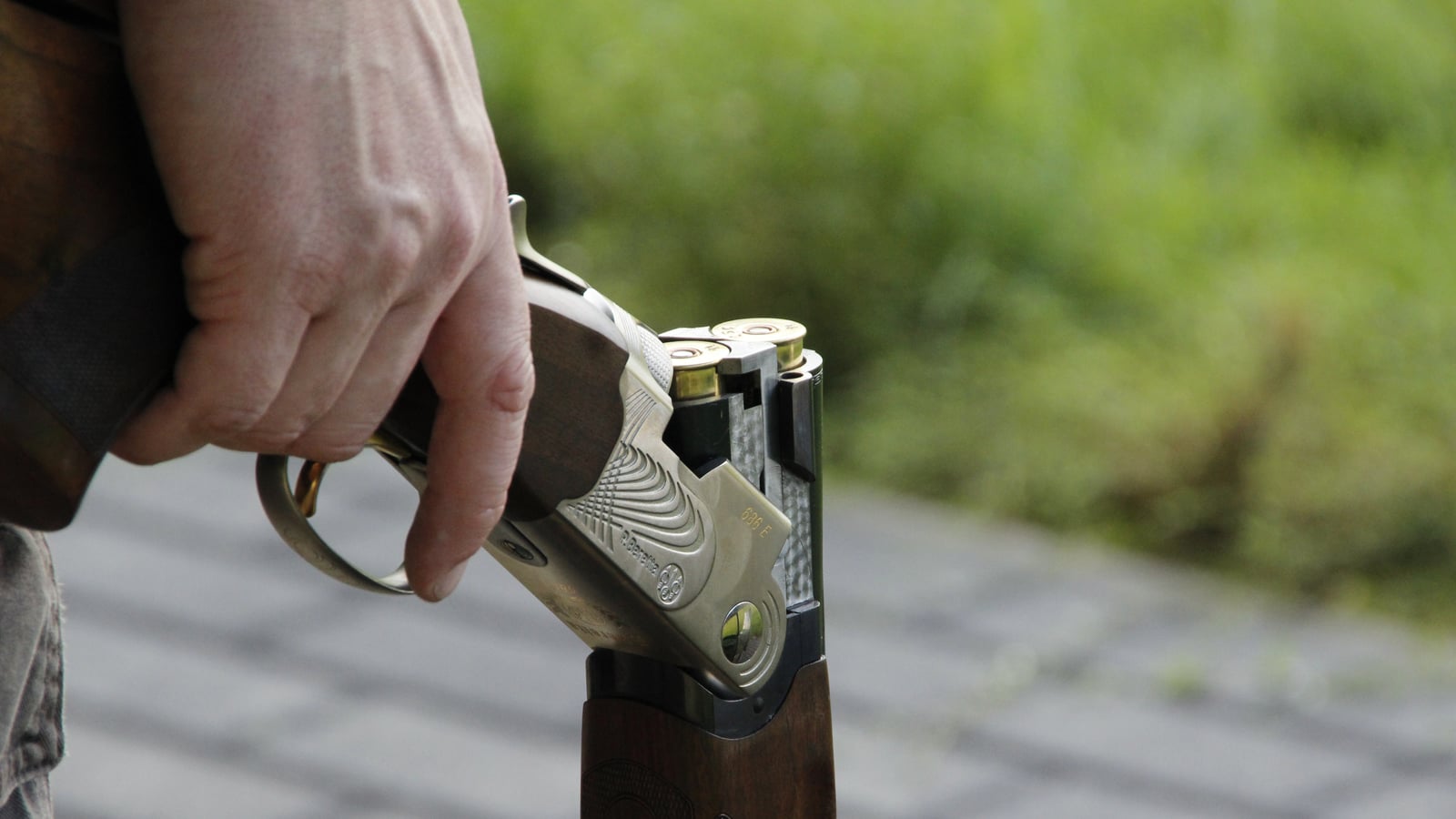
Why a smoothbore shotgun fouls differently than a rifle
A clay pigeon shotgun doesn’t foul like a rifled barrel. No rifling, so no copper or lead deposit clinging inside a groove. The smooth bore plays a different game: powder fouling and wad residue that streaks down the entire length of the tube with every shot.
Every time you fire a shell, you send through the barrel a cocktail of combustion gases, unburned powder particles, and a plastic wad rubbing against the walls over 70 centimeters or more. This wad heats up, deforms slightly as it passes through the choke, and leaves a film of residue that clings to the metal.
On a rifle, enemy number one is the copper from the bullet embedding itself in the rifling. On a smoothbore shotgun, there’s no rifling: the issue comes from the melted plastic of the wad and the sulfur from the powder, which, combined with ambient humidity, chemically attack the steel if you let it sit.
The most common clay pigeon gauge, 12-gauge, has a wide bore (about 18.5 mm) but is very long. That length means more contact surface, so more residue with every shot. A 100-clay session means 100 passes of wad and powder along the entire length of the tube.
The removable or fixed choke adds a constriction zone where wad residue tends to build up even more. It’s often the dirtiest area of the barrel after a session, and it’s also the area most easily neglected when you’re cleaning in a hurry.
Unlike a handgun that fires a few dozen rounds per session, a regular clay shooter can go through 100, 150, sometimes 200 shells in a single afternoon of competition or intensive training. The volume of accumulated residue has nothing to do with a precision pistol shooting session.
This reality demands a different discipline: cleaning a clay pigeon shotgun isn’t a cosmetic option, it’s a mechanical necessity tied to the shooting volume and the nature of residue produced by plastic-wad shells.
Fouling: what actually deposits inside the barrel
Fouling is the deposit of combustion residue that forms on the inner walls of the barrel after the powder charge and wad pass through. It’s not a simple layer of soot: it’s a mix of microscopic metal particles, carbon residue, and traces of melted plastic.
On a smoothbore shotgun, this fouling spreads along the entire length of the barrel, from the chamber to the muzzle. It isn’t uniform: it’s denser near the chamber, where combustion is most intense, and gradually thins out toward the muzzle.
The composition of the fouling depends directly on the type of shell used. A modern “clean” powder shell leaves a finer deposit than an entry-level shell with coarser powder. Lead shot itself barely touches the walls of a smoothbore barrel: it’s the wad that protects the barrel from direct contact with the lead.
If this fouling isn’t removed, it gradually becomes harder and more difficult to remove. A fresh deposit of a few hours comes off with a standard solvent and a few passes of the brush. A deposit that’s had weeks to oxidize takes much longer work, sometimes even with a copper-removing solvent, even though the shotgun has never fired a bullet.
Fouling buildup has a measurable impact on shot consistency: a fouled barrel slightly changes the friction on the wad as it passes, which can affect the consistency of the shot pattern. For a club shooter counting their clays, the difference is rarely noticeable. For a competitor seeking maximum consistency, a clean barrel before every string is never a luxury.
Fouling also attracts moisture. Combustion residue is hygroscopic to some degree, meaning it captures ambient humidity and creates a local environment favorable to corrosion, even in a well-kept ammo cabinet.
It’s this combination — chemically active residue and moisture-retaining capacity — that explains why so much emphasis is placed on quick cleaning after a session rather than one big weekly clean. Fresh fouling comes off in fifteen minutes; old fouling can require a full session with multiple solvents.
The chamber: the most exposed and most neglected area
The chamber is where the shell sits at the moment of firing, right before the barrel proper. It’s the area that takes the brunt of the pressure and combustion heat, and paradoxically it’s one of the least well-cleaned areas by shooters in a hurry.
The classic reflex is to run the brush through the barrel starting from the muzzle and pushing toward the chamber, or the reverse depending on the gun type. Many shooters stop once the barrel “shines” to the eye, without checking that the chamber area itself — often wider and slightly different in shape from the rest of the barrel — is properly cleared.
The chamber accumulates specific residue tied to the primer and the shell’s base: priming particles, brass or metal traces from the base on shotguns firing reloaded shells with metal cases reused several times. These deposits differ from what you find further down the tube.
On a self-loading (semi-automatic) shotgun, the chamber is also the area where residue can interfere with extracting the next shell. A fouled chamber can create extra friction when the spent case needs to be extracted, sometimes resulting in a less clean extraction or even a jam.
To clean the chamber properly, it’s best to use a dedicated brush, slightly wider than the one used for the rest of the barrel, focusing on the edges where the shell comes to rest. A cloth wrapped around a flathead screwdriver, lacking a dedicated tool, can help in a pinch for hard-to-reach corners on certain models.
You should also think about the breech face, that metal part that comes to rest against the shell’s base at the moment of firing. It absorbs part of the shock and accumulates powder residue with every shot fired. Regular degreasing of this face prevents buildup that can eventually hinder proper base seating.
Neglecting the chamber for several sessions in a row means setting yourself up for a much more laborious cleaning the day you finally get to it, and risking less reliable operation in the meantime.
The ejection mechanism: the sensitive point on semi-autos and over-and-unders
The ejection mechanism is the set of parts that remove the fired (or empty) case from the chamber to allow the next shell to be loaded. On a single-shot or classic break-action shotgun, this mechanism is simple. On a semi-automatic clay pigeon gun, it’s considerably more complex and demanding in terms of maintenance.
A semi-automatic works either by gas operation or by inertia (recoil of the barrel or bolt). In both cases, the mechanism uses the energy of the shot to drive a moving part backward, extract the case, eject it, then recock and feed the next shell from the tubular magazine.
On gas-operated models, a small amount of combustion gas is diverted to a piston located under the barrel. This piston, directly exposed to the hottest and most particle-laden powder residue, fouls quickly. A fouled piston can lose travel, resulting in less crisp cycling, even jams toward the end of a session.
The extractor, the small claw that hooks the rim of the case to pull it from the chamber, is a small but critical part. If it fouls, or if a residue of wad plastic gets stuck under the claw, extraction becomes erratic: the case sometimes stays stuck in the chamber instead of being properly ejected.
The ejector, meanwhile, is the part (or spring) that gives the final push to send the case out of the gun once it’s extracted. A fouled or poorly lubricated ejector can let the case fall back into the mechanism instead of being properly expelled, creating a jam that has to be cleared by hand mid-string.
On an over-and-under or side-by-side, ejection is mechanically simpler (often just spring extractors or selective ejectors linked to the firing pins), but the area remains sensitive to residue that builds up around the breech block and locking lugs.
The common thread across all these mechanisms: they’re designed to run with minimal residue and light but present lubrication. An ejection mechanism left to foul session after session becomes progressively less reliable, until the day it fails at the worst possible moment — mid-way through a competition round.
Why clean systematically after every clay pigeon session
The answer fits in one sentence: because plastic-wad shell residue is more aggressive and more abundant than that of a precision cartridge, and it builds up fast over a shooting volume for clays that far exceeds a paper-target session.
A typical clay pigeon session is between 50 and 200 shells fired. Each shell deposits its share of powder residue, wad plastic, and sometimes priming particles. Multiplied by the volume fired, the buildup becomes significant in a single afternoon.
Left in place, this residue doesn’t stay inert. Sulfur from powder combustion, combined with ambient humidity — whether from an outdoor firing line or a transport bag — forms compounds that progressively attack the steel of the barrel. It’s a slow but real chemical phenomenon that starts within the first hours after firing.
A clay pigeon shotgun typically goes from the outdoor firing line (often outdoors, sometimes in light rain or morning humidity) to a transport case, an enclosed and poorly ventilated environment. This combination — fresh residue and confined environment — is an ideal breeding ground for corrosion to begin, even superficially.
Putting off cleaning until the next day or the following week lets the fouling harden. A fresh deposit comes off in a few minutes with a standard solvent. The same deposit, left for two weeks, can require a more aggressive solvent and twice the brushing time for the same result.
There’s also a mechanical reliability argument: a shotgun cleaned after every session keeps an ejection and cycling mechanism operating within the tolerances intended by the manufacturer. A shotgun left to foul over several sessions sees its mechanical tolerances progressively shrink, with a proportionally rising risk of jams.
Finally, there’s a simple time-saving argument. Fifteen minutes of cleaning after every session costs less, in time and elbow grease, than an hour of deep scrubbing a month later, once the fouling has had time to set in for good.
The gear you need to maintain a smoothbore shotgun
The gear needed to maintain a clay pigeon shotgun isn’t exotic, but some items are specific to the smoothbore gauge and deserve to be chosen carefully rather than grabbed at random from the club drawer.
- A cleaning rod matched to the barrel length (often longer than for a rifle), made of fiberglass or brass to avoid marking the barrel if it rubs against the walls.
- A bronze or brass brush at the exact gauge of the shotgun (12, 20, or other), for the initial scrubbing of the toughest fouling.
- Cleaning cords or “snakes,” handy for a quick pass between two strings during a long competition day.
- A universal solvent suited to powder and plastic residue (solvents dedicated to rifle copper removal are useless here, an all-purpose solvent is more than enough).
- A fine oil or dry lubricant suited to the mechanism, in measured amounts: the goal is to protect, not to drown the moving parts.
- Cotton patches in the right gauge for drying and visual cleanliness checks.
- A soft-bristle brush to clear residue from the nooks of the ejection mechanism and the breech block.
- A microfiber cloth for exterior cleaning, the stock, and finishing.
For semi-automatics, a model-specific maintenance kit (often supplied or recommended by the manufacturer) sometimes includes a small brush dedicated to the gas piston, a component that should never be neglected on this type of gun.
The removable choke, if present, deserves a brush or bristle capable of reaching the threading without damaging it. A poorly cleaned choke can, over time, become harder to unscrew due to residue buildup in the threads.
For the wooden stock, a wood care product (linseed oil or a dedicated product) is enough to preserve the finish without attacking the varnish. Avoid harsh solvents in contact with the wood: they can dull or weaken the finish over the long term.
One last often-forgotten point: a small headlamp or a bore inspection mirror to visually check the inside of the tube. This avoids declaring a barrel “clean” based solely on a patch that comes out almost clear, when a localized deposit still remains further down the tube.
The step-by-step method after a clay pigeon session
Here’s the logical order for a complete and effective cleaning, ideally done the same day or at the latest the day after the session.
- Check the gun is unloaded: chamber open, tubular magazine emptied on semi-automatics, visual and tactile check. This step is never optional, even “just for cleaning.”
- Break down the shotgun according to type: action open and barrel separated from the stock for an over-and-under or side-by-side, partial disassembly per the manual for a semi-automatic.
- Run a solvent-soaked brush through the barrel, from chamber to muzzle, paying particular attention to the choke area where wad residue builds up the most.
- Let the solvent work for a few minutes to soften the fouling before running the brush through a second time.
- Dry the barrel with clean patches until they come out without visible traces of black or gray residue.
- Clean the chamber specifically with a brush or a wrapped patch, focusing on the edges where the shell’s base comes to rest.
- Degrease the breech face and the metal-on-metal contact surfaces (locking lugs, breech latch) with a patch and solvent.
- On a semi-automatic, clear the ejection mechanism and the cycling system with a soft brush, then a cloth, removing visible wad-plastic residue.
- Clean the gas piston if the model has one, following the manufacturer’s procedure: it’s often the most fouled part after an intensive session.
- Lightly lubricate the friction points identified in the manual: bolt rails, action lugs, recoil spring. One drop per point is enough, no more.
- Wipe the exterior of the barrel and mechanism with a microfiber cloth to remove fingerprints and moisture.
- Care for the wooden stock with a suitable product if needed, without overdoing it.
- Fully reassemble the gun and check proper function of the action, cocking, and, on a semi-automatic, the dry cycling.
- Store the gun in its case or safe, ideally not immediately in a closed sleeve if it’s still slightly damp with solvent: let it air-dry for a few minutes before final storage.
This sequence generally takes between 15 and 25 minutes for an experienced shooter, a bit longer the first time or on a semi-automatic that’s complex to strip.
The mistakes that damage a shotgun more than they protect it
Certain habits, often passed from shooter to shooter without ever being questioned, do more harm than good on a smoothbore shotgun.
- Over-lubricating the ejection mechanism thinking “more oil means more safety.” Excess oil attracts dust and powder residue, which form an abrasive paste instead of protecting the parts.
- Using an aggressive copper-removing solvent when no copper is involved on a smoothbore barrel. This type of solvent is useless here and can, with repeated use, needlessly attack certain barrel coatings.
- Neglecting the removable choke on the pretext that it “doesn’t see much.” That’s exactly the constriction zone where wad residue builds up the most, and a choke seized by fouling can become hard to remove.
- Storing the shotgun still damp with solvent in a closed sleeve immediately after cleaning. Moisture trapped in a confined environment promotes corrosion instead of preventing it.
- Forgetting the gas piston on a semi-automatic for several sessions in a row. It’s the part that suffers fastest from cumulative fouling, and inadequate care for it is the most frequent cause of jams mid-string.
- Cleaning only the barrel and completely forgetting the ejection and cycling mechanism, on the theory that “if the barrel shines, it’s clean.” The barrel is only part of the problem.
- Scrubbing the barrel with a metal brush without solvent, dry, thinking it saves time. This needlessly wears the inner coating without actually dissolving the fouling.
- Spacing out cleanings on the assumption “I’ll do a big clean at the end of the season.” Old fouling is much harder to remove, and the corrosion risk builds up the whole time.
These mistakes share a common thread: they often come from confusing a quick clean with a complete clean. A superficial five-minute pass isn’t maintenance, it’s a cosmetic gesture that leaves the real work for later, under worse conditions.
Frequency, rhythm, and maintenance on the road
The basic rule stays simple: clean after every clay pigeon session, no exceptions, regardless of the number of shells fired. But the depth of cleaning can be adjusted to your actual practice rhythm.
For an occasional shooter who practices once a month or less, every session deserves a complete cleaning within 24 to 48 hours of shooting. The gap between sessions gives fouling plenty of time to harden if it’s not dealt with quickly.
For a regular competitor stringing together several sessions a week, a complete cleaning after every outing remains the standard, but a quick check (running a snake through the barrel, visually inspecting the mechanism) between two strings on the same competition day can be enough to limit buildup without spending an hour between every round.
Climate and shooting conditions also influence the rhythm. A session in the rain or in high ambient humidity calls for faster, more attentive cleaning than the same session in dry weather: water clearly speeds up the chemical reactions between fouling and metal.
Storage between sessions matters too. A shotgun stored in a ventilated cabinet with good humidity control tolerates a cleaning delay a bit better than a shotgun left in a closed sleeve in the middle of a car trunk for a week of heat.
A periodic deep clean — more thorough disassembly, full mechanism check, thorough greasing of hidden points — remains useful as a complement to cleaning after every session, at a rhythm that varies with shooting volume: this can range from once a month for an intensive shooter to once or twice a season for an occasional one.
In every case, a quick, regular cleaning beats a big, spaced-out one. The first prevents buildup; the second only catches up on a backlog that’s had time to settle in and harden.
Complete cleaning at home, in good conditions with all the gear on hand, is one thing. Minimal cleaning between two competition strings, or on the road at a match far from your usual club, is another.
On a competition firing line, between two strings on the same day, a quick pass of a cleaning snake through the barrel is enough to limit buildup without disrupting the day’s pace. The goal isn’t a complete cleaning, but clearing the freshest fouling before it hardens over several hours of air exposure.
For a multi-day trip — a regional match or a course run by an experienced instructor — a compact cleaning kit becomes useful: a snake, a small bottle of solvent, a microfiber cloth, and a few patches are enough to ensure minimal maintenance every evening without hauling the whole usual setup.
The heat of a car trunk in the middle of summer, or conversely the damp cold of an outdoor range in winter, add an extra strain. A shotgun that stays several hours in an environment with strong temperature swings can develop condensation inside the barrel as the temperature changes, which further accelerates the corrosion process on fouling that’s already present.
Many clubs and ranges have a basic cleaning station available to shooters, with a workbench and sometimes a few basic products. Using this kind of space between two strings, even for a minimal ten-minute clean, is far better than waiting until you get home at the end of the day.
The right reflex on the road is to treat field cleaning as a complement, not a substitute, for a complete cleaning. A snake pass limits the damage during the day, but thorough cleaning — barrel, chamber, mechanism, lubrication — remains essential as soon as you’re back in better conditions, ideally that same evening.
Differences by action type: break-action, semi-automatic, pump
Not all clay pigeon shotguns need exactly the same maintenance. The action type changes how the work is split between the barrel, mechanism, and friction points.
On an over-and-under or side-by-side (break-action shotgun), maintenance focuses mainly on the barrel, the chamber, and the breech block with its locking lugs. The firing mechanism, often simple, needs little lubrication but deserves regular degreasing to prevent residue buildup around the hammers and firing pins.
On a semi-automatic, the work takes longer because you have to add cleaning of the entire cycling system: gas piston or inertia mass depending on the design, recoil spring, bolt rails, and the ejection mechanism in its own right. This is the action type that demands the most rigor, since it’s also the one that tolerates cumulative fouling worst before jamming.
On a pump-action shotgun, less common in pure clay pigeon shooting but present among some versatile shooters, maintenance resembles that of the semi-automatic for the mechanism side, plus particular attention to the pump rail, which must stay clean and lightly lubricated to guarantee a smooth, snag-free manual cycling action.
The tubular magazine, present on semi-automatics and pumps, also deserves regular checking. Powder residue and dust can build up on the magazine spring and affect the consistency of shell feeding, especially after many sessions without a complete disassembly.
Whatever the action type, the chamber and choke area remain the common points that demand systematic attention. These are the two areas where residue builds up fastest and where the consequences of prolonged fouling are most felt in terms of reliability.
Maintenance, longevity, and the influence of shell type
A well-maintained clay pigeon shotgun goes through decades without major issues. It’s relatively simple mechanics compared to a modern handgun, but that simplicity doesn’t exempt it from rigorous maintenance — it simply makes it more accessible.
Internal barrel corrosion, when it sets in for lack of regular cleaning, creates microscopic pitting in the metal. Once present, this pitting never disappears completely: it can be softened by professional polishing, but the barrel keeps a permanent trace of past neglect.
On the ejection and cycling mechanism of a semi-automatic, wear tied to chronic fouling shows up as growing play between the moving parts. This play, once established, increases the likelihood of jams and can require replacing parts that, with proper maintenance, would have lasted tens of thousands more shells.
The breech block of an over-and-under, if it accumulates residue at the locking lugs without ever being degreased, can develop closure play that eventually affects shooting accuracy and locking safety. It’s an essential part that deserves regular attention, even if it seems less exposed than the barrel.
The choke, if it’s never unscrewed and cleaned, can literally seize in its threading from the buildup of hardened residue. Some shooters discover this problem only the day they want to swap chokes for a different discipline, and find themselves with a part practically welded on by old fouling.
Conversely, a shotgun cleaned after every session keeps its original mechanical tolerances far longer. It’s a fifteen-minute investment that protects an investment of several hundred, even several thousand euros, and guarantees consistent reliability when it matters most — mid-way through a competition round, not at the practice range where a jam is a non-issue to clear.
A well-maintained shotgun also resells better. A barrel with no trace of internal corrosion, a mechanism that runs without excessive play, is what distinguishes a sought-after used gun from one a savvy buyer will avoid after a simple visual check of the barrel.
Not all clay pigeon shells are equal when it comes to residue. The choice of shell directly influences the time you’ll spend behind the brush at the end of a session, and it’s not just a matter of brand or price.
The powder charge is the first factor. A light-charge shell, designed to limit recoil over a long string of clays, generally burns more completely and leaves a finer fouling. A heavier-charge shell, used for certain disciplines that require more shot at distance, tends to leave a denser deposit along the entire length of the barrel.
The wad type also plays a role. Cup wads (those that envelop the shot charge) protect the barrel better from direct contact with the pellets, but their plastic material leaves precisely that famous residue that sticks to the walls, especially at the choke exit where the wad separates from the shot charge.
Biodegradable shells, increasingly used at some environmentally conscious ranges, have a different wad composition than classic plastic wads. Some shooters report slightly different fouling with this type of shell, but caution is warranted: without precise and verifiable data on every reference on the market, it’s better to rely on direct observation of your own barrel after a session rather than trust a generality that varies by manufacturer.
Shell storage before the session matters too, though the effect is more indirect. Shells kept in a humid environment can have their powder absorb a bit of moisture, which slightly alters combustion and can increase unburned residue found in the barrel after firing.
In every case, whatever type of shell is used, the principle stays the same: the more complete and clean the combustion, the shorter the cleaning, but no clay pigeon shell exempts you from a brush pass after the session. The variation is in cleaning duration, never in its necessity.
Tracking your maintenance over time: a habit that pays off
Cleaning after every session is a one-off action. But the real value shows up when you look at the whole picture over several months: how many shells since the last deep clean, which solvent was used last time, whether the gas piston was recently stripped or not.
Many shooters keep this information in their heads, or not at all, and end up unable to say precisely how many sessions it’s been since they last did a more thorough check of the ejection mechanism. This vagueness ends up costing time the day a jam shows up unannounced.
Logging every session — number of shells, type of cleaning done, observed condition of the barrel and mechanism — lets you spot trends: a shotgun that needs cleaning more often than before might signal a part to check, a seal to change, or simply a choke to inspect.
That’s exactly the kind of tracking a digital shooting log makes easy. With PewPewLife, every clay pigeon session can be logged with the number of shells fired, the type of clay or discipline practiced, and a note on the maintenance performed. Over time, this tracking turns a vague impression (“I think it’s been a while”) into a precise, searchable history.
This kind of rigor is nothing excessive: it’s the same logic a shooter already applies to their ammunition or competition results. Maintenance deserves the same level of tracking, because it directly determines the reliability of the gun the whole practice depends on.
FAQ
Q: Does a smoothbore shotgun need a special solvent compared to a rifle? A: No, a classic all-purpose solvent is more than enough. Copper-removing solvents, designed to strip copper from a rifle’s rifling, are useless on a smoothbore barrel since there’s no rifling or copper deposit to deal with.
Q: How much time should you really set aside for cleaning after a clay pigeon session? A: Count on 15 to 25 minutes for a complete cleaning including the barrel, chamber, and mechanism, a bit more on a semi-automatic the first time. That’s significantly less than catching up on fouling that’s had time to harden.
Q: Does the gas piston on a semi-automatic need to be cleaned after every session? A: A quick check and clearing of visible residue every session is recommended, since it’s the part most exposed to hot combustion residue. A more thorough cleaning, following the manufacturer’s instructions, can be spaced out a bit depending on shooting volume, but should never be neglected over several sessions in a row.
Q: Can you leave the shotgun a few days before cleaning it if you don’t have time right after the session? A: Not ideal, but if unavoidable, a quick barrel check with a cleaning snake limits the damage in the meantime. The main risk is that fouling hardens and ambient humidity starts acting on the residue, making the complete cleaning longer once you finally get to it.
Q: How do you know if the removable choke is fouled to the point of being a problem? A: If the choke becomes hard to unscrew by hand or needs a tool with more force than usual, it’s often a sign of residue buildup in the threading. Regular cleaning of this area, including periodically unscrewing it even when everything seems to be working fine, prevents this gradual seizing.
Q: Does a shotgun stored in a humid environment between sessions need different maintenance? A: The cleaning method stays the same, but the checking frequency should increase: check more often for early signs of corrosion, and favor storage with good humidity control (dehumidifier, silica gel in the case) alongside cleaning after every session.