
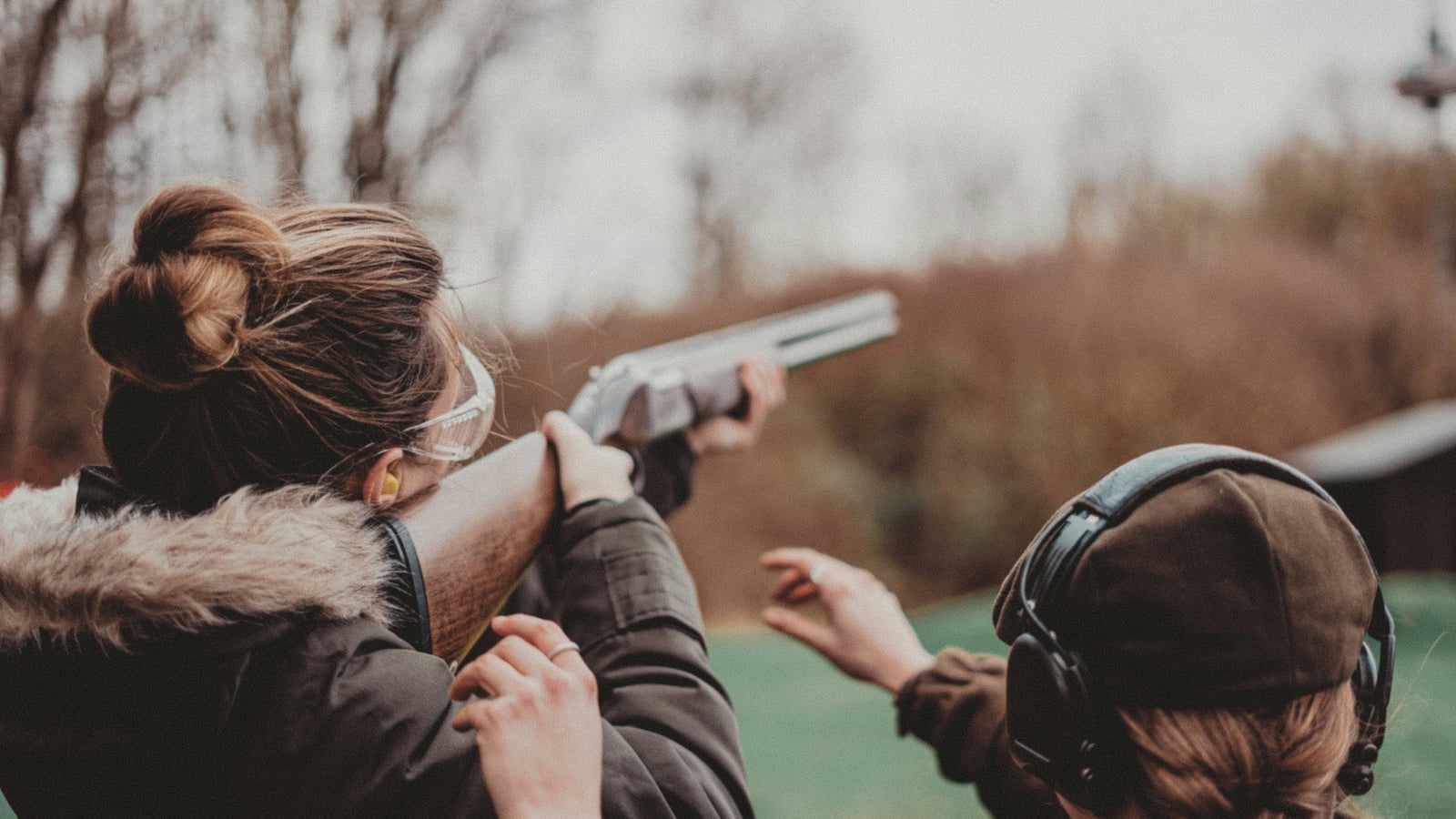
Why shooting sports is one of the disciplines best suited to kids
You shoot, you have kids, and you’re wondering at what age you can start taking them to the range. The answer fits in one sentence: earlier than you think, but not just any old way. Shooting sports is one of the rare disciplines where safety is built into the very structure of the activity, long before a child ever touches a firearm.
Contrary to what it looks like from the outside, a range supervised by a national federation is an extremely controlled environment. Every movement is broken down, every position is monitored, every round is counted. It’s exactly this framework that makes the sport accessible to the youngest: there’s no room for improvisation.
Shooting sports have been part of the Olympics since 1896, which says a lot about how long they’ve been a structured, codified discipline. That codification isn’t just about competition rules — it’s what protects your child at every step, from their very first taste of it to their first air rifle.
This guide covers the whole journey: what age to start at depending on the discipline, how junior shooting schools work, what gear is actually right for a child, what the rules say about supervision, and how to keep it fun without ever compromising on rigor.
The real minimum age, discipline by discipline
There’s no single age for “starting to shoot.” It depends on the discipline, the club, and above all on the child’s maturity when it comes to strict safety instructions. Here are the most common benchmarks seen at affiliated clubs.
- Laser rifle introduction: as early as 6-7 years old in many clubs, sometimes earlier at one-off taster events. No live ammunition, no ballistic risk at all — the child learns only stance, aiming, and handling discipline.
- Category D air rifle (under 20 joules): generally around 8-10 years old depending on the club, with reinforced one-on-one supervision.
- 10-metre rifle at a junior shooting school: from 9-11 years old in most setups, once the child has been through the laser introduction and then the air rifle stage.
- Disciplines using rimfire or centerfire firearms: reserved for older teenagers and strictly supervised by the club, often alongside their first internal badges.
- Official competition: youth categories exist from the teenage years on, with precise age thresholds set by the federation depending on the discipline and firearm used.
These thresholds vary from club to club and evolve along with federal rules. Never treat a number found online as gospel: your club’s instructor is the only reliable source at the moment you enroll your child, because they know both the current rules and the actual maturity level of the kid in front of them.
What matters more than chronological age is the child’s ability to follow an instruction without arguing, every single time, no exceptions. An experienced instructor can spot that in ten minutes of observation, long before caliber even comes up.
Junior shooting schools: the structured way in
Federations have built a dedicated program for young people, with a progression designed around age rather than copied from the adult pathway. This is the entry point to favor over an improvised introduction by a well-meaning relative.
Junior shooting schools work on a tiered logic. A child never touches a step before validating the previous one, and each tier corresponds to a growing level of autonomy and responsibility. It’s a mechanic close to sailing or judo schools: you don’t move up a level because you asked to, you move up because you demonstrated it.
Concretely, a typical junior shooting school offers:
- A collective discovery phase, often with laser rifles, where the child learns basic vocabulary: firing line, safety, position, respecting the instructor’s commands.
- Individual sessions or very small groups, never a child alone with a firearm with no supervisor within arm’s reach.
- Documented progression: every child has a tracking record, sometimes a logbook, noting what’s been validated and what’s still being worked on.
- Internal club badges or certificates, which give the child a concrete, rewarding goal without ever pushing them toward a firearm they’re not ready to handle.
- Regular contact with parents, so you know exactly where your child stands and what they’re practicing.
The benefit of this framework is that it removes all in-the-moment pressure. The child doesn’t have to “prove” they’re ready for a more powerful rifle: the instructor decides, based on objective criteria observed repeatedly across several sessions, not on one good day.
Ask directly at clubs in your area whether they run a junior shooting school: not all of them offer the same thing — some are very structured with a dedicated instructor, others offer more occasional slots. The federation’s website and the clubs themselves remain the best sources for what’s actually available near you.
The right gear: start with the laser, not the powder
The classic mistake shooting parents make is wanting to introduce their child to “their” discipline with “their” gear. A .22 Long Rifle or an adult competition caliber has no business in the hands of an 8-year-old, even under full supervision. Gear has to be designed for the child, not adapted after the fact.
The laser rifle is the introductory tool par excellence. It reproduces the full shooting motion — stance, aiming, breath control, progressive trigger pressure — with no ammunition at all, no recoil, no noise, and no ballistic risk whatsoever. It’s the equivalent of a simulator: the child builds the right reflexes before ever handling a firearm capable of launching a projectile.
Several concrete advantages to this approach:
- Zero physical risk, which allows starting very young without any supervisor being under constant tension.
- Near-zero running cost: no ammunition to buy, which allows for more frequent short sessions instead of rationing training.
- Can be used indoors, including in rooms that don’t have the infrastructure of a proper range.
- Immediate feedback on screen or electronic target, which helps a child understand right away why their point of impact is moving.
Once the motion has been acquired on the laser, the move to a Category D air rifle happens naturally. These firearms, sold freely or requiring simple registration depending on the model, develop less than 20 joules of energy — enough to hit a target at 10 metres, far below the energy levels of a conventional firearm. It’s the reduced caliber par excellence for learning.
Gear also needs to be physically sized for the child: a rifle that’s too long or too heavy wrecks the stance before precision is even a topic. Clubs with a real junior shooting school generally have a stock of rifles with adjustable stocks or different sizes, precisely to avoid this problem. If your club only has adult-sized gear, that’s a sign it might not be the most suitable place to start a child.
Mandatory supervision: what the federal framework actually requires
A child never shoots alone, at any point, at any level. This principle isn’t a parental precaution — it’s a structural requirement of affiliated clubs and range regulations. A certified instructor or an authorized supervisor is physically present, in immediate proximity, for the entire duration of the session.
What distinguishes supervision of a child from that of an adult beginner isn’t the presence itself, but its intensity. An adult in an introductory session can be watched by an instructor overseeing several positions at once. A child, especially in the first sessions, is followed almost one-on-one: the supervisor stays within arm’s reach, corrects immediately, and keeps physical control of the equipment between turns if needed.
Concretely, mandatory supervision means:
- An instructor holding a federally recognized qualification for supervising young people, not simply a seasoned club shooter doing a favor.
- Direct supervision of every stage of handling the firearm: loading, firing, unloading, transport to the rack.
- A deliberately low supervisor-to-child ratio, well below what’s tolerated for a group of adults.
- Parents allowed to be present — even encouraged in many clubs — but without an active role in technical supervision: the instructor runs the session, not the shooting parent, however experienced.
- A systematic briefing before every session, where safety rules are repeated even if the child already knows them by heart.
This last point deserves highlighting: repeating the briefing isn’t there because we doubt the child — it’s there because range safety relies on reflexes, and a reflex is built through repetition, not a single explanation.
If a club ever suggests letting your child “practice a bit on their own” while the instructor deals with another position, that’s a red flag, whatever the child’s level. That’s not how a serious shooting school operates.
Keeping it fun without letting up on rigor
Once the safety basics are in place, the temptation is either to swing too serious — turning every session into a lecture — or too relaxed, thinking “it’s just a game.” Both extremes fail the child. The goal is to make rigor itself fun.
An experienced instructor knows how to turn a safety instruction into a little ritual the child makes their own. For example, having them say out loud “firearm unloaded, magazine removed, barrel checked” before putting a rifle back on the rack becomes as much a memory game as a safety rule. A child who recites it flawlessly takes real pride in it.
A few things that work well in practice:
- Visual progress markers: a scoreboard, a badge, a target kept as a souvenir. The child sees their progress, which motivates far more than abstract talk about “needing to improve.”
- Varied targets: classic scoring targets, playful targets with shapes or colors, animal silhouettes like a chicken or a pig used in some federation disciplines. Changing the target breaks up monotony without ever changing the safety rules.
- Short sessions: an 8-year-old’s concentration rarely lasts more than 20-30 minutes on a repetitive exercise. Three short sequences with a break beat one long session that ends in scattered attention.
- The right to fail without drama: missing a target should stay a non-event. What should never be a non-event, on the other hand, is a breach of a safety rule, however minor.
That’s the central balance point: everything can be relaxed, smiling, playful — except safety, which stays 100% non-negotiable at all times. A child who understands that distinction early on — “we can joke around, but not about that” — has picked up something that reaches far beyond shooting sports.
Many club instructors report the same observation: the kids who progress best aren’t the most technically gifted at first, but the ones who early on grasped that the enjoyment of the activity and the rigor of the movements aren’t two things in tension, but one and the same thing.
Personal protective equipment: what’s different for a child
A child’s protective gear isn’t a shrunk-down version of an adult’s — it’s equipment designed differently. Many serious clubs specifically invest in youth-sized gear rather than putting a kid in ear protection built for an adult skull.
Ear muffs or earplugs need to match the child’s morphology, otherwise the protection becomes illusory: muffs that are too big let noise in around the edges, a poorly fitted plug works its way loose within minutes. An attentive supervisor checks the fit before every session, not just the first time.
Eye protection glasses follow the same logic: they need to stay put on a child’s face without sliding at the slightest head movement, otherwise the child spends more time repositioning them than focusing on their stance. Some clubs offer adjustable frames or several available sizes, precisely to avoid this recurring problem.
A few extra points of attention specific to a young audience:
- Noise sensitivity is often higher in a child than in an adult, even with a fairly quiet air rifle. Double hearing protection — muffs and plugs combined — is sometimes recommended for the more sensitive ones, particularly in shotgun disciplines where the report is noticeably louder.
- The weight of protective gear matters: muffs that are too heavy tire out a child’s neck over a long session, degrading their stance well before they complain about it out loud.
- Clothing matters too: long sleeves recommended, long hair tied back, no loose clothing that could get in the way of handling or catch on part of the shooting position.
- Hand hygiene after a session with live ammunition is one of the habits to instill from the start, on par with putting equipment away properly.
This level of detail may seem excessive for a simple taster session, but it’s precisely the accumulation of these small attentions that sets a club well-practiced at welcoming young people apart from one that’s improvising. Don’t hesitate to ask the club directly before enrolling your child: how they answer about equipment says a lot about the overall seriousness of their supervision.
Choosing the right club and discipline for your family
Not every affiliated club has the same sensitivity to welcoming the youngest, and not every discipline lends itself equally well to family practice. Before enrolling your child, a few criteria help steer the choice toward a genuinely suitable setup.
The first move is to visit the club without your child at first, to observe an ongoing youth session if the rules allow it. A club that happily accepts this preliminary visit and answers your questions about supervising minors in detail is sending a positive signal. A club that dodges the question or suggests enrolling directly without ever showing you anything deserves more caution.
A few concrete things to check:
- The existence of a genuinely structured youth program, with dedicated time slots, rather than kids simply being squeezed into adult slots on an ad hoc basis.
- The number of instructors qualified to supervise young people, not just the club’s total instructor count.
- Real geographic proximity: a club 45 minutes’ drive away quickly discourages regular practice, especially for a child who needs repetition to progress.
- The general atmosphere observed during the visit: a club where the kids present seem both relaxed and focused is a good sign, as opposed to tense silence or poorly channeled restlessness.
- The availability of the suitable gear mentioned above — rifles with adjustable stocks, enough laser units so kids aren’t left waiting too long between turns.
As for choosing the discipline, rifle remains the most common entry point for the youngest, notably because the stance can be standing, kneeling, or prone depending on level, allowing for a gentle physical progression. Other families turn to shotgun disciplines once the child is older, where the dynamic movement and outdoor work appeal to some more energetic profiles. There’s no “best” discipline in absolute terms: the right one is the one that fits the child’s temperament and what’s actually available near you.
Child development and the benefits beyond shooting
Shooting sports develop skills in a child that go well beyond the discipline itself, which partly explains why more and more families are taking an interest beyond the circle of already-licensed shooters. Understanding these benefits also helps motivate a child who’s unsure about their interest in the activity.
Concentration is the most obvious skill. Precision shooting demands a stillness and focus that few children’s activities call on so directly. Many instructors observe that this concentration ability picked up at the range gradually carries over into other contexts, particularly school, though no study establishes a formal causal link and such generalizations should be treated with caution.
Managing frustration is another real benefit. Missing a target after a real effort of concentration is a small, immediate, and consequence-free disappointment — an ideal training ground for learning to take a setback in stride without drama, then start over.
Respect for authority and group rules is also built differently at the range than in other settings. In a child’s eyes, a safety rule is never arbitrary: it has a tangible physical justification they can understand, which often makes it easier to internalize than a more abstract school or family rule.
Physically, the shooting stance works core stability and body awareness, particularly in the standing position, where the child has to learn to manage their balance without unnecessary weight shifting. It’s not a cardio activity, but it calls on fine motor control that usefully complements more physical activities practiced elsewhere.
Finally, the social dimension of the club shouldn’t be underestimated. A child who practices at the same club over several years builds relationships there with other young shooters and with the supervisors — a social anchoring point that reaches well beyond the purely technical practice of the discipline.
The shooting parent’s role: present, but not the instructor
If you’ve been a licensed shooter yourself for years, the temptation to pass it on directly, without going through a third party, is strong. It’s a common mistake, and yet it comes from a good place. The emotional bond between parent and child changes the learning dynamic, and not always in a good way.
A child questions an instruction coming from a parent more easily than one from an outside supervisor — that’s a plain psychological mechanism, not a judgment on your relationship with your child. Conversely, a child can also shut down if the parent becomes too technically demanding, trying to make them “a good shooter” rather than letting them discover the activity at their own pace.
The most useful role for the shooting parent is logistical and emotional support, not instructor:
- Bring your child to the club and stay in the area set aside for parents if range rules allow it.
- Encourage without commenting on every shot: a child who senses their parent evaluating each hit quickly loses the enjoyment of the session.
- Let the instructor correct technique, even if you spot an obvious stance or aiming mistake.
- Share your passion by example rather than direct teaching: show that you too keep improving, that shooting sports remain a lifelong learning process even for a seasoned club shooter.
- Track progress together, for instance by logging session results in a shared shooting log, creating a family ritual without replacing the instructor’s role.
That distance doesn’t get in the way of closeness. Many shooting families experience the club as a strong intergenerational bonding space — it’s just that each person has a different role there: the child learns, the instructor teaches, the parent accompanies.
Mistakes to absolutely avoid
Certain mistakes come up again and again with parents discovering shooting sports as a family for the first time. They almost always come from a good place, but they undermine the child’s safety or motivation over the long run.
- Skipping steps: wanting to jump straight to an air rifle, or even a firearm, without going through the laser stage, on the grounds that the child is “already gifted for their age.” Tiered progression exists precisely to build reflexes, not to slow down a motivated child.
- Using unsuitable personal gear: the parent’s rifle or handgun, sized for an adult, has no place in a child’s hands, even for a few minutes and even under close supervision.
- Downplaying a safety breach because “they’re just a kid”: on the contrary, a broken rule must be addressed with the same firmness as with an adult, without dramatizing it but without letting it slide either.
- Comparing children against each other within the same group: individual progress always outweighs relative performance, especially at an age where maturity varies enormously between children of the same age.
- Neglecting hearing and eye protection on the grounds that the child is shooting with reduced power: protection must be systematic from the very first contact with a range, even with a laser rifle in a noisy room.
- Forcing the frequency: insisting on a session every single week can turn enjoyment into an obligation. Moderate but lasting regularity beats an intense pace that burns out motivation within a few months.
These mistakes aren’t irreversible, but they often delay a child’s progress rather than speeding it up. Patience remains, here as elsewhere in shooting sports, the most valuable trait over time.
Building a family practice that lasts
Introducing a child to shooting sports only makes sense if the practice takes hold over time, not as a one-off activity tried out one summer and then dropped. A few principles help build that continuity without it becoming a burden on the family.
First, accept that the child’s pace of progress will never match that of a motivated adult. There will be periods of enthusiasm and periods of temporary disinterest, often linked to other activities or school. That’s normal, and forcing an immediate comeback rarely works.
Next, keep the connection with the club alive beyond the shooting sessions themselves. Many clubs organize family events, open days, or internal competitions accessible to the youngest, which build a stronger sense of belonging than a simple string of practice slots.
Finally, let the child define their own goal: some want to progress toward competition, others stay with occasional recreational practice, and both are perfectly valid. The role of the parent and the club is to offer the safest, most structured framework possible, not to impose a path.
One last practical point: keeping a written record of your child’s progress — sessions completed, results, the instructor’s notes — helps both the child and you visualize how far they’ve come. It’s also an excellent way to spot, over several months, whether interest stays genuine or fades, without having to rely solely on a gut feeling from the moment.
This tracking really comes into its own when it becomes a shared family object rather than a simple administrative logbook tucked away in a drawer. Some parents use it as an opportunity to link their child’s progress with their own practice, logging the parent’s and child’s sessions side by side on the same digital tool, which creates a natural conversation thread after every club visit rather than a simple box to tick. The key is that this tracking always serves the child’s motivation, never becomes extra pressure on their results.
From introduction to the teenage years: thinking about the journey over several years
Introducing a child to shooting sports means kicking off a journey that unfolds over several years, not just organizing a handful of taster sessions. Anticipating the next steps helps avoid focusing solely on that first contact with the laser rifle.
Once the first tiers are validated at the junior shooting school, the teenage years gradually open access to more disciplines and, depending on age and the federation rules in force, to specific youth competition categories. These competition tiers are set by the federation and evolve over time: the club remains the up-to-date reference for what’s accessible at what age as your child grows.
This pivotal period is also when some teens start taking an interest in dynamic disciplines, where movement and time management add to pure precision. These disciplines use cardboard or metal targets set out along a course, never human-shaped, and remain supervised with the same rigor as static precision disciplines. Access to these disciplines for a minor remains conditional on the club’s approval and a level of mastery of the fundamentals deemed sufficient by the supervisors.
Another aspect to anticipate is personal equipment. Many families wonder at what point it becomes worthwhile to buy a rifle dedicated to the child rather than using club equipment. This decision is generally made in consultation with the instructor, once the practice has taken hold over time and the child has shown enough consistency to justify the investment. Here again, it’s best to stay cautious with the amounts committed until the child’s interest has proven its staying power over several seasons.
Finally, some teenagers choose to get involved in refereeing or helping supervise the youngest once they themselves have several years of practice behind them. It’s a natural progression in many family-oriented clubs, where the once-introduced child in turn becomes a reference point for newcomers, under the supervision of a certified instructor of course, never in full autonomy until age and qualification formally allow it.
Involving the whole sibling group without creating unhealthy competition
When several children from the same family practice together, a new challenge appears: preventing gaps in level or age from turning sessions into constant rivalry. It’s a point often underestimated by shooting parents who mainly think about the technical side of the introduction.
A younger or less advanced child who constantly compares themselves to a more experienced sibling risks getting discouraged quickly, even if no one in the family ever voices that comparison out loud. Good clubs know this and structure their groups by actual level rather than family ties, which naturally avoids putting two siblings in direct competition on the same exercise.
A few practices that help families with several practicing children:
- Value individual goals over internal sibling rankings: each child progresses against their own benchmarks, not their brother’s or sister’s.
- Alternate moments where each child gets a parent’s exclusive attention, away from the range, so the relationship doesn’t get reduced to comparing results.
- Let a child not want to continue while a sibling stays passionate, without turning it into a source of family tension.
- Use moments when levels get close to build collaboration rather than competition, for instance pairing up on a collective points-counting exercise offered by some clubs.
Well-managed sibling dynamics often become an extra motivational driver rather than a source of friction. But that requires active attention from the parent, in tandem with the instructor, to catch early signs of a child who feels systematically left behind.
FAQ
Q: At what age can a child really start shooting sports? A: Some clubs offer a laser rifle introduction from as early as 6-7 years old, with no ammunition and no ballistic risk. The exact age depends above all on the child’s ability to follow strict instructions, and the club’s instructor is best placed to judge that.
Q: Does a child need a federation license to take part in a junior shooting school? A: Enrollment procedures vary by club and their youth offering; some offer no-commitment taster sessions before a full enrollment. Check directly with the club you’re targeting for the exact process in force.
Q: Can a child shoot with a conventional firearm? A: No, not at the introductory stage. The path goes first through the laser rifle, then Category D air rifles, whose power stays under 20 joules, well before any discipline involving a firearm comes into play.
Q: Can a parent supervise their own child if they’re already an experienced shooter? A: It’s not recommended, even for an experienced shooter. The emotional bond often complicates learning the instructions, and a qualified instructor at the shooting school is best placed to ensure objective, safe supervision.
Q: How much does it cost to introduce a child to shooting sports? A: Cost varies a lot depending on the club, the region, and the type of slot chosen. It’s best to ask the club you’re targeting directly for a price list rather than relying on a generic figure found online.
Q: What should I do if my child loses interest after a few sessions? A: That’s common and normal, especially for the youngest. Better to take a break without making a drama of it than to force a comeback; many children return to the activity later, with steadier motivation, once they’ve chosen it themselves.