
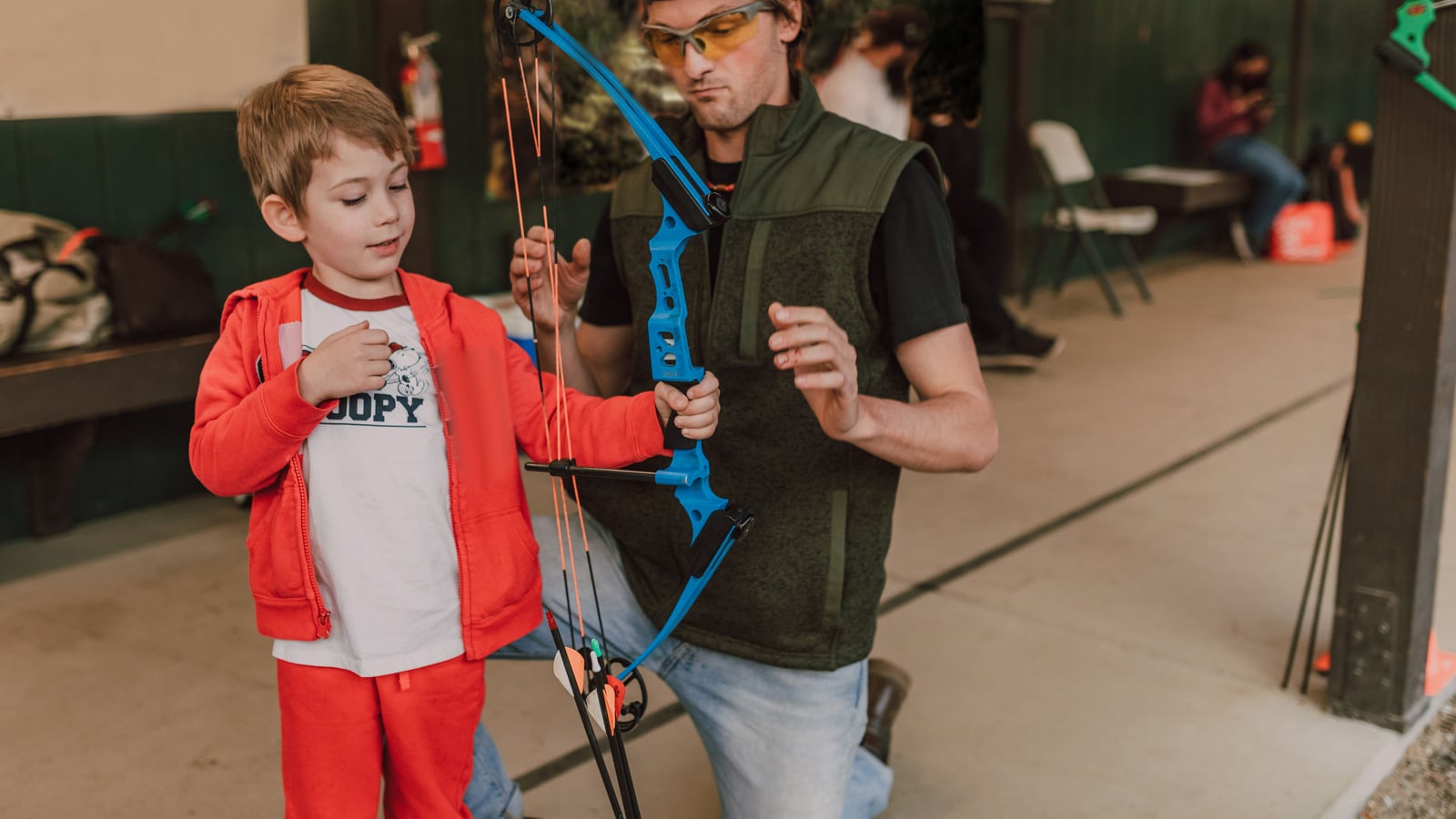
What a shooting school actually is
A shooting school isn’t just a time slot reserved for kids at a regular club. It’s an organized teaching structure, run by instructors specifically trained to work with young people, with a codified progression and tools adapted to each age.
Most affiliated clubs that offer this activity have structured it into cycles: discovery, introduction, skill-building, then a bridge into classic competitive practice. Each cycle has its own teaching goals, regardless of the discipline practiced further along (rifle, pistol, or clay targets, depending on the club’s facilities).
The entry age varies quite a bit from one club to another depending on the disciplines offered and the facilities available. Some shooting schools welcome kids from primary-school age for closely supervised air rifle activities, while others reserve the introduction for the federation’s official youth categories. What they all have in common is systematic supervision by a certified instructor — never unsupervised practice.
A shooting school’s role goes well beyond teaching technical skills. It also passes on a safety culture, personal discipline, and a relationship with equipment that shapes a young person’s future practice long-term, whether they go on to compete or just shoot casually as a hobby.
Contrary to a common assumption, the primary goal isn’t to “get kids shooting” but to teach them a rigorous framework within which the activity becomes possible safely. Actual shooting often only happens after several sessions devoted purely to rules, dry handling, and stance.
Administratively, a shooting school generally operates as its own section within the club, with its own supervisors, its own dedicated time slots, and sometimes its own pricing. This separate structure keeps kids from mixing with regular adult sessions, where the pace and demands aren’t comparable.
The number of clubs offering a genuinely structured shooting school has grown in recent years, driven by the federation’s desire to renew its membership base over the long term. A club that invests in this kind of structure is betting on retention over several years, well beyond a one-off taster activity.
This long-term dimension also changes how a club thinks about its equipment, its facilities, and the training of its supervisors. A club that has welcomed young people for a long time has generally refined its teaching methods over the seasons, keeping what works and dropping what created more friction than real progress for young shooters.
The first contact: before even touching a firearm
A young person’s very first session at a shooting school almost never starts with actual shooting. It begins with an introduction to the range, the fundamental safety rules, and the basic vocabulary the child will need to remember and repeat.
An instructor explains muzzle direction, the concept of a safety zone, and the absolute rule of never touching a firearm without explicit permission from the supervisor. These rules are repeated, rephrased in simple, age-appropriate language, then checked through direct questions to the child.
This phase can feel long to parents eager to see their child shoot, but it shapes everything that follows. A young person who has internalized these safety reflexes before ever handling a firearm progresses faster and more calmly afterward, because they don’t have to unlearn bad habits picked up in haste.
The equipment is then introduced with the firearm unloaded, action open, often with very concrete explanations: what each part is for, why certain movements are forbidden, how to check for yourself that the firearm is safe. The instructor places particular emphasis on the trigger, clearly explaining exactly when the finger is allowed near it.
Many clubs use visual teaching aids at this stage — posters or simplified diagrams — to anchor these concepts in a playful way rather than purely verbally. This gives the child a clear mental image tied to each rule, which makes long-term retention easier compared to a purely spoken explanation.
The vocabulary used in this first session deserves particular attention. An instructor working with young people systematically avoids the shorthand used among experienced shooters, taking time to name each element precisely: the trigger rather than a vague term, the chamber rather than an approximate paraphrase. This lexical precision from the start avoids confusion that could become dangerous later.
A common exercise during this very first meeting has the child repeat, in their own words, the rules they’ve just heard. This active rephrasing lets the instructor check for real understanding rather than mere passive listening, and immediately correct any rule that was misunderstood before it takes root incorrectly.
Some clubs round out this first session with a small booklet or handout to take home, covering the essential rules seen at the club. Parents can then go over them with the child between sessions, which reinforces memory without requiring another visit to the club in the meantime.
Equipment adapted to the youngest shooters
The equipment used at a shooting school has nothing in common with that of an experienced shooter. Clubs systematically favor lightweight firearms with almost no recoil and a size adjusted to a child’s still-developing build.
The category-D air rifle, freely available or simply requiring registration depending on the model, remains the most widespread starting point. Its limited power, lack of significant recoil, and handiness make it an ideal teaching tool for learning aim, breathing, and trigger control without the distraction of noticeable recoil.
Some clubs also offer replicas or equipment specifically sized for small hands and small arms, with adjustable stocks that follow a young shooter’s growth over several seasons without needing to change equipment entirely. This equipment adjustment prevents the compensatory bad posture that appears when a child uses gear sized for an adult.
Hearing and eye protection are systematically provided and sized appropriately — never simple adult models worn as best they can. A poorly protected child quickly develops an apprehension of noise that then hurts their entire technical progress, particularly through involuntary anticipation of the shot.
The overall weight of the firearm also matters a great deal at this age. A rifle that’s too heavy quickly tires a child’s arms and shoulders, which degrades aiming stability well before the end of a normal session. Clubs equipped for youth instruction generally have several sizes available, chosen based on each child’s height and strength rather than a single standard model.
The targets used at a shooting school also follow a teaching logic specific to this age. The visuals are generally simple, with clear concentric rings and contrasting colors that make it easy for a child still learning visual concentration to read the impact quickly. Some clubs use playful themed targets for the very first shots, before moving on to standard competition targets once technical interest has taken hold.
The physical shooting support (rest, adjustable table, arm support) is also part of this child-oriented equipment. A child who has to contort themselves to reach a shooting position designed for an adult develops unnecessary tension that hurts their stability, with no connection to any technical fault on their part. Well-equipped clubs systematically adjust the height and tilt of the shooting station to each young person’s build.
The question of equipment shared between several children in the same session also comes up regularly in the practical organization of a shooting school. Many clubs have a large enough fleet of rifles to avoid overly long waits between two young shooters, which keeps the group’s attention and avoids idle moments that invite lapses in vigilance.
The typical teaching progression
A shooting school’s progression generally follows a step-by-step logic, where each stage must be consolidated before moving to the next. The pace depends on the child, never on a fixed calendar imposed by the club.
The first stage focuses exclusively on safety and dry handling: carrying the firearm correctly, presenting it with the action open, respecting the zones and commands of the firing line. No actual shooting takes place until this stage is reliably and repeatedly mastered.
The second stage introduces actual shooting, at very short distances and with close, individual supervision. The goal isn’t performance but the correct repetition of the movement: stable position, settled aim, progressive trigger pull without jerking. The instructor corrects in real time, often after each individual shot rather than at the end of a string.
The third stage gradually widens the distance and introduces longer strings, along with a first notion of grouping and target reading. This is the stage where the young shooter starts to understand that shot dispersion tells them something about their technique — a skill that will remain central throughout their shooting life.
The following stages progressively introduce elements of simplified sporting regulations: respecting a time limit for a string, loading independently under supervision, first exercises close to federation events. This introduction always remains gradual and is never imposed before the fundamentals are truly in place.
One important point sets this progression apart from that of an adult beginner: a child’s attention span is shorter, and instructors deliberately alternate technical exercises with more playful moments to maintain motivation without loosening underlying rigor. A typical session thus mixes explanation, supervised shooting, and teaching feedback in small blocks rather than one prolonged exercise.
The notion of validating each stage plays a structuring role in this step-by-step progression. Rather than moving a whole group forward at the same pace, a serious club validates each stage individually for each young person, based on concrete criteria observed in session rather than a fixed amount of time spent at the club. Two children who enrolled the same day can thus progress at very different rates without this being a problem.
This individualization requires the instructor to know each young person well, which is why shooting-school groups generally stay small. An instructor supervising ten children at once can’t offer the same level of individualized follow-up as one supervising three or four at a time.
Some clubs formalize this step-by-step progression through a simple written record — a sort of progress logbook specific to the shooting school, distinct from the classic shooting log used later. This document keeps track of validated stages and makes it easier to hand over information if the instructor changes over the seasons.
Supervision: the instructor’s central role
A shooting-school instructor holds a very different position from an instructor supervising adults. They must combine technical rigor, age-appropriate teaching, and heightened safety vigilance, since the tolerance for error is even lower with young shooters.
The federation regulates the training of these instructors through specific qualifications that go beyond the standard instructor certification. Someone supervising young people must know how to adapt their vocabulary, hold the attention of a sometimes age-mixed group, and spot signs of fatigue or loss of concentration before they become a safety issue.
The supervisor-to-children ratio is deliberately kept low at most serious clubs, often one adult for a very small number of young people during the first sessions, with this ratio able to widen slightly once basic independence is achieved. This closeness allows near-immediate correction of every movement, an essential condition for anchoring good reflexes right from the start.
Beyond technique, the instructor also serves as a trusted anchor for the child. An activity involving firearms or similar devices naturally makes an impression at this age, and the trust built with the supervisor largely determines the young person’s ability to stay focused and relaxed while learning.
Parents are generally included in this observation phase, without intervening directly on the firing line. Many clubs organize open observation sessions where parents can follow their child’s progress without disrupting the teaching relationship between instructor and child.
Ongoing training for shooting-school instructors generally doesn’t stop at the initial certification. Many regularly take part in courses or practice-sharing exchanges organized at regional or federation level, to update their teaching methods and share concrete solutions for situations encountered with young shooters. This collective dimension of training directly benefits the children being supervised.
A good instructor also knows how to recognize the limits of their own role and hand things over when a situation goes beyond them, whether it’s a recurring behavior issue or a learning difficulty that would need more specific support. This professional humility is one of the qualities sought in a good youth instructor, alongside pure technical competence.
Ongoing observation of each young shooter, session after session, also lets the instructor finely adjust their tone and expectations. A child who’s had a hard week at school doesn’t approach the shooting session the same way as a relaxed child, and an attentive supervisor adjusts the day’s demands accordingly, without ever loosening the safety rules, which remain non-negotiable under all circumstances.
Disciplines accessible to the youngest shooters
Not all shooting sports disciplines are equally accessible at a very young age. Shooting schools generally steer their first steps toward static practices, which are less physically demanding and simpler to secure within a group teaching setting.
Air rifle on paper targets remains the most widespread entry point, notably due to its low power and high teaching tolerance. It allows work on stance, aim, and trigger control without the constraints of recoil or more complex ammunition handling.
The air pistol generally comes a bit later in the progression, once mastery of the basic movement has been achieved with the rifle. Holding it with one hand demands more stability and muscular control, which often makes it a secondary step rather than a starting point for the youngest shooters.
Some well-equipped clubs also offer an age-adapted introduction to clay-target disciplines, with appropriately sized equipment and adapted general targets, always under stronger individual supervision given the more pronounced recoil and noise of these disciplines compared with air guns.
Dynamic disciplines, which are more demanding in terms of pace and managing several parameters at once, are generally reserved for young people who already have several seasons of static practice behind them. A careful club never rushes a young shooter toward this kind of practice before the safety and technical fundamentals are perfectly stable.
Crossbow and Olympic archery also feature among the introductory disciplines offered at some multi-discipline clubs, as a complement or alternative to firearms and similar devices. These practices share common fundamentals with classic shooting sports (stable position, aim, breathing and release control) while presenting a different risk profile, which can suit clubs or families looking for a complementary first approach.
The choice of starting discipline is never set in stone, and many clubs explicitly encourage young people to try several practices during their first seasons rather than specializing right away. This variety of exposure lets each child find the discipline that best matches their build, patience, and temperament, with some naturally more at ease in static precision and others in the faster pace of other practices.
Locally available infrastructure also weighs heavily on the actual range of disciplines a given shooting school can offer. A club set up only indoors over short distances won’t logically offer the same options as a club with an outdoor range suited to longer distances, which explains why the introductory path can differ quite a bit from one region to another.
Session rhythm and the role of repetition
A shooting school generally runs on a weekly or biweekly rhythm, with short sessions rather than long, tiring ones. A young shooter’s concentration span drops quickly, and a well-organized club favors regularity over duration.
A typical session rarely lasts more than an hour for the youngest shooters, split between recapping the rules, warming up movements, supervised shooting, and teaching feedback at the end. This short but regular structure anchors good reflexes more effectively than a single prolonged session spaced far apart in time.
Repetition holds a central place in this teaching approach, sometimes even more so than with adult beginners. The same basic exercise can be repeated over several consecutive sessions, not for lack of teaching ambition, but because motor consolidation at this age requires more repetitions than at adult age.
Instructors deliberately vary how these repetitions are presented to maintain interest: the same aiming exercise might be presented as a small playful challenge one week, then more formally the next. The technical goal stays the same — only the teaching format changes.
Progress tracking at this age is generally kept simple and visual: a results chart, stickers or progress badges, sometimes a simplified tracking booklet kept jointly by the child and the instructor. This approach gently prepares the way for the stricter upkeep of a full shooting log once practice becomes more advanced.
A shooting school’s annual calendar generally follows the school year, with a break over the summer holidays and sometimes a gradual restart in the fall to let young people find their footing again after several weeks without practice. This extended break can cause a slight, temporary technical regression, which instructors anticipate by devoting the first sessions back to catching up rather than immediate progress.
Some clubs offer intensive courses during school holidays, in a format different from the usual weekly rhythm. These courses pack several sessions into a short period, which can speed up certain learning, but also demands greater vigilance from the instructor regarding fatigue accumulated over several consecutive days, which is more pronounced in a young shooter than in an adult.
The alternation between individual and group sessions also often shapes the rhythm of a shooting school. Group moments, where several young people practice in parallel under the instructor’s overall supervision, foster group spirit and enjoyment, while individual moments allow finer technical work on each shooter’s specific weak points.
The role of parents in supporting their child
The role of parents at a shooting school is often misunderstood before the first enrollment. It’s not an active role on the firing line, but logistical and motivational support outside of supervised sessions.
Initial enrollment generally involves presenting the club’s rules to the parents themselves, particularly regarding safety, responsibility, and storing equipment at home if the child progresses to a practice requiring personal equipment. This transparency from the start avoids later misunderstandings.
Parents also play an important role in keeping practice regular. A child who attends irregularly, with long gaps between sessions, progresses noticeably less well than a child whose attendance is stable over time. Simple logistical support (transport, consistent enrollment) therefore indirectly but genuinely shapes the quality of learning.
Some clubs organize specific moments when parents can directly observe a session without intervening. These moments help reassure families about how seriously supervision is taken and better understand the teaching goals being pursued, particularly when the parents themselves don’t practice shooting sports.
Regular dialogue between instructor and parents, even brief, also helps adapt the pace to family realities: a busy school period, particular tiredness, a change in the child’s motivation. This communication remains an often underestimated success factor in the introduction process.
Some parents discover shooting sports at the same time as their child, with no prior personal experience of the discipline themselves. This situation is common and poses no particular difficulty, as clubs are used to explaining how the activity works to completely novice families. Conversely, a parent who practices themselves must be careful not to transfer their own performance expectations onto a child who’s only just discovering the activity.
Parental involvement can also take a more active form at some club-run associations, where families are occasionally called on for general organizational tasks (logistical support for an open day, help putting equipment away) without ever encroaching on the teaching role reserved for qualified instructors. This involvement often strengthens the bond between the family and the club over time.
The club’s communication with parents also evolves as the child progresses. Exchanges during the first sessions mostly cover safety and initial adjustment, while later exchanges address progression prospects, possible accessible competitions, and equipment choices to consider in the medium term more directly.
The regulatory and administrative framework for enrollment
Enrolling a young person at a shooting school follows a precise administrative framework, governed by the federation and the club’s internal rules. An appropriate medical certificate is generally required, as for any federation-regulated sporting activity.
The federation’s official age categories structure access to certain practices and competitions, with specific rules on permitted equipment and supervision depending on the age bracket concerned. These categories ensure that the equipment and format of events remain consistent with the young shooter’s physical development and maturity.
The club systematically checks this framework before any enrollment, and it’s generally during the first contact that practical questions (minimum age accepted by the club, disciplines actually accessible, equipment provided or to be brought) are clarified with the family. This framework varies quite a bit from one club to another depending on its facilities and available instructors, so it’s better to ask directly rather than rely on a supposedly universal general rule.
The question of personal equipment generally comes up fairly late in a young shooter’s journey. As long as practice remains at a beginner level, the vast majority of equipment is provided or lent by the club, sparing families a premature investment before knowing whether the child wants to commit long-term.
The insurance tied to the federation license generally covers supervised practice at a shooting school from the moment of enrollment, which legitimately reassures families on this point. The exact terms of coverage do vary, however, depending on contracts and the options chosen by the club, and it’s better to ask for precise written confirmation rather than rely on a general assumption about what a given license does or doesn’t cover.
The club’s internal rules, a document generally handed over at enrollment, also spell out practical points specific to the shooting school: youth session times, any equipment to bring, expected conduct even away from the firing line. Taking the time to read this document with the child, rather than skimming through it quickly, helps set a clear framework from the very start of practice.
Some clubs also require specific parental authorization, separate from the medical certificate, particularly for competition trips or courses involving travel away from the usual club. This extra administrative formality, though sometimes seen as cumbersome, protects both the family and the club by clarifying everyone’s responsibilities.
The transition to a competitive license
Moving from supervised introductory practice to a full competitive license is an important step, generally reached after several seasons of regular practice at the shooting school. This transition is never automatic or imposed on a fixed schedule.
It’s decided jointly between the instructor, the young shooter, and their family, based on concrete indicators: reliable mastery of safety fundamentals, genuine and lasting motivation, and the ability to follow the more formal regulations of a competition. A young person who isn’t technically or mentally ready gains nothing from being pushed prematurely into competition.
A competitive license opens access to the federation’s official events, organized by age category, with equipment and distances suited to each bracket. It’s also an opportunity to introduce a more formal tracking framework, where the young person starts keeping their own results more rigorously, continuing on from the simplified tracking practiced at the shooting school.
This move into competition doesn’t mean abandoning underlying teaching supervision. A young competitor generally keeps working on their fundamentals with the same instructor, with competition adding to this base rather than replacing it. Serious clubs are particularly careful not to sacrifice technical solidity for the sake of chasing early results.
Training rhythm naturally evolves at this stage, with more frequent and sometimes longer sessions, always respecting the young shooter’s fatigue and actual availability. An attentive club adjusts this increase in workload gradually rather than imposing an adult competitor’s training volume on a young shooter still developing.
A young shooter’s first competitions generally take place in a format close to what’s already practiced at the shooting school, to limit the number of new things to manage at once on competition day. A young person discovering a new venue, a new event format, and competition pressure all at the same time risks an underperformance that has nothing to do with their actual technical level.
The instructor’s role also gradually evolves as the young shooter gains technical independence. Where the very first sessions required near-constant correction, a more advanced young competitor benefits more from strategic support: managing competition stress, simple age-appropriate mental preparation, after-the-fact analysis of results rather than real-time, move-by-move correction.
This evolution in the supervisor’s role never means disengagement. It instead reflects a teaching approach that adjusts to the young person’s actual level, with goals that naturally shift from acquiring the fundamentals to consolidating them under more demanding conditions, such as the moderate stress of a first official competition.
Common difficulties and obstacles in the introduction process
Certain obstacles come up regularly in the experience of clubs that run shooting schools, and anticipating them helps families cope better with the first sessions. Apprehension about noise and the shooting motion remains the most common, particularly among the youngest children or those naturally more sensitive to sound stimuli.
An experienced instructor knows how to adjust the progression to deal with this apprehension: a slower introduction, more dry handling before the first actual shot, encouragement without pressure. Forcing a reluctant child rarely produces a good result and can instead entrench a lasting rejection of the activity.
Availability and logistical regularity represent another common obstacle, particularly when shooting-school time slots compete with other after-school activities. Clubs that best succeed in retaining their young shooters often offer stable, predictable time slots, making it easier to fit into the family schedule.
The question of cost also deserves to be raised clearly right from enrollment, while staying general since prices vary a lot depending on the club, region, and whether or not equipment is provided. A shooting-school membership generally remains more affordable than a full competitive license, but it’s better to ask directly at the club in question rather than rely on a general estimate.
Finally, some young people discover after a few sessions that the discipline they started with doesn’t suit them as much as hoped. This is a normal and healthy outcome of the discovery phase: a good club generally offers several introductory disciplines before locking a young shooter into a single practice, precisely to allow for this kind of adjustment without discouragement.
Comparison between young shooters in the same group is another common pitfall, generally introduced unintentionally by parents rather than by the club itself. Every child progresses at their own pace, and an attentive instructor regularly reminds families that directly comparing results between children of the same age makes little teaching sense at this stage of learning.
Handling disappointment after an underperformance, particularly at a first competition, also requires age-appropriate support. A child who takes a bad result hard needs a reassuring framework that puts that result in perspective, without minimizing what the child is feeling in the moment. Experienced instructors generally know how to balance this support between listening and constructive perspective.
The natural turnover of young shooters, who sometimes leave the activity after a few seasons for other interests, is also part of the reality that a shooting-school club builds into how it operates. This isn’t necessarily a teaching failure: many of these young people keep a safety culture and a healthy relationship with firearms and similar devices that stays with them, even without continuing competitive practice long-term.
FAQ
Q: At what age can a child start shooting sports? A: This varies by club and by the disciplines offered, with some accepting children from primary-school age for closely supervised air rifle activities. It’s best to ask directly at the club in question, which knows its own rules and facilities.
Q: Is a medical certificate needed to enroll a child at a shooting school? A: Yes, an appropriate medical certificate is generally required, as for any federation-regulated sporting activity. The club will specify the exact requirements at enrollment.
Q: Does equipment need to be bought before enrolling? A: No, almost all clubs provide or lend introductory equipment, including air rifles and hearing and eye protection. Buying personal equipment generally only comes much later, once practice has been confirmed over time.
Q: How long before a child actually shoots during the first sessions? A: The first sessions are often devoted exclusively to safety and dry handling, with no immediate actual shooting. This solid foundation, though it requires patience, then speeds up progress once actual shooting begins.
Q: How does the transition to a competitive license work? A: It’s decided gradually, in consultation between the instructor, the young person, and their family, once safety and technical fundamentals are well mastered. Training rhythm then evolves gently rather than jumping abruptly to a competitor’s volume.
Q: What should be done if the child is afraid of noise or recoil at the start? A: This is a common and normal reaction, and instructors trained to supervise young people know how to adjust the introduction pace accordingly. A slower progression, with more dry handling, resolves this apprehension in most cases without forcing the child.