
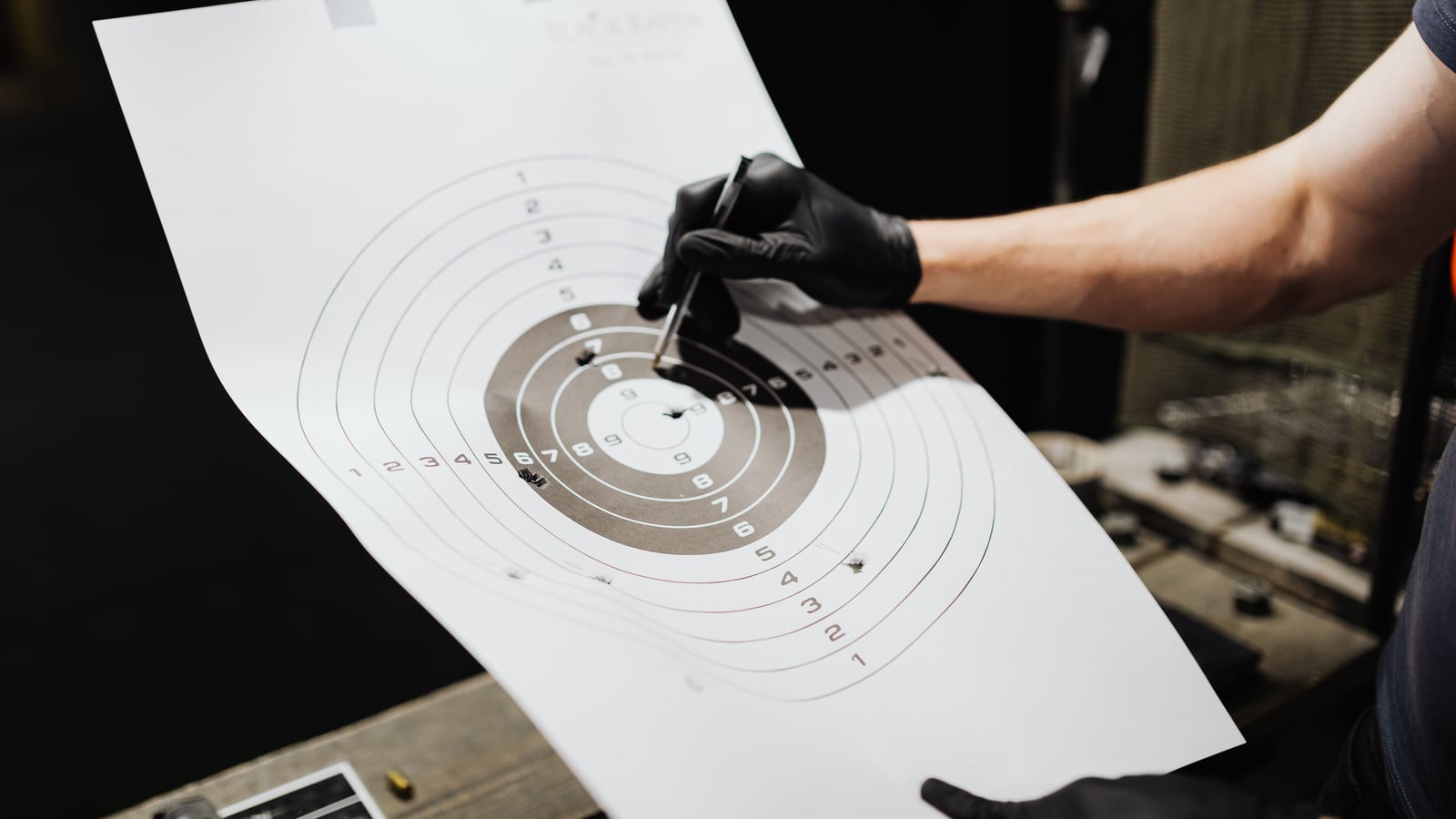
Gloves: an accessory people adopt too fast or too late
Shooting gloves are divisive. Some shooters swear by them from the very first winter sessions, others flatly refuse to wear them, even in bitter cold, because they’re afraid of losing feel on the trigger. Both positions have merit, which is exactly what makes the topic interesting.
The truth is there’s no universal answer. A glove that saves a clay session in January can ruin a 10-meter precision series the same day. It all depends on the discipline, the technical movement required, and what you’re actually trying to protect: your hands from the cold, your skin from splinters, or your grip on a gun that slips.
This guide covers the question fully and without dogma. We’ll look at the real reasons to wear a glove, the disciplines where it’s common or even recommended, those where it’s clearly a bad idea, and the real impact on trigger feel, which is often the deciding factor in the final choice.
One clarification before we start: everything below concerns civilian sport shooting, recreational and competitive, supervised by a club or federation. Nothing in this article applies to professional use or any context outside the sport shooting range.
Keep one simple principle in mind that runs through the whole article: the glove is never an end in itself. It’s a protection or comfort tool, and it should never become an obstacle to precision of movement, which in sport shooting always remains priority number one.
Protection against cold: the most obvious use case
The first instinct that pushes a shooter toward gloves is simply the weather. An outdoor range in the dead of winter, a morning clay session below freezing, a 300-meter rifle session in bitter wind: under these conditions, numb hands quickly become a real technical problem.
A cold hand loses sensitivity and fine dexterity well before you notice. The shooter no longer feels precisely the pressure applied on the trigger, nor the micro-adjustments of grip that stabilize the gun. This isn’t just a comfort issue: it’s a measurable degradation in the quality of the movement.
In disciplines often practiced outdoors in all weather, like clay shooting, trap shooting in general, or certain long-distance rifle events, the thermal glove is almost basic equipment for the cold months. It keeps mobility in the fingers without sacrificing the whole session to fighting numbness.
The choice then leans toward thin but insulating gloves, often in technical fabric or soft lined leather, never thick classic “winter gloves” that completely block finger mobility. The balance between warmth and thinness is the number one criterion, well ahead of looks or brand.
One point not to overlook: cold doesn’t only affect the hands, but it has a disproportionate impact on them because the hands drive shooting precision. A shooter who accepts cold shoulders but keeps sensitive fingers will score better than one who’s well covered everywhere except the hands.
Protection against splinters and ejecta
The second major reason to wear gloves is physical protection against anything that can injure or irritate the hands during a shooting session. This risk varies enormously depending on the discipline and the type of gun used.
In clay shooting and shotgun disciplines in general, ejected shells can be hot and sometimes thrown unpredictably depending on the gun model. A light glove protects the hand that isn’t directly on the trigger against these small surface burns, without hindering the mount.
In dynamic shooting on cardboard targets or steel plates, repeated handling of magazines, gripping a gun that’s sometimes still warm after a fast string, or contact with abrasive surfaces of competition accessories can irritate the skin over time. Shooters who train intensely sometimes wear a thin glove on the support hand for this exact reason.
Shooting old firearms or black powder presents a special case: combustion residue, sometimes more abundant than with modern powder, and handling parts that can heat up after several successive shots, push some practitioners to wear a glove on the hand that handles the barrel or the loading rod.
We should also mention splinters coming from the target itself: on certain reactive targets or steel plates used in animal silhouette shooting (chicken, pig, turkey, ram), fragments can ricochet near the firing line in rare configurations. A glove doesn’t protect against a direct hit at that distance, but it limits the discomfort of small secondary projections on the support hand, which is often more exposed than the shooting hand.
In all these cases, the glove remains a comfort and light-protection accessory, not ballistic safety equipment. The real protection against dangerous projections remains shooting glasses and following range rules, never a fabric or thin leather glove.
Improved grip: when the glove becomes a technical ally
Beyond protection, some shooters adopt the glove for a purely technical reason: improving grip on a gun that slips. This is a use case in its own right, independent of weather or injury risk.
Sweaty hands, whether from nervousness in competition or simply hot weather, reduce grip on a smooth stock or a poorly textured forend. A glove with a non-slip palm can then stabilize the grip better than a bare, damp hand.
This is an argument you often find in dynamic shooting, where speed of execution and fast transitions between positions demand a constant, reliable grip. A technical glove, thin at the fingers but reinforced at the palm, keeps this grip without sacrificing the sensitivity needed for quick magazine or safety manipulations.
Some clay shooters make the same choice for a slightly different reason: the repeated mounting of a long gun wears down the skin of the support hand at the forend, and a reinforced-palm glove limits wear over an intensive competition season.
There are also gloves specifically designed to compensate for insufficient stock texture on a stock firearm. Rather than modifying the gun itself with an add-on grip, some shooters prefer adding this traction via the glove, a reversible and inexpensive solution compared to changing the stock or forend.
The downside of this approach: a poorly chosen glove, with a palm too thick or poorly textured, can instead create play between the hand and the gun, the opposite of the desired effect. Model choice should always go through a real try-before-you-buy test, never on the basis of a product sheet alone.
Disciplines where the glove is common: clays and dynamic shooting
Two big families of disciplines stand out for frequent and well-accepted glove use: clay shooting and dynamic shooting on cardboard or steel targets.
In clay shooting (trap, skeet, sporting clays), the glove checks several boxes at once: protection from cold outdoors, comfort against hot shells, and sometimes improved grip on a shotgun that can get slippery after several dozen rounds. The discipline lends itself well to glove use because the shooting motion, mount and trigger break, remains relatively tolerant of a slight loss of fine tactile feel.
In dynamic shooting (IPSC, Steel Challenge, USPSA, and related disciplines), the glove is common on the support hand, less systematic on the shooting hand due to the impact on trigger feel detailed further below. Many competitors wear a thin glove only on the weak-hand side, for grip and protection during fast magazine manipulations.
These two families of disciplines share one thing: overall movement takes priority over fine feel at the fingertip. Speed of execution, grip stability, and flow of movement matter more than the exact perception of the trigger break point, unlike static precision disciplines.
An experienced coach often advises beginners in dynamic shooting to first try without a glove during the early sessions, to properly learn the movement and the base feel, then introduce the glove gradually once fundamentals are acquired. This progression avoids masking a technical flaw behind the excuse of the glove.
Disciplines where the glove is discouraged: fine precision
At the opposite end, fine precision disciplines are the ones where the glove causes the most problems, and where its use is generally discouraged, or even ruled out by practice itself rather than by explicit regulation.
Precision pistol or rifle shooting, notably in 10-, 25-, or 50-meter static-position events, demands extremely fine finger control on the trigger. The shooter must precisely feel the starting point of the travel, the buildup of pressure, and the exact moment of the shot breaking, often anticipating a break that must slightly surprise the brain to avoid recoil anticipation.
A glove, even a thin one, adds a layer of material between the skin and the trigger. This layer changes the perception of the break point, reduces sensitivity to pressure variations, and can literally change the feel of the movement compared to training done bare-handed. For a shooter chasing a tenth of a point in precision competition, this loss of feel is rarely acceptable.
10-meter air rifle shooting illustrates this problem well: the discipline is practiced almost always indoors, without cold exposure, with a gun whose trigger weight is often very light and calibrated to the gram. Adding a glove in this context brings no protective benefit and only removes tactile precision.
Some precision shooters still use a glove, but in a very different role: a support glove, often padded, worn on the arm or forearm rather than on the hand that operates the trigger, to stabilize a rest or cushion a sling. This isn’t a classic grip glove and doesn’t pose the same trigger-feel problem.
The general rule to remember: the more finely a discipline requires feeling the travel and break point of the trigger, the less the glove belongs on the shooting hand. This is a simple principle that guides the decision better than any fixed list of allowed or forbidden disciplines.
The glove’s impact on trigger feel, in detail
Trigger feel is arguably the most decisive argument in the choice to wear a glove or not. It deserves more detail beyond the simple precision-versus-dynamic opposition.
A bare finger on a trigger perceives three distinct elements: the free travel before the mechanism starts resisting, the progressive buildup of resistance up to the break point, and the sensation of the shot breaking itself. An experienced shooter feels these three phases almost unconsciously after years of practice.
A glove, even the thinnest on the market, introduces a layer of material that slightly dampens this perception. The effect varies with glove thickness, material used, and the exact zone of the finger touching the trigger. A very thin leather glove on the first knuckle will have minimal impact; a thick or poorly fitted glove can completely mask nuances of pressure.
This impact isn’t purely negative in absolute terms: it depends on what the discipline demands. In dynamic shooting, where the trigger is pulled more decisively and repeatedly at a fast pace, the loss of tactile finesse matters much less than in a discipline where each shot is prepared over several seconds while chasing the perfect movement.
Another often-forgotten factor: whether or not the glove is habitually worn in training. A shooter who always trains with the same glove develops a reference feel adapted to that material thickness, much like they’d develop a feel specific to a trigger set to a given weight. The real problem arises when the glove changes between training and competition, or when it’s only worn occasionally: in that case, the hand loses its usual reference points at the worst possible moment.
For this reason, a seasoned club shooter considering using a glove in competition has every interest in training systematically with that same glove, rather than reserving it for competition day. Consistency of movement depends first and foremost on consistency of training conditions.
Materials and thickness: what really changes things
The choice of material and glove thickness directly determines the balance between protection, grip, and tactile feel. This isn’t a cosmetic detail, it’s the most important technical parameter after the decision itself to wear a glove.
Thin leather remains a safe bet for versatile use: it offers good wear resistance, decent grip even slightly damp, and a moderate loss of trigger feel compared to other thicker materials. It’s often the compromise chosen by shooters who want a single glove for multiple uses.
Technical fabric gloves, similar to those used in other precision or outdoor sports, bet on lightness and breathability. They suit clay shooting or dynamic shooting well, where grip and cold protection outweigh ultra-fine feel.
Palm-reinforced gloves, with silicone or non-slip material inserts, specifically target improved grip. They’re relevant for the support hand in dynamic shooting, but rarely recommended on the shooting hand in fine precision, where even a localized reinforcement can disrupt finger feel on the trigger.
There are also so-called “fingerless” or cut-finger gloves, which protect the palm and back of the hand while leaving the index finger bare for direct trigger contact. This hybrid solution appeals to shooters who want grip and cold protection over most of the hand, without sacrificing fine tactile feel on the finger that operates the trigger. It’s often a good compromise for those torn between both approaches.
Overall thickness remains the most determining factor across all materials: the thicker a glove, the more it protects and insulates from cold, but the more it degrades tactile feel. No miracle material resolves this tension: it’s a tradeoff each shooter has to make according to their discipline and personal priorities.
Fit and size: a criterion too often neglected
A good glove that’s poorly fitted cancels out much of its benefits, whether grip, protection, or preserving trigger feel. Fit deserves as much attention as material choice.
A glove that’s too loose creates play between the skin and the inside of the fabric or leather, which further blurs perception of the trigger and can even hinder overall grip on the gun. A glove that’s too tight, conversely, compresses the hand and can numb the fingers, ironic for an accessory often chosen precisely against the cold.
Trying it under real conditions remains the only truly valid test. A glove that seems perfect in the store can turn out to be annoying once the hand is closed around a stock or trigger guard, particularly at the index finger joint, which must remain free to move without catching on the fabric.
One precise technical point to check systematically: the zone covering the first knuckle of the index finger, the part that comes into contact with the trigger. A seam, a fold of material, or a poorly placed reinforcement at exactly that spot can create a friction point that disrupts the movement far more than uniform thickness over the whole hand.
For shooters with particularly slim or wide hands, standard commercial sizes don’t always fit. Some manufacturers specializing in shooting or precision sports offer intermediate sizes or specific left- and right-hand cuts, which are worth seeking out rather than settling for a poorly fitted generic glove.
Care and lifespan of shooting gloves
A shooting glove, like any piece of equipment subject to regular wear, needs minimal but real maintenance to keep its grip and protective qualities over time.
Moisture is the main enemy, whether accumulated sweat session after session or exposure to rain at an outdoor range. A glove that dries poorly loses suppleness, can harden locally, and sees its material degrade faster than a glove properly air-dried after each use.
Leather requires particular attention: occasional care with a product suited to soft leather keeps it flexible and prevents it from cracking over time. Technical fabric gloves clean more simply, often by hand with mild soap, but tolerate an overly aggressive machine wash poorly, which can damage grip inserts.
The actual lifespan of a glove varies enormously depending on frequency of use and discipline practiced. A glove used only for a few winter clay sessions logically lasts much longer than one worn at every intensive dynamic shooting training. Rather than stating a precise lifespan that would vary too much case by case, it’s better to watch for concrete signs of wear: loss of palm grip, thinning at flex points, or seams starting to give.
Replacing a worn glove isn’t just a comfort question. A glove that has lost its original grip can become counterproductive, giving a false sense of security about the grip while the material no longer really holds the gun as it should.
Making your choice based on your personal practice
Having reviewed the uses, disciplines, and materials, the real question remains individual: what’s the right choice for your specific practice, with your training conditions and goals.
A shooter who practices only at a club, indoors, in static precision disciplines really has few reasons to wear a glove on the shooting hand. The protective benefit is nearly nil in a temperate indoor space, and the cost in tactile feel far outweighs the sought-after advantage.
A shooter who alternates between outdoor clays in winter and dynamic shooting the rest of the year has an interest in owning two distinct types of gloves rather than a single model meant to do everything. A warmer, more protective glove for cold sessions, a thinner, grip-oriented one for dynamic practice.
For hesitant shooters, the best method remains progressive trial: introducing the glove over a few training sessions, objectively comparing feel and results with and without, before settling on a regular practice. That’s better than relying solely on the recommendations of other practitioners, whose hand shape and shooting style inevitably differ from yours.
A regional champion who long hesitated between glove and bare hand in dynamic shooting sums up the logic to follow well: the glove must serve performance, never constrain it. If a glove objectively improves comfort or grip without a perceptible cost to precision, it deserves its place in the equipment. Otherwise, it’s better to do without, even in cold weather, and compensate for the lost comfort another way.
Gloves and general safety at the range
The glove also has a safety dimension often left unspoken, distinct from simple protection against cold or splinters. It concerns how it interacts with the range’s other safety rules.
A central rule of sport shooting requires the finger to stay outside the trigger guard as long as the gun isn’t pointed at the target and ready to fire. A poorly fitted glove, particularly too thick at the knuckle, can make this movement in and out of the trigger guard less crisp, with a risk of premature or involuntary contact with the trigger. This is one more argument in favor of a thin, well-cut glove, rather than a thick model chosen only for thermal comfort.
Operating the gun’s mechanical safeties, whether a safety lever, a bolt lock button, or a magazine latch, also requires good dexterity. An overly bulky glove can slow down these basic safety movements, particularly during loading and unloading phases under the supervision of an instructor or range officer. On a range where procedural rigor comes before everything else, this slowdown isn’t trivial.
A glove can also mask a useful sensation in case of a mechanical problem: a bare-handed shooter more easily feels abnormal resistance on the trigger, an unusual grittiness in the mechanism, or suspicious play in the frame. These weak signals, almost imperceptible with a thick glove, sometimes allow spotting an issue before it worsens. This isn’t a reason to ban the glove, but an additional reason to favor thinness over thickness when possible.
Finally, some internal club rules impose specific dress requirements, particularly in clay disciplines where wearing long sleeves and gloves may be recommended to limit shot residue landing on exposed skin. An experienced instructor knows these local customs better than any general guide, and remains the best source of information before investing in specific equipment tied to a given club.
Gloves and antique or black powder firearms: a special case
Shooting antique firearms and black powder deserves separate treatment, given how much the constraints differ from shooting modern firearms. It’s a discipline where the glove changes role: it protects less against cold than against direct handling of parts and residue.
Loading a black powder firearm involves pouring a charge, tamping a projectile with a rod, and often handling primers or percussion caps depending on the ignition system. These repeated motions expose the hands to combustion residue, sometimes sticky or slightly corrosive, which can irritate the skin over a prolonged session.
A thin glove on the hand handling the loading rod or holding the barrel while tamping the projectile limits this direct contact. Many regular practitioners of this discipline adopt a soft leather glove or resistant fabric, not necessarily for thermal comfort, but precisely for this reason of repeated residue handling.
The hand operating the trigger raises a different issue: on many antique firearms or historical replicas, the trigger mechanism is simple, sometimes heavier and less progressive than on a modern precision gun. The impact of a thin glove on the feel of the shot breaking is therefore often less critical there than on a 10-meter precision rifle, where every gram of pressure counts.
It’s also worth noting that certain historical replicas and category D firearms, freely sold or subject to simple registration depending on their exact configuration, are precisely appreciated by beginners for their accessibility. A shooter discovering this discipline via a category D firearm has every interest in checking directly with their club about local dress customs, which sometimes vary from one range to another depending on the type of black powder used and the safety procedures in force.
Budget and where to invest first
The shooting glove market covers a wide price range, from the generic sports glove found at a big-box store to the specialized model designed specifically for shooting practice. Budget should never be the first selection criterion, but it still structures the final decision.
An entry-level glove in technical fabric works very well to start, particularly if use remains occasional, for example for a few winter clay sessions per season. It lets you test the value of the glove for your own practice before investing further in a more specialized model.
For more regular or more technical use, notably in dynamic shooting where grip and durability matter more, a mid-range glove with localized palm reinforcements often represents the best value for money. This segment generally offers a good balance between tactile finesse, wear resistance, and comfort.
High-end models, with custom or near-custom cut, advanced technical materials, and careful finishing at the index finger, are aimed mainly at intensive practitioners who shoot several times a week and for whom every detail matters over the course of a competition season. The price gap with entry-level stays broad and varies a lot depending on manufacturer, material chosen, and country of manufacture, so it’s better to compare several references rather than trust a universal price range.
One practical piece of advice that applies across all budgets: a simple glove well fitted to your hand beats an expensive but poorly cut one. Fit, as mentioned above, weighs more on actual performance than price range or brand reputation.
Common mistakes among shooters new to gloves
Certain mistakes come up regularly among shooters discovering glove use, often because they carry over a habit from another sport or manual activity without adapting it to the specific demands of shooting.
The first mistake is choosing a glove based on its use in another field, for example a motorcycle glove or a hiking glove, because you already have one in your gear bag. These gloves are designed for other constraints: impact protection for motorcycling, maximum insulation for mountain hiking. Neither accounts for the finesse needed for contact with a trigger.
The second mistake, almost the opposite, is wanting to wear the thinnest glove possible right from the start, imagining that thinness fixes everything. A glove too thin in genuinely cold conditions doesn’t insulate enough, and the shooter ends up with numb hands despite the glove, canceling out the whole point of wearing one.
A third frequent mistake concerns consistency: some shooters alternate between glove and bare hand from one session to the next with no clear rule, depending on mood or the day’s weather. This inconsistency prevents developing a stable trigger feel, whether with or without a glove. Better to pick a clear rule, for example “glove on below a certain perceived temperature,” and stick to it to keep a coherent technical reference point from one session to the next.
One last, more subtle mistake is ignoring the advice of an experienced instructor or a seasoned club shooter about the habits specific to a given discipline. The general recommendations in this article provide a solid framework, but every club and every locally practiced discipline can have its own customs, its own field constraints, and sometimes additional safety rules that are better known before showing up at the range with unsuitable equipment.
FAQ
Q: Is the shooting glove mandatory in a discipline or a club? A: No, wearing a glove remains almost always a personal choice, not a regulatory requirement. Some clubs may recommend warm equipment in winter for general comfort, but that doesn’t specifically concern the hands or the trigger.
Q: Can you use the same gloves for clay shooting and dynamic shooting? A: It’s possible but rarely optimal, since the priorities differ: warmth and comfort for outdoor clays, grip finesse for dynamic shooting. A versatile thin leather glove can suit both if you accept a compromise on each use.
Q: Does a thin glove really change trigger feel? A: Yes, even a very thin glove adds a layer of material that slightly changes perception of the break point. The impact remains slight in dynamic shooting but becomes significant in fine precision disciplines where every nuance of pressure counts.
Q: Should you wear a glove on both hands or just one? A: It depends on the discipline: in dynamic shooting, many shooters wear a glove only on the support hand to preserve trigger feel on the shooting hand. In clay shooting, wearing on both hands is more common since neither directly touches a gram-sensitive trigger.
Q: How do I know if my glove is too thick for my discipline? A: If you no longer distinctly feel the buildup of pressure before the shot breaks, or if you have to push harder than usual to release the shot, the glove is probably too thick for that use. The most reliable test remains directly comparing a string with and without the glove, under the same conditions.
Q: Are there gloves specifically designed for sport shooting? A: Yes, some manufacturers offer gloves designed for shooting, with reinforced palm zones and an exposed or very thin index finger to preserve trigger feel. They generally cost more than a generic glove, but the precise fit often justifies the difference for regular practice.