
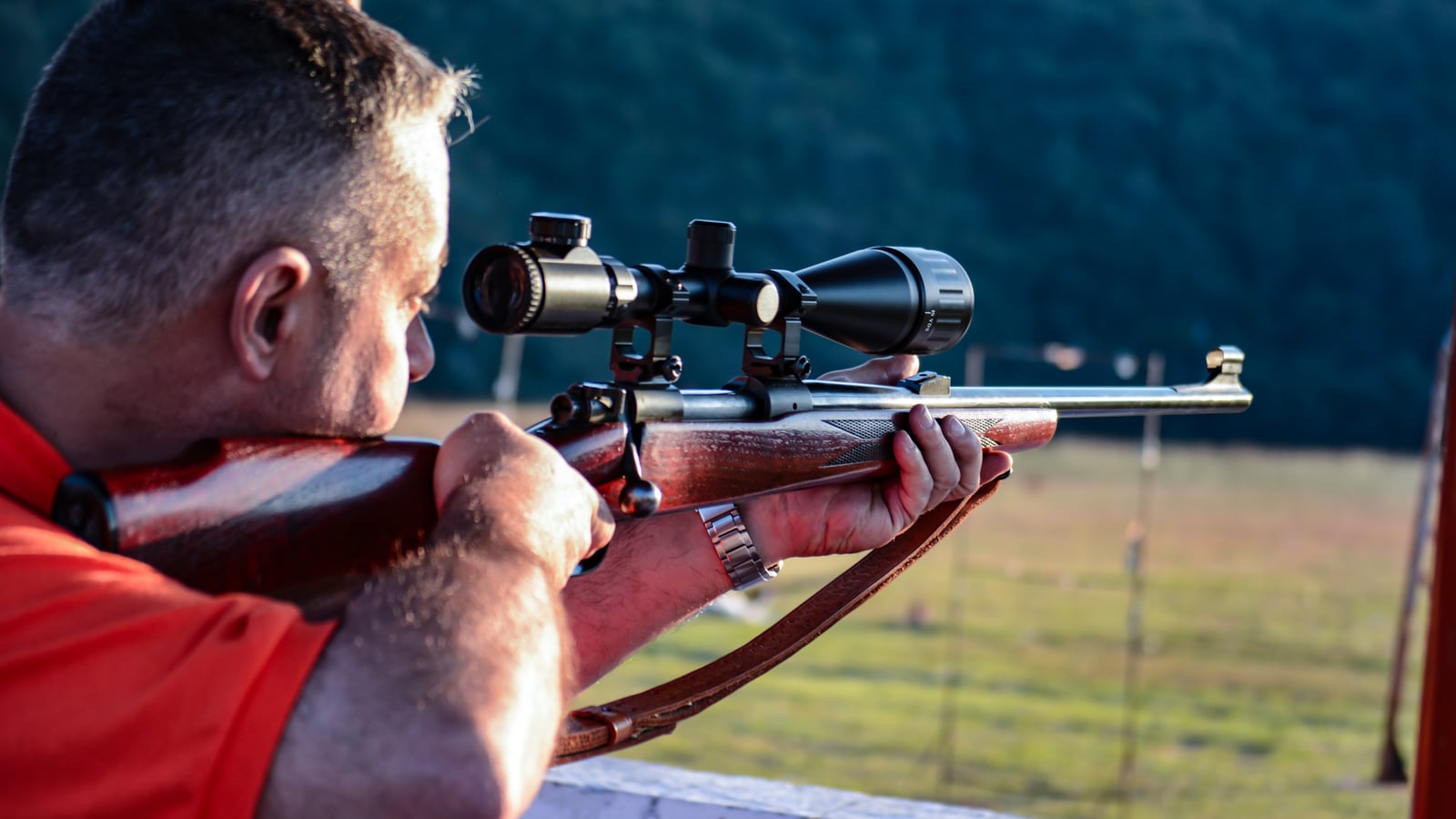
Why sport psychology got interested in shooting
Precision shooting is a unique field of study for sport psychology researchers. Unlike a sprint or a throw, the movement is nearly static: the body barely moves, everything happens in a mental and physiological space invisible to the naked eye.
This particularity has made it a subject of choice for decades. Researchers find in it an almost pure model for studying attention, fine motor control, and stress management, without the “physical power” variable that muddies results in other disciplines.
What follows is a plain-language synthesis of what these studies actually say, without unnecessary jargon. The goal isn’t to turn you into a researcher but to give you concrete tools you can use starting with your very next session.
None of this is specific to civilian recreational or competitive shooting sport — the same mechanisms apply to a beginner at a local club as to a confirmed regional champion. Psychology doesn’t distinguish by level, only by degree.
Attention: the shooter’s scarcest resource
Human attention is a limited resource. You can’t be fully focused on your position, your breathing, your sight alignment, and the noise from the shooter next to you all at once. The brain prioritizes, and it often prioritizes badly.
Researchers distinguish two types of attentional focus: internal attention (bodily sensations, movement, breath) and external attention (target outcome, environment, competitors). Precision shooting demands an almost exclusively internal attention at the moment of release.
An experienced club shooter who blows a string almost never has a technical problem in the strict sense. Most often, their attention has drifted outward: the running score, the clock, other people’s gaze. The movement itself doesn’t change from shot to shot in an experienced practitioner.
Concretely, training your attention means repeating an identical routine before every shot, until it becomes an automatic signal to switch back inward. It’s not a trick — it’s one of the most consistently replicated findings in the precision-sport psychology literature.
A few practical, research-backed levers:
- A fixed pre-shot routine, always identical, regardless of the stakes.
- A keyword or a short mental image that brings attention back to the movement (“release,” “clear front sight”).
- Deliberate micro-pauses between shots to “reset” attention rather than chaining shots in a degraded automatic mode.
A second useful concept is “attentional narrowing” under pressure: the higher the stress level rises, the smaller the field of what the brain can process becomes. In small doses, this narrowing helps eliminate superfluous distractions. Pushed too far, it also eliminates useful information — the feel of the trigger, wrist balance — and the movement becomes rigid.
This notion explains why the same shooter can be excellent in a small group and lose their footing in a packed hall on championship day: it isn’t the stakes themselves that are the problem, it’s the amount of information the brain has to sort simultaneously, and how attention narrows to cope with it.
One last documented point concerns the duration of sustained concentration. High-quality attention isn’t a state you can maintain indefinitely: it fluctuates in waves of a few minutes. A shooter who runs through a long string without a structured pause ends up shooting the last shots with diluted attention, even without realizing it. Deliberately spacing out strings, rather than chaining them out of habit, helps you stay within the windows where attention is genuinely available.
Optimal arousal: neither too calm nor too excited
Arousal is the overall level of physiological and mental activation — from drowsiness to panic. An old but still central model in sport psychology says that performance follows an inverted-U curve relative to this activation level.
Too low, and the shooter is mentally absent, reflexes are slow, concentration drifts. Too high, and tremor increases, breathing speeds up, fine motor control deteriorates — exactly what you don’t need to align a sight point on a target at 10, 25, or 50 meters.
There’s an intermediate point, unique to each shooter, where performance peaks. This point isn’t the same for everyone: an experienced instructor sometimes performs best at an activation level a beginner would find paralyzing, and vice versa.
The discipline itself influences this optimal point. A dynamic speed event (multiple cardboard targets, timed) demands higher arousal than a static precision event at 50 meters, where near-total calm is sought.
How to find your own optimal point without lab equipment:
- Note your felt stress level (out of 10) before each training string, and your result.
- After several sessions, a pattern emerges: a stress level that’s neither too low nor too high consistently corresponds to your best groupings.
- Once you’ve identified this point, develop routines to deliberately bring yourself back there — slow breathing if you’re too excited, light activation (a few movements, an energizing phrase) if you’re too flat.
This model also explains a phenomenon many shooters notice without naming it: the first string of a competition is often weaker than the second or third, once arousal has come down from an initially too-high peak into the optimal zone. Some competitors build this observation into their match strategy, deliberately treating the first string as a calibration period rather than the decisive one.
Another factor that shifts the optimal point is fatigue accumulated over a long competition day with multiple events or rounds. Fatigue generally lowers the activation threshold needed to tip onto the “too high” side of the curve: a stress level that stayed manageable early in the day becomes excessive by the end, with identical external context. Anticipating this drift is part of preparing for a competition that lasts several hours.
Finally, there’s a documented difference between “cognitive” arousal (anxious thoughts, worry about the outcome) and “somatic” arousal (physical manifestations: racing heart, sweaty palms, muscle tension). The two don’t respond to the same levers: breathing acts mainly on the somatic component, while reframing self-talk acts mainly on the cognitive component. A shooter who only addresses one of the two lets the other keep disrupting performance.
Biofeedback: making the invisible visible
Biofeedback consists of measuring a physiological signal in real time — heart rate, muscle tension, heart rate variability — and feeding it back to the athlete so they learn to consciously modulate it. Precision-sport psychology research has been interested in this for a long time because shooting lends itself particularly well to it.
The most studied principle is synchronization between heart rhythm and the moment of release. The heart doesn’t accelerate linearly: there are micro-phases where cardiac activity interferes less with the stability of the movement. Trained shooters learn, with biofeedback, to identify this moment and time their release to it.
A consumer-grade biofeedback device is often just a heart-rate sensor connected to an app, or a muscle-tension sensor placed on the forearm of the holding hand. The pedagogical principle is always the same: make a normally invisible signal conscious, so the brain can learn to regulate it.
What the literature shows on this topic, in summary:
- Biofeedback training improves lab-measured postural stability in regular practitioners.
- The main benefit isn’t the sensor itself, but the bodily awareness it installs — a shooter who has practiced biofeedback for a few weeks often retains this sensitivity even without a sensor afterward.
- Biofeedback works best as a complement to classic technical training, never as a replacement for it.
Without a sensor, you can mimic the principle by deliberately concentrating, string after string, on your pulse as felt in your temples or fingers, then noting whether releasing at the moment of a particular beat changes your grouping.
Biofeedback also extends to muscle tension, particularly in the forearm and shoulders. Excessive tension, invisible to the naked eye, in the trapezius or the supporting forearm degrades aiming stability well before the shooter consciously feels it. Electromyographic sensors used in labs have documented that experienced shooters maintain noticeably lower and more stable tension than beginners in the same muscle groups, with an outwardly comparable movement.
One of the most interesting contributions of biofeedback to recreational practice is that it makes measurable a progress that would otherwise remain purely subjective. Many shooters judge their calm state purely by feeling, an unreliable indicator under stress. A sensor, even a simple one, removes some of that subjectivity and lets you objectively verify whether a stress-management technique actually works for you, rather than trusting an impression.
The honest limit of biofeedback, documented by the research itself, is that the learning effect needs repetition over several weeks to settle durably. A single session with a sensor rarely produces a measurable change; it’s repeated use, as with any training, that builds the skill.
Fine motor control under pressure
The shooting sport movement is one of the finest motor movements there is: a few tenths of a millimeter of barrel displacement at the muzzle translate into centimeters of deviation on the target. The psychology of motor control looks at how this movement degrades under stress, and how to preserve it.
A well-documented phenomenon is “over-conscious” movement under pressure: an experienced shooter who starts over-analyzing a normally automatic movement consciously sees their fluidity degrade. This is the paradox of the over-thought movement.
This phenomenon explains why an experienced shooter can suddenly “lose” a movement they’ve mastered for years, typically in an important competition. The brain regains conscious control over a process that should stay automatic, and the automaticity breaks.
The documented countermeasure is to keep attention on a simple external element (the aiming point, a target) rather than on the internal detail of the movement (the exact position of the finger on the trigger). Focusing on the visual result of the movement protects automaticity better than focusing on the movement itself.
This result has a direct practical consequence on how to correct a technical flaw. Working on a flaw in the middle of competition, consciously analyzing every parameter of the movement, tends to worsen the situation rather than fix it. Fine technical corrections belong in training, away from any stakes, precisely because that’s the only context where the movement can become conscious again without degrading under pressure.
Motor-control research also documents a “cognitive load” phenomenon: every extra mental task carried out in parallel with the movement (counting cartridges, watching the clock, thinking about the next step in the program) consumes resources that are then missing for the stability of the movement itself. Simplifying to the maximum what needs to be consciously managed during the shot mechanically frees up resources for fine motor skills.
A concrete example of this cognitive load involves dynamic disciplines, where the shooter must simultaneously manage movement, count remaining ammunition, and quickly identify cardboard or steel targets to engage. Managing this load, more than raw speed of movement, often differentiates experienced shooters from beginners in this type of event.
The role of self-talk
What a shooter says to themselves during a string has a measurable effect on their performance. Research distinguishes facilitative self-talk (which helps stay focused, calm, confident) from disruptive self-talk (doubt, self-criticism, negative anticipation).
A typical example of disruptive self-talk: after a missed shot, the shooter thinks “I’m going to miss the next one too.” This sentence acts as an implicit instruction given to the brain, and statistically increases the probability of actually missing the next shot.
Facilitative self-talk isn’t about lying to yourself (“everything’s fine” when it isn’t) but about reframing in action-oriented language: replacing “I always miss my first shots” with “I do my routine, shot after shot.” The semantic difference seems minor; the effect on performance is not.
A simple exercise, used by many clubs, consists of writing down your recurring inner sentences during competition, then reformulating them one by one into an action-oriented version. This reformulation exercise, repeated, ends up changing the automatic verbal reflex.
Self-talk also has an interesting temporal dimension studied by researchers: sentences spoken before the shot don’t carry the same weight as those spoken right after. Post-shot self-talk, especially after a miss, seems to have a disproportionate effect on the next shot compared to its apparent importance. This is why managing the immediate aftermath of a miss is considered one of the most cost-effective mental levers to work on.
A useful distinction, documented by research, contrasts instructional self-talk (which gives a technical cue: “release the shoulder”) with motivational self-talk (aimed at the emotional state: “stay calm, you’ve got this”). Both have their use but at different moments: instructional before and during the movement, motivational rather between strings or after a setback. Mixing the two registers — for instance, motivating yourself verbally in the middle of aiming — tends to interfere with the technical concentration needed at that precise instant.
The pre-shot routine as a psychological tool, not superstition
Many shooters have a pre-shot routine without knowing it has a precise psychological function, documented by research. It isn’t superstition — it’s a tool for attentional and physiological regulation.
An effective routine, according to what the literature identifies, shares several characteristics: it’s short (a few seconds to a few dozen seconds), always identical, it includes a physical element (breathing, posture) and a mental element (image or keyword), and it always ends with the same start signal.
The intended effect is twofold: occupying attention with a known sequence to prevent it drifting toward doubt or the outcome, and creating a conditioned signal that automatically flips body and mind into “ready to shoot” mode after dozens of repetitions.
What systematically breaks a routine, documented as counterproductive: changing it mid-competition because “it’s not working today,” or lengthening it under stress thinking more preparation time will compensate for anxiety. Generally the opposite happens: the more the routine lengthens under stress, the more doubt creeps into it.
A less-known aspect concerns the “post-shot” routine, distinct from the pre-shot routine but just as studied. It consists of a brief sequence performed right after each shot, whether successful or missed, to mentally close the action and start fresh for the next shot. Without this closing airlock, the mind retains a trace of the previous shot — satisfaction or frustration — that contaminates the next one without the shooter always being aware of it.
Building an effective routine generally follows a progressive principle documented by motor-learning research: it’s first shaped consciously and relatively rigidly, then it automates and can shorten slightly without losing its effect, as repetitions accumulate. A beginner shooter therefore benefits from accepting a longer, more conscious routine at first, knowing it will smooth out with experience rather than chasing immediate efficiency.
Competition stress: a mechanism, not a fatality
Competition stress isn’t a character trait (“I’m just a stressed person”) but a physiological response to a context perceived as important and uncertain. This distinction changes everything about how to work on it.
Research shows that competition stress decreases with repeated exposure to stakes-bearing contexts, even low-stakes ones. A shooter who takes part in many small club matches develops a tolerance to competition stress that later transfers to bigger competitions.
An often misunderstood point: the goal isn’t to make stress disappear, which is unrealistic and probably counterproductive, but to learn to perform with a present but controlled stress level. The best competitors generally aren’t the ones who feel nothing, but those who know how to function with the tension present.
Slow breathing techniques (short inhale, extended exhale) have a documented effect on reducing activation of the sympathetic nervous system, responsible for the stress response. It’s not a miracle method but a simple, free tool usable between every string.
A useful distinction, often overlooked, separates “facilitative” anxiety from “debilitating” anxiety. What matters isn’t so much the intensity of felt stress as how the shooter interprets it: perceived as a signal of engagement and importance, that same stress level can become a driver of concentration rather than a brake. This reinterpretation, called cognitive reframing in the literature, is one of the most studied angles in competition psychology in recent years.
The social context of competition also plays a documented role in the intensity of perceived stress. The presence of spectators, the proximity of other shooters on the same line, or the public announcement of intermediate scores generally increases felt stress, regardless of the shooter’s actual technical level. Occasionally training under conditions that reproduce part of this social pressure — a small audience, a visible clock, a score announcement — prepares the nervous system for these stimuli before match day.
Finally, recovery between competitions is an integral part of medium-term stress management. A string of close-together competitions without sufficient psychological recovery time tends to raise the shooter’s baseline stress level, a phenomenon close to overtraining but mental rather than muscular. Deliberately spacing out important deadlines, or at minimum allowing yourself a wind-down period after each competition, is among the recommendations regularly made in this research field.
What research says about mental visualization
Visualization, or mental imagery, consists of mentally rehearsing a movement without physically performing it. Sport psychology studies show partial activation of the same motor circuits as during actual execution of the movement, which explains its measurable training effect.
For shooting sport, effective visualization isn’t “imagining yourself winning” but mentally rehearsing the complete sequence of the technical movement: position, breathing, alignment, release, in the richest possible sensory detail (what you see, what you feel in your fingers, the expected sound).
A useful visualization session rarely lasts more than a few minutes but requires real concentration, not passive daydreaming. Quality vastly outweighs quantity: a few well-focused minutes are worth more than a distracted half hour.
Visualization works as a complement to physical practice, never as a substitute. No serious study supports the idea that it can replace real repetitions on the range — it extends and reinforces their effect, it doesn’t replace them.
Research distinguishes two visualization perspectives: the internal perspective, where the shooter imagines being inside their own body performing the movement, and the external perspective, where they see themselves as an outside observer would watch the scene. Both perspectives have slightly different effects: the internal seems more effective for working on fine proprioceptive sensations, while the external helps more with working on overall posture or sequence flow.
A particularly documented use of visualization concerns preparing for an unfamiliar competition venue. A shooter who has never shot on a given range can reduce part of the discomfort of the big day by visualizing in advance, in detail, the full sequence of their presence on site: arrival, setup, warm-up, first string. This mental anticipation reduces perceived unpredictability, and therefore indirectly the stress level felt on arrival.
Visualization can also be used to mentally rework a past underperformance, not by dwelling on it but by mentally replaying the same situation with the correct technical outcome. This form of corrective visualization is documented as a confidence-rebuilding tool after a bad string or a bad competition, provided it stays focused on the movement and not on regret over the outcome.
Individual differences: why there’s no universal recipe
One of the most consistent messages from recent sport psychology research is individual variability. Two shooters of equivalent level can have opposite psychological profiles and yet perform comparably, each with their own levers.
Some practitioners need more structure and ritual to feel mentally secure; others perform better with a shorter, more spontaneous preparation. Neither profile is inherently superior — what matters is the coherence between the profile and the method used.
This is one of the reasons why directly copying another shooter’s routine, even a successful shooter’s, rarely gives the same result. The routine that works is the one that matches each person’s own mental functioning, refined through experience and self-observation.
Tracking your own data over time — sensations, felt stress, results — remains the most reliable way to identify what actually works for you, rather than applying a generic method found elsewhere.
This individual variability also shows up in the learning speed of the mental tools themselves. Some shooters integrate a new breathing routine in a few sessions, others need several weeks before feeling a stable effect. Neither speed indicates a lack of aptitude: motor-learning research shows that the acquisition speed of a mental automaticity varies as much from one individual to another as that of a purely physical automaticity.
An additional individual factor, documented more recently, concerns each person’s sensitivity to social comparison. Some shooters are barely affected by shooting next to a stronger competitor; others see their performance drop noticeably in that configuration, regardless of their actual technical level. Identifying your own sensitivity to this factor lets you adapt your preparation — for example by deliberately training alongside shooters of varied levels rather than systematically isolating yourself.
Gaze fixation and perceptual load
An entire branch of precision-sport psychology research focuses on the shooter’s visual behavior, measured with eye-tracking devices. What’s studied isn’t just where the gaze lands, but how long it stays fixed there before release — a metric called the “final fixation period” (quiet eye) in the literature.
The best-performing shooters consistently show a longer and more stable final fixation on the aiming point or reticle, right before release, compared to less-performing shooters. This isn’t a simple style effect: this fixation period seems to give the brain time to process the visual information necessary for the final movement without being interrupted by a new gaze shift.
One of the practical lessons of this work is that a gaze that “flutters” between several points of interest right before release (the sight, then the target, then back to the sight) degrades precision, even if each individual fixation seems correct. Gaze stability matters as much as its momentary accuracy.
This research has direct implications for training: some protocols use simple visual feedback (a training partner who observes whether the gaze stays stable, or a slowed-down video) to help a shooter become aware of their own eye movements, generally invisible to themselves without such external feedback.
This result connects with the notion of cognitive load mentioned earlier: an unstable gaze is often the visible symptom of a mind managing too much information in parallel. Simplifying what needs to be mentally processed during aiming has the measurable side effect of also stabilizing gaze behavior.
Group cohesion and the club’s effect on individual mindset
Sport psychology doesn’t stop at the isolated individual: the club environment directly influences the shooter’s mental state. A club with a supportive atmosphere, where failure is normalized as a learning step, produces shooters who handle competition pressure better.
Conversely, an environment with constant social comparison and stigmatized error tends to reinforce performance anxiety, even in shooters who are otherwise technically solid. This factor is often underestimated even though research documents it clearly.
An experienced instructor who establishes a learning climate rather than a judgment climate durably changes how their students experience competition, well beyond the technique taught alone.
For an individual shooter, this translates concretely into a club choice that matters as much as facility quality: a club climate aligned with one’s own psychological needs is a progression factor in its own right.
The role of others’ gaze during training itself is also documented. A practitioner who systematically trains alone rarely develops the same tolerance to social pressure as one who regularly trains in the presence of others, even outside any formal competition context. The mere fact of being observed, even without explicit judgment, slightly alters motor behavior — a phenomenon long known in social psychology and directly transposable to shooting.
The role of a training partner or instructor goes beyond technical advice. A training partner who verbalizes constructive feedback after a string, rather than a mere score number, helps build a richer, more solution-oriented inner dialogue in the observed shooter. This relational dimension of training is regularly cited in work on the long-term progression of precision athletes.
Finally, the narrative function of the club — how progress and setbacks are told collectively, in debriefs after a competition or over a season — shapes how a shooter perceives their own trajectory. A club that values consistency and gradual learning instills a more durable vision of performance than one focused solely on the results of the last competition.
Measuring your own mental profile over time
Most of the lessons above only make full sense when tracked over time. A single bad match says nothing about a mental profile; a trend over several months says a lot.
Recording, session after session, your felt stress level, your sleep quality the night before, your fatigue state, and cross-referencing this data with your results lets individual patterns emerge that memory alone doesn’t retain faithfully.
That’s precisely what a digital shooting log like PewPewLife enables: logging these mental variables alongside scores and groupings, to turn a vague intuition (“I get stressed in competition”) into usable data over time.
This approach directly mirrors the method used by researchers themselves: it’s never a single isolated observation that reveals a psychological mechanism, but the repetition and comparison of measurements over time.
One of the most frequent traps in this personal tracking is recording only the numerical results (score, grouping) without the mental variables that go with them. Two sessions with an identical score can cover radically different mental experiences — one mastered start to finish, the other saved in extremis after a loss of concentration mid-string. Without noting this dimension, the most useful information for mental progress disappears, even as the final number seems to tell a story of stability.
Tracking over time also lets you objectify the effects of a new mental technique before concluding too quickly. A breathing routine tested over a single session tells you nothing about its real value; tested over ten sessions with systematic notes, it reveals whether the effect is reproducible or was just a lucky coincidence. This rigor, borrowed directly from the scientific method, remains accessible to any club shooter without a lab or specialized equipment.
Finally, regularly reviewing your own notes over several months, rather than accumulating them without ever rereading them, is what turns a tracking log into a real mental-progression tool. The sought-after pattern — the link between a given mental state and a given performance — generally only appears after several retrospective readings, never in an isolated note taken in the moment.
FAQ
Q: Does mental preparation require specific equipment? A: No, most validated techniques (pre-shot routine, breathing, visualization, self-talk) require no equipment. Sensor-based biofeedback is a plus but remains optional, especially at a recreational club.
Q: How long does it take to see an effect on competition stress management? A: It varies depending on training frequency and the number of stakes-bearing competitions faced. Consistency matters more than intensity: a few minutes of mental work per session, over several months, produces a more durable effect than intensive one-off work before a single match.
Q: Should a beginner already work on these mental aspects? A: Yes, pre-shot routine and breathing can be worked on from the very first sessions, alongside technique. Waiting to have “perfect technique” before addressing the mental side is a common, avoidable mistake.
Q: Does competition stress disappear with experience? A: It decreases in perceived intensity but never completely disappears, even in the most experienced shooters. The realistic goal is learning to perform with it, not waiting for its total disappearance.
Q: Does mental visualization replace physical training? A: No, it complements it. No serious data supports the idea that it can substitute for real repetitions on the range; it extends and reinforces their learning effect.
Q: Do you need a sport psychologist to progress mentally? A: It isn’t essential for a recreational or club shooter — the basic tools remain accessible alone or with an experienced instructor. Specialized support becomes especially relevant when approaching a more demanding competition level.