
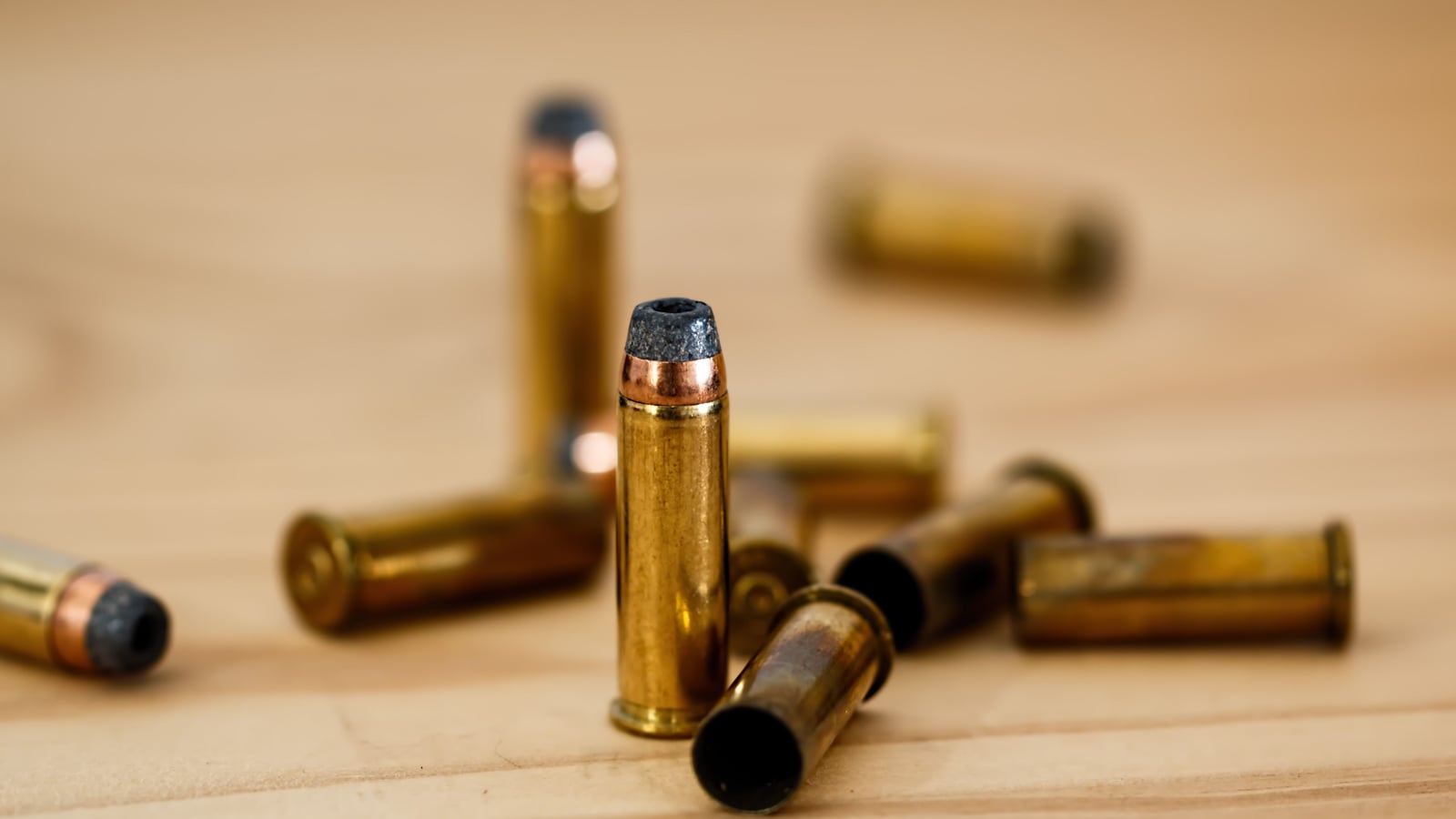
Two ways to light the powder
On the firing line, nobody ever asks “is that rimfire or centerfire” before lending you a gun. Yet this distinction shapes almost everything: the price of your session, the felt recoil, the useful range, and even the type of discipline you’ll practice long-term. Many beginner shooters know the phrase “.22 caliber” without knowing why this ammo costs three to five times less than a typical centerfire rifle cartridge.
The difference comes down to a tiny mechanical detail: where the primer sits on the case. On a rimfire cartridge, the priming compound is housed in the rim at the base of the case, a thin collar running all the way around. On a centerfire cartridge, the primer is a separate part crimped exactly in the center of the base, replaceable and reusable in a reloading context.
This design choice, dating back to the nineteenth century, has direct consequences for case strength, the pressure the ammunition can withstand, and therefore the achievable ballistic power. A rimfire round stays structurally limited by how thin its strikeable rim must be. A centerfire round, with a solid base and a robust central primer, handles far higher pressures.
This article walks through the topic in the logical order a shooter needs when making a concrete choice: the priming mechanism in detail, the consequences for cost per round, the real impact on accuracy at different distances, typical uses in training and competition, maintenance of the associated firearms, and the safety and regulatory questions that come with each ammunition family.
The rimfire priming mechanism
A rimfire cartridge contains a priming compound spread in a thin layer inside the hollow rim of the case, usually thin brass or a similar alloy. When the trigger is pulled, the firing pin strikes this rim against the breech, crushing the priming compound between the two metal surfaces and triggering ignition of the powder.
This system imposes a fundamental constraint: the rim must stay thin and malleable enough to deform under the firing pin’s impact. A case that’s too thick wouldn’t transmit enough energy to the priming compound to ignite it reliably. This structural thinness is exactly what caps the maximum pressure a rimfire cartridge can withstand.
The .22 Long Rifle caliber dominates this family by far, but there’s also the .22 Short, the .22 WMR (Winchester Magnum Rimfire), and the .17 HMR, faster and pricier, which push the range limits a bit without changing the basic logic. A rimfire cartridge is never reloadable at the amateur level: once the rim has been struck and deformed, it’s impossible to reliably and safely seat a fresh priming charge.
This lack of reloading changes the shooter’s relationship with their ammunition. With rimfire, you buy, you shoot, you toss the case. There’s no ritual of picking brass off the ground like you see among centerfire reloaders. This simplicity has a downside: you’re entirely dependent on the manufacturer for lot quality and consistency, with no personal tuning lever.
Another technical aspect worth knowing: the priming compound’s distribution inside the rim is never perfectly uniform around the full circumference. Some manufacturers use centrifugal processes during manufacturing to spread the compound as evenly as possible, which explains part of the quality and consistency gap between entry-level rimfire ammo and much pricier “match” ammo. If this potential unevenness is too pronounced, it can cause occasional ignition failures depending on exactly where the firing pin strikes the rim.
The choice of case orientation in the chamber actually matters in practice for a shooter dealing with recurring misfires with a particular lot of ammunition. Some experienced shooters recommend rotating the cartridge before a second attempt after a misfire, precisely because the imperfect distribution of the priming compound can make one specific point on the rim less sensitive than another. It’s a detail few beginners know, but one that explains some puzzling behavior seen on the range.
The centerfire priming mechanism
A centerfire cartridge works with an independent primer, a small metal cap crimped into a pocket at the center of the case base. This primer itself contains its own priming compound, protected and concentrated in an enclosed space that’s much more robust than the thin rim of a rimfire cartridge.
When the firing pin strikes the center of the base, it compresses the primer against a small internal anvil, which triggers a flame that travels through one or more flash holes (the “flash channel”) to ignite the powder inside the case. This mechanically more complex system allows for much thicker, stronger-walled cases, hence far higher combustion pressures.
This structural robustness explains why nearly all precision, hunting, and serious competition calibers in rifles or large-caliber pistols use a centerfire system. The case survives the pressure, can be reused, and the primer can be individually replaced during reloading.
Reloading, in fact, completely changes the centerfire shooter’s experience. An experienced club shooter who reloads their own ammunition controls every variable: powder type, charge weight, bullet, seating depth. This control lets you fine-tune a firearm’s accuracy beyond what standard commercial ammo offers, but it requires dedicated equipment, time, and unavoidable safety discipline.
There’s also a subfamily less known to the general public: primers themselves come in several sizes and sensitivities depending on the firearm and powder used, notably between “small” and “large” diameter primers, or standard and magnum ignition strength. A reloader must learn to match the right primer to the right powder-and-caliber combination, or risk completely unbalancing combustion pressure and therefore shooting safety. This level of technical detail simply doesn’t exist on the rimfire side, where the ammunition is a fixed unit delivered as-is by the manufacturer.
The double cup found in some centerfire primers, with an integrated or separate anvil depending on design, illustrates well the extra mechanical complexity of this system compared to rimfire. This complexity has a direct manufacturing cost, but in return offers generally higher and, above all, customizable ignition reliability — decisive for a shooter looking to optimize an ammunition lot for a specific firearm.
What it changes about real cost
The first shock for a beginner switching from rimfire to centerfire is the bill. A box of fifty .22 LR cartridges costs a fraction of the price of an equivalent box in a common centerfire caliber. This gap comes down to raw material quantity: less brass in the case, no separate primer to manufacture and crimp, less powder per round, and industrial-scale production at massive volumes for over a century.
For a standard training session where you fire several dozen or even several hundred rounds, this cost gap adds up fast. It’s the main reason so many clubs and instructors steer beginners toward a rimfire firearm as a first approach: the ammo budget lets you shoot much more often, repeating technical movements far more times for the same amount spent.
Reloading changes the equation on the centerfire side, but only for already-invested shooters. Reloading your own ammunition lowers the cost per round compared to buying new commercial ammo, but requires an initial investment in equipment (press, dies, scale, measuring tools) that only pays off over time and with substantial shooting volume.
You also need to factor in the indirect cost tied to wear on the firearm itself. A large-caliber centerfire firearm absorbs much higher recoil and pressure with every shot, which accelerates wear on certain mechanical parts compared to a rimfire firearm fired at the same volumes. This varies a lot by model and maintenance, so it’s hard to give a universal figure, but the general sense among experienced shooters points in that direction.
A budget item often forgotten in cost calculations is the accessories tied to the practice itself: scopes, shooting rests, reinforced hearing protection. These accessories aren’t specific to a particular caliber, but a precision centerfire shooter generally invests more in quality optics, because the ammunition itself has an accuracy potential that only a good scope lets you fully exploit. An entry-level rimfire, meanwhile, does perfectly well with basic iron sights or an entry-level scope, without that hurting the beginner’s progress.
The cost of the shooting federation license and range access stays the same regardless of caliber, which puts the ammo cost gap into perspective: over a full year of practice, membership fees, insurance, and range access often represent a share of the budget just as significant as the ammunition itself for a moderate casual shooter. The rimfire/centerfire gap becomes especially decisive for high training volumes, typically beyond several hundred rounds fired per month.
Accuracy: what really depends on distance
The intrinsic accuracy of good-quality rimfire ammunition, fired from a suitable firearm, is excellent at short and medium range. In precision shooting disciplines at 10, 25, or 50 meters, a match-grade .22 LR competes without complex against much pricier ammunition, notably because the lower muzzle velocity reduces sensitivity to small manufacturing imperfections.
This quality collapses, however, as distance increases. The trajectory of a rimfire projectile, on average slower and less aerodynamic than that of a precision centerfire projectile, drops faster and becomes much more sensitive to crosswind. Beyond about fifty meters, the accuracy gap between the two families starts widening noticeably, and it becomes obvious at the long distances typical of centerfire precision shooting.
Centerfire, with much higher muzzle velocities, offers a flatter trajectory that’s less sensitive to outside disturbances over distance. This is why long-range precision disciplines, whether 300-meter rifle or certain bench rest events, rely almost exclusively on centerfire calibers specifically developed for precision ballistics.
You shouldn’t confuse “ammunition accuracy” with “shooter accuracy.” A well-zeroed rimfire rifle in the hands of an experienced regional champion will produce tighter groups than a poorly handled centerfire rifle in beginner hands. The ammunition sets a theoretical ceiling, but most of the actual dispersion on target comes from stance, breathing, and trigger release.
Wind sensitivity deserves separate discussion, because it completely changes how a shooter needs to think about their ammunition depending on the discipline. A rimfire projectile, lighter and slower, gets disproportionately deflected by a moderate crosswind past about fifty meters, making outdoor windy rimfire precision shooting much more unpredictable than in a covered range. A precision centerfire projectile, heavier and faster, keeps a more stable trajectory under the same wind conditions, which is why outdoor long-range precision competitions almost systematically rely on this type of ammunition.
The consistency of an ammunition lot — meaning how constant the muzzle velocity is from one cartridge to the next within the same box — directly influences vertical dispersion of groups at long range. So-called “match” rimfire ammunition, notably pricier than standard ammo, specifically aims to reduce this velocity variability to offer accuracy comparable to what you’d expect from good centerfire ammo at short range. This high-end rimfire ammunition category illustrates well that the accuracy boundary between the two families isn’t purely a matter of priming mechanism, but also of care taken in manufacturing.
Recoil and shooting comfort
Felt recoil depends on several factors (firearm mass, cartridge energy, absorption system), but at equal comparison energy, rimfire cartridges generate very low recoil, often nearly imperceptible even to a complete beginner. This is a major pedagogical argument: a new shooter who has never anticipated recoil can focus entirely on their stance and aim without developing an anticipation reflex (the notorious “flinch” that degrades accuracy).
Centerfire cartridges cover a much wider recoil spectrum depending on caliber, ranging from relatively moderate to downright heavy on large-bore calibers. This heavier recoil requires progressive learning: shoulder management, body position, breathing coordinated with trigger release. An experienced instructor generally stresses the importance of not skipping steps, or you risk developing bad habits that are hard to correct later.
Sound comfort follows a similar logic. A rimfire firearm, even without optimal hearing protection, generally stays more tolerable over a long session than a substantial-caliber centerfire firearm. This is a factor often underestimated when choosing an entry-level firearm: auditory fatigue and noise stress directly influence concentration quality during a long session.
Wearing suitable hearing protection remains essential in both cases, including with rimfire, where the noise seems less impressive. Shooting-related hearing loss is cumulative and irreversible, and it often only shows up years later as tinnitus or progressive hearing loss at certain frequencies. An experienced instructor systematically reminds beginners of this rule, precisely because rimfire’s low recoil sometimes gives a false impression of general harmlessness that wrongly includes the noise aspect.
Cumulative physical fatigue over a long session also differs notably between the two families. A multi-hour session with a substantial-caliber centerfire firearm stresses the shoulder, neck, and back in a way rimfire doesn’t replicate, which in practice limits how many rounds a shooter can comfortably fire in the same session. This physical limit, independent of the budget limit, explains why even experienced centerfire shooters often alternate with rimfire sessions to extend their training time without accumulating excessive fatigue.
Typical use: training and introduction
In the vast majority of shooting clubs, the first firearm placed in a beginner’s hands is a rifle or pistol in rimfire caliber, generally .22 LR. This practice isn’t just a matter of budget convenience: it’s a pedagogical choice validated by decades of instructor feedback.
The minimal recoil lets the beginner focus on the fundamentals: stable stance, controlled breathing, sight alignment, trigger control without anticipation. Once acquired in rimfire, these fundamentals transfer directly when the shooter later moves to more physically demanding centerfire calibers.
The reduced cost also allows for a much higher volume of repetitions for the same training budget. Learning sport shooting relies heavily on the conscious repetition of the correct motion. A beginner who can fire several hundred rimfire rounds often progresses faster than a beginner limited to a few dozen centerfire rounds for the same amount spent.
Some shooting disciplines are, in fact, permanently structured around rimfire, not just during the introductory phase. 10-meter rifle or pistol shooting, very present in shooting schools and youth competitions, remains mostly practiced in .22 caliber even among experienced shooters, simply because the discipline itself is designed around that caliber.
Pedagogical support plays a central role during this introductory phase, beyond the simple caliber choice. An experienced instructor generally structures a step-by-step progression: first safety and dry handling, then the first supervised shots at short distance, then a gradual lengthening of distance and increasingly complex exercises. Rimfire accompanies this entire initial progression because it lets each step be repeated without cost or recoil interfering with the learning process.
Equipment loaned by clubs also reinforces this dynamic. Most shooting associations have a rimfire firearm fleet dedicated to introduction that’s much more developed than their centerfire fleet, simply because many beginners rotating through the same firearm wears out a low-pressure caliber less quickly than a powerful one. This equipment availability further facilitates the natural choice of rimfire for the first seasons of practice.
Typical use: serious competition
As soon as you move up in distance or discipline demands, centerfire becomes the norm again across a large part of sport shooting. Long-range precision shooting, a good portion of dynamic competition shooting (IPSC, Steel Challenge, USPSA), and most related hunting disciplines rely on centerfire calibers chosen for their energy, trajectory, and reliability under competition conditions.
Dynamic shooting in particular illustrates this logic well. On a course with cardboard targets and metal plates arranged according to a defined scenario, standard pistol-caliber centerfire ammunition provides the energy needed to reliably actuate reactive targets, while staying within a manageable recoil range for fast semi-automatic strings of fire.
Some competitions nonetheless have categories or divisions specifically in rimfire, notably to lower the cost barrier to entry or offer practice accessible to a wider audience. These categories have seen real growth in recent years, proof that the boundary between the two worlds isn’t as watertight as one might think.
Serious long-range precision rifle competition, on the other hand, remains almost exclusively centerfire. The physics of trajectory at 300 meters and beyond demands energy and ballistic stability that rimfire structurally cannot provide, regardless of ammunition manufacturing quality.
Historical firearms shooting and certain related historical disciplines follow yet another logic, with ammunition and priming mechanisms sometimes far removed from modern rimfire or centerfire standards. These disciplines remain marginal in terms of practitioner volume, but they illustrate that the rimfire/centerfire dichotomy, while dominant, doesn’t cover the entire landscape of civilian sport shooting.
The tipping point between the two worlds generally sits around fifty meters and depends on the nature of the course practiced. Below that distance and on static precision exercises, rimfire covers most of the needs of a casual or even regional competitive shooter. As soon as distance lengthens significantly or the discipline demands a reliable semi-automatic cycle at fast cadence, switching to centerfire becomes a matter of technical coherence rather than simple comfort preference.
Reliability and handling firing incidents
Ignition reliability is a criterion often overlooked when comparing the two families, even though it directly affects how smoothly a session runs and the shooter’s perceived safety. Rimfire ammunition, because of how thin its rim is and the sometimes imperfect distribution of the priming compound, statistically shows a slightly higher misfire rate than comparable-quality centerfire ammunition, even though this rate stays low on modern, well-made ammunition.
A rimfire misfire is handled simply: standard protocol is to keep the firearm pointed in a safe direction for a few seconds before working the action, in case ignition was merely delayed rather than absent. This waiting protocol applies identically with centerfire, but the consequences of mishandling differ: an unfired centerfire round contains more active powder, which justifies at least equal, if not greater, caution.
“Hangfire,” that abnormal delay between primer strike and shot discharge, remains rare but possible with both ammunition families. This type of incident, well covered in the safety training of any serious shooting club, is a reminder of why the rule of never pointing a firearm anywhere but a safe direction applies at all times, including right after an apparent misfire.
Case failure is an incident specific to poorly managed centerfire reloading, when a case reused too many times or a poorly measured powder charge exceeds the metal’s resistance tolerances. This risk doesn’t exist with rimfire, since the ammunition is never reloaded by the end user. It’s an additional simplicity argument in favor of rimfire for a shooter who prefers to avoid any in-depth technical handling of their ammunition.
Firearm maintenance by ammunition type
A rimfire firearm generally fouls faster than a well-maintained centerfire firearm, partly due to the composition of the powders and primers historically used with this ammunition type, which often leave more visible residue in the barrel and chamber. Regular cleaning remains essential, but mechanical tolerances are often simpler to maintain on basic-design rimfire firearms.
A centerfire firearm, especially in precision calibers, demands a generally stricter maintenance protocol: checking barrel condition, monitoring wear on internal rifling that directly affects accuracy over time, thorough cleaning after each intensive session. This varies a lot by firearm model and exact caliber, so stay cautious before generalizing one model’s protocol to another.
Storing the ammunition itself follows a different logic. Rimfire cartridges, with their priming exposed in the rim, are reputed to be more sensitive to prolonged humidity and repeated shocks than centerfire cartridges, whose primer is better protected by its central position and crimping. Dry storage, sheltered from temperature swings, is recommended in all cases, regardless of ammunition family.
A rimfire firearm’s lifespan, measured in firing cycles before major overhaul, often exceeds that of a large-caliber centerfire firearm fired at the same volumes, simply because mechanical stress per shot is much lower. This remains a general trend rather than an absolute rule: initial manufacturing quality and maintenance rigor weigh at least as much as caliber in a firearm’s real longevity.
Safety and handling
Both ammunition families demand the same basic safety discipline: always treat the firearm as loaded, keep your finger off the trigger until aim is engaged, always control muzzle direction. No caliber, however modest its recoil or range, justifies relaxing fundamental safety rules on the range.
The maximum range of a rimfire cartridge remains significant and dangerous nonetheless if a shot is misdirected, contrary to a widespread misconception among beginners who sometimes (wrongly) associate “small caliber” with “harmless.” A .22 LR projectile can travel over a kilometer on a free trajectory and remain lethal over a good part of that path.
Regulatory storage distinguishes ammunition based on the category of the associated firearm rather than the priming mechanism itself. A category C or D rimfire rifle and a category B centerfire rifle don’t follow the same possession, acquisition, and storage constraints, and it’s this firearm category that determines legal obligations, not the type of ammunition as such.
Handling primers during centerfire reloading adds an extra layer of vigilance. A primer is a small explosive element sensitive to shock and friction, which must be stored and handled with specific precautions. Rimfire, with no reloading step possible for a private individual, entirely avoids this additional safety concern.
Range ventilation is another point of attention, common to both families but with different intensity. Powder combustion releases residue and vapors that are best not breathed in excessive concentration over a long session. Well-designed covered ranges include air extraction sized to absorb these residues, a point a regular shooter should stay attentive to, regardless of the ammunition used that day.
Transporting ammunition to and from the range also follows common-sense rules shared by both families: original or suitable containers, physical separation between ammunition and firearm during transport, and compliance with club instructions regarding temporary on-site storage. These rules, often repeated in each shooting association’s internal regulations, are primarily meant to avoid unnecessary handling and loss of traceability for an ammunition lot.
The regulatory framework: what really matters
Under French law, firearm classification follows a four-category system: category A groups firearms prohibited to private individuals (war material); category B groups firearms subject to prefectural authorization, notably most handguns and many semi-automatics; category C groups firearms subject to declaration, including certain manually operated repeating rifles; category D groups freely sold or simple-registration firearms, including low-power air guns and certain historical firearms.
Whether ammunition is rimfire or centerfire doesn’t directly factor into this classification: it’s the firearm itself, its operating mode (manual repeating, semi-automatic) and its ammunition capacity that determine the legal category, not the priming mechanism of the cartridge it fires. A manually operated rimfire rifle and a manually operated centerfire rifle can thus fall under different or similar categories depending on their other technical characteristics.
That said, in practice on the ground, many entry-level rimfire firearms fall under category C or D, which partly explains why they’re so often used as a first-acquisition firearm for a shooter starting their administrative journey. The exact steps vary by specific model and relevant prefecture, so it’s always better to check this point directly with your club or gunsmith rather than rely on generalities.
For a category B centerfire firearm, acquisition steps go through prefectural authorization, which generally assumes a valid sport shooting license and demonstrated regular practice. This administrative path is one of the reasons why many shooters do in fact start with rimfire, not solely by technical choice, but also because the administrative entry framework is often simpler for this type of firearm.
Ammunition possession itself follows traceability rules that vary depending on the category of the firearm involved, with stricter registration requirements as the category becomes more restrictive. These requirements target traceability of the firearm and its use, not the rimfire or centerfire nature of the ammunition itself. Here again, caution recommends checking the exact procedures with your club or prefecture rather than relying on informally gathered information, as administrative practices can differ from one department to another.
What this means for your equipment choice
If you’re starting sport shooting with no prior experience of recoil and ballistics management, a rimfire firearm remains a coherent entry point in almost all cases. The reduced cost allows for substantial training volume, minimal recoil makes it easier to acquire the right reflexes, and short-to-medium-range accuracy is more than enough to progress on the fundamentals of shooting.
If your goal is serious competition in a discipline that structurally requires centerfire (long-range precision, certain dynamic shooting categories), the transition becomes unavoidable at some point in your progression. It’s best to solidify the fundamentals in rimfire before investing in the pricier centerfire equipment and ammunition, rather than jumping straight into the deep end without a technical foundation.
Many experienced shooters, in fact, keep up regular rimfire practice even after switching to centerfire for their main discipline. It’s an excellent way to maintain training volume without blowing the ammunition budget, while working on technical fundamentals that remain largely transferable from one caliber to another.
The final choice also depends on your club and the disciplines it actually offers. An experienced instructor knows the local constraints (range access, available distances, loaned equipment) better than any generic article, and remains your best resource for turning these general principles into a concrete progression plan suited to your situation.
FAQ
Q: Is rimfire really less accurate than centerfire? A: At short and medium range, quality rimfire competes very well with centerfire. The accuracy gap widens mainly at long range, due to a trajectory more sensitive to wind and ballistic drop.
Q: Can rimfire cartridges be reloaded like centerfire ones? A: No, rimfire priming is built into the case rim and deforms irreversibly when fired, making amateur reloading impossible. Only centerfire cartridges, with their independent primer, lend themselves to reloading.
Q: Why do clubs almost always start with rimfire? A: Minimal recoil makes it easier to learn the fundamentals without developing bad reflexes, and lower cost allows for a much higher volume of repetitions for the same training budget.
Q: Does a firearm’s legal category depend on the type of ammunition (rimfire or centerfire)? A: No, the French classification into categories A, B, C, and D depends on the firearm’s operating mode and capacity, not the ammunition’s priming mechanism. This varies by exact model, so check with your club or gunsmith.
Q: Is rimfire harmless because of its low recoil? A: No, a rimfire projectile retains significant range and lethal potential despite low recoil. Basic safety rules apply identically regardless of caliber used.
Q: Should you give up rimfire once you’ve moved to centerfire? A: Not necessarily — many experienced shooters keep up regular rimfire practice to maintain their training volume without blowing the ammunition budget. The technical fundamentals trained remain largely transferable between both calibers.