
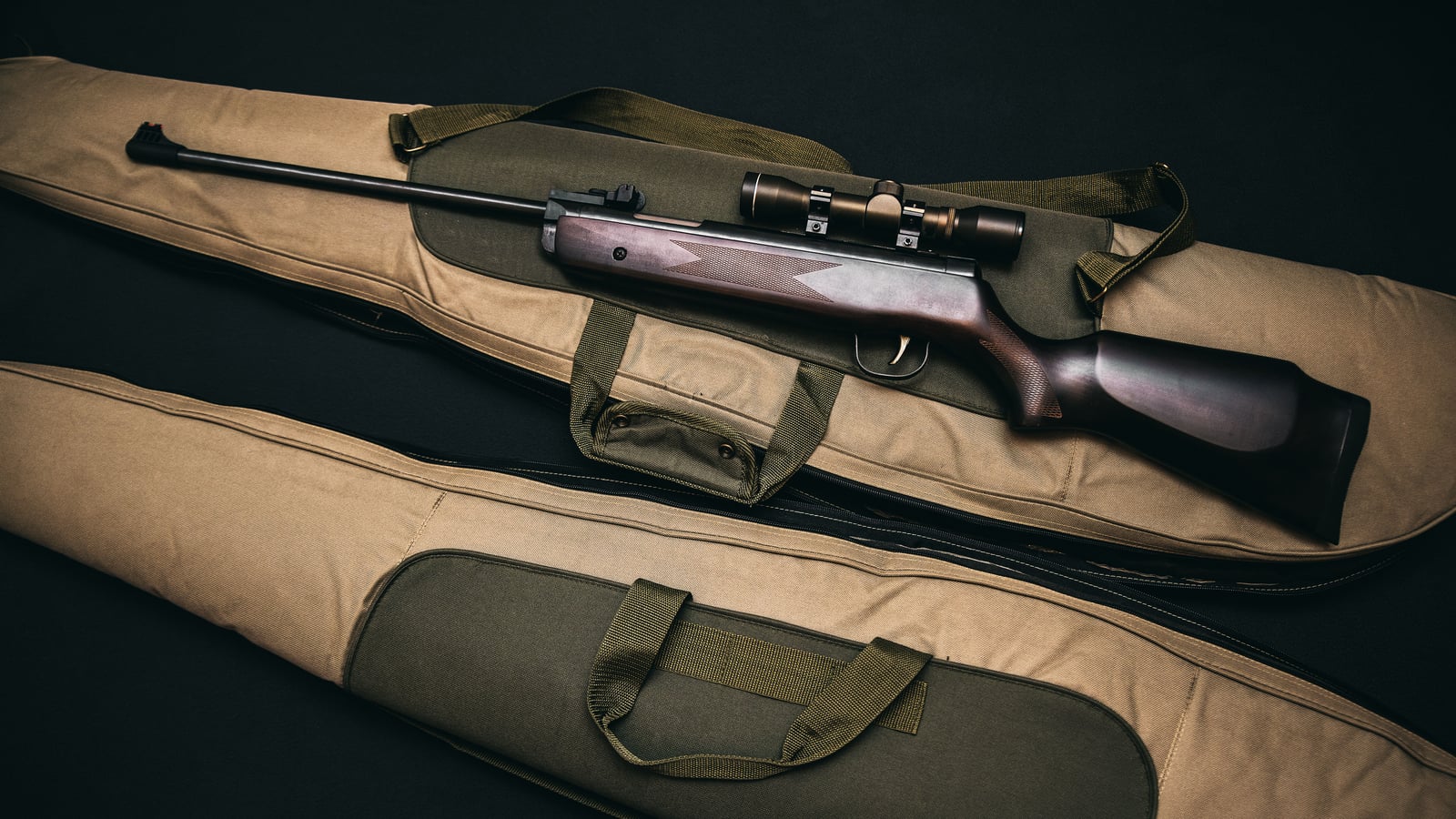
Why the choice of case is not a minor detail
Many shooters treat the carrying case as a simple accessory, bought at the last minute after the rifle itself. That’s a mistake you pay for sooner or later, often at the worst moment: a barrel hitting the edge of the trunk, a scope going out of zero after a bumpy drive, or a refusal at airport check-in for lack of a compliant container.
The case isn’t just a bag. It’s the element that protects your most expensive investment between the moment you leave home and the moment you set the rifle down on the firing line. It also largely determines the legality and discretion of your everyday transport.
The choice between hard and soft isn’t just a matter of taste or budget. It depends on your usual mode of transport, how often you travel, the gear mounted on the weapon, and above all whether or not you fly with your rifle. Any one of these factors alone can tip the decision.
This article covers both families of containers in detail, their respective uses, the cases where a hard case truly becomes essential, and the most common mistakes seen among shooters who change gear without anticipating transport constraints. The goal is to let you choose once, correctly, rather than having to buy again a year later.
One clarification before we start: this article talks exclusively about transport in the context of civilian sport shooting, recreational and competition, organized through a club or federation. Transporting a weapon, magazine removed and unloaded, remains subject to precise rules that vary by context; if in doubt, check directly with your local authority or federation rather than relying on a generality found online.
This guide is aimed both at the beginner shooter looking for their first transport container, and at the seasoned practitioner who already travels regularly to competitions and wants to refine their choice for a specific use. The criteria aren’t the same whether you make a weekly round trip to a club fifteen minutes from home or you’re preparing an international trip with several days of transit.
Keep one simple principle in mind that runs through this whole article: the best transport container is the one that matches your actual use, not the one with the most marketing claims on its product page. A premium soft case poorly suited to air travel is worth nothing next to a basic but compliant hard case, and conversely, an oversized hard case for a simple club run just adds weight and bulk with no real benefit.
Soft case: lightness and everyday practicality
The soft case is built from canvas, ballistic nylon, or quilted technical fabric, closed with a zipper running its full length. It hugs the shape of the rifle rather than creating a rigid volume around it, which makes it noticeably more compact to store than a hard case.
Its main advantage is weight: a soft case generally weighs a fraction of an equivalent hard case, which matters when you have to carry your gear a distance from the parking lot to the firing line, or when you regularly switch vehicles. It also folds partially for storage at home, unlike a rigid shell that keeps a fixed volume permanently.
Internal padding varies a lot from one model to another. Entry-level cases use thin foam, enough to prevent superficial scratches but offering little protection against a hard impact. More refined models incorporate thick closed-cell foam, sometimes with an extra layer at the barrel and scope areas, the zones most exposed during rough handling.
A soft case protects adequately against dust, everyday handling scratches, and light moisture if the fabric is water-repellent treated. It offers little protection, however, against a direct impact, being crushed under other luggage, or a fall from a significant height. That’s a difference in kind, not just degree, compared to a hard case.
The typical use case for a soft case remains the regular trip between home and club, by car, where the weapon is handled carefully and the risk of a violent impact is low. It’s also well suited to storage at home in a cabinet or safe, alongside a locking system that complies with storage regulations.
The shape of the case also deserves attention: “contoured” models that closely follow the outline of the stock and barrel limit internal play and therefore repeated friction with every handling. More generic rectangular models leave more empty space around the weapon, which can seem convenient for slipping in an extra accessory but also allows a bit more movement during transport.
Some cases feature a reinforced shoulder strap or a double-stitched padded handle, a detail that seems minor but significantly changes actual comfort on a somewhat long walk, especially when heading to an outdoor firing line far from the parking lot. A shooter who overlooks this point at purchase often regrets it after just a few outings.
Hard case: maximum mechanical protection
The hard case consists of a shell made of injection-molded polymer or aluminum, with custom-cut foam inside to keep the weapon fixed and prevent any movement during transport. Some models include reinforced hinges, lockable latch closures, and sometimes pressure-equalization valves.
Its main quality is resistance to crushing and frontal impact. A well-made hard case can absorb a heavy piece of luggage falling on it, an impact against the edge of a trunk, or rough handling by a third party, without transmitting the impact directly to the weapon or the mounted optic.
The foam cutout, often in two layers (a fixed bottom layer and a removable top layer, cut to the exact dimensions of the weapon and its accessories), keeps the rifle immobile inside the volume. This support prevents the repeated micro-shocks that, accumulated over a long road trip, can eventually knock a zero off or loosen a scope mounting screw.
The main trade-off of the hard case is weight and bulk: it takes up a fixed volume that never shrinks, even when empty, and weighs noticeably more than an equivalent soft case. It’s also less practical to carry over a long distance on foot, making it less suited to everyday use at the club where a soft case remains more manageable.
Many high-end hard cases offer anchor points for padlocks, sometimes compatible with the standards used by certain airlines for transporting special luggage. This detail becomes decisive as soon as air travel comes into play, a subject covered in detail later in this article.
The shell material itself varies by manufacturer: injection-molded polymer remains the most common for its good strength-to-weight ratio and controlled manufacturing cost, while aluminum, rarer and pricier, offers superior rigidity but adds noticeable weight. Some high-end models combine a fiber-reinforced polymer shell with metal corners, seeking a compromise between ruggedness and transportable weight.
Pressure-equalization valves, present on some models designed for frequent air travel, let air escape gradually during altitude changes in the cargo hold, avoiding excessive internal pressure that could over time weaken hinges or seals. This technical detail remains secondary for exclusively road use, but becomes a real selection criterion for a shooter who flies several times a year.
Padding: what really protects the weapon
Padding is often the least visible criterion on a product page, and yet one of the most decisive for the actual protection of the rifle. A case or hard case advertised as “padded” can cover very different realities depending on the density and thickness of the foam used.
Dense, thick closed-cell foam absorbs impact energy by deforming slightly and then returning to shape, without permanently compressing. Open-cell foam, thinner or of lower quality, gradually compresses with repeated handling and loses part of its protective power after a few months of regular use.
The barrel area and the scope area deserve particular attention at purchase. A localized impact on the barrel can affect accuracy if the barrel is free-floating and sensitive to external stress; an impact on a mounted scope can misalign the reticle or damage the internal adjustment mechanism, damage that’s sometimes invisible until you’re back on the firing line and notice the shift.
Some manufacturers offer custom-cut foam inserts, particularly for hard cases, that precisely hug the shape of the weapon, the scope, and mounted accessories (bipod, vertical grip). This custom cut limits internal movement far better than a generic block of foam, even a good-quality one.
Also remember to check whether the padding properly covers the inside of zippers on soft cases. A poorly lined zipper can create direct contact between the zipper’s metal and the rifle, a source of recurring micro-scratches over time.
Foam density can’t be judged just by touch during an in-store try: foam can feel firm under finger pressure but behave very differently under a brief dynamic impact, which stresses the material in a completely different way from a slow static press. That’s one reason why feedback from other practitioners over real usage time is often worth more than a simple in-store test.
A technical point often overlooked by beginners concerns the aging of the foam itself: some low-end foams degrade chemically over time, even without mechanical stress, and become crumbly or sticky after several years of storage. A container kept closed for several seasons deserves an inspection before returning to active use, particularly if it was stored in a hot or humid environment.
Everyday practicality: what really matters at the club
Beyond pure protection, everyday usability weighs heavily in the choice, especially for a shooter who visits the club several times a month. A soft case with a comfortable carrying handle and an adjustable shoulder strap noticeably reduces fatigue on a walk from the parking lot.
External pockets, found on many soft cases and some hard cases, let you store ammunition removed from its original box (per applicable transport rules), hearing protection, a cleaning cloth, or a small maintenance kit. This centralization prevents forgetting an essential item when heading out.
Ease of access to the weapon matters too: a soft case with a full-length opening lets you pull the rifle out quickly, whereas some hard cases with combination locking systems take more time, a detail that can be annoying at a busy club pace but obviously has no bearing on safety — quite the opposite.
Storage at home also deserves thought: a hard case keeps a fixed volume that can quickly clutter a small storage space, whereas a soft case fits more easily into a safe or cabinet already loaded with other gear. This criterion becomes even more important for shooters who own several weapons and therefore several containers to store permanently.
Finally, visual discretion during transport matters a lot to many practitioners. A neutral-colored soft case draws less attention than a large hard case, a point with no bearing on safety but that many shooters appreciate for a daily trip in an urban area or shared vehicle transport.
A criterion often overlooked until it becomes a real problem: the overall length of the container relative to your rifle’s, including mounted accessories. A case or hard case that’s slightly too short forces you to remove a scope or bipod before every transport, which quickly becomes a hassle with regular use. Always check your weapon’s overall length in its actual configuration before buying, rather than relying solely on the length of the stock with a bare barrel.
Compatibility with storage in a compact vehicle also deserves to be anticipated. A very long hard case may simply not fit diagonally in the trunk of a small city car, a problem that almost never arises with a soft case that can fold slightly to fit a constrained space.
Car transport: soft or hard case depending on the trip
For a classic road trip between home and the club, a soft case covers the vast majority of needs, provided it’s properly stowed in the vehicle: laid flat, wedged to prevent any shifting during braking or turns, and never tossed loose under other heavy luggage.
A long trip, on the highway or over several hours of driving, accumulates more micro-vibrations than a short drive. This accumulation of vibration, without being a single violent impact, can over time stress the mounts of an installed optic or bipod, which argues for good-quality padding even in standard road use.
A hard case becomes more relevant as soon as the trip involves handling by third parties: drop-off in the cargo area of a rental car, shared transport with other bulky luggage, or temporary storage somewhere you don’t directly control what gets placed on or next to it. The mechanical protection of the hard shell then absorbs risks that a soft case doesn’t cover.
For a carpool trip to a regional competition, where the trunk is shared with other shooters’ gear, a hard case offers valuable safety margin against accidental impacts between multiple people’s equipment. This is a context where the risk of an unintentional cross-impact increases noticeably compared to traveling solo.
Whatever container you choose, remember that transport must always be done with an unloaded weapon, magazine removed where applicable, and in compliance with the transport rules in force for your weapon category. These rules vary depending on the weapon’s classification and deserve to be checked directly with an official source rather than assumed.
The question of parking also deserves anticipation: a vehicle parked in direct sunlight for several hours can significantly raise the interior temperature, which stresses certain hard-case polymers more than the fabric of a soft case. Avoiding leaving the container in prolonged direct sunlight, whatever model you choose, remains a simple good habit.
Parking in an unwatched location, even briefly, also raises the discretion question mentioned earlier: a container clearly identifiable as a weapon case, left visible on the back seat, draws more attention than a soft case of a more neutral shape tucked into the trunk. This simple habit of keeping things out of sight applies regardless of container type.
Air travel: the hard case becomes essential
Air travel radically changes the picture. Nearly all airlines that accept the transport of sport shooting weapons require a hard, lockable container for any checked-in passage. A soft case, even a padded one, is refused at check-in by the vast majority of carriers.
This requirement isn’t arbitrary: an aircraft’s cargo hold subjects luggage to mechanical handling (conveyors, loading, stacking with other heavy luggage) far rougher than a car trunk. Only a hard shell guarantees that no external pressure can damage the weapon or, more seriously, allow unauthorized access during transit.
Locking is a major point of vigilance: most air transport regulations for sport shooting weapons require the case to remain locked at all times with a system to which only the passenger holds the key or combination, including during security checks conducted in your presence. Check this precisely with the airline and airport concerned before any departure, as exact procedures and requirements vary and evolve.
A scope mounted on the rifle must be protected with redoubled attention in an air travel context, where handling impacts are more frequent than in road use. A custom foam cutout that fully immobilizes the weapon-plus-optic assembly noticeably reduces the risk of reticle misalignment on arrival.
Also anticipate the administrative steps specific to air transport of a sport shooting weapon: prior declaration to the airline, documents to present at check-in, sometimes longer processing times than for regular luggage. These formalities vary by airline, destination, and weapon category; check them systematically and well in advance, rather than discovering an unanticipated requirement on departure day.
Ammunition transport generally follows rules distinct from those for the weapon itself, with specific containers and quantities imposed by air regulations. Never assume the same hard container can hold both the weapon and the ammunition in a single compartment: check precisely the separation requirements demanded by your airline before packing your luggage.
The check-in moment deserves to be anticipated in terms of available time: presenting a sport shooting weapon for checked baggage often comes with a longer verification procedure than a standard baggage check-in, especially when an agent must confirm the absence of ammunition inside the container in your presence. Planning extra time margin avoids the unnecessary stress of a tight connection.
Traveling to competitions: anticipating checks and formalities
A trip to a national or international competition adds an extra layer of constraints. Beyond transport itself, you may be required to present your rifle at customs or security checks at various stages of the journey, especially if it crosses a border.
A hard case makes these checks easier by offering organized, quick access to the weapon and its accessories, without having to improvise unpacking in an often cramped inspection area. Clear organization, with each item in its place within the foam cutout, also projects an image of seriousness that simplifies interactions with inspection officers.
Some federations and international competition organizers require specific documents (transport authorization, license, proof of event participation) to be presented if checked. These requirements vary considerably by destination country and change regularly: check them with your federation well ahead of the trip rather than at the last moment.
The total weight of the luggage, hard case included, can also factor into sports-equipment-specific baggage allowances offered by certain airlines. These allowances and their exact conditions vary by carrier; direct contact with customer service before buying a ticket avoids unpleasant surprises at check-in.
For shooters who travel frequently to competitions, investing in a quality hard case designed for repeated use and international travel pays off quickly compared to the risk of damage or boarding refusal with unsuitable gear.
Communicating with the competition organizer ahead of the trip often lets you anticipate specific local requirements not necessarily covered by national regulations alone. A regional champion used to international travel generally recommends contacting the organization a few weeks before the event to clarify the exact arrival procedures with shooting gear, rather than discovering an unforeseen procedure on site.
Some countries apply specific temporary import rules for sport shooting weapons, with forms to prepare even before departure. These country-specific steps often require several weeks of administrative lead time; anticipating them early enough avoids unnecessary stress as an important competition approaches.
Transporting several weapons or several configurations
A shooter who owns several rifles, or a single weapon with several accessory configurations depending on the discipline practiced, needs to think about their transport needs differently. A hard case with modular foam, with repositionable foam blocks, lets you adapt the internal cutout to different configurations without buying a new container for each weapon.
Cases designed for two weapons, with a stacked or side-by-side double cutout, exist and can be a sensible choice for shooters who travel to the club with several rifles for different disciplines in the same outing. They remain heavier and bulkier, however, than two soft cases carried separately.
For a shooter who alternates between a bare rifle and one mounted with a bulky scope, the foam cutout should be designed for the bulkiest configuration, even if that leaves some play when the weapon is transported bare. A fit that’s too tight for a single configuration can render the container unusable as soon as the accessory changes.
Some shooters choose a hybrid combination: a soft case for regular club trips, and a hard case reserved for rarer trips to competition or by plane. This approach spreads the cost across two purchases but avoids the compromise of a single container that would never be perfectly suited to either use.
For shooters who practice several disciplines with very differently sized weapons (a long precision rifle and a more compact rifle for a dynamic discipline, for example), pooling into a single large container often leads to an unsatisfying compromise. A container sized for the largest weapon leaves excessive play for the shortest one, which can compromise the latter’s proper support during transport.
The combined weight of several weapons carried in the same container also deserves checking against the load limits stated by the manufacturer, especially for handles and shoulder straps. A carrying system undersized for the actual combined weight wears out prematurely and can fail at the worst moment, mid-handling.
Budget and durability: an investment to weigh over time
The price of a quality soft case or hard case varies considerably depending on material, brand, and the level of padding or custom cutting offered. Rather than relying on a specific figure that would quickly become outdated, compare several current references at the time of your purchase, focusing on the stated build quality and feedback from other practitioners.
An entry-level case, for a few dozen euros, may be enough for occasional, undemanding use, but it generally wears out faster: a less robust zipper, foam that compresses quickly, fabric that tears at stress points. A slightly higher initial investment often translates into a significantly longer lifespan.
For the hard case, the quality of the hinges and locking system largely determines its longevity. A fragile hinge that breaks after a few dozen openings renders the whole container unusable, even if the shell itself remains intact. Check the manufacturer’s reputation on this specific point rather than just on the shell’s apparent ruggedness.
A shooter who practices occasionally, with no competition travel or planned air transport, can reasonably settle for a soft case of decent quality without needing to invest further. Conversely, a regular competitor who travels several times a year quickly recoups the cost of a better-made hard case, if only for the peace of mind it provides on every trip.
Keep in mind that the cost of a transport container remains marginal compared to that of the weapon and optic it protects. Skimping on this item for a use that genuinely requires more (air travel, frequent trips, valuable mounted gear) is rarely a good bet over time.
The warranty offered by the manufacturer is an indirect but useful indicator of the confidence they place in their own product. A long warranty on the hinges and locking system of a hard case generally signals better build quality than a model with no warranty or one limited to just a few months.
An experienced coach often advises not to focus solely on the best-known brand, but to compare the actual materials used and concrete feedback from other practitioners over time. A brand recognized for its weapons doesn’t necessarily have the same expertise in designing transport containers, as these two skill sets aren’t always linked within a single manufacturer.
Maintenance and regular checks of the container
A transport container, soft or hard, deserves periodic checking just like the rest of your gear. On a soft case, regularly check the condition of the zipper, the seams at stress points, and the interior lining, which can gradually wear from repeated contact with the barrel or stock.
On a hard case, check the condition of the hinges, the locking system, and the internal foam, which can compress or tear with use. Compressed foam no longer holds the weapon as firmly as it originally did, correspondingly reducing the actual protection provided during transport.
Regularly clean the inside of the container, especially after a trip in a dusty or humid environment (returning from an outdoor shooting session, transport during rainy periods). Moisture residue trapped in closed foam can promote corrosion on the weapon’s metal parts if the container stays closed for several days without being reopened.
Store your container, once the weapon has been removed and stored in compliance with regulations, in a dry place, sheltered from extreme temperature swings. Prolonged exposure to direct sunlight in a car trunk can over time weaken certain polymers or loosen certain interior lining adhesives.
After transport in wet or rainy conditions, leave the container open for a few hours in a dry place before closing and storing it, rather than immediately storing it closed with any residual moisture trapped inside. This simple habit greatly limits the risk of corrosion on the weapon and mold growth on the container’s interior lining.
Finally, remember to periodically check the proper functioning of a hard case’s locking system, especially if it’s a dial combination that can drift out of adjustment over time or from impacts. Discovering a locking malfunction the day you leave for a competition, rather than during a prior cold check, remains an easily avoidable situation.
Common mistakes to avoid
The first mistake is choosing based solely on the lowest price, without considering the actual intended use. An entry-level case bought for daily road use may be fine, but the same case mistakenly used for a plane flight will systematically result in a refusal at check-in.
The second, very common mistake is neglecting the internal foam cutout in favor of the container’s external look alone. A case with a rugged look but poorly fitted generic foam protects noticeably less well than a more discreet model custom-cut for your specific weapon.
The third mistake is treating the container as a one-time purchase, without anticipating an evolution in your practice. A shooter who starts out with local recreational use and, a few years later, begins traveling to competitions, often finds themselves having to urgently buy a compliant hard case, when a slightly more thoughtful investment from the start could have anticipated this evolution.
Finally, a subtler mistake involves checking air travel requirements: many shooters discover their airline’s exact requirements only at the check-in counter, which can lead to an outright boarding refusal. Systematically check, several weeks in advance, the exact weapon transport conditions of the airline and airport concerned.
A fifth, more subtle mistake is underestimating the normal wear of transport gear and continuing to use a visibly degraded container out of habit or thrift. A tired latch, compressed foam, or a stretched seam won’t repair themselves: they get worse with each additional use until they no longer fulfill their protective function.
A final common mistake concerns forgetting to check the container’s compatibility with a change in gear: adding a bipod, a longer scope, or an extended magazine can be enough to make an existing foam cutout unsuitable. Every significant change to a weapon’s configuration deserves a quick check of compatibility with the container used up to that point.
Choosing well based on your profile: practical summary
Before buying, clearly identify your primary use: regular road trips to the club, occasional trips to regional competitions, or travel involving air transport.
- Club use, short and regular road trips: a good-quality soft case, adequate padding, priority on weight and ease of carrying.
- Trips to regional competitions, carpooling with shared gear: a hard case or a heavily padded soft case, depending on the estimated risk of cross-impact.
- Air travel, whatever the frequency: a lockable hard case, virtually without exception, compliant with the requirements of the airline involved.
- Several weapons or varied configurations: a modular-foam hard case, or a combination of a soft case for everyday use plus a hard case for rarer trips.
Don’t hesitate to ask for the opinion of a seasoned shooter at your club who already travels regularly with their gear: their concrete feedback on a given model is often worth more than a technical spec sheet read online.
Whatever container you choose, remember that its primary function remains the safety and protection of the weapon, well before aesthetics or practicality. A choice aligned with your actual use will save you both from a premature repurchase and an unpleasant surprise on the day of an important trip.
FAQ
Q: Is a soft case enough for driving to the club? A: Yes, in the vast majority of cases, provided it’s properly padded and wedged in the vehicle to prevent any shifting. Just check the condition of the padding regularly, especially around the barrel and any mounted scope.
Q: Can you fly with a soft case for your rifle? A: Nearly all airlines require a hard, lockable container for any weapon transport in the cargo hold, refusing a soft case even a padded one. Systematically check the exact conditions of your airline and airport several weeks before departure.
Q: Does a hard case really protect the scope better? A: Yes, especially if the internal foam is custom-cut to fully immobilize the weapon-and-optic assembly. A soft case protects against scratches and dust, but far less against a hard impact that could misalign the reticle.
Q: Do you need a different case for each weapon? A: Not necessarily: some modular-foam models let you adapt the internal cutout to several weapons or configurations. But a custom fit always remains more protective than a generic cutout shared between multiple pieces of gear.
Q: How do you know if a case’s padding is sufficient? A: Check the stated density and thickness of the foam, especially at the barrel and optic area, rather than relying solely on the word “padded” on the product page. Dense, closed-cell foam protects significantly better than thin open-cell foam that compresses quickly.
Q: Is the price of a hard case justified compared to a soft case? A: It depends entirely on your use: for an occasional road trip, the price gap isn’t always justified. For air travel or frequent competition trips, the hard case becomes an investment that pays for itself quickly against the risk of damage or boarding refusal.