
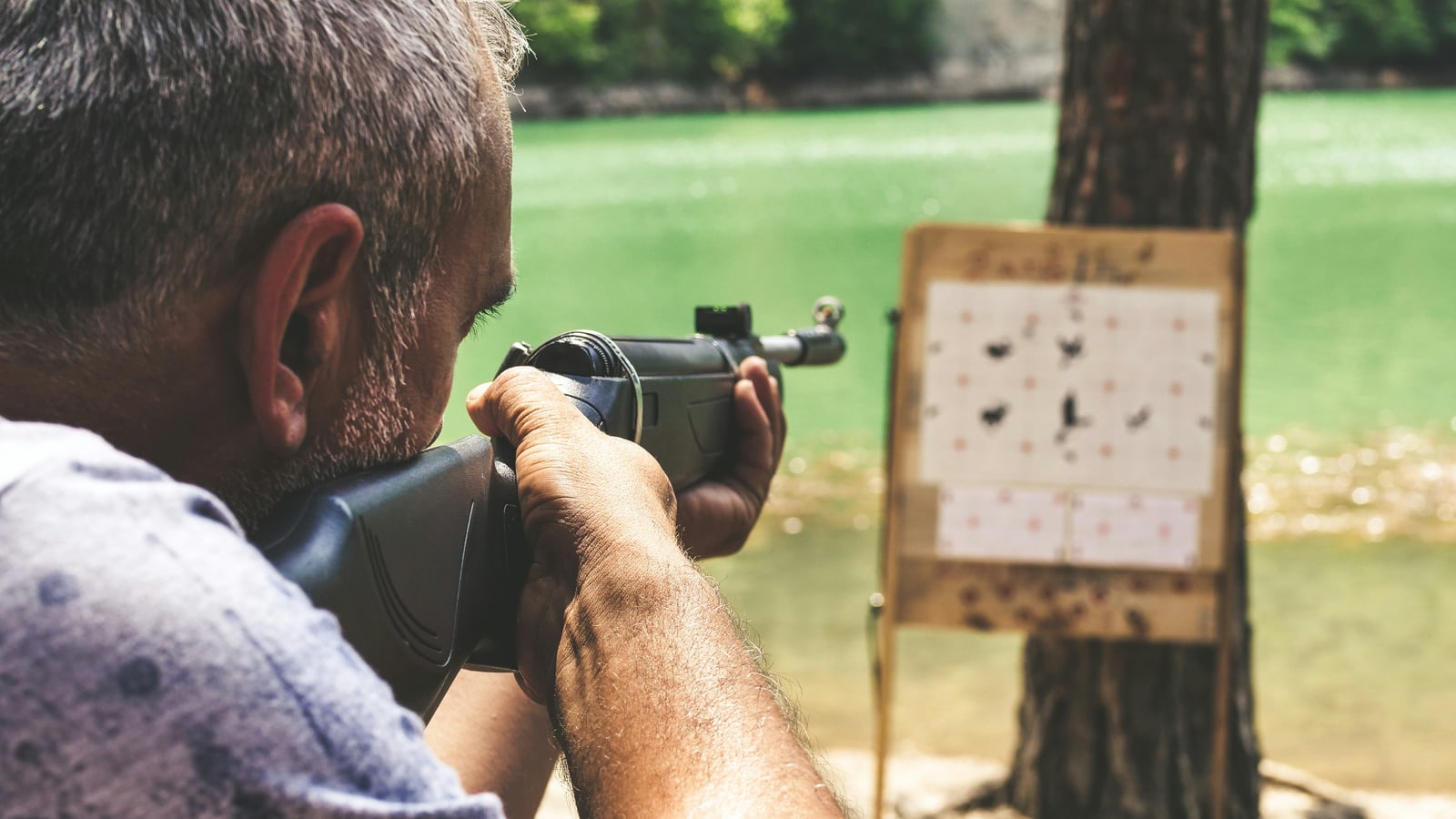
Why 50 isn’t an obstacle to sport shooting
Sport shooting is one of the rare disciplines where age isn’t a major limiting factor. Unlike endurance sports (running, road cycling, team sports), it doesn’t rely on cardio or explosiveness but on stability, precision, and self-control. A less athletic build than at 25 doesn’t stop you from holding a rifle or pistol correctly.
At any club range, it’s common to run into shooters in their 60s, 70s, even 80s posting solid scores, sometimes better than younger but less consistent shooters. The reason is simple: shooting technique is built on repetition and patience, two qualities that life experience tends to strengthen rather than erode.
Returning or starting after 50 isn’t “doing it despite your age” but often “taking advantage of a favorable moment in life.” Fewer heavy family obligations, sometimes more free time, a better ability to listen to your body without trying to do too much too fast. These are real advantages, not consolation prizes.
What changes with age isn’t your ability to shoot well, it’s the need to pay closer attention to certain settings: the weight you carry, recoil absorption, posture held over time. These are parameters you can adjust, not barriers you have to endure.
The medical certificate: a formality not to underestimate or fear
Joining a shooting club requires a medical certificate confirming no contraindication to the practice of sport shooting, regardless of age. Past a certain age, some general practitioners pay a bit closer attention to specific points: blood pressure, vision, hearing, shoulder and back mobility.
This isn’t an exam to dread. Sport shooting places very low cardiovascular demand compared to team sports or running. The core of the medical check focuses on your ability to hold a static posture for a few minutes and react appropriately in case of a problem (fall, discomfort, heat).
If you’re on ongoing medical treatment (blood thinners, beta-blockers, blood pressure medication), it’s worth discussing it openly with the doctor issuing the certificate. This very rarely disqualifies you from the practice, but it allows certain advice to be adapted: hydration, breaks, vigilance in case of high heat at an outdoor range.
The medical visit is also a good opportunity to check on hearing and vision, two senses directly engaged in shooting. A pre-existing hearing deficit or emerging presbyopia aren’t roadblocks, but factors to anticipate when choosing protective and sighting equipment.
Renewal of the certificate then follows the schedule set by the federation and sometimes changes with age or general health. It’s better to book the appointment well in advance at the start of the season rather than getting stuck right before a competition or license renewal.
Adjusting the weight of the firearm: the first setting to revisit
The weight of the firearm is often the first parameter to adjust when returning to shooting after 50, especially if the practice was interrupted for several years. An Olympic precision rifle weighing several kilos can become tiring to hold in a prolonged standing position if the shoulders are no longer used to this static effort.
The good news: there are concrete solutions without giving up precision. A well-equipped club generally offers several rifle or pistol models, with different weights and balance. Testing several firearms before personally investing lets you find a comfortable compromise between stability (more weight helps limit tremors) and muscle fatigue.
For pistols, the situation is similar: a lighter model reduces wrist and forearm fatigue over a long string, at the cost of slightly less stability than a heavier, front-balanced model. This is a personal trade-off, one to actually test at the range rather than choose from a catalog.
There are also support accessories: adjustable rifle slings, removable additional weights to adjust front/back balance, stocks adjustable in length and comb height. An experienced club instructor will know how to guide you toward the right adjustments based on your build and current physical condition, without needing to adapt everything from the very first session.
The key is not to cling to a model or caliber out of habit if your body signals fatigue or discomfort. Changing equipment isn’t an admission of weakness, it’s simply adapting intelligently to your current physical condition, exactly as a younger shooter would adjust their gear after an injury.
Managing recoil: comfort first
Recoil is a factor often underestimated when returning to shooting after a break of several years. A shoulder or wrist that hasn’t absorbed recoil in a long time can feel real discomfort, even with a caliber that previously seemed perfectly manageable.
The simplest solution is to scale down the power of the ammunition or the caliber used, at least until you find your footing again. Moving from a heavier rifle caliber to a milder one, or reducing the powder charge in supervised reloading, lets you rework technique without tensing up in anticipation of the shock.
This anticipation of recoil (sometimes called “flinching”) is a purely mental phenomenon that heavily degrades accuracy: the shooter contracts muscles just before the shot breaks, which shifts the point of impact far more than the actual recoil itself. Easing back in with milder ammunition breaks this cycle before it sets in.
For smoothbore disciplines like trap shooting, cumulative recoil over a long string of clay targets can tire the shoulder faster than before. A more absorbent rubber recoil pad, available from most gunsmiths, noticeably reduces the sensation without changing the firearm itself.
Air rifle or air pistol shooting (10m) remains the gentlest option in this regard: virtually no recoil, which makes it an excellent entry or re-entry point before, possibly, moving on to punchier calibers once confidence and endurance are back.
Posture: less flexibility, more technical intelligence
With age, shoulder, back, and hip mobility can decrease, especially if regular physical activity hasn’t been maintained. This doesn’t call into question the ability to shoot well, but it does require revisiting certain stances and positions considered “classic” in technical manuals.
The standing position in 10m rifle, for example, requires a certain flexibility of the back and hips to find a good natural point of aim without straining. If that flexibility has decreased, it’s entirely possible to compensate with a slight adjustment of foot placement and a more pronounced torso rotation, rather than forcing a textbook posture that would create unnecessary tension.
Kneeling or prone positions, present in some rifle events, can become uncomfortable for more sensitive knees or lower backs. Here too, padded mats, knee pads, and a joint warm-up before the session make a real difference in perceived comfort.
Standing pistol shooting, arm extended, engages the shoulder and wrist for extended periods during a string. Simple warm-up work (shoulder rotations, light forearm stretches) before picking up the firearm noticeably reduces tension that might otherwise appear after a few dozen shots.
The key takeaway: it’s not about regaining the flexibility of your 25-year-old self, but about building a functional, stable posture with the body you have now. A club instructor used to working with shooters of all ages will know how to suggest adjustments without forcing an unsuitable theoretical position.
Sport shooting as a low-impact physical activity, and its cognitive benefits
Compared to most sports practiced after 50, sport shooting has a particularly low joint and cardiovascular risk profile. There’s no repeated impact, no ground shock, no sudden acceleration aggressively stressing the joints.
Most of the physical effort centers on maintaining a static posture and fine muscular control, rather than on brute force or cardiovascular endurance. It’s an effort profile close to gentle core work or static yoga, with a strongly pronounced mental concentration component on top.
This low joint stress makes it a relevant activity for people who’ve had to reduce or stop a more demanding sport following surgery, early arthritis, or simply age-related joint fatigue. Sport shooting lets you stay in a regular practice, structured by a club, without the physical demands of an endurance sport.
That said, don’t swing to the other extreme and think sport shooting requires no physical effort at all. Holding a rifle standing through a full string genuinely engages back and shoulder stabilizer muscles; good general fitness (regular walking, some gentle strengthening exercises) remains a welcome plus for comfortable progress.
Finally, sport shooting maintains a quality often neglected with age: fine eye-hand coordination and proprioception. This repeated precision movement work actively contributes to maintaining fine reflexes, a benefit that extends well beyond the sporting hobby itself.
Beyond the physical aspect, sport shooting offers real cognitive benefits at any age, particularly valuable after 50. The sustained concentration needed to hold your aim, manage your breathing, and control your trigger squeeze engages attention comparably to certain cognitive stimulation exercises recommended for maintaining mental faculties.
The repetition of a precise technical movement, refined session after session, also maintains procedural memory, that is, the memory of the movement and motor sequence. This form of memory generally stays well preserved with age and keeps refining through regular practice, unlike other forms of memory more sensitive to aging.
The social aspect of a shooting club shouldn’t be overlooked either. Many clubs count a significant proportion of senior members, often experienced shooters returning after a professional or family-related break. This friendly setting, structured around a shared goal of progress, is a real source of regular social connection.
An experienced club shooter returning after a break of several years often tells the same story: relearning the technical movements happens faster than expected, because muscle memory retains a trace of prior training, even after a long gap. It’s an encouraging point for anyone hesitant to get back into it, fearing they’ll have to “start entirely from scratch.”
Finally, structuring a regular practice around measurable goals (score progression, moving up a category, preparing for a friendly competition) provides a motivating framework beyond mere hobby. Many senior shooters find in this measurable progress a satisfaction close to what they felt earlier in an active professional career.
The most physically accessible disciplines
Not all shooting disciplines demand the same physical commitment. For returning or starting after 50, some are particularly well suited, both for their low recoil and their measured postural demands.
10m air pistol is often cited as the ideal entry point. Nearly zero recoil, a relatively light firearm, a standing position that can be adjusted without excessive constraint. It’s the go-to discipline for anyone wanting to rework fine precision without heavily taxing the body.
10m air rifle follows the same logic: very little recoil, club equipment available to test before investing, and technical work centered on stability and breathing rather than strength. The regulation standing position may take some time to adapt to, but remains accessible with good coaching.
Precision shooting at moderate distance (50m rifle, for example prone or supported) draws more on patience and fine reading of conditions (wind, breathing) than on raw physical condition. It’s a discipline particularly suited to shooters who favor thought and method over physical endurance.
Conversely, dynamic disciplines like IPSC or Steel Challenge, which require quick movement, frequent position changes, and physical stress management under the clock, remain entirely practicable after 50 but demand sturdier physical preparation. Nothing stops you from easing into them gradually, starting with less physically demanding sessions and taking time to build the necessary endurance.
Trap shooting and clay disciplines in general mainly engage the shoulder (due to shotgun recoil) and extended standing time. A suitable recoil pad and good management of the number of targets shot per session make it possible to participate comfortably, including for shooters returning after a long break.
Returning after surgery or a health issue
It’s not uncommon for a return to sport shooting after 50 to follow a specific health event: shoulder, knee, or back surgery, or simply a medical diagnosis requiring increased vigilance around physical effort. In that case, the approach to follow is simple and non-negotiable: the surgeon’s or treating physician’s opinion takes priority over any other consideration.
The medical certificate confirming no contraindication to sport shooting must be obtained after a consultation that explicitly addresses the relevant medical history. A doctor familiar with the patient’s file is best placed to assess whether a return is possible, at what pace, and with what particular precautions (delay after surgery, movements to avoid, limited load-bearing).
For a return after shoulder surgery, for example, light air gun shooting is generally a gentler option than a heavier rifle or shotgun with noticeable recoil. The club instructor, informed of the situation, can also adapt the exercises offered at the start of the return.
It’s also useful to inform the club and the assigned instructor of any particular limitation, without needing to go into medical detail if that’s meant to stay private. This information allows coaching to be adapted, more frequent breaks scheduled, or the shooter directed toward more suitable club equipment during the recovery period.
Finally, don’t hesitate to temporarily lower your goals. Resuming a progressive shooting pace, with shorter sessions and fewer rounds fired, lets you regain your footing safely without putting yourself under physical or psychological pressure against past performance standards that may not be immediately reachable.
Choosing the right club: a stronger criterion after 50
Choosing a club takes on particular importance for a return or start after 50. Not all clubs have the same atmosphere or the same member profile, and certain criteria become more decisive at this stage of life.
Having an experienced instructor, used to coaching varied profiles including senior shooters or those returning after a long break, is a real plus. An instructor who can adapt their teaching rather than apply a one-size-fits-all program will make a real difference in comfort and speed of progress.
The club’s geographic proximity also deserves more weight than at 25: a regular commute that’s too long can discourage consistent practice, especially if the session itself already demands sustained concentration. A club fifteen or twenty minutes away greatly eases regularity, itself the key to progress.
The club’s overall atmosphere, the proportion of senior members, and the friendliness perceived during a visit before signing up are indicators not to be overlooked. A club where you feel welcomed, without excessive performance pressure, favors a lasting, enjoyable practice rather than a return experienced as a constraint.
Finally, the equipment available on loan within the club is a very concrete criterion for a return. Being able to test several firearm models, weights, and calibers before personally investing allows informed choices, suited to your actual physical condition rather than a theoretical idea of what should work.
Building realistic, lasting progress
The temptation to “make up for lost time” is common in a shooter returning after a long break. It’s better, though, to build realistic progress spread over several months, rather than aiming for an immediate return to the level reached years before.
The digital shooting log becomes a valuable ally in this respect. Systematically noting scores, feelings, equipment used, and conditions of each session lets you objectify actual progress, often faster than immediate impressions suggest. It also avoids getting discouraged based on a subjective impression on a tired day.
Consistency trumps intensity. Two short, focused sessions a month, carried out consistently over several months, generally produce better results than an intense comeback followed by giving up out of weariness or physical fatigue. The body and technical memory need spaced repetition, not brutal accumulation.
Setting modest, achievable goals early in the return (tightening a group, holding a full string without excessive fatigue) rather than aiming directly for a competition score lets you gradually regain confidence. This regained confidence is often the true engine of faster progress afterward.
Finally, it’s worth keeping in mind that the primary goal of a return after 50 isn’t necessarily performance but the pleasure of the practice, maintaining a structured activity, and the social connection it provides. A regional champion who returned to shooting after a long family-related break often reports that this shift in mindset, less focused on pure performance, paradoxically allowed for calmer, more lasting progress.
Protective equipment and energy during a session
Hearing and eye protection are non-negotiable at any age on a range, but certain specific needs deserve reassessment after 50. An already established hearing decline, even mild, combines poorly with basic hearing protection that cuts all ambient sound: you then lose contact with the instructor’s instructions and exchanges with other shooters on the line.
Electronic earmuffs, which amplify ambient sounds while instantly cutting off gunshot blasts, become particularly useful here. They let you keep hearing a conversation or safety instruction normally while staying protected from dangerous sound impulses. For a shooter who already has some hearing impairment, this choice is no longer just a comfort but a real safety and independence tool at the range.
On the vision side, presbyopia setting in with age sometimes complicates reading classic sighting elements (front sight and rear aperture), as the close-focus zone becomes harder to reach without correction. Shooting glasses with a specific corrective insert set for sighting distance, made by an optician used to precision sports, solve this problem far better than a generic pair of reading glasses.
For disciplines using a red dot or scope, presbyopia paradoxically has less impact: the eye doesn’t need to focus simultaneously on the front sight and the target, which explains why some shooters gladly return with this type of optic rather than classic mechanical sights.
Finally, simple clothing comfort (stable, comfortable shoes for prolonged standing, clothing allowing good shoulder freedom of movement) directly contributes to a session free of unnecessary tension. These are small details, but their accumulation often makes the difference between an enjoyable session and one that leaves needless soreness.
Sport shooting demands sustained concentration over several dozen minutes, sometimes several hours in competition. With age, managing energy and hydration during the session deserves somewhat more systematic attention than before, notably to avoid drops in alertness toward the end of the session.
Regular hydration before and during the session, in small amounts rather than a lot at once, helps maintain concentration over time. This is especially true for outdoor summer sessions (trap, long-range precision shooting), where heat adds an extra factor to anticipate with a bit more vigilance than at 30.
A light meal before the session, avoiding excesses that promote drowsiness or digestive discomfort in a prolonged static position, also contributes to better concentration quality. This isn’t age-specific, but attention to this detail tends to sharpen with experience.
Managing fatigue during a session also deserves monitoring: increasing tremor, an aim that becomes harder to stabilize after a while, are normal signs of muscular fatigue or loss of concentration, not signs of failure. Knowing how to take a break of a few minutes, hydrate, relax the shoulders before resuming is a skill in its own right, often better mastered by experienced shooters than by beginners eager to rush through strings.
Finally, sleep quality the night before a session or competition has a direct, documented impact on aim stability and trigger control. This factor, sometimes neglected in your twenties when recovery is faster, deserves real attention after 50: better to postpone a session than to hold it under poor recovery conditions.
Returning as a couple or with friends, and objectifying your progress
Many returns after 50 happen as a pair, as a couple or with longtime friends rediscovering an activity practiced long ago or discovering a new one together. This setting has a very concrete effect on consistency of practice: it’s noticeably easier to keep up a session pace when a partner is waiting at the club the same day each week.
This two-person dynamic also allows, in some cases, sharing equipment investment (splitting a club membership, helping each other transport gear, mutual motivation on lower-motivation days) and makes the experience more sociable than solo practice. Many clubs even offer time slots or events designed for this type of shared practice.
Friendly rivalry, without tipping into excessive competition, is also a recognized driver of progress. Comparing scores with a friend at a similar level, setting small challenges each session, sharing observations from the shooting log: all mechanisms that make progress more playful and motivating over time.
For couples returning together after a professional or family-related break, sport shooting also offers the rare advantage of being an activity practiced at different paces and levels without that being a problem: each person progresses at their own pace in their own discipline or caliber, while sharing the same club and the same social moments.
Finally, this shared social setting also eases the anxiety of returning to the range after a long break. An experienced club instructor confirms this regularly: shooters who come back accompanied regain confidence faster than those who return alone, simply because the pressure of individual performance is diluted by the pleasure of the shared moment.
Resuming an activity after a long break often comes with uncertainty about what you’re actually capable of doing today, as opposed to what you could do “before.” This uncertainty feeds either needless frustration (unfavorable comparison to an idealized memory) or, conversely, an underestimation of current abilities. A shooting log, kept rigorously from the very first return session, cuts short both biases.
Systematically noting the date, discipline, caliber or power used, number of rounds fired, score obtained, and a few words on physical sensations (fatigue, discomfort, comfort) quickly builds a very telling personal database. After a few sessions, trends become visible: a certain position repeatedly causes issues, a certain caliber is better tolerated than another, a certain time of day corresponds to better results.
This objectification is particularly useful when talking with an instructor or doctor. Rather than vaguely describing “occasional shoulder discomfort,” being able to show that the discomfort systematically appears after the twentieth shot of a string with a given caliber provides concrete, actionable information. An instructor can then suggest a targeted posture adjustment, a doctor can better tailor their advice.
The digital shooting log has an added advantage over the traditional paper logbook: it lets you visualize progress over several months with a single glance, without manually re-entering data or flipping through pages. For a shooter returning after a break, seeing a real progress curve, even a modest one at first, is a far more powerful motivating factor than a vague, changing feeling from one session to the next.
Finally, this rigorous tracking also helps catch early a signal that would warrant medical attention (discomfort that settles in and worsens rather than easing with training, for example), rather than dismissing it in the moment. It’s as much a health-tracking tool as a performance one, particularly relevant for a return after 50.
Preconceptions to drop, and preparing your first visit
A number of preconceptions needlessly hold back people who’d like to return to or start sport shooting after 50. The first is thinking sport shooting is an activity reserved for young, athletic profiles: that’s false, and it’s even one of the few sports disciplines where life experience is a real technical advantage, notably around managing concentration and patience.
Another preconception is believing you must immediately aim for an impressive caliber or discipline for it “to be worth it.” The opposite is true: starting or returning with a mild caliber, a static precision discipline, lets you build solid foundations to later move on from, should the desire arise, toward more physical disciplines.
Many also think a long interruption means “losing everything” in terms of technical skill. In reality, procedural memory of the technical movement generally reactivates faster than expected, even after several years without practice. The first return sessions are often a pleasant surprise for anyone dreading starting from absolute zero.
Some also fear that the entry cost is too high just “to try it out.” Yet most clubs offer trial sessions or discovery packages with equipment provided, letting you test several disciplines before any financial or administrative commitment. Only once the preferred discipline is identified does personal investment in equipment become worthwhile.
Finally, the idea that the medical certificate is a heavy, uncertain administrative obstacle is generally unfounded. In the vast majority of cases, it’s a simple routine consultation with your treating physician, without any particular additional exam, barring a specific medical situation already being followed elsewhere. The administrative process itself is much simpler than you’d imagine before looking into it.
The first visit to the club after years away, or the very first visit for a beginner, benefits from a bit of preparation to go smoothly. Contacting the club beforehand by phone or email lets you find out about time slots dedicated to discovery or return sessions, often different from the busier competition slots.
Showing up without expecting any particular performance, simply informing the front desk or instructor of your profile (returning after so many years, any physical limitation, discipline of interest a priori) lets you benefit from a welcome and coaching better calibrated from the very first session. Most clubs are used to this type of profile and know how to adapt the discovery accordingly.
Planning comfortable clothing, without movement constraints at the shoulders, and stable shoes is simple but useful preparation. Technical equipment (hearing and eye protection) is generally provided or loaned during a first discovery session, no need to invest before having tried the practice.
It’s also wise to plan a bit of time after the session rather than leaving immediately, if only to talk with the instructor about the sensations felt and ask questions that came up during the session. These informal exchanges are often as instructive as the session itself for someone discovering or rediscovering the discipline.
Finally, don’t hesitate to visit several clubs before making a final choice if the first experience leaves any doubt, whether about the atmosphere, coaching, or logistics. The right club is above all the one where you feel comfortable coming back regularly, the number-one condition for a lasting and beneficial practice after 50.
FAQ
Q: Is it really possible to progress well in sport shooting starting after 50? A: Yes, without reservation. Sport shooting relies on technique, patience, and repetition rather than physical qualities that decline with age. Many shooters start after 50 and reach quite respectable precision levels within a few seasons.
Q: Is the medical certificate harder to obtain past a certain age? A: No, it’s not inherently harder, but the doctor will generally pay closer attention to blood pressure, vision, hearing, and joint mobility. If you’re on ongoing medical treatment, it’s best to discuss it openly during the consultation.
Q: Which discipline would you recommend to someone returning after shoulder surgery? A: Air pistol or air rifle at 10m are generally the gentlest options, with virtually no recoil. The return should still always follow the surgeon’s or treating physician’s advice on timing and permitted movements.
Q: Should I invest in new equipment right away? A: No, it’s better to test several models available on loan at the club before investing. The weight, balance, and caliber best suited to your current physical condition are really determined at the range, not from a catalog.
Q: Is recoil a problem for a senior shooter? A: It may require an adjustment, notably by choosing a milder caliber or ammunition at the start of the return, or by fitting the firearm with a more absorbent recoil pad. The key is avoiding recoil anticipation, which degrades precision far more than the recoil itself.
Q: Does sport shooting after 50 have benefits beyond the sport itself? A: Yes, regular practice maintains concentration, eye-hand coordination, and technical movement memory. The club setting also provides regular, structuring social connection, often as valuable as the athletic benefit itself.