
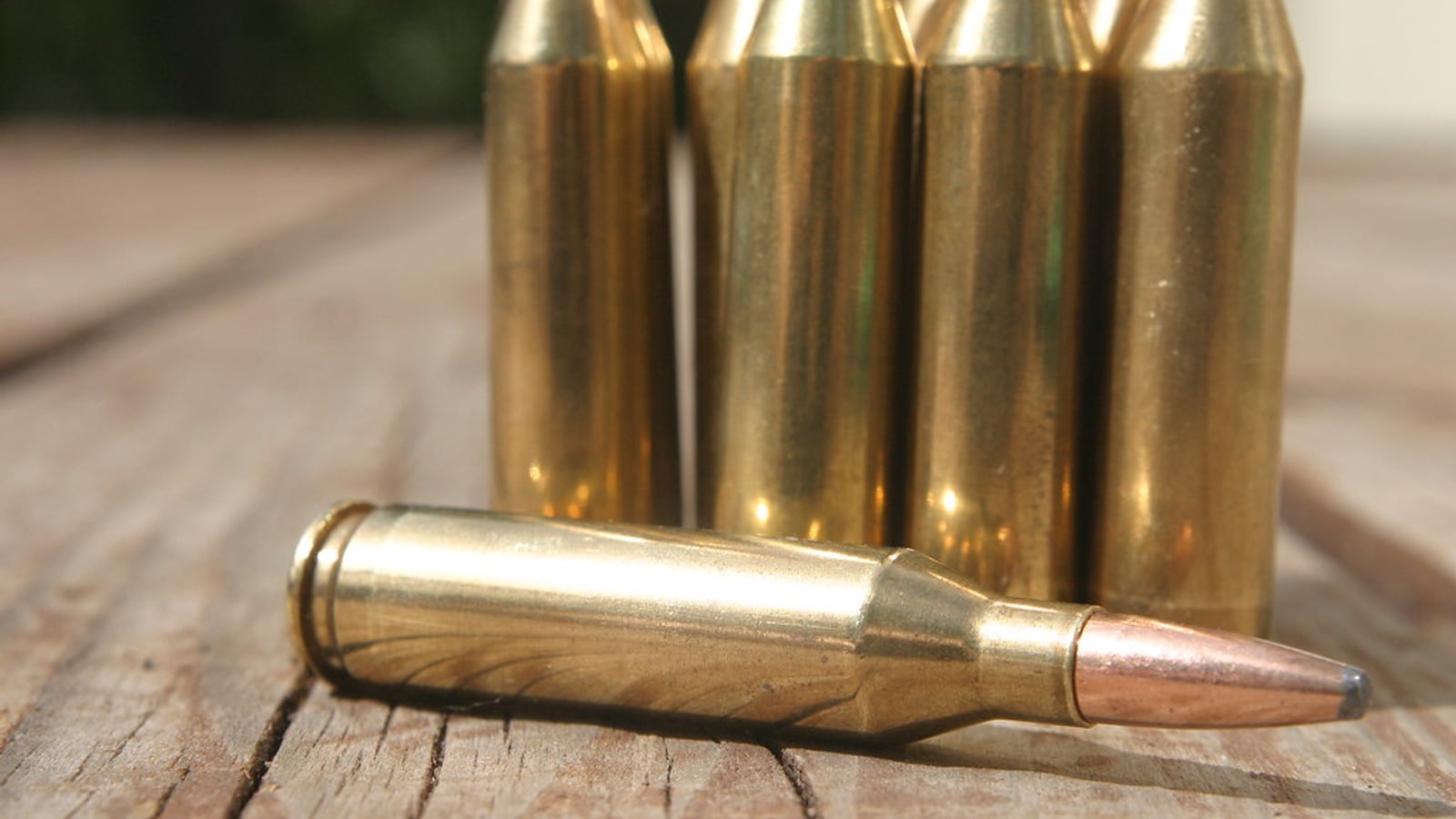
Why reloading attracts so many shooters
You shoot regularly, you watch the price of ammo boxes climb with every order, and the idea of making your own rounds eventually crosses your mind. It’s a legitimate question, asked by a huge number of regular practitioners in precision rifle, club pistol, or dynamic disciplines on cardboard targets.
Reloading means reusing a case that’s already been fired to fit it with a fresh primer, a measured powder charge, and a suitable bullet or projectile. The idea appeals for two reasons: the promise of long-term savings, and the ability to fine-tune a load precisely for a given firearm — something no standard factory ammunition offers.
But before ordering a reloading press, there are two questions to settle seriously: is it legal in your specific case, and is it actually worth it once every cost is added up. These are two distinct topics, often conflated, and that’s exactly where most misconceptions creep in.
This article covers the full legal framework in France, the gear you need to start out properly, and an honest profitability calculation, with no made-up numbers to dress it up. The goal is to give you what you need to decide with full knowledge, not to sell you a practice.
The legal framework for reloading in France
Reloading ammunition is not a banned activity in France, but it’s strictly regulated, and its permissibility depends directly on the firearm category and the type of ammunition involved. There’s no general freedom to reload any cartridge for any firearm.
The basic principle to remember: reloading for strictly personal use is mainly conceivable for ammunition meant for category C and D firearms — those subject to simple declaration or freely sold. For category B firearms, subject to prefectural authorization, the regulation is markedly more restrictive, and personal reloading is neither a widespread nor an obvious practice.
Here are the points to watch before anything else:
- Possessing propellant powder and primers is itself regulated independently of the firearms, with quantity thresholds that trigger different obligations.
- Reloading for commercial purposes (selling reloaded ammunition to a third party) is a completely different activity, one that falls under ammunition manufacturing and requires specific authorizations that few individuals hold.
- Reselling reloaded ammunition, even occasionally and among fellow shooters, raises real legal problems that are best avoided entirely.
France’s firearm classification remains the reference for understanding what you’re allowed to do with a given firearm. Category A: banned for private individuals (weapons of war, military equipment). Category B: subject to prefectural authorization (handguns, most semi-automatics). Category C: subject to declaration (certain hunting rifles, manually-operated repeating rifles). Category D: freely sold or subject to simple registration (low-power air guns, replicas, certain historical firearms).
Reloading ammunition must always correspond to a firearm you legally own, in a compatible category. Reloading for a firearm you don’t own, or outside the scope of your declared personal practice, immediately falls outside the legal framework.
Declaration, administrative steps, and storage safety
Possessing powder and primers for reloading is subject to a declarative regime that depends on the quantity stored at your home. Below a certain threshold, a simple declaration is enough; above it, the process becomes more complex and may require authorization.
In practical terms, before getting started, you need to go through several administrative steps:
- Check with your prefecture or your gunsmith the currently applicable possession thresholds for powder and primers, since these thresholds are set by decree and can change.
- Declare your reloading activity if the volume of material you store exceeds the free-possession threshold.
- Keep proof of purchase for your components (powder, primers, cases, projectiles), which may be requested during an inspection.
- Check that your home insurance actually covers the storage of explosive materials for domestic use, which isn’t automatic in every policy.
An approved gunsmith remains your most reliable contact for these steps, since they know the current thresholds and the documents required by your prefecture. The exact thresholds, in kilograms or number of primers, vary depending on the regulations in force and can be revised; never trust a figure you heard at the club without double-checking it with an official source at the time of purchase.
The club where you hold your FFTir license may also have its own internal rules about storing reloading components on its premises, separate from national regulations. Some clubs have a dedicated, supervised space for collective reloading, others simply ban it outright on their range.
Beyond the declarative obligations, propellant powder and primers are sensitive materials that require precise storage rules. This isn’t a minor administrative formality: poor storage is a genuine domestic risk.
The common-sense rules to follow systematically:
- Store powder in its original, closed container, away from heat and any ignition source (radiator, fireplace, electrical appliance).
- Never store large quantities of powder and primers in the same room as your active reloading bench, to limit the consequences of an incident.
- Absolutely avoid exposure to direct sunlight, excessive humidity, or extreme temperature swings that degrade powder.
- Keep this stock out of reach of any unauthorized person, just as you would your firearms and factory ammunition.
An experienced club shooter who’s been reloading for years always stresses one point: rigor never lets up, even after hundreds of incident-free reloading sessions. It’s precisely that apparent routine that tempts you to skip a check, and that’s where accidents happen.
Storing your stock of components follows the same logic as storing your finished ammunition: a dedicated, labeled compartment, with a clear record of what you have and since when. It also greatly eases any potential administrative inspection, which always goes better when your organization is visibly serious.
The essential gear to get started
Reloading requires a significant initial equipment investment, and it’s precisely this expense category that determines whether the activity will pay off in the long run. There are several equipment tiers, from entry-level kits to a full reloading bench.
The minimum setup to reload under good conditions includes:
- A reloading press, single-stage to start or turret-style to speed up the pace once you’re comfortable.
- A set of reloading dies specific to each caliber you want to reload — one set per caliber, not interchangeable.
- A precision scale to weigh the powder charge, an absolute requirement for safety and consistency.
- A sorting gauge to check case dimensions after resizing.
- A crimping tool and a cleaning station for used cases (ultrasonic bath or vibratory tumbler).
- A chronograph, very useful even if not strictly essential, to confirm the actual velocity of your loads.
This baseline represents a sizable starting budget, which varies a lot depending on the brand and tier chosen; prices change regularly and differ from one retailer to another, so it’s better to compare several current sources rather than trust a fixed figure. A properly equipped entry-level bench remains a serious investment, to be amortized over several hundred, if not thousands, of rounds.
You’ll also need to plan a dedicated, well-ventilated work space, with decent lighting and enough room to handle the press, scale, and components without rushing. Reloading isn’t an activity you do on a corner of a table between two chores; it demands concentration and time.
The real profitability calculation
This is the heart of the question everyone asks: does reloading actually cost less than buying new ammunition. The honest answer is “it depends,” and here’s why.
Factors that favor reloading:
- The cost per reloaded round is generally lower than the price of new factory ammunition, mainly because you reuse the case, the most expensive line item in a new round.
- The more expensive the caliber to buy (precision calibers, uncommon calibers), the more significant the profitability gap per round becomes.
- A high annual shooting volume amortizes the initial equipment investment faster.
Factors that reduce or cancel out this profitability:
- The cost of buying reloading equipment, which must be amortized over a large number of rounds before generating a net saving.
- The time spent reloading, which is never zero: it’s a manual, meticulous activity that takes several dozen minutes to produce a hundred rounds, depending on your equipment and experience.
- The cost of the components themselves (powder, primers, projectiles), which also follows market fluctuations and can narrow the gap with factory ammunition during periods of raw material shortage.
- The wear and gradual replacement of cases, which don’t reload indefinitely and eventually get scrapped after a certain number of cycles.
The profitability calculation fundamentally depends on three variables specific to your situation: your annual shooting volume, the caliber you use, and the value you place on your own time. A shooter who goes through several hundred rounds a month in an expensive caliber recoups their equipment much faster than an occasional shooter in a common, cheap caliber.
For occasional use in an already inexpensive mainstream caliber, reloading often takes a long time to become profitable once the equipment is amortized, and the time invested weighs heavily in the balance. For a dedicated shooter in a precision or uncommon caliber, the equation tips in your favor much faster. Do the math with your own real numbers — your shooting volume, the current price of your new ammunition, the current price of components — rather than relying on a general average that may not match your practice.
Reloading and precision: the other, often forgotten benefit
Financial profitability isn’t the only reason to reload. Many precision shooters get into it above all for the fine control that a custom load, tuned to their specific firearm, brings.
Standard factory ammunition is made to function correctly across a wide range of firearms in the same caliber. A custom-reloaded load can be precisely tuned to your rifle: bullet seating depth, specific powder charge, projectile type chosen for your exact use.
This customization concretely allows you to:
- Reduce group dispersion by tuning the charge to your barrel’s specific harmonic node.
- Test different powder/projectile combinations to find the one best suited to your discipline (300m rifle, bench rest, or precision shooting in general).
- Adapt the ammunition’s power to a specific use, for example a softer load for intensive training and a competition load for matches.
An experienced club instructor often sums it up to her students starting out in precision shooting like this: reloading is only worthwhile if you’re willing to invest time in testing and adjusting, not just in mass-producing rounds identical to what already exists. Without that research mindset, the technical appeal of reloading largely collapses.
This precision benefit doesn’t apply equally to every practitioner. A shooter who only does recreational shooting at cardboard targets at medium range gets less added value from this customization than a competitor in 50m or 300m rifle chasing an extra tenth of a minute of angle.
Common beginner mistakes in reloading
Reloading doesn’t forgive much sloppiness, contrary to what some hurried shooters assume when starting out. Here are the mistakes that come up most often among beginners.
Frequent method mistakes:
- Not weighing every powder charge systematically, relying solely on the powder measure’s setting without regular verification.
- Mixing cases from different origins or reload counts in the same batch, which introduces variability invisible to the naked eye.
- Following a load data found on a forum or video without cross-checking it against a reliable, up-to-date reloading manual.
- Neglecting to visually inspect cases before reuse (cracks, deformation, poorly seated primer) to save time.
- Jumping straight to maximum loads without a cautious progression from a lower starting charge.
An experienced instructor who mentors reloading beginners always stresses the same thing first: it’s better to produce ten rounds slowly, checked one by one, than a hundred rounds on an assembly line without systematic control. Production speed comes with experience, never before.
Another classic mistake involves documentation: many beginners don’t precisely note the charge used for each batch, which makes any retrospective analysis impossible if a group deteriorates or a firing pressure seems abnormal. Systematically noting the powder lot, the exact charge, the projectile type, and the reloading date is a habit to adopt from the very first box.
The role of a shooting log in a serious reloading practice
Reloading without precisely noting what you’re doing is like navigating without instruments. Rigorous tracking of your loads is what turns reloading from rough tinkering into a genuine technical process.
What serious tracking should include for each reloaded batch:
- The caliber, type, and brand of projectile used.
- The powder type and lot, along with the exact charge in grains or grams.
- The type of primer used and its manufacturer.
- The overall length of the assembled round.
- The reloading date and the number of cycles already performed on the cases used.
- The results at the range: group dispersion, chronograph-measured velocity if available, and impressions of consistency.
Cross-referencing this data with your shooting sessions lets you quickly identify which combination works best for your firearm and discipline, without starting from scratch with every new attempt. This is exactly the kind of tracking a structured digital shooting log makes easy, by centralizing both your regular shooting sessions and the details of your reloaded loads, instead of juggling a paper notebook for the range and a separate one for reloading.
Over time, this history becomes a genuine personal database: you can notice that a given load consistently produces better groups in hot weather, or that a particular powder lot behaves differently from a previous one. This retrospective analysis capability is probably the most underrated benefit of rigorous reloading tracking.
Club reloading: pooling resources and best practices
Many FFTir clubs have a collective reloading space or a group of practitioners who pool equipment and knowledge. This approach has real benefits, provided a clear framework is respected.
The concrete benefits of pooling resources at a club:
- Sharing the cost of a press and dies among several members, reducing the individual investment.
- Passing on experience between seasoned and beginner practitioners, which speeds up learning the right safety reflexes.
- Pooling secure storage space, often better organized than an individual home setup.
Points to watch specific to collective reloading:
- Each practitioner remains solely legally responsible for the ammunition they reload for their own use, even on shared equipment.
- The club must clearly define the rules for accessing the reloading space and for tracing the components each person uses.
- Lending dies or presses between members must come with systematic verification of the settings before each new use, to avoid a load miscalibrated for a similar caliber slipping into a batch.
A regional champion who’s been reloading for a long time often recommends beginners start by watching a seasoned club practitioner before reloading alone at home. This supervised learning phase considerably reduces the risk of method errors in the first months, far more effectively than a manual read alone.
Alternatives to full reloading
Reloading isn’t a binary choice between “all factory” and “all hand-reloaded.” There are intermediate approaches worth considering depending on your practice and budget.
Alternatives to consider:
- Buying factory ammunition in bulk during promotions or group club purchases, which reduces the unit cost without requiring an equipment investment.
- Reloading only for a specific, expensive caliber, while buying new ammunition for your more common, cheaper calibers.
- Turning to supervised club reloading rather than investing individually, if your personal volume doesn’t justify the full equipment purchase.
- Reserving reloading for the phase of finding the optimal load for a precision rifle, while using standard new ammunition for regular training.
This mixed approach often lets you capture the essential technical benefit of reloading — load customization for a specific caliber — without bearing the full investment and time that systematic reloading of all your ammunition demands.
The final choice mostly depends on your main discipline. A dynamic shooter on cardboard targets, who goes through a large volume of ammunition in a common caliber, generally gets more value from a bulk purchase than from full reloading. A precision rifle shooter, chasing that extra tenth of a group at long range, finds in reloading a tool that’s hard to replace.
The reloading process step by step
Understanding the full mechanics of reloading helps gauge the real time producing a batch of rounds takes, a central factor in the profitability calculation discussed above. Here are the main steps, in order, as they follow one another at a typical bench.
The first step is sorting and inspecting the used cases collected after a session. Each case must be visually examined for cracks, deformation at the neck or base, and poorly ejected primers. A suspect case goes straight to the scrap pile; this is never the moment to cut corners on safety.
Next comes cleaning the cases, usually in an ultrasonic bath or vibratory tumbler, to remove powder residue and restore the case to a clean state before reforming. This step, often underestimated by beginners, directly determines the consistency of the resizing that follows.
Resizing, done on the press with the appropriate die, restores the case to its original dimensions after the deformation caused by the previous shot. This is also the stage where the spent primer is ejected. A dimensional check with a gauge confirms the case meets tolerances before moving on.
Priming involves inserting a new primer into the reformed case. This step requires special attention: a poorly seated primer, too deep or not deep enough, can cause a misfire or a safety issue. The motion must be precise and consistent, never rushed.
The powder charge is then carefully weighed and poured into the case, scrupulously following a load validated by a reliable reloading manual, never eyeballed. This is the most critical step in the whole process: too heavy a charge can generate dangerous pressure for both the firearm and the shooter.
Finally, the projectile is seated to the desired depth and crimped if necessary, to obtain a round with an overall length that meets your firearm and discipline’s specifications. A final check of each assembled round, by eye and gauge, closes out the process before storage.
This full cycle, repeated for each round or in small batches depending on the type of press used, represents real production time that absolutely must be factored into your personal profitability calculation. A single-stage press requires repeating each step individually for every case, while a turret or progressive press lets you chain the steps faster, at the cost of a higher initial investment.
Equipment lifespan and maintaining your reloading bench
Reloading equipment isn’t a one-time purchase frozen in time: press, dies, and measuring tools require regular maintenance and, for some parts, eventually wear out and need replacing. This cost category is rarely factored into initial profitability calculations, even though it adds up over time.
Points of attention for the longevity of your equipment:
- Resizing dies must stay clean and lightly lubricated per the manufacturer’s recommendations, or they’ll scratch cases or unnecessarily strain the press.
- The press mechanism itself needs periodic cleaning and sometimes lubrication of friction points, especially if you reload large volumes regularly.
- The precision scale must be recalibrated regularly with certified weights, since measurement drift directly affects the safety of your loads.
- Measuring tools (gauges, calipers) must be checked periodically, since a skewed instrument invalidates every dimensional check performed with it.
Beyond maintenance, some parts wear out and need replacing: crimping heads, press springs, or the components of the powder measure on automated models. This long-term maintenance cost must be added to the initial investment to get a complete and honest picture of your reloading budget over several years.
The cases themselves have a limited lifespan. Each cycle of firing and reloading slightly fatigues the metal, particularly at the neck. After a number of cycles that varies with caliber, firing pressure, and the original case quality, signs of fatigue appear (neck cracks, extraction difficulty) that require scrapping the case. Factoring this case-replacement rate into your cost-per-round calculation avoids underestimating the real expense over a full season.
An experienced club shooter who keeps precise accounts of their reloading often notices that the real cost per round, once equipment wear and case replacement are factored in, comes closer to their initial optimistic estimates than they’d hoped at first. That’s not a reason to give up on reloading, but a reason to calculate with complete figures rather than partial ones.
Progressing from basic reloading to an autonomous practice
Reloading is learned in stages, and trying to skip steps is precisely one of the main causes of the method mistakes mentioned above. Here’s a realistic progression for a beginner who wants to become autonomous without taking unnecessary risks.
At first, the absolute priority is learning to faithfully reproduce an already-validated load data, without trying to innovate or optimize anything. The goal of this phase is purely methodological: master the motions, understand every step of the process, and develop the reflexes of systematic checking (weighing, visual inspection, dimensional verification).
Once this solid foundation is acquired, generally after several hundred rounds produced and tested at the range without incident, you can start exploring gradual, careful adjustments: testing a slightly different charge within the range recommended by the manual, trying another projectile compatible with your firearm, comparing two different powder lots under the same test protocol.
This experimentation phase must always remain gradual and documented: only one parameter changed at a time, a sufficient number of rounds tested to draw a reliable conclusion, and systematic recording of results in your log. It’s by cross-referencing this data with your shooting sessions that you progressively identify the load best suited to your specific firearm.
At a more advanced stage, some precision shooters go as far as working on the fine homogeneity of their batches: sorting cases by weight or internal volume, sorting projectiles by weight, systematically uniformizing primers. This pursuit of extreme consistency only makes sense for very high-level long-range precision rifle practice; it would be disproportionate for recreational or regular training use.
An experienced instructor who follows shooters over several seasons observes that the healthiest progression is always the slowest: those who take the time to master each step before moving to the next end up producing more consistent ammunition than those who tried to optimize too fast. Patience, once again, is what separates a serious practice from mere tinkering.
This step-by-step progression ties directly back to the value of rigorous tracking mentioned earlier: without a precise history of your successive trials, it’s impossible to objectively know whether an adjustment actually improved your results or whether the observed variation is just down to the randomness of a single session.
Choosing your starting caliber to get into reloading
Not all calibers are equal as an entry point into reloading. Some choices make learning easier and safer, others needlessly complicate the first steps.
A common, widespread caliber offers several advantages for beginners: an abundance of validated load data in reference manuals, components easy to find at most retailers, and a large enough community of practitioners to share reliable feedback at the club. Conversely, diving straight into a rare caliber or an unusual firearm complicates the search for reliable data and reduces your chances of being advised by other seasoned practitioners.
The type of discipline you practice also influences this choice of starting caliber. A shooter who mainly practices precision rifle at medium or long range has every reason to start reloading with their main caliber, since that’s precisely where the benefit of load customization is most significant. A practitioner of dynamic disciplines on cardboard targets, who goes through a large volume of ammunition in a common, economical caliber, often gets more value from a simple, well-documented caliber, where production consistency matters more than the pursuit of extreme precision.
It’s also recommended to limit the number of calibers you reload in parallel during your first year of practice. Every additional caliber multiplies the dies you need to own, the load data you need to master, and above all the risk of confusion between case or powder lots if your storage isn’t flawless. Better to consolidate a solid method on a single caliber before gradually expanding to others.
A regional champion who started reloading with an uncommon precision caliber readily admits it took her much longer to find reliable load data and get useful feedback at the club than practitioners who started with a more widespread caliber. This kind of anonymous, generalizable feedback illustrates well the value of starting simple before specializing.
The long-term availability of components also deserves consideration. Certain calibers and certain powder types go through periods of market tightness, with lead times growing longer at retailers. A widespread caliber, backed by several compatible powder and projectile brands, offers more fallback options if a specific component temporarily runs short. A niche caliber, dependent on a limited number of compatible references, is more exposed to interruptions in practice if there’s a stock shortage at your usual suppliers.
FAQ
Q: Is reloading ammunition allowed for all firearms in France? A: No, permission depends on the category of the firearm involved. Personal reloading is mainly conceivable for category C and D firearms; for category B, subject to prefectural authorization, the framework is markedly more restrictive.
Q: Do you have to declare your reloading activity to the prefecture? A: Possessing powder and primers follows a declarative regime based on quantity thresholds, which can change depending on the regulations in force. Check directly with your prefecture or approved gunsmith for the current thresholds before storing components.
Q: Does reloading actually save money compared to new ammunition? A: It depends on your shooting volume, the caliber involved, and the equipment cost amortized over the number of rounds produced. For an occasional shooter in a cheap, common caliber, the net saving often takes a long time to materialize; for a dedicated shooter in an expensive caliber, it arrives faster.
Q: Can you resell reloaded ammunition to other shooters? A: No, reselling reloaded ammunition, even occasionally, raises real legal problems and amounts to an unauthorized commercial manufacturing activity for a private individual. Reloading must remain strictly personal.
Q: What’s the minimum equipment to start reloading? A: A press, a set of dies per caliber, a precision scale, a case-cleaning tool, and a way to check dimensions after resizing. That’s a sizable initial investment that must be amortized over several hundred rounds to become profitable.
Q: Is club reloading simpler than reloading individually at home? A: Yes in many cases, since it lets you pool the cost of equipment and benefit from the experience of seasoned practitioners in a supervised setting. Each shooter nevertheless remains solely legally responsible for the ammunition they reload for their own use.