
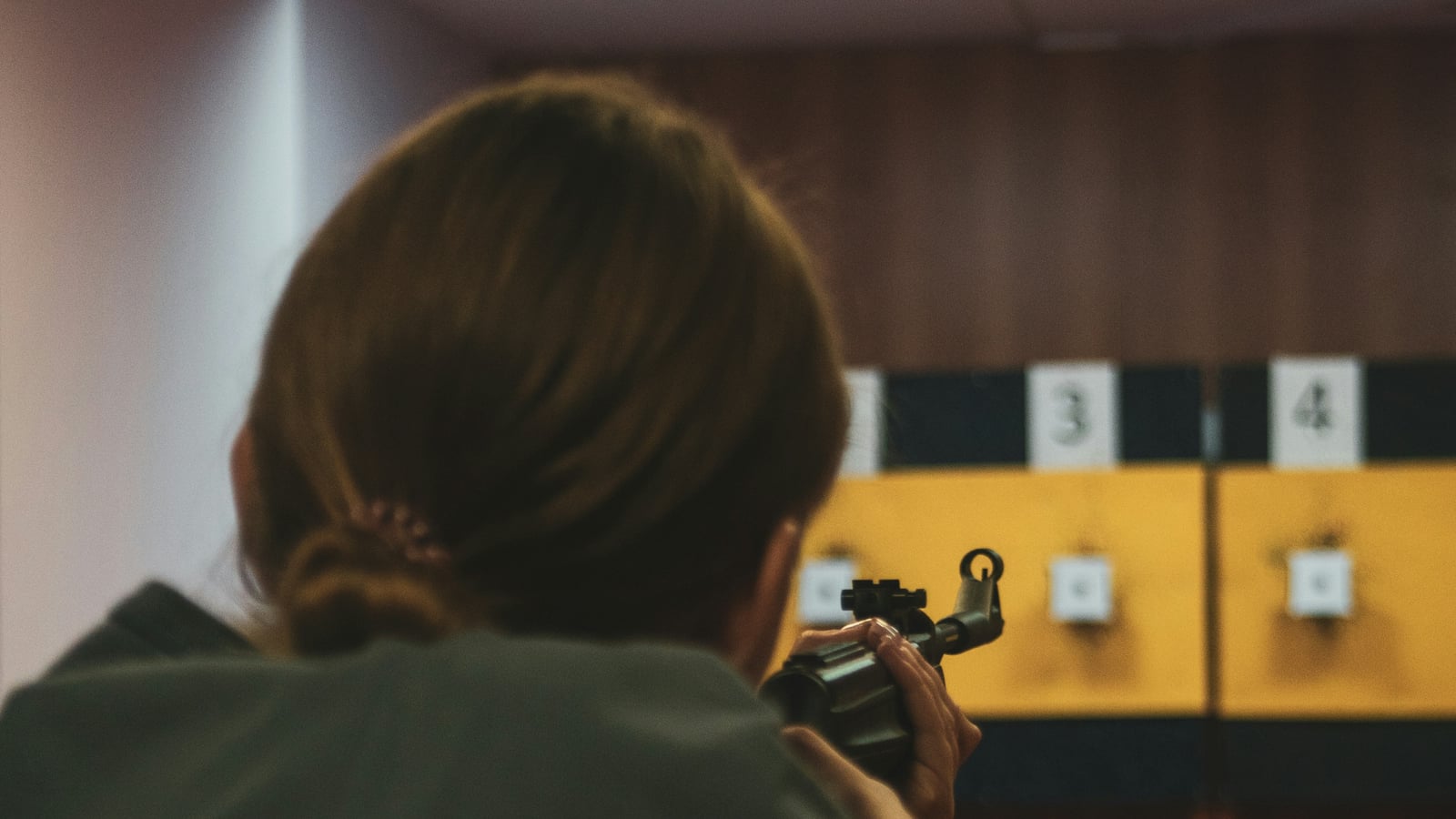
Understanding the qualification pyramid
Deciding to aim for a regional or national qualification transforms how you practice competitive shooting, even before the first qualifying competition. Simply setting this goal changes how you approach every training session at the club.
A shooter practicing purely for leisure can afford to vary sessions according to the day’s mood. A shooter aiming for qualification, by contrast, has to structure sessions around identified weaknesses, even when that means repeating drills that are less enjoyable than free shooting.
This shift is neither better nor worse than recreational practice — it simply serves a different goal. An experienced instructor often helps formalize this transition: moving from practice for immediate pleasure to performance-oriented practice requires a change in how you view your own sessions, not just more hours on the range.
- Identify your real weaknesses before structuring your training sessions
- Accept that aiming for qualification sometimes means less enjoyable sessions
- Clearly separate, in your mind, recreational practice from qualification prep
Competitive shooting runs on a tiered system. You start at the club, move up to departmental level, then regional, then national, and for a handful of shooters, toward international selection. Each rung has its own entry criteria, and they aren’t always identical from one discipline to another.
This structure exists for a simple reason: to progressively filter so that top-level competitions stay manageable in terms of participant numbers. A national championship can’t accommodate every licensed shooter practicing a given discipline.
Understanding this pyramid from the start spares you disappointment. Many shooters discover too late that they could have structured their season differently had they known how qualifications fit together. It isn’t a single wall to clear, but a series of doors opening one at a time.
- Club/departmental level: entry competitions, often qualifying for the next stage
- Regional level (league): the first real selection, with required score thresholds
- National level (national championship): reserved for regional qualifiers
- International level (national team selection): reserved for a very small elite
It’s worth keeping in mind that this pyramid isn’t arbitrary: it reflects the logic of any federated sports organization, where hosting resources, approved facilities, and the available time of competition officials are limited at every level. The higher you go, the fewer slots there are, and the more rigorous the selection must be to stay manageable.
This organizational logic also explains why qualification criteria are reassessed every season. The number of affiliated clubs, the number of active license holders in a given discipline, and the hosting capacity of available venues change from year to year, which mechanically affects thresholds and quotas.
Regional qualification criteria
Regional qualification generally rests on a combination of two elements: a minimum score achieved at referenced competitions, and sometimes a top ranking in a qualifying event organized by the regional league. Both logics coexist depending on the discipline.
In some disciplines, reaching a floor score at any homologated competition during the season is enough. In others, you need to rank among the best at a specific event designated as “qualifying.” Check precisely with your league, since this varies by discipline and can change from one season to the next.
An often-overlooked point: qualifying competitions have date windows. A score achieved too early or too late in the season may not count. A seasoned club shooter always keeps an up-to-date calendar of their league’s deadlines, printed or on their phone, so as never to miss a window.
- Check your discipline’s specific rules every season, as they can change
- Note the result submission deadlines, not just the competition dates
- Some leagues require a minimum number of competitions entered in the year
You should also distinguish “score-based” qualification, which relies on a number reached independently of how other shooters present that day ranked, from “ranking-based” qualification, which depends directly on the performance of competitors present at the qualifying event. These two logics call for different mental preparation.
In a score-based qualification, you fully control your goal: reach or exceed a number known in advance, regardless of what other shooters on the neighboring line do. In a ranking-based qualification, your individual performance isn’t enough if the competitors present that day are themselves exceptional, adding a variable outside your direct control.
Score thresholds: a notion to keep in perspective
Qualifying score thresholds exist and are published by federations or leagues, but they fluctuate year to year depending on the general level of participants and available place quotas. A threshold that was enough last year guarantees nothing for the current season.
Rather than aiming for a precise figure picked up on a forum or heard at the club, aim for a safety margin. If the usual threshold in your discipline sits around a certain range, train to beat it comfortably rather than just scraping by. A borderline score achieved on a windless day won’t necessarily repeat itself on the day of the qualifying competition.
This holds true in rifle as much as in pistol, in dynamic shooting sports as well as clay target. The principle stays the same: the official threshold is a figure that varies, your training margin should remain your true compass. An experienced female instructor often reminds her young shooters: aiming for the minimum threshold already puts you in position to fail.
- Check the published threshold for your discipline and age/level category every season
- Systematically aim for a margin above the theoretical threshold
- Keep a history of your competition scores, not just your training numbers
It’s also useful to understand why thresholds fluctuate from year to year. The arrival of a new generation of well-trained shooters in a league, developments in available equipment, or even a simple calendar change can shift the average level of qualifying competitions from one season to another, without reflecting any general drop or rise in the national level.
Another classic trap is confusing the qualification threshold with a personal performance goal. The threshold is an administrative minimum, not an indicator of your worth as a shooter. An experienced female instructor often reminds her students that a shooter who consistently aims well above the threshold progresses faster than one who calibrates preparation solely to the minimum required.
Building a qualification-focused season
A well-built competition season doesn’t happen by improvisation. If the goal is regional or national qualification, the calendar needs to be planned ahead: which competitions count, which serve as tests, and where to place peak form.
Many shooters make the mistake of arriving “in form” too early in the season and running out of steam before the qualifying deadline. Others, conversely, underestimate the time needed to reach their best level and show up unprepared for the competitions that actually matter.
A seasoned club shooter generally plans their season in blocks: a technical rebuilding phase, a build-up phase with test competitions, then a sharpening phase right before the qualifying deadlines. This breakdown is nothing exceptional — it simply draws on the periodization used in most individual sports.
- Identify at the start of the season which competitions count for qualification
- Plan “test” competitions with no stakes to break in equipment and stress management
- Leave a recovery margin before the qualifying event, not just before the finals
Periodization of a competitive shooting season draws directly on methods used in classic physical training, adapted to the specificity of the shooting motion. A technical rebuilding phase generally lasts several weeks and is used to correct flaws accumulated during the winter or summer break, with no pressure for results.
The build-up phase progressively introduces competitions with rising stakes, where the shooter learns to reproduce under pressure what they master in training. It’s often at this stage that gaps between training scores and competition scores narrow, provided enough events are gathered under varied conditions.
Finally, the sharpening phase preceding the qualifying deadline should stay short and targeted. A seasoned club shooter generally avoids introducing new drills or technical corrections in the final days, preferring to consolidate what already works rather than chase a risky last-minute improvement.
National qualification: a step up
Once qualified at the regional level, the next step is the national championship, which remains subject to a limited number of places per league and discipline. Regional quotas exist precisely because the number of places is constrained, regardless of the actual level of participants in each territory.
This means a regional qualifying score may be sufficient in one league and insufficient in another, simply because the density of good shooters is stronger there. It’s a frustrating reality, but one better accepted early than discovered mid-season.
The national championship also imposes different logistical management: a longer trip, sometimes an unfamiliar range, different shooting conditions from your usual club. A regional champion tackling her first national championship must deal with a new environment, which adds a layer of complexity compared to a competition on familiar ground.
- Find out how many places are allocated to your league before setting a precise goal
- Plan a site visit if the rules and calendar allow it
- Prepare your backup equipment — a long trip doesn’t forgive a forgotten item
The collective dimension also matters more at national level. Qualified shooters from the same league often end up grouped together for travel, creating a useful dynamic of mutual support: sharing spare equipment, jointly reviewing the site’s specific rules, moral support before events. A club that organizes this trip collectively greatly eases the individual logistics of each qualified shooter.
Moving to national level also often marks the first encounter with competition officials who are stricter about enforcing the rules, simply because the stakes and number of participants demand greater rigor. A shooter used to a certain flexibility in regional competition would do well to review the technical rules carefully before their first national championship, to avoid an avoidable penalty tied to a poorly anticipated rules detail.
Thresholds by major discipline family
Qualification thresholds vary widely depending on whether we’re talking rifle, pistol, or dynamic disciplines. Without giving an absolute figure that would quickly become outdated, here are the logics worth knowing for each major family.
In Olympic rifle and pistol, thresholds are expressed in points on a standardized series, and progress often hinges on details of consistency rather than isolated exceptional shots. Steadiness takes precedence over an occasional peak.
In dynamic shooting sports disciplines like IPSC or Steel Challenge, qualification is often based on overall ranking or a technical classification system specific to the discipline, where the time factor on paper or steel targets weighs as much as pure accuracy.
In clay target (trap, skeet, Olympic trap), the number of clays broken over a reference series serves as the basis, with fairly standardized levels at national level. Here again, this varies by federation and by rule changes, so always check the current year’s official source.
- Olympic rifle/pistol: consistency across standardized series
- Dynamic disciplines: ranking and time factor on paper/steel targets
- Clay target: number of clays broken over a reference series
Other disciplines deserve a separate mention. Archery and sport crossbow, although sometimes falling under separate federations, apply similar logics of levels based on cumulative score over standardized distances. Metallic animal silhouette shooting (chicken, pig, turkey, ram) uses timed series where accuracy and speed are assessed together, with qualification thresholds specific to each shooting distance.
Muzzleloader and historical black powder shooting follows yet another logic, where the number of homologated competitions available in the year is often more limited, directly influencing the qualification calendar. A shooter practicing this discipline generally needs to plan their season earlier, given the lack of catch-up options if a qualifying competition is missed for any reason.
Managing the pressure of qualifying deadlines
The pressure felt before a qualifying competition has nothing to do with that of an ordinary competition, even though the technical motion stays identical. The brain knows the result counts differently, and this changes how the body reacts under tension.
The most common symptom is excessive tensing: the grip stiffens, breathing shortens, shooting pace speeds up without the shooter noticing. These are normal physiological reactions to a stake perceived as important, not a sign of mental weakness.
The best defense remains mental preparation beforehand, not improvisation on the day. An experienced instructor often recommends mentally rehearsing the full sequence of the qualifying competition several days ahead: arriving at the firing point, the setup movements, the first series. This visualization defuses part of the emotional surprise.
- Work on your breathing in advance, not just on competition day
- Visualize the full sequence of the event several days before the deadline
- Accept that a score below your training level on the day remains normal under pressure
There’s also an important difference between the stress felt before a first qualification and that felt on subsequent attempts. The first time, pressure often comes from the unknown: the shooter doesn’t know exactly what to expect, or how they’ll react physically. In later attempts, the pressure changes nature and becomes tied to the stakes of repeating or improving an already-known performance.
An experienced instructor often encourages their shooters to write down their feelings after each qualifying competition, whether successful or not. Re-reading these notes before the next deadline helps identify recurring patterns in one’s own stress reaction, and adjust mental preparation accordingly rather than starting from scratch every season.
A solid competition routine serves precisely to limit the impact of stress on performance. The more automated the movements before each shot, the less room the mind has for parasitic pressure.
This routine must be built and tested well before the qualifying deadline, never invented on the spot. It typically includes preparing the shooting station, managing equipment, breathing before each series, and a mental reset signal after a missed shot.
A seasoned club shooter often insists on this last point: the ability to “turn the page” after a bad shot often makes more of a difference in qualification than raw technical talent. Dwelling on a mistake during subsequent shots costs more than the mistake itself.
- Build your routine in training, never improvised in competition
- Plan a short ritual for bouncing back after a missed shot
- Test your routine under simulated stress conditions before the real deadline
Artificially simulating pressure in training is a technique commonly used to reinforce a competition routine. This can involve timed scenarios, series shot in front of other club members, or score goals announced out loud before shooting. The idea isn’t to exactly reproduce the atmosphere of a qualification, but to get body and mind used to performing under some form of observation or constraint.
Some clubs regularly organize internal competitions with a posted ranking, precisely for this purpose. A shooter who trains only alone, never exposing themselves to this kind of outside scrutiny, often discovers a surprising performance gap at their first real qualifying competition, simply because this dimension was never worked on beforehand.
Equipment and regulations in a qualification context
A qualifying competition is not the time to test new equipment or a new configuration. Equipment changes must be validated well in advance, in training, never introduced right before a deadline that matters.
This also applies to the regulatory compliance of your equipment according to your firearm category. As a reminder, French classification distinguishes Category A, banned to private individuals, Category B, subject to prefectural authorization, Category C, subject to declaration, and Category D, freely sold or subject to simple registration. Make sure your configuration remains compliant with your firearm category and your discipline’s specific rules.
Equipment checks generally take place at the entrance to regional and national level competitions. Showing up with a firearm or equipment that doesn’t comply with the discipline’s rules can lead to immediate disqualification, which would be a shame after months of preparation.
- Never change equipment right before a qualifying deadline
- Check your firearm’s regulatory compliance according to its category
- Re-read the equipment rules specific to your discipline before every major deadline
Regular equipment maintenance also takes on particular importance as a qualifying deadline approaches. A slightly sticky trigger, a poorly mounted scope, or poorly matched ammunition can be enough to ruin a series that months of preparation rested on. A complete equipment check several days before the competition, never the night before, allows you to detect and fix this type of problem without added stress.
It’s also recommended to keep a written record of settings that work: stock height, trigger adjustment, type of ammunition used in competition. This personal sheet avoids starting from scratch after a long break or a club change, and secures the reproducibility of performances from one qualifying competition to the next.
The role of your circle and your club
An active club generally supports its qualified shooters by giving them reference points on how regional and national competitions unfold. This support often counts as much as pure technical training, especially for a first qualification.
Talking with shooters who have already been through this stage lets you anticipate logistical details you wouldn’t think of alone: actual check-in times, waiting time between series, quirks of the host venue. These are details that seem minor but weigh on stress management on the day.
An experienced instructor also plays a useful role as an emotional filter in the weeks leading up to the deadline. They help put a one-off bad training session into perspective and avoid turning an isolated poor performance into generalized doubt about the preparation.
- Seek feedback from club shooters who are already qualified
- Prepare travel logistics well before the deadline
- Use your sporting circle as a filter against excessive doubt
Family and non-practicing loved ones also play an often underestimated role. Traveling for a national qualifying competition can mean an entire weekend, sometimes more, which requires logistical organization on the family side: childcare, household travel, or simply loved ones understanding the stakes. A shooter who neglects this dimension sometimes discovers an additional source of stress that has nothing to do with shooting itself.
Some clubs organize informal meetings before major qualifying deadlines, where the shooters involved discuss their respective goals and worries. This kind of collective exchange, even informal, helps normalize the doubts and pressures felt, by showing that these feelings are shared rather than individual, and that no shooter, even an experienced one, entirely escapes them when approaching an important qualifying deadline.
After qualification: what next
Obtaining your regional or national qualification isn’t an end in itself, it’s a new working baseline. The level of demand changes immediately: what was enough to qualify generally isn’t enough to aim for a good ranking at the next level.
Some shooters let their preparation slide right after securing their qualification, carried by the relief of having reached the goal. This is a classic mistake: the real competition often begins after qualification, not before.
Think of each qualification as a step up in progression, not as a culmination. A seasoned club shooter who strings together qualifications over several seasons has generally adopted this philosophy: each level cleared simply redefines the next threshold to reach.
- Don’t let your preparation slide right after achieving a qualification
- Redefine a new score goal as soon as your qualification is announced
- Analyze your weaknesses from the qualifying competition for what comes next
The transition to the higher level also often requires an adjustment in how the shooter sees themselves. Moving from club shooter status to representing your league at the national championship sometimes changes how you approach the practice, with an added sense of responsibility that can be motivating or, on the contrary, burdensome depending on the person.
A seasoned club shooter who has been through several qualification cycles often points out that you need to grow into this new status at your own pace, without giving in to the pressure of having to immediately perform at national level the way you performed at regional level. Skill growth after a qualification generally takes several seasons, not a single deadline.
Not all competitive shooting disciplines lead to qualification at the same pace or with the same density of competitors. A discipline widely practiced in your region will mechanically see more shooters aiming for the same qualifying spots than a more niche discipline.
That doesn’t mean you should choose your discipline solely based on the supposed ease of reaching higher levels. A shooter who switches disciplines purely out of strategic calculation often loses motivation and enjoyment of practice, which ends up showing in the scores. Consistency between personal taste and the discipline practiced remains a long-term performance factor.
That said, it’s useful to know the reality of your discipline before setting season goals. An experienced instructor can help you situate your current level against the actual demands of your discipline in your league, rather than basing yourself on benchmarks heard from another region or another federation.
- Find out the usual number of competitors in your discipline within your league
- Don’t switch disciplines solely hoping for an easier qualification
- Assess your real level with an instructor before setting a season goal
The qualification path always comes with an administrative side that’s better anticipated than endured. Competition results must be homologated and submitted within precise deadlines, and an incomplete file can cost a qualification that was otherwise sportingly earned.
Keeping a personal record of each competition result, in addition to the one kept by the club or league, helps avoid unpleasant surprises in case of data entry or transmission errors. A seasoned club shooter often gets into the habit of photographing their scoresheet and noting the date and place of every competition entered.
This administrative rigor becomes even more important at national level, where the number of files federations have to process is greater and verification times can lengthen. A clean, complete file, submitted in advance rather than at the last minute, makes life easier for everyone, including yourself.
- Keep a personal copy of every competition scoresheet
- Check that your club submits your results within the required deadlines
- Anticipate longer administrative delays at national level
One last administrative aspect concerns the renewal of your shooting federation license and the associated medical certificate, whose validity must cover the entire period of the qualifying competitions targeted. A missed renewal, even by a few days, can invalidate participation in a qualifying event, regardless of the score achieved on the line. Check these administrative deadlines with the same rigor as your sporting calendar, building them directly into your season planner rather than relying on memory at the last minute.
Balancing personal life, club, and qualification ambitions
Aiming for a regional or national qualification requires a time investment that goes well beyond the usual training sessions. Travel, weekend competitions, mental preparation — all of this adds to a personal and professional life that keeps running in parallel.
Shooters who go the distance over several seasons are rarely the ones who sacrifice everything to competition. More often, they’re the ones who’ve found a sustainable balance, even if it means scaling back their season goals in some years for personal reasons, without giving up practice altogether.
An active club generally understands this reality and adjusts its support accordingly. A regional champion with several years of hindsight often puts it simply: better a slow but steady progression over several seasons than an isolated performance peak followed by burnout-driven abandonment.
- Set season goals that are realistic given your actual availability
- Accept revising your ambitions some years without guilt
- Favor consistency over several seasons rather than a single goal at all costs
Common mistakes on the road to qualification
Certain mistakes recur regularly among shooters aiming for their first regional or national qualification. Knowing them in advance makes them easier to avoid than to discover the hard way.
The first mistake is multiplying qualifying competitions without a strategy, hoping a sufficient score will eventually come out through accumulation. This approach exhausts the shooter physically and mentally, and often degrades shooting quality over the course of events rather than improving it.
The second mistake is neglecting logistical preparation in favor of technical preparation alone. A technically ready shooter who discovers an equipment problem or a transport delay on the day of the qualifying event loses an edge they had nonetheless built over months.
The third, more subtle mistake is constantly comparing yourself to other shooters from your club or league rather than to your own progression. This comparison fuels unnecessary additional pressure, on top of the pressure already generated by the stakes of qualification itself.
- Don’t multiply qualifying competitions without a coherent season plan
- Prepare travel logistics with as much seriousness as the technical side
- Focus on your own progression rather than constant comparison
- Write down your feelings after each qualifying deadline to adjust your future preparation
One last mistake deserves mention: treating failure at a qualification as a definitive judgment on your level as a shooter. Competitive shooting sport carries an unavoidable share of variability, tied to the day’s conditions, physical and mental form, and sometimes simply the luck of a series. Not qualifying in a given season doesn’t invalidate years of practice and real progress.
An experienced instructor often stresses this point to ambitious young shooters: qualification is a structuring goal, useful for organizing your progression, but it must never become the sole measure of a shooter’s worth or the enjoyment they get from their practice. Keeping that balance is undoubtedly the best guarantee of continuing to progress over time, season after season, qualification obtained or not.
FAQ
Q: Do you need to be regionally qualified to access the national championship directly? A: In the vast majority of disciplines, yes, regional qualification is a prerequisite before access to national level. Check the specific rules of your discipline and federation, though, as exceptions exist depending on age or level categories.
Q: Are qualification thresholds the same in every region? A: No, place quotas are often distributed by league, meaning the same score can qualify in one region and not in another. It depends on the density and level of shooters in each territory that season.
Q: How long before the deadline should mental preparation start? A: There’s no universal rule, but starting several weeks ahead lets you build visualization and stress management into automatic habits rather than a last-minute technique. This varies according to each shooter’s sensitivity to pressure.
Q: Can you change firearms right before a qualifying competition? A: This isn’t recommended, since new equipment requires an adaptation period that often exceeds a few sessions. Always validate equipment changes well in advance, in training, never right before a deadline that matters.
Q: What happens if you narrowly miss the qualification threshold? A: It depends on each discipline’s and league’s rules: some offer a repechage or a second qualifying window, others don’t. Check directly with your league rather than relying on assumptions heard at the club.
Q: Does the pressure felt during qualification decrease with experience? A: Broadly yes, repeated deadlines help you better recognize and manage the physiological signals of stress. But even seasoned club shooters still report nervousness before an important qualifying competition — it’s a normal reaction, not a sign of failure to come.