
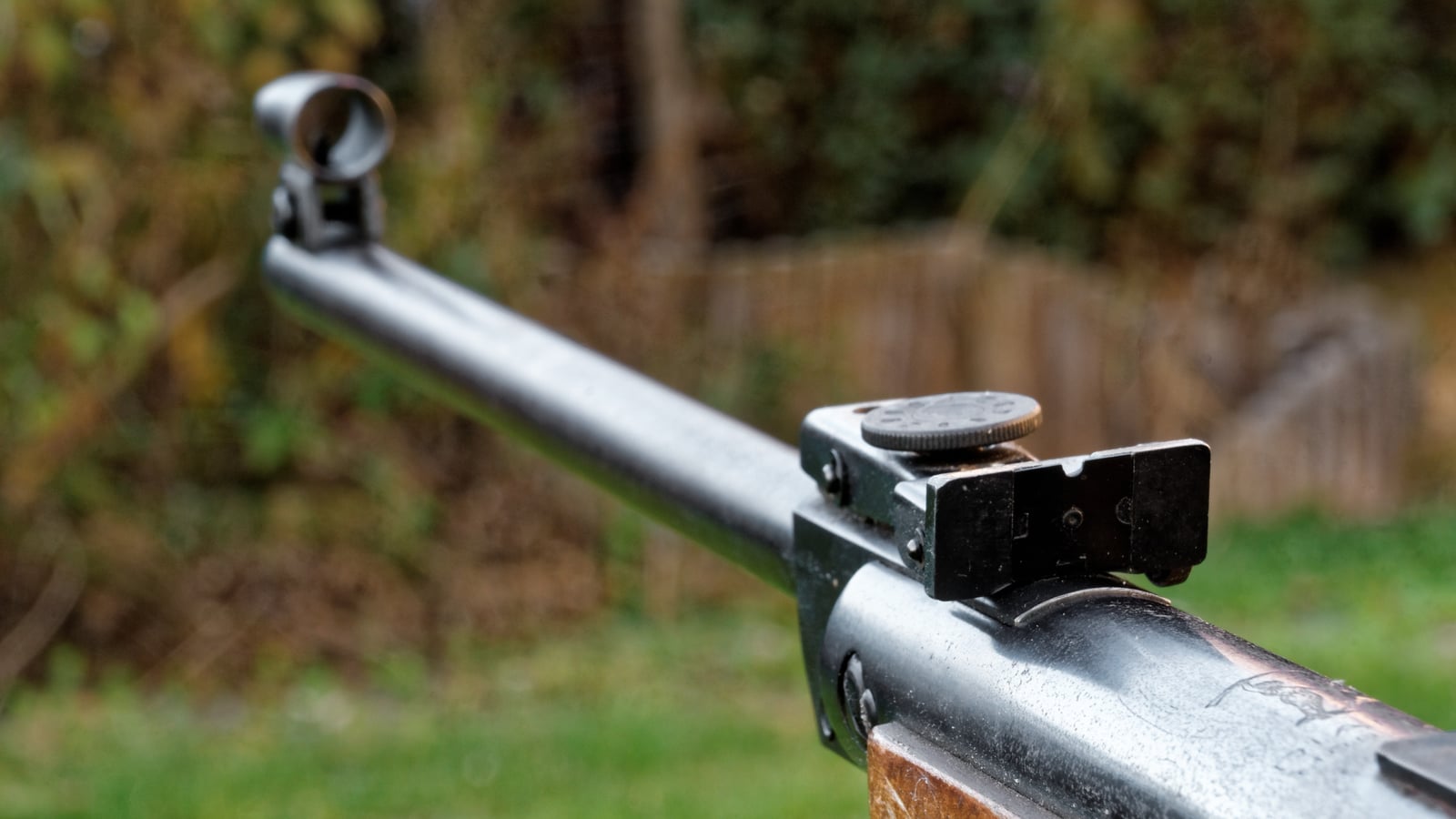
Three sighting systems, three philosophies
Choosing your sighting system is often the first real technical dilemma for a shooter who’s progressing. The red dot, the scope, and iron sights (diopter sights) don’t answer the same need, and none of the three is objectively “better” in an absolute sense.
Each was designed for a specific use: iron sights for pure precision at minimal weight and cost, the scope to pick out detail at long range, the red dot for fast target acquisition and shooting with both eyes open. Confusing them with one another often leads to a bad purchase.
This article compares the three systems on concrete criteria: precision, acquisition speed, weight, price, and suitability by discipline. The goal isn’t to crown a winner but to help you choose based on your actual practice, not a trend or an opinion overheard at the range.
We’re staying strictly within the scope of civilian sport shooting, in a club or in official competition. No tactical, military, or professional dimension comes into play here.
Before getting into the detail of each system, keep in mind that no choice is irreversible. Switching optics or sights is always possible as you progress, and many experienced shooters own several guns equipped differently depending on the discipline of the day. This comparison is meant above all to lay out the right decision criteria, not to lock anyone into a fixed choice for their entire shooting career.
Iron sights: raw precision and nothing else
Iron sights, or diopter sights, rely on a simple optical principle: the eye naturally aligns a small rear hole (the aperture) with a front post or ring, with no lens and no magnification. It’s the most precise metallic sighting system that exists for static precision shooting.
Its main strength is alignment rigor. The brain instinctively centers one circle within another with formidable precision, far superior to aligning a classic notch and post. That’s why 10m and 50m rifle, as well as 10m and 25m precision pistol, use this system almost exclusively in official competition.
On weight and bulk, iron sights are unbeatable: a few dozen grams, no electronics, no battery, no lens to scratch. It’s also the most reliable system over time, since there’s nothing that can fail. A well-adjusted set of iron sights lasts decades with no special maintenance.
On price, the gap versus the other two options is huge. Good-quality iron sights cost a fraction of the price of a red dot or scope with equivalent reliability. That’s a strong argument for a beginner who wants to gear up seriously without blowing their budget.
The limitation is clear: iron sights are slow to acquire a moving target or in dynamic shooting, and they demand flawless near vision since the eye has to focus on several successive planes (rear sight, front post, target). With age or the onset of presbyopia, this exercise becomes more tiring.
Adjusting iron sights is done purely through micrometer screws acting on elevation and windage, with no electronics to calibrate. This mechanical simplicity is an advantage for repeatability: once the position is memorized via marks or click counts, it’s easy to return to a previous setting after lending the gun out or disassembling it for transport. That’s a real comfort for a shooter who shares gear at the club or travels regularly with their rifle.
The scope: magnification in service of detail
A scope adds a magnifying optical system between the eye and the target, with a reticle superimposed on the image. It lets you see details invisible to the naked eye: a previous hit at 100m, a bull’s-eye zone at 50m, or a distant target in long-range precision shooting.
Magnification is its number-one asset. A 3-9x or 4-16x scope allows shot placement with a finesse that neither a red dot nor iron sights can match beyond a few dozen meters. It’s an indispensable tool in 300m rifle, bench rest, or any discipline played out over distance.
Its downside is weight and bulk. A quality scope with its mounting rings easily adds several hundred grams to the gun, which changes the balance and handling, especially on a light rifle.
Acquisition speed is also its weak point. The reduced field of view caused by magnification makes it harder to shoot a moving target or move quickly from one target to another. Finding your target in the eyepiece takes an adjustment period, especially at high magnification, which makes it unsuited to dynamic disciplines.
On price, the range is very wide: a decent entry-level scope stays affordable, but models used in long-range competition with bright optics and a precision reticle quickly climb into a substantial budget. Optical quality (sharpness, low-light brightness, absence of distortion) accounts for most of the price difference.
Adjusting a scope combines several parameters that don’t exist on the other two systems: parallax correction so the reticle stays sharp at the chosen shooting distance, diopter adjustment on the eyepiece to match the sharpness to your own eyesight, and elevation and windage turrets to adjust the point of impact. This wealth of adjustments is an asset for fine precision, but it requires a longer learning curve than a simple screw adjustment on iron sights.
The red dot: speed above all
The red dot projects a lit point (red, or sometimes green) onto a lens with no magnification, which the eye superimposes on the target. The key principle is shooting with both eyes open: one eye looks at the dot, the other looks at the target, and the brain merges the two images.
This approach makes target acquisition extremely fast, which explains its massive adoption in dynamic shooting (IPSC, Steel Challenge, USPSA) on cardboard or steel targets. Field of view stays total since there’s no magnification, which makes it easy to move quickly from one target to another during a stage.
The red dot has also become essential in modern competition pistol shooting, in divisions that allow it, for its ability to reduce the time between two shots without sacrificing precision at short and medium range.
Its main weakness is its dependence on a battery and electronics. A dead battery or a red dot failing mid-competition turns the gun into a blind system, with no fallback if no backup iron sight is mounted alongside it. Shock and water resistance also vary a lot from one model to another.
Weight stays generally moderate, often lower than a scope’s, but higher than plain iron sights since it has to house a lens, an emitter, and a battery compartment. Price covers an enormous spectrum, from entry-level models to high-end competition models with battery life of several thousand hours and a very bright lens in full sunlight.
Adjusting a red dot is generally limited to two correction screws (elevation and windage) plus a button or dial for light intensity. Some models offer automatic activation via a motion or ambient-light sensor, a welcome feature for never finding yourself with a dead dot at the moment of drawing in dynamic competition. Others, simpler, require manual activation that you need to remember to check before every string.
The numbers comparison: precision, speed, weight, and budget
On pure precision at each discipline’s reference distance, the ranking depends heavily on the context of use rather than a universal hierarchy.
- Precision — Iron sights: maximum precision on a fixed target at short and medium range (10m, 25m, 50m), thanks to very rigorous, repeatable mechanical alignment.
- Precision — Scope: maximum precision at long range thanks to magnification, which lets you see and correct deviations invisible to the naked eye beyond 100m.
- Precision — Red dot: decent precision at short and medium range, but a lit point that visually grows with distance covers part of the target, which limits aiming finesse beyond 50-70m depending on the dot size chosen.
The choice of dot size (expressed in MOA) directly affects this last point: a fine dot (2-3 MOA) favors precision, a wide dot (6-8 MOA) favors acquisition speed at the expense of finesse.
It’s on acquisition speed that the gaps between the three systems are clearest.
- Speed — Red dot: maximum acquisition speed, shooting with both eyes open, total field of view. The reference system for any timed discipline on multiple targets.
- Speed — Iron sights: medium to low speed, superimposing several optical planes (rear sight, front post, target) requires an unavoidable alignment time.
- Speed — Scope: the slowest as soon as magnification exceeds a few power levels, due to the reduced field of view and the time needed to relocate the target in the eyepiece.
A shooter who practices a timed discipline on multiple targets should clearly favor the red dot. A static precision shooter, conversely, has no need for that speed at all.
Added weight on the gun changes its balance, fatigue during long holds, and sometimes even eligibility in certain competition categories with a regulated maximum weight.
- Weight — Iron sights: a few dozen grams, minimal bulk, no notable impact on the gun’s balance.
- Weight — Red dot: moderate weight, between that of iron sights and a scope, varying with the housing (aluminum or polymer) and lens size.
- Weight — Scope: the heaviest, compounded by the metal mounting ring needed to withstand recoil, with bulk that noticeably changes the gun’s silhouette and center of gravity.
Finally, price is never limited to the initial purchase: you have to factor in maintenance, batteries for the red dot, and potential fragility against transport shocks.
- Budget — Iron sights: the lowest budget to buy, near-zero upkeep, very long lifespan with no recurring cost.
- Budget — Red dot: affordable entry budget up to a high budget for competition models, with a recurring battery cost that stays marginal for normal use.
- Budget — Scope: moderate entry budget, but models used in long-range competition with flawless optical quality represent the heaviest investment of the three systems.
A tight budget and a desire to progress quickly in short-range precision naturally point toward iron sights. A larger budget for dynamic shooting justifies investing in a quality red dot, whose battery reliability and auto-activation make all the difference in competition.
Which discipline for which system
Each competition discipline has its habits, sometimes imposed by the rules, sometimes born from simple practical logic.
- 10m and 50m rifle, 10m and 25m precision pistol: iron sights almost systematically, the historical and regulatory standard for these static precision events.
- 300m rifle and bench rest: a scope, essential to exploit the gun’s precision over distance.
- Dynamic shooting (IPSC, Steel Challenge, USPSA) on cardboard or steel plates: red dot dominant in the optics division, for acquisition speed and shooting with both eyes open.
- Animal-shaped metal silhouettes (chicken, pig, ram, turkey): depending on distance and the event’s rules, iron sights or a low-magnification scope depending on whether the event favors speed or precision.
- Shooting at a moving target: red dot or low-magnification scope depending on the target’s speed of movement and the shooting distance.
The regulation gear for each discipline remains the absolute reference: always check your federation’s or club’s rules before investing, since some events require a specific sighting system to stay within a given category.
Many shooters also think they have to pick a single system for their entire practice, when the reality on the ground is often more nuanced. The same shooter might very well own a rifle set up with iron sights for 50m precision and another gun equipped with a red dot for dynamic shooting.
Some mounts also let you quickly switch between a red dot and a backup iron sight, a solution appreciated in competition to guard against a battery or electronics failure mid-stage. This setup adds cost and weight, but it reassures shooters who never want to depend 100% on an electronic system.
For a beginner hesitating between several disciplines, it’s often wiser to start with the system imposed by the main discipline you’re aiming for, rather than buying versatile-but-mediocre-at-everything gear. Initial specialization pays off more than a vague compromise.
Visual learning: what each system asks of your eye
Choosing a sighting system isn’t just a matter of gear — it’s also a matter of different visual and cognitive demands for each of the three systems.
With iron sights, the eye has to manage three planes at different distances: the very close rear aperture, the front post at the muzzle end, and the target far away. The brain gradually learns to favor sharpness on the front post while leaving the rear sight and target slightly blurred, a skill built over dozens of hours of repeated practice.
The red dot simplifies this management since the lit point and the target sit virtually in the same optical plane at infinity. The eye therefore has only one focus point to manage, which explains why this system is often perceived as more intuitive by beginners, especially those who wear prescription glasses.
The scope imposes a different constraint: quickly finding your eye relief (the exact distance between the eye and the eyepiece that gives a sharp image with no vignetting) requires specific postural learning. Poor head placement on the stock is enough to produce a black crescent at the edge of the image, a sign that alignment isn’t optimal.
For a shooter who wears prescription glasses or is developing presbyopia, the red dot offers a real advantage: it removes the need to focus on an element close to the eye, unlike iron sights, which become more tiring with age. That’s a factor worth weighing beyond purely sporting performance.
The hidden budget: accessories and mounting
The listed price of a sighting system is only part of the real budget, and many shooters discover extra costs after purchase that they hadn’t anticipated.
For iron sights, mounting is often limited to attaching to a rail already present on the gun, with minimal installation cost. The only sometimes useful accessory is a set of interchangeable apertures of different diameters, to adjust perceived brightness to conditions.
For a red dot, you need to plan for a mount suited to the gun type (Picatinny rail, dovetail, or a specific plate depending on the pistol), which can represent a non-trivial cost if the gun isn’t natively designed to accept an optic. You also need to anticipate regularly replacing batteries and, for some models, buying a shock-protection cover for transport.
For a scope, the mounting rings must be chosen carefully according to the caliber and recoil level of the gun, since a low-end mount can loosen over time and cause you to lose zero. You might also need to add an anti-glare sunshade or a quick-adjustment system (click turrets) for disciplines that require frequent corrections mid-string.
Anticipating these extra costs avoids the classic bad surprise: a sighting system bought at the best price, followed by a final budget inflated by essential accessories discovered after the fact.
Common mistakes when choosing
Certain mistakes recur regularly among shooters who switch sighting systems without taking the time to think about their actual use.
The first mistake is buying a red dot for a purely static precision discipline just because “everyone’s talking about it” at the club. If your practice is limited to 25m or 50m precision on a fixed target, iron sights often remain more effective and, above all, much cheaper for an equivalent or even superior result.
The second mistake is buying a high-magnification scope for dynamic shooting, thinking higher magnification always brings more precision. The opposite happens: the reduced field of view considerably slows transitions between targets and directly hurts your time.
The third, more subtle mistake is neglecting the quality of the mount in favor of the optic housing alone. A high-end red dot mounted on a cheap mount can lose its zero at the slightest bump, which ruins the whole initial investment.
A fourth mistake, rarer but costly, is buying a sighting system without first checking that it’s allowed in the targeted competition division or category. A shooter who invests in a high-end red dot only to discover their preferred division bans it ends up having to buy a second system, or switch divisions against their will. A simple call to the club or a careful read of the current rules is enough to avoid this disappointment.
Finally, many shooters underestimate the adjustment time needed after switching systems. Going from iron sights to a red dot, or vice versa, takes several sessions before regaining your usual reflexes and results. Judging a new system on a single trial session remains a common misjudgment.
Shooter progression: when to switch systems
The question of the right time to switch sighting systems comes up often among shooters who progress and change sporting goals over the seasons.
A beginner discovering precision shooting has every reason to first learn with iron sights, even if they plan to eventually move toward a red dot or scope. The alignment rigor demanded by metallic sights builds fundamentals in posture and breath control that remain useful regardless of the system used afterward.
A shooter switching to dynamic shooting after several years of static precision needs to accept an adjustment period with the red dot, especially for shooting with both eyes open, which isn’t a natural reflex for everyone. Some experienced shooters take several months to become fully comfortable with this technique.
Conversely, a shooter used to a red dot who wants to improve in long-range precision will need to master eye relief and the magnification specific to a scope, a different exercise from anything they’ve practiced up to that point.
There’s no mandatory path: an experienced coach knows how to guide each shooter based on their profile, target disciplines, and physical constraints (eyesight, age, build). What matters is staying honest about your actual goals rather than following a trend observed among other club members.
One last factor deserves consideration in this journey: practice frequency. An occasional shooter who only goes out once a month benefits from keeping a simple, stable system like iron sights, which requires no reconfiguration between spaced-out sessions. A regular shooter who trains several times a week can, by contrast, afford to explore a second system in parallel, with available practice time compensating for the initial adjustment period.
Lighting and shooting conditions: a criterion too often overlooked
Lighting conditions at the range hugely influence the comfort and performance of each system, an aspect rarely mentioned before purchase.
Iron sights depend entirely on natural ambient light. Indoors under weak artificial lighting, the contrast between the front post and target can become hard to judge, which pushes some shooters to use a tunnel front sight with a luminous insert or a set of colored filters to improve contrast depending on the range’s lighting.
A red dot, by contrast, carries its own adjustable light source, which makes it particularly well-suited to lighting variations. Adjusting intensity, however, becomes a point to watch: a dot too bright in low-light conditions visually “blooms” and covers the target, while a dot too dim in full sunlight becomes nearly invisible. Quality models offer fine automatic or manual adjustment to avoid both pitfalls.
A scope depends on the quality of its lenses and their optical coatings to retain brightness in low light, an area where the difference between an entry-level and a premium model is felt the most. A cheap scope can become nearly unusable late in the day or under overcast skies, while a better-coated model keeps a usable image for much longer.
For a shooter who practices both indoors and outdoors, or at varying times of day, this criterion deserves a concrete test before purchase rather than being judged on a single spec sheet in a store.
Compatibility with the gun: what changes depending on the mount
The choice of a sighting system is never made in the abstract — it also depends heavily on the type of gun it will be mounted on, a point worth detailing separately from the rest of the comparison.
On a category D air rifle used for leisure or beginner training, iron sights often remain the most coherent choice: these guns are designed from the outset for this type of sighting, with a rear rail intended for it and an interchangeable front post. Adding a red dot or scope remains possible but sometimes requires an additional rail not originally provided.
On a category B pistol, mounting a red dot often requires a slide specifically cut to accept an optic plate, which isn’t the case for every model on the market. A shooter considering this addition must check their gun’s compatibility before buying, otherwise machining or a full slide swap may become necessary.
On a category C manually operated repeating rifle used for leisure shooting or animal-shaped metal silhouettes, the scope is generally mounted on a rail or rings fixed to the gun’s receiver, an operation that requires precise adjustment (parallax and elevation) so as not to introduce an aiming error stemming from the mount itself rather than the optic.
In every case, the gun’s recoil directly influences the choice of gear: a hard-recoiling gun demands a robust mount and a sighting system able to withstand repeated shocks without losing its zero, a criterion worth checking in the technical specs before purchase rather than discovering after several sessions.
Reliability over time also clearly distinguishes the three systems, a criterion often underestimated at the time of purchase. Iron sights contain no electronic parts or fragile front lens: occasional cleaning and checking the mounting screws are enough to keep them operational for decades, making them the most robust system against transport shocks and temperature swings.
The red dot depends on a battery whose life varies enormously depending on the model and chosen brightness, as well as on the sealing of its electronic housing. An entry-level model exposed to moisture or repeated shocks can lose its zero or fail faster than a better-built competition model. The scope, with its multiple lenses and internal adjustment mechanism, is sensitive to violent shocks that can shift its zero point with no visible warning sign: regular checking remains essential, especially after transport under rough conditions.
Field feedback: what coaches and experienced shooters report
Beyond spec sheets, the concrete experience of club shooters and their coaches often sheds better light on certain choices than any sales pitch. An experienced coach who trains beginners often observes the same patterns repeating from one generation of shooters to the next, regardless of technological developments in gear.
Newcomers who start with iron sights, often simply because that’s the loaner gear available at the club, generally develop a better understanding of aiming fundamentals. This initial rigor, once acquired, then transfers easily to a red dot or scope the day the shooter changes discipline.
Conversely, a shooter who starts directly with a red dot without ever having gone through metallic sights can sometimes develop postural compensations that mask flaws in gun hold, simply because the system forgives small alignment imperfections more. That’s not a dealbreaker, but it can slow overall technical progress if the shooter someday wants to diversify their disciplines. An experienced coach will happily recount having seen beginners struggle for months on a red dot, thinking their poor results came from the gear, when the problem was actually an unstable gun hold that iron sights would have immediately revealed through scattered groupings.
An experienced club shooter who practices both precision and dynamic shooting often describes switching between their two setups as a real shift in mental logic: the slowness and extreme concentration of static precision have almost nothing in common with the rhythm and speed management specific to the red dot in a timed discipline. Many consider this variety of practice to overall improve their fundamentals, each system reinforcing different skills.
A regional precision champion, for her part, mentions the importance of never changing gear right before an important competition, whatever system is used. The adjustment time to a new set of iron sights, a new red dot, or a new scope, even from the same lineup as a previous model, can be enough to disrupt reflexes built over several seasons.
This field feedback confirms a simple idea running through this entire comparison: the most expensive or most modern sighting system is never automatically the best suited. A piece of advice many coaches share points in the same direction: never choose a system just because it’s trendy or because a clubmate uses it successfully. Every shooter has a different build, eyesight, and goals, and the best system remains the one that precisely matches the discipline practiced and the available budget, not the one that impresses the most at the range. It’s the coherence between the system chosen, the discipline practiced, and the shooter’s experience level that determines real performance.
Above all, remember this as you close out this comparison: the red dot, the scope, and iron sights aren’t rivals to be settled once and for all, but three complementary tools in the toolbox of a sport shooter who takes their practice seriously. Take the time to try each system before investing, talk with the experienced shooters at your club, and choose based on the discipline you actually practice today rather than the one you might consider someday. The best gear is always the one that lets you progress calmly, session after session, without ever becoming a hindrance or a source of frustration at the range.
FAQ
Q: Is the red dot allowed in official competition? A: That depends strictly on the discipline and division you’re competing in, some requiring it and others excluding it entirely in favor of metallic sights. Always check the current sporting rules with your federation before investing in a given system.
Q: Can you start directly with a red dot without having gone through iron sights first? A: Yes, nothing requires starting with iron sights, the choice mainly depends on the discipline targeted from the outset. A beginner in dynamic shooting, for example, will make more sense learning directly with the system they’ll use in competition.
Q: What red dot size should you choose to start out? A: A mid-size dot (around 4-6 MOA) offers a good compromise between precision and acquisition speed for a shooter discovering this system. Very fine dots demand more precision in mounting and use, while wide dots mainly favor pure speed.
Q: Is a scope useful under 50 meters? A: Its usefulness is limited at these distances, iron sights or a red dot are largely sufficient and also offer superior acquisition speed. A scope becomes worthwhile once target detail becomes hard to make out with the naked eye.
Q: Should you fear a red dot’s battery dying in competition? A: It’s a real but manageable risk if you choose a reliable model with strong battery life and check your battery before every important outing. Some shooters also mount a backup iron sight so they never depend 100% on electronics.
Q: Does the price of a sighting system always reflect its quality? A: Generally yes for optical quality and electronic reliability, but a simple, inexpensive set of iron sights can remain superior to an expensive red dot or scope for purely static precision use. The right choice depends first on fit with your discipline, not just the budget committed.