
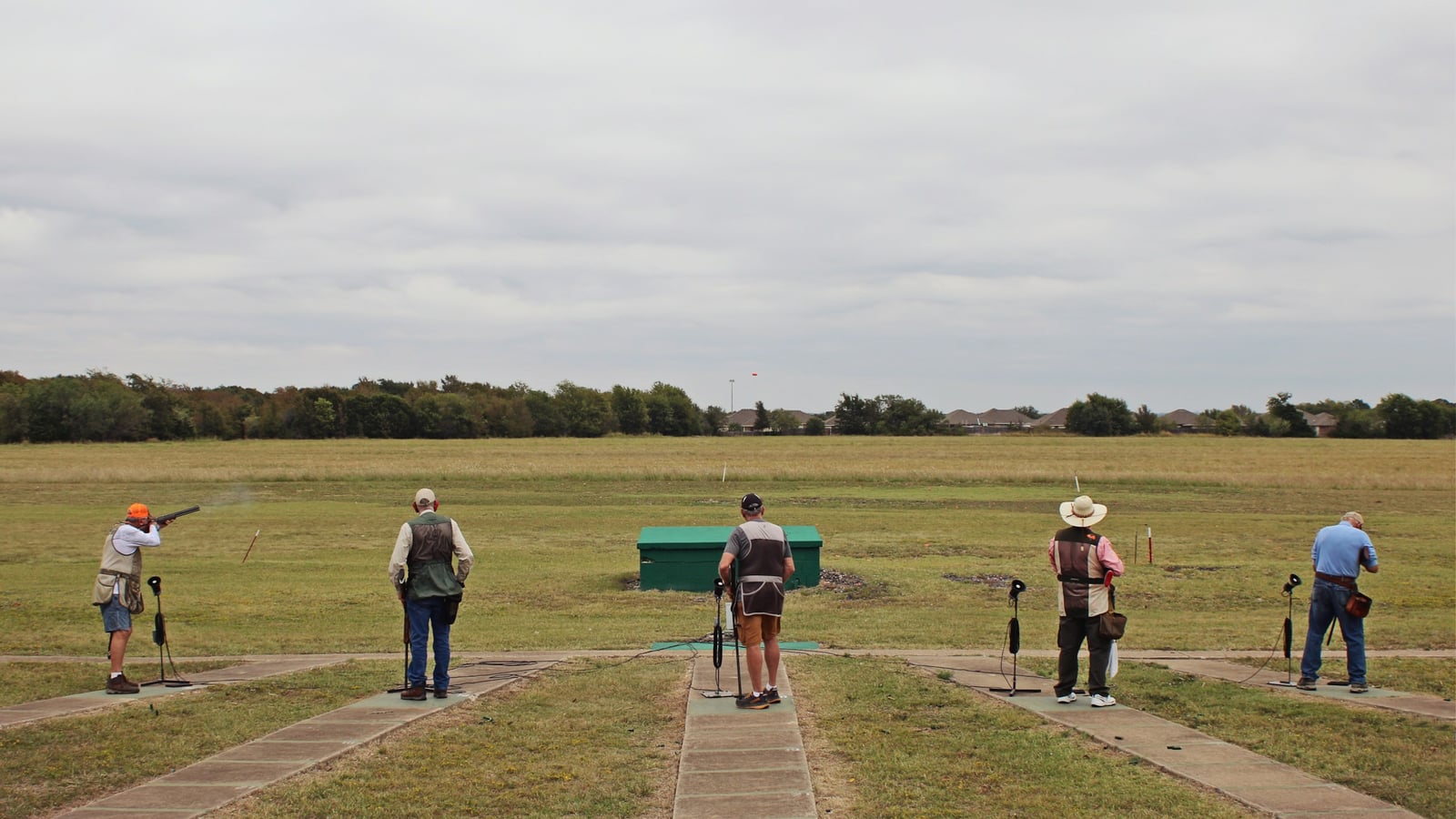
Why organizing a club challenge changes the whole dynamic
An internal challenge isn’t just “we shoot a bit harder this Sunday.” It’s a project that gives a shared goal to members who would otherwise train alone in their corner. It rebuilds connection, motivates beginners to work toward a concrete deadline, and gives the club an identity that federal competitions alone never create.
An experienced club shooter who’s run this kind of project before puts it bluntly: the hard part is never the shooting itself. It’s the organization - the rules, the logistics, the refereeing, and the communication around the event. Everything else follows if that foundation is solid.
This guide covers the concrete steps to build a challenge from scratch: framing the rules, recruiting and training referees, preparing targets, running a live leaderboard, and leaning on digital tools so the whole thing stays smooth instead of chaotic. The goal isn’t to reinvent an official federation competition, but to create a unifying, safe event you can repeat every year.
This kind of project also has an often-underestimated side effect: it reveals the goodwill within a club. Members who never volunteered for anything beyond putting equipment away sometimes discover a real talent for organizing, scoring, or communicating. A well-run challenge can become a natural talent pool for renewing the board or coaching team in the years that follow.
Don’t underestimate the minimal administrative side either. Even a purely internal event deserves board approval, a mention in the club’s activity log, and coverage under the structure’s usual insurance. These are quick formalities, but forgetting them can become a real problem if even a minor incident occurs.
Define the goal and format before anything else
Before thinking about targets or trophies, you need to answer a simple question: why does this challenge exist? A challenge aimed at “camaraderie and progress” doesn’t take the same shape as one aimed at “a serious ranking that preps people for regional competitions.” Both are legitimate, but they’re built differently.
A few formats that work well at club level:
- The multi-discipline challenge: several disciplines practiced at the club (rifle, pistol, clays depending on facilities), with a combined ranking.
- The team challenge: pairs or trios mixing skill levels, so beginners don’t feel out of their depth next to experienced shooters.
- The “season” challenge: several rounds spread over several months, with a cumulative ranking that keeps interest alive over time.
- The one-shot challenge: a single day, simple format, ideal for a first attempt before ramping up complexity in following years.
The format has to stay realistic given the club’s actual facilities and the number of volunteers available. An overly ambitious first-year challenge burns out the organizing team and discourages a repeat. A modest, well-executed format beats an ambitious, sloppy one.
Also think about the event’s total duration, which needs to stay realistic relative to the range’s capacity. A challenge that stretches over ten hours with endless waits between turns wears down even the most motivated participants’ patience. Better to plan several time slots throughout the day, or even split the events across two half-days, than to cram everything into one overlong session.
The question of participant numbers also deserves an answer at this stage. A challenge open to all members with no cap can quickly exceed a small club’s logistical capacity, especially if shooting stations are limited. Setting a maximum number of entries, with a waitlist if needed, avoids being overwhelmed on the day and helps you better calibrate the number of targets, scoresheets, and time slots.
The format choice should also account for the diversity of equipment present at the club. If members shoot with very different weapon categories or calibers, it may make sense to plan subcategories by equipment type rather than a single ranking that mechanically favors certain gear. Working through this in advance with a few experienced members avoids endless debates once the rules are already published.
Finally, don’t underestimate the value of testing the format at small scale before rolling it out fully. A scaled-down version of the challenge, run on an ordinary Sunday with a handful of volunteers, lets you spot flaws in the scoring or the flow without the stress of a big event. This informal dry run is well worth the time it takes, especially for a first edition.
Building a clear, fair rulebook
The rulebook is the document that prevents 90% of disputes on the day. It must be written, distributed in advance, and approved by the club board before being communicated to participants. Verbal rules along the lines of “we’ll figure it out on the day” systematically create tension, even among longtime friends.
Points the rulebook absolutely must cover:
- Participant categories (age, level, license seniority) and any women’s/men’s categories or weapon-class categories.
- Number of strings, number of shots per string, distances and stations used.
- Scoring scale and tie-breaking method.
- Event-specific safety rules, on top of the range’s permanent rules.
- Disqualification conditions (shooting outside the zone, breaking safety commandments, dangerous behavior).
- Complaint procedures: who to contact, within what timeframe, how a referee rules.
An experienced instructor often stresses one point: the rules must be identical for everyone, including organizers who compete. Nothing kills a challenge’s credibility faster than a sense of favoritism, even an unfounded one. Post the rulebook on the club noticeboard and email it out at least two weeks before the event.
Also plan a paragraph dedicated to allowed equipment. Some clubs limit optics, adjustable stocks, or ammunition to maintain a degree of fairness among differently equipped shooters. Others prefer full openness and let everyone bring their usual gear. Neither approach is objectively better, but it must be clearly announced before registration, not discovered on site.
One last often-overlooked point: the rulebook should specify what happens in the event of an equipment failure during a string, like a jam or a gear malfunction that isn’t the shooter’s fault. Planning a simple rule - retake the string, add time, or neutralize the score depending on the case - avoids an improvised and potentially unfair negotiation in the middle of the event.
Also consider including a brief section on sporting ethics in the rules. Reminding everyone that the spirit of the challenge remains camaraderie and respect between members, not performance at any cost, naturally steers the behavior of the more competitive participants. This kind of simple reminder also helps avoid certain behavior issues sometimes seen at more formal events.
Finally, include a clear clause on image rights if photos or videos are taken during the event, especially if the club plans to share them internally or on its communication channels afterward. A simple line on the registration form, asking for the participant’s consent or refusal, is usually enough to cover this without excessive administrative complexity.
Building a reliable refereeing team
Refereeing isn’t a secondary role - it’s what legitimizes the final ranking. A challenge without clearly identified referees will inevitably generate disputes over scores, even when everyone acts in good faith. Plan for at least one referee per station or firing line, plus a head referee to settle contested cases.
Roles to assign before the day:
- Line referee: monitors safety and validates each string in real time.
- Scorer: records results on the sheet or digital tool, without interpreting the rules.
- Head referee: the only person authorized to rule on a complaint or contested score.
- General safety officer: oversees the whole range, coordinating with the club’s usual range safety officer.
Train your referees before the event, even informally over coffee on a weeknight. Have them read the rules line by line and walk through concrete scenarios (“what happens if a shooter goes three seconds over the time limit?”). A referee team that answers in unison on the day avoids hiccups that sour the mood.
The number of referees needed depends directly on the number of stations active at once. As a base rule, always plan one referee per station rather than a single roaming referee running between stations - the latter ends up missing important observations and falling behind the overall schedule. If the club is short on available volunteers, it’s better to reduce the number of stations open at once than to sacrifice refereeing quality.
Another point worth watching is perceived impartiality. As much as possible, avoid having a referee score a family member or their usual training partner, even if you know the person is trustworthy. It’s not a question of individual trust but of collective perception: rotating referees between stations over the course of the day reinforces the legitimacy of the final ranking in every participant’s eyes.
A group briefing just before stations open, bringing referees and scorers together for five minutes, lets you go over the day’s watch points and answer last questions before the crowd makes conversation harder. Also prepare your referees to handle delicate human situations, not just technical rules cases. A disappointed participant raising their voice after an unfavorable call, or a stressed beginner hesitating repeatedly at their station, both need a calm tone and particular tact. A referee who can defuse tension with a few calm words often prevents a simple disagreement from escalating into a conflict that sours the whole day’s mood.
Finally, plan a quick debrief with the refereeing team at the end of the event, while details are still fresh. This lets you note contested cases, parts of the rulebook that raised questions, and adjustments to plan for the next edition. These notes, written down, are worth their weight in gold for refining the rules over the years.
Choosing and preparing targets suited to the format
Target choice depends directly on the chosen format and the disciplines practiced at the club. For precision events, classic paper targets with numbered scoring zones remain the standard: easy to read, easy to photograph and archive in case of disputes.
For a more dynamic challenge, favor cardboard or generic steel plates, never using a human silhouette in any form. Approved animal silhouettes (chicken, pig, turkey, ram) work great for varying events without stepping outside civilian sport shooting.
Always keep a stock of spare targets above your estimates: wind, light rain, or accidental tears eat through more targets than expected. Number and code each target in connection with its station and shooter to avoid any confusion when tallying scores. A good practice is to photograph each target before taking it down, which serves as evidence in case of a score dispute.
Target distance and mounting angle should also be checked in advance, ideally during a dry run a few days before the event. A target holder that isn’t properly secured and shifts in the wind, or poor lighting late in the day at an outdoor range, can distort perceived scores and create avoidable disputes. Test each station under the real conditions expected on the day, at the same time if possible.
Also think about the logistics of replacing targets between shooter rotations. For a format with several waves of shooters, assign someone dedicated to quick target changes, independent from the line referee. This avoids dead time between shooters and keeps a pleasant event pace for everyone, including those waiting their turn.
Storing targets before and during the event also deserves some organization. Sort them by category and station into clearly labeled crates, rather than one pile rummaged through at the last minute. On a challenge that runs all day, this small logistical discipline saves meaningful time, especially once the organizing team starts tiring in the late afternoon.
If the club’s budget allows, also consider laminated or reinforced backup targets for the stations most exposed to weather. This costs a bit more upfront, but sharply reduces the replacement rate during the day, limiting interruptions and unplanned costs from emergency restocking.
Running a live leaderboard without losing track
The live leaderboard is often the weak point of “old-school” club challenges: loose sheets, manual calculations, a whiteboard that gets rained on. Once you’re past twenty participants, transcription errors become nearly inevitable without some minimum of tooling.
A few principles that work regardless of the tool chosen:
- A single centralized entry point, to avoid double entries or gaps between multiple sheets.
- A visible display for participants, which keeps engagement up throughout the day.
- Regular data backups, on paper AND digitally, in case of equipment failure.
- A clearly announced complaint window before the ranking is declared final.
A paper board remains viable for a small, friendly challenge of about thirty shooters, but once the format spans several rounds or several combined disciplines, manual calculation becomes a source of errors and wasted time for the organizing team.
Systematically designate a backup person able to take over data entry if the usual person in charge needs to step away, even just to shoot their own string. An entry point that depends on a single irreplaceable person is a point of fragility for the whole event. Document the calculation method in a simple memo, accessible to anyone who has to step in on short notice.
Also plan a dedicated, clearly announced moment for announcing final results. A ranking that drags on while participants grow impatient spoils some of the atmosphere built up during the day. Conversely, announcing results too hastily, before the complaint window has passed, can force a walk-back and create needless confusion.
The role of digital tools in smoothing out the event
This is where digital tools really change the game compared to a challenge organized purely on paper and stopwatch. A digital shooting logbook app lets each member centralize their own practice scores ahead of time, which makes registering by skill level easier and avoids nasty category surprises on the day.
During the event, a digital score-tracking tool lets you enter results directly from a phone or tablet, station by station, with automatic calculation of the cumulative ranking. This eliminates manual addition errors and frees up time for the organizing team, who can focus on safety and atmosphere instead of paperwork.
Another concrete advantage: keeping a history. A club that runs its challenge every year can compare progress from one edition to the next, identify shooters moving up in skill level, and adjust categories accordingly. This collective memory, impossible to maintain with loose sheets filed in a binder, becomes a real tool for tracking the club’s sporting life.
Also think about real-time display: a screen or connected tablet showing the updated ranking after each round keeps up the interest of participants who haven’t shot yet, and gives the feel of a real event rather than a simple organized practice session.
Digital tools also make advance registration easier. An online form, even a basic one, lets you collect categories, self-declared level, and participant availability without multiplying email exchanges or loose sheets that get lost. It also gives a clear view of the number of registrants several weeks before the event, which helps adjust logistics accordingly instead of discovering the numbers at the last minute.
One last interesting use case concerns sharing individual stats after the event. Some digital tools let each shooter pull up the detail of their performance, string by string, and compare it to their own past practice sessions. This personalized feedback, impossible to offer with a simple paper leaderboard, adds real value to participation beyond just the overall ranking.
Planning the logistics of the day
Logistics is the area where good intentions collapse most often for lack of written preparation. Make a complete equipment list at least a week before the event, and assign a person responsible for each logistical station.
Systematically plan for:
- Match sheets or charged tablets, plus a backup system in case of failure.
- An accessible first aid kit and a designated person trained in basic care.
- Clear signage guiding participants to stations, changing areas, and safety zones.
- Water and light refreshments, especially if the challenge spans a full day.
- A buffer slot in the schedule to absorb delays, a complaint, or minor weather disruption.
An experienced instructor recommends holding a coordination meeting the day before with the whole organizing team, even just fifteen minutes. This lets you check that everyone knows exactly where they need to be and at what time, rather than discovering gaps in the schedule in the middle of the event morning.
Don’t forget the logistics around storing and transporting ammunition and equipment either, which must stay compliant with the range’s usual rules and local regulations, with no exception for the occasion. A challenge, however friendly, doesn’t waive any safety or storage rule normally applied at the club.
Also plan a backup weather plan if part of the challenge takes place outdoors. A partial postponement, a fallback to a covered range, or a format adjustment should be considered in advance rather than decided in a rush on the morning itself. Communicating this backup plan to participants as soon as the event is announced avoids nasty surprises and last-minute withdrawals.
Parking and welcome arrangements also deserve particular attention if the club expects participants from other clubs or non-licensed companions. Simple signage from the site entrance, a clearly identified welcome point, and a dedicated person for initial information prevent confusion from staggered arrivals throughout the morning.
Finally, prepare a basic equipment repair kit: spare batteries for stopwatches or tablets, tape, scissors, staples or clips for targets, an extension cord if needed. These small items, forgotten nine times out of ten in the rush, are exactly what saves the flow of an event when an equipment problem crops up in the middle of the day.
Communicating before, during, and after the event
Communication around the challenge directly shapes turnout and atmosphere. Announce the event early enough - at least a month, to give members time to organize - and repeat the reminder several times through the club’s usual channels (noticeboard, email, chat group).
During the event, assign someone to handle live communication: announcements over the mic or speaker, updating the leaderboard display, managing photos if the club publishes them. After the challenge, a thank-you message to participants and volunteers, along with the final ranking and a few photos, keeps up the desire to come back the following year.
Don’t neglect the internal debrief either. Gather the organizing team in the days that follow to list what worked well and what needs to change. These notes, kept from year to year, turn an event organized in a rush into a well-oiled fixture that improves with each edition.
Also consider soliciting direct feedback from participants, not just the organizing team. A short questionnaire handed out at the end of the day, or sent by email during the following week, lets you gather fresh impressions on the flow, atmosphere, or rules. This feedback, even informal, often brings a different perspective than the organizing team’s, which necessarily has a more internal view of the event.
Also think about promoting the event outside the circle of direct participants. A short write-up posted at the club, or even shared on the club’s social media if it has any, shows absent members what they missed and makes them want to sign up for the next edition. It can also serve as a showcase to attract new members curious about joining an active club.
One last useful habit: thank the volunteers by name who gave their time, not just the ranking winners. A challenge runs on the elbow grease of several people behind the scenes - referees, scorers, logistics - and explicitly acknowledging their involvement greatly increases the odds they’ll say yes again next year.
Involving new members without putting them in a tough spot
A successful club challenge should never make beginners feel like they have no place there. Plan adapted categories or scoring scales that reward progress rather than raw performance alone. A new member who improves their own score compared to their last session deserves recognition, even if they finish far from the overall podium.
A few concrete ideas for integrating beginners:
- A “discovery” category with a simplified scale, separate from the main ranking.
- Informal mentoring, where an experienced shooter accompanies a newcomer through the event.
- A progress award, calculated against practice scores logged in the preceding weeks.
- A clear explanation of safety rules at the start of the day, without rushing through it on the assumption that “everyone already knows.”
A regional champion who started with this kind of friendly challenge often points this out: it’s this type of accessible event, more than official competition, that makes people want to stay a member long-term. The stakes aren’t just sporting - they’re also about the club’s retention.
Be careful, though, not to over-structure the beginners’ experience to the point of making it artificial. The idea isn’t to walk them through an easy path cut off from the rest of the event, but to fully integrate them into the challenge while adjusting performance expectations. A beginner who feels treated as a real participant, with their own markers of progress, gets far more out of it than a mere spectator confined to a separate event.
The vocabulary used by referees and organizers also matters enormously with this audience. A technical remark delivered with tact encourages a beginner to keep going, while the same remark delivered curtly can discourage them for a long time. Remind your coaching team of this before the event: sporting rigor and kindness aren’t incompatible, especially in front of an audience still discovering the discipline.
Adapting the format from one year to the next
A challenge that never changes eventually gets stale, even if it’s well organized. Use feedback and ranking data to gradually adjust the format: add a discipline, revise a scale judged too hard or too easy, or introduce a new category if the members’ profile has evolved.
The digital history of past editions helps a lot with this adjustment work. Comparing turnaround times, participation rates by category, or the evolution of average scores gives far more reliable indicators than the club board’s gut feeling alone. It’s also a solid argument for convincing the steering committee to renew or increase the event’s budget.
Finally, keep in mind that consistency matters more than scale. A modest challenge organized every year becomes a club tradition; a spectacular challenge organized once and then abandoned leaves a sense of something unfinished. Aim for continuity before aiming for scope.
Over the editions, also think about passing on the organizational know-how to other club members rather than keeping it within the same two or three people. A challenge that depends on a single historical organizer often disappears the day that person no longer has the time or the desire to carry it. Documenting the process, useful contacts, and lessons learned in a shared club folder ensures the project’s longevity well beyond its original founders.
Funding the challenge without straining the club budget
The funding question comes up as early as the first preparation meetings. A challenge doesn’t need a big budget to succeed, but you need to clarify from the start who pays for what: targets, small rewards, any catering, printing documents. Ambiguity on this point often creates unnecessary tension between the board and the organizing team.
Several funding approaches combine well at club scale:
- A symbolic fee charged to entrants, covering part of the cost of targets and light catering.
- A dedicated budget voted at the general assembly or by the board, if the club is used to supporting this kind of unifying event.
- A local partnership with a gun shop or local business, in exchange for modest visibility during the event.
- Reusing equipment already at the club rather than buying new every time, to limit costs in the first year.
Keep a written record of expenses and revenue for the edition, even a modest one. This tracking greatly eases budgeting for the next edition and reassures the club board about the project’s sound management, which helps secure renewed - or even increased - support in following years.
The prizes themselves don’t need to be expensive to leave a mark. A printed certificate, a small shooting accessory engraved with the club’s name, or simply a podium photo displayed year-round at the clubhouse can carry more symbolic value than an impersonal, costly prize. What matters is that recognition is visible and lasting, not necessarily expensive.
Handling the unexpected and tensions on the day of the event
Even with the best preparation, a club challenge almost always runs into something unexpected: a late participant, a disagreement over a rule’s interpretation, weather turning bad, or a referee who has to leave urgently. The quality of an organization is measured as much by its ability to anticipate as by its ability to absorb these hiccups without letting things spiral.
A few useful reflexes for keeping control of the situation:
- Always keep a time buffer in the schedule rather than packing it to the brim, to absorb small delays without a domino effect.
- Centralize disputed decisions with the head referee, rather than letting each line referee rule alone on ambiguous cases.
- Communicate calmly and publicly in the event of a last-minute change, to avoid rumors and misinterpretations among participants.
- Keep a written record of any exceptional decision made during the event, useful in case of a later dispute or to adjust the rules the following year.
An experienced club shooter who has organized several editions sums up the mindset to adopt well: the goal isn’t to avoid every unexpected event, that’s impossible, but to react calmly and consistently when it happens. Participants easily forgive a small hiccup handled with transparency; they forgive far less an impression of improvisation or arbitrary decisions.
Also keep in mind that safety always takes priority over the event’s schedule, without any exception. If a safety incident occurs, however minor, the challenge’s refereeing must stop immediately to deal with it, even if that means pushing back the whole day’s schedule. No ranking, however hard-fought, justifies downplaying a safety issue just to avoid delaying the event.
FAQ
Q: How far in advance should you start organizing a club challenge? A: Plan for at least two to three months for a first challenge, to give yourself time to get the rules approved by the board, recruit referees, and communicate widely. Later editions come together faster once the format is well established.
Q: Do you absolutely need a federal referee to organize an internal challenge? A: No, an internal club challenge can be refereed by experienced members trained in advance, as long as it stays a friendly event without federal homologation. Just check this point with your governing body if you’re considering official recognition.
Q: How do you avoid disputes over the final ranking? A: A written rulebook distributed in advance, a transparent calculation method, and a clearly announced complaint window before the ranking becomes final resolve the vast majority of disputes.
Q: What budget should you plan for a first club challenge? A: It varies a lot depending on the number of participants, targets used, and any prizes. It’s better to start with a modest format the first year and adjust the budget once the event is established.
Q: Is a digital tool really necessary for a small challenge? A: For about thirty participants in a single round, a well-organized sheet may be enough. Once the format gets more complex (several rounds, several disciplines), a digital tracking tool sharply limits errors and saves the organizing team valuable time.