
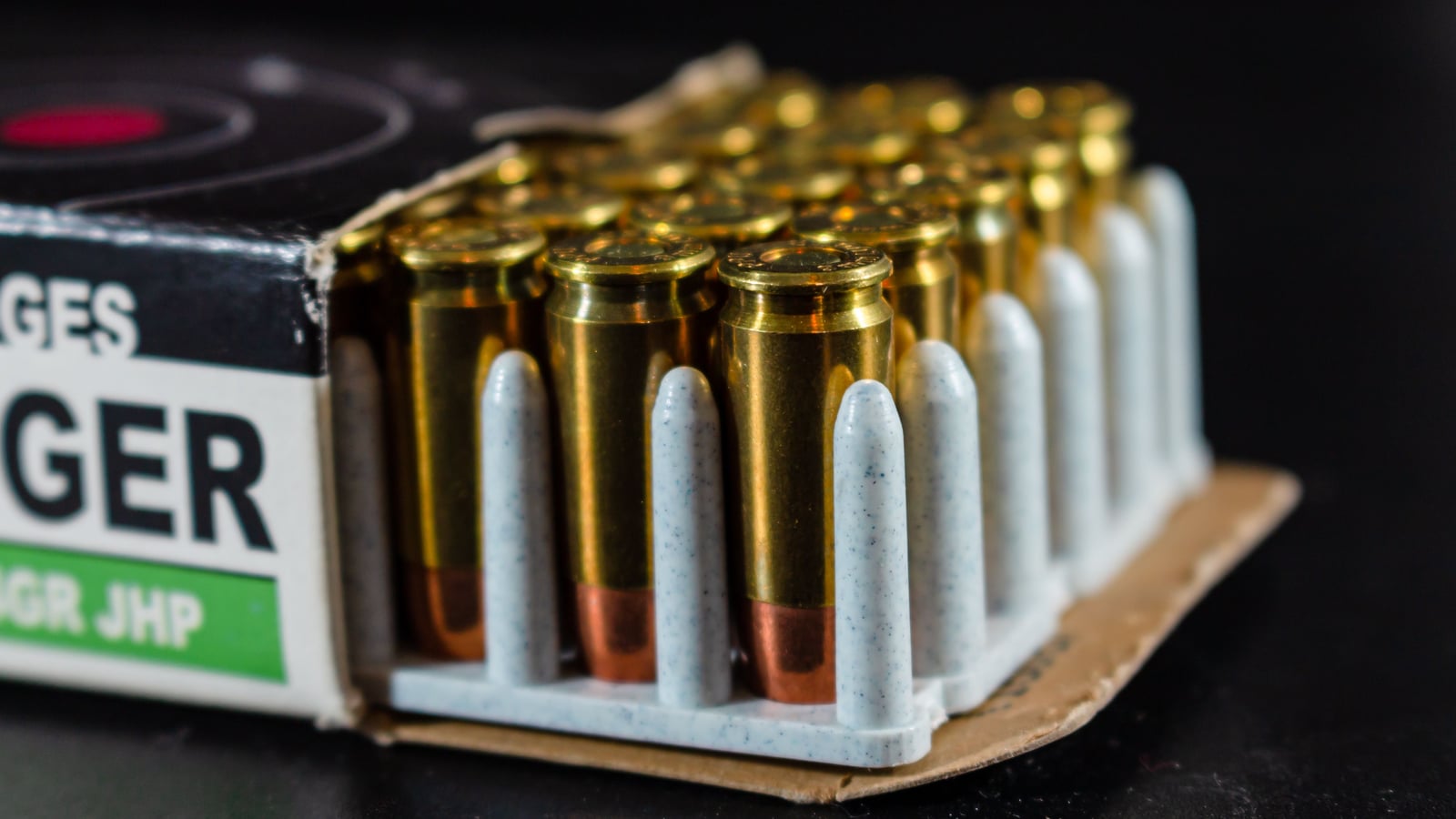
The term “match-grade” hides more vagueness than standard
There’s no official spec sheet, no body that issues a “match-grade” label with mandatory numeric thresholds. It’s as much a marketing term as a technical one, used by manufacturers to designate ammo made with tighter quality control than their standard line.
In practice, it covers a fairly consistent reality from one manufacturer to another: tighter dimensional tolerances, more precisely weighed powder, selected components, visual inspection, and sometimes systematic weighing of every round. But the absence of a standard means two “match” rounds from two different brands can have very different levels of rigor.
This vagueness explains why so many shooters ask themselves the question this article addresses: is it worth the premium, or are you paying for a word on the label? The honest answer is “it depends,” and this article details precisely what it depends on, without selling you a dream or discouraging you from trying.
What matters to remember from the start: match-grade ammo doesn’t turn an average firearm into a record-setting rifle, and it never compensates for poor hold or a technique flaw. It reduces one source of dispersion among others. Understanding exactly where it acts in the precision chain is key to knowing whether the investment makes sense for you.
You also need to distinguish “match-grade” from the mere “premium” or “high performance” labeling some manufacturers slap on ammo that, in reality, stays fairly close to their standard line in terms of actual manufacturing tolerances. Marketing vocabulary isn’t regulated, meaning a line’s name guarantees nothing on its own about the level of rigor applied in production.
It’s precisely because this term stays vague that it’s worth understanding precisely the physical mechanisms that explain a real precision gain, rather than relying solely on the label or the displayed price. The following sections detail these mechanisms one by one, before tackling the central question of the threshold at which the investment concretely pays off for your practice.
What actually changes in manufacturing
The first concrete difference lies in the dimensional tolerances of the case and bullet. On standard ammo, variations in diameter, overall length, and concentricity (the bullet’s perfect alignment with the case axis) are accepted within a fairly wide range, sufficient for casual use or basic training.
On match-grade ammo, this range tightens noticeably. Concentricity in particular is closely monitored: a poorly centered bullet introduces an imbalance that translates into increased dispersion in flight, especially at long range. A variation invisible to the naked eye can be enough to shift a hit by several centimeters at 300 meters.
The second area is the powder charge. On a standard production line, powder is dosed by volume, with a tolerance that’s fine for safety but introduces variation from one round to the next. On match-grade ammo, dosing is more often done by weighing, round by round or in small controlled batches, which reduces the muzzle velocity spread between shots fired.
This velocity consistency is perhaps the most decisive factor for accuracy at distance. Two rounds fired at different velocities don’t land at the same point of impact, even with identical aim and hold. It’s a purely ballistic phenomenon, independent of the shooter, that no technique can correct.
Finally, the bullet choice itself differs. Match ammo often uses bullets with a profile optimized for flight stability (boat-tail or match hollow point types), with a cleaner crimp and more homogeneous weight from bullet to bullet. The cumulative result of these three factors (tolerances, powder, bullet) statistically translates into tighter groups, provided the rest of the chain (firearm, shooter, conditions) follows through.
A fourth factor, less often highlighted but just as real, concerns the primer. On entry-level ammo, the primer is made with a sensitivity and pyrotechnic charge tolerance that’s fine for everyday use, but not necessarily consistent from batch to batch. On match-grade ammo, the primer is also subject to tighter control, since an inconsistent primer introduces a variable ignition delay that directly affects velocity consistency out of the barrel.
The overall crimp of the round, meaning how the case, primer, and bullet are assembled, also gets particular attention on match lines. An inconsistent crimp can introduce micro gas leaks at the moment of firing, which disrupts internal pressure and thus the actual velocity achieved — a flaw invisible to the naked eye but measurable on a chronograph over a sufficient number of shots.
Why consistency matters more than raw speed
A common reflex among shooters discovering precision ammo is to compare the velocities advertised on the boxes, as if a higher velocity guaranteed better ammo. That’s an incomplete reading of the subject.
What matters for accuracy isn’t a round’s absolute velocity, but the velocity spread between rounds in the same batch. This is called the standard deviation of velocity (SD) and the extreme spread (ES) over a series of shots measured on a chronograph. A round with a low SD will produce tight groups even if its average velocity isn’t the fastest on the market.
A well-made match-grade round typically shows an SD noticeably lower than a standard training round, even though the exact gap varies by caliber, batch, and manufacturer. It’s this consistency, more than the velocity itself, that explains why these rounds group better at distance.
This distinction is essential to avoid targeting the wrong thing in-store. If you compare two rounds solely on their advertised velocity, you’re looking at the wrong data point. What should interest you is the manufacturer’s consistency batch after batch, a criterion only a chronograph or reliable firsthand accounts can reveal.
To go beyond gut feeling and truly objectify this benefit, using a personal chronograph changes the game. This tool, increasingly affordable for serious amateur use, lets you directly measure the velocity of every shot fired and thus calculate the standard deviation of a batch yourself, rather than relying solely on the figures printed on the box.
Without a chronograph, you can only observe the final result on the target: a more or less tight group, without knowing precisely whether the improvement comes from velocity consistency, better support that day, or more favorable weather. With a chronograph, you isolate the pure ballistic variable and objectively compare two ammo references independent of your own performance on any given day.
This practice is particularly useful for a shooter considering handloading, since it lets you validate each powder charge change with a hard number rather than an impression. Logging these measurements in your shooting log, next to the groups obtained the same day, builds over time a personal database far more reliable than any opinion found online.
The weight of the barrel and the firearm in the equation
No ammo, however well made, can exceed the intrinsic precision potential of the firearm firing it. A worn barrel, excessive play in the bolt, a stock that doesn’t stabilize the hold properly: these mechanical flaws introduce dispersion that no premium round can correct.
That’s the point many shooters discover the hard way after investing in expensive ammo without any notable improvement in grouping. The reasoning should be reversed: match-grade ammo serves to reduce ballistic “noise” so the true potential of the firearm and shooter can show through, not to mask an existing hardware flaw.
On a production firearm in good condition, properly maintained, with a barrel in good shape, match-grade ammo produces a measurable gain. On a firearm with a tired or poorly adjusted barrel, the gain is often drowned out by mechanical dispersion far larger than what the ammo itself introduces.
Before investing in premium ammo, it’s better to make sure the firearm is in a condition that allows you to benefit from it: up-to-date barrel maintenance, well-adjusted optics or sights, stable hold and bipod or shooting bag depending on the discipline practiced. Without that foundation, money spent on ammo doesn’t show up on the target.
Shooter hold also remains a factor that’s often more decisive than ammo choice, particularly for someone who hasn’t yet stabilized their shooting position, breathing, and trigger control. An inconsistent trigger break, poorly controlled breathing at the moment of firing, or an unstable hold produce dispersion far greater than what a correctly made standard round could introduce.
That’s why an experienced club instructor almost always recommends working on technique first before considering an ammo change. A shooter who groups inconsistently with reliable standard ammo has a strong chance of continuing to group inconsistently with match-grade ammo, as long as the main source of dispersion remains their own hold rather than the cartridge.
Handloading: a serious alternative to commercial match-grade
Handloading (reloading your own cases with chosen powder, primer, and bullet) is a path many precision shooters take, for a simple reason: it allows even finer control than any commercial ammo, even premium ones.
When handloading, you choose your powder charge to within a tenth of a grain, select your bullet precisely matched to your distance and barrel, and can adjust the round’s overall length to optimize it for your specific firearm. This level of customization explains why many top-level shooters in precision disciplines (300m rifle, TAR) handload their own ammo rather than buying commercial match rounds.
Handloading, however, requires an investment in equipment (press, measuring tools, precision scale), serious learning time, and absolute rigor on safety: every step of charging and crimping must be mastered to avoid any incident. It’s not automatically a “simpler or cheaper” solution; it’s a discipline in its own right, with its own learning curve.
For a shooter starting out in precision shooting, buying commercial match ammo remains the most reasonable entry point. Handloading becomes relevant once shooting volume is high enough to offset the equipment investment, and once practice level justifies this extra degree of control.
There’s also a lesser-known middle path: having your ammo handloaded by a professional or an equipped club rather than investing in the full equipment yourself. This option lets you benefit from part of the control that custom handloading offers, without bearing the equipment entry cost or the initial learning curve alone. It remains, however, less widespread and depends heavily on what your club or gunsmith offers locally.
In any case, safety remains non-negotiable as soon as handling powder and primers is involved. Poorly mastered handloading can produce dangerous rounds, with potentially serious consequences for the shooter and the firearm. This discipline is ideally learned under supervision, through a club or an experienced practitioner, never solely from tutorials found online without oversight.
The discipline threshold where the investment pays off
This is the central question of this article, and the honest answer fits in one sentence: the value of match-grade ammo increases with the precision demands of your practice, not with your seniority or available budget.
For casual, beginner shooting, on paper targets at 25 or 50 meters with no demand for tight grouping, the performance gap between good-quality standard ammo and match-grade ammo is often invisible in the results, drowned out by a beginner shooter’s natural variability. In that case, spending more per round doesn’t bring much that’s measurable.
For an experienced club shooter progressing in consistency and looking to tighten their own groups, match-grade ammo starts making a perceptible difference, provided the firearm and technique are already at a level where this dispersion source becomes the limiting factor.
For competitive practice in precision disciplines (50m or 300m rifle, certain precision pistol disciplines, benchrest), match-grade ammo or custom handloading becomes nearly essential: at this level, the consistency gap between standard and premium ammo translates directly into points or centimeters of grouping, which directly impacts ranking.
The simplest benchmark to remember: if you can’t yet identify whether your underperformance comes from you, your firearm, or your ammo, start by eliminating the other variables before investing in the best round on the market. A regional rifle champion will often tell you the same thing: ammo only becomes the limiting factor once everything else is already mastered.
This question, by the way, doesn’t get settled once and for all at the start of your practice: it deserves to be asked again regularly, as your level evolves. A simple benchmark is to observe your own groups over several months with a correctly good-quality standard round. If they remain inconsistent from one session to the next, with gaps far exceeding what an ammo difference could explain, you or your gear are still the limiting factor, not the round: continuing to progress on technique remains more worthwhile than switching ammo.
Conversely, when your groups become consistent from session to session with standard ammo, and that consistency itself becomes your new limit, that’s the signal that switching to match-grade or handloading can bring a real, measurable gain. This shift has no fixed date: it depends on your own progression curve, not a number of years of practice. This threshold logic also applies when changing firearm or discipline: an experienced shooter switching from a dynamic discipline to pure precision partly starts from scratch on this question, since consistency demands aren’t the same.
The cost-benefit calculation over a shooting season
The premium of match-grade ammo over good-quality standard ammo varies greatly by caliber and manufacturer, but generally represents a significant multiple of the cost per round. Over a high shooting volume, this gap quickly weighs on an annual budget.
To assess whether the investment is worthwhile for you, you need to weigh this premium against a concrete goal: gaining points in competition, moving up to a higher category, or simply getting a more reliable read on your own training progress. Without a clear goal, the premium becomes spending without measurable return.
A pragmatic approach is to reserve match-grade ammo for check sessions and competitions, while training in volume with correctly good-quality standard ammo for technique, position, and stress management work. This approach limits the budget while keeping the precision benefit at the moment it actually matters.
This budget-allocation logic can also be adjusted depending on the point in the season. During the preparation phase, far from competition deadlines, high-volume training with standard ammo remains the priority to consolidate technique. As important competitions approach, narrowing usage toward an already tested and validated match-grade round lets you arrive on the day with equipment whose behavior you know precisely, rather than discovering a new reference mid-season.
Your digital shooting log is the most useful tool for objectifying this calculation: by systematically noting the type of ammo used at each session next to your groups, you can objectively compare, over several months, whether switching ammo actually improved your results or whether other factors (fatigue, weather, adjustments) explain the variation.
How to test match-grade ammo without breaking the bank
Before buying a whole case of a match-grade reference, it’s smarter to test in small quantities. Most retailers offer boxes of 20 or 50 rounds, plenty for a first serious grouping test.
The most reliable test method stays simple: fire several groups of 5 to 10 shots from a stable support (bipod, shooting bag, or bench), under comparable weather conditions, and objectively compare the dispersion obtained with your usual ammo. A single group isn’t enough to draw a reliable conclusion; the test needs to be repeated over several series to smooth out natural variability.
It’s also useful to test several different match-grade references rather than just one, since every firearm has its own preferences. A given barrel might “like” a particular bullet weight/velocity combination and produce noticeably better groups with one reference than another, for reasons of barrel harmonic resonance that are hard to predict in advance.
Documenting these tests in your shooting log lets you keep a usable record: which reference, which batch, which conditions, which group obtained. Without that record, you risk redoing the same tests months later without remembering, or drawing hasty conclusions based on a single unrepresentative session.
A rigorous test protocol also benefits from including a known reference round, fired alternately with the new references being tested, rather than simply testing each round in isolation one after another. This alternation lets you detect whether a variation in results really comes from the round being tested, or from an external factor that changed between two series, such as growing shooter fatigue or a gradual change in light and wind conditions over the course of the session.
The batch factor: a variable too often ignored
A point many shooters discover only after several years of practice is that a commercial ammo reference doesn’t guarantee perfect consistency from one manufacturing batch to the next. Two boxes of the same reference, bought months apart, can show differences in velocity or grouping.
This is especially true for premium ammo used in high-level competition, where some shooters deliberately buy several hundred rounds of the same batch as soon as they’ve validated its performance on their firearm, to avoid having to retest a new reference mid-competition-season.
For a less committed practitioner, this factor is still good to know: if an unexplained performance change appears while nothing else has changed in your practice, batch variation is among the possible explanations, alongside fatigue, weather, or an optic going out of adjustment.
Noting the batch number in your shooting log, when it’s visible on the packaging, lets you trace back this information if a consistency issue appears later. It’s a detail few shooters get in the habit of logging, even though it costs a few seconds and can explain an otherwise mysterious underperformance.
Stock storage over time deserves the same vigilance, since buying match-grade ammo without caring for its storage cancels out part of the benefit paid for at a premium. Humidity is the main enemy: a round stored in a humid environment can see its powder degrade gradually, with a direct impact on the velocity consistency you specifically paid extra for. Storage at stable temperature, sheltered from humidity, in original airtight boxes supplemented if needed by desiccant packets, better preserves the ammo’s original characteristics.
Transport deserves the same attention. Rounds rattling around loose in a bag on the way to the range can suffer micro-shocks that, accumulated over several outings, end up affecting the concentricity the manufacturer had carefully set in production. Compartmentalized storage that avoids direct friction between rounds limits this risk at almost no cost. Keeping a record of purchase date and storage conditions in your shooting log lets you check, if doubt arises about a performance drop after several months, whether the “stock aging” factor should be considered alongside the usual other explanations.
Disciplines where match-grade changes little
Some civilian sport shooting practices benefit fairly little from the premium of match-grade ammo, and it’s honest to say so clearly rather than pushing an unnecessary investment. Dynamic disciplines on cardboard or steel targets, where execution speed and stress management matter more than millimeter-tight grouping, fall into this category.
In these disciplines, a transition time between targets or hesitation acquiring the sight picture costs far more in performance than a dispersion gap of a few millimeters between standard and match ammo. High-volume training with reliable, affordable ammo has more value than the extreme precision of a premium round.
Similarly, casual beginner shooting, discovering a new discipline or firearm, and basic training in hold and breathing don’t require high-end ammo. Money is better invested in repetition volume at this stage of learning.
Conversely, pure precision disciplines (50m and 300m rifle, certain precision pistol events, benchrest) are where match-grade or custom handloading deliver the most measurable benefit, precisely because ranking is decided by gaps of a few millimeters at distance.
This benefit gap also depends on caliber and the projectile’s time of flight. In long-range precision rifle, the cumulative effect of manufacturing tolerances is amplified by flight time: the longer the bullet stays airborne, the more time a small initial variation has to turn into a large impact gap. In pistol, at shorter distances, that same manufacturing quality gap has less time to express itself as visible dispersion, which makes the relative gain often more modest than in long-range rifle.
For smaller calibers like .22LR, widely used both for beginners and at high-level competition, “match” ammo occupies a special place: the gap between cheap training ammo and dedicated competition ammo for .22LR can be very pronounced, since this caliber is precisely known for its sensitivity to manufacturing variation. It’s one of the calibers where ammo choice has historically had the most documented impact on results in precision competition. For hunting or manually-operated repeating rifle calibers subject to declaration, match-grade ammo also exists, but its use remains mainly relevant for practitioners using this type of firearm in civilian precision discipline rather than for hunting purposes.
The role of weather and conditions in perceiving the gain
A common trap is judging a match-grade round’s performance during a single session, without accounting for outside conditions that influence the result just as much. Wind, particularly at long distances, can completely mask a round’s consistency gain, or conversely make a standard round look surprisingly accurate on a windless day.
Ambient temperature also influences powder combustion and thus the actual velocity achieved, an effect that touches all ammo but that can be more or less pronounced depending on the powder formulation the manufacturer uses. A round tested in cold weather then in high heat can give different grouping results, without this being a manufacturing defect.
That’s one more reason to never draw a definitive conclusion based on a single outing. To seriously compare two rounds, you should ideally test them under comparable weather conditions, or at minimum note each session’s conditions in your shooting log so you can rule out this variable afterward during analysis.
Humidity and the range’s altitude also play a role, more subtle but real, on the density of the air the projectile travels through. At long precision distances, these environmental parameters can have an effect of the same order of magnitude as the difference between standard and match-grade ammo, which explains why top-level shooters systematically log the conditions of every training session.
Common mistakes in choosing and using precision ammo
The first common mistake is switching ammo references too often, out of curiosity or a constant search for the “best” round, without ever giving a rigorous test time to bear fruit. This instability prevents building a reliable data history and makes any serious comparison between two options impossible.
The second mistake is neglecting barrel cleaning during ammo comparisons. A barrel fouled differently from one session to the next introduces an extra variable that skews the comparison: a worse group might come from the barrel’s condition, not the ammo tested that day. It’s better to test under barrel-cleanliness conditions that are as stable as possible.
The third, more subtle mistake is over-interpreting a single good group obtained with premium ammo as definitive proof of its superiority, when a statistical stroke of luck always remains possible over a small series. Rigor requires repeating tests before durably changing supply, especially if the change involves a substantial budget over time.
Finally, a budget-related mistake often crops up among shooters discovering match-grade ammo: shifting their entire training volume to this type of ammo, when most of the technical work (position, breathing, trigger management) is just as well practiced with reliable standard ammo. Reserving match-grade for moments when precision really matters lets you keep a budget consistent with your actual practice.
Recognizing good match-grade ammo in-store
Without an official standard, you have to rely on a cluster of clues to seriously assess a reference before buying. The first useful reflex is to look for the velocity and standard-deviation data the manufacturer provides, when it exists: the lower the advertised standard deviation, the more likely the manufacturing consistency is good.
Feedback from other shooters practicing the same discipline and using a firearm comparable to yours is a valuable source, provided you take it with the necessary nuance: what works well on a given barrel doesn’t automatically transfer to another. An experienced club instructor can often point you toward references proven on equipment similar to yours.
Price alone isn’t a reliable quality indicator. Some references position themselves as “premium” essentially on marketing grounds, without a genuinely superior consistency gain over cheaper alternatives. One more reason to test in small quantities before committing to a large volume.
Finally, a reference’s availability and supply stability over time also matter in the choice, especially if you plan to rely on it for a full competition season. Excellent ammo that’s unavailable six months later forces you to retest an alternative at the worst possible moment.
One last useful reflex is to ask the retailer or gunsmith directly about the reference’s traceability: how long the line has existed, whether it’s had recent formulation changes, and whether per-batch quality control is actually applied in production rather than merely claimed on the packaging. These simple questions often help distinguish a serious reference from a product that relies solely on the label without the substance to back it up.
FAQ
Q: Can match-grade ammo compensate for an entry-level firearm? A: No, it reduces the dispersion tied to the ammo itself, but doesn’t correct a mechanical flaw in the barrel or stock. On a firearm in poor condition, the gain often stays invisible in the results.
Q: Should you use match-grade from the very start of your practice? A: Not necessarily. For casual or beginner shooting, the performance gap is rarely noticeable; the investment becomes relevant once technique and firearm are no longer the limiting factor.
Q: Does handloading replace buying commercial match ammo? A: It can offer even finer control, but requires an equipment investment, learning time, and strict safety rigor. It’s not automatically a simpler solution.
Q: How do you test match-grade ammo without buying a whole case? A: Buy small quantities (20 to 50 rounds), fire several groups from a stable support, and objectively compare the dispersion with your usual ammo over several sessions.
Q: Does the batch number really matter? A: Yes, two batches of the same reference can show consistency gaps. Noting it in your shooting log helps explain a performance variation that would otherwise seem unexplained.
Q: In which disciplines does match-grade ammo help the most? A: Pure precision disciplines like 50m or 300m rifle and benchrest get the most measurable benefit from it, since ranking is decided by gaps of a few millimeters at distance.