
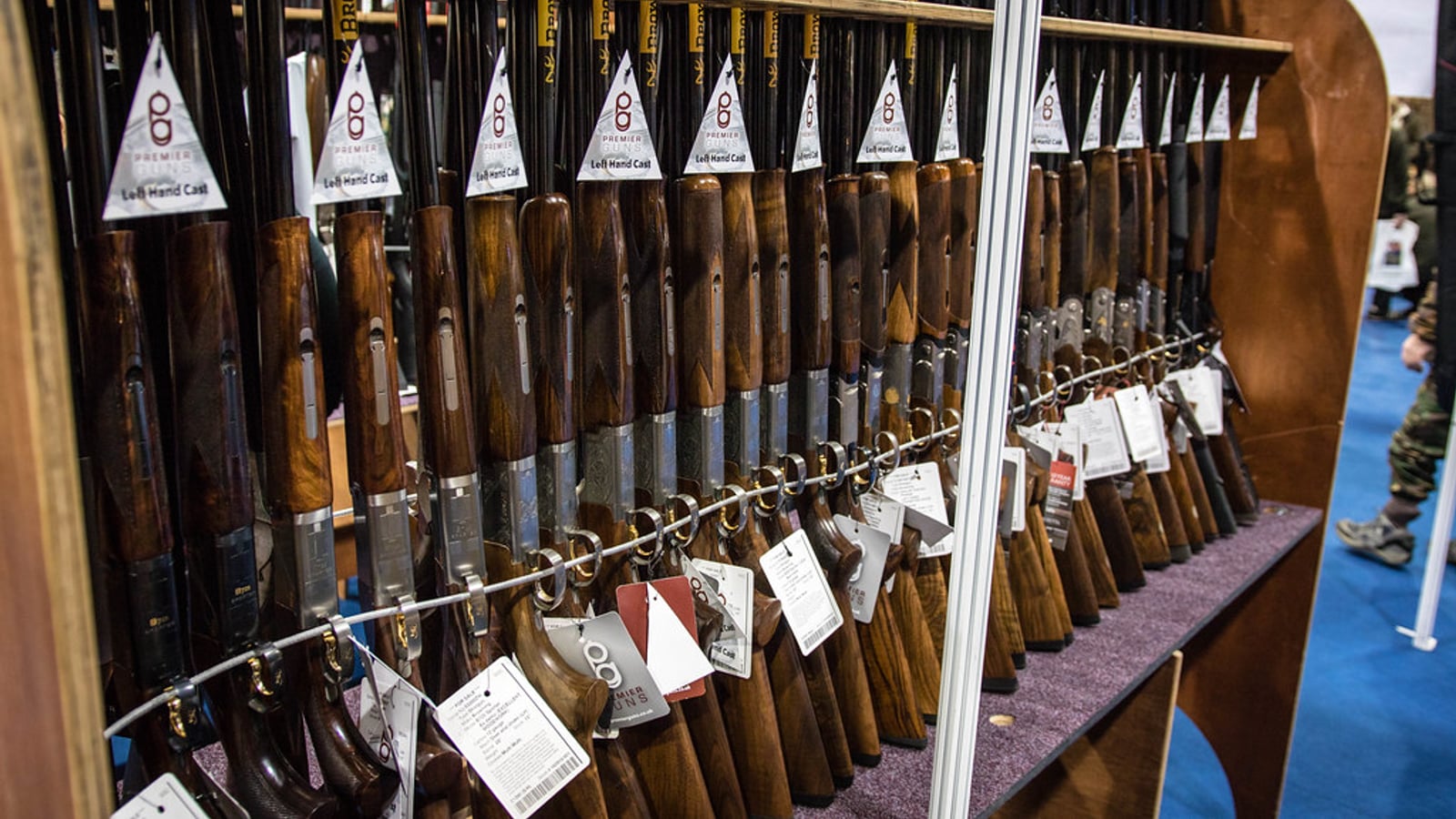
If you’re left-handed and you’ve been shooting for a while, you’ve already lived this scene: you ask your gunsmith for a left-handed model, and he gives you a look that says it all. Not out of ill will. Because left-handed offerings, in this sport, remain thin, expensive, and unevenly spread across weapon types.
This isn’t a minor detail. About 10% of the population is left-handed, which means one shooter in ten in every club faces this problem from day one. And yet the shooting sports industry keeps designing the vast majority of its gear for right-handers, treating lefties as a marginal variant rather than a market segment in its own right.
This article takes an unflinching look at what actually exists today: bolt-action rifles, semi-autos, shotguns, optics, accessories. And above all, it details the concrete solutions when the left-handed model simply doesn’t exist, which is still the most common situation.
There’s also a psychological dimension that rarely gets discussed: the feeling of being the odd one out in a group where everyone shoots right-handed. That feeling isn’t rational, but it pushes some left-handed beginners to accept unsuitable gear rather than ask for a solution, out of fear of “making a fuss” or seeming demanding. That’s a mistake: physical comfort directly shapes safety and progress — it’s not a whim.
Why the shooting industry neglects left-handers
The answer boils down to one word: volume. A manufacturer producing a left-handed version has to duplicate tooling, assembly lines, and sometimes rework the entire receiver geometry. For a market that statistically represents a fraction of the total, the economics rarely work out.
This industrial logic explains why some weapon categories have a decent left-handed offering (high-end bolt-action rifles, for instance) while others are almost entirely without one (entry-level shotguns). The manufacturer invests where demand is concentrated enough and margins justify it.
There’s also a historical bias. Sport shooting was built around military and hunting standards designed over a century ago, at a time when left-handed adaptation simply wasn’t a concern. Many current mechanisms are direct descendants of those designs, which explains their persistent asymmetry.
Finally, there’s a self-reinforcing phenomenon: the fewer visible left-handers with adapted gear at the range, the less new left-handed shooters know an offering exists, and the less they actively ask gunsmiths for it. Silence sustains scarcity, which sustains silence.
Bolt-action rifles: the most mature offering
This is clearly the category where a left-hander most easily finds a good fit. Several major manufacturers offer left-handed versions of their hunting and precision rifles, with the bolt reversed to allow natural left-hand manipulation without reaching the arm across the face.
The central technical point is ejection direction. On a well-designed left-handed bolt rifle, the ejection port is positioned to eject the case on the correct side and not send it back toward the shooter’s face. A right-handed rifle used “backwards” by a lefty, on the other hand, often ejects the case directly toward the cheek or eye — uncomfortable at best, dangerous at worst.
The extra cost is real but contained compared to other weapon categories. Expect a markup generally ranging from a few dozen to a few hundred euros depending on the manufacturer and grade, with a delivery time often longer than a right-handed version available in stock at the gunsmith’s.
For pure precision shooting (long-range disciplines, benchrest), the left-handed offering exists at several specialized manufacturers who offer the stock and receiver in mirrored form. It’s a budget that climbs fast, but stays within a price range consistent with what a right-hander would pay for an equivalent level of equipment.
Semi-automatics: the real weak spot
This is where things get seriously complicated. The vast majority of semi-automatic rifles and pistols eject to the right by default, and very few manufacturers offer a fully mirrored version of the mechanism.
For semi-automatic precision or dynamic rifles, some models at least offer an adjustable or orientable brass deflector, which redirects ejection away from the face without redesigning the entire internal mechanism. It’s a compromise, not a true left-handed solution, but it’s often the only option available without prohibitive extra cost.
On semi-automatic pistols used in dynamic shooting (category B, subject to authorization), a fully reversed mechanism is extremely rare. Most left-handed shooters, in practice, adapt to the standard ejection direction, which isn’t a major problem on a pistol held at arm’s length far from the face, unlike a shouldered rifle.
The real friction point on semi-autos is often less about ejection than about the safety lever and the bolt release, positioned for a right thumb. Some manufacturers offer ambidextrous versions of these controls, which is actually a more widely available and often more affordable solution than fully reversing the weapon.
Shotguns: between a premium offering and a gaping void
The world of clay target shooting perfectly illustrates the left-handed market divide. At entry and mid-range levels, the offering of specifically left-handed shotguns is virtually non-existent. A left-handed beginner looking for an affordable semi-auto or over-under will find very few dedicated options at their gunsmith’s.
However, once you move up toward serious competition shotguns, several manufacturers offer left-handed versions on request or in a limited catalog, with an adapted stock, trigger guard, and sometimes modified ejection. Pricing then climbs significantly compared to the right-handed equivalent, which makes this option hard to reach for a beginning shooter.
The most common solution in practice, and by far the most economical, remains adjusting the stock rather than replacing the whole weapon. A stock can be reworked or replaced with a custom-fitted piece adapted to the left dominant eye, which solves a large part of the shouldering problem without touching the mechanism.
A technical point not to overlook: on a classic over-under shotgun, case ejection direction causes far fewer problems than on a rifle, because the shooting stance at clay targets (standing, barrel raised) naturally avoids case return toward the face. It’s one of the rare cases where the left/right constraint almost dissolves on its own.
Optics and sights: the market’s good news
This is arguably the most reassuring category for a left-handed shooter. Scopes, red dots, and most modern optical systems are fundamentally symmetrical in design: they don’t “know” which side of the shoulder they’re mounted on.
The only real question is mounting and adjusting parallax or eye relief, which must be set to the shooter’s dominant eye, left or right, with no manufacturing distinction. A red dot adjusts for intensity and position the same way regardless of the shouldering side.
Where attention is needed is the turrets and adjustment controls on some precision scopes, sometimes positioned to be more accessible for a dominant right hand depending on the shooting position adopted. In the vast majority of cases, it’s only a slight access inconvenience, not a functional obstacle.
For Olympic iron-sight shooting (10m, 50m rifle), the sighting system also remains neutral: height and windage adjustment work identically for a left-hander, the only necessary adaptation involving the stock itself rather than the sight.
Holsters and dynamic competition accessories
The holster market is paradoxically one of the most left-hander-friendly, at least among specialized kydex makers who work to order. A molded holster can be produced in a left-handed version with the same lead time and often the same price as a right-handed one, since the manufacturing process is identical, just mirrored.
The real challenge is immediate in-store availability at the local gunsmith rather than a special order. Most holsters displayed in shops are right-handed, meaning a left-hander will very often need to order online directly from the manufacturer or place a special order with a wait time.
For magazine pouches and IPSC competition belts, laterality is more a question of carry ergonomics than technical manufacturing. Most makers of rigid double-layer belts offer a fully modular configuration where each element repositions freely, which largely sidesteps the problem.
An often-forgotten accessory: the gun sling, which almost always adjusts symmetrically and rarely poses any laterality-related constraint, contrary to what one might think.
Solution 1: the adjustable or interchangeable stock
Before looking for a fully left-handed weapon, the first option worth exploring, often the most economical, is the adjustable stock. Many modern precision rifles and some high-end shotguns use modular stocks whose buttplate, comb, and cheek piece adjust independently of the bolt direction.
This approach has a clear limit: it doesn’t solve the ejection problem on a weapon with a non-reversible mechanism. It only fixes shouldering comfort and dominant-eye alignment with the sight, which is already a significant part of the problem for many static precision disciplines.
On a tight budget, adapting or replacing only the stock of an existing right-handed weapon generally costs a fraction of the price of a fully left-handed weapon. It’s often the path recommended by club instructors to a left-handed beginner who doesn’t yet know whether they’ll stick with a gear-demanding discipline.
Solution 2: learning to shoot from the non-dominant shoulder
An option many left-handers overlook by reflex: learning to shoot from the right shoulder while keeping the left dominant eye closed or masked, or the reverse depending on configuration. This isn’t a lazy fix — it’s a genuine technical option adopted by a significant number of experienced club shooters.
The main advantage is immediate access to the entire standard right-handed catalog, with no extra cost or lead time. The downside is an adaptation phase that can take several weeks to several months depending on the discipline, while the new motor pattern stabilizes.
This approach works particularly well for disciplines where shouldering isn’t prolonged (clay shooting, some dynamic events) and much less well for long, static precision disciplines, where fatigue and stress quickly challenge an unnatural movement.
An experienced instructor can objectively assess, from the very first sessions, whether this switch is viable for a given shooter, notably by observing the shooter’s actual dominant eye, which doesn’t always match their general hand laterality.
Solution 3: masking or occluding the non-dominant eye
When a left-hander has a right dominant eye (the crossed configuration exists and isn’t rare), the simplest solution is to slightly occlude the non-dominant left eye with an adhesive cover on shooting glasses or a piece of frosted tape, while shooting a classic right-handed weapon from the right shoulder.
This widely used club trick completely bypasses the left-handed gear problem by working around it through physiology. It only works for shooters with crossed eye/hand laterality, which justifies a real test with an instructor before investing in gear.
The eye dominance test is simple and quick: aim at a distant point with both eyes open through a frame formed by the hands, then close one eye at a time to see which one keeps the alignment. This test should be systematic when any new shooter, left- or right-handed, joins a club, since it directly determines gear choice.
Solution 4: the used market and importing
The French used market remains poor in left-handed gear, for the simple reason that items produced in small quantities keep changing hands rarely. Some foreign markets, particularly North American ones, have a broader installed base of left-handed gear, which opens the door to importing.
Importing a weapon from abroad involves specific administrative steps (authorizations, the role of the importing gunsmith, timeframes that vary by country of origin and weapon category), which are best planned well in advance before committing financially to an order.
For accessories not subject to the same strict regulation (stocks, holsters, some sights), buying online directly from a specialized foreign manufacturer is a much simpler option to implement, with reasonable delivery times and no particular administrative hassle.
Dry-fire practice: neutral ground for the left-hander
Dry-fire practice, working with an unloaded and checked weapon to train the trigger, aiming, and transitions, has an often-underestimated benefit for a left-handed shooter in a gear-adaptation phase: it lets you test a configuration (stock, shouldering, hand grip) without spending ammunition or experiencing recoil, which can mask an ergonomic flaw.
A left-hander torn between several solutions — learning the non-dominant shoulder, eye occlusion, or investing in an adjustable stock — benefits from devoting several dry-fire sessions to each option before deciding. The repeated dry movement quickly reveals whether a position holds up over time or generates a parasitic tension that only becomes clear after dozens of repetitions.
It’s also a chance to check an often-overlooked point: handling the safety lever and magazine release on a right-handed weapon used by a left-hander. A safety mechanism designed for a right thumb may require completely relearning the manipulation, which only repeated dry practice can make smooth and safe before moving to live fire.
To document this test phase, systematically noting the configuration used at each dry-fire session (which stock, which setting, which hand) in your shooting log lets you objectively compare impressions over several weeks, rather than relying on a momentary impression that can vary with fatigue or the day’s motivation.
Specific disciplines: where the left-handed question matters most
Not all sport shooting disciplines are equal when it comes to the left-handed issue. In prolonged static precision events, such as the 50m three-position rifle, the stock and shouldering question takes on disproportionate importance, since the shooter stays in the same position for long minutes, which amplifies any poorly corrected ergonomic discomfort.
Conversely, in fast dynamic disciplines where positions constantly change and the weapon is held at arm’s length rather than shouldered for long, such as some pistol events, left/right laterality has a more limited impact on pure performance. This is one of the reasons why many left-handed shooters find pistol shooting more immediately accessible than rifle shooting.
Clay target shooting occupies an interesting middle ground. Shouldering is brief but repeated at high frequency during a competition, and the need to track a fast trajectory with both eyes open makes the dominant-eye question particularly central, sometimes more than hand laterality itself.
For biathlon, where shooting alternates with intense physical effort in cross-country skiing, left-handed adaptation becomes even more complicated: the gear must remain compatible with an elevated heart rate and a rapid position change between prone and standing, which leaves little room for a configuration improvised on the fly. This is a discipline where investing in genuinely adapted gear from the start, budget permitting, spares a lot of competition frustration.
In crossbow or archery disciplines practiced alongside bullet shooting, the left-handed question arises differently: this equipment is often entirely custom-made from the outset, which paradoxically makes left-handed adaptation simpler and more natural than on a mass-produced firearm.
Maintenance and handling: what actually changes for a left-hander
Routine cleaning and maintenance of a weapon generally don’t depend on the shooter’s laterality, but a few points deserve attention. On a left-handed bolt rifle, the direction of bolt manipulation during partial disassembly is reversed compared to generic instructions often written with a right-hander in mind, which can be confusing the first time.
On a right-handed weapon used by a left-hander shooting from the right shoulder, maintenance poses no particular difficulty since the mechanism is used in its originally designed direction. This is one more argument in favor of the “learn the non-dominant shoulder” solution for anyone who values maintenance simplicity and access to standard technical documentation.
A practical point to systematically check when buying a left-handed weapon or a reversed mechanism: the availability of spare parts and specific cleaning accessories (cleaning rod, adapted kit) at the local gunsmith. Some rarer left-handed parts may require a special order with a wait time that a right-handed shooter never experiences.
Resale value and the secondary market for left-handed gear
A financial aspect rarely discussed: left-handed gear resells differently from standard right-handed gear. On one hand, relative scarcity can work in the seller’s favor, as a left-hander looking for used adapted gear may be willing to pay a bit more than a right-hander for an equivalent model, given the lack of abundant new supply.
On the other hand, the pool of potential buyers is mechanically smaller, which can lengthen resale time compared to an equivalent right-handed weapon, whose demand is immediate and broad. A left-handed shooter considering reselling dedicated gear should plan for this longer timeframe, notably via specialized networks or shooter forums rather than a quick sale at a general gunsmith.
This market reality argues, once again, for testing low-commitment solutions first (adjustable stock, eye occlusion) before investing in dedicated left-handed gear whose resale, should the discipline choice change, will be less fluid than a right-handed equivalent.
Checklist before investing in dedicated left-handed gear
Before writing a check for a genuinely left-handed rifle or shotgun, several concrete checks can help avoid a regretted purchase:
- Have your actual dominant eye confirmed by an instructor, independent of your general dominant hand.
- Test a left-handed weapon or an adaptation configuration at the club, ideally over several sessions, before buying.
- Compare the cost of an adjusted stock on an existing right-handed weapon against the price of a brand-new, fully left-handed weapon.
- Check the availability of spare parts and after-sales service for the left-handed model considered, at the local gunsmith.
- Honestly assess your level of commitment to the targeted discipline before investing in gear that’s hard to resell.
- Ask about real lead times, often longer than for a right-handed model available in stock.
This list isn’t exhaustive, but it covers the points that come up most often in feedback from experienced left-handed club shooters, and that avoid the most frequent disappointment: discovering after purchase that a cheaper adaptation solution would have been enough.
The role of the club and instructor in supporting left-handers
A good shooting club generally keeps at least one or two left-handed or ambidextrous weapons in its stock, if only to let a left-handed beginner try the discipline before investing. Asking about this before joining is a perfectly legitimate question to raise during a club visit.
An experienced instructor has often already supported several left-handed shooters and knows the classic pitfalls: misjudging the dominant eye, rushing to buy a right-handed weapon for lack of information, underestimating the real comfort brought by an adapted stock rather than a full weapon change.
Some clubs also organize a loan or extended rental system that lets a beginning left-hander try a left-handed rifle before committing to a costly purchase. This is a resource worth actively seeking out rather than passively waiting for it to be offered.
The digital shooting log is particularly useful here for a left-handed shooter in a gear-adaptation phase: precisely documenting which equipment (weapon, stock, setting) was used at each session lets you objectively assess whether a configuration change actually improves grouping, rather than relying on a subjective impression of comfort.
Field reports: how left-handed shooters solved the problem
Beyond theory, it’s useful to look at how concrete, generic but representative profiles have handled this material constraint at the club. These situations come up regularly in conversations between shooters and help calibrate one’s own expectations.
An experienced club shooter, a pure left-hander with a left dominant eye, practicing 10m air rifle, chose to invest directly in a left-handed rifle from their very first year of serious competition, after finding that no adaptation compensated for the discomfort of a right-handed stock in a position held for long minutes. The initial extra cost was offset by faster progress, since they didn’t have to fight against unsuitable ergonomics.
A regional clay shooting champion, left-handed with a crossed (right) dominant eye, chose instead to shoot entirely in classic right-handed configuration after an eye dominance test performed by their instructor at the very start. This discovery spared them an unnecessary gear investment and gave them immediate access to the entire shotgun catalog available at their gunsmith’s.
An experienced instructor regularly reports the opposite case: left-handed beginners convinced they need dedicated gear, when a simple test reveals a right dominant eye compatible with standard equipment. This finding reinforces a central message of this article: the eye dominance test should always precede any purchase decision, not the other way around.
Finally, a club dynamic shooting practitioner, left-handed and shooting a category B semi-automatic pistol subject to authorization, reports never having felt the need for a dedicated left-handed weapon for this particular discipline, since laterality has a marginal impact on a pistol held at arm’s length, contrary to what they feared before starting.
International comparison: France versus other markets
The French sport shooting market, structured around the FFTir framework and strict weapon category regulation, remains narrower than some foreign markets in terms of left-handed offerings. The number of specialized gunsmiths able to order or adapt custom left-handed gear is limited compared to markets with a much broader practitioner base.
This difference in scale explains why some French left-handed shooters turn to importing or ordering directly from foreign manufacturers, notably for accessories not subject to the same regulatory constraints as weapons themselves. Delivery times remain reasonable, even though customs and tax procedures need to be planned for.
This isn’t about saying the French market is inadequate, but about recalling a simple economic reality: the larger a country’s pool of left-handed practitioners, the more it’s worth local manufacturers investing in a dedicated offering. France, with its own regulation and network of gunsmiths, remains in an intermediate position — neither the poorest nor the richest in this regard.
Left-handed inclusion as a club issue, not just a gear issue
Beyond gear, the left-handed question also touches the very organization of a shooting line. On an outdoor range or a shared firing line, the position of a left-hander shouldering to the right may need slightly different lateral space than a right-hander, notably for case ejection or elbow clearance.
A well-organized club takes this reality into account when assigning shooting positions, rather than letting a left-hander make do at the least practical spot by default. This is a point to observe during a club visit before joining: how instructors spontaneously handle a left-handed shooter says a lot about the overall maturity of the structure toward this group.
Some clubs also organize slots or discovery sessions specifically designed to test different gear configurations, letting a new left-handed member compare several solutions before committing, rather than having to improvise alone against an almost exclusively right-handed rental stock.
Realistic budget: what being left-handed actually costs in this sport
It would be dishonest to downplay the real extra cost. On a bolt rifle, the left-handed markup stays moderate. On a shotgun or a semi-automatic weapon in a genuinely reversed version, the extra cost can represent a significant share of the budget, when the option exists at all.
Conversely, adaptation solutions (eye occlusion, adjustable stock, learning the non-dominant shoulder) cost almost nothing or far less than buying a dedicated left-handed weapon. A left-handed beginner therefore has every reason to explore these avenues before committing to a heavy, sometimes irreversible gear investment.
The most rational approach is to test low-cost solutions first over several months of regular practice, then only invest in dedicated left-handed gear once the chosen discipline is confirmed as a long-term commitment and the comfort of use objectively justifies the expense.
One last budget factor deserves mention: the hidden cost of time. A shooter who persists with poorly suited gear often loses more sessions correcting ergonomics-related technical flaws than they would gain by investing earlier in a proper solution. That cost never appears on any gunsmith’s invoice, but it weighs real weight on progress and, indirectly, on the motivation to keep practicing over time.
Common mistakes of beginning left-handed shooters
Some mistakes recur so often that it’s worth listing them explicitly, so a new left-handed shooter can avoid them from the start rather than discovering them the hard way after several months of practice.
The first mistake is rushing to buy a left-handed weapon at the very first session, before even confirming the actual dominant eye with a simple test. A significant gear investment decided on intuition rather than concrete verification regularly leads to disappointment, especially among shooters with crossed laterality who didn’t actually need dedicated gear.
The second mistake, at the opposite extreme, is stubbornly sticking with clearly unsuitable right-handed gear for months out of sheer reluctance to invest or fear of seeming demanding at the club. This stubbornness needlessly slows progress and can establish postural compensations that later become harder to correct than if the adaptation had been addressed from the start.
The third mistake concerns neglecting ejection direction in a technical compromise, such as using a brass deflector on a semi-auto. A poorly checked adjustment can send a hot case back toward the face, which is a genuine safety risk and not just a comfort annoyance. Any compromise solution deserves rigorous checking before live fire, ideally supervised by an instructor.
The fourth mistake is underestimating the lead time for specific left-handed gear and ending up with no fallback solution when a competition deadline arrives. Planning well ahead, several months before an important event, remains the best protection against this logistical setback.
Finally, the fifth, more subtle mistake is comparing one’s progress to that of right-handed shooters at the same club without accounting for the extra gear-adaptation time that a left-handed configuration sometimes requires. This hasty comparison can generate needless frustration, when the actual progress curve, once the gear is settled, has no objective reason to differ between a left-hander and a right-hander.
FAQ
Q: Can a left-hander progress as fast as a right-hander in sport shooting? A: Yes, nothing in shooting biomechanics inherently disadvantages a left-hander. The only variable that really matters is the match between the gear used and the shooter’s actual laterality, dominant eye included.
Q: Do you absolutely need a left-handed weapon to start out? A: No. Many left-handed beginners start with standard right-handed gear, notably via occluding the non-dominant eye or learning the opposite shoulder, before investing in dedicated gear once the discipline is confirmed.
Q: How do I know if I’m actually left-handed for shooting despite a dominant right hand? A: Have your dominant eye tested by an instructor with a simple two-hand aiming test. Eye laterality doesn’t always match general hand laterality, and it’s the eye that matters for gear choice.
Q: Do Olympic air rifles come in a left-handed version? A: Yes, this is one of the best-covered categories, with adjustable stocks and sometimes fully mirrored versions from several manufacturers specialized in 10m precision shooting.
Q: Is the left-handed extra cost always justified? A: It varies a lot depending on the type of weapon and the intended level of practice. For occasional leisure use, low-cost adaptation solutions are often enough; for regular competitive practice, investing in dedicated gear becomes more worthwhile.