Why take a test before signing up anywhere
You’ve probably already watched videos, read articles, maybe even shot once during a discovery session at a club. The desire is there. But that initial spark says nothing about whether you’ll still be at it in eighteen months, once the novelty has worn off and all that’s left is the reality of everyday practice: slots to fit into your calendar, an ammo budget that chips away every month, the administrative paperwork that comes with this sport more than with almost any other hobby.
This test isn’t a gimmick. It’s a tool to help you avoid the most common mistake newcomers make: signing up at a random club, in a discipline that doesn’t match their temperament or their real constraints, and quitting six months later thinking “shooting just isn’t for me.” Often, it wasn’t shooting that wasn’t for them. It was the wrong discipline, or the wrong pace, chosen without any prior thought.
Ten honest, unflattering questions. Answer with who you really are, not who you’d like to be. By the end, you’ll know whether this sport has a realistic place in your life and, if so, which door to walk through.
Question 1: what budget can you really commit each month
Competitive shooting isn’t the most expensive hobby out there, but it isn’t free either, and the line item that surprises beginners most isn’t the starting gear: it’s the regular consumption of ammunition.
Be concrete. Take your current monthly leisure budget and ask yourself honestly how much you can allocate without it becoming a source of tension, financial or otherwise, in your household. You need to factor in the annual federation license, club dues, insurance, and then the variable cost: ammunition, which varies enormously depending on caliber and discipline.
An air rifle burns through cheap pellets, which makes it one of the most economical entry points over the long run. A discipline using a firearm with a bigger caliber or a higher rate of fire, by contrast, can push the monthly bill up much faster, simply because each round costs more and you fire more of them per session.
If your real monthly budget is tight, that’s not a dealbreaker: it simply steers your choice of starting discipline. A comfortable budget opens up more options, but never exempts you from checking that you’re ready to commit to it long-term, month after month, not just during the first three months of enthusiasm.
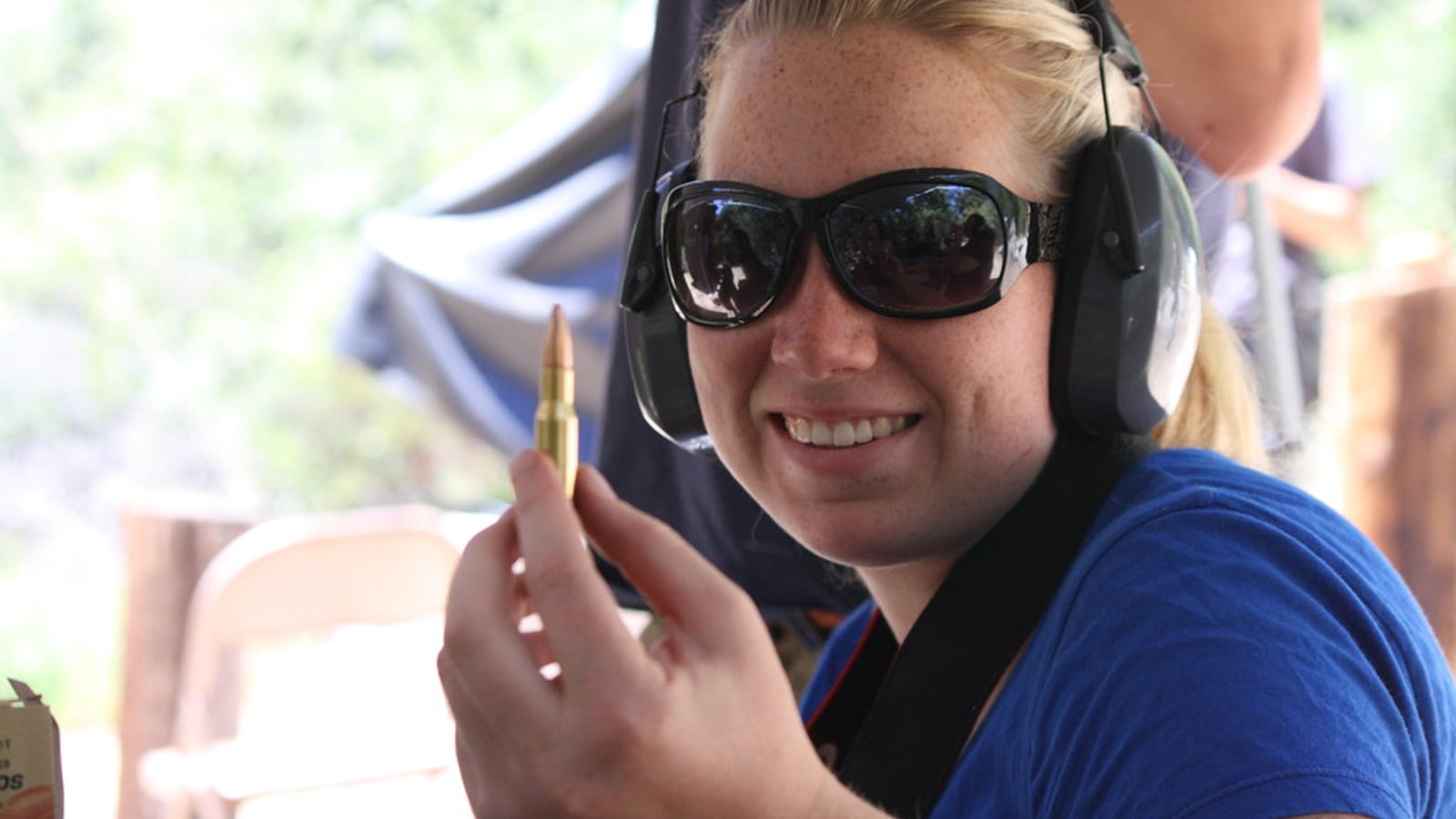
Also think about the line item people often forget: personal protective equipment. Hearing protection and proper shooting glasses aren’t negotiable, whatever the discipline, and it’s better to plan for this expense from the start rather than discover it along the way. A serious club can sometimes lend basic gear to beginners for the first few sessions, but you’ll need to equip yourself fairly quickly if you keep going.
The gun itself is a separate chapter. Many beginners buy their own gun too fast, before even knowing whether the discipline suits them long-term. Most clubs have loaner or rental guns for the first few months, letting you delay that investment until your commitment to the discipline is confirmed. Resist the urge to gear up “seriously” in the first few weeks: that budget will be better spent later, once you really know what suits you in terms of handling and caliber.
Finally, don’t forget to include the extras that add up over time in your calculation: gun maintenance, cleaning supplies, possible travel costs for competitions if you get into that. Taken alone, each item seems minor; added up over a year, they can represent a significant share of your total leisure budget.
Question 2: how much time can you realistically free up each week
Many newcomers overestimate their future availability. They picture themselves shooting twice a week when their current schedule doesn’t even free up that much time for other activities.
Look at your calendar from the past four weeks, not the one you’d like to have. How many recurring free slots actually appear, at a fixed or roughly fixed time? Competitive shooting progresses through consistency more than through occasional intensity: a short session every week moves you forward more than one long session once a quarter.
If you can only free up one weekend out of two, that’s not a problem in itself, but it rules out certain disciplines that are very demanding in terms of technical regularity, and pushes you instead toward a leisure format with no short-term ranking ambitions. If, on the other hand, you have genuinely stable weekly availability, you can aim for steadier progress and consider competition sooner.
Be honest about logistics too: a club forty minutes from home, even an excellent one, you’ll likely visit less often than a decent club ten minutes away. Geographic proximity weighs more heavily on real attendance than the theoretical quality of the facilities.
Another often overlooked factor: how well the club’s time slots fit your actual rhythm of life, not just your theoretical availability. A Tuesday evening slot at 8pm might look perfect on paper, but if it systematically falls after an exhausting day when your concentration is at its lowest, the quality of your sessions will suffer, and with it your long-term motivation. Some clubs offer morning slots on weekends or weekdays for retirees and people with shifted schedules: check whether that kind of slot exists if your schedule is unusual.
Also think about seasonality. A discipline practiced outdoors, like clay shooting or certain trap disciplines, depends more on weather and daylight depending on the time of year, which can reduce how often you actually practice in winter. A discipline practiced in a covered range, like 10m precision, gives you steadier year-round consistency, which matters if your motivation needs a stable routine to hold up over time.
Question 3: how do you react to a rule that seems absurd to you
This question often surprises people, but it’s central. Competitive shooting within a club involves following strict safety instructions, sometimes seemingly redundant, and a hierarchy of instructors and referees whose decisions aren’t up for negotiation on the firing line.
If a safety instruction seems excessive to you on a given day, you must still be able to apply it, without arguing, without trying to bend it “just this once.” This isn’t about submitting to authority: it’s that in an environment where several people handle firearms at the same time, rigor is never negotiable, even when the risk seems abstract or unlikely on that particular day.
If you tend to argue every rule, believe your personal common sense outranks an established protocol, or get irritated easily when corrected on a movement, this character trait will create real friction at a club. That doesn’t mean shooting is closed off to you, but that you’ll need to consciously work on this aspect, or choose an even more structured framework (like Olympic precision shooting, very ritualized) where personal discipline quickly becomes second nature rather than a constraint.
Concretely, this rigor translates into very precise movements repeated at every session: the gun always stays pointed in a safe direction, the trigger finger only touches the trigger once the target is aimed at and you’re ready to fire, and the gun is handled with the magazine removed or the action open whenever you’re not on the firing line. These reflexes must become automatic, without exception, even when you’re tired, in a hurry, or “everyone else around you is doing the same thing that day.”
An experienced club instructor never tries to humiliate a beginner who makes a mistake, but will firmly and immediately correct any safety lapse, with zero tolerance or negotiation on that specific point. If you perceive that firmness as a personal attack rather than normal collective protection, that’s a signal worth taking seriously before committing further to this practice.
Question 4: are you comfortable with slowness, or do you need immediate action
Some shooting disciplines are contemplative and slow: 10m or 50m precision, for instance, where each shot can take a good minute of mental preparation for a few seconds of actual firing. Others are fast-paced, where the action flows across cardboard targets or steel plates arranged along a course.
If the idea of repeating the same stance, the same movement, for an hour, chasing a gain of a few tenths of a point, bores you deeply just imagining it, pure precision shooting risks frustrating you more than fulfilling you. You might stick with a few sessions out of politeness to yourself, then drop off.
Conversely, if you need movement, variety in the sequences, a timer creating immediate pressure, dynamic disciplines on cardboard targets or steel plates will probably suit you better. They also demand technical rigor, but the pace of a session is radically different.
There’s no right answer here, only a temperament preference to identify before choosing, rather than after several months of boredom or frustration.
There are also intermediate formats, halfway between the two extremes. Speed shooting on steel animal silhouettes, for instance, demands real precision but within a limited time, which creates a different kind of tension than pure precision or full dynamic speed. Similarly, some 25m pistol disciplines combine slow precision phases and rapid-fire phases within the same series, which can suit a profile that enjoys a bit of both worlds rather than one exclusive extreme.
If you’re genuinely torn between the two temperaments, the best way to decide remains physically trying both formats during separate discovery sessions, rather than guessing based on this test alone. Some people discover an unexpected preference once on the firing line, different from what they would have anticipated on paper.
Question 5: how do you handle repeated failure and the absence of visible progress
Competitive shooting includes long stretches where your score stagnates, or even slightly drops for no apparent reason. That’s normal and well documented: it happens to everyone, beginner and seasoned club shooter alike. The question isn’t whether it will happen to you, but how you’ll react when it does.
If a bad session puts you in a disproportionate state of frustration, if you tend to give everything up at the first plateau, or if you need visible results quickly to stay motivated, prepare consciously for this reality before starting. Competitive shooting never offers a linear progress curve, ever.
An experienced club shooter handles a bad training session by putting it in perspective: she knows variance is part of the game and that a single session says nothing about the real trend over several months. That’s a skill you build, not a character trait you either have or don’t from the start.
If you think you have very low tolerance for frustration, that’s not a dealbreaker, but start with a discipline where initial progress is fast and visible (like rifle or 10m pistol early on) rather than a discipline with a higher technical entry threshold and slower first results.
One concrete tool helps a lot in putting these plateaus into perspective: keeping a rigorous log of your sessions, with scores, shooting conditions, and how you felt that day. Without this log, a stagnation felt in the moment can seem dramatic when it’s actually part of a perfectly positive underlying trend over several weeks. A shooting log, paper or digital, lets you step back and look at real data rather than the impression left by the last session, often skewed by fatigue or stress in the moment.
This numerical perspective concretely changes how you experience bad days. Instead of telling yourself “I’m stuck, I’m not improving anymore,” you can objectively compare today’s session to one from a month ago, or to your average over the last ten outings. Most of the time, the underlying trend stays positive even when a single session seems catastrophic in the moment.
Question 6: does administrative paperwork block you, or do you handle it without a second thought
This is the point almost every newcomer underestimates, and yet it’s the one that makes a fair number of people give up before even their first session. Competitive shooting in France involves an administrative file: a medical certificate, a federation license, and depending on the targeted discipline and firearm, a prefectural authorization to build and renew.
The French system classifies firearms into four categories. Category A covers weapons banned for private individuals. Category B covers weapons subject to prefectural authorization, including most handguns and semi-automatics. Category C covers weapons subject to simple declaration, such as certain manually-operated repeating rifles. Category D covers weapons freely sold or subject to simple registration, such as low-power air guns or certain historic replicas.
If you’re aiming for a Category B discipline, prepare for a file with supporting documents, processing times that vary by prefecture, and a periodic renewal you must not let slip. If the idea of filling out forms, gathering documents and waiting for an administrative response already puts you in a bad mood just reading this, know that it’s not an optional side-quest of the sport: it’s an unavoidable structural component as soon as you step outside Category D.
Conversely, if you want to try shooting without stepping into that machinery right away, starting with an air gun in Category D at a club lets you discover the discipline, trigger control, stance, without a heavy file at the outset. That’s actually the path most club instructors recommend to a true beginner, regardless of the administrative question.
You should also distinguish the medical certificate, common to all disciplines, from the steps specific to certain weapon categories. The medical certificate simply attests to no medical contraindication to shooting, and its periodic renewal is a fairly light formality once you’re in the rhythm. That’s not the part that trips up beginners: it’s mainly the prefectural authorization for Category B weapons that requires anticipation, a complete file, and patience during processing.
A serious club will support you through this: many have an administrative point person or a club president used to these files, able to tell you precisely which documents to gather and how to avoid rejections for incomplete files. Don’t underestimate this support: a poorly prepared file can delay your move to a Category B discipline by several weeks, whereas a clean file submitted with the club’s help often avoids these back-and-forths.
If you truly hate this kind of administrative process, that’s not a character flaw: it’s just a factor to build into your choice of starting discipline. Nothing stops you from staying long-term on a Category D or C discipline if the hassle of Category B never seems justified by the pleasure you get from it.
Question 7: do you prefer progressing alone or within a group dynamic
Competitive shooting can be practiced in a very solitary way (a rifle, a target, complete silence for an hour) or in a much more social way, depending on the discipline and the atmosphere of the chosen club. Some dynamic disciplines are practiced in groups on a commented course, with constant exchanges between participants about sequencing strategies.
If you’re looking for a moment of calm, a personal bubble where you only think about your breathing and your alignment, a precision section at a studious club will suit you. If instead you’re looking for a social activity, a friendly moment where you chat with other practitioners between runs, a dynamic discipline at a livelier club will be more suitable.
This isn’t a technical criterion, it’s a long-term satisfaction criterion. A shooter who needs calm and ends up at a noisy, social club will eventually feel uncomfortable there, even if they’re technically progressing. The reverse is also true.
Before signing up, visit several clubs at different times, one internal competition day and one free training day. The atmosphere at the same club can vary a lot depending on the moment, and this will give you a better idea of what actually awaits you day to day.
Group dynamics also affect your progress, not just your social comfort. In a discipline practiced in groups, you often benefit from informal feedback from other practitioners, observations about your stance or movement that no one would have formalized outside a spontaneous conversation between two turns. In a more solitary discipline, that feedback comes almost exclusively from the instructor or your own analytical work, which requires more autonomy and self-correction ability.
If you’re rather introverted, don’t automatically assume solitary precision shooting will suit you better: some introverts actually enjoy the light social structure of a group sharing the same dynamic course, without ever having to actively make conversation. The criterion that really matters isn’t introversion or extroversion itself, but your actual need for social stimulation during the activity itself.
Question 8: do you have a physical constraint to take into account
Competitive shooting is one of the most physically accessible sports around, which makes it a particularly inclusive discipline. But some disciplines demand more prolonged postural stability (standing precision, for instance) than others, where seated or adapted positions exist.
If you have a physical constraint, whether permanent or temporary, it’s almost never an absolute obstacle: many adapted setups exist, from specific supports to seated shooting systems, and several clubs have staff trained in these adaptations. Para-shooting is a fully structured discipline in its own right, with its own competitions and its own technical framework.
What matters at this stage of the test is simply anticipating the question instead of discovering it at the club. Contact the club you’re targeting beforehand to find out whether it has the staff or equipment adapted to your situation. Some clubs are better equipped than others on this front, and knowing that before signing up saves you a disappointment.
If you have no particular constraint, this question obviously doesn’t rule out any discipline for you: it mainly serves as a reminder that competitive shooting remains open well beyond the “classic athletic” profile sometimes imagined by default.
This also applies to constraints less visible than a physical disability in the strict sense: a back problem that limits prolonged standing, eye fatigue that complicates fine aiming late in the day, or a shoulder mobility limitation that makes certain grips uncomfortable. These more discreet constraints deserve the same anticipation as a more visible disability: it’s better to talk openly with the instructor from the first meeting rather than push through in silence and develop discomfort, or even pain, that will make you quit later on.
A physical constraint doesn’t only steer your choice of discipline, it also influences your choice of club. Some clubs have step-free facilities that are easier to access, others have firing lines with steps or less suitable arrangements. This physical accessibility criterion deserves checking beforehand if your situation calls for it, just like time slots or pricing.
Question 9: are you after competition, or purely leisure
This question shapes a great deal of your path ahead, including on the administrative and financial side. Aiming for competition means a more sustained training rhythm, a progressively deeper equipment investment, and often travel for regional or national competitions.
Staying in a purely leisure framework, with no ranking ambitions, is a perfectly respectable and common option. Many federation license holders shoot for years without ever entering a single official competition, simply for the pleasure of the movement, the mental relaxation a session provides, or the social time spent at the club.
If you don’t yet know what you prefer, which is perfectly normal early on, start with leisure. The shift toward competition happens naturally over time, once you’ve identified a discipline you genuinely enjoy and your attendance has become steady. The reverse — aiming for competition before even confirming the discipline suits you long-term — often leads to a faster dropout, from self-imposed pressure applied too early.
An experienced instructor generally observes this pattern among new members: those who stick with it are rarely the ones aiming for a ranking from the first month, but those who let their motivation build gradually around the pleasure of practice.
There’s also a middle ground worth considering: internal club competitions, often informal, with no federation ranking stakes, which let you taste the atmosphere of head-to-head competition without the logistical constraints of an official regional or national event. Many shooters find an excellent compromise there during their first years: enough challenge to stay stimulating, without the pressure or travel a real competitive circuit involves.
If you’re seriously considering competition down the line, keep in mind that the necessary training rhythm intensifies gradually, rarely overnight. A shooter aiming for a regional competition in a year doesn’t need to train like a top-level athlete from her very first year: the progression toward a competitive rhythm builds in stages, just like technical progress itself.
Question 10: are you willing to accept a learning period before any immediate pleasure
Contrary to what some very dynamic videos suggest, competitive shooting doesn’t provide immediate, easy pleasure from the very first session. The first few times mainly involve concentration, safety instructions to absorb, a stance to constantly correct, and unsatisfying grouping results on the target.
The real pleasure — that sense of control, the fluidity between aiming and the shot breaking, the satisfaction of a tight group — arrives after several sessions, once the fundamentals no longer demand constant conscious attention. If you quit before reaching that point because the beginnings feel laborious, you’ll never know whether competitive shooting was really right for you.
Set yourself a reasonable target before judging: about ten sessions minimum, spread over two to three months, before deciding whether this activity has a place in your life. That’s the threshold beyond which most beginners start feeling real pleasure in practicing rather than mere initial curiosity.
If the idea of a gradual learning process, with modest beginnings and delayed pleasure, deeply repels you, ask yourself honestly about your general tolerance for slow learning. This isn’t unique to shooting: it’s true of most disciplines that demand precise physical skill.
There’s a shortcut to speed up this initial phase without skipping it: dry-fire practice, which you can do at home between club sessions, gun unloaded and subject to strict compliance with basic safety rules. Repeating the aiming motion and trigger control dry, without ammunition, helps anchor the fundamentals much faster than relying solely on club sessions. This isn’t always allowed or relevant depending on the discipline and type of firearm, so check with your instructor whether this practice suits your case before trying it alone at home.
How to read your answers: the profiles that emerge
If you answered with a tight budget, availability limited to one weekend out of two, and a preference for slowness and calm, your profile points toward a 10m air rifle at a club, Category D, with no immediate competition goal. It’s the most economical entry point, the most administratively accessible, and the most tolerant of irregular schedules.
If you have a comfortable budget, stable weekly availability, a temperament that handles strict rules and slowness well, and a clear desire to measure your progress against others, Olympic precision shooting with pistol or rifle, with a path toward regional competition, probably suits you well.
If you answered that you need action, variety in sequences, a good tolerance for the timer’s stress, and administrative paperwork doesn’t particularly scare you, dynamic disciplines on cardboard targets or steel plates (IPSC or Steel Challenge type) are probably your best entry point, once the necessary authorizations are underway.
If you have a social temperament that needs a friendly atmosphere and shared outdoor moments, clay shooting or plate disciplines deserve real consideration, especially if you also have an interest in long-gun shooting and outdoor sessions.
If several profiles speak to you at once, that’s common and not a problem: many federation clubs offer several sections, letting you try different disciplines before specializing. Nothing forces you to choose permanently from your very first sign-up.
Warning signs that should give you serious pause
Some answers to this test deserve more than just a discipline recommendation: they should push you to genuinely delay signing up, or to first work on what’s causing the issue before starting. Competitive shooting remains an activity that involves handling a firearm, and honesty with yourself matters more here than in almost any other hobby.
If you’re going through a period marked by strong emotional instability, major stress, or poorly controlled anger in daily life, this isn’t the right time to start, whatever discipline you’re aiming for. This isn’t a moral judgment: it’s a matter of common sense and respect for yourself and for other practitioners on the range. A serious club can actually spot this kind of signal during the pre-enrollment interview and steer the person toward a different moment in their life to start.
If you’re counting on competitive shooting as the sole outlet for anger or frustration accumulated elsewhere, that also deserves reflection. Shooting instead demands inner calm and composed concentration; it’s not a stress reliever, contrary to how some people picture it before trying. A good session looks more like active meditation than a release of raw tension.
Finally, if a loved one expresses sincere concern at the idea of you practicing this activity, take the time to talk it through with them rather than ignoring or minimizing that reaction. That doesn’t mean you have to give it up, but an open conversation avoids unnecessary personal tension and sometimes helps you clarify your own motivations by explaining them to someone else.
Starting gear based on your profile
Once your profile emerges from the test, a practical question quickly arises: should you buy gear before even signing up at a club? The short answer is no, almost always. Most clubs offer a loan or rental gun for beginners, often included in the first discovery sessions, precisely to avoid this premature investment.
If your profile points toward the air rifle, club equipment is more than enough for your first six months to a year of practice. The difference between an entry-level rifle and a more advanced model is mostly felt at a level of mastery you won’t have reached yet early on. Investing too early in high-end gear doesn’t speed up your progress; only regular practice does.
If your profile points toward a dynamic discipline, the equipment question arises differently because individual gear (holster, magazine pouches, belt) becomes important faster once authorizations are obtained. Here too, start with basic equipment recommended by your club, and refine your choices once you’ve identified your actual preferences over several months of practice.
Either way, the best starting expense is almost never the gun itself: it’s your hearing and eye protection, which you should never skimp on, whatever discipline you choose. Quality protective gear serves you from the very first session and for all the years that follow, unlike an entry-level gun you’ll probably replace once your level improves.
What this test doesn’t replace
This test helps you show up with the right questions in mind, but it never replaces an actual discovery session, under real conditions, with club supervision. The physical sensations, the noise, the concentration required: none of that can be fully felt on paper, only on a firing line.
Many federation clubs offer discovery sessions or open days, often with loaned gear and staff dedicated to newcomers. That’s the logical next step after this test: check on the ground whether the intuition drawn from your answers holds up in practice.
Also use this discovery session to ask your most concrete questions directly to the instructor present: the real budget observed by the club’s license holders, typical timelines seen for local administrative steps, the atmosphere of the different time slots. These on-the-ground answers will refine what this test has already told you on paper.
Finally, keep in mind that a starting discipline choice is never final. Many seasoned shooters started in one discipline and moved to another after a year or two, depending on how their preferences became clearer with experience. This test is meant to help you start well, not to lock you into an unchangeable choice.
FAQ
Q: I’ve never held a gun in my life, is that a problem for starting out? A: No, it’s actually the most common situation among new club members. Federation supervision is specifically built to support complete beginners, with a gradual learning process for safety rules and technical fundamentals.
Q: The test suggests several profiles for me, how do I decide? A: Start with the least expensive and least administratively demanding discipline among those that fit you, generally an air gun in Category D. You can move to another discipline once your regularity of practice is confirmed.
Q: How long before I know if competitive shooting is really for me? A: Count on about ten sessions spread over two to three months before judging seriously. The very first sessions are rarely representative of the real pleasure practice provides once the basics are in place.
Q: Can I try several disciplines before choosing a permanent club? A: Yes, and it’s even recommended. Many federation clubs have several sections and offer discovery sessions across different disciplines, letting you compare before committing to a year-long license.
Q: Is administrative paperwork really that big an obstacle? A: It entirely depends on the targeted discipline. For a Category D weapon like an air gun, the process stays light. For a Category B weapon, you need to plan for a prefectural authorization file with timelines that vary by prefecture, and a renewal to anticipate.
Q: My budget is really limited, should I give up on competitive shooting? A: Not necessarily. The 10m air rifle remains one of the sport’s most economical entry points, with low ammunition costs and often the possibility of borrowing gear at a club to start without a heavy initial investment.