
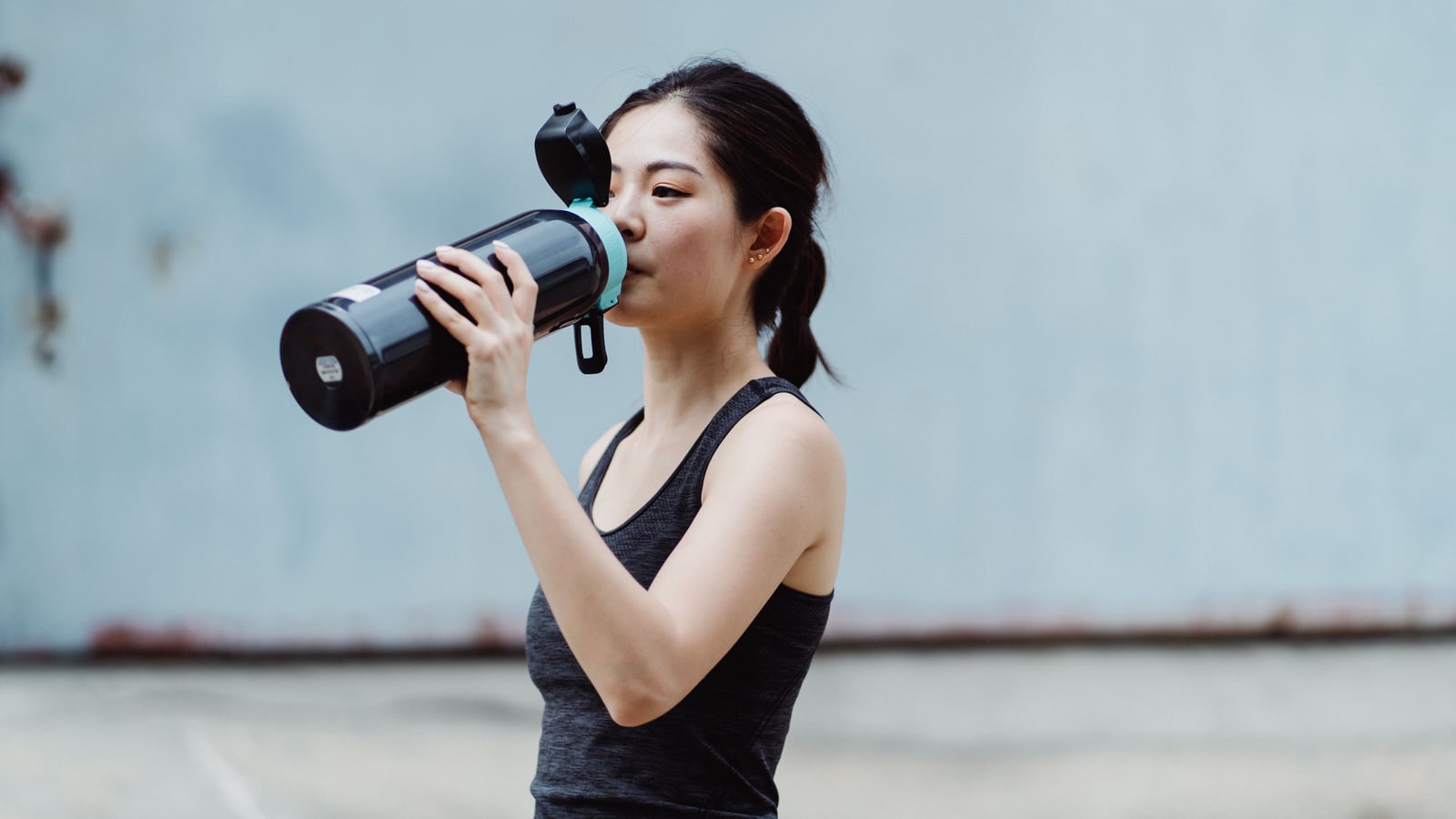
Why outdoor shooting exposes you to more heat
An outdoor range has nothing in common with a covered, air-conditioned shooting line. On the stations, you spend hours standing in full sun, often on gravel or asphalt that reflects heat back at you on top of what it absorbs. Rounds follow each other fast, and there’s almost never real shade between stages.
In long-range precision (LRP), the problem is different but just as real. You stay still for long minutes, prone or seated, focused on your breathing and your trigger break. That prolonged stillness under a blazing sun limits circulation and delays the body’s warning signals: you can be well into dehydration before you notice anything at all.
Add the weight of your gear: vest, carry bag, rifle, ammo. Every extra kilo carried in the sun increases your body’s heat production. Your body has to dissipate that heat on top of what the environment throws at it, and sweat becomes the only regulation mechanism available.
That’s exactly sweat’s job: it releases heat through evaporation, but it also carries away water and mineral salts. Without compensation, core temperature climbs and precision performance collapses well before an actual heatstroke.
Wind, often seen only as a ballistic correction, also plays a role in perceived heat. A hot, dry wind speeds up sweat evaporation and gives a false sense of coolness, which can further delay realizing you need to drink. Conversely, high humidity slows that evaporation and makes heat harder to bear even at the same displayed temperature.
Ground surface also varies a lot from range to range. A firing line on grass or under trees dissipates heat very differently from one on white gravel or concrete slabs, which soak up sun heat during the day and release it slowly. Two clubs in the same region can expose their members to very different thermal stress levels at the exact same thermometer reading.
The warning signs you shouldn’t ignore before it’s too late
Dehydration doesn’t really announce itself. Early signals are subtle: unusual mild fatigue, thirst you barely notice, urine darker than usual. Many shooters ignore them because they’re focused on their groups or their pace between stations.
One sign very specific to shooting: precision dropping off for no apparent technical reason. If your groups get worse over the day while your position and setup haven’t changed, heat-related fatigue is a serious possibility to consider before second-guessing everything about the gun.
Muscle cramps, especially in the calves or forearms, signal mineral salt loss more than plain lack of water. They often show up late in a competition day, after several hours of effort in the sun without enough replenishment.
Headaches, mild dizziness when standing up after being prone, or sudden irritability are also signals not to brush off. These are symptoms your body struggles to compensate for, and ignoring them means taking an unnecessary risk to keep going with a session that won’t be productive anyway.
Heatstroke is a real emergency: hot, dry skin, confusion, intense nausea. If a clubmate shows these signs, get them into shade, hydrate them, and call for medical help without waiting for things to get worse.
Urine color remains a simple indicator you can check anytime, no equipment needed. Clear urine generally signals correct hydration, while dark, scant urine should prompt you to increase fluid intake quickly, especially if you notice it repeatedly through the day.
Some shooters also report a pasty mouth or sticky tongue feeling, a signal often overlooked because it seems minor. Yet it’s one of the earliest physical signs of dehydration, well before thirst itself becomes clearly noticeable.
A heart rate that stays elevated after a rest period, even though physical effort was actually limited, also deserves attention. This mismatch between actual effort and the body’s response often reflects heat-related compensation rather than muscular fatigue alone.
How much to drink and at what pace during a session
There’s no universal magic number — the right amount depends on your build, the temperature, humidity, and how intense your session is. What matters more than the exact volume is regularity: small, repeated sips rather than a big gulp at the end of the day.
Good practice is to start the day already well hydrated, before you even reach the range. Waiting until you’re thirsty to drink means you’re already behind: thirst kicks in after dehydration has begun, not before.
On a clay-style range, use every station change to take a few sips. The rotation rhythm forces natural pauses — use them instead of waiting for the end of a full round.
In long-range precision, stillness makes it trickier since you don’t want to break your position at the wrong moment to drink. Plan to hydrate systematically between strings, during target changes or wind-correction pauses — never mid-string.
After the session, keep drinking gradually rather than compensating all at once: the body absorbs water better spread over several hours than a liter gulped down in one go.
A simple trick used by some club shooters: pair every repetitive action of the session with a sip of water — every magazine change, every new target set up, every scorecard filled in. This automatic association keeps you from relying solely on memory or thirst, both unreliable when you’re deep in concentration.
For a competition spanning a full day with several rounds, setting fixed time markers (every half hour, for example) can also help keep a steady rhythm without having to think about it constantly. The goal isn’t to follow a strict stopwatch but to avoid long stretches with zero fluid intake, which is the real risk factor.
Water, electrolyte drinks, and gear: getting organized
For a moderate-length session in reasonable temperatures, water remains the simplest and most reliable base. It brings no unnecessary sugar and hydrates effectively for most club outings.
When a session stretches over several hours in strong heat, or spans a full competition day, drinks containing electrolytes (sodium, potassium in particular) start to make real sense. They replace salts lost through sweat, which water alone doesn’t do.
Avoid very sugary drinks like regular sodas during effort: they can slow water absorption and cause digestive discomfort right when you need to stay focused and steady. Coffee and alcohol should be limited before and during an outdoor session, since their diuretic effect works against your hydration goal.
Some shooters simply alternate between still water and a light electrolyte drink through the day, which is a reasonable approach without unnecessary complexity. The key is having enough to drink and never running dry mid-day because the reserve was poorly planned.
Very cold drinks straight from a cooler can cause digestive discomfort in some shooters if gulped too fast after exertion. Cool water without excess stays more comfortable than an ice-cold drink downed in one go between stations.
For shooters who prefer a simple solution without buying a specialized drink, a pinch of salt added to a water bottle, paired with a salty snack, can be enough to compensate for moderate losses on a typical club outing. That said, it remains a more improvised and less precise solution than a commercial electrolyte drink for a demanding full-day competition.
Once you’ve picked your drink, you still need to organize so you can actually drink without breaking the session’s rhythm. An outdoor range, especially during a clay competition with several stations to work through, doesn’t always have a water point accessible at all times. Planning your own reserve in a bag or dedicated vest keeps you from depending on a tap that might be far away.
An insulated bottle keeps water cool much longer than a regular bottle left in the sun on a cart or shooting table. Warm water is always less appealing to drink, which can unintentionally reduce how much you actually drink over the day.
Also think about direct sun protection: a cap or wide-brimmed hat, tinted shooting glasses suited to the light, and a light long-sleeved layer rather than a t-shirt that exposes more skin. Sun protection reduces overall heat load and, with it, the hydration needed to compensate.
In LRP, a parasol or portable shelter between strings helps limit continuous exposure during waiting or target-change phases. On clay ranges, seeking out available shade between two stations, even for a few minutes, helps slow the buildup of body heat.
Finally, a small kit with a misting spray or damp towel lets you quickly cool skin temperature at the neck or wrists — a simple but effective move between two runs.
The choice of technical clothing matters too. A breathable fabric that wicks sweat away stays more comfortable than plain cotton, which soaks up moisture and clings to the skin, which over time can worsen the feeling of heat rather than reduce it. Light colors reflect more light than dark ones — a small but useful detail for a full day out in the sun.
A small insulated bag dedicated only to drinks, separate from your shooting gear bag, also avoids the annoyance of a bottle heated up by contact with other equipment left in the sun. Some clubs have a shared shade spot or a communal tent where the whole team’s supplies can be stored — a simple setup that benefits every participant on an outing.
For shooters who drive to the range, a cooler in the trunk lets you prep several containers ahead of time: one bottle for the start of the session, another kept cool for later. This setup avoids having to manage a single large container that gradually warms up over the hours spent outdoors.
Container choice matters too. A wide-mouth bottle fills more easily at a fountain or the club’s water point than a narrow-necked one — a practical detail when you’re already wearing a vest, hearing protection, and shooting gear. Some models with a built-in straw let you drink quickly between actions without unscrewing a cap, which can save precious time at a timed station.
Adjusting your diet before a summer shooting day
Hydration isn’t only decided at the range — it starts the day before. A meal too salty or too heavy on alcohol the night before a competition in strong heat increases fluid loss and complicates overnight recovery.
Breakfast on competition day benefits from foods that support hydration: water-rich fruit, yogurt, an unsweetened drink in sufficient quantity. A meal that’s too heavy or too fatty right before a session in full sun can also slow digestion and add extra discomfort to managing the heat.
During the day, if the competition runs several hours, a light salty snack (dried fruit, salty crackers) helps replace sodium losses without weighing down the stomach between stations. Avoid heavy meals midday, which divert energy toward digestion rather than concentration.
Salt lost through sweat deserves particular attention on the hottest days. A slightly salty diet remains sufficient for most club shooters; needs become more specific only for competitors stringing together several consecutive days in strong heat — a topic worth discussing case by case with a health professional if needed.
Fruits like watermelon, orange, or grapes provide both water and a bit of easily absorbed natural sugar, making them a practical snack between rounds without causing digestive heaviness. They also keep well in a competition cooler, unlike other foods more sensitive to heat.
Conversely, a lunch too rich in fats or sauces, often offered at competition food stalls, can seem tempting after a morning of effort but complicates digestion in strong heat. Favoring a lighter lunch, even if it means making up for it with a more substantial snack later once the competition is over, remains a pragmatic approach to staying sharp in the afternoon.
Some shooters prefer to split their food intake into several small portions throughout the day rather than two or three classic meals, especially during competitions that run from morning to late afternoon. This approach avoids big digestion phases that can create a heavy feeling right when picking shooting back up, while maintaining steady energy intake.
It’s also worth remembering that a loss of appetite in strong heat, common among some shooters, shouldn’t lead to skipping a planned meal or snack entirely. The body needs that intake to maintain its energy over a full competition day, even if the desire to eat is reduced by ambient heat.
Special case: clay stations, sustained pace and continuous exposure
Clay shooting means a string of stations with little downtime, leaving little room for improvising hydration. The competition’s pace doesn’t stop for you, so it’s on you to plan ahead before each course starts.
The weight carried while walking from one station to another (shotgun, shells, bag) adds extra heat load compared to a static discipline. That physical exertion combined with ambient heat speeds up fluid loss much faster than a discipline where you stay in a fixed position.
Using rotations between squads or station changes to drink systematically, even without feeling thirsty, becomes a habit worth building over seasons. Many seasoned club shooters explain that they make themselves take a sip at every station, regardless of how they feel in the moment.
Radiant heat from the ground (gravel, concrete) is often underestimated on outdoor clay ranges. It exposes you to heat coming from below in addition to direct sun, which justifies particular vigilance on this type of setup compared to a range set on grass or under partial cover.
The line waiting before each station, often in full sun with no real protection, represents exposure time that quietly accumulates throughout a clay competition. This cumulative wait time can represent a significant share of the day, far more than the actual shooting time itself, and therefore deserves the same vigilance regarding hydration and sun protection.
Wearing hearing protection and sometimes a helmet or cap adds an extra layer that traps heat around the head. Airing out your head for a few moments during breaks, while staying within the range’s safety framework, can contribute to better overall thermal comfort over a full day of dynamic outdoor shooting.
Special case: long-range precision, stillness and concentration
In LRP, the constraint is the opposite of clay shooting: you stay still for a long time, often prone, which limits natural opportunities to drink without disturbing your shooting position. Hydration management must therefore be more deliberate and planned ahead.
Prolonged stillness in full sun can also mask the body’s warning signals, since the extreme concentration precision shooting demands diverts attention from physical sensations. A shooter may notice late that they’re starting to feel dizzy or unusually fatigued.
Using target changes, wind corrections between strings, or regulation breaks to take a few sips lets you stay consistent without breaking your shooting rhythm. Some shooters place their bottle within reach directly on the shooting mat to avoid any unnecessary movement.
Prolonged prone position in full sun also exposes a larger area of the body directly to the rays, notably the back and neck. Appropriate protection (light clothing, a cap, or even a small shelter if match rules allow) limits this continuous exposure over dozens of minutes.
Prolonged contact with the ground or shooting mat, often laid directly on a surface that has been heating up all morning, adds an extra heat source through conduction that’s felt less directly than sun on the skin. An insulating mat or a thicker pad can limit this heat rising up during long prone positions.
Breath control, essential to trigger-break precision, also becomes harder with heat-related fatigue. A slightly dehydrated shooter often breathes faster and less regularly, which directly disrupts the chosen moment for the shot and can explain less consistent groups toward the end of a string.
Organizing your session or competition around the weather
Checking the forecast before an outdoor shooting day lets you plan ahead rather than just endure. On a club outing, it’s often possible to shift the schedule slightly to avoid the midday heat peak, usually in early afternoon.
At an organized competition, that choice isn’t always available since the schedule is set by organizers. In that case, individual preparation (extra hydration the night before and that morning, suitable gear) becomes your main lever of action.
Planning voluntary breaks in the shade between engagements, when the schedule allows, helps bring body temperature back down before heading out again. A few minutes’ break is sometimes enough to regain sharper focus for the rest of the session.
An experienced instructor often points out that stepping away from a session when genuinely unwell is never a failure. Personal safety and the group’s always outweigh continuing a training session or even a competition, whatever’s at stake sportingly at that moment.
Time of day also strongly influences how heat feels, independent of the displayed temperature. The same temperature can be much harder to bear in early afternoon, when sun radiation is most direct, than in late morning or late in the day. When the competition format allows it, favoring the most sun-exposed stations during cooler windows of the day is a strategy some organizers already apply, and one you can also anticipate individually if the schedule gives you a bit of leeway.
The total time spent on-site, beyond just shooting time, matters too. Between arrival, setting up gear, safety briefings, wait times between rounds, and final pack-up, a competition advertised as four hours of shooting can turn into a full day of heat exposure. Anticipating that real duration, not just the scheduled shooting time, helps you better plan how much water to bring from the start.
Gradually acclimating to heat at the start of the season
The body adapts to heat over time, but that adaptation isn’t immediate. A shooter returning to outdoor outings after a winter spent mostly at a covered range often struggles more with the first hot days of spring or early summer than with those of high summer, once acclimation has set in.
Easing back in, with shorter sessions during the season’s first outings in strong heat, gives the body time to better regulate its sweating and core temperature. Jumping straight into a long competition at the year’s first heat wave carries a higher risk of heat fatigue than a more gradual return.
This acclimation concept especially applies to shooters who practice mostly indoors or at a covered range the rest of the year and occasionally switch to outdoor competitions in summer. The body doesn’t have the same thermal-management habit as a shooter who trains regularly outdoors from the first warm days on.
Age and overall physical condition also influence this adaptive capacity. Without this being a reason to avoid the sport, it remains reasonable for a shooter unaccustomed to exertion in strong heat to pay particular attention to hydration during their first summer outings, rather than immediately matching the pace of a shooter long used to these conditions.
Tracking your hydration over a competition season
Beyond a single day, hydration management is also worth thinking about over an entire season. A shooter stringing together several outdoor competitions in July and August benefits from watching their own trends: noticeably more fatigue on certain weekends, less consistent groups late in the day, slower recovery between two closely spaced outings.
Noting these observations, even briefly, helps identify personal patterns: maybe heat affects your afternoons more than your mornings, or certain competitions held at a particularly sun-exposed range demand different preparation than your usual club. This kind of tracking follows the same logic as a classic shooting log, but applied to physical conditions rather than just gun settings.
This tracking also helps distinguish a performance drop caused by technique from one caused by heat fatigue accumulated over several closely spaced competition days. A shooter who runs three outdoor competition weekends in a row during a full heatwave isn’t starting their third outing in the same physical shape as their first, even with correct hydration each time.
Adjusting your personal calendar, spacing out outdoor competitions further during marked heatwave periods when possible, remains an option worth considering for shooters who notice cumulative fatigue over several close outings. The federation’s calendar isn’t always flexible, but club outings and personal training sessions often are.
Hydration and shooting performance: the direct link
Even mild dehydration affects the fine coordination and stability needed for a good trigger break. A less steady hand, a higher resting heart rate, concentration that fades faster: these are all direct consequences of insufficient fluid intake.
Heat-related fatigue also amplifies fine muscle tremor, particularly troublesome standing on clay stations or holding precise support in LRP. A well-hydrated shooter maintains better group consistency over the course of a full competition.
Mental sharpness, essential for managing wind, distances, and adjustments in precision shooting, also degrades with dehydration. Reading or calculation mistakes that wouldn’t happen early in the day can show up after several hours of exposure without enough compensation.
Treating hydration as a full training component, on the same level as stance or scope adjustment, often changes how you approach a summer competition. It’s not a side detail — it’s a direct performance condition.
Recovery after the effort deserves the same attention as preparation. A shooter who gets home dehydrated after a summer competition often takes several days to fully recover, which can affect the quality of the next training session if outings are close together. Drinking enough in the hours following the end of a session is part of good hydration management, not just the moment on the firing line itself.
Sleep the night after a competition day in strong heat is also generally affected by poorly compensated dehydration: harder to recover well, lingering fatigue the next day. A shooter running several competition days over a weekend therefore has good reason to take particular care of their evening rehydration, not just the current day’s.
The link between hydration and performance consistency also applies to disciplines requiring stable, repetitive movements, like working the bolt of a manual-action rifle or reloading a magazine in dynamic shooting on cardboard or steel targets. Heat-related fatigue makes these movements less fluid and less consistent from one run to the next, which directly translates into lost time or precision depending on the discipline practiced.
Prevention and collective safety within a club
On a club outing in high summer, vigilance shouldn’t be only individual. Spotting signs of excessive fatigue in a fellow shooter, especially a beginner unaccustomed to long outdoor sessions, is part of a good collective safety culture.
Setting up a water point that’s accessible and visible across the whole course, when the club’s setup allows it, greatly helps everyone keep up with hydration. A simple shared insulated jug at a central station can be enough for a small club.
Reminding new members of these good habits, particularly before their first summer competition, avoids many avoidable inconveniences. Heat affects every shooter differently depending on age, physical condition, and familiarity with outdoor outings.
An instructor or session leader who keeps an eye on the group’s overall state, beyond just firearm-handling safety, usefully complements everyone’s individual vigilance.
At regional or national competitions held in high summer, the presence of a first-aid station or a person trained in basic first response remains something to check before the day, especially for events billed as particularly hot. Knowing where that first-aid point is before even starting your first round saves precious time if real need arises.
The role of referees and range officials also deserves mention: they too are exposed to heat for long hours without necessarily having the same easy access to shade or water as competitors on rotation. Mutual attention between shooters and officials on these matters is part of good collective organization for a summer competition.
Finally, sharing these habits with shooters who just got their license, often during their first full season of outdoor competitions, avoids many avoidable uncomfortable situations. A good club culture around this topic naturally passes from one generation of members to the next, just like safety rules around handling firearms.
Younger and older shooters in the club deserve particular attention, since their thermal regulation works differently from that of a physically fit adult. Without this justifying excluding them from summer outings, an attentive instructor can offer these members more frequent breaks or less exposed time slots, in agreement with them and without stigmatizing their participation in club life.
A shared club kit, containing a few extra water bottles, salt packets or electrolyte tablets, and a survival blanket, can come in handy on a particularly hot day when a participant has underestimated their needs. This kind of simple, inexpensive preparation fits easily into the usual gear carried on a club outing or organized competition.
FAQ
Q: How long before a session should you start hydrating? A: Ideally starting the night before, avoiding alcohol and overly salty meals the previous evening. Arriving already well hydrated that morning beats trying to catch up once you’re at the range.
Q: Is water alone enough for an all-day competition? A: For a short session, yes. Over a full day in strong heat, an electrolyte drink on top of water helps replace salts lost through sweat, which water alone doesn’t replace.
Q: Can you keep shooting through a muscle cramp? A: A cramp is a warning signal to take seriously, not just a minor annoyance to ignore. It’s better to pause, hydrate, and get into shade before continuing, rather than pushing through the rest of the session.
Q: Does morning coffee cause a problem before a session in full sun? A: Consumed in excess, its diuretic effect can work against your overall hydration for the day. Moderate consumption remains reasonable, but it never replaces sufficient water intake.
Q: How do you spot the start of heatstroke in a clubmate? A: Hot, dry skin, confusion, or intense nausea are emergency signals. Get them into shade, hydrate them if possible, and call for medical help without waiting.
Q: Should you adjust your gear differently between clay stations and LRP? A: Yes: on clay stations, favor an easily accessible water reserve for moving between stages. In LRP, keep your bottle within reach on the shooting mat instead, so you can drink without breaking your position.