
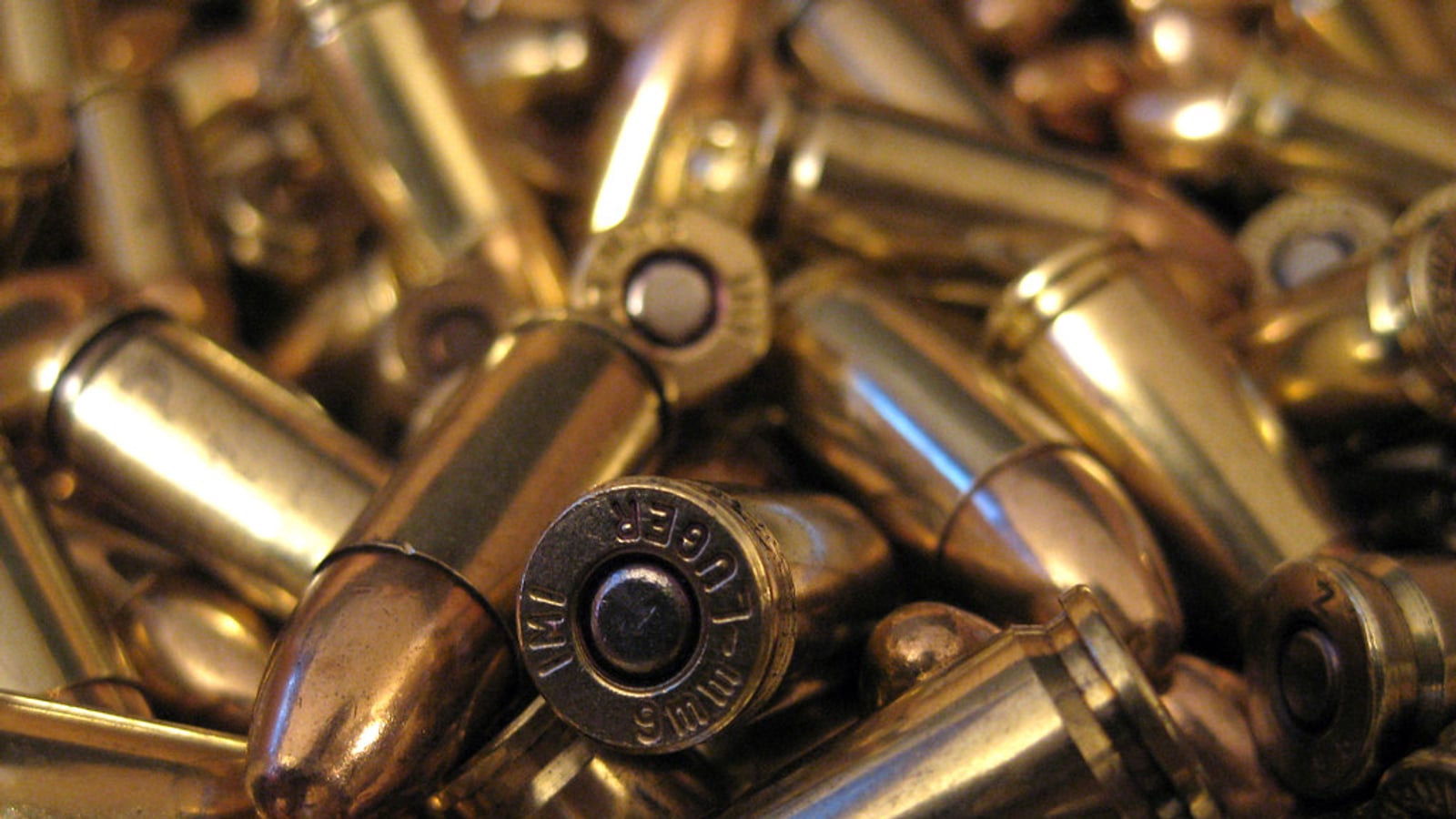
Why your ammo storage deserves as much care as your firearm
You maintain your rifle, you clean your pistol after every session, you keep an eye on your trigger to make sure it stays crisp. And then you toss your ammo boxes in a jumbled pile in a corner of the closet. That’s the blind spot for most shooters, beginners and veterans alike.
A poorly organized stock costs you time at every session: you search for the right caliber, you open three boxes before finding the right one, you end up bringing rounds to the club that you never meant to use. Over a season, that adds up to hours wasted for nothing.
There’s also a safety and traceability issue at stake. Knowing exactly what you have, how much of it, and since when, is the foundation of serious practice — whether you shoot 50m rifle, rapid-fire pistol, or a dynamic discipline on cardboard targets. This article covers the full method: separating by caliber, choosing between rigid boxes and soft organizer bags, storage conditions, and the link to your shooting log.
This topic becomes even more concrete once you practice more than one discipline or own several firearms. A shooter starting out with a single 22LR rifle can get away with minimalist storage; someone who accumulates several calibers over the years, splitting time between a club pistol and a precision rifle, quickly ends up with a genuine small inventory to manage. The method doesn’t fundamentally change with volume, but rigor becomes non-negotiable past a certain threshold.
What’s often striking is that this topic is rarely covered at a club or during initial training. You learn to field-strip a firearm, follow safety rules on the firing line, maintain your gear — but nobody takes the time to explain how to properly store what you bring home after every session. That’s a gap this article aims to fill completely, with a method you can apply this very weekend, whatever the size of your current stock.
The basic principle: one caliber, one container, one label
The first rule, the one that prevents 90% of problems, is dead simple: every caliber gets its own container, never shared with another. Mixing similar calibers (9mm and .38, .223 and .222, for example) in the same box is the number one cause of loading mistakes at the range.
In practice, that means:
- One dedicated box or compartment per caliber, no exceptions, even for small quantities.
- A legible label on every container: exact caliber, ammo type (FMJ, lead, HP…), and if possible the lot number or purchase date.
- No “loose” ammo rattling around in a general carry bag, mixed in with magazines or accessories.
This discipline sounds obvious on paper, but it slips quickly over time: a box gets opened to help out, a few rounds change containers, and six months later you no longer know what’s where. Get in the habit of putting everything back in its place right after the session, not the next day.
For shooters who practice several disciplines with different calibers, this strict separation becomes even more important. A club shooter who alternates between a 22LR rifle and a 9mm pistol in the same outing statistically runs a higher risk of mix-ups if this storage discipline isn’t ingrained from the start.
This rule also applies to calibers that look similar on paper but really aren’t in practice. .38 Special and .357 Magnum share the same diameter and can physically slide into the same chambers on certain firearms, which makes separating them in storage even more critical: an ambiguous label or a mix-up in the same box can lead to loading the wrong round into the wrong gun. The principle stays the same everywhere: as soon as any doubt exists between two calibers, physical separation must be total, not just “mostly” done.
Another useful habit is dating your labels with a format that stays consistent over time (year then month, for example), rather than free-form notation that changes from one box to the next. This detail seems minor, but it becomes valuable after two or three years of practice, when your stock includes boxes opened at different times and you want to spot at a glance which one to use first.
Finally, remember to also label the approximate quantity remaining in each partially opened box, with a pencil or erasable marker. That saves you from having to open and recount every time you want to know if a box has enough for your next session — a small gain per instance, but a real one over a full season.
Rigid boxes: the simplest solution for home storage
The rigid plastic storage box remains the go-to for storing ammo at home. It protects effectively against impacts, occasional moisture, and dust, and it stacks well on a shelf.
The concrete advantages:
- Good seal if the lid has a gasket (models with a silicone seal are clearly superior to simple clip-lock models).
- Stackable and modular: you add boxes as your stock grows, caliber by caliber.
- Impact resistance well above a simple plastic bag, useful if the box falls off a shelf.
- Affordable price and a very long lifespan, well beyond a single season.
The main drawback is bulk: a rigid box always takes up its fixed volume, even half empty. For a growing stock across several calibers, that can quickly fill an entire cabinet. It’s a trade-off worth accepting if you want the best protection for fixed storage.
A practical tip: favor boxes with removable internal dividers over one single big volume. That lets you separate subcategories (different ammo types within the same caliber, for example) without multiplying containers.
Material choice matters too. A quality rigid plastic (thick polypropylene, for instance) holds up better over time than thin plastic, which becomes brittle after a few years, especially if it gets a bit of cold exposure in winter. Before buying a whole series of boxes to organize your entire stock, test a single one for a few months: check that the lid keeps its firmness, that the gasket doesn’t deform, and that stacking stays stable once it’s full.
Plastic color isn’t purely aesthetic either. Clear or translucent boxes let you see the fill level at a glance without opening the lid, which speeds up quick visual inventory a lot. Conversely, opaque plastic protects the contents better from prolonged light exposure if your storage spot gets direct sun part of the day — a factor worth weighing based on your storage room’s layout.
Finally, think about box size relative to how often you buy ammo. Many small boxes (in batches of 50 or 100 rounds) are often more practical than a few large boxes holding several hundred rounds at once: you limit repeated opening of the same container, and you can bring a whole box to the club without having to scoop out a precise quantity from a larger stock.
Organizer bags: the solution for transport and the club
The soft compartmentalized organizer bag is designed for a different purpose: transport to the range, not long-term storage. It slides into a larger range bag, takes up little space, and flexes to fit whatever you’re carrying that day.
Its strengths:
- Light and compact, ideal for bringing only what you need for the day’s session.
- Compartments that are often clear or flap-covered, letting you identify contents without opening everything.
- A format that adapts to variable quantities without an “empty box taking up space” problem.
Its limits are just as clear: protection against impact and moisture is far weaker than a rigid box. An organizer bag isn’t built to store a year’s worth of ammo in a garage; it’s built to accompany 100 to 300 rounds to the firing line and back.
The good practice, adopted by most experienced club shooters, is to combine both: primary storage in rigid boxes at home, and an organizer bag that serves purely as a “shuttle” between stock and range, reloaded before every outing with the exact quantity planned for the session.
Bag choice depends a lot on your discipline. A precision shooter who only needs about fifty rounds of a single caliber per session can make do with a small two- or three-compartment organizer. A dynamic-discipline shooter who loads several magazines before heading out, with a larger volume of ammo per outing, will benefit from a more structured bag with rigid internal compartments — almost a hybrid between the soft bag and the hard box.
Some bags offer removable rigid plastic compartments that fit inside a soft outer shell: that’s often the best compromise for anyone who wants transport convenience without fully sacrificing protection. These compartments can also be pulled out and stored directly on a shelf once you’re home, which simplifies the transition between “transport mode” and “storage mode” with no extra handling.
Also check the bag’s closure. A simple velcro flap sometimes pops open on its own inside a larger carry bag, risking rounds scattering into the bottom of the main bag. A zipper or a solid clip closure limits this annoyance, especially if you’re carrying your gear on public transit or by bike to the club.
What to absolutely avoid as a container
Certain storage habits, often born out of a lack of dedicated gear, create real problems:
- Single-use plastic bags (grocery-bag type): no mechanical protection, risk of puncture, no real seal.
- The original cardboard box left open or piled loosely: it crushes, tears under moisture, and doesn’t protect against impact.
- Metal boxes without a gasket in a humid environment: they can condense moisture inside if temperature swings are pronounced, which is worse than plain cardboard.
- Mixing ammo and maintenance tools (solvents, grease) in the same drawer: some cleaning chemicals can, over the long term, affect casings or primers if there’s direct contact or concentrated fumes in an enclosed space.
The right instinct is simple: a dedicated, clean, labeled container, never shared with anything other than ammunition of the same caliber.
A less obvious trap involves containers recycled from another use: a toolbox, a garage storage bin previously used for automotive care products, or a drawer that spent years holding screws and hardware. Even if they look clean, these containers can retain residue (oil, grease, metal dust) that isn’t neutral on prolonged contact with a round, particularly on the casing or primer. A new or thoroughly cleaned container reserved exclusively for ammunition eliminates that risk at the source.
Finally, be wary of containers that look practical but block proper air circulation, like a fully vacuum-sealed bag. Counterintuitively, a perfect air vacuum brings no particular benefit for standard ammunition and makes quick access harder when you need it; a container that’s simply well-closed and dry is more than enough for the vast majority of everyday sporting uses.
Humidity: the silent enemy of your stock
Humidity is the sneakiest degradation factor for ammo stored long-term, because the effects aren’t always visible to the naked eye before firing. A primer that’s picked up moisture can produce a misfire or erratic ignition; damp powder can alter velocity and therefore accuracy.
A few general principles, without pinning down an exact threshold since it depends heavily on your storage location:
- Favor a dry storage space, sheltered from sharp swings in humidity (absolutely avoid uninsulated basements, unheated garages near the coast, or any room prone to condensation).
- Desiccant packets (silica gel) placed inside rigid boxes help absorb residual moisture, especially in humid regions or near the coast.
- Avoid storing directly on a concrete floor, which tends to stay more humid than the rest of the room; a raised shelf limits this risk.
- If you bring a box stored in a cold environment into a warm room, let it return to room temperature while still closed before opening it, to avoid direct condensation on the ammunition.
These aren’t absolute rules with universal numbers, since every home has its own characteristics. The principle that matters most is stability: a stable, dry environment is always preferable to one that swings a lot, even if the average seems fine.
A point often overlooked: a room’s ambient humidity can vary a lot by season, even in a generally dry home. A room that seems perfect in summer can become noticeably more humid in winter if it’s poorly heated or poorly ventilated, especially if it backs onto a poorly insulated exterior wall. Before settling on a storage spot for good, observe it over several months rather than trusting a one-time impression.
If you live in a particularly humid region (coastal area, deep valley, older home with average insulation), a small hygrometer placed in your storage room is a modest investment that saves you from guessing. It lets you objectively check whether the chosen spot stays within a reasonable range across seasons, rather than relying purely on feel.
Silica gel isn’t the only desiccant option: some shooters use rechargeable desiccant cartridges (to be re-dried in an oven or microwave depending on the model) that last longer than a simple disposable packet. The principle stays the same, only the lifespan and long-term cost change. What matters is checking their condition regularly rather than forgetting about them once placed.
Temperature: aim for stability rather than cold or heat
Contrary to popular belief, the goal isn’t to store ammunition “cool” at all costs, but to avoid overly sharp and repeated temperature swings. A hot-cold-hot cycle repeated over several months wears out a stock more than a stable temperature, even one that’s slightly higher.
In practice:
- Avoid spots that get extremely hot in summer, like a car trunk in direct sun or a poorly insulated attic. Prolonged excessive heat can accelerate powder aging.
- Also avoid repeated freeze-thaw cycles in an uninsulated shed, which promotes condensation with every cycle.
- A room in the house with stable ambient temperature (bedroom, interior closet, temperate laundry room) is almost always a better choice than an outbuilding, even if the latter seems more “logical” for storing shooting gear.
Again, stay general on thresholds: variation from one home to another is too large to give a reliable universal number. Remember the principle: stable and moderate beats extreme cold or extreme heat.
The car trunk case deserves particular attention, since it’s a common habit among shooters who string together several outings in a week and leave part of their stock “just in case” in the vehicle. The problem isn’t just summer heat: it’s mainly the daily temperature swing that’s problematic, with a cabin that can heat up sharply during the day then cool down at night, several days in a row. It’s never a recommended storage spot beyond a one-off transport of a few hours.
Similarly, an uninsulated outdoor storage locker, even one that’s locked and secure from an access standpoint, is rarely ideal thermally if it’s exposed to outdoor climate swings with no regulation at all. If that’s the only option available due to space constraints, at least favor a spot inside the locker rather than right against an exterior wall directly exposed to sun or frost.
For shooters with a substantial stock built up over several years, it can be worth dedicating a closed cabinet in a temperature-controlled living space rather than giving in to the ease of an outdoor space simply because it seems “on the surface” better suited to shooting gear. The thermal comfort of the room you live in is almost always better for preservation than any unheated outbuilding.
Physically organizing your storage space
Beyond the container itself, how you lay out your storage space changes your day-to-day life quite a bit. A few principles that make a real difference:
- Arrange by frequency of use: your main caliber (the one you use every week) should be the most accessible, not hidden behind a stock of caliber you use twice a year.
- Keep a free buffer area for freshly purchased ammo, long enough to label it and integrate it cleanly into the rest of the stock — avoid leaving it “set aside” indefinitely.
- Visually separate competition ammo (often pricier, reserved for a specific use) from everyday training ammo, even if it’s the same caliber. A different colored label is enough.
- If you practice several disciplines with different needs (10m air rifle and 50m smallbore rifle, for example), keep those stocks clearly distinct even if the base caliber is similar, to avoid grabbing the wrong type out of habit.
A well-thought-out storage space isn’t an arrangement fixed once and for all: it’s a system you gently adjust as your practice habits evolve.
Also think about the physical ergonomics of your space: a shelf that’s too high forces you to carry heavy boxes above head height, which is never ideal from a handling-safety standpoint. A mid-height that’s easy to reach without effort, and without having to climb on an unstable support, remains preferable for repeated use season after season.
If you share your home with other people, including roommates or non-shooting family members, think about the discreetness of your storage space as much as its accessibility for you. Storage in a heavily trafficked common room isn’t ideal, even if the whole setup stays locked: favor a more secluded space, in a room you control more closely day to day.
One last useful organizational point concerns consistency between your ammo storage area and that of your other shooting accessories (magazines, cardboard targets, hearing and eye protection, maintenance tools). Grouping these items in the same zone, without physically mixing them, saves you valuable time when packing your bag before heading to the club.
The link to your shooting log: traceability and forward planning
Storing things neatly is one thing. Knowing what you have without opening every box is another. That’s where traceability comes in, and it’s one of the most concrete uses of a digital shooting log like PewPewLife’s.
Logging the number of rounds fired per caliber at every session lets you:
- Know your remaining stock without having to physically recount everything each time.
- Plan a restock ahead of running out, rather than realizing it the night before a competition.
- Spot the oldest ammo in your stock to use it first (a “first in, first out” principle), rather than grabbing at random and letting the bottom of a box age indefinitely.
- Cross-reference your grouping results with the ammo lot used, which is valuable in precision disciplines for identifying whether a particular lot suits your firearm better.
An experienced club shooter who keeps this kind of log saves considerable time on season prep: no more guessing, the numbers are right there. It’s also a habit that fits into the broader administrative rigor of competitive shooting, where traceability (license, permits, shooting log) is an integral part of responsible practice.
This traceability becomes even more meaningful when cross-referenced with performance data. A digital shooting log that links every session to both the number of rounds fired and the results achieved (grouping, score, feel) lets you spot trends that simple manual counting never reveals as clearly. For instance, noticing that a particular ammo lot consistently correlates with better groupings on your rifle, or that a brand switch coincides with a drop in consistency.
The same tracking also helps you budget your practice over time. By reviewing your consumption history by caliber over several months, you get a realistic average of your monthly consumption, far more reliable than a rough estimate from memory. That makes bulk-purchase decisions easier — often more cost-effective — without tipping into overconsumption or the disproportionate stockpiling mentioned further down this article.
Finally, lot-level traceability becomes particularly valuable if a problem is identified with a batch of ammunition (a consistency issue flagged by the manufacturer or by other shooters at the club, for example). If you’ve noted precisely which lot corresponds to which physical box, you can isolate and set aside the affected rounds without having to blindly go through your entire stock.
Quantities at home: staying within a reasonable range
The question of how much ammunition to keep at home comes up often among shooters who practice regularly. There’s no universal, quantified rule that applies to every situation: it depends on the ownership status of each firearm and the regulations in force, which can vary by case and evolve over time.
What can be said in general, without putting forward a precise figure that might be wrong or outdated: stay reasonable, keep only the volume that matches your actual usage over a few months, and avoid piling up a disproportionate stock “just in case.” An excessive stock also complicates your own organization and raises the safety and preservation stakes discussed above.
For any specific question about permitted quantities or ownership conditions based on your firearm’s category, the most reliable move is to check directly with your prefecture or your FFTir club, whose points of contact know the current regulatory framework. This is a point where staying general beats a numeric answer that risks being wrong.
A useful reminder on the classification system, to set the context: in France, Category A covers firearms prohibited for private ownership (war material), Category B covers firearms subject to prefectural authorization (most handguns and semi-automatics), Category C covers firearms subject to a simple declaration (certain hunting rifles or manually operated repeaters), and Category D covers firearms that are freely sold or subject only to simple registration (low-power air rifles, replicas, certain historic firearms). Ammunition matching a Category B firearm logically follows a stricter vigilance framework than that of a Category D firearm, even though the physical storage method described in this article stays the same in both cases.
A simple principle to keep in mind, regardless of exact thresholds: the larger the quantity stored, the less negotiable the requirement for rigorous storage (separation, labeling, securing) becomes. A small, poorly organized stock stays merely annoying; a large, poorly organized stock becomes a real problem, both for safety and for simple day-to-day management.
Don’t hesitate to discuss this topic with other club members either. An experienced instructor or a longtime shooter has usually already refined their own stock-management method, and these informal exchanges are often worth more than an isolated internet search, in part because they factor in local specifics (climate, housing type, disciplines practiced at the club).
Securing your storage: beyond organization
Organizing your stock doesn’t exempt you from the securing obligations that apply to keeping ammunition at home. The two topics complement each other: clear organization actually makes proper securing easier, since you know exactly what you need to protect and where.
A few general good practices that align with this log’s logic:
- Ammunition should be kept under conditions that prevent easy access, particularly for anyone outside the household or any children present in the home.
- A lockable container (cabinet, safe, or a lockable rigid box) is always preferable to simple open shelf storage.
- The ammunition storage location benefits from being distinct from where the firearm itself is stored, which limits risk in the event of a break-in.
These securing principles connect directly to the organization by caliber and container described above: the clearer your system, the easier it is to secure properly without spending a disproportionate amount of time doing so each time.
The key to the cabinet or safe deserves thoughtful storage of its own: avoid leaving it on the main keyring accessible to the whole household, or worse, on the furniture right next to the container it’s supposed to protect. A dedicated, distinct, and discreet spot for the key logically rounds out the whole system without complicating your own day-to-day access.
If several people in the household practice shooting sports, it’s worth clarifying who has access to which stock, especially if experience levels differ. A clear household arrangement, discussed upfront rather than discovered by accident, avoids ambiguity and strengthens the household’s overall safety culture.
Finally, think about consistency between how you secure your ammunition and how you secure your firearms themselves, which follow their own strict rules (a certified safe or gun cabinet appropriate to the category you own). The two setups should work together as part of an overall approach to responsibility, not as two topics handled independently of each other.
Special case: reloading components and ammunition
If you reload, your storage needs extend beyond finished cartridges: powder, primers, and spent casings each need their own storage logic, separate from your loaded ammunition.
A few specific points:
- Powder should be kept in its original container, closed, away from direct light and heat. Never transfer it into an unlabeled container.
- Primers are particularly sensitive to humidity and impact: a dedicated rigid container, separated from everything else, is essential.
- Spent casings destined for reloading can be stored more loosely (bags or bins), since they don’t carry the same safety stakes as loaded ammunition or active components.
- Systematically sort and label by caliber and by the number of reloads already performed on each batch of casings — a habit an experienced reloading instructor recommends to every student from their very first sessions.
This specific organization requires a bit more rigor than a simple stock of commercial ammunition, but it follows exactly the same principles: strict separation, clear labeling, and stable storage conditions.
The workspace dedicated to reloading also deserves to be treated as its own zone, separate from your finished-ammunition storage area. Many reloaders set up a small bench area where only the components currently in use are out, while the rest of the stock stays closed up elsewhere. This separation limits the risk of error (mixing different powders, confusing two primer batches) that naturally increases when everything sits out at once on the same work surface.
The reloaded ammunition itself, once assembled, follows the same fate as commercial ammunition for final storage: a dedicated rigid box, labeled at minimum with the caliber, assembly date, and ideally a reference to the recipe used (powder type, charge, projectile type). This extra piece of information is valuable if you ever notice a performance discrepancy and want to trace back to the likely cause.
If your reloading volume grows over time, a simple tracking sheet, on paper or digital, that logs every batch produced with its exact recipe usefully complements physical storage. It saves you from having to reconstruct a box’s composition from vague memories months after assembling it.
Building a periodic check-up routine
A good storage system doesn’t just exist: it gets checked. Get in the habit of doing a full review of your stock once or twice a year.
This simple routine includes:
- A quick visual check of every box: no signs of moisture, no visible corrosion on casings, labels still legible.
- An update to your shooting log to verify that the quantities noted actually match physical reality — a good way to catch a counting error or a missed entry.
- Renewing desiccant packets if you use them, since they lose effectiveness over time.
- A reorganization if your practice has changed (new discipline, new caliber, a discipline you’ve dropped) so you’re not keeping a system designed for a use you no longer have.
This periodic check rarely takes more than an hour, but it prevents unpleasant surprises and keeps your storage system aligned with your actual practice, season after season.
It’s also a good time to do a broader sort: identify very old boxes you’ve never really folded into your normal rotation, or ammo bought for a firearm you no longer shoot. Rather than letting that leftover stock sit dormant indefinitely, plan to use it first during regular training sessions, where absolute performance matters less than in competition.
Use this routine to also check the condition of your containers themselves, not just their contents. A rigid box’s gasket that’s starting to harden or crack gradually loses its sealing effectiveness, without that always being visible at first glance. Replacing an aging box costs little compared to the risk of its entire contents being exposed to moisture without you immediately noticing.
Finally, a well-run periodic check is also a chance to reset your labeling system if it’s drifted inconsistently over time. It’s not uncommon, after several years of practice, to end up with two or three different labeling conventions coexisting on the same shelves. Using this moment to harmonize everything under one clear convention durably simplifies reading your stock, for you as well as for anyone else in the household who might need access to it.
FAQ
Q: Can you store all your ammunition in one big box, separated only by internal pouches? A: Technically possible for small quantities, but not recommended beyond two or three calibers. The risk of mix-ups increases with the number of compartments in a single container, so it’s better to use multiple dedicated boxes.
Q: Is a soft organizer bag enough for storage over several months? A: No, it’s designed for short-term transport to the range, not long-term preservation. For a stock sitting for several months, a rigid box with a gasket offers far better protection against impact and humidity.
Q: Should you write the purchase date on every ammo box? A: It’s an excellent habit, especially combined with a shooting log that tracks consumption. It lets you prioritize the oldest lots and keep real visibility on how old your stock is.
Q: Is reloaded ammunition stored differently from commercial ammunition? A: The storage principle (separation by caliber, rigid container, stable conditions) stays identical. The difference mainly plays out upstream, in the separate storage of components (powder, primers, casings) before assembly.
Q: Is a desiccant really useful in an ammo box? A: In a humid region or a home prone to condensation, yes, it’s a simple and inexpensive protection. In a dry, stable home, the benefit is more limited but still carries no downside.
Q: How do you know if ammunition stored too long is still reliable? A: There’s no simple, safe test you can do yourself at home; visual appearance guarantees nothing about the internal state of the powder or primer. If you have serious doubts about very old or poorly preserved ammunition, ask your gunsmith or a club instructor for advice rather than firing a suspect round.