
A federation older than most modern Olympic sports
Every time you renew your license each year at your club, you’re repeating a gesture that has existed in one form or another for more than a century. Sport shooting is one of the very first disciplines to organize itself into a national federation in France, at a time when sport itself was only just beginning to structure around written rules and official competitions.
This age isn’t just a trivia footnote. It explains why French sport shooting has a dense administrative culture, deeply rooted club traditions, and a close relationship with the Olympic movement from its very beginnings. Shooting has been part of the Olympic Games since their modern revival in 1896, which directly shaped how the practice organized itself in France.
Understanding this history isn’t just about satisfying curiosity. It helps you grasp why certain current rules exist, why the French federal system works the way it does, and why your license isn’t just a piece of administrative paper but the direct heir of an old associative movement.
This article traces the broad outlines of that history: the origins of the movement, the stages of its structuring, the evolution of the club network, and the role the federation plays today in organizing the sport in France. We deliberately stay cautious about exact dates and precise figures when full certainty isn’t available — the goal is to give you an accurate picture rather than an invented timeline.
This factual caution isn’t dodging the question. It’s actually what distinguishes a serious article from a text that piles up dates and precise numbers to create an impression of rigor without ever checking their accuracy. On a historical topic this old, with sources that are sometimes incomplete or contradictory depending on the period, it’s better to stick to well-established trends than to fabricate false precision.
You’ll also see, throughout this piece, how closely the federation’s history overlaps with that of French sport in general: the same growth cycles, the same lulls, the same gradual professionalization of coaching and organization. Sport shooting never evolved outside the national sporting movement — it followed the same broad lines while keeping its own specificities, notably its regulatory dimension tied to firearms.
The associative origins of sport shooting in France
Before a single national federation came into existence, sport shooting in France first organized itself locally, through shooting societies independent of one another. These local structures existed in many towns and regions, often built on already-old traditions of popular shooting, well before the very idea of a centralized federation.
This organization into autonomous local societies reflects a pattern found in many sports in their early days: isolated clubs, rules that varied from one region to another, local competitions with no shared framework. The need to harmonize rules, organize inter-regional meets, and represent the discipline before emerging sporting bodies gradually pushed these societies to federate.
The end of the nineteenth century and the beginning of the twentieth mark, in France as in several other European countries, the emergence of this broader movement of federating sport in general. Shooting was no exception to this dynamic, and structured itself at roughly the same time as other disciplines that would go on to become Olympic.
What matters most from this founding phase is that the federation wasn’t born from an isolated administrative decision but from the will of already-existing clubs to give themselves a shared framework. This bottom-up logic, from clubs toward the national structure, remains a feature of how the federal system works today: the club is still the entry point into the practice, with the federation coming afterward to federate, oversee, and represent.
These nineteenth-century local shooting societies often had only a distant relationship to sport shooting as practiced today. Many were rooted in a tradition of popular shooting, sometimes tied to local festivals or communal contests, where the convivial dimension and roots in village or neighborhood life mattered at least as much as pure technical performance.
This dense associative groundwork also explains why France, compared to other European countries, saw an early proliferation of small shooting structures rather than a limited number of large urban clubs. This territorial characteristic, inherited from the nineteenth century, still shows up today in the geographic distribution of affiliated clubs, with a historically strong presence in certain regions and a later-developed network elsewhere.
Another notable aspect of this founding period concerns the equipment used, very far removed from today’s gear. The firearms available at the time, their reliability and their accuracy, bear no comparison to today’s homologated competition equipment, which made certain precision disciplines far more demanding than they are now with modern gear.
The gradual structuring of a national federation
The creation of a single national body for sport shooting happened gradually rather than all at once. As with many sporting institutions of the era, it took time for the central structure to gain real authority over all the local clubs and societies, and for its role to be recognized both by public authorities and by the international sporting movement.
This structuring phase coincided with a period when sport in general was professionalizing its organization: the appearance of detailed written rules, official competition calendars, shooter ranking systems, and formalized relationships with international sport shooting bodies.
The twentieth century saw the federation go through the country’s major historical upheavals, with periods of slowdown tied to world conflicts, followed by phases of rebuilding and relaunching the practice. These cycles marked every French sports federation of that generation, and shooting was no exception.
Rather than giving you a precise timeline with exact dates for founding texts or successive statutes — a terrain where factual error would be easy — remember the essential point: the federation you know today is the product of a long evolution, made up of successive adjustments to its statutes, its internal organization, and its relationship with the state, rather than a creation frozen at a single moment.
This statutory evolution also came alongside a shift in how the French state recognizes and regulates sports federations in general. The principle of delegating a public service mission to a federation to organize a discipline, in exchange for state oversight of its statutes and operations, became widespread across French sport throughout the twentieth century, and shooting didn’t escape this broader movement.
The federation’s internal structuring also followed this logic of gradual professionalization. The first decades relied largely on volunteer work, carried by club leaders who devoted personal time to national organization alongside their activity as shooters or local coaches. This way of operating gradually gave way to a more formalized organization, with salaried teams dedicated to certain administrative, technical, or development missions, while governance remained largely in the hands of elected officials from the associative movement.
This dual nature — both a structured administration and a grassroots associative movement — remains a feature of how the federal system works today. It explains why certain procedures can seem both very tightly regulated on paper and, at the local level, carried by club volunteers who give their time without financial compensation.
Shooting’s place in the Olympic movement
Shooting is part of the historical core of modern Olympic sports, present since the very first edition in Athens in 1896. This near-continuous presence for more than a century has given the discipline a legitimacy and visibility that many other sports only acquired much later.
For the French federation, this Olympic dimension had a direct structuring effect. It imposed international standards very early on for rules, homologated equipment, and competition organization, pushing the national structure to align with the practices of international sport shooting bodies rather than evolving in isolation.
This international constraint also explains why French sport shooting has always had a clearly identified elite level, with a system for spotting and preparing shooters aimed at major international deadlines, running alongside the recreational and club shooting practiced by the vast majority of license holders.
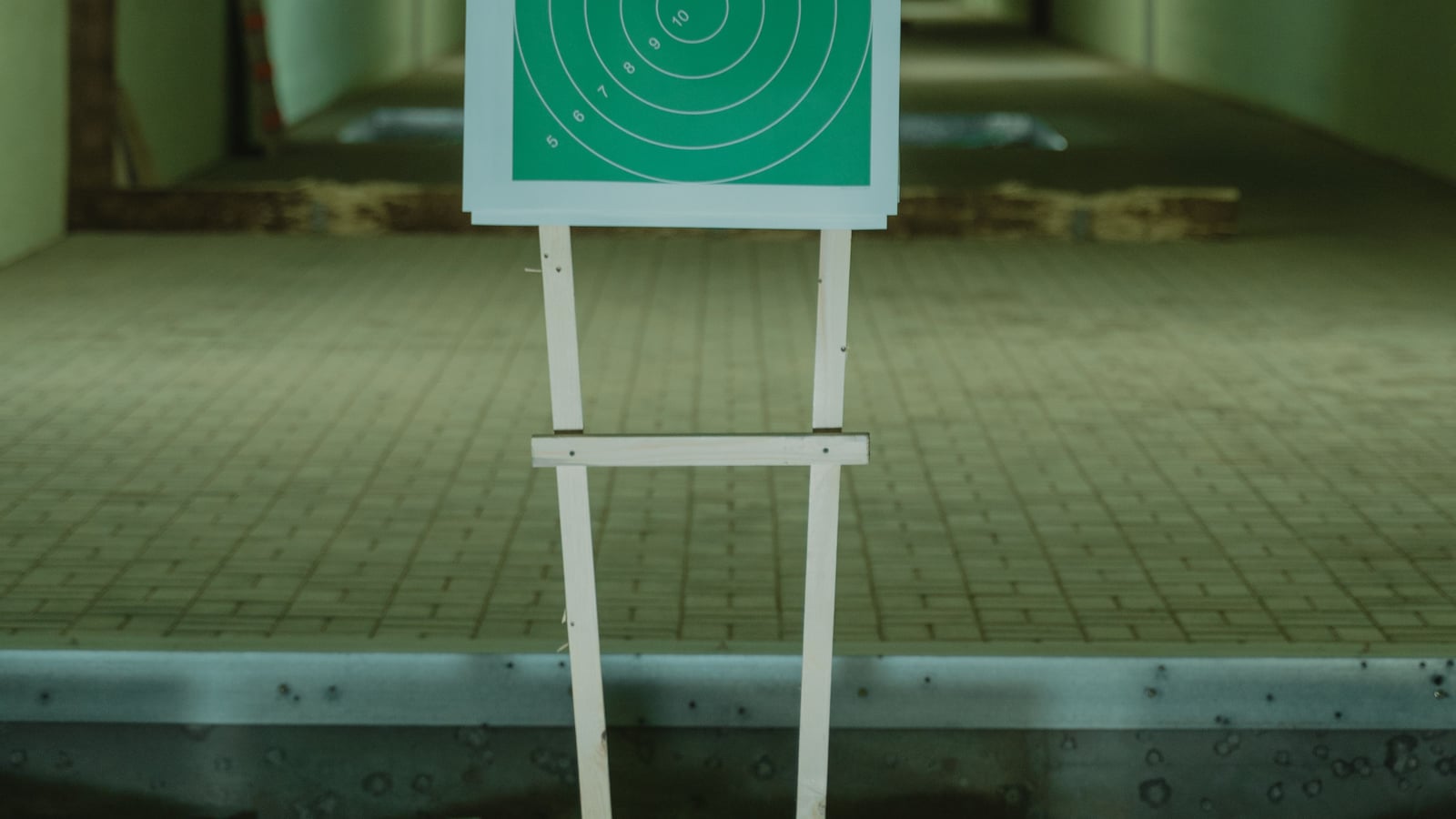
One point deserves clarifying, since it’s often misunderstood outside the community: shooting’s Olympic presence has only ever involved events against inert targets, whether paper targets with concentric rings or clay targets in shotgun shooting. Olympic sport shooting, like civilian sport shooting in general, has strictly nothing to do with tactical or combat use — it’s a discipline of precision and technical mastery, comparable in spirit to archery or fencing.
The selection of French shooters for successive Olympic deadlines has relied, over the decades, on an increasingly rigorous national ranking system, with performance minimums to be reached in official competition before any selection. This ranking system, specific to each discipline, remains today one of the pillars of how the federation identifies shooters capable of representing France internationally.
Belonging to the Olympic movement has also had a less visible but equally important consequence: it forced the French federation into permanent dialogue with the international bodies that set the technical rules for the various events. Allowed caliber, shooting distance, target format, time allotted — each of these parameters is defined at international level before being adopted into national rules, which ensures consistency between club practice and the standards of major competitions.
This international influence doesn’t erase French specificities, though. Certain disciplines practiced in France, notably some historical events or certain sport shooting speed formats, aren’t part of the Olympic program but have their own international bodies and their own world championships, in which the French federation also takes part through its own national selections.
Multiple disciplines gathered under one banner
One particularity of the French shooting federation is that it doesn’t cover a single discipline but a broad family of practices very different from one another. Rifle and pistol shooting at paper targets at various distances, clay target shooting, sport shooting speed events on cardboard or metal targets, and historical disciplines using period firearms each reproduce a distinct technical and cultural world.
This diversity was built up gradually, with the federation integrating new disciplines over the decades as they developed in France, often driven by pioneering clubs or shooters returning from international competitions with the desire to develop a practice still uncommon on French soil.
Sport shooting speed events on cardboard or metal targets illustrate this dynamic of gradual integration well: born in a civilian sporting context abroad, this dynamic type of practice developed in France more recently than the historical precision disciplines, before being fully integrated into the federal fold with its own safety rules and its own competition circuits.
This architecture of multiple disciplines has a concrete advantage for you as a license holder: a single federal license potentially gives you access, depending on the clubs and equipment available, to a wide range of practices, from the most deliberate precision shooting on paper targets to more dynamic formats, without changing organization or administrative status.
Historical disciplines using period firearms occupy a particular place in this landscape. They bring together enthusiasts attached to reproducing period techniques and equipment, within a framework strictly regulated by the same federation as the modern Olympic disciplines. This coexistence of heritage practice and contemporary elite-level practice is a fairly rare richness among French sports federations.
Clay target shooting also deserves to be distinguished from paper-target disciplines, both technically and culturally. This practice, which consists of hitting clay targets thrown into the air with a shotgun, developed alongside the static precision disciplines, with its own ecosystem of clubs, often set up outdoors on large grounds, unlike the covered ranges used for paper-target shooting.
Each discipline has also developed its own club culture, its own competition rituals, and sometimes even its own technical vocabulary. A shooter coming from a precision discipline who discovers sport shooting speed events on cardboard or metal targets often has to relearn a good part of their reflexes, since the demands in terms of execution speed and stress management differ so much from one format to another.
The evolution of the club network across the country
The territorial network of clubs affiliated with the federation was built up gradually, with a distribution that reflects both the industrial and rural history of certain regions, the presence of shooting ranges inherited from old practices, and more recent demographic dynamics around major urban areas.
Some regions have a particularly old and well-established density of clubs, often inherited from local shooting traditions that predate even the national federation itself. Other areas saw their network densify later, as new ranges were created or existing facilities converted.
Without putting forward a precise figure for the exact number of clubs at any given moment — a number that varies year to year with the creation, merger, and closure of local structures — one can say without risk of error that the network has developed and professionalized considerably compared to its beginnings, with infrastructure that today meets much stricter safety and certification standards than at the movement’s origin.
This densification has come with a diversification of the audiences welcomed. The shooting club is no longer seen only as a place reserved for experienced practitioners; many structures today develop sessions dedicated to introducing newcomers, aimed at new audiences discovering the discipline with no shooting background in their circle.
The infrastructure itself has changed a great deal. The first ranges of the early federal movement were often rudimentary facilities, sometimes outdoors and dependent on weather conditions, with safety measures very far from today’s standards. Building and renovating covered ranges, equipped with ventilation, lighting, and bullet-trap systems that meet modern standards, has stretched over several decades and continues today.
This modernization of infrastructure comes at a cost that many clubs cover through a mix of membership fees, local grants, and volunteer work by their members. It also explains why some clubs, lacking sufficient means to bring old facilities up to standard, have sometimes had to close or merge with better-equipped neighboring structures — a phenomenon that contributes to the constant evolution of the total number of affiliated clubs.
The split between covered ranges for precision shooting and outdoor grounds for clay target shooting also illustrates another reality of the federal network: the same territory can host several very different types of infrastructure, each meeting the specific requirements of a family of disciplines, which further complicates managing the network uniformly at the national level.
The growth of licensed membership over time
The number of federation license holders has, over the long run, followed a broadly upward trend, with variations tied to successive historical, economic, and regulatory contexts. As with many sports federations, some periods saw more marked growth, others stagnation or a slight decline, without a century of evolution reducing to a simple, continuous curve.
Rather than putting forward a precise number of license holders at a given date — a figure that varies from one season to the next and that it would be dishonest to invent with false precision — it’s more accurate to say that the French shooting federation is today among the national sports federations with a significant number of practitioners, structured around a network of active clubs across the entire country.
Several factors have influenced this evolution over time: changes in firearms regulation and ownership, the social image of the practice depending on the era, the rise of new dynamic disciplines attracting a different audience than the historical precision practices, and more recently a growing interest in technical, demanding leisure activities.
An experienced instructor often observes that the profile of new license holders has diversified over the decades: more women, a wider age range, and motivations ranging from serious competition to simply wanting a technical and rigorous weekend hobby.
Some periods saw an influx of new practitioners drawn specifically to the dynamic disciplines on cardboard or metal targets, whose later development in France coincided with a partial rejuvenation of the licensed population in certain clubs. This shouldn’t obscure the fact that the historical precision disciplines also retain a loyal base of practitioners, often engaged in the sport over several consecutive decades.
The evolution of regulations around acquiring and owning firearms has also played a non-negligible role in the trajectory of license numbers. Every tightening or loosening of the legal framework has had repercussions on the practice’s appeal to new audiences, without this relationship reducing to a simple mechanical link: other social and economic factors always play a role alongside it.
It’s also worth noting that retaining existing license holders weighs at least as much as recruiting new practitioners in a club’s demographic health. A club that manages to turn beginners into regular shooters over several years builds a solid base, while a club that only attracts occasional practitioners struggles to stabilize its numbers over time, whatever the apparent dynamism of its introductory sessions.
The federation’s role in regulatory oversight
Beyond organizing competitions, the French shooting federation plays a central role in the regulatory oversight of civilian practice. It notably intervenes within the authorization scheme applicable to Category B firearms, subject to prefectural authorization, by issuing the certificates needed by licensed shooters who can demonstrate regular practice at a club.
This interface role between the shooter, the club, and the prefectural administration is an important specificity of the French system, one that sets the federation apart from a simple sports competition organizer. It participates directly in the legal framework that allows a civilian practitioner to acquire and own certain categories of firearms in a strictly sporting context.
The federation also oversees the training of new shooters, with validated introductory pathways before access to independent practice, as well as the ongoing training of technical staff and referees who keep competitions running at every level, from the local club up to national events.
This regulatory dimension has strengthened over the decades, as the French legal framework around firearms has become more precise. The federation has had to, like any structure of this kind, continuously adapt its internal procedures to successive legislative changes, which explains why the administrative steps of a license holder today have little in common with those of a shooter several decades ago.
The regime for Category C firearms, subject to simple declaration, concerns the federal certificate less directly than that of Category B, but the federation remains nonetheless a reference point for shooters practicing with this type of equipment, notably in certain historical disciplines. As for Category D firearms, freely sold or subject to simple registration depending on the model, such as low-power air guns, they remain the most common entry point for discovering the discipline without heavy prior steps.
This gradation between Category A, banned for private individuals, Category B subject to authorization, Category C subject to declaration, and Category D freely sold or subject to simple registration, structures the entirety of the federation’s regulatory thinking. Each sporting discipline is built around one or more types of equipment falling into different categories, which explains why administrative steps vary noticeably from one practice to another even within the federal movement itself.
The federation also acts as an information relay for its clubs and license holders whenever regulations change, whether it’s new obligations for securing equipment at home, changes to authorization renewal procedures, or adjustments to the conditions for transporting firearms between home and the range. This relay function, less visible than organizing competitions, is nonetheless essential to the daily life of every license holder.
Training coaches, referees, and instructors
A century-old federation doesn’t hold together just through its competitions, but through a fabric of volunteers and professionals who train, referee, and coach on a daily basis. The French system for training shooting instructors has structured itself gradually, with distinct qualification levels depending on the responsibilities entrusted: coaching beginners, training experienced shooters, or overseeing elite-level competition.
This network of trained staff is what allows a beginner to be welcomed safely from their very first session, with coaching that knows precisely which safety protocols to enforce, discipline by discipline. An experienced instructor today fits into a chain of transmission that has existed since the federation’s beginnings, even if teaching methods have evolved considerably since then.
Refereeing follows a similar logic: every official competition, from departmental to national level, relies on referees trained and certified by the federation, who guarantee compliance with technical rules and safety conditions during events. This function, often little seen by the public, is essential to the smooth running of any competition organized under the federation’s umbrella.
This gradual professionalization of coaching reflects a general trend in French sport: moving from largely informal operations, carried by local goodwill, to a system of recognized qualifications and mandatory ongoing training to hold certain positions.
Instructor training today includes modules that go well beyond shooting technique alone: pedagogy applied to varied audiences, group management, in-depth knowledge of the safety rules specific to each discipline, and awareness of welcoming specific audiences such as complete beginners or young practitioners. This comprehensive approach to training contrasts with the federation’s early days, when knowledge transfer relied mostly on the direct experience of an experienced shooter passed on to a novice.
The federation’s regional bodies play an important role in this training chain, organizing qualification sessions locally that would be difficult to centralize solely at the national level. This territorial deconcentration allows a greater number of club volunteers to access training without traveling long distances, which has helped increase the number of qualified staff across the whole country.
Refereeing too has seen growing specialization, with differentiated qualifications depending on the discipline and the level of competitions overseen. A referee certified for departmental precision shooting competitions doesn’t necessarily hold the same qualifications as one who officiates at national clay target or sport shooting speed competitions, each discipline having its own regulatory subtleties to master.
Sport shooting and the place of women in the discipline
The history of women’s presence in French sport shooting follows a long, gradual trajectory rather than a clean break at a specific date. As with many sporting disciplines, women’s participation stayed a minority for a long time before seeing more marked growth from the second half of the twentieth century onward.
This evolution came alongside growing recognition of women’s competitions and rankings across the various federal disciplines, with women shooters active today at every level, from the local club up to the highest international competitions. A regional club champion illustrates this normalization well: her presence on a firing line in competition today is nothing exceptional, whereas it might have been seen differently several decades ago.
Without putting forward a precise proportion of female license holders at any given moment, one can say that the share of women in federal practice has followed an upward trend over the long term, driven both by the general evolution of women’s place in sport and by specific initiatives from certain clubs to open up the practice further.
This dynamic remains a development priority identified by the federation today, with a stated desire to keep broadening the diversity of practitioners, beyond the sometimes outdated image of a sport perceived as exclusively male.
On the competitive results front, French women shooters have long contributed to the federation’s international performances, across several Olympic and non-Olympic disciplines. Without attributing a precise record to any named individual, one can say that women’s presence in French delegations at major international competitions has become solidly established over the decades, as more and more women shooters reached the discipline’s highest levels.
Some clubs have developed specific initiatives to lower the cultural barriers that could still discourage women from walking through the door of a shooting range, whether through dedicated introductory sessions or communication that better highlights diversity among practitioners. These local initiatives, driven by individual clubs rather than by a single national policy, illustrate well how cultural change in a sports federation often builds from the ground up toward the national level rather than the other way around.
The question of gender balance goes beyond competition participation alone, though. It also concerns the presence of women in coaching, club management, and refereeing roles, positions where representation has also progressed over the long term, even if it remains, as with many sports federations, an ongoing area the national structure continues to follow closely.
The major technological changes that have shaped the discipline
The federation’s history is also that of the evolution of the equipment used by shooters. Firearms, ammunition, and sighting equipment have undergone profound transformations over a century, with direct consequences for the rules and for the homologated records across the various disciplines.
The appearance of new categories of equipment, whether refined optical sighting equipment or new generations of air guns, has regularly forced the federation to update its technical rules to regulate what’s allowed in competition, discipline by discipline. This continuous adaptation is a constant throughout federal history, not a recent phenomenon.
Clay target shooting illustrates this material evolution well, with clay-throwing equipment and cartridges that have evolved considerably since the discipline’s beginnings, just as speed shooting on cardboard or metal targets has seen its equipment become more sophisticated across generations of competitors.
This technical evolution is always accompanied by a safety framework that itself remains constant in its fundamental principles even as equipment changes. A modern firearm’s trigger can have a very different travel and weight from one several decades old, but the basic safety rules around its use have never varied.
Ammunition itself has undergone notable changes, with continuous improvement in manufacturing consistency and ballistic stability, two parameters that matter enormously in precision disciplines where every tiny deviation shows up directly on the target. This gradual improvement in equipment has helped push homologated performance levels forward across several disciplines over the decades.
The arrival of new materials in firearm manufacturing, lighter or offering better vibration absorption, has also transformed the comfort and endurance of shooters during long training or competition sessions. What once required specific physical preparation to hold out through a demanding event is now made easier by better-designed equipment, without reducing the technical demands of the discipline itself.
Digitalization has also reached sport shooting in recent decades, through training tracking tools, electronic shot analysis systems, and digital platforms that are gradually replacing some of the paper logbooks traditionally kept by shooters. This evolution fits into a broader movement of digitalizing athletic tracking that affects practically every organized discipline today.
The federation’s current role in organizing the sport
Today, the French shooting federation holds a structuring position at several levels. It organizes the calendar of official competitions, from departmental level up to national championships, including selections for international competitions. It also represents France before international sport shooting bodies, in both Olympic and non-Olympic frameworks depending on the discipline.
On the administrative side, it remains the central point of contact for issuing licenses, affiliating clubs, and all procedures related to the regulated practice of civilian sport shooting. This centralization ensures consistent treatment across regions, even if timelines and certain practical details can vary locally depending on the prefecture and the club.
The federation also plays a permanent monitoring and regulatory adaptation role, following French and European legislative developments around firearms and adjusting its own internal procedures accordingly. It also carries out development initiatives, notably through introductory programs aimed at bringing the discipline to audiences who wouldn’t otherwise naturally have had access to it.
Finally, it continues to oversee the training pathway for technical staff, instructors, and referees who keep the local associative fabric alive. It’s this architecture — at once sporting, administrative, and educational — that explains why your annual license fits into a system far larger than a simple club subscription.
The federation also takes on a role of collective representation before public authorities when regulatory changes are being discussed. It carries the voice of clubs and license holders in consultations touching on the sporting practice of shooting, with the goal of preserving a framework that allows both public safety and the continuity of a legitimate, well-regulated civilian sporting practice.
Internationally, beyond the Olympic dimension already discussed, the federation maintains ongoing relationships with the bodies governing each of the disciplines it oversees, whether precision shooting, clay target shooting, sport shooting speed, or historical disciplines. This diversity of international counterparts reflects the very diversity of practices gathered under a single national banner.
For a license holder today, this architecture translates concretely into a system where the club remains the local level, the league or regional committee the intermediate level, and the national federation the level that guarantees overall consistency, represents the discipline internationally, and serves as the interface with the state. This cascading organization, which has stabilized over the decades, is a direct legacy of the path traveled since the first local shooting societies of the nineteenth century.
FAQ
Q: Since when has sport shooting been an Olympic discipline? A: Sport shooting has been part of the Olympic Games since their very first modern edition in 1896. This long history has strongly shaped how the practice was structured in France as in other participating countries.
Q: Why does the federation issue certificates related to Category B firearms? A: Because owning Category B firearms requires prefectural authorization, and regular practice at a club affiliated with the federation is one of the pieces of evidence taken into account in that process. The federation thus plays an interface role between the licensed shooter and the administration.
Q: Does the federation only cover precision shooting on paper targets? A: No, it covers a wide family of disciplines: precision on paper targets, clay target shooting, speed shooting on cardboard or metal targets, as well as historical disciplines using period firearms.
Q: Has the number of clubs and license holders varied much over time? A: Yes, with a broadly upward trend over the long run, but with variations depending on historical, economic, and regulatory periods. There’s no simple, continuous curve over more than a century of existence.
Q: Has sport shooting always been practiced the same way? A: No, the equipment, technical rules, and audiences have changed a great deal. However, the fundamental safety principles have remained constant throughout the discipline’s history.
Q: What role does the federation play in training beginner shooters? A: It validates the introductory pathways followed at the club before access to independent practice, and oversees the training of the instructors who run these pathways. It’s this network of trained staff that guarantees a safe welcome from the very first session.