
Your heart is not a simple metronome
Every heartbeat produces a micro shockwave that travels through your whole body. It crosses your torso, your shoulders, your arms, and ends up echoing all the way to the barrel of your gun. On a rifle held standing, this wave can be enough to shift the aiming point by several millimeters at the moment of the shot.
This isn’t an abstract sensation. If you put your eye to a magnifying scope after exertion, you literally see the reticle “pulse” in time with your heartbeat. This movement is called cardio-ballistic oscillation, and it affects every shooter, without exception.
The good news is that this phenomenon is predictable. Unlike random muscle tremor or wind that shifts without warning, your heart beats on a regular cycle. And a regular cycle can be anticipated.
That’s exactly what top-level shooters have been doing for decades, without necessarily formalizing it: they learn to release their shot in the troughs of the cycle, those fractions of a second when the pulse wave is weakest.
What’s really happening in your body
Your heart doesn’t beat like a perfect metronome. It speeds up and slows down constantly, in response to your breathing, your nervous system, and your stress state. This beat-to-beat variation has a scientific name: heart rate variability, or HRV.
High HRV means your autonomic nervous system moves flexibly between activation and recovery. Low HRV with a very regular rhythm can, on the contrary, signal more sustained stress activation, where the body stays permanently “on edge.”
For precision shooting, what matters is not just heart rate in beats per minute, but the amplitude of the pressure wave each beat generates in the tissue. A heart that beats more slowly generally produces more spaced-out waves, with longer calm intervals between two impulses.
This is why resting heart rate has become an indicator tracked by many serious shooters: the lower it is, the longer and more usable the stability windows between two beats.
That doesn’t mean you should try to slow your heart down at all costs during a string. What matters most is understanding your own rhythm, knowing where these windows sit, and learning to use them rather than simply endure them.
The cardiac cycle, second by second
A heartbeat breaks down into two main phases: systole, where the heart contracts and ejects blood, and diastole, where it fills again. Mechanically, most of the vibratory disturbance felt in the arms occurs just after systole, when the pressure wave travels through the arteries.
After this pulse, there is a longer period of relative stability before the next beat. This is the window that trained shooters try to identify and use for the release of the shot.
At a resting heart rate of around 60 beats per minute, the full cycle lasts about one second. That leaves real room to time your breathing and trigger squeeze to the right moment, provided you’ve worked on that synchronization in training.
The higher the heart rate climbs, whether from competition stress or prior physical exertion, the tighter the cycles become and the shorter the calm windows get. This is one of the reasons stress management is as much a part of precision shooting performance as aiming technique.
Why position changes everything
The impact of the pulse is not the same across disciplines and shooting positions. In prone rifle shooting, the body is largely supported by the ground and the bipod, which mechanically reduces the amplitude of movement transmitted to the barrel.
In standing position, particularly with a pistol or standing rifle, the arm supporting the weapon has no external support at all. The pulse wave then travels up from the heart, through the shoulder, the arm, and reaches the barrel with much more visible amplitude in the reticle or front sight.
This is why sensitivity to heart rate is a particularly closely watched subject in Olympic shooting standing disciplines, where every tenth of a millimeter of drift at the barrel translates into a measurable gap on a distant target.
Archery, although strictly outside the field of firearms, shares exactly the same physiological problem: the stability of the bow and the extended arm also depends on where the release falls in the cardiac cycle. It’s one of the natural bridges between the two precision disciplines.
In rapid-fire pistol or dynamic disciplines, the question arises differently. The time available to time the shot to a cardiac trough is often too short given the time constraint, so priority goes more toward consistency of movement than fine cardiac synchronization.
Techniques used by experienced shooters
An experienced club shooter practicing standing precision disciplines almost always develops, with experience, a kind of intuition for the right moment to release the shot. This intuition can be structured and accelerated by conscious work on breathing and listening to the pulse.
The first technique consists of feeling your own pulse even before raising the weapon. Some shooters place a hand on their chest or wrist for a few seconds in the preparation position, simply to resync their attention on their current heart rhythm rather than a theoretical one.
The second, better-known technique consists of synchronizing the release with the natural breath-hold phase after a half exhale. This respiratory pause often coincides with a transient slowdown in heart rate, which combines both sources of stability into a single window.
The third, more refined approach consists of working the progressive pressure on the trigger so that it finishes precisely in a trough of the cycle, rather than passively waiting for that trough before acting. The trigger action then becomes a variable adjustable in real time, rather than a simple fixed release.
A regional champion preparing for an important competition will often work this synchronization dry, without ammunition, simply observing the movement of the reticle or front sight over the course of the beats. This dry-fire training makes it possible to learn to read your own body without the pressure of the result on target.
The role of breathing in the equation
Breathing and heart rate are intimately linked through a phenomenon called respiratory sinus arrhythmia. Simply put, heart rate naturally tends to accelerate slightly on inhalation and slow down on exhalation.
This is the physiological property that most precision shooting methods exploit when they recommend firing at the end of exhalation, on a natural pause before the next inhale. This moment combines a slower heart with mechanical stillness of the torso.
Slow, controlled breathing before a string, with exhalations longer than inhalations, tends to reinforce this effect and widen the available stability windows. This is one of the reasons breathing work is part of the preparation routines of many top-level shooters, long before they even touch the weapon.
Conversely, short, high breathing, typical of acute stress, reduces this natural slowdown and makes calm windows rarer and shorter. Learning to breathe from the belly rather than the upper chest is often the first technical correction suggested to a shooter who reports a front sight “that moves too much” in standing position.
Stress, adrenaline, and drift in the movement
In competition, stress acts as a direct amplifier of everything just described. The adrenaline surge raises heart rate, tightens the cycles, and makes every pulse wave more pronounced in the arm holding the weapon.
This phenomenon largely explains why some shooters who group perfectly in training see their results degrade in a match, with no apparent technical change. The movement is identical, but the physiological ground on which it’s executed has changed entirely.
An experienced instructor generally insists on one point: trying to completely eliminate stress is a counterproductive illusion. The realistic goal is rather to learn to shoot correctly with a faster-beating heart, accepting shorter stability windows and adapting the timing of the release accordingly.
Mental work, repeating pressure situations in training, and stable pre-shot routines all help limit the amplitude of this physiological response. This is not a subject separate from shooting technique: it’s a full component of performance.
What physical training and the right tools can change
A shooter’s general cardiovascular condition directly influences their resting heart rate and their ability to return to calm after exertion or a stress spike. A trained heart tends to beat more slowly at rest, which mechanically lengthens the stability windows between two beats.
Regular, even moderate, cardiovascular endurance work is part of the physical preparation routines of many top-level shooters, even though precision shooting is not, strictly speaking, an endurance sport. The goal is not cardiac performance itself, but its indirect effects on shooting stability.
This work can take many different forms: regular brisk walking, cycling, swimming, or running at a moderate pace, depending on individual preferences and physical constraints. There’s no single mandated protocol, and consistency over time counts far more than the occasional intensity of a single session.
Strengthening the back, shoulders, and core plays a complementary role: the more economically posture is held, the less parasitic muscle tremor gets added to the cardiac oscillation, muddying the reading of movement.
Fatigue, conversely, degrades both parameters at once. A tired shooter often has a higher heart rate for the same effort, and a less stable posture that amplifies every pulse wave. This is why managing sleep and recovery before a competition is not a minor detail.
You don’t need scientific equipment to start working on this dimension. The first tool is simply careful observation of the movement of your reticle or front sight at rest, weapon mounted, without trying to fire.
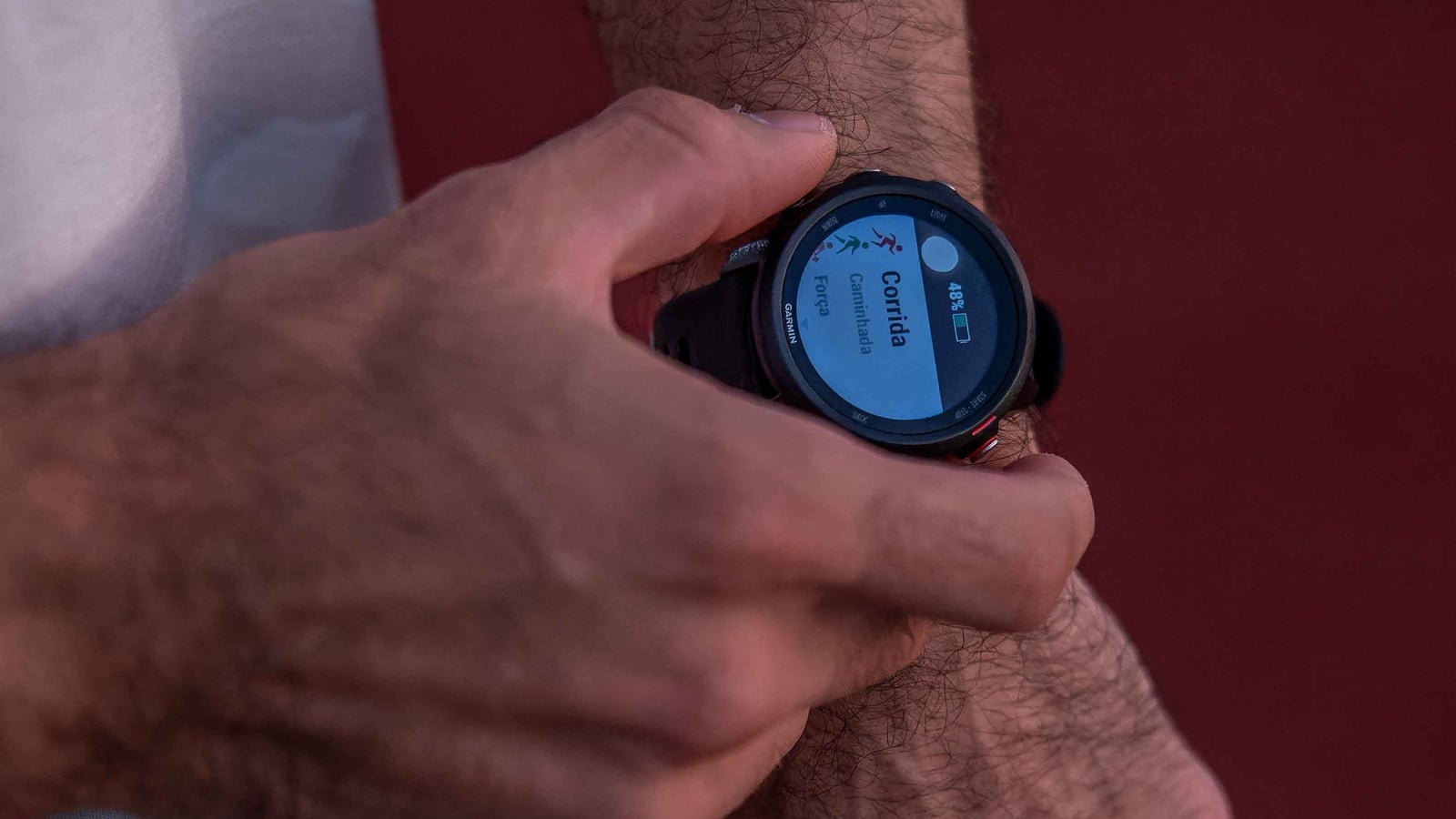
Some shooters use a consumer heart rate monitor during their dry-fire sessions, not to hit a precise number, but to start associating a bodily feeling with an approximate frequency. This helps recognize your own state without having to consciously think about it in a match.
Cardiac coherence, a rhythmic breathing technique popularized well beyond sport, is used by some shooters in the preparation phase before a string or a competition. It aims to stabilize heart rate and reduce stress-related variability, rather than to create usable troughs during the shooting itself.
The most important thing remains the training log. Noting your sensations, perceived stress level, and quality of the release after each string lets you cross-reference this information with the groupings obtained, and start identifying your own physiological patterns over time.
A digital shooting log makes this approach far easier than a simple paper notebook, because it lets you quickly find a specific session, compare several periods against each other, and spot trends that would go unnoticed if the notes stayed scattered across different pages or got lost from one season to the next.
Differences between disciplines: rifle, pistol, crossbow
Standing rifle is probably the discipline where the pulse wave is felt most, because of the significant lever arm between the shoulder and the muzzle. A shooter moving from prone to standing often rediscovers this phenomenon, having barely noticed it lying flat.
With pistol, the problem arises differently because the weapon is held at arm’s length, with no support on the shoulder or body. The whole arm acts as an amplifier of the movement transmitted from the torso, making pulse management even more decisive than with rifle for shooters aiming for high precision at 10 or 25 meters.
Precision crossbow, a less mediatized discipline but well present in competition, shares much of this problem with standing rifle. The stability of the crossbow’s body depends directly on the quality of the support and the management of the cardiac cycle, exactly as with a rifle held without external support.
In clay target shooting, the dynamic is completely different since the movement is fast and the shooter tracks a moving target rather than aiming at a fixed, still point. Heart rate plays a role there, but more on the general fluidity of movement and stress management than on fine synchronization with a beat trough.
This diversity of contexts explains why there is no single universal “right method.” Each discipline imposes its own time and posture constraints, and the place heart rate management can occupy must adapt to these constraints rather than being applied identically everywhere.
Building a pre-shot routine that integrates physiology
An effective pre-shot routine isn’t limited to aiming technique: it also integrates a short, repeatable physiological preparation. The idea is to create a fixed sequence that prepares the body the same way for every shot, to reduce variability from one attempt to the next.
This routine can start with a few slow, deep breaths in the preparation position, even before mounting the weapon. The goal is to bring down a heart rate potentially elevated by the walk to the firing point, the stress of waiting, or the excitement of competition.
Next comes mounting the weapon itself, followed by a period of observing the movement of the front sight or reticle, without immediate intent to fire. This time serves to assess the state of the moment: does the movement seem wide or contained, fast or slow, regular or erratic.
The last phase is the release itself, where pressure on the trigger accelerates slightly at the moment identified as most stable. This phase must stay short, because too prolonged an aiming time tires the stabilizing muscles and degrades the quality of the hold, which cancels out the benefits of good cardiac synchronization.
Repeating this routine identically for every shot, including in training, allows the body to associate this sequence with a state of relative calm. This is a gradual learning mechanism that takes hundreds of repetitions before becoming truly reliable under pressure.
Logging your sessions in a digital shooting notebook lets you put this heart rate work in perspective against the actual results obtained on target. Without this tracking, it’s easy to rely on a one-off impression rather than a trend observed over several weeks or months.
Noting, session after session, elements like felt fatigue level, stress context, or time of day lets useful correlations emerge. Some shooters discover, for example, that they group better late in the day than early morning, or the reverse, without aiming technique having changed between the two moments.
This kind of structured observation is more reliable than feeling alone, because memory tends to retain mostly the memorable sessions, good or bad, and smooth out the average ones. A written history corrects this natural bias and gives a more honest picture of progress.
The idea isn’t to turn every session into a scientific protocol, but to give yourself the means to spot, over time, the conditions under which your management of heart rate and breathing works best. This is groundwork that pays off mainly over several seasons of practice.
What age, experience, and health change
Resting heart rate and the way the body responds to stress evolve naturally with age. A shooter who has practiced for a long time often notices that their pulse management at the firing point has improved over the years, without this necessarily being a major physiological change.
A good part of this improvement comes from experience rather than the body itself. A seasoned shooter has simply spent more time observing their own reactions in competition, and has ended up automating part of the stress management that previously required conscious attention.
With age, heart rate variability tends to decrease on average, which can reduce some sudden pulse spikes but also make the cardiovascular system a little less reactive in its ability to return quickly to calm after a stress spike. These changes are highly variable from one person to another and depend largely on overall physical activity level.
A young shooter discovering competition is often the one who feels stress-related heart acceleration most intensely, simply because they haven’t yet accumulated enough similar situations for their body to recognize them as familiar. This feeling gradually fades, not because the heart fundamentally changes, but because the context becomes less threatening through repetition.
This is good news for any beginning shooter: excessive sensitivity to competition stress is not a fixed trait. It can be worked on and reduced through gradual exposure to increasing pressure situations, at the club level then in competition.
Everything described so far concerns the normal physiology of a healthy heart. If you feel unusual palpitations, chest pain, dizziness, or disproportionate shortness of breath during your sessions, this is no longer a shooting technique topic but a full medical one.
Certain medication treatments, notably beta-blockers, act directly on heart rate and on the way the body responds to stress. Their use in a competitive setting is governed by the anti-doping regulations specific to each federation, and this subject falls exclusively under medical advice, not shooting technique advice.
If you notice a clear and lasting change in your resting heart rate, abnormal fatigue, or symptoms outside what you know of your own body, the right approach is to talk to a doctor rather than trying to compensate with a shooting technique. The cardiac physiology described in this article assumes a healthy heart; it never replaces medical advice.
A shooter resuming sporting activity after a long break, or starting shooting at a more advanced age, has every interest in checking in with their doctor before intensifying their sessions, as with any physical activity. Precision shooting looks static from the outside, but it genuinely engages the cardiovascular system, if only through the stress of competition and the prolonged holding of demanding postures.
Diet, hydration, stimulants, and equipment
What you consume before a session or a competition directly influences your heart rate and its variability. Caffeine, for example, is a stimulant that raises heart rate and can heighten the perception of the pulse in the arm holding the weapon, particularly in people not used to consuming it.
Some shooters voluntarily cut back on coffee or energy drinks in the hours before a competition, particularly for standing disciplines where fine arm stability is decisive. Others, long accustomed to their daily dose, prefer to keep their usual routine rather than change a variable the day before a match, which could further disrupt their overall balance.
Dehydration, even mild, tends to raise heart rate to compensate for a reduction in circulating blood volume. Arriving at a firing point in the middle of summer without having hydrated properly in the preceding hours can therefore degrade the stability of the movement, independent of any question of technique.
Prolonged fasting or too heavy a meal just before a session can also disrupt the balance of the autonomic nervous system and therefore the regularity of heart rate. The goal is not to follow a strict diet for shooting, but simply to arrive at the firing point in a stable physiological state, neither starving nor mid-digestion.
A light, easily digestible snack, taken one or two hours before a competition that spans a whole day, often helps avoid the energy dip that sometimes accompanies too long a fast between two strings.
Sleep the night before plays an equally important role, since lack of sleep generally raises resting heart rate and reduces the body’s ability to return to calm after a stress spike. Good competition preparation often starts the night before, well before arriving at the firing point.
Alcohol also deserves a separate mention, beyond any regulation specific to shooting ranges. Even at a distance from a session, it disrupts sleep quality and can leave a slightly elevated heart rate the next day, which doesn’t help in recovering a stable physiological state for a competition that really counts.
Certain equipment adjustments can reduce the visible impact of the pulse without ever eliminating it completely. A stock or grip well fitted to the shooter’s morphology distributes contact points better and limits the micro-tensions that add to the natural cardiac oscillation.
Lower optical magnification in training can also help a beginning shooter avoid focusing excessively on a reticle movement they perceive as uncontrollable. Seeing a movement amplified by a strong scope without understanding its physiological origin can generate needless anxiety, which itself accelerates heart rate and worsens the phenomenon.
The weight and overall balance of the weapon also play a role: a heavier or better-balanced weapon tends to dampen the small oscillations transmitted from the body more, whereas a very light weapon often makes them more visible in the movement of the barrel. This equipment choice should remain a secondary adjustment, not a replacement for physiological preparation itself.
No equipment adjustment, however well thought out, removes the need to work on breathing, physical condition, and stress management. Equipment can make the phenomenon more manageable or less visible, but the source of the movement is always the shooter’s body, not the weapon they’re holding.
An experienced instructor often reminds their students that changing equipment to “fix” a stability problem without first working on breathing and pulse management amounts to treating a symptom without addressing its real cause. It’s often an unnecessary expense that temporarily masks groundwork still to be done, without ever really resolving it over time.
Integrating this work into a multi-season progression, from club to competition
Heart rate management in shooting is not a skill worked on in a single session or even a single month. It’s a thread that runs through several seasons of practice, alongside classic technical work on aiming, posture, and trigger control.
A beginning shooter often has an interest in focusing first on the technical fundamentals, without immediately worrying about the fine placement of their release within the cardiac cycle. This dimension becomes truly relevant once posture, basic breathing, and trigger management are already well mastered.
Progressively, as groupings tighten and the margins for technical progress become finer, synchronization with heart rate takes on a more central role. It’s often at this stage that an experienced club shooter starts actively looking for gains in this area, having already exploited most of the purely technical progress.
This step-by-step progression avoids spreading yourself too thin across too many parameters at once. Adding fine pulse management before stabilizing the basics mainly risks needlessly complicating learning, without real benefit as long as the fundamentals aren’t acquired.
Over time, this work becomes one of the dimensions that distinguishes a merely correct shooter from one able to reproduce their best results under pressure, in a match, when everything hinges on a few tenths of a point. It’s also often the difference between a good club result and a result that holds up against stronger outside pressure.
Many shooters work well on their breathing and heart rate management during calm weekday sessions, alone at their usual firing point, then see this work partially collapse as soon as they find themselves back in the atmosphere of a club or a competition. This gap is normal and expected, not a sign that the method has failed.
The environment changes an enormous number of parameters at once: ambient noise, the presence of other shooters, the pressure of outside eyes, the stakes of the result. Any one of these elements alone can be enough to raise baseline heart rate, even before the shooter has started their string.
To reduce this gap, it’s useful to train regularly in conditions that at least somewhat approximate competition: in the presence of other shooters, with some background noise, or simulating a time or score constraint. This lets the body encounter a toned-down version of match stress well before the actual day, and gradually accustoms the cardiovascular system to it.
A club that regularly organizes internal matches or timed sessions does this service for its members without even formulating it explicitly in these terms. This is one of the reasons why regular club practice, beyond the sheer volume of rounds fired, genuinely contributes to managing stress and heart rate in real conditions.
Regularly taking part in friendly matches, even with no ranking stakes, exposes the body to a moderate version of competition stress. It’s often this repeated exposure, more than any isolated technique, that ends up making heart rate management almost automatic for an experienced club shooter, season after season.
Common mistakes to avoid
The first mistake is trying to force an artificial slowdown of the heart just before the shot, for example by holding your breath too long. This creates additional tension that degrades stability rather than improving it.
The second mistake is ignoring the subject entirely, considering that only aiming technique matters. Cardiac physiology acts whether you account for it or not; ignoring it doesn’t make it disappear, it simply deprives the shooter of an available lever for progress.
The third mistake, more subtle, consists of over-analyzing your pulse to the point of losing focus on aiming itself. Cardiac synchronization should remain a background setting, not a conscious obsession that interferes with the attention given to the front sight or reticle.
Finally, many beginning shooters confuse fatigue-related muscle tremor with cardiac oscillation. The two look similar visually in the barrel’s movement, but their solutions differ: rest and core work for one, rhythm and breathing management for the other.
One last mistake, rarer but very real, consists of blindly and uncritically copying a training partner’s precise breathing routine without adapting it to your own cardiac cycle. Every shooter has a different natural rhythm, and a routine that works perfectly for one may simply not match the physiological tempo of another, even at a comparable practice level.
FAQ
Q: Are all shooters equally affected by their pulse? A: No, the perceived amplitude depends on shooting position, physical condition, and individual sensitivity. Standing and arm’s-length disciplines are far more affected than prone or supported positions.
Q: Is cardiac coherence useful specifically for shooting? A: It can help stabilize overall heart rate and better manage competition stress. Its effect varies by person, so it’s better to test it in training over several weeks before fully relying on it in a match.
Q: Does competition stress cancel out all the work on heart rate? A: It makes it harder, since calm windows tighten as the heart speeds up. Regular training to shoot under pressure helps adapt to these shorter windows rather than making them disappear.
Q: Does this subject also concern dynamic disciplines like IPSC? A: Less directly, since the time available to time a shot to a cardiac trough is very limited there by the time constraint. Consistency of movement and overall stress management take priority there over fine synchronization.
Q: Can you really feel your pulse through the weapon? A: Yes, particularly in standing position with strong optical magnification, where the reticle’s movement in time with the heart becomes visible to many shooters once they know where to attentively watch their aiming point at rest.
Q: At what age should you start worrying about your heart rate for shooting? A: There’s no precise age: what matters is any abnormal change or any resumption of activity after a long break, which warrants medical advice before intensifying sessions. The physiology described here assumes a healthy heart, not a diagnosis.