
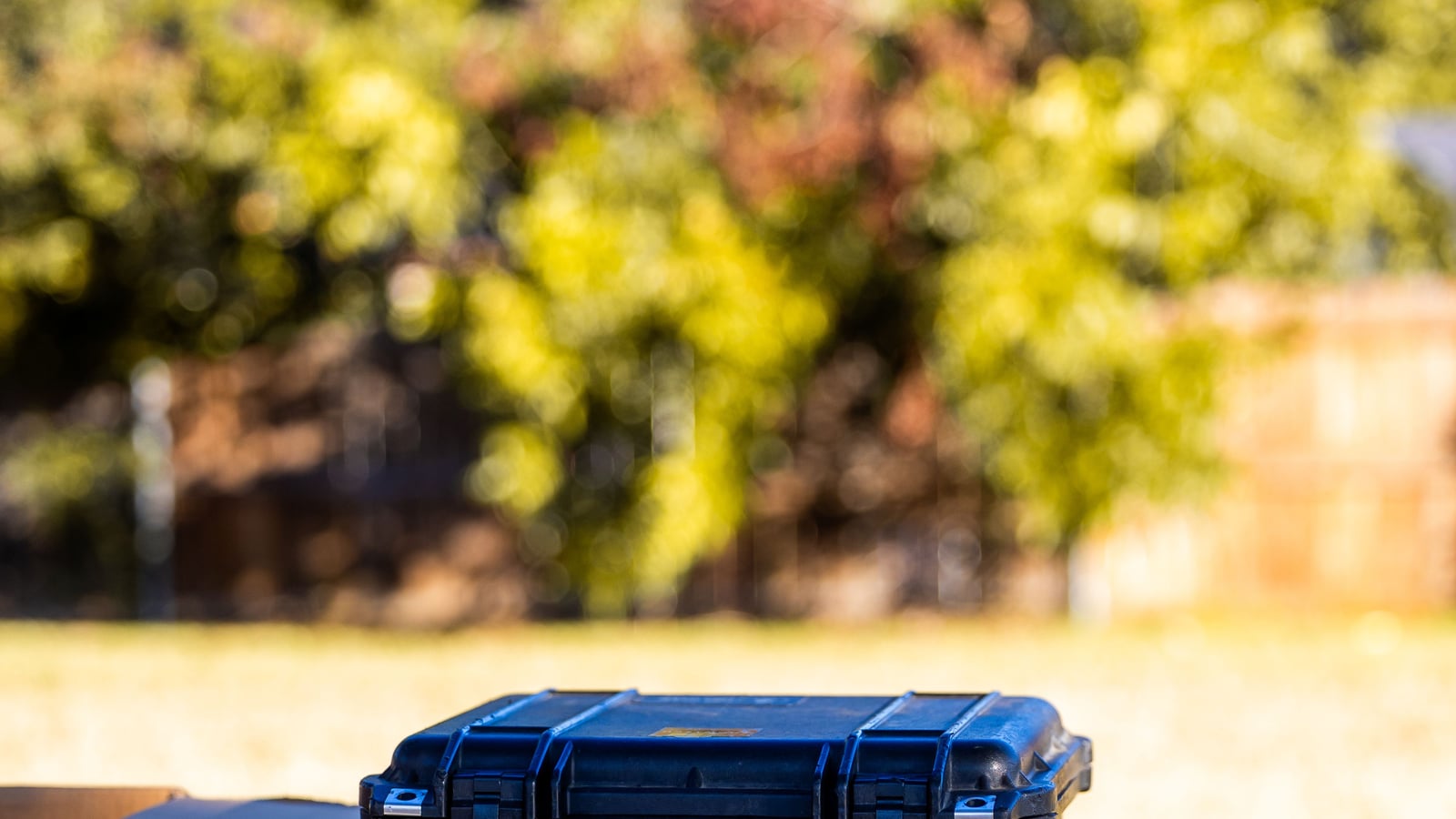
What the law actually says about transporting a firearm
Many shooters discover transport regulations the day a police officer stops them at a checkpoint. By then it’s too late to improvise. The rules are simple on paper, but their practical application is worth knowing before you hit the road for a range session or a competition.
The basic principle: a firearm being transported must be disassembled or rendered unfit for immediate use, and must not be loaded. Concretely, this means separating at least one essential mechanical component (bolt removed, barrel taken apart depending on the firearm type) or using an approved temporary neutralization device. The magazine, if there is one, must be removed and stored separately from the firearm.
The firearm must also be transported out of sight. That doesn’t mean “stashed under the seat” — it means inside a closed container, in the trunk or an area of the vehicle that keeps it from being visible from outside. A case sitting on the back seat, visible through the window, doesn’t meet this requirement even if it’s locked.
These obligations apply regardless of the firearm’s category: Category B (subject to authorization, like most handguns and semi-automatics), Category C (subject to declaration, certain hunting or bolt-action rifles), or Category D (freely sold or simply registered, low-power air guns, replicas, certain historic firearms). Category A firearms are prohibited for private individuals and are therefore never relevant to this question of civilian transport.
The reason for the trip matters too. Heading to a range, a competition, a gunsmith, or an authorized event falls within the normal scope of a possession permit or authorization. Outside of these justifiable trips, it’s best to avoid driving around with a firearm in the vehicle without a clear reason.
The notion of “not immediately operational” is worth understanding well, since it conditions everything else. It’s not about making the firearm permanently unusable, only about creating an intermediate step before it can fire: removing a part, separating the mechanism, locking a dedicated device. The lawmaker’s goal is simple — prevent a functional, loaded firearm from circulating on public roads unchecked.
This requirement has a direct practical consequence on choosing a case: the container needs to allow transporting the firearm in this disassembled state without the separated parts knocking together or getting lost. A case designed only for the assembled firearm sometimes forces you to improvise storage for the removed bolt or barrel, which is never satisfactory either for protection or for rigor.
The trip home from a shooting session deserves the same vigilance as the trip there. After a session, fatigue and the urge to get home quickly sometimes push people to reassemble the firearm “to save time” before storing it. That’s exactly the reflex to avoid: disassembly and compliant storage happen before leaving the firing line, not once you’ve reached the vehicle in a rush.
You also need to distinguish ordinary road transport from transport framed by a sporting event. During an organized competition, entry procedures and on-site firearm checks are usually specified by the organizer, but they never exempt you from following the rules of the road to get there. The two frameworks stack up; they don’t replace each other.
Why the case isn’t just an accessory
Many beginners see the case as a secondary expense after buying the firearm, ammunition, and hearing protection. That’s a mistaken perspective: the case is what concretely demonstrates compliance with the law on the road. Without it, or with a poorly chosen model, you’re exposed the moment you leave the parking lot.
It also protects your gear, which often cost far more than its container. A poorly secured scope, a Picatinny rail knocking against the trunk’s bodywork at every pothole, a barrel rubbing against a worn zipper: the damage accumulates silently over several months.
Finally, the case plays a discreet social role. Arriving at a club or competition with a container recognizable as a firearm case, rather than in a generic sports bag, reassures other shooters and range staff about your seriousness and compliance. It’s not a legal obligation in itself, but it’s a habit that quickly takes hold among experienced license holders.
A poor container also has a hidden cost in wasted time. A bag with no dedicated compartment forces you to rummage through magazines, tools, and earplugs before every session, needlessly extending setup on the firing line. A club instructor notices this quickly among beginners: those who arrive organized start shooting sooner and lose less time on side tasks.
There’s one last argument shooters often discover after the fact: resale value. A firearm that has traveled for years in a well-suited case, without scratches or dents on the frame or optic, sells better and faster than one visibly marked by careless transport. The container therefore also protects the material value of the gear, an aspect rarely highlighted but very real for anyone who regularly changes configuration.
Hard or soft: the real tradeoff
The first question isn’t “which one is best” but “what do I actually use it for.” A hard case and a soft bag meet different needs, and most experienced shooters end up owning both.
The hard case, generally made of injection-molded polymer with hinges and clip or padlock closures, offers maximum protection against impact and crushing. It’s particularly well suited to:
- Air or train travel, where crush resistance in a cargo hold or luggage compartment is decisive
- Home storage between outings, as a complement or alternative to a safe depending on the regulations that apply to your situation
- Firearms fitted with sensitive optics (scope, red dot) that are vulnerable to direct impact
- Trips where the case travels in a trunk shared with other luggage that could crush it
The soft bag, made of reinforced canvas or ballistic nylon, bets on lightness and discretion. It suits:
- Short, regular trips between home and the club, in a personal vehicle
- Shooters who carry their gear on foot for part of the trip (distant parking, public transit to a drop-off point)
- Complementary storage inside a safe, to avoid scratches between multiple firearms
- Long rifles, where a suitable hard case quickly becomes bulky and hard to handle alone
The downside of the soft bag is that it offers no protection against crushing or a heavy object falling on it. It protects against scratches and dust, not structural impacts. Conversely, a quality hard case is bulkier and more expensive, but lasts for years without deforming.
There’s also an intermediate category, the semi-rigid case, with a reinforced shell that’s flexible at the edges and a partially reinforced internal structure. It aims for a compromise between the weight of a bag and the protection of a hard shell, with variable results depending on the manufacturer. This format suits mixed use, neither strictly home-club nor regularly flown, for anyone who wants to limit weight without giving up structural protection entirely.
The criterion of UV resistance and temperature swings is also worth considering, particularly for anyone who leaves their case in a car trunk exposed to the sun for a good part of the day, for example during a competition that stretches over several hours. Poor-quality polymer becomes brittle after a few summers, while cheap canvas fades and loses strength. This aging isn’t always visible before a hinge gives way or a seam fails at the worst moment.
The empty weight of the container, often overlooked at purchase, becomes a decisive factor once trips multiply during the season. A premium hard case advertised as rugged can weigh several kilos empty, which adds directly to the weight of the firearm and accessories. For a shooter running back and forth between the vehicle and the firing line at regional competitions, this weight delta is physically felt by the end of the day.
Custom-cut foam: a technical detail with real impact
This is often the most overlooked aspect at purchase, even though it makes all the difference in use. Custom-cut foam (foam cut) keeps the firearm and its accessories immobile during transport, which prevents repeated micro-shocks that damage finishes and throw optics out of zero.
Two approaches exist on the market. Factory pre-cut foam, which matches the exact shape of a specific firearm model, offers the best hold but is only available for the most common configurations. Pick-and-pluck foam, which you shape yourself by removing cubes one by one, adapts to almost any shape but with slightly less precise hold if the cutting is approximate.
Points to check before buying a case with integrated foam:
- Foam density: foam that’s too soft sags after a few months and lets the firearm shift slightly at every turn
- The presence of dedicated slots for accessories (magazines, tools, a disassembled scope) rather than a simple uniform block
- The possibility of refilling or replacing the foam if it settles over time, on higher-end models
- The match between the cut and your actual configuration: a rifle with a bipod and scope occupies a different volume than a bare firearm
An often-forgotten point: the foam also needs to hold the firearm disassembled, not just assembled. If your practice requires transporting the bolt and firearm body separately, check that the cut actually provides two distinct slots rather than a single one designed for the complete firearm.
Foam color plays an underrated practical role. Black foam, very common, makes it hard to spot a small part that’s fallen to the bottom of a slot during a rushed reassembly before a session. Light-colored or contrasting foam makes it easier to do a quick visual check before closing the case, which limits the risk of forgetting a tool or a loose part on the firing line.
The cut itself also needs to anticipate future changes to the gear. A shooter who starts with a bare firearm often adds a scope, a bipod, or a grip in the months that follow. Pick-and-pluck foam keeps the advantage here: it lets you adjust the existing cut instead of buying a whole new case as soon as the configuration changes, which a fixed pre-cut foam doesn’t allow.
Some manufacturers offer dual-density foam kits within the same case, with a firmer layer at the bottom for shock absorption and a softer layer in direct contact with the firearm to avoid micro-scratches on treated surfaces. This dual density costs more upfront but limits visible wear on anodized or blued finishes, which are particularly sensitive to repeated friction.
Soft bags: what really matters
Not all bags are equal, even at comparable volume and price. The quality of the outer fabric determines abrasion resistance against the vehicle’s trunk or an outdoor range’s floor. A thin fabric like light polyester tears and wears out in one season of regular practice; dense ballistic nylon holds up for several years.
The internal padding also deserves attention. A bag advertised as “padded” may have only a few millimeters of thin foam, insufficient to cushion an impact against a car door. Check the actual thickness before buying, not just the marketing claim.
Closure points are another decisive criterion. A single zipper running the full length makes opening easier but exposes the contents more if the slider fails. Multiple closures with protective flaps slow down access but reinforce security and discretion, which directly ties into the legal obligation to transport out of sight.
Finally, the carry straps must be sturdy and adjustable. A long bag for a rifle is often carried over the shoulder for a short distance between the vehicle and the firing line; thin or poorly stitched straps quickly become a weak point, especially with a heavy firearm fitted with accessories.
The shape of the bag also deserves comparison. Contoured models, which roughly follow the outline of the firearm (stock, handguard, barrel), offer better support than a simple uniform tube-shaped bag, by limiting internal movement during the trip. In exchange, a contoured bag is specific to a particular firearm silhouette and adapts less well if you later change configuration or firearm.
The color and outer pattern of the bag also matter, particularly given the obligation of discretion during transport. A bag with a pattern too evocative of firearm use draws more attention than a plain, neutral-colored model, which runs against the spirit of discretion sought on the road, especially at a highway rest stop or a public parking lot.
One last technical point concerns exterior pockets. Many bags offer one or two secondary pockets handy for storing a cleaning kit, hearing protection, or a shooting log. These pockets should never, however, contain ammunition inside the same bag as the firearm if you’re aiming to respect the strict separation between the firearm and its ammunition during the trip.
Waterproof cases: when they become necessary
The waterproof case, generally certified to a sealing and pressure-resistance standard, goes further than a simple hard case. It mainly interests three shooter profiles.
The first is someone flying to a competition or training course, where checked luggage can be exposed to humidity, harsh handling shocks during loading, or even altered pressure at altitude on certain flights. A certified waterproof case limits the risk of damage on a long trip that’s out of your direct control.
The second is the shooter who practices outdoors in all weather, particularly in long-range or clay disciplines, where the case sometimes stays exposed to rain between passes on the firing line. A waterproof case prevents water infiltration that would encourage corrosion on the barrel or bolt.
The third is someone who stores humidity-sensitive material long-term: reloaded ammunition, a scope’s electronic components, or simply a firearm that’s rarely taken out and needs to stay protected from the ambient air of a garage or basement.
This level of protection has a cost, in money and weight. A quality waterproof case weighs noticeably more than a classic hard case, which matters if you have to carry it on foot regularly. For strictly home-club use by car, this investment is rarely justified: save it for trips that fall outside the usual routine.
The sealing standards advertised by manufacturers refer to standards of resistance to immersion, dust, and sometimes pressure, but their actual level varies widely from one model to another. A high rating listed on a product sheet doesn’t guarantee the same performance as a model independently tested and validated. It’s better to trust the reviews of regular competitors than the marketing claim alone on the packaging.
The pressure equalization valve, present on most serious waterproof cases, equalizes internal and external pressure during altitude changes, particularly in an airplane cargo hold. Without this valve, a perfectly sealed case can become hard to open after a flight, as the pressure difference creates a suction effect on the seals. This simple detail often distinguishes a model designed for air travel from one that’s simply waterproof.
One last profile concerns shooters who practice by the sea or in very humid areas year-round. For them, the waterproof case isn’t reserved for long trips but becomes everyday equipment, since salt air and ambient humidity accelerate corrosion much faster than a typical continental climate. In this particular context, the investment is justified even for strictly local use.
Format and sizing: avoiding the classic mistake
The most common trap for new buyers is choosing a case as close as possible to the firearm’s dimensions, to save a few euros or trunk centimeters. That’s a false economy: without margin, it’s impossible to fit good-quality foam, and the slightest accessory added later (bipod, scope, grip) no longer fits.
For a handgun, plan for a container that accommodates the firearm, at least one spare magazine, and ideally a basic maintenance kit. For a rifle or shotgun, the overall length must account for the stock extended if it doesn’t fold, and the possible presence of a scope that isn’t systematically removed between outings.
Another often underestimated point: the total weight once the firearm and accessories are in place. A case that seems reasonable in the store quickly becomes a burden to carry fifty meters across a parking lot once loaded. If possible, test carrying it in a real configuration before finalizing a purchase, particularly for a format that will be carried on foot regularly.
Also think about your vehicle’s layout. A long rectangular hard case may not fit diagonally in a small city car’s trunk, whereas a soft bag adapts more easily to the irregular shapes of a constrained storage space.
Sizing must also account for ammunition and small accessory gear, often transported in the same vehicle without necessarily sharing the same container. A dedicated ammunition box, physically separate from the firearm case, remains the most rigorous practice. Planning a coherent trunk space for everything (firearm, ammunition, hearing protection, maintenance kit) from the moment of purchase avoids improvising on departure day.
Finally, an overly generous format also has its own downsides. A large, half-empty case leaves the firearm and accessories moving around in a poorly filled volume, which wears out the foam faster and fatigues the hinges over time. The goal, then, isn’t to maximize margin at all costs, but to find the right amount of space that absorbs reasonable changes to your configuration without creating unnecessary emptiness.
Multi-firearm transport: pool or separate
Shooters practicing multiple disciplines quickly face the question of grouped transport: one large case for everything, or several dedicated containers. Both approaches have their logic.
A single multi-firearm case simplifies loading the vehicle and reduces the number of items to keep track of. It works well for a trip to a competition where several firearms are needed on the same day, for example in a combined discipline. The downside is size and weight: these cases become bulky and impractical for simple everyday use.
Separate containers per firearm offer more flexibility day-to-day. You only take out what you need, each bag or case stays sized as tightly as possible to its contents, and an incident with one firearm (damage, loss, inspection) doesn’t affect the rest of the gear. This is the approach most license holders favor when they practice one main discipline with an occasional second firearm.
One legal point of caution applies in both cases: each transported firearm must individually comply with the rules on disassembly, neutralization, and ammunition separation, whether the container is single or multiple. Grouping several firearms in one case doesn’t exempt you from handling each in accordance with the law.
The choice also depends on how many people share the same vehicle to get to a session. A group of shooters from the same club carpooling to a regional competition often has an interest in keeping individual containers, with each person remaining responsible for their own gear and compliance, rather than mixing everything in a shared case whose responsibility becomes unclear during a check.
For shooters practicing multiple disciplines with firearms of different categories (for example a Category B firearm and a Category D firearm), nothing prevents a shared container as long as each firearm individually complies with the disassembly and ammunition-separation rules that apply to it. However, it remains simpler in practice to keep a clear mental picture of what’s located where, to avoid any confusion during an inspection or when lending gear to an authorized third party.
Home storage: the link with transport
The transport case and home storage are two related but distinct topics, often confused by beginners. Home storage falls under securing obligations (safe, strongroom depending on the category and number of firearms owned) that exist independently of any travel.
Some shooters use their transport case as their only storage solution between outings, which poses a compliance problem if the regulations applicable to their situation require a reinforced securing device. A clip-latch case, even locked, doesn’t have the same break-in resistance as a certified safe.
Best practice is to separate the two functions: a fixed, solid securing device for storage between outings, and a case or bag designed for transport, possibly itself stored inside the securing device when not in use. This arrangement also limits premature wear on the transport case, which only gets used on actual trips.
When buying a safe or cabinet, also check that the transport case fits easily inside once closed. A poor size match between the two pieces of equipment forces you to take the firearm out of its case to store it, which cancels out part of the point of the system.
The trip between the home securing location and the vehicle is often the most neglected link in the whole chain. It’s a short trip, sometimes just a few meters through a hallway or garage, but it’s also the moment when the firearm is temporarily outside the safe and outside the locked vehicle. Planning a direct route without detours or pauses, and quickly transferring the firearm from its securing device to its transport case, limits unnecessary exposure.
Some households opt for a hybrid solution: a small transit safe near the exit door, separate from the main storage safe, that holds the case just before departure. This arrangement avoids having to walk through the whole house with the firearm in hand and shortens the vulnerable window between fixed and mobile security.
Locks, padlocks, and traffic stops
The choice of locking system deserves particular attention, beyond the practical aspect. During a traffic stop, law enforcement may need to verify transport compliance, and a case that opens without a key or code doesn’t fully fulfill its function as a closed container.
Key padlocks remain the most common and, over time, the most reliable solution. Their downside is managing the key itself: losing it locks you out of the firearm, and duplicating it slightly weakens security if copies circulate.
Numeric combination locks avoid the problem of a lost key but require remembering a code and changing it periodically to stay reliable. They suit shooters who travel often and worry about forgetting a physical key.
Some high-end cases include TSA-compatible locks, originally designed for air travel, which allow airport authorities to open the system without forcing it. This detail matters if you regularly fly with your gear for competitions or training courses.
Whatever system you choose, check that it stays functional over time: a padlock that seizes up after a few months of outdoor use quickly becomes a friction point before you even reach the firing line.
A traffic stop almost always unfolds the same way for a compliant shooter: presenting the possession permit or authorization, verifying that the firearm is properly disassembled or neutralized, and confirming that the magazine is separated and empty. Keeping these documents easily accessible, in a dedicated folder rather than scattered in the glovebox, avoids wasting time and giving an impression of disorganization to law enforcement.
One last useful habit concerns the number of keys or codes in circulation. A shooter who occasionally lends their vehicle or travels with others needs to keep track of who has access to the locked case. Multiplying key copies without keeping count eventually weakens the security the padlock was supposed to provide.
Maintenance and durability of the case
A quality, properly maintained case lasts many years. Neglecting it cancels out part of the initial investment, especially on models with integrated foam, which wears out faster than the shell itself.
A few simple habits extend the container’s lifespan:
- Let the case dry completely after an outing in the rain before closing it, to avoid stagnant humidity that encourages mold and corrosion
- Remove the foam regularly to air it out and check that it isn’t sagging unevenly
- Clean hinges and closures with a suitable product, without excess lubricant that would attract dust
- Periodically check the condition of the seals on certified models, which deteriorate over time and with UV exposure
One wear sign worth watching closely: the play that gradually appears between the firearm and its foam cutout. This play, even minimal, indicates progressive settling and signals it’s time to replace or refill the foam before it stops properly fulfilling its holding function.
The metal hinges on a hard case deserve regular visual inspection, particularly at the attachment points on the shell. A hinge starting to loosen shows up as abnormal side-to-side play in the lid before it fully fails. Tightening the screws at this stage avoids a more definitive break that would require replacing the entire case.
Storage of the case itself, when not in use, also affects its longevity. A case left closed with the firearm and compressed foam for months unnecessarily speeds up settling. When the case serves as a simple storage container between two close outings, leaving it slightly ajar or temporarily removing the firearm lets the foam keep its volume longer.
Club life and good habits observed in the field
Beyond the regulations, observing daily club life gives a good idea of which practices actually work. An experienced instructor quickly notices shooters who arrive with a well-oiled system: case opened directly on the hood or a dedicated table, magazines taken out at the same time as the firearm, no improvisation. This smoothness isn’t just a matter of personal organization; it also reflects a good understanding of transport obligations.
Conversely, the most frequent incidents observed in the field rarely involve an intent to break the law, but rather gradual negligence. An experienced club shooter who, over several months, has gotten into the habit of leaving their firearm assembled in a bag simply closed out of convenience, eventually normalizes a practice that no longer respects the spirit of the law, even if it started from an innocuous habit.
Clubs that organize group outings or trips to competitions often remind new license holders, at the start of the season, of good transport practices. This reminder isn’t a superfluous administrative formality: it prevents awkward situations during a collective traffic stop, where the whole group can be held up if a single vehicle isn’t compliant.
Another lesson from the field concerns gear borrowed or lent between license holders of the same club, a common practice for testing a firearm before buying it. In this case, the case or bag rarely follows the borrowed firearm, forcing you to improvise a temporary container. In this situation, it’s better to keep a spare generic bag on hand rather than transporting a borrowed firearm in a simple bag not designed for it.
Budget and priorities based on your practice profile
The budget to devote to a case depends directly on the frequency and type of trips, far more than on the price of the firearm itself. A shooter who practices once a month at the nearest club doesn’t have the same needs as a competitor who runs through regional matches all season long.
For occasional, local use, a decent-quality soft bag or an entry-level hard case is more than enough, provided you check foam density and the sturdiness of the closures rather than relying solely on the listed price.
For regular practice with frequent car trips, investing in a hard case with custom-cut foam becomes worthwhile, particularly if the firearm is fitted with optics or accessories sensitive to impact.
For air travel or regular weather exposure, the certified waterproof case represents the safest option, despite its higher cost and extra weight. It’s an investment justified by the value of the protected gear and the frequency of risk exposure.
In all cases, it’s better to slightly over-invest in the container than to under-invest: a firearm damaged or knocked out of zero during transport often costs more to repair than the price difference between two case tiers.
It’s also useful to think in terms of total cost over several years rather than a single expense. An entry-level bag that needs replacing every season, because the fabric tears or the closures fail, often ends up costing more over five years than a mid-range hard case bought once. This amortization logic mirrors what many shooters already apply to their other gear, from hearing protection to scopes.
The second piece of transport gear, often forgotten in the initial budget, concerns the evolution of practice itself. A shooter who starts with a single Category D firearm as a hobby sometimes discovers a different discipline a few years later that leads them toward a Category B or C firearm, with different transport requirements. Anticipating this possible evolution, without over-equipping from the start for a hypothetical use, remains a balancing act specific to each shooter’s journey.
FAQ
Q: Can I transport my firearm loaded in my car’s trunk? A: No, the firearm must be unloaded during transport, with the magazine removed and stored separately. It must also be disassembled or rendered unfit for immediate use, regardless of its category.
Q: Is a soft bag enough to comply with the law, or is a hard case mandatory? A: The law doesn’t require a specific type of container, only that the firearm be disassembled, unloaded, and out of sight. A closed, opaque soft bag therefore meets these criteria, with the hard case providing an additional level of physical protection for the gear.
Q: How do I know if my case’s foam is still adequate? A: Check that there’s no play left between the firearm and its slot once the case is closed and shaken slightly. Play that gradually appears signals foam settling that needs to be replaced or refilled.
Q: Do I need a waterproof case even for strictly home-club use? A: For a regular, sheltered road trip, a classic hard case is generally enough. The waterproof case becomes useful mainly for air travel or frequent weather exposure.
Q: Can I transport several firearms in a single case? A: Yes, provided each firearm individually complies with the disassembly and ammunition-separation rules. The single case must also be properly sized to avoid any contact or impact between the firearms during the trip.
Q: Is storing my transport case in my home safe sufficient as securing? A: That depends on the regulations applicable to your situation, which vary by category and number of firearms owned: check with your club or the relevant authority about the required level of securing. In all cases, separating a fixed securing device for storage from a dedicated case for transport remains the safest practice.