
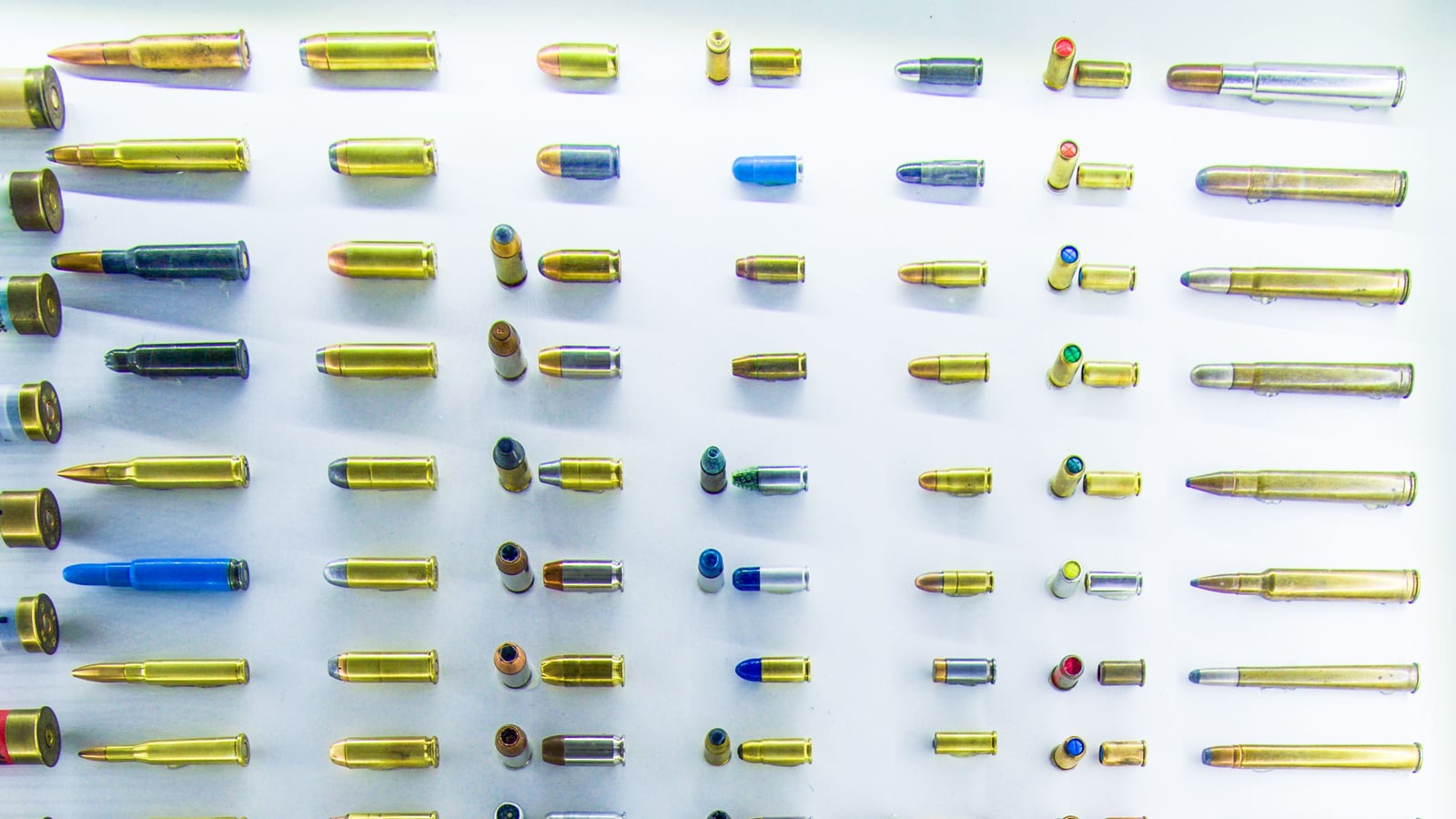
From the origins to black powder: the prehistory of caliber
Before anyone even spoke of “caliber” in the modern sense, someone had to invent a reliable way to propel a projectile. Black powder, a mix of saltpeter, sulfur, and charcoal, is the ancestor of all Western and Eastern ballistics. It burns relatively slowly compared to modern powders, which imposes strong constraints on the shape of weapons and projectiles.
The first portable firearms fired round lead balls, cast by hand or in a mold, whose diameter was only roughly matched to the barrel. There was no standard at the time: every weapon, every founder, every region had its own calibration habits. “Caliber” back then was above all a matter of lead availability and the size of a locally made barrel.
This lack of standardization had a direct, practical consequence: a shooter who switched weapons often had to adapt or remake his ammunition. This wasn’t a minor detail — it was a real logistical problem that would weigh heavily for centuries, especially wherever ammunition supply needed to be reliable and predictable.
The round lead ball remained dominant for a very long time because it was simple to produce and lead is a soft metal, easy to melt at low temperature. This choice of material also explains why the first “calibers” were expressed in fractions of a pound of lead rather than millimeters or inches, a system still found today in shotgun gauge terminology.
The clearance between the ball’s diameter and the bore was, at the time, also the first factor that directly influenced performance. A ball too tight against the barrel made loading the projectile harder, an already slow and delicate gesture with a muzzle-loading weapon. A ball too small let some combustion gases leak past the projectile, reducing velocity and thus useful range.
This purely empirical compromise already foreshadowed all the dimensional tolerance questions that would become central with the arrival of the rifled barrel. The gunsmiths and armorers of this era passed on their calibration know-how almost exclusively through practical experience, without standardized measuring instruments, which explains the great variability in results from one weapon to another.
The rifled barrel and the birth of precision
Rifling the barrel changed everything. By cutting helical grooves inside the barrel, a rotational movement is imparted to the projectile, stabilizing its trajectory through gyroscopic effect. This innovation had existed experimentally for a long time, but its gradual spread transformed how people thought about the relationship between projectile diameter and precision.
With a rifled barrel, the bullet must fit the grooves more precisely for the rotation to be effective. This pushed manufacturers to refine their calibration tolerances: a projectile too small loses energy and precision by “rattling” in the barrel, one too large complicates loading and can damage the weapon. Caliber stopped being an approximation and became a genuine technical specification.
This demand for dimensional precision also drove the emergence of finer measuring tools and more reproducible manufacturing methods. People began thinking in hundredths of an inch or fractions of a line, an evolution directly tied to the era’s progress in metallurgy and precision tooling.
On the sporting side, this period laid the foundations of what would become the precision shooting practiced today in clubs. Barrel rifling is the first true technological building block that links caliber and ballistic performance in a measurable and reproducible way.
The number of grooves, their depth, and their twist rate — that is, the distance needed to complete one full turn inside the barrel — also became parameters to adjust depending on the caliber and type of projectile used. A twist rate poorly matched to the length or mass of a given projectile can badly degrade accuracy, even with an otherwise well-chosen caliber.
This interaction between twist rate, projectile length, and muzzle velocity remains, in fact, a perfectly current technical subject: a gunsmith or precision-shooting instructor at a club still reasons today about these same parameters, inherited directly from this pivotal period in the history of the rifled barrel.
From round ball to conical bullet: the contribution of the expanding system
The shift from the round ball to conical or ogival-shaped projectiles was a pivotal step. A conical bullet offers a better ballistic coefficient, meaning it retains its velocity better and resists air resistance better than a simple sphere. It also allows increasing the projectile’s mass without excessively changing its diameter.
Certain historical expanding-skirt bullet systems allow a slightly undersized projectile to be loaded from the front of the barrel, greatly easing the loading process, then let it expand under the pressure of combustion gases to perfectly fit the rifling. It’s a clever technical compromise between ease of loading and shooting precision.
This evolution had a direct effect on caliber standardization: since the projectile’s shape became a parameter as important as its raw diameter, manufacturers began documenting their specifications more precisely. The first true “families” of calibers appeared, conceived as coherent systems rather than isolated sizes.
For today’s sport shooter who reloads their own ammunition or studies the ballistic characteristics of their cartridges, this logic remains entirely relevant: the projectile’s profile matters as much as its nominal diameter for understanding its flight behavior.
This period also marks the emergence of deeper thinking about mass distribution inside the projectile itself. A well-designed ogival profile allows the center of gravity to be shifted and flight stability improved, a line of reasoning that already anticipates the aerodynamic optimizations found in the design of modern competition projectiles, engineered to minimize velocity loss over long shooting distances.
The metallic cartridge: unifying powder, primer, and projectile
The invention of the unitary metallic cartridge is probably the single most important technological break in the entire history of calibers. Before it, loading a weapon meant pouring powder, inserting the projectile, sometimes adding wadding, then priming the ignition mechanism separately. This process is slow, sensitive to humidity, and poorly reproducible from one shot to the next.
The metallic cartridge combines the primer, the powder charge, and the projectile in a single case, generally made of brass. This unification had an enormous impact on reliability, loading speed, and above all standardization: a cartridge becomes a finished product, with fixed dimensions, that different manufacturers can reproduce identically.
It is at exactly this moment that “caliber” takes on the meaning we know today: a designation encompassing not just the projectile’s diameter, but also the case dimensions, the overall cartridge length, and sometimes the associated powder charge. A caliber becomes a complete industrial standard, not just a diameter measurement.
This standardization also enabled the emergence of an ammunition market in the modern sense: cartridges mass-produced, interchangeable between weapons of the same chamber, and sold independently of the weapon manufacturer itself. This is an indispensable condition for the development of civilian sport shooting as practiced in clubs today.
The metallic cartridge also radically changed shooting ergonomics. Loading a weapon through the breech rather than the muzzle considerably speeds up possible firing rates and simplifies learning safety gestures, particularly checking whether a weapon is loaded or unloaded. This simplification of the loading gesture is one of the reasons sport shooting became more accessible to a wider public from this period onward.
It also opened the way to repeating mechanisms, whether bolt-action, lever-action, or later semi-automatic, since a rigid, self-contained cartridge can be mechanically manipulated by an extraction and re-cocking system, which would have been impossible with the separate components of muzzle-loading.
Smokeless powder: a silent revolution
The arrival of smokeless powder, based on nitrocellulose or nitroglycerin rather than saltpeter and sulfur, once again changed the physics of shooting. This powder produces far fewer visible residues and burns in a more progressive and controlled way than black powder, allowing higher internal pressures to be reached without bursting the weapon.
Higher, better-controlled pressures opened the door to smaller but faster calibers. Historically, with black powder, a lack of velocity was compensated for by a heavy projectile mass, hence a generous diameter. With smokeless powder, comparable or greater energy can be achieved with a thinner, faster projectile.
This technological shift explains why many “modern” calibers have more modest diameters than their direct ancestors from the black powder era, while being ballistically superior. Muzzle velocity becomes a performance lever as important as diameter or projectile mass.
On a practical level for the sport shooter, this evolution also made weapons lighter to carry, less messy to maintain, and less prone to humidity-related misfires — three improvements that greatly facilitated regular shooting practice in clubs and competitions.
This transition, however, was not instantaneous. During a transitional period, black powder and smokeless powder coexisted, and many weapons originally designed for the former could not withstand the pressures generated by the latter without risk of damage. This technical constraint explains why some historic calibers had to be redefined with specifically adapted loads, while others simply disappeared in favor of standards better suited to this new generation of powder.
The diversification of calibers at the end of the nineteenth century
The combination of the metallic cartridge and smokeless powder triggered a veritable explosion of new calibers at the end of the nineteenth century. Every manufacturer, every country, every emerging discipline sought to optimize its own standard, producing a proliferation of designations that largely persists today.
This period also saw a sharper distinction emerge between calibers intended for handguns and those intended for carbines or rifles, with different design logics. Handguns favor maneuverability and a shorter usage distance, which pushes toward more compact cartridges, while long guns can exploit more powerful cartridges over greater distances.
It is also during this era that the distinction between metric systems (designation in millimeters, European) and imperial systems (designation in hundredths of an inch, Anglo-Saxon) was born, a duality that explains why related calibers are still designated differently today depending on their geographic origin.
This diversification is not just a matter of marketing or industrial nationalism: each standard responds to a different compromise between range, precision, recoil, manufacturing cost, and availability of local raw materials. Understanding this diversity helps make better sense of the caliber spec sheets one still encounters today at the gun shop.
It was also during this period that centerfire ignition largely established itself over rimfire ignition for the most powerful calibers, centerfire offering better tolerance to high pressures and greater reloading ease. Rimfire calibers, on the other hand, remain dominant for lower-power applications, a technical split that persists practically unchanged in civilian sport shooting to this day.
The two world wars as industrial accelerators
Without dwelling on a context beyond the scope of civilian sport shooting, it must be acknowledged that the two great world conflicts of the twentieth century had a considerable accelerating effect on the industrialization of ammunition manufacturing. Producing millions of identical, reliable cartridges demands a rigor of manufacturing and quality control that later benefits the entire civilian industry.
This period drove the development of mass production methods, systematic dimensional control, and tolerance standardization that are still found in today’s standards for sporting and hunting ammunition manufacturing. The production techniques learned at large scale then flowed into the entire civilian sector in the postwar period.
It is also after these periods that many calibers, initially developed for specific uses, became democratized in civilian life for hunting and sport shooting, carried by the industrial availability of machine tools, components, and manufacturing know-how that had by then become widespread.
It’s important to recall here that civilian sport shooting as practiced today in a club has no connection to military or law-enforcement use: it is a sporting and recreational discipline in its own right, governed by strict civilian regulations, that deserves to be understood independently of the historical industrial origin of any given caliber.
This transfer of industrial know-how to civilian life illustrates a recurring phenomenon in technical history in general: an innovation developed under the constraint of mass production almost always ends up flowing into far broader and far more peaceful uses than its original development context. The machine tools, quality control methods, and manufacturing skills acquired at this scale subsequently benefit entire generations of sporting and hunting ammunition manufacturers.
Velocity versus mass: the great ballistic philosophies
The entire history of calibers can be read through a recurring debate: is it better to have a heavy, relatively slow projectile, or a light, fast one? A heavy projectile retains its energy better over distance and resists wind better, but generates more recoil and a more curved trajectory at long range.
A light, fast projectile offers a flatter trajectory, thus easier to judge for accurate aiming without complex corrections, and generally softer recoil, which facilitates quickly stringing together precise shots. In exchange, it loses velocity faster against air resistance and can be more sensitive to crosswind.
This debate has never been settled universally because the answer depends on the use case: long-range precision shooting, dynamic shooting on close targets, hunting, or recreational shooting don’t share the same ballistic priorities. It is precisely this diversity of needs that explains why so many different calibers still coexist today without any one imposing itself as the absolute “best.”
An experienced club instructor will often stress this very point with beginners: the “best” caliber doesn’t exist in absolute terms — there only exists a caliber suited to a discipline, a shooter’s build, and a specific goal. It’s a principle that runs through the entire technical history just outlined.
The recoil felt by the shooter also depends as much on the mass of the weapon itself as on the power of the cartridge: a heavier weapon absorbs more recoil energy, which explains why two weapons chambered in the same caliber can produce very different shooting sensations. This additional variable, purely mechanical and independent of caliber in the strict sense, further complicates the search for a universal answer to the velocity-versus-mass debate.
Reloading: when the shooter takes back control of their caliber
A direct consequence of the industrial standardization of calibers was the emergence of ammunition reloading as a discipline in its own right. Once case dimensions, primers, and powder components are standardized and available separately for purchase, it becomes possible for a shooter to assemble their own cartridge rather than buying only pre-assembled ammunition.
Reloading answers a very concrete logic: adjusting the powder charge, the projectile weight, or the overall cartridge length to precisely match a given weapon, a given discipline, or a given budget. It’s also a way to understand from the inside what differentiates two cartridges of the same nominal caliber but with different performance.
This practice also played a role in the longevity of certain older calibers. A caliber that might have disappeared for lack of sufficient commercial production sometimes remains viable simply because a community of reloaders keeps producing its own ammunition from reusable cases and still-manufactured components.
Caution is warranted on this topic: reloading is a demanding technical practice that requires scrupulously respecting the load data published by powder manufacturers and never exceeding the maximum pressures intended for a given weapon. This is not a field for improvisation, and it varies greatly depending on the type of weapon, the caliber, and the reloading equipment used.
Beyond the economic aspect, many reloaders also find a purely sporting interest in it: fine-tuning a load to achieve the best possible group with a particular weapon becomes almost a discipline in its own right, complementary to shooting itself. This pursuit of personalized ballistic consistency is a modern, refined form of the same concern for precision that already drove the craftsmen of the rifled barrel.
The emblematic calibers of sport shooting and civilian hunting
Without going into precise figures that vary by source and era, one can observe that certain calibers have established themselves in well-identified sporting and recreational uses, each illustrating one of the technical logics mentioned above. Handgun calibers used in Olympic sport shooting or dynamic disciplines generally favor a compromise between recoil controllability and rate of fire.
Rifle calibers used in precision shooting or position disciplines rely more heavily on ballistic consistency and wind resistance over long distances. Shotgun calibers, often designated by a historical gauge system rather than in millimeters, continue a logic inherited directly from the era of the hand-cast lead ball.
This diversity of uses explains why a practitioner discovering several disciplines within the same club might find themselves handling calibers with very different design logics within a single day. This is neither a coincidence nor unnecessary complexity: each discipline has refined its caliber of choice over decades of competitive practice.
An experienced club shooter will often recommend that new members not focus solely on a caliber’s advertised power, but also consider ammunition availability, cost of use, and the tolerance of equipment available for loan or rental at the club. These criteria are just as much a legacy of industrial history as raw ballistic performance.
This logic of considered choice also applies to air rifle shooting, often used as a gateway into sport shooting thanks to a very low cost of use and lighter Category D regulation. Many clubs rely on this discipline to teach fundamental technique before guiding new shooters toward cartridge calibers that are more demanding technically and legally.
Materials and processes: the other quiet engine of caliber evolution
The history of calibers isn’t limited to powder and projectile shape: the materials used have also profoundly influenced the standards. The shift from pure lead to harder alloys, then to projectiles jacketed in copper-based metal, made it possible to increase velocities without excessively deforming the projectile or prematurely fouling the barrel.
This evolution in materials also helped reduce barrel wear caused by high-speed friction, which allowed faster calibers without sacrificing the weapon’s longevity. Progress in brass metallurgy for cases, in turn, improved sealing against combustion gases and the reusability of cases for reloading.
Industrial manufacturing processes, such as precision stamping and automated dimensional control, also made it possible to produce cartridges with a consistency that manual craftsmanship could not guarantee. This manufacturing consistency is directly linked to the ballistic consistency sought in competition, where a minimal variation in powder charge can translate into a difference in group size.
This industrial and metallurgical dimension is often less well known than the history of powders or of the calibers themselves, but it largely explains why a modern cartridge, even in an old caliber, shoots more consistently today than an equivalent cartridge manufactured a century earlier.
Primers themselves followed a comparable path of improvement, moving from sensitive, corrosive fulminate compositions to more stable mixtures less aggressive toward barrel steel. This quiet evolution has markedly reduced the maintenance needed after each shooting session, a comfort that today’s shooters often take for granted without knowing the origin of the progress.
The modern era: international standardization and interchangeability
In the twentieth century, the multiplication of national calibers drove a movement toward international standardization. Technical organizations established precise standards for dimensions, maximum allowable pressures, and control methods, so that a cartridge manufactured in one country could be safely fired in a weapon chambered for that same caliber elsewhere in the world.
This standardization is crucial for the sport shooter’s safety: it guarantees that a cartridge respects maximum pressures compatible with the mechanical strength of the weapon it’s designed for. It is this rigor that today allows anyone to buy standard-caliber ammunition in any country with a serious ammunition industry, with reasonable confidence in its compatibility and safety of use.
This period also saw a finer distinction emerge between competition-oriented calibers, where ballistic consistency comes first, and recreation- or hunting-oriented calibers, where other economic or practical compromises may prevail. Sporting disciplines governed by national shooting federations rely on this standardization to guarantee fairness among competitors using identical calibers.
For today’s sport shooter, this international standardization is almost invisible, so much has it become taken for granted, but it is the fruit of a century and a half of accumulated technical evolutions, from the round lead ball to the modern, perfectly calibrated cartridge you load into your weapon at the range.
This normative rigor also comes with precise labeling of commercial ammunition boxes, indicating caliber, projectile type, and sometimes reference muzzle velocity. This transparency allows a shooter to objectively compare several references of the same caliber, a possibility that simply didn’t exist before the era of the standardized metallic cartridge.
Antique firearms and black powder in sport shooting today
There exist today, within regulated civilian practice, disciplines entirely dedicated to antique firearms or their reproductions functioning with black powder. These disciplines are not mere museum demonstrations: they are genuine sport shooting events, with their own safety rules, their own targets, and their own technical demands.
Shooting a black powder weapon requires returning to historical gestures: measuring a loose or pelletized powder charge, positioning a projectile at the front of the barrel, managing an ignition delay different from that of a modern metallic cartridge. It’s a sensory and technical experience very different from shooting with a contemporary cartridge weapon.
This practice deliberately perpetuates methods that disappeared from everyday use more than a century ago, but it has real educational value: it lets you concretely feel why the metallic cartridge and smokeless powder represented such progress in terms of speed of use, reliability, and cleanliness.
For a curious practitioner, trying a black powder discipline once at a club, in a supervised and safe setting, is often a very concrete way to understand from the inside the whole technical journey from the origins to the modern cartridge one uses the rest of the time.
These disciplines also impose specific safety rules, adapted to the particularities of black powder: rigorous management of the smoke released after each shot, systematic checking for the absence of glowing residue before any reload, and adherence to slower firing rates than with a modern weapon. It’s a demanding framework that builds excellent habits of rigor, transferable to all other sport shooting disciplines.
Caliber, discipline, and regulation: an inseparable triptych
One last angle deserves to be clearly stated: the caliber of a weapon is never a simple, isolated ballistic choice — it always sits within a precise regulatory framework that determines the conditions of acquisition and possession. Understanding the technical history of calibers only makes full sense when connected to this legal framework, which has itself evolved alongside technical progress.
In France, this framework rests on four clearly distinct categories. Category A groups weapons prohibited to private individuals, treated as war material. Category B concerns weapons subject to prefectural authorization, which includes most handguns and semi-automatic weapons used in competitive sport shooting. Category C brings together weapons subject to simple declaration, notably certain manually operated repeating hunting rifles. Category D, finally, corresponds to freely sold or simply registered weapons, such as reproductions of antique weapons or low-powered air guns.
This classification doesn’t depend solely on caliber in the ballistic sense: two weapons of identical caliber can belong to different categories depending on their operating mechanism, magazine capacity, or overall design. This is why it is always recommended to verify the exact category of a specific weapon with a licensed gunsmith or the relevant prefectural authorities, rather than relying on a generality overheard at the club.
This triptych of ballistic performance, practiced sporting discipline, and applicable regulatory framework is ultimately the logical culmination of the entire history just covered: a caliber is never just a metal tube containing powder and a projectile — it is also the product of an era, an industry, and a body of law that continue to evolve together today.
What the history of calibers teaches us about today’s equipment
Looking back at this evolution helps better understand why today’s equipment is designed the way it is. Every parameter of a modern cartridge, from the projectile’s diameter to the shape of the case to the composition of the powder, is the direct legacy of a technical constraint solved at a given point in time.
This historical perspective also helps put into perspective certain current debates about the “best” caliber for this or that discipline. Many of these debates reproduce, with modern vocabulary, the same trade-offs between mass, velocity, precision, and recoil that run through the entire history just covered, going back to black powder.
An experienced club shooter knows this well: understanding why a caliber was designed the way it was often helps use it better, whether to fine-tune settings, choose a discipline, or simply have a better conversation with a gunsmith or instructor about a round’s characteristics.
This technical and historical culture is an integral part of a serious practitioner’s toolkit, on par with mastering the fundamentals of safety and weapon handling. It gives meaning to choices that, without this context, can seem arbitrary or purely driven by current trends.
FAQ
Q: Why are some calibers designated in millimeters and others in hundredths of an inch? A: This simply reflects the geographic origin of the standard, European for the metric system and Anglo-Saxon for the imperial system. Both systems have coexisted and continue to coexist because they designate cartridge families developed independently within different industries.
Q: Does a cartridge’s caliber always correspond exactly to the projectile’s actual diameter? A: Not systematically, as certain historic or commercial designations differ slightly from the actual measured diameter. This is one reason it’s always better to check a cartridge’s precise dimensions rather than relying solely on its commercial name.
Q: Why have some old calibers disappeared while others have remained in use for over a century? A: A caliber generally survives because it retains an active manufacturing industry and a sufficient user base, often thanks to a good all-around compromise between precision, recoil, and availability. Others simply disappear once their original technical advantage is surpassed by newer standards.
Q: Has smokeless powder made black powder completely obsolete? A: For the vast majority of modern sporting uses, yes, but black powder remains used in dedicated historical disciplines, notably around reproduced or original antique firearms. It’s a niche practice that deliberately perpetuates period shooting techniques and sensations.
Q: Do you need to know this history to shoot sport well today? A: It’s not essential for beginners, but it enriches understanding of the equipment and helps you choose your caliber better according to your discipline. It’s above all a culture that adds depth and meaning to a practice that’s already exciting on its own.
Q: What is the French legal classification applicable to weapons according to their caliber or use? A: In France, weapons are divided into Category A (prohibited to private individuals), Category B (subject to prefectural authorization, notably most handguns and semi-automatics), Category C (subject to declaration, certain hunting weapons or manually operated repeating rifles), and Category D (freely sold or simply registered, such as low-power air guns). This classification varies by specific model and not solely by caliber, so it’s always best to check with a gunsmith or your prefecture for a particular case.