
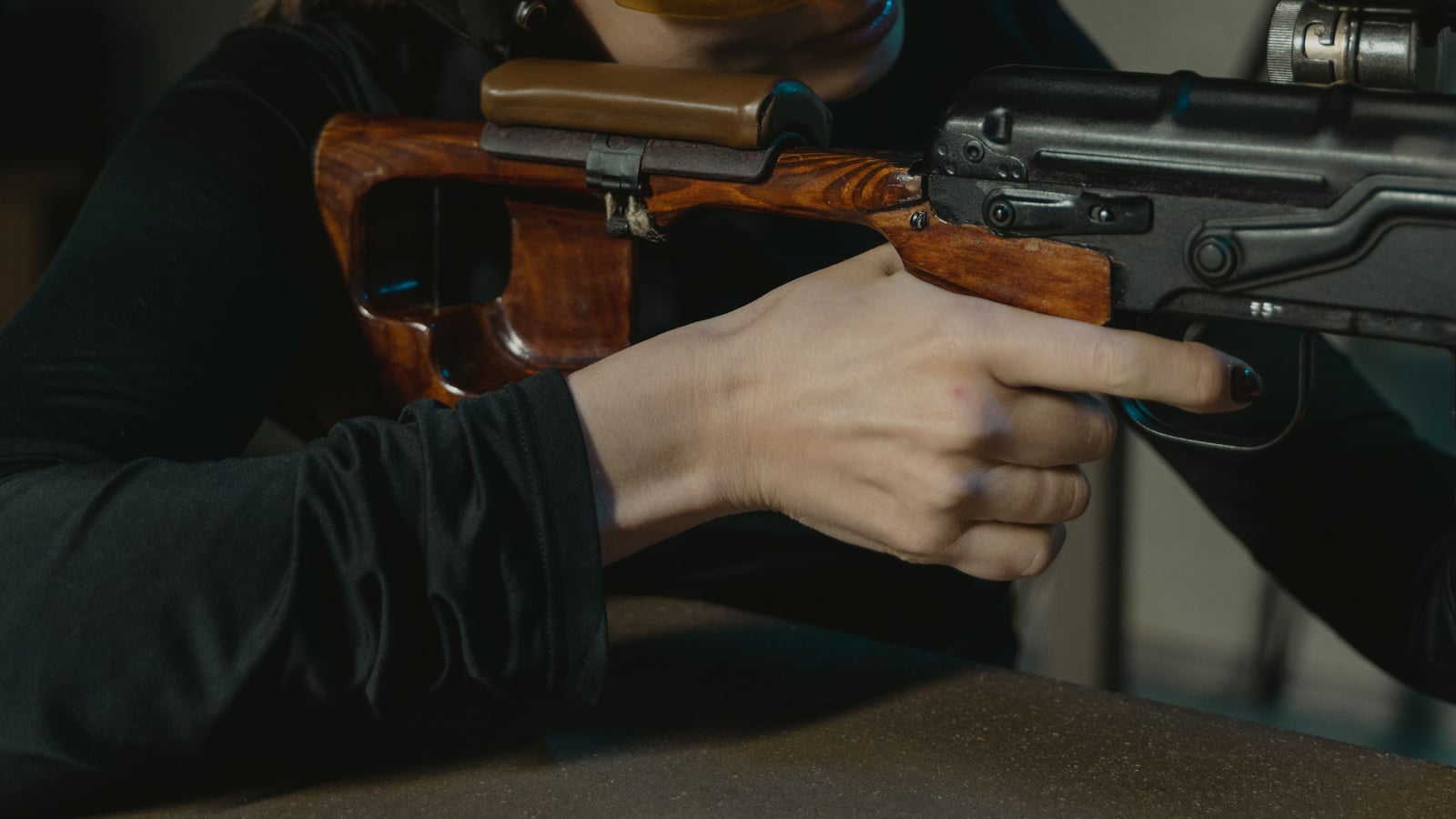
The first session, far from the image you have of it
A seasoned club shooter rarely remembers their first session as a glorious moment. Most tell the same story: a gun that feels heavier than expected, a bang that surprises even with hearing protection, and a grouping on the target that looks more like a cloud than a tight point.
This gap between expectation and reality is nearly universal. You picture instant mastery, fed by images seen elsewhere, and instead discover a body that trembles slightly, an eye that hesitates between the front sight and the target, and a trigger that seems to have a will of its own. Nothing serious, but nothing spectacular either.
What separates a beginner who sticks with it from one who quits after three sessions isn’t initial talent. It’s the ability to accept that this uncomfortable phase is part of the path, and not to judge your practice on the first ten minutes. An experienced instructor repeats it to every new recruit: the first session is there to learn not to be afraid of your gun, not to shoot a clean group.
The club plays a decisive role at this stage, far more than the equipment or the caliber chosen. Present supervision that corrects posture without discouraging, that explains the “why” behind every safety instruction, makes the difference between a new member who comes back the following week and one who files their membership form away in a drawer.
This is also when the question of tracking arises, even if few beginners are aware of it. Without any trace of these first sessions, it later becomes impossible to objectively measure the road traveled. A shooting log, even a rudimentary one, started from day one, gives a reference point whose value only really appears months later.
Many beginners also arrive with preconceived ideas about what they’re going to feel, often fed by amplified stories from friends or the image of the “born shooter.” The reality of the first contact is generally more prosaic: a gradual discovery of sensations, a bodily adaptation that takes several sessions, and a satisfaction that comes more from the mastered repetition of a simple motion than from a one-off feat.
The choice of the first gun lent or rented by the club also shapes this first impression, even if the beginner isn’t always aware of it. A club that adapts the caliber and weight of the gun to the newcomer’s build, rather than systematically offering the same model to everyone, limits apprehension and makes for calmer learning from the very first rounds fired.
The first few weeks: the phase of silent discouragement
After the relative euphoria of the start comes a phase that’s talked about less: the one where progress seems to stall, or even regress. A shooter who was visibly improving session after session suddenly finds their grouping widening again, with no apparent explanation.
This plateau, or temporary regression, discourages a huge number of new practitioners. Many interpret it as a sign that they “don’t have what it takes” or that the discipline isn’t for them. In reality, this phenomenon is documented in almost all fine motor learning: the brain consolidates previous patterns before it can progress on the next ones, and this consolidation often comes with an apparent phase of drift.
An experienced club instructor knows how to recognize this moment and reassures rather than letting doubt take hold. They point out that a beginner who has no numerical benchmark on their own practice experiences this period as a series of blurry impressions, whereas a shooter who logs their results session after session can be objective: has the average grouping really gotten worse, or does the impression come from one particularly bad session that stuck in memory more than the others.
This is exactly the phase where the shooting log changes status. It stops being an administrative formality and becomes a tool for clarity. Rereading your last three sessions and finding that the average dispersion has actually shrunk by 20%, despite a subjective feeling of stagnation, completely changes morale and motivation to keep going.
The shooters who quit most often at this stage are those with no written data to counter their own pessimism of the moment. They judge their progress on their immediate feeling, which is notoriously unreliable after a tiring or stressful session.
This phase also reveals a common trap: comparing yourself too early to other, more advanced club members. A beginner who systematically compares themselves to a seasoned club shooter, without accounting for the number of seasons that separate them, builds up unnecessary frustration. Comparing today’s session to your own session from a month ago remains a much fairer and much more motivating measure than any external comparison.
Some beginners go through this phase of doubt by frantically changing their gear or technique from one session to the next, hoping to find the miracle solution. This instability actually prevents them from knowing what really works, since no change is ever kept long enough to be evaluated properly. Methodical stability, changing only one parameter at a time and noting it as such, remains the best way out of this period without exhausting yourself needlessly.
The role of the club: far more than access to a range
A shooting sports club isn’t just about providing a firing line and targets. For a beginner, it’s often the first place where they encounter a community organized around a shared demand for safety and rigor, which shapes their practice for the long term.
A club’s atmosphere passes on habits well before the rules are ever explicitly stated. A new member who systematically sees guns pointed in a safe direction between strings, triggers never touched before being in a firing position, adopts these reflexes as much by imitation as by formal instruction.
The choice of club also directly affects the pace of progress. A club with available supervision, that offers regular slots for beginners and instructors who take the time to observe each shooter individually, considerably speeds up the acquisition of fundamentals compared to a club where a newcomer is simply handed a gun with no structured guidance.
Many seasoned shooters say their breakthrough came from a specific remark by an instructor, not a long theoretical lecture. A targeted observation about a grip flaw or recoil anticipation, said at the right moment, is often worth more than hours of general, uncontextualized explanation.
The club is also where the desire to compete is almost always born. Seeing other club members head off to a regional competition and come back with concrete stories gives a tangible goal to a practice that could otherwise remain purely recreational indefinitely.
The club’s community life, often underestimated by newcomers focused solely on their own firing point, also plays a role in how long someone stays engaged. Helping maintain the range, taking part in open days or organizing an internal competition creates an attachment to the club that goes beyond a simple customer-provider relationship, and that sustains motivation during tougher seasons.
Another aspect rarely mentioned before you experience it involves the diversity of profiles you meet at the club. Teenagers, retirees, working people from every professional background share the same firing line and the same safety constraints. This mix, common to many clubs, quickly exposes a new member to ways of progressing different from their own, which enriches their own thinking about their practice.
Choosing a discipline: an underrated crossroads
Many beginners stay undecided about their discipline for several months, dabbling in a bit of everything depending on the slots available at the club. This exploration period isn’t wasted time: it lets you discover what really suits your build, your patience, and your personal tastes.
Some shooters discover an affinity for pure precision and static shooting at distance, where every breath counts and patience beats speed. Others immediately prefer the faster pace of dynamic disciplines, where managing stress and speed of execution matter as much as raw accuracy.
This choice is almost never final, and it’s important to know that so you don’t fixate on a first impression. A seasoned club shooter often says they started with one discipline for practical reasons, slot availability or the influence of a friend already licensed, before switching to another discipline seasons later, once the general fundamentals were in place.
A well-kept shooting log actually helps make this emerging preference objective. By comparing sessions across different disciplines over several months, a shooter can identify where their progress curve is clearest, where subjective enjoyment overlaps with measurable improvement, which is often a more reliable signal than a mere momentary preference.
Equipment follows the discipline, never the other way around, in a healthy progression. A shooter who invests prematurely in cutting-edge gear before even knowing which discipline they actually want to practice long-term often ends up with equipment poorly suited to their real needs, discovered too late.
Dynamic disciplines, which involve movement and cardboard targets or metal plates arranged in a course, often attract beginners drawn to the pace and physical side of the exercise. Others feel more at home with the animal-shaped silhouettes used in sport shooting, chicken, pig, turkey or ram, which demand a different degree of precision at every distance and silhouette size.
A point few beginners anticipate: switching disciplines along the way never erases the work already done. The fundamentals of stance, trigger control and breathing largely transfer from one discipline to another, even from dynamic to static or vice versa. A seasoned shooter who explored several disciplines before settling confirms it every time: none of the seasons spent on an “abandoned” discipline were wasted time.
The first licensed season: between enthusiasm and frustration
Moving from casual occasional practitioner to licensed status marks a real shift in mindset for most shooters. The license opens access to the club’s structured training, internal competitions, and often a more formal framework of insurance and follow-up.
This first licensed season is rarely linear. It alternates between sessions where everything seems to fall into place naturally, tight grouping, smooth breath control, and others where nothing works as expected, for no identifiable reason at the time. This normal irregularity often surprises new members who expected a steadier progress curve.
This is also the season when most shooters start to understand the importance of factors they used to neglect: sleep quality the night before a session, hydration, general fatigue level. A shooting log that notes these contextual elements, not just raw results, quickly becomes more useful than a simple score sheet.
A seasoned shooter looking back on their first licensed season often mentions having underestimated the importance of consistency over intensity. Two short but regular sessions each week generally lead to more progress than a single long, intense session, because motor memory builds through spaced repetition rather than one-off accumulation.
The first internal club competitions, often informal, play a key role at this stage. They introduce the pressure of being watched and of a stopwatch or a counted score, in a supportive setting that gradually prepares you for higher-stakes situations.
This first season is also when many licensed members start seriously taking an interest in the equipment they use, without necessarily changing it. Understanding why a particular trigger setting suits better, why a particular round of ammunition produces a more consistent group than another during logged sessions, already reflects a more analytical approach than the purely recreational practice of the early days.
The people around you, family or friends outside the sport shooting world, also react differently once you get licensed. Many shooters say they’ve had to explain, sometimes repeatedly, the difference between their supervised club practice and the far-fetched ideas some loved ones may have about sport shooting. This repeated bit of teaching is also part of a first-time licensee’s journey.
The spark toward regional competition
Moving from club practice to the ambition of regional competition almost never happens overnight. It usually results from a buildup of small signals: internal results that become consistent, an instructor suggesting a first official outing, a curiosity that grows after hearing other club members recount their own competition experience.
The decision to enter a first regional competition often comes with an apprehension out of proportion with the level actually expected at this stage. Many shooters wrongly imagine you need a near-expert level just to take part, when these competitions actually welcome a wide range of levels, from the recently licensed to the seasoned shooter.
This spark generally comes with a change in one’s relationship to training. Sessions become more intentional, with specific goals rather than diffuse practice. A shooter aiming for their first regional competition typically starts working on specific elements identified as weak, rather than uniformly repeating their whole technical repertoire.
The shooting log takes on a new dimension here. It no longer just serves to note general progress, but to methodically prepare for a dated goal. Comparing your training strings to the requirements of the targeted competition’s rules lets you precisely identify the gaps to close before the big day.
This preparation phase also often reveals gaps ignored until then, notably around equipment management: systematic checks, regular maintenance, familiarity with the safety procedures specific to official competitions, which sometimes differ from the habits picked up during free club training.
Many shooters say they underestimated, before their first entry, the psychological weight of simply signing up. Filling out an entry form, choosing your category, picturing yourself on a specific date makes the goal brutally concrete, whereas it stayed abstract as long as it was only a vague intention to “take part someday.” This shift, often accompanied by a new kind of nervousness, psychologically marks the real start of preparation.
The role of training partners at the club also takes on new importance at this stage. Training alongside a shooter who has already taken part in one or more regional competitions lets you ask concrete questions about how the day actually unfolds, waiting times, organizing your gear on site, practical details rarely covered by the written rules alone.
The material and administrative obstacles along the way
A club shooter’s path toward regional competition involves obstacles that have nothing to do with sport but weigh just as heavily on motivation. The administrative steps tied to owning firearms, depending on the category concerned, require anticipation and patience, with timelines varying by club, local authority, and the specific firearm model involved.
Many new competitors discover at this stage the distinction between weapon categories: Category B, subject to prior authorization, which covers most handguns and semi-automatics used in competition; Category C, subject to simple declaration, for certain manually operated repeating firearms; and Category D, freely sold or subject to simple registration, which covers, for example, replicas or certain historical firearms. Understanding this system avoids a lot of last-minute disappointment.
The budget side also weighs on the balance, even though it varies enormously depending on the discipline, the club, and the equipment level targeted. Ammunition, maintenance, travel to regional competitions, possible specific gear: it’s better to ask your club directly rather than rely on general figures that never reflect individual reality.
The logistics of traveling to regional competitions also often surprise newcomers. Unlike club training, a competition imposes fixed schedules, secure transport of equipment as required by regulations, and managing logistical stress on top of the sporting stress itself.
A seasoned club shooter generally insists on one point: these administrative and material obstacles should never be treated as secondary. They demand anticipation just as rigorous as the technical preparation itself, or you risk discovering a blocking problem the day before a competition.
Equipment maintenance, often pushed to the back burner by beginners eager to train, becomes a real issue as a first regional competition approaches. A shooter who neglects regular cleaning or checking the general condition of their equipment risks a material incident on the big day, hard to fix under the pressure of an official competition.
The question of transporting and securely storing firearms, governed by current regulations, also requires organization that many new competitors discover late. Asking your club or federation in advance about the exact rules that apply avoids avoidable stress the night before leaving for a regional competition.
Stress management, an underrated obstacle
Competition stress surprises almost every shooter at their first official outing, even those who felt solid in training. A grouping that was clean and consistent at the club can suddenly widen noticeably, not because the technique has vanished, but because pressure fundamentally changes the physiological picture.
This phenomenon is largely explained by well-known physiological mechanisms: faster heart rate, increased muscle tension, shorter breathing. These reactions, useful in other contexts, directly harm the stability and consistency of the shooting motion, which instead requires calm and controlled muscular relaxation.
The first competition often mostly serves as a lesson on exactly this point. A shooter generally comes away marked less by their ranking than by discovering their own behavior under pressure, information that no club training session, however intense, could have revealed.
A shooting log that also documents competitions, not just training, becomes valuable here. Objectively comparing your training and competition results lets you quantify the gap actually caused by stress, rather than staying with a vague impression of having “shot worse than usual.”
The shooters who improve fastest at managing this stress are generally those who multiply their chances to expose themselves to real-condition pressure, rather than those who wait to feel “ready” before signing up for a new competition. Confidence in competition builds through repeated exposure, not technical preparation alone.
Some shooters develop, with experience, very personal breathing routines or concentration rituals to manage this stress, often inherited from tips picked up from instructors or other club competitors. What works for one doesn’t necessarily work for another, which explains why there’s no universal method taught identically to every new competitor.
Stress isn’t purely negative, and many seasoned shooters learn over time to distinguish it from the simple excitement of competing. A certain level of physiological activation even improves focus and alertness, as long as it stays under a certain threshold. Learning to recognize this tipping point between useful stress and paralyzing stress is one of the most valuable, but also longest, lessons of a competitive journey.
The central, underrated role of the shooting log
If one thread runs through almost every testimonial from seasoned shooters about their own journey, it’s the growing importance of rigorously tracking their practice. What often starts as an administrative chore seen as secondary becomes, over the seasons, an indispensable steering tool.
A well-kept shooting log doesn’t just note a final score per session. It captures the context: type of ammunition used, weather conditions for outdoor shooting, fatigue level, specific settings tested, how stability and breathing felt. It’s this granularity that turns plain numbers into usable information for progress.
The value of a shooting log truly reveals itself only over time. A single logged session teaches almost nothing. But comparing dozens of sessions spread over several seasons lets you spot trends invisible to immediate feeling: a setting that consistently improves dispersion, a time of day when concentration is better, a type of training that precedes the best competition performances.
A shooter preparing for a regional competition typically relies on their log to precisely target their training in the final weeks, working on points identified as weak rather than uniformly repeating their entire technical repertoire. This targeted approach, made possible only by accumulated data, saves considerable time compared to generic training.
The digital side of the shooting log, via a dedicated app rather than a simple paper notebook, brings an added benefit: the ability to visualize trends on graphs, instantly find a specific session, and keep a complete history even after several years of practice, without the risk of losing a paper log misplaced at the bottom of a range bag.
A still too rare but particularly useful practice with the shooting log is to also note failures, not just good sessions. Many shooters, out of natural reflex, mostly log their good results and neglect to document a disappointing session, even though it’s precisely those sessions that contain the most useful information for identifying a recurring cause of underperformance.
Sharing your shooting log with your club instructor, when the trust relationship allows it, also changes the quality of guidance received. An instructor with numerical data over several months can target their advice far more precisely than by relying solely on what they observe during a single, one-off session with a given shooter.
The in-between seasons: consolidating and putting results in perspective
Between a first regional competition and a truly established practice, most shooters go through several seasons where progress visibly slows compared to the initial early momentum. This slowdown is normal and reflects the very nature of fine motor learning, where the initial rapid gains give way to slower but more lasting improvements.
This in-between phase often tests motivation harder than the early days. The excitement of novelty has faded, competition is no longer a discovery but a routine, and progress is now measured in small percentages rather than visible leaps from one session to the next.
This is exactly the stage where rigorous tracking in the shooting log proves its full worth. Without comparative data across several seasons, a shooter in this in-between phase could easily and wrongly conclude they’re completely stuck. In reality, the numerical comparison often reveals a real but slow improvement, enough to sustain motivation if properly made objective.
Seasoned shooters who came through this period successfully generally mention a shift in approach: moving from outcome goals, like a specific ranking, to process goals, like the consistency of a particular technical motion. This shift in focus makes progress psychologically more bearable, since it depends more on personal work than on results compared to other competitors.
The club’s role remains central during these consolidation seasons. A stable training environment, with regular partners and supervision that keeps offering constructive feedback, prevents the isolation and discouragement that threaten a shooter left alone with their own solitary analysis of results.
It’s also during these in-between seasons that many shooters start getting involved differently in club life, in turn mentoring beginners during introductory sessions. This transmission, even informal, paradoxically strengthens their own technical understanding: explaining a motion to someone else forces you to break it down clearly, which often consolidates your own mastery more than an extra solo training session.
Once several regional competitions have piled up, the question of ranking takes on a different place depending on the shooter. Some stay focused on their position’s progress season after season, while others deliberately choose to downplay that number and focus on their own technical consistency, regardless of the level of the other participants on that particular day.
This diversity of approach is far from trivial over time. A shooter who builds their entire motivation on their relative ranking depends directly on the highly variable level of the other competitors present at each edition. Conversely, a shooter who tracks their own progress via their shooting log has a stable reference point that doesn’t fluctuate based on who else signed up for the same competition.
Regional competition results, moreover, often tell only part of the story. An identical ranking across two different competitions can hide a very different technical reality: one competition won under favorable conditions, and another where a similar score was clawed out despite far tougher conditions. The shooting log, by preserving the context of each outing, lets you restore this nuance that the final ranking alone never shows.
Many seasoned shooters also recall going through a season of disappointing regional competition results, despite preparation considered serious beforehand. These seasons, frustrating at the time, often become useful turning points in retrospect, provided they were properly documented to allow a later analysis rather than a simple, unused feeling of failure.
What accumulated experience really changes
After several seasons of practice and regular regional competition, a seasoned club shooter rarely describes their progress as a straight line. It’s more a sum of successive adjustments, each modest on its own but significant once accumulated over time.
One of the most striking changes concerns mental management rather than pure technique. An experienced shooter has generally developed a personal pre-shot routine, often refined over dozens of competitions, that lets them find a stable state of focus regardless of the outside context or the stakes of the competition.
Experience also changes your relationship to failure in competition. An underperformance that would have demoralized a beginner for several weeks becomes, for a seasoned shooter, a source of information to analyze coolly, often directly in their shooting log, to identify what actually caused the gap from usual results.
The relationship to equipment also evolves with experience. A seasoned shooter knows their gear intimately, its precise settings and their effects, information accumulated session after session rather than guessed. This fine-grained knowledge reduces uncertainty on competition day, since the unknown variables have already been explored and documented beforehand.
Finally, a shooter who has traveled this road over several seasons often becomes, in turn, a resource for the club’s new members. Passing on their experience, notably about the importance of rigorous tracking from the very start, closes the loop of a journey that itself benefited from similar advice a few seasons earlier.
Accumulated experience also changes how a shooter perceives a single bad session. Where a beginner can be thrown off for several days by a disappointing training session, a seasoned club shooter knows, thanks to their own history, that a session below their usual average doesn’t call into question several seasons of real progress. This perspective, gained over time, considerably reduces the emotional weight tied to each one-off underperformance.
Advice for anyone starting the same journey today
A seasoned club shooter, asked what they’d change if they started their journey over, almost always mentions the same regret: having waited too long before keeping a serious, regular shooting log. The first, undocumented seasons remain a blurry area in their memory, whereas the following ones, well tracked, still allow for precise and useful analysis today.
The second piece of advice that comes up often concerns patience with apparent stagnation phases. Accepting that a plateau of several weeks doesn’t mean a real step back, but often a necessary consolidation before the next improvement, prevents a lot of premature quitting among new members.
Consistency of practice systematically wins out over one-off intensity, according to nearly all experienced shooters. Two short, regular sessions a week build a more solid motor memory than one long, occasional session, even if the latter feels psychologically more satisfying at the time.
Signing up early for a first regional competition, without waiting for a level deemed “good enough,” generally speeds up progress more than any amount of extra club training. Exposure to the real competition context reveals information about yourself that no training session, however rigorous, can provide.
Finally, relying on the club community rather than isolating yourself in your own practice remains cross-cutting advice found in almost all the testimonials gathered. A solid path of progress is rarely built alone: it relies on instructors, training partners, and an ongoing sharing of experience among licensed members of different levels.
One last piece of advice, more rarely stated but just as widely shared by seasoned shooters, concerns your relationship to time itself. Accepting from the start that this journey is measured in seasons, not weeks, fundamentally changes how you approach every difficulty encountered along the way. An obstacle that looks huge from the first year becomes, with the hindsight of several seasons, an ordinary and expected stage of a normal path of progress.
Planning ahead: beyond the first regional competition
Once the first regional competition is over, whatever the ranking outcome, a new question naturally arises for many shooters: what to aim for next. Some choose to enter the same competition again the following year to directly measure their progress on an identical, familiar format.
Others prefer to diversify the regional competitions they enter, to face different formats, rules or conditions. This diversification, when possible depending on the discipline practiced, exposes them to new situations that enrich the overall experience far more than systematically repeating the same event.
The eventual move up to a competition level above regional remains, for most club shooters, a distant horizon and not necessarily a sought-after goal. Many licensed members find in regional competition a satisfying balance between genuine sporting stakes and compatibility with a leisure practice, without feeling the need to systematically aim higher every season.
Whatever goal is chosen going forward, the shooting log keeps playing its role as a guiding thread. It lets you set new goals based on real data rather than impressions, and measure, season after season, a journey that, seen from the start, would have seemed hard to imagine in such detail and precision.
FAQ
Q: On average, how long does it take to go from club practice to a first regional competition? A: It varies enormously depending on the discipline, training frequency and club, there’s no reliable standard timeline. Many shooters get there after several seasons of regular practice, but some clubs encourage a first entry much earlier, in a deliberately accessible setting.
Q: Do you need a particular level to enter a regional competition? A: No, these competitions generally welcome a wide range of levels, from the recently licensed to the seasoned shooter. The exact rules and entry categories vary by discipline and organization, so it’s best to check directly with your club or the organizing committee.
Q: Is a paper shooting log enough, or is an app really worth it? A: A paper log works, but a dedicated app makes it easier to compare trends across several seasons and avoids the risk of losing the physical notebook. What matters most is the consistency of tracking, whatever tool you choose.
Q: How do you manage stress at a first official competition? A: The best method remains gradual, repeated exposure to pressure contexts, rather than waiting to feel completely ready. Documenting every experience in your shooting log also helps make real progress in stress management objective from one competition to the next.
Q: What should you do about a stagnation phase that lasts several weeks? A: This is a normal phenomenon of fine motor learning, often tied to a consolidation phase rather than a genuine step back. Rereading your shooting log over several weeks generally lets you make real progress objective despite a subjective feeling of being stuck.
Q: Is the budget needed to start regional competition high? A: It depends heavily on the discipline, the club and the equipment level targeted, so it’s better to ask your club directly rather than rely on general estimates. Many shooters make significant progress with standard equipment before considering more advanced investments.