
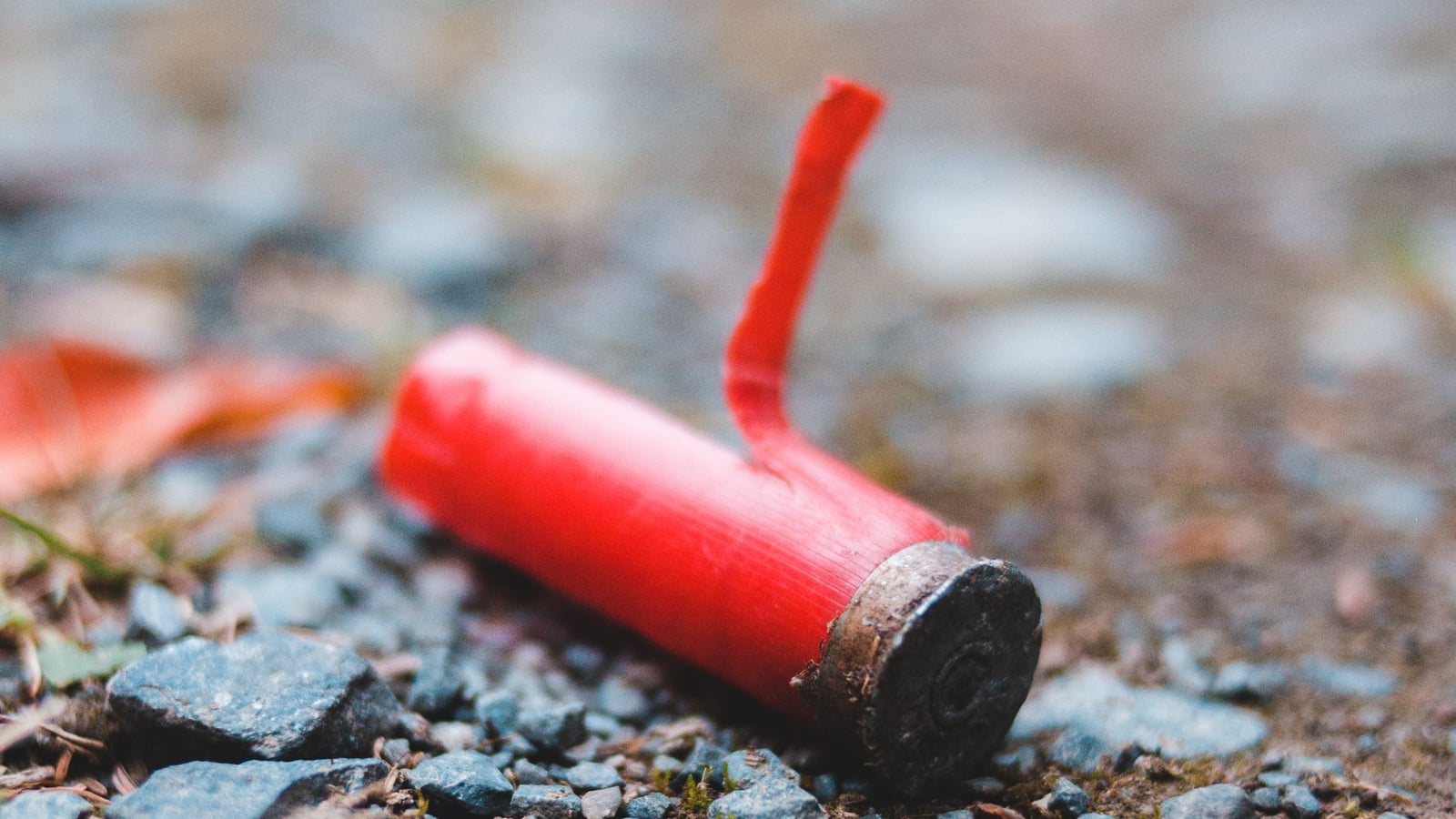
Three loads, three different logics
A smoothbore shotgun can fire three main families of ammunition that have nothing in common in terms of use: birdshot, buckshot, and the single projectile called a slug. Many beginner shooters mentally lump them together because they come out of the same barrel, when in fact they serve radically different needs.
Birdshot sends out a multitude of small pellets that form a wide pattern, designed to hit a fast-moving target at short to medium range. Buckshot sends out a smaller number of larger pellets, with a tighter pattern and an intermediate range. The slug sends out a single projectile, with a trajectory close to that of a rifle over a limited distance.
Mixing up these three loads, or picking the wrong one for the wrong discipline, isn’t just a matter of sporting performance. It’s also a matter of safety on the firing line and compliance with the range’s rules. A clay-target range doesn’t accept the same ammunition as a dynamic shotgun range or a slug range.
This article details the respective use of each load depending on the discipline practiced, the real differences in range and pattern between them, and what’s actually allowed on an FFTir-affiliated sport shooting range. The goal is for you to know, before buying a box of shells, whether it actually matches what you shoot.
This distinction becomes even more important when the same shooter practices several shotgun disciplines over the course of a season. A licensed shooter who alternates trap on Saturday and dynamic shotgun on Sunday has to mentally juggle two completely different ammunition logics, with safety and storage habits that can’t afford the slightest approximation. It’s one of the points an experienced coach systematically insists on with new licensed shooters discovering the versatility of the shotgun.
Birdshot: the load of clay disciplines
Birdshot, simply called “shot” in range jargon, refers to a shell loaded with numerous small spherical pellets whose diameter is identified by a number. The higher the number, the smaller the pellets, and the more of them fit in the shell for an equal charge weight.
This load is the absolute reference for clay disciplines: trap, skeet, and sporting clays. The principle behind these disciplines rests on a clay target launched into flight at high speed, on a trajectory that’s often unpredictable for the shooter discovering the throw. A wide pattern of small pellets maximizes the odds of hitting this moving target with a margin for error a single projectile would never allow.
The shot pattern opens progressively as it leaves the barrel, forming a cloud of pellets whose diameter increases with distance. At short range, this pattern stays compact and concentrated. Farther out, it widens but also thins, which reduces impact density per unit of surface area. This is why birdshot remains a short-to-medium-range load, generally effective up to a few dozen meters depending on the shot size and the barrel’s choke.
The choice of shot size depends directly on the discipline and the usual shooting distance. A fine size suits close, fast clays where pattern density matters more than the individual energy of each pellet. A larger size carries farther but with a less dense pattern — a trade-off best discussed with an experienced club coach rather than guessed alone on the line.
On a sport range oriented toward clay disciplines, birdshot isn’t just allowed, it’s practically mandated by the discipline’s rules. Most FFTir trap and skeet regulations explicitly ban buckshot and slugs, precisely because these loads don’t fit the discipline’s principle and carry safety risks unsuited to a moving aerial target.
The shot material itself also varies depending on the shells available on the market, between pure lead shot and non-lead alternatives required in certain contexts or countries under specific environmental regulations. A shooter wondering about this point is better off checking directly with their gunsmith, since regulatory developments on this exact topic change regularly and deserve an up-to-date check rather than a general answer frozen in time.
Buckshot: a wider pattern of heavier pellets
Buckshot consists of spherical pellets noticeably larger than those of birdshot, in a smaller number, generally from a few to about fifteen pellets depending on the gauge and shell type. Each pellet retains more individual energy over distance, at the cost of an overall less dense pattern than fine shot.
This load finds its favorite ground in dynamic disciplines that use cardboard or steel targets at close range, where the shooter has to engage several targets quickly with a shotgun. Buckshot is valued there for the energy it delivers per pellet, enough to register a hit on a cardboard target or knock down a steel plate, while keeping a more generous aiming margin than a single slug.
Buckshot’s useful range sits between fine shot and slug, typically effective over a short distance, well short of a rifle’s range. Beyond that distance, the buckshot pattern opens up enough that some pellets miss the target while others hit, which degrades shot reliability and also poses a safety issue if the range doesn’t have a backstop suited to that spread.
A range’s rules strictly govern buckshot use, because its spread and the individual energy of each pellet impose different safety requirements than birdshot. A firing line set up to accept buckshot generally has a berm or backstop sized accordingly, and the house rules spell out the distances and target types allowed with this load.
One point deserves to be repeated clearly: whatever dynamic discipline is practiced with buckshot, the targets engaged remain cardboard targets or generic steel plates. No civilian sport range setup uses, or should use, a target representing a human silhouette, and a serious club’s rules explicitly forbid it.
The number of pellets in a buckshot shell varies noticeably from one manufacturer to another, which directly affects pattern consistency from shot to shot. An experienced club shooter looking for the best possible consistency is better off testing several shell references at the same distance before settling on a choice, rather than making do with the first box available on the gunsmith’s shelf.
The slug: when the shotgun behaves like a rifle
A slug is a single projectile, usually made of hardened lead or an alloy, fired from a smoothbore shotgun barrel. Unlike birdshot and buckshot, which disperse their charge, a slug keeps a nearly straight-line trajectory over its useful range, which brings its use much closer to that of a rifle than to that of a clay-target shotgun.
This load serves disciplines that demand precision on a fixed or barely moving target at a distance a smoothbore can adequately cover, generally shorter than a rifled rifle’s range but noticeably longer than birdshot’s. Slug shooting is typically practiced on animal silhouette targets in FFTir competition, on a dedicated firing line that specifically accepts this type of ammunition.
A shotgun’s smooth barrel doesn’t impart stabilizing spin to the projectile the way a rifle’s rifling would. Some slugs incorporate fins or a specific design to partly compensate for this lack of spin and stabilize the trajectory, but precision remains structurally lower than a rifle’s over the same distance. That’s a trade-off the discipline accepts, not a flaw of the ammunition itself.
The range difference between birdshot and a slug is considerable. Where a shot pattern loses its effectiveness after a few dozen meters, a slug keeps a usable trajectory and energy over a noticeably greater distance, which explains why the two loads never substitute for one another depending on the discipline practiced.
On a sport range, slug use is governed by rules specific to the discipline concerned, with backstop and firing-line configuration requirements different from those of a clay range. A shooter looking to get into slug shooting needs to check with their club that the range’s infrastructure is actually certified for this ammunition before showing up with a box of slugs.
The weight and shape of the slug also directly influence trajectory and point of impact at different distances, somewhat like how bullet choice influences a rifle’s ballistics. An experienced coach often recommends sticking with the same shell reference from one session to the next once a satisfactory zero is found, rather than switching ammunition regularly and having to re-adjust aim each time.
Comparing ranges: what the ammunition really changes
The notion of range deserves clarifying, because it covers several realities depending on the ammunition. For birdshot, the useful range corresponds to the distance beyond which the pattern becomes too thin to guarantee an effective hit on the intended target, whether a clay or a game target in hunting practice.
For buckshot, the useful range is defined by the distance beyond which the spread of the few pellets becomes too great to guarantee enough of them hit the engaged target. This range generally exceeds fine shot’s, without approaching that of a single projectile.
For the slug, the useful range comes closer to the concept of range for a rifled weapon, limited mainly by the smoothbore’s intrinsic precision and the projectile’s stability rather than by pattern spread. It’s the load that objectively carries the farthest with usable precision among the three.
This range hierarchy directly explains why each load is confined to different disciplines and range configurations. A trap range doesn’t need a backstop sized for a slug, but a range hosting slug shooting must absolutely have infrastructure suited to that greater range and energy.
It’s also worth remembering that the range a manufacturer states remains a general figure that varies according to the exact shell model, the barrel length used, and the choke fitted. Rather than fixating on a precise number that might not match your gear, it’s better to treat these relative orders of magnitude between the three loads as the useful benchmark.
The notion of maximum range — the distance at which a projectile remains dangerous even though it’s no longer effective for precisely hitting a target — far exceeds the useful range for all three loads. That’s one of the reasons the siting of a sport range, the orientation of firing lines, and the height of safety berms are calculated by professionals to precise standards, independent of the useful range actually exploited by shooters in everyday practice.
Comparing patterns: density, spread, and margin for error
The birdshot pattern is the densest and the most spread out in surface area at the moment of impact, which makes it the most forgiving load for hitting a fast, moving target like a clay. That forgiveness comes at a price: each individual pellet carries little energy, insufficient for a use that would require penetration or a solid impact on a tougher target.
The buckshot pattern occupies an intermediate position: fewer pellets, so a smaller aiming margin than fine shot, but each pellet carries more individual energy. This combination suits dynamic disciplines where the target is fixed or barely moving but where impact energy must be enough to register a score or knock down a steel plate.
By definition, a slug has no pattern at all: a single projectile, a single trajectory, no margin for error linked to spread. All the charge’s energy concentrates on this single projectile, which in turn demands noticeably higher aiming precision than birdshot or buckshot requires.
This spread hierarchy translates directly into a demand on the shooter’s skill. Birdshot forgives aiming imprecision thanks to its wide pattern. Buckshot forgives less. A slug forgives almost nothing and demands aim mastery comparable to that required with a rifle, albeit over a shorter distance.
A shooter starting out on all three loads in succession often notices this same progression in difficulty. It’s a good pedagogical reason to first solidify your aim with birdshot on clays before tackling the more demanding precision of the slug, even though nothing technically stops you from starting directly with whichever discipline interests you most.
This notion of margin for error also explains why some competition formats impose precise engagement distances depending on the load used. A course featuring both close and distant targets will generally adjust the allowed load at each station, so the tolerance margin stays consistent with the actual shooting distance at each stage of the course.
What’s allowed depending on the discipline practiced
An FFTir discipline’s rules systematically specify which loads are allowed and which are banned, and those rules always take precedence over a shooter’s personal preference. In trap and skeet, only birdshot is allowed, often with a limit on shot size and maximum charge to preserve sporting fairness and facility safety.
In dynamic shotgun, on cardboard targets or generic steel plates, the discipline’s rules specify whether buckshot, slugs, or both are allowed depending on the stages and courses. Some courses deliberately mix loads within the same sequence, which forces the shooter to load the right shell at the right moment according to the stage’s scenario.
In pure slug discipline, obviously only the slug is allowed, and the rules generally specify the shooting distances and the type of animal silhouette used as a target. The firing line dedicated to this discipline is configured specifically for this load, with a backstop suited to its energy and range.
A point of caution applies to any shooter discovering a new shotgun discipline: never assume a load is allowed simply because it was on another range or in another discipline. The club’s house rules and the range safety officer’s instructions on the day always take precedence, and a range can restrict allowed ammunition more than the general federal rules would permit, depending on its own safety infrastructure.
It’s also worth checking this point before showing up for a competition or a course at a club you don’t normally attend. Two ranges affiliated with the same federation can have different facilities, and therefore different allowed loads for the same nominal discipline, simply because one has a reinforced backstop and the other doesn’t.
The discipline sheets published by the federation provide a useful general framework for preparing ahead of a first participation, but they never replace the verbal instructions given at the briefing on competition day. A range safety officer can locally adjust certain rules depending on the weather, ground conditions, or a one-off safety constraint, and these adjustments always take precedence over the written document consulted beforehand.
Safety: why the ammunition is never a detail
Choosing the right load for a discipline isn’t just about performance or sporting rules: it’s above all a matter of safety for you and the other shooters present on the range. Buckshot or a slug fired at a facility designed only for birdshot can exceed the stopping capacity of the backstop in place, with consequences no sporting rule can afford to risk.
That’s why the range safety officer or coach present on a firing line systematically checks the ammunition used by each shooter before a string begins, especially in disciplines that allow several types of loads depending on the stage. This check isn’t an administrative formality — it’s an active safety measure that protects the whole range.
A shooter who mistakenly loads buckshot or a slug on a trap firing line, through a simple mix-up of shell boxes in their bag, potentially exposes facilities and people to a risk the range’s backstop wasn’t designed to absorb. That’s one of the reasons many serious clubs recommend sorting your ammunition by type and discipline rather than mixing several boxes in the same shooting bag.
Checking the barrel and the choke fitted also matters before firing a slug, because some very tight chokes aren’t recommended by manufacturers for this type of load, at the risk of damaging the barrel or seriously degrading precision. A trusted gunsmith can confirm whether your current choke is suited to slug shooting before you try it.
Finally, storing ammunition at home follows the same logic of rigor, regardless of type. Clearly separating boxes of birdshot, buckshot, and slugs, and systematically checking the labeling before loading, remains the simplest habit to avoid any mix-up, at the club as much as at home.
A visual check before every shot remains the last safety net, however careful the upstream storage was. Getting into the habit of checking the headstamp or hull markings on a shell before chambering it, even when you think you know your bag by heart, prevents the vast majority of ammunition mix-ups seen on ranges, and this simple habit deserves to be taught from the very first sessions to any new licensed shooter.
Choosing your ammunition based on your shooting goals
A shooter who practices exclusively trap, skeet, or sporting clays actually only has one decision to make regarding ammunition: the shot size and charge, not the type of load itself, since the rules mandate birdshot. That decision is made mainly based on the average distance of the clays encountered at their club and their aiming habits.
A shooter moving toward dynamic shotgun needs to check with their club which loads are allowed on the courses they plan to shoot, and gear up accordingly. Some shooters keep buckshot and slug ammunition separately prepared in advance, clearly labeled, to avoid any mix-up during a course that alternates between the two.
A shooter discovering slug discipline for the first time is better off leaning on an experienced coach for their first sessions, given how much the precision demand differs from birdshot’s. Jumping straight from clay shooting to slug shooting without guidance can generate needless frustration, simply because the aiming references aren’t the same.
A shooter planning to practice several shotgun disciplines over the year has every interest in budgeting their ammunition purchases by discipline rather than buying a large quantity of a single load they think is universal. Birdshot, buckshot, and slugs never effectively substitute for one another, however urgent the moment.
The digital shooting logbook remains a valuable tool for tracking this choice over time, noting precisely which load was used at which session and with what felt result. A shooter who logs this information over several months finds it much easier to recall the exact shell reference that worked best for them, rather than relying on a vague memory when buying another box at the gunsmith’s.
Choke and barrel: an underrated role in choosing ammunition
The choice of barrel choke directly affects each load’s effectiveness and deserves consideration when choosing a shell, regardless of discipline. A tight choke tightens the birdshot or buckshot pattern, which increases impact density at distance but reduces the covered area — a trade-off to adjust based on average shooting distance.
For the slug, a choke that’s too tight can instead degrade precision or, in some cases, not be recommended at all by the barrel manufacturer, particularly on the tightest interchangeable chokes designed for long-range fine shot. A shooter who regularly switches between shot and slug on the same shotgun should check the compatibility of their choke set with each load with a gunsmith.
Some shotguns dedicated specifically to slug shooting are fitted with a fixed cylinder-choke barrel or a barrel rifled over a short section, precisely designed to optimize the single projectile’s stability rather than the pattern. A shooter planning to shoot slugs regularly might eventually consider a barrel dedicated to that use rather than permanently making do with a versatile barrel.
This technical equipment dimension adds to the choice of ammunition itself, and a gunsmith specialized in sport shooting remains the best resource to guide you toward the barrel, choke, and load combination most consistent with your shooting, rather than multiplying costly trial-and-error attempts.
Barrel maintenance after a slug shooting session also deserves particular attention, because this type of load sometimes stresses the barrel’s rifled inserts or interior coating differently compared to a classic birdshot session. Careful cleaning after every outing, with the appropriate products recommended by the manufacturer, preserves barrel precision over time and avoids premature wear caused by neglected maintenance.
Regulatory framework for ammunition under the French classification
The administrative classification of ammunition follows a logic tied to that of the firearm and caliber, governed by the same category system that applies to firearms. As a reminder, category A covers material banned for private individuals, category B covers firearms subject to prefectural authorization, category C covers firearms subject to declaration, and category D covers firearms freely sold or subject to simple registration.
Smoothbore shotgun ammunition used in civilian sport practice, whether birdshot, buckshot, or slugs, generally falls under a declaratory regime tied to the category of the firearm that fires it, rather than an independent classification specific to each type of ammunition. It’s best to check this exact point with your gunsmith or your federation before any bulk purchase, since the texts governing ammunition evolve and vary depending on the configuration.
Buying ammunition at a club or from a gunsmith generally requires proving a valid FFTir license and, depending on the type of ammunition, legal possession of the corresponding firearm. This check protects both the shooter and the seller, and it applies the same way to birdshot, buckshot, and slugs, without favoring one over another.
The quantities of ammunition a private individual can hold at home also follow their own declaratory framework, which is best checked directly with the competent authorities or your federation rather than relying on an approximate figure circulating among shooters, since these thresholds can be adjusted by the texts in force.
Transporting ammunition between home and the range also follows precautionary rules worth knowing, particularly regarding the recommended separation between the firearm and the ammunition during transit. These good practices, generally reiterated in each club’s house rules or by the federation, apply identically regardless of the type of ammunition being transported.
Budget and availability by ammunition type
Birdshot remains, overall, the most available and most economical of the three loads, carried by significant production volume tied to clay disciplines that remain among the most practiced shotgun sports in France. This availability makes regular training easier without weighing too heavily on a dedicated shooter’s budget.
Buckshot occupies an intermediate position in terms of cost and availability, with a narrower range than birdshot but sufficient at most gunsmiths serving a dynamic shotgun clientele. Prices vary noticeably depending on the number of pellets, the manufacturer, and the ballistic consistency sought — a point best discussed directly with your gunsmith rather than relying on a general average.
The slug tends to be the most expensive of the three per unit, which is explained by its more elaborate design aimed at stabilizing a single projectile from a smoothbore barrel. A shooter who practices this discipline intensively feels this cost gap more clearly over a season than an occasional shooter.
This cost difference deserves to factor into the decision when choosing your main discipline, without becoming the sole deciding factor. The enjoyment of the practice and the fit with your sporting goal remain criteria at least as important as the ammunition budget, which stays marginal anyway compared to the overall cost of regular sport shooting practice.
Buying in larger quantities often reduces the unit cost, a logic valid for all three loads but particularly worthwhile for birdshot, consumed in significant volume by regular clay shooters. This approach, however, assumes you have suitable storage space at home, meeting the recommended storage conditions to preserve the shells’ ballistic consistency over time.
Common mistakes to avoid
The most frequent mix-up among shooters discovering several shotgun disciplines is storing different ammunition boxes in the same bag without clear labeling, risking loading the wrong shell at the wrong moment. This risk increases further during a course that deliberately alternates several loads in the same session.
Another common mistake is underestimating the precision demand of the slug when coming straight from birdshot practice, without adjusting expected results or aiming approach. An experienced club shooter discovering slugs for the first time is better off accepting a learning phase rather than expecting the same tolerance level as with clays.
Some shooters also neglect to check their choke’s compatibility with the intended load, particularly for slugs on a barrel fitted with a tight choke not recommended for this use. This check takes just a few minutes with a gunsmith and avoids equipment trouble or disappointing precision.
Finally, assuming a load allowed at one club will automatically be accepted at another remains a classic mistake among shooters switching ranges or attending an outside competition for the first time. Checking systematically beforehand, rather than finding out on-site, avoids an awkward situation on the day.
One last, more subtle mistake is neglecting to keep precise track of your ammunition and settings from one season to the next. A shooter who switches charge, shot size, or slug reference without noting their observations wastes valuable time trying to rediscover through trial and error a setting they had actually already validated before. Documenting your tests, even briefly, remains a simple habit that pays off over time.
FAQ
Q: Can you fire buckshot on a trap range? A: No, the rules for clay disciplines mandate birdshot exclusively, and buckshot is generally explicitly banned there. The backstop and range configuration aren’t designed for this type of load either.
Q: Is a slug as precise as a rifle at the same distance? A: No, a smooth barrel doesn’t impart the stabilizing spin of a rifled barrel, which limits the slug’s precision compared to a rifle at the same distance. It remains, however, noticeably more precise and longer-ranged than birdshot or buckshot.
Q: How do I know which loads are allowed at a range I don’t know? A: Check systematically with the club or the range safety officer before your session, since the rules can vary depending on each facility’s own safety infrastructure. Never assume a load allowed elsewhere will automatically be allowed at a new range.
Q: Do you need a different shotgun for each type of ammunition? A: Not necessarily — many versatile shotguns fire all three loads, but choke choice must be checked for each, especially for slugs. A shooter practicing slugs intensively might eventually consider a dedicated barrel.
Q: Why does buckshot cost more than birdshot? A: Supply and production volume are smaller than for birdshot, which benefits from the popularity of clay disciplines. Prices also vary by manufacturer and the ballistic consistency sought.
Q: Can a beginner start directly with slug discipline? A: Nothing technically prevents it, but the precision demand is closer to a rifle’s than to clays’. Guidance from an experienced coach from the very first sessions makes learning much easier.