
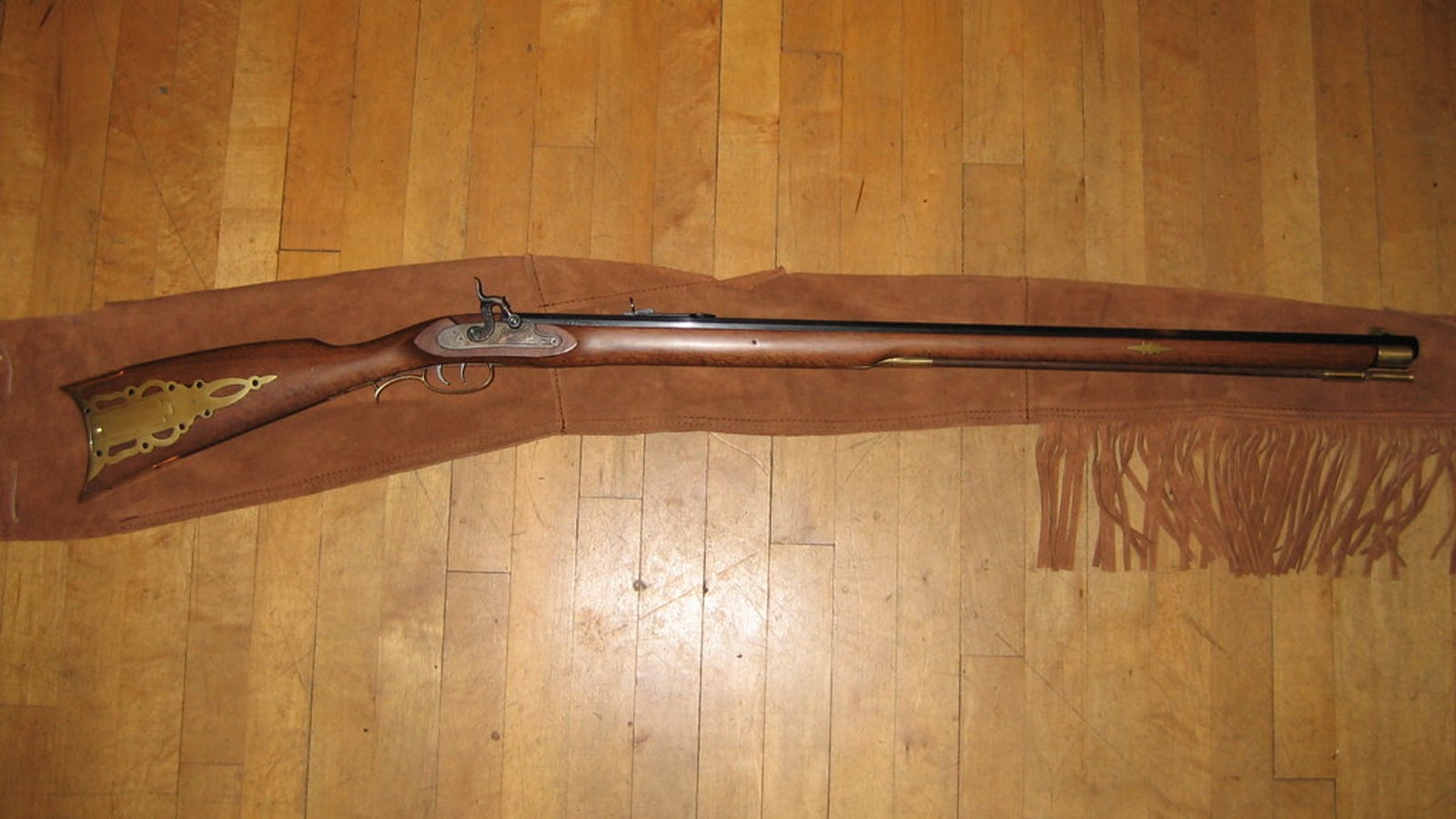
A discipline that goes back to the origins of the firearm
Black powder shooting is nothing like a simple nostalgic tribute. It’s a full sporting discipline, governed by national shooting federations, with its own regulations, weapon categories, and technical culture. You don’t shoot “the old way” for folklore’s sake: you shoot using an ignition process completely different from modern shooting.
That difference in process changes everything: shot preparation, shooting pace, risks, and maintenance. A shooter coming from classic sport shooting who thinks they can carry over their habits is almost always wrong. Muzzleloading imposes a strict, non-negotiable sequence of movements.
This article covers the required equipment, the fundamental differences from modern cartridge shooting, black-powder-specific safety, and the immediate maintenance this discipline demands after every session. The goal: for you to know exactly what you’re getting into before you gear up.
Muzzleloading vs. modern cartridge: the fundamental difference
With a modern firearm, the cartridge is a complete, sealed unit: primer, powder, and projectile are assembled at the factory inside a metal case. You load, you shoot, the case is ejected. The entire ignition chemistry is contained and protected from air, humidity, and human handling until the moment of firing.
With a muzzleloading black powder firearm, there is no cartridge. You assemble the shot yourself, directly in the barrel or the cylinder, every single time:
- Black powder is poured first, in a measured quantity, into the bottom of the barrel or chamber.
- A wad is then inserted and seated to separate the powder from the projectile and seal the combustion gases.
- The projectile (round ball, conical bullet, or shot depending on the firearm) is pushed down on top, usually with a ramrod.
- The whole assembly is fired by a percussion cap (or a flintlock or matchlock system, depending on the historical reproduction used).
This sequence means every shot is a deliberate, sequential act, carried out in the open air, without any protective metal enclosure. Black powder, unlike the smokeless powder in modern cartridges, is also far more sensitive to sparks, flame, and friction — it doesn’t need confinement to ignite, which completely changes the safety approach.
Another major difference: combustion. Black powder produces huge amounts of solid residue and a dense cloud of smoke with every shot. Modern smokeless shooting is clean by comparison. This trait demands immediate maintenance after the session, or you risk accelerated barrel corrosion.
The legal classification of black powder firearms
Under French law, firearms fall into four categories: Category A (banned for private individuals, war materiel), Category B (subject to prefectural authorization, handguns and most semi-automatics), Category C (subject to declaration, certain hunting weapons or manually operated repeating rifles), and Category D (freely sold or subject to simple registration, low-power air guns, replicas, and certain historical weapons).
A large number of reproductions of antique black powder firearms — single-shot or flintlock — historically fall under a lighter regime compared to equivalent modern firearms, due to their loading method and very limited rate of fire. That classification, however, depends precisely on the model, its mechanism, and its caliber: never rely on a generalization you heard at the club — always check the exact classification of the firearm you’re considering before any purchase.
This also varies with ongoing regulatory changes, which can shift thresholds or categories over time. A gunsmith specializing in antique firearms, or your federation-affiliated club practicing the black powder discipline, remains the most reliable source to confirm the exact status of a specific model before buying.
In every case, acquiring, possessing, and transporting these firearms remain subject to the same traceability and safety requirements as any other firearm: an approved safe or gun cabinet, recommended separation of ammunition and firearm, and an up-to-date shooting logbook if your category requires one.
The essential regulation-required equipment
Black powder shooting requires specific gear, well beyond the firearm itself. Here’s what you’ll find on the firing line of any serious practitioner:
- The powder flask (or measuring horn): used to measure and pour a precise black powder charge for each shot. Regulation models often include a graduated measure that saves you from weighing each charge separately.
- The wads: made of felt, cardboard, or an approved synthetic material depending on the discipline, they separate the powder from the projectile and seal the combustion gases inside the barrel.
- The percussion caps: used on percussion firearms, they replace the flint of older weapons and trigger ignition of the powder charge the moment you pull the trigger.
- The loading rod (ramrod): essential for seating the wad and driving the projectile down to the bottom of the barrel, with a systematic check that it’s fully seated.
- A dedicated cleaning kit: cleaning patches/brushes, specific oil, solvent suited to black powder residue — a modern-firearm cleaning kit isn’t always adequate here.
- The projectiles: round lead balls, conical bullets, or shot, depending on the type of firearm and the discipline practiced at your club.
Each piece has a precise role in the safety chain of the shot. A poorly chosen wad or a mis-measured powder charge can cause dangerous overpressure for both the firearm and the shooter. This is never a cosmetic detail.
The central role of measuring the powder
Unlike a modern cartridge, where the charge is fixed and controlled at the factory, with black powder it’s you who sets the charge for every single shot, using your powder flask or measure. That responsibility completely changes your relationship to shot preparation.
A badly calibrated measure, a powder flask that dispenses more than intended, or an approximate “by eye” charge represent the number one risk in this discipline. National federations and black powder firearm manufacturers publish tables of recommended maximum charges by model and caliber — following them strictly isn’t optional.
An experienced club shooter always drills the same point into beginners: never improvise a charge, never “round up” a measurement out of laziness, and never reuse a measure from one caliber for another. Rigor here replaces the mechanical consistency that a factory cartridge provides.
It’s also imperative to never pour powder directly from a storage container into the barrel: the individual measure exists precisely to isolate the small quantity used from the rest of the stock, so that a residual spark in the barrel can never travel back to the main container.
Discipline-specific safety: the risk of residual embers
Safety in black powder shooting shares the fundamentals of classic civilian sport shooting — firearm always pointed in a safe direction, finger off the trigger outside of firing, firearm unloaded until it’s on the line — but it adds risks specific to this ignition method.
The main, best-documented risk in black powder shooting is that of a residual ember after a shot. A fragment of wad or combustion residue can remain smoldering inside the barrel, invisible to the naked eye, after the shot has fired. Reloading immediately on top of that residue can trigger an unintended discharge at the exact moment you’re inserting the new powder charge.
The strict rule passed down in every federation club practicing this discipline: always observe a waiting period before reloading, and for some protocols, lightly dampen the inside of the barrel or run a wet cleaning patch through it between shots to extinguish any smoldering residue before introducing the next charge.
Other points of vigilance specific to this discipline:
- Never store a full powder flask near a flame, an unprotected percussion cap, or a heat source.
- Never force a poorly seated projectile with the ramrod: misalignment can create localized overpressure.
- Systematically check the barrel is clear of any obstruction before every charge, especially after a misfire.
- Wear suitable eye and ear protection: the black powder cloud throws off more particles and residue than modern shooting.
A misfire (the cap ignites but not the main charge, or nothing happens at all) requires a strict waiting procedure before any handling, exactly as with a modern firearm, but with heightened vigilance regarding residue potentially still hot inside the barrel.
Immediate maintenance after the session: an obligation, not an option
This is probably the point most underestimated by beginners coming from modern shooting. Black powder combustion leaves highly corrosive and hygroscopic residue — meaning it draws moisture from the air. A barrel neglected after a black powder session can develop visible corrosion within just a few hours, compared to several days or weeks for modern powder residue.
Cleaning must happen the same day, ideally within the hour following the last shot. This isn’t a matter of cosmetic cleanliness: it’s a matter of preserving the barrel and the action.
The classic procedure followed at clubs:
- Disassembling removable parts, depending on the firearm model.
- Running wet cleaning patches or brushes repeatedly (hot soapy water or a dedicated black powder solvent) to dissolve solid residue.
- Complete, thorough drying of the barrel and mechanism, leaving no trace of residual moisture.
- Applying a suitable protective oil to all metal surfaces, including hard-to-reach areas.
- Visual inspection of the barrel under light to detect any early sign of corrosion.
An experienced instructor often recommends a second check 24 to 48 hours after the initial cleaning, since poorly dissolved residue can keep drawing moisture even after an apparently thorough first cleaning. This delayed check lets you catch a cleaning shortfall before it becomes a structural problem.
The different ignition types in black powder shooting
Not all black powder firearms share the same ignition system, and this variety directly affects the gear you need and the safety actions you must follow:
- Flintlock ignition: a cock fitted with a flint strikes a steel piece to produce a spark that ignites a small quantity of priming powder, which in turn passes the flame to the main charge. This is the oldest system still practiced in the sporting discipline.
- Percussion ignition (cap): a cap containing a priming explosive is struck by a hammer or firing pin, which transmits the flame directly to the main charge through a nipple. This is the most widespread system in clubs today, more reliable in all weather than the flintlock.
- Matchlock reproductions: rarer in regular sporting practice, these use a slow-burning match kept lit continuously to ignite the charge at the desired moment. This system demands constant vigilance over managing open flame throughout the entire session.
Each system imposes its own safety reflexes and its own maintenance. A flintlock shooter, for instance, must regularly check the condition of their flint, while a percussion practitioner must check the condition of their nipples to avoid any lateral gas jet at the moment of firing.
Original antique firearms and modern reproductions: an essential distinction
On the black powder firing line, you’ll encounter two very different families of firearms, even though their operating principle stays identical. On one side, authentic antique firearms, sometimes a century old, inherited or acquired from a gunsmith specializing in collector’s weapons. On the other, modern reproductions, manufactured today using contemporary steels and production methods, but faithfully reproducing the look and mechanism of a historical model.
This distinction isn’t just a matter of collecting or aesthetics: it has direct consequences for sporting practice. A modern reproduction benefits from stricter manufacturing tolerances, better-controlled steels, and industrial quality control. An authentic antique firearm, even if perfectly maintained, has gone through decades of handling whose complete history is rarely known with certainty.
For this reason, the vast majority of federation clubs that oversee the black powder discipline steer beginners toward modern reproductions rather than authentic antique pieces. A recent reproduction designed for regular sporting use offers a better-known safety margin, whereas a period firearm belongs more to the realm of collecting or a very closely supervised practice, with prior metallurgical checks recommended by a specialist gunsmith.
A few benchmarks to help you find your way:
- A modern reproduction certified for shooting: designed and sold explicitly for regular sporting use, with controlled tolerances. This is the default recommendation for new practitioners.
- An authentic antique firearm in firing condition: requires a prior expert assessment by a gunsmith specializing in antique firearms before any use on a firing line, regardless of its apparent condition.
- A collector’s piece not intended for firing: some antique pieces are preserved as historical objects and should never be loaded or fired, since their metallurgical condition isn’t guaranteed to withstand the pressure of a real shot.
Never fire an antique firearm whose condition hasn’t been validated by a qualified professional. The temptation to “just fire it once to see” with an inherited or secondhand piece is one of the most well-documented causes of incidents in this discipline, precisely because the origin and metallurgical history of the firearm are never guaranteed.
Understanding the projectiles: round ball, conical bullet, and shot
The choice of projectile directly affects ballistics, accuracy, and even the type of wad you need to use. Unlike modern shooting, where the projectile is inseparable from its cartridge, in black powder shooting the choice of projectile is an independent decision the shooter makes at every session, depending on their firearm and the discipline practiced.
- The round lead ball: historically the oldest form of projectile, still widely used in smoothbore or slow-twist rifled carbines and pistols. Its spherical shape simplifies loading into the barrel but limits effective range compared to a conical bullet.
- The conical bullet (Minié-type or similar): elongated and often fitted with a skirt that expands under gas pressure to engage the barrel’s rifling, it offers better flight stability and greater accuracy at longer range. In exchange, it requires a more precise fit to the barrel’s caliber.
- Small-diameter shot: used on certain replicas or smaller-caliber firearms, particularly in the beginner discipline, with loading constraints different from those of larger-caliber bullets.
The choice of projectile is never trivial relative to the rest of the load: the exact diameter, weight, and material determine the recommended powder quantity, the appropriate wad type, and the pressure generated inside the barrel. A projectile poorly matched to the firearm — too tight, too loose, or an inappropriate weight for the manufacturer’s specifications — can create overpressure, or conversely poor energy transfer that hurts both accuracy and shooting safety.
That’s why experienced shooters keep precise load records per firearm and per projectile, logging the powder/wad/projectile combination that works reliably and safely for their specific equipment. This personal record-keeping complements the maximum load tables provided by the manufacturer, without ever replacing them.
Weather conditions: humidity, temperature, and ignition reliability
Black powder is markedly more sensitive to weather conditions than modern smokeless powder, largely because of its hygroscopic nature — its tendency to absorb ambient moisture. A humid outdoor range, a powder flask left open too long, or a session in light rain can all degrade ignition reliability.
Black powder that has absorbed moisture, even in a minimal amount invisible to the eye, burns less efficiently, produces more unburnt residue, and can cause misfires or dangerous incomplete shots, where the projectile stays lodged in the barrel without being fully expelled. This situation — a projectile lodged in the barrel after an apparently normal shot — represents a serious danger if it isn’t detected before the next shot, hence the importance of systematically checking for obstructions, as mentioned earlier.
A few practical precautions followed at clubs in humid or rainy weather:
- Keep the powder flask closed at all times, opening it only for the strict duration of measuring.
- Protect the powder supply in a sealed container between strings of fire, shielded from any prolonged exposure to ambient air.
- Check the appearance of the powder more frequently before loading: damp powder changes slightly in appearance and smell compared to dry powder.
- Pay particular attention to signs of an abnormal shot (muffled sound, weaker recoil than usual), which can indicate incomplete combustion and thus a projectile potentially left in the barrel.
Cold also affects the discipline, though less critically than humidity: very cold black powder can slightly alter burn rate, which is why some competitive shooters prefer to store their powder at a stable temperature rather than exposing it to large temperature swings between storage and the firing line.
The black powder shooting station: organization and ergonomics
The physical layout of the firing station in black powder shooting differs noticeably from that of a modern shooter, due to the number of accessories that must be handled in a precise order for every shot. A poorly organized station multiplies the risk of error: mixing up two measures, a misplaced wad, a cap rolling out of reach at the wrong moment.
Experienced shooters generally adopt a systematic layout that stays identical session after session:
- Gear is arranged in order of use, left to right or right to left depending on preference, never scattered.
- The powder flask and measure always stay in the same spot, never mixed with the caps, to avoid any confusion between the two most sensitive components.
- Only one type of wad and one caliber of projectile are present on the station at any given time, with the rest of the stock kept stored elsewhere, to eliminate any risk of mixing calibers.
- The ramrod stays accessible without having to be searched for, ideally at a fixed spot always in the same place on the station.
This organizational rigor isn’t just a habit of convenience: it’s an integral part of the discipline’s safety. A shooter who has to interrupt their loading motion to search for a misplaced accessory breaks their concentration at the exact moment attention must remain at its peak — while handling explosive powder and an active ignition system.
Budget and costs: what this discipline really represents
The cost of entering black powder shooting follows a different logic than modern shooting, particularly because the cost per shot is split differently between the firearm, consumable ammunition components, and maintenance.
On the firearm itself, an entry-level modern reproduction generally stays within a price range comparable to an equivalent entry-level modern firearm, though this varies widely depending on the model, manufacturer, and mechanism chosen (percussion or flintlock, with flintlocks often more expensive due to their more complex mechanism to produce).
On the consumables side, the cost structure differs markedly from modern shooting:
- Black powder, wads, caps, and projectiles are bought separately and in bulk rather than in preassembled cartridges, which can reduce the cost per shot once the measuring gear is paid off.
- In exchange, the dedicated cleaning kit (specific solvents and patches/brushes) represents a non-negligible recurring expense, due to the frequency and rigor of maintenance required after every session.
- The time spent on maintenance is also a real cost, often underestimated by beginners who only compare ammunition prices without factoring the mandatory cleaning time into their overall budget.
This varies considerably depending on how often you practice, the club you attend, and your region, so avoid relying on a specific figure you heard here or there: ask your affiliated club for a realistic budget estimate based on regional practice and the gear they recommend, before committing to a first purchase.
The disciplines practiced in national competition
Black powder shooting isn’t limited to a solitary practice: national federations oversee several competition formats that structure a shooter’s progression, from the local level up to the national level.
Events generally differ by weapon type (black powder rifle or pistol), shooting distance, and target type — concentric-zone paper targets in most precision formats. Some more technical events impose reduced time limits, which further complicates managing the charge and reloading between strings.
The typical progression at a club follows a well-marked path: a supervised introduction to the basics of loading and safety, regular training on the fundamentals of dosing and firearm hold, then participation in the first internal competitions before considering regional levels. This progression takes time — considerably more than for a modern firearm — because every preparation gesture must become a reliable automatism before pure performance can even be considered.
The logistics of a black powder competition session
A black powder competition runs at a very different pace from a modern shooting competition, which often surprises shooters discovering this discipline after coming from another one. The time allotted per shooter and per string necessarily includes manual reloading time, considerably longer than for a modern repeating firearm.
The competition officials overseeing these events know this constraint well and factor it into the day’s program: rotations between shooters on the line are longer, and time slots per firing point are calculated accordingly. A shooter discovering this discipline in competition for the first time should expect an overall longer day than in modern shooting, for a comparable number of shots fired.
A few logistical elements specific to black powder competition that are best anticipated before the big day:
- Equipment inspection before the event: officials generally check the firearm’s compliance (category, mechanism, caliber authorized for the event) and sometimes the powder charge used, depending on the exact competition rules.
- Managing the firing station within a time limit: some events impose an overall firing time that includes reloading, which requires training specifically at competition pace, different from the free training pace at the club.
- Collective safety on the firing line: with several black powder shooters side by side, the collective discipline around reload timing and checking for smoldering residue becomes even stricter than in individual training.
- Cleaning between events on the same day: a shooter competing in several events on the same day sometimes needs to do a light intermediate maintenance of their firearm, especially if the number of shots fired is high.
This particular organization also explains why progression in black powder competition values consistency of motion just as much as raw scoring performance. A shooter who has fully mastered their reload rhythm holds a real advantage over the whole competition day, beyond accuracy alone.
Getting equipped: where to concretely start
Getting into black powder shooting is never something you do alone through a general gunsmith. The first step is systematically the federation-affiliated club that offers this discipline, where qualified supervision validates the basics before any personal purchase.
A few benchmarks to structure your first steps:
- Contact a club near you that practices the black powder discipline and ask for a supervised introductory session before any equipment investment.
- Use this period to try several types of firearms (flintlock, percussion) and figure out which matches the practice you’re aiming for.
- Find out the exact legal classification of the model you’re interested in before any purchase, since status varies by the specific model.
- Plan a budget covering not just the firearm, but the entire regulation-required gear: powder flask, wads, caps, ramrod, and a dedicated cleaning kit.
- This varies by club and region, but the price of a complete starter kit generally stays comparable to that of an entry-level modern firearm, once you add up the accessories.
Never try to rush this learning phase. Black powder forgives method mistakes far less than modern shooting, precisely because every step of the shot is manual and reversible only through the shooter’s own rigor.
Storage and transport of black powder
Black powder is classified as an explosive substance, and its storage follows rules distinct from those governing modern ammunition storage. The quantities allowed for personal possession, the storage conditions (approved container, distance from heat sources, a dedicated room beyond certain thresholds), and the transport rules depend on current regulations and vary according to the quantity held.
This varies by local authority and by evolving regulations on explosive substances: never rely on information heard at the club without verifying it with an official source or your specialist gunsmith at the time of purchase. This point deserves systematic verification, since the consequences of non-compliant storage go well beyond the sporting context.
For transport to the range, the basic rule remains universal across every sport shooting discipline: powder and firearm kept separate, containers closed, direct transport without unjustified intermediate stops. A serious club systematically reminds new members practicing this discipline of these rules.
Common beginner mistakes
Certain mistakes recur with striking regularity among shooters discovering black powder after having practiced only modern shooting:
- Underestimating shot preparation time: the shooting pace in black powder is incomparably slower, and wanting to “go fast” pushes shooters to skip safety steps.
- Neglecting immediate maintenance: putting off cleaning until the next day because of end-of-session fatigue, with corrosion potentially already underway by the time you wake up.
- Mis-measuring out of visual habit: a beginner used to pre-loaded cartridges tends to underestimate the importance of precise manual dosing, thinking a small variation changes nothing.
- Ignoring the risk of smoldering residue: reloading too quickly after a shot without observing the waiting period or the wet-patch pass recommended by the club.
- Mixing gear between calibers: using a measure or wads meant for a different firearm model, which can completely throw off the actual charge sent downrange.
An experienced instructor observes that most incidents during black powder introduction come from gestural impatience, not equipment failure. The discipline imposes a pace, and that pace is an integral part of safety.
FAQ
Q: Is black powder shooting more dangerous than modern shooting? A: It isn’t more dangerous in absolute terms, but the risks are different and demand specific vigilance, notably around manually dosing the charge and the smoldering residue after firing. Supervised club practice with strict adherence to procedures remains just as safe as modern shooting.
Q: Can you use any commercially available black powder? A: No, you must use black powder approved for sporting use and strictly follow the maximum charges recommended by the firearm’s manufacturer. This varies by model and caliber — check with your club or a specialist gunsmith before any purchase.
Q: Do you need a specific license or authorization to practice this discipline? A: The regime depends on the exact classification of the firearm used (Category B, C, or D depending on the model), so it requires case-by-case verification. Your federation-affiliated club practicing the black powder discipline can guide you precisely, based on the firearm you’re considering.
Q: How long does cleaning take after a session? A: This varies depending on the firearm and the number of shots fired, but generally expect it to take longer than for an equivalent modern firearm, due to the volume of residue to deal with. Cleaning must happen the same day to avoid any risk of corrosion.
Q: Can you shoot classic targets like in modern shooting? A: Yes, black powder competitions use concentric-zone paper targets similar in principle to classic precision disciplines. The exact format depends on the event and the regulation distance set by the federation.
Q: Can you start on your own directly with gear bought online? A: This isn’t recommended: the first step should always be a supervised introduction at a federation-affiliated club, before any personal equipment purchase. The safety actions specific to this discipline are learned in person, not from an instruction manual.