
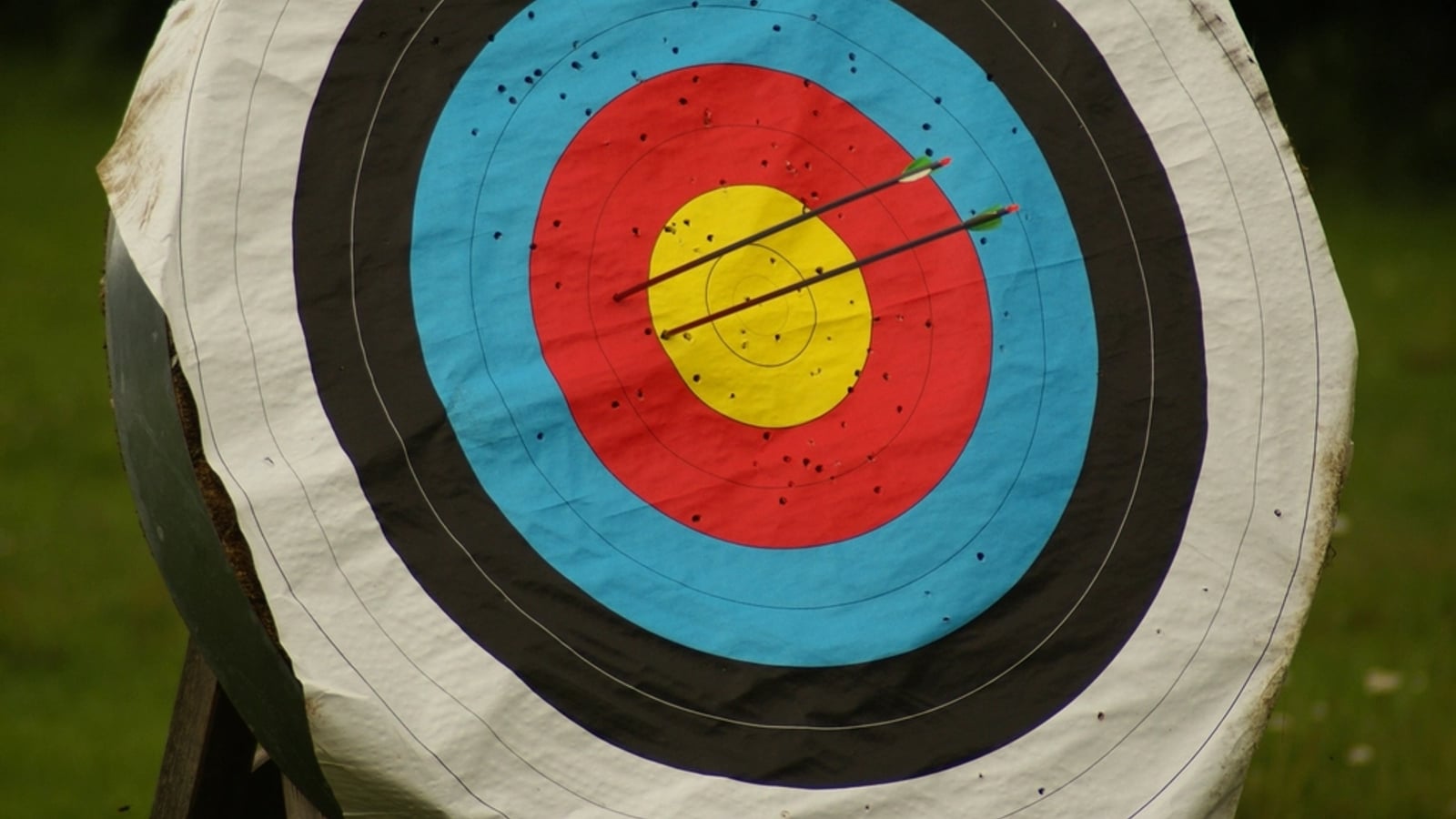
Two disciplines, one shared mental root
Many bullet shooters look at archery from a distance, as a cousin discipline but somewhat apart, with its own world and its own codes. That’s a perspective mistake. Archery and bullet sport shooting share an almost identical mental foundation — only the tool changes.
In both cases, the goal is the same: produce a stable, repeatable action despite a body that moves, breathes, doubts. Both the rifle and the bow demand relative stillness at the moment of release, fine breath control, and the ability to repeat that action dozens of times without mental fatigue degrading precision.
What really changes is the nature of the physical effort involved. A compound or recurve bow requires continuous muscular effort throughout the draw and aiming phase, whereas a rifle or pistol mostly demands static stability. This difference makes archery complementary rather than redundant: it engages muscle groups that bullet shooting largely leaves at rest.
This article covers the real common ground between the two practices (not the surface-level similarities), the starter gear for a shooter who wants to try archery without breaking the bank, and concrete options for practicing both disciplines in parallel, in a club or alongside your main practice.
A note on the legal framework right away: unlike firearms, a classic or compound sport bow doesn’t fall into any of the four categories A, B, C, or D of the French firearms classification. It remains freely available for sale, with no particular administrative process, making it a materially much simpler entry point than any firearm.
This convergence between the two disciplines is nothing new: many multi-sport clubs or municipal sports complexes host both a sport shooting section and an archery section, sometimes in the same premises or in neighboring time slots. This logistical proximity naturally facilitates bridges between practitioners curious about both worlds.
Historically, the two disciplines also share a common origin: utilitarian or hunting practices gradually codified into precision sports, with rules, categories, and structured competitions over time. Olympic archery and Olympic bullet sport shooting have both been present at the Olympic Games since the beginnings of the modern era, which testifies to this ancient kinship between the two families of precision disciplines.
Another common point deserves mention before going into detail: both disciplines value consistency over one-off performance. An excellent shooter, whether with bow or bullet, is not the one who produces an exceptional shot from time to time, but the one who maintains a high, stable level across an entire series, round, or full season. This demand for consistency shapes a very similar training mindset in both worlds: repetition, analysis, gradual adjustment rather than the pursuit of an isolated flash of brilliance.
Concentration: the same mental muscle, two different contexts
The concentration needed for a precision shot with a bow and that needed for a precision shot with a bullet call on the same cognitive mechanism: narrowing the field of awareness to a single point (the sight, the front sight, the anchor point) while excluding everything else, including ambient noise, fatigue, and the result of the previous shot.
An experienced sport shooter already knows that mental tunnel sensation where nothing exists but the sight line and the moment the shot breaks. In archery, this same tunnel must be sustained for longer, since the draw, anchor, and aiming phase generally lasts longer than the aim-up of a well-rehearsed bullet shot.
This longer aiming phase in archery has an interesting pedagogical effect for a bullet shooter: it forces you to consciously slow down a process that habit has often made too fast and too automatic. Many shooters who discover archery report that they return to their main discipline afterward with a better awareness of the time actually needed to stabilize an aim.
Managing distractions turns out to be identical in both disciplines: a sudden noise at the neighboring firing point, an intrusive thought about the previous series’ score, a passing physical discomfort. The mental work of letting that distraction pass without clinging to it, then immediately returning to the chosen point of focus, transfers directly from one discipline to the other.
An experienced archery club instructor often explains to new students coming from bullet shooting that the real difficulty isn’t concentrating once, but recreating that identical state of concentration on every single arrow, session after session, without routine dulling the quality of attention. That’s exactly the same challenge a sport shooter faces over a series of twenty or forty shots.
Concentration fatigue — that phenomenon where attention progressively degrades over the course of a long session — also shows up comparably in both disciplines. An archer stringing together several dozen arrows feels the same progressive slackening of vigilance as a bullet shooter during a long 50m or dynamic shooting session.
What still sets the two practices apart on this front is immediate feedback. In archery, the arrow remains visible in flight a fraction of a second longer than a bullet, giving an extra clue about the quality of the release at the very moment it happens. Some bullet shooters who also practice archery say this direct observation of the projectile’s flight sharpens their perception of the action — feedback they never get with a much faster bullet invisible to the naked eye.
The notion of “floating” rather than “clenched” concentration is another point both disciplines teach in similar ways, even if instructors’ vocabulary sometimes differs. Concentration that’s too rigid, where the shooter grits their teeth and forces their attention, paradoxically produces more parasitic muscular tension than a settled but relaxed concentration. The best practitioners in both disciplines often describe this state as active calm rather than raw willpower.
Specific mental training, in the form of visualizing the action even before picking up the bow or the firearm, is also found in both worlds at an advanced level. An archer who mentally visualizes their draw, anchor, and release sequence before a competition applies exactly the same method as a precision bullet shooter who mentally rehearses their aim-up before a decisive series. This technique, borrowed from sport psychology in general, transposes without particular adaptation from one discipline to the other.
Breathing: the same mechanics, a different timing
Breathing occupies a central place in both disciplines, but its integration into the action differs noticeably. In bullet shooting, the release classically happens during a natural respiratory pause, often at the end of exhalation, a moment when the chest remains still without prolonged breath-holding.
In archery, the mechanics are more constrained by the physical effort of the draw. The archer generally inhales before raising the bow, exhales partially while getting into position and anchoring, then stabilizes their breathing in a short phase before release. This phase is necessarily briefer than in bullet shooting, because holding a drawn bow while not breathing quickly becomes uncomfortable, even counterproductive for stability.
This tighter time constraint in archery pushes toward stricter breathing discipline. A shooter who lingers too long in the drawn position loses muscular stability as fatigue sets in, which forces them to precisely synchronize their breathing with a limited aiming window. This rigor, once acquired, transfers usefully back to bullet shooting, where the temptation to over-prolong an uncertain aim remains a classic beginner flaw.
The general breathing rhythm adopted by shooters in both disciplines also converges on one point: breathing should stay ample and regular between shots, to avoid arriving winded or in residual breath-holding at the critical moment. A shooter who strings together arrows or rounds without sufficient respiratory rest accumulates tension that eventually shows up in the spread of the grouping.
A point of caution specific to archery deserves mention: the effort of drawing engages the rib cage and accessory respiratory muscles more than simply holding a firearm statically. A bullet shooter discovering archery often feels, from the very first sessions, an unusual shortness of breath that has nothing to do with a lack of general physical fitness, but with the specific demand of this effort.
The coordination between heart rate and the moment of release — a fine but real subject in both disciplines (the pulse causes a minimal but measurable oscillation of the aim at high level) — turns out identical in archery and bullet shooting. Top-level shooters in both disciplines learn to place their release between two heartbeats, a refinement that remains anecdotal for a recreational practitioner but quite real in high-level competition.
Respiratory warm-up before a session, often neglected by beginners in both disciplines, deserves particular attention for anyone discovering archery coming from bullet shooting. A few minutes of ample, conscious breathing before the first shots help establish a stable rhythm from the start of the session, rather than letting the body adjust gradually over the first arrows or rounds, which are often less precise for that reason.
One more point of caution should be added regarding managing physiological competition stress. Competition stress naturally speeds up heart rate and breathing in both disciplines, disrupting the stability sought at the moment of release. Experienced shooters in both worlds learn to voluntarily slow their breathing in the minutes preceding an important shot, a physiological regulation technique that can be trained and improved with experience, regardless of the tool used.
Mentally handling failure: accepting the missed shot
No precision discipline escapes the missed shot, and the way of processing it mentally often matters more than pure technique for lasting progress. On this ground, archery and bullet shooting share an almost identical philosophy: analyze without judging yourself, correct without tensing up, move on without dwelling.
A missed shot in archery competition, like a missed shot in precision bullet competition, often triggers the same harmful reflex in beginners: the temptation to immediately over-correct on the next shot, which amplifies the error instead of reducing it. Both disciplines teach the same lesson: accept the result of the previous shot, coldly analyze its probable cause, then return to a neutral action for the next shot rather than compensating in a hurry.
The notion of a “mental routine” before each shot — an always-identical sequence of thoughts and gestures that prepares the mind for release — is taught in an almost overlapping way in archery clubs and sport shooting clubs. This routine serves as a stabilizing ritual: it reduces mental variability from one shot to the next, regardless of the discipline practiced.
Managing competition pressure also follows a common logic. Whether it’s an archery final or a decisive series in precision bullet shooting, competition stress disrupts the same mechanism: the ability to stay in the present moment rather than mentally projecting the final score or the ranking at stake. The refocusing techniques used (conscious breathing, anchoring on a word or a repetitive gesture) are found, with vocabulary variants, in both worlds.
A regional archery champion, interviewed as part of mixed training camps bringing together archers and bullet shooters, often sums up this common point this way: the arrow or bullet that has just left can no longer be changed, and the only real lever remaining is the quality of the next shot. This phrase, almost a cliché in both disciplines, nonetheless remains one of the hardest mental foundations to truly internalize in competition.
The shooting logbook, kept by many practitioners in both disciplines, plays a comparable role: noting the sensations, conditions, and results of a session allows one to move past hot-take evaluation, often biased by the emotion of the moment, toward a calmer analysis afterward. A bullet shooter who already keeps this kind of notebook will immediately find their bearings when transposing it to their archery sessions.
Managing others’ gaze during a public poor performance is another common point rarely mentioned. Missing an arrow in front of a whole field in an archery competition final exposes the shooter to the same social discomfort as a precision bullet shooter who drops a bad series in front of their club or a competition jury. Both disciplines progressively teach dissociating the shooter’s worth from the value of the isolated shot, a psychological separation that takes time to settle solidly in a practitioner, whatever discipline is involved.
Technical self-compassion, a concept increasingly taught in high-level sports coaching, also finds an identical echo in both worlds. It’s about learning to talk to yourself after a failure with the same kindness you’d reserve for a training partner in the same situation, rather than with excessive severity which, far from improving the next performance, generally hinders it further.
What archery brings that bullet shooting doesn’t teach
While the common ground is real, it would be dishonest to claim archery is merely a rehash of bullet shooting with a different tool. The discipline brings dimensions of its own, absent or marginal in classic sport shooting practice.
Overall physical engagement is the first notable gap. Drawing a bow, holding it in position, managing the tension throughout the aiming phase engages the shoulders, back, and arms in a way no firearm requires. This repeated muscular effort, session after session, builds a specific endurance that bullet shooting doesn’t develop.
Proprioception of the overall action also changes in nature. In bullet shooting, the weapon largely rests on contact points (stock, hand, sometimes bipod) that stabilize a large part of the system. In archery, the whole body actively participates in stability: foot posture, pelvis alignment, back positioning, head position relative to the string. This whole-body demand sharpens a postural awareness that many bullet shooters neglect in their own practice.
The relationship to shot preparation time also differs noticeably. An arrow shot involves a longer, more visible gestural sequence (picking up the arrow, nocking, raising the bow, drawing, anchoring, aiming, releasing) than a bullet shot, where most of these steps are either absent or largely automated and invisible. This more explicit breakdown of the action can help a bullet shooter better understand their own gestural sequence, often too automated to be consciously analyzed.
The sensory dimension of the release also changes in nature. In archery, releasing the string (or triggering a release aid for a compound bow) produces a direct sensation in the fingers or hand with no equivalent in bullet shooting, where the trigger movement remains more discreet and less physically engaged. This additional sensation gives proprioceptive feedback that some shooters find valuable for refining their own release, including later on a firearm.
Finally, the classic bow (without sights, called “bare bow” or “instinctive”) pushes a skill rarely worked on in bullet shooting: aiming without a dedicated optical device, relying solely on bodily reference points and repeated practice. This more intuitive approach develops a form of spatial perception different from the one trained by a sight or a classic scope.
The cardiovascular dimension, often underestimated, also deserves mention. An archery session bringing together several dozen arrows over a full competition engages the body over duration in a way that most bullet shooting sessions, shorter in cumulative physical effort, don’t demand. Some bullet shooters who add archery to their practice report a general improvement in their physical endurance, an indirect benefit that then feeds their main discipline, particularly during long sessions or competitions that span a whole day.
Managing equipment during effort is another skill unique to archery. Unlike a firearm that remains stable once shouldered, the bow continues to exert constant physical tension on the shooter throughout the aiming phase, forcing them to manage growing fatigue in real time, shot after shot, within the same series. This management of effort under progressive tension has no real equivalent in bullet shooting, where physical effort remains globally stable from one shot to the next within the same series.
Starter gear for a shooter who wants to try archery
For a sport shooter curious to discover archery, the first step is almost never to buy personal equipment. Most FFTAr (French Archery Federation) clubs offer trial sessions with loaned equipment, often a classic (“recurve”) bow fitted for beginners.
The classic bow is generally recommended as a first approach, even for a future practitioner who eventually plans to move toward a compound bow. It requires a more direct learning of body technique, without the mechanical aids (cams, release aid) that simplify certain aspects of the action on a compound bow.
The choice of bow power (expressed in pounds, a unit measuring the force needed to draw the bow to full draw length) should remain modest for a beginner, regardless of their general physical condition otherwise. A bow that’s too powerful quickly degrades the quality of the action, as the shooter compensates for the excessive effort with parasitic tension that harms precision and increases the risk of muscular discomfort.
Draw length, which corresponds to the draw distance adapted to the shooter’s morphology (arm span in particular), should be measured by a club instructor before any purchase. A bow poorly sized in draw length, even one of otherwise good quality, will produce an uncomfortable and imprecise action regardless of the effort invested by the shooter.
Regarding starting budget, it’s better to stay general rather than put forward a precise figure: the price of a bow, its set of arrows, and basic accessories (arm guard, tab or glove, quiver) varies widely depending on brand, tier level, and promotions or deals available at the club. An FFTAr-affiliated club remains the best source for a realistic, up-to-date price range.
The arm guard (also called a bracer) and the tab or shooting glove are near-essential safety and comfort equipment from the very first sessions, to avoid string marks on the forearm and protect the fingers that pull the string on every shot. These accessories are inexpensive and often included in the loaned equipment during trial sessions.
The arrows themselves must be sized in length and stiffness (the arrow’s “spine”) according to the shooter’s draw length and the power of the bow used. A poorly matched arrow can fly erratically regardless of the quality of the action, which makes this selection step as important as choosing the bow itself for a beginner who wants to progress calmly.
For a bullet shooter eventually considering a compound bow, mechanically closer to a logic of assisted precision, it remains advisable to first go through an introductory phase on a classic bow in a club, if only to grasp the fundamentals of the action before adding the complexity of the mechanical adjustments specific to a compound bow (sight, stabilizers, release aid).
The different types of bows and competitive practice
The archery landscape includes several clearly distinct bow families, and a shooter coming from bullet shooting benefits from knowing these differences before choosing their direction. The classic bow (recurve) is the only type allowed in Olympic competition, fitted with a sight, stabilizers, and sometimes a movable arrow rest, but without any mechanical draw assistance.
The compound bow uses a system of cables and eccentric cams that greatly reduces the holding effort once the bow is fully drawn, allowing for a longer and more relaxed aim than with a classic bow. This type of bow, in its logic of use, is close to a precision rifle fitted with a scope: the emphasis is on mechanical repeatability rather than pure bodily mastery alone.
The bare bow, without sight or additional stabilizer, represents a third, rapidly growing family, appreciated by shooters seeking a more direct and instinctive relationship to aiming. This category particularly attracts practitioners coming from other precision disciplines who are specifically looking to recover a less instrumented dimension than their usual practice.
In terms of competition formats, target archery at a fixed distance, contested outdoors over long distances or indoors over shorter distances, remains the format closest in spirit to a classic precision event in bullet shooting: a series of arrows, a cumulative score, individual or team ranking.
Field or course archery (already mentioned), practiced over variable and sometimes unknown-in-advance distances, adds a distance-estimation dimension absent from fixed-target archery. This visual assessment skill recalls, in some respects, the terrain-reading work practiced by some precision bullet shooters in unmarked long-distance conditions.
Indoor archery, generally contested over short distances with a strictly regulated number of arrows and shooting time, offers a year-round accessible format particularly suited to a shooter who simply wants to try the discipline without waiting for good weather. It’s often the most practical entry point for a first contact with archery at an urban club.
Whatever type of bow chosen at the start, it remains possible to move to another type later: many clubs actually encourage their members to try several types of bows as they progress, before permanently specializing in the one that best matches their feel and personal goals.
Where to practice archery alongside your main discipline
Nearly every French département has at least one club affiliated with the French Archery Federation, often with covered facilities allowing year-round practice, including indoors over shorter distances than the classic outdoor ones.
Many bullet sport shooting clubs maintain direct links with a neighboring archery club, sometimes within the same municipal multi-sport structure. Asking directly at your own club or your town hall often reveals a nearby offering you hadn’t suspected existed.
Trial sessions, generally offered in small groups supervised by a certified instructor, remain the recommended entry route rather than self-directed practice with personal equipment purchased without guidance. These sessions allow you to confirm genuine interest in the discipline before any material investment.
Some sport shooting clubs also organize mixed days or training camps, deliberately bringing together archers and bullet shooters around shared workshops on concentration, breathing, or managing competition stress. These initiatives, still not widespread but growing in some regional leagues, illustrate well the recognized complementarity between the two practices.
Outdoor practice (shooting at a target at variable distance, generally over several dozen meters depending on level) and indoor practice (often over shorter distances, adapted to the constraints of a gym or a dedicated hall) offer two different contexts for the same basic learning. A beginner can start with either depending on what’s available locally, without this compromising future progress.
Field or nature-course archery, a variant that involves shooting at targets set out along an outdoor course rather than at a fixed firing point, particularly appeals to shooters already used to outdoor practice, such as some practitioners of hunting or nature shooting disciplines. This variant adds a terrain-reading dimension absent from classic fixed-range shooting.
For an FFTir-licensed shooter who wants to try archery without immediate commitment, the “archery pass” formula or equivalent, offered by many clubs for a few discovery sessions at a reduced rate before a yearly commitment, remains the best entry point. The precise terms (rates, number of sessions, equipment provided) vary from club to club: the most reliable approach is to contact the targeted club directly rather than rely on a general rule.
The practice calendar also deserves to be thought through in relation to your main discipline rather than in isolation. Many shooters who practice both disciplines organize their week by alternating time slots, for example a bullet shooting session during the week and an archery session on the weekend, which avoids monotony and intelligently distributes physical demand between the two practices across different muscle groups.
The competition season specific to each discipline also deserves anticipation if the goal goes beyond simple recreational discovery. The FFTAr and FFTir competition calendars follow their own rhythms, with periods of heavy activity that don’t always coincide, which can actually make it easier to reconcile both competitive practices within the same sporting season rather than creating a systematic scheduling conflict.
Some departmental committees or regional leagues also organize multi-sport forums or open house days where several federations, including FFTAr and FFTir, present their disciplines side by side to the general public. These often-annual events are a practical opportunity to test archery under real conditions without commitment, before choosing a club for more regular practice.
Points of caution for a bullet shooter discovering archery
Despite all the mental bridges mentioned, some bullet-shooting reflexes don’t transfer directly to archery, and can even hinder learning if not identified from the start.
The first reflex to correct concerns execution speed. A sport shooter used to a fast, automated aim-up motion may tend to want to “rush through” the drawing and aiming phase in archery, whereas this discipline instead demands a slower, more conscious breakdown of the action, at least during initial learning.
Parasitic tension in the shoulders and back, often invisible to a beginner coming from bullet shooting who’s used to a different posture, is a frequent source of discomfort and lack of precision. An experienced instructor will spot this tension from the very first sessions, which justifies favoring supervised learning over self-teaching based on videos or habits transposed without discernment from bullet shooting.
Confusion between the two disciplines regarding safety vocabulary also deserves mention. Safety instructions in archery (managing the shooting line, the direction of movement around the firing point, arrow-retrieval zones) differ from bullet shooting’s instructions and must be learned as a framework in its own right, without assuming they automatically overlap.
Muscle fatigue specific to archery, concentrated in the shoulders and upper back, can surprise a generally fit shooter whose bullet-shooting practice doesn’t intensively engage these same muscle groups. It remains advisable not to string together too high a volume of arrows in the very first sessions, to let the body adjust gradually to this new effort.
Finally, the temptation to compare your archery results too quickly to your already-acquired bullet-shooting level can generate unnecessary frustration. The archery learning curve follows its own pace, independent of the level reached in another precision discipline, and it’s better to approach this new practice with the same patience as a complete beginner rather than with the expectations of a shooter already accomplished elsewhere.
One last point of caution concerns personal protective equipment. Some bullet shooters, used to systematically wearing hearing protection at their usual firing point, forget that archery doesn’t share this same need, but introduces in exchange a specific risk of injury to the bow arm if the arm guard is poorly fitted or absent. Mentally adapting your safety equipment list to each discipline, rather than mechanically transposing reflexes from one to the other, avoids this kind of oversight.
Equipment management between two sessions also deserves a word: a bow, unlike a firearm, doesn’t require regulated secure storage in the same way, but remains sensitive to humidity, impacts, and temperature variations that can affect its string or wood depending on the model. A shooter used to the rigorous maintenance of their firearm will naturally apply that rigor to maintaining their bow, with different points of caution but the same mindset of caring for equipment.
FAQ
Q: Do you need special authorization to practice archery in France? A: No, a classic or compound sport bow is freely sold and doesn’t fall into any of the categories A, B, C, or D applicable to firearms. An FFTAr license is however required to practice in a club and in competition, as with any federated discipline.
Q: Does an FFTir-licensed shooter need to take out a separate license to practice archery? A: Yes, archery falls under a distinct federation (the FFTAr), with its own license and its own medical certificate. The two practices remain administratively independent even though they complement each other well mentally and physically.
Q: Is the compound bow easier to learn than the classic bow for a beginner? A: The compound bow offers certain mechanical aids (reduced effort at the end of the draw, sight) that can simplify certain aspects, but most clubs recommend starting with the classic bow to properly build the fundamentals of body technique.
Q: How long does it take to see noticeable progress in archery? A: This varies a lot depending on the regularity of practice and starting physical condition, particularly in the shoulders and back. It’s better to stick with this general answer than to rely on a typical timeframe, which depends heavily on each practitioner’s profile.
Q: Can archery really improve my bullet shooting practice? A: Many shooters report a real benefit for concentration, breath control, and mental patience — directly transferable skills. However, it’s not a technical shortcut: each discipline requires its own specific learning.
Q: Can you practice archery indoors all year round? A: Yes, many FFTAr clubs have covered facilities allowing regular indoor practice, over shorter distances than the classic outdoor ones. This makes it possible to maintain a consistent practice regardless of the weather.