
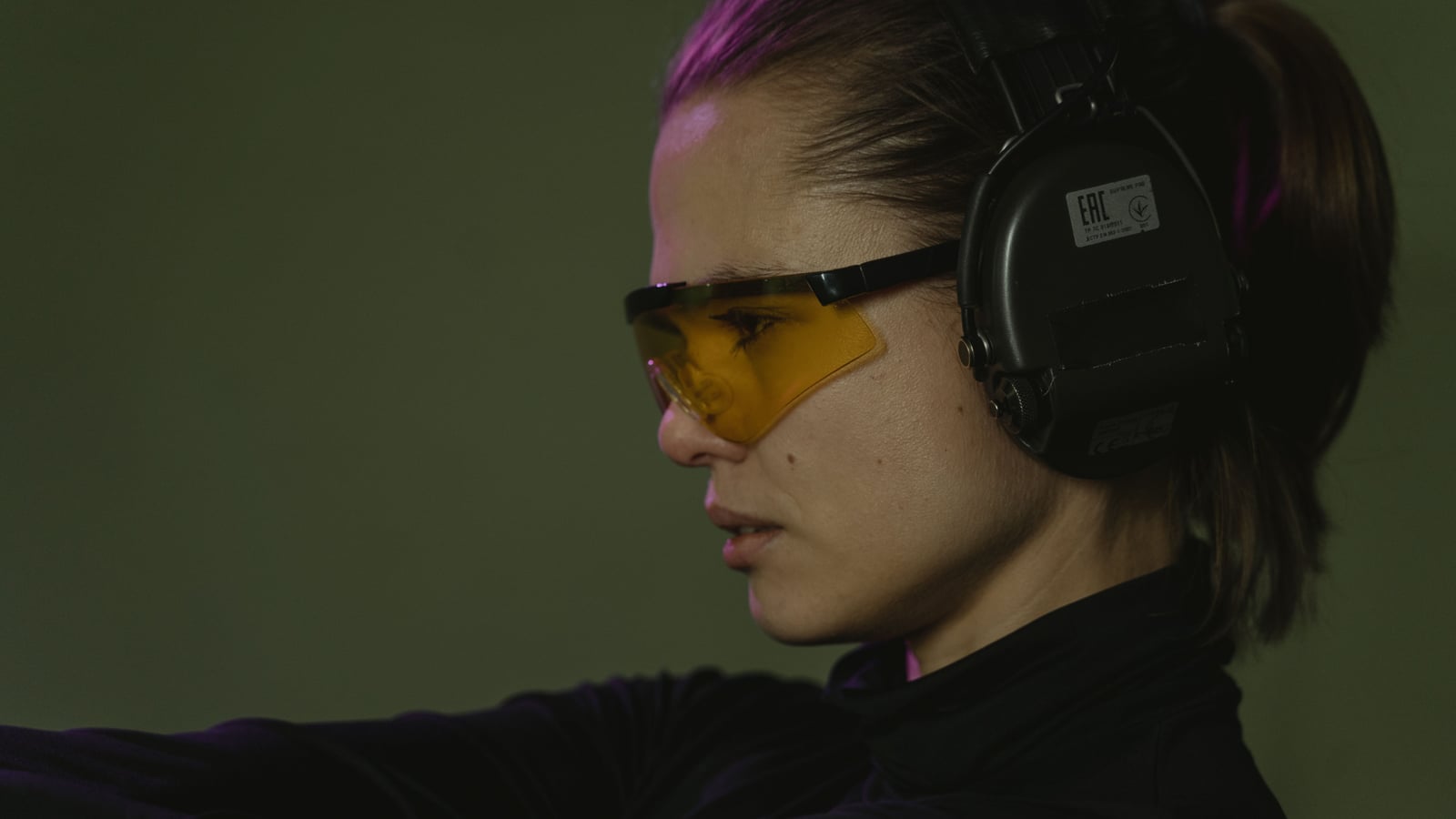
Why equipment makes all the difference in competition
For casual shooting, nobody checks the weight of your rifle or the diameter of your barrel. In competition, it’s the opposite: a technical official runs your gun through the gauge, the scale, and sometimes a template before you fire your first shot. Equipment rules aren’t an administrative detail — they’re your ticket into the match.
Every discipline has built its own limits over the decades, often to preserve a balance between pure technique and financial investment. A 10m rifle and a 300m rifle have nothing in common in terms of constraints, and mixing up the two rulebooks is the most common mistake among shooters switching disciplines.
This article walks through the major rule families: weight, caliber, optics, permitted modifications. The goal isn’t to replace your federation’s or discipline’s official rulebook, but to give you an overview so you can spot the pitfalls before you show up for check-in.
Keep in mind that rules change regularly, sometimes on a specific point from one season to the next. The only document that counts on the day is the rulebook currently in force, published by the body governing your discipline. This article gives you bearings, not the final word.
The common foundation: weapon classification and access to disciplines
Before talking about sporting rules, it’s worth recalling the legal framework that governs which weapons you can even own. In France, the classification splits weapons into four categories. Category A covers weapons banned for private individuals, treated as war material. Category B covers weapons requiring prefectural authorization, which includes handguns and most semi-automatics used in sport shooting.
Category C groups weapons subject to simple declaration, a good share of manually-operated repeating rifles used in hunting or precision shooting. Category D covers freely sold or simply registered equipment: low-power air guns, replicas, certain historical black-powder weapons.
This legal classification is not the same as a discipline’s sporting rulebook. You can perfectly legally own a Category B weapon and still be refused entry to an event because the model doesn’t meet the discipline’s specific rules (weight, barrel length, trigger type). The two frameworks overlap — they don’t replace each other.
Before investing in competition gear, systematically check both levels: can I legally own this weapon, and does it meet the rules of the targeted discipline? A gunsmith specializing in sport shooting can usually guide you on both points at once.
The federal license itself also governs access to certain weapon categories, independently of prefectural authorization. Regular, documented practice within a club is often an administrative prerequisite for accessing a Category B weapon, well before you even think about the sporting equipment rules. This administrative process takes time, so plan ahead if you’re switching disciplines mid-season.
One last point worth clarifying: equipment check in competition never verifies your administrative status (authorization, declaration, registration). That’s the job of the competent authorities, not the technical official on the firing line. The two processes remain entirely separate, even though they concern the same weapon.
10-meter rifle: the strictest weight rules
10-meter air rifle shooting imposes one of the most rigid frameworks in all of sport shooting. The maximum weight of the rifle plus accessories as a whole is strictly capped, and officials weigh the complete gun, including stock and sighting systems.
The trigger gets particular scrutiny: pull length and let-off weight are regulated, especially on finely adjustable trigger models. A shooter who adjusts their trigger without rechecking the allowed values can end up out of spec without even realizing it, simply because a setting drifted with wear.
Sighting systems are limited to metallic sights (front sight and rear aperture), with no magnifying optics or red dot. This is a discipline of pure precision where the shooter’s eye does the work, not a lens. Any attempt to add an optical device results in immediate rejection at check-in.
The classic trap here: adjustable ergonomic stocks, much appreciated for comfort, can easily exceed the maximum width or height dimensions if they’ve been adjusted “by feel” without going back through the check gauge. Get in the habit of checking your settings with a gauge before every season, not just before an important competition.
The buttplate, often overlooked, is also subject to precise dimensions on its width and its ground-contact surface in standing position. A seasoned club shooter who’s had a custom buttplate made by a craftsman must systematically have that piece validated with an official gauge before using it in competition, because a one-centimeter deviation is enough to justify a rejection.
Added weight in the form of balancing weights in the stock is generally tolerated, but it counts toward the total maximum weight. Many shooters discover at check-in that the accumulation of small successive additions (balance weights, muzzle attachment, reinforced sighting system) has pushed them over the threshold without them noticing during training.
Shooting clothing isn’t technically “weapon equipment,” but it’s also governed by the rifle discipline’s rules, particularly regarding its stiffness and thickness. A jacket that’s too rigid, seen as an artificial stability aid, can be subject to a separate check from the weapon itself, often via a standardized fold test.
10-meter pistol: trigger, weight, and grip angle
The 10-meter air pistol shares the pure-precision philosophy of its rifle cousin, with its own constraints. The gun’s total weight is capped, and most dedicated competition models deliberately approach that limit to maximize stability while in position.
Minimum trigger weight is regulated: below a certain threshold, the weapon is deemed dangerous for competition and rejected. This is one of the points technical officials systematically check with a calibrated gauge, regardless of what the manufacturer’s setting displays.
Grip shape is also subject to precise rules. Custom-molded anatomical grips are allowed, but certain palm supports or extensions that alter the hold beyond a certain point can be considered non-compliant aids. Again, the limit is verified against the current season’s rules, not by inference.
No optics are allowed in this discipline: rear aperture and front sight only. A shooter coming from dynamic sport shooting who’s used to a red dot has to completely change their visual approach when moving to this discipline, which often takes several months of adaptation.
A removable counterweight fixed under the barrel or at the front of the frame is allowed in most rulebooks, within the weapon’s total maximum weight. Its role is to shift the center of gravity to stabilize the extended arm, but an oversized counterweight tips the whole setup out of spec faster than you’d think, especially combined with an already heavy grip.
The barrel itself has a maximum length, and sometimes a minimum, depending on the exact discipline. A shooter who has their barrel shortened for looks or for a different feel of balance must absolutely recheck this dimension before showing up to competition, since it’s not a setting you can reverse in a few minutes on the firing line.
Wearing corrective glasses remains allowed without restriction, including tinted lenses adapted to the range’s lighting. However, certain “shooting glasses” style devices with an integrated side shield can be considered a non-compliant visual aid depending on how the current rules are interpreted; check this point with your club before investing in specialized equipment.
50-meter and 300-meter rifle: caliber, scope, and position
Over long distances, equipment rules shift to different levers: allowed caliber, scope type, and above all a very precise definition of what constitutes a legal “support” in prone or standing position.
Caliber is regulated according to the exact event: some competitions require a single caliber, others tolerate a range of calibers with constraints on muzzle velocity or energy. Always check the exact event you’re entering — two competitions with similar names can have completely different caliber rules.
Magnifying scopes are allowed at these long distances, unlike at 10 meters, but their maximum magnification may be capped depending on the event. Some competitions also limit objective lens diameter or ban illuminated reticles beyond a certain brightness.
Slings and gloves are generally allowed but their use is regulated: how the sling is tensioned and positioned can be checked, particularly in prone position where an improperly regulated support gives a stability advantage deemed unfair.
The most common trap over these distances: the total weight of the assembled rifle, scope and bipod included, quickly exceeds the allowed threshold when you stack high-end accessories. Weigh your complete setup before the season, not just the bare rifle.
The bipod is a full-fledged accessory from a rules standpoint, with constraints on its mounting type and sometimes its adjustable height. Some prone-position events limit bipod use to specific configurations to prevent it from serving as a disproportionate artificial support relative to the discipline’s spirit.
The muzzle brake, often confused with a recoil compensator, is generally tolerated on long-range rifles because it mainly affects shooting comfort rather than aiming precision. Still check that its diameter doesn’t alter the weapon’s regulated overall length, a point some rulebooks regulate separately from caliber.
The carrying case and shooting bag aren’t strictly subject to equipment check, but the rice or sand bag used as a prone-position support can be subject to restrictions on its weight and shape. A bag that’s too bulky or molded to precisely fit the stock can be reclassified as a non-compliant stabilization device depending on the event.
Dynamic disciplines: cardboard targets, zones, and minimum caliber
Dynamic disciplines impose different constraints, centered on minimum caliber power rather than weapon weight. These events are contested on courses with cardboard and metal or plate targets — never any human silhouette in any form.
The “power factor,” meaning bullet weight multiplied by velocity, is a central classification criterion in these disciplines. Ammunition too low in energy can be reclassified into a lower category or rejected if it fails to meet the minimum threshold verified by chronograph before or during the event.
Magazines are regulated by capacity according to the equipment category you’re entering. A shooter using a magazine with a higher capacity than allowed in their category is automatically bumped into a more permissive category, which often changes their final ranking even if their sporting performance was good.
Optics (red dot, reflex sight) are allowed in certain equipment categories but explicitly banned in others, notably so-called production categories that require factory metallic sights. A seasoned club shooter starting out in these events needs to check their category before investing in an optic, or risk disqualification from their intended division.
The recoil compensator (compensator at the muzzle end) is allowed in some categories and strictly banned in others. It’s one of the most frequent technical check points at the start of an event, since it noticeably alters the gun’s behavior in rapid fire.
The carry/duty holster used during the event is also subject to precise rules on its retention type and its position on the belt. A holster with too-fast a draw or positioned outside allowed zones can be judged non-compliant independently of the weapon itself, sometimes resulting in a penalty rather than a simple equipment rejection.
Magazine pouches, their number and placement on the belt, are also regulated according to equipment category. A shooter who adds extra magazine pouches beyond what their category allows can be reclassified, even if that doesn’t directly affect the weapon used to shoot.
Raised sighting devices (notably risers for red dots) are allowed in categories that permit optics, but their maximum height may be capped by the rules to avoid a disproportionate aiming advantage. This detail is often forgotten by shooters who mount their own optic without checking their category’s precise dimensions.
Minimum trigger weight also applies in these dynamic disciplines, with thresholds that vary noticeably from one category to another. A trigger lightened beyond the tolerated threshold, highly prized for speed in strings of fire, remains one of the most common grounds for disqualification during random checks in the course of an event.
Trap and clay disciplines: shotgun gauge and shot load
Clay disciplines (Olympic trap, skeet, sporting clays) follow their own rules logic, centered on shotgun gauge and allowed shot load rather than optics or weight.
12-gauge dominates these disciplines by a wide margin, but some rulebooks tolerate other gauges with load adjustments. The amount of shot per shell is precisely capped, and organizers sometimes carry out random checks by weighing shells pulled from the shooter’s box.
Chokes (the interchangeable constrictions at the muzzle end) are unrestricted in most clay disciplines, leaving real room for customization depending on shooting distance and target type. It’s one of the rare equipment settings where the shooter keeps fairly free rein compared to precision disciplines.
Stocks adjustable in length and drop are generally tolerated without strict restriction, unlike rifle disciplines where every dimension is measured. This flexibility comes from the dynamic nature of the discipline, where fitting the gun to the shooter’s build matters more than strict equipment standardization.
The often-overlooked point: minimum barrel length. Some rulebooks impose a precise floor, and a shotgun shortened for handling can end up out of spec without the shooter anticipating it, especially with used equipment modified by a previous owner.
The number of rounds allowed in the magazine (for semi-automatic shotguns used on some hunting courses) is strictly regulated, with a plug often required to limit capacity. A plug that’s removed or improperly seated, even by mistake, exposes you to immediate disqualification at check-in, regardless of the shooter’s intent.
Tinted shooting glasses or interchangeable lenses depending on light conditions are widely used in clay disciplines and generally pose no rules problem, unlike precision disciplines where eye-optics equipment is sometimes more tightly regulated. It’s one of the rare disciplines where visual comfort equipment remains almost entirely free.
The shotgun’s total weight, unlike a precision rifle, is almost never capped in clay-discipline rules. It’s balance and mass distribution that matter for performance instead, a choice entirely up to the shooter’s preference rather than a compliance constraint.
Metallic silhouettes and animal-shape disciplines: gauge template and distance
Metallic silhouette events exclusively use targets representing stylized animal shapes (chicken, pig, turkey, ram) — never a human form. These disciplines’ equipment rules mainly concern allowed caliber and, depending on category, the type of optic tolerated.
Some categories in these events require factory metallic sights, in a logic close to classic precision shooting. Other, more performance-oriented categories allow magnifying scopes with magnification caps governed by the event’s rules.
Trigger weight is subject to the same checks as other precision disciplines, with a minimum threshold below which the weapon is deemed non-compliant. Bipods and rest bags are generally allowed in position but their use may be limited depending on the shooting category chosen.
A classic trap in these disciplines: a shooter who alternates between several categories of the same event over a season, with different optic configurations, sometimes forgets to recheck their equipment when switching categories. Check-in before each event is individual — compliance validated last month doesn’t carry over to the next event.
Shooting distance on these silhouettes varies widely depending on the target’s gauge template and the event’s category, which has a direct influence on which caliber is deemed appropriate. A caliber perfectly suited to a short distance may lack sufficient energy at a longer distance, which isn’t grounds for rejection at check-in but a real sporting handicap to anticipate before entering.
The stock support and holding belt used in unsupported standing position are subject to specific rules in these events, distinct from those of the classic 300-meter rifle. An experienced coach recommends checking this point especially for shooters coming from another precision discipline who transpose their habits without validating them.
Antique arms and black powder: historical compliance and powder charge
Antique and black-powder shooting follows a specific equipment rulebook centered on historical fidelity to the model rather than pure performance. The type of weapon (flintlock, percussion) and its original caliber must match a category recognized by the discipline’s rules.
The powder charge is precisely regulated according to caliber and weapon type, with strict safety caps. A shooter who reloads their own ammunition must follow these caps to the letter: the margin for error with black powder is much tighter than with modern metallic ammunition, due to the pressures generated.
Optics are excluded on principle in these disciplines: the very nature of the event rests on period sighting devices or ones faithfully reproducing historical models. Adding a modern optical device to a black-powder weapon, even discreetly, results in systematic rejection at check-in.
The main point of vigilance here concerns maintenance: a black-powder weapon poorly cleaned between sessions can build up fouling that unpredictably changes its effective charge. This isn’t strictly a rules point but a safety non-compliance that can prompt the technical official to reject it at check-in.
The weapon’s precise category (original period piece, faithful reproduction, or modernized reproduction) often determines the competition subcategory you can enter. A shooter who owns a reproduction with modern materials (a barrel made of differently treated steel than the original, for instance) must check whether that feature shifts them into a category distinct from strictly period weapons.
The ignition system (flintlock, percussion cap) is a classification criterion in its own right, and some competitions organize separate events based on this criterion rather than caliber alone. Never assume a percussion weapon can compete in an event dedicated to flintlocks, even though both belong to the same broad black-powder family.
The projectile used (round ball, conical bullet, Minié type) is also subject to restrictions depending on the event and declared caliber. A shooter who reloads their own ammunition must check that the chosen projectile type matches the intended competition category, since a non-compliant projectile can invalidate an entire string even if the weapon itself is perfectly compliant.
Competition crossbow: draw weight, draw length, and sighting system
Sport crossbow shooting, whether at 10 or 30 meters, follows an equipment rulebook separate from firearms, centered on draw power and the length of the trigger system’s travel.
The maximum power of the bow or propulsion system is capped depending on the event category, with checks carried out using a dynamometer before competition. A system that’s too powerful isn’t just disqualifying — it can also pose a safety risk on the firing line, which explains the strictness of the check.
Sighting systems also differ by category: some events require metallic sights or a simple rear-sight elevator, others tolerate magnifying scopes with a magnification cap defined by the rules. Never assume a rule observed in one competition applies to every crossbow category — the gaps between categories are more pronounced than in other disciplines.
The crossbow’s trigger mechanism, often called the trigger tongue in technical rulebooks, is checked for its travel and let-off weight, on the same principle as a precision rifle or pistol. An experienced coach generally recommends having this setting checked by a professional before every season, rather than adjusting it yourself by ear.
The crossbow’s total weight, accessories included, is capped depending on category, following a logic very close to the 10-meter rifle. Counterweights and adjustable stocks follow the same gauge-check principle, and the same traps apply: a setting adjusted gradually without rechecking can drift out of spec over several months.
The crossbow’s string and cables are themselves regulated in some rulebooks, particularly regarding their material and number of strands, since they directly influence the actual power delivered. Replacing a string with a higher-performance model, even presented as a simple wear-part swap, can push the whole setup past the allowed power threshold and must be rechecked with a dynamometer.
Ammunition, reloading, and common mistakes when switching disciplines
Equipment compliance doesn’t stop at the weapon: the ammunition itself is a check point in its own right, and it’s often the most neglected point among shooters who reload their own rounds. A chronograph placed at the muzzle lets you verify actual velocity, regardless of what the shooter’s reloading data sheet claims.
For dynamic disciplines, the calculated power factor must match the category declared ahead of the event. A batch of reloaded ammunition using a powder lot slightly different from the usual one can be enough to drop velocity below the minimum threshold, even if the charge in grains remains identical on paper.
For long-distance precision disciplines, shot-to-shot velocity consistency matters as much as average velocity itself. This isn’t strictly a rules compliance criterion, but a significant irregularity can betray a poorly controlled ammunition batch and expose you to dispersion problems mid-event.
Storage and transport of reloaded ammunition are also governed by safety rules specific to each club, not a single sporting rulebook. Always check the organizer’s instructions before showing up with reloaded ammunition; some events accept it without reservation, others require commercial ammunition only for traceability reasons.
A shooter who practices several disciplines in parallel is particularly exposed to another type of mistake: carrying settings over from one discipline to another. A configuration validated in one discipline can seem reasonable in another when it’s actually completely out of spec, simply because the two rulebooks never followed the same logic.
The most common mistake concerns optics: a shooter used to a red dot in a dynamic discipline who mounts the same device on a weapon intended for a precision event with metallic sights gets rejected without even getting the chance to fire a single round in competition. This kind of mistake mostly happens during transition periods, when a shooter discovers a new discipline while still using the old one’s equipment.
The second mistake concerns trigger weight. A shooter coming from a discipline that tolerates a very light trigger can underestimate another discipline’s much higher minimum threshold, and get flagged for a trigger deemed dangerous even though it was perfectly compliant in their usual practice.
The third mistake concerns caliber and the weapon’s own legal category. A shooter who borrows a weapon from a club or training partner must check that this weapon matches not only the intended discipline, but also their own personal authorization or declaration. Borrowing a Category B weapon without holding the appropriate authorization yourself for that type of equipment is never covered simply by competing under the club’s responsibility.
Technical check before an event: what really gets verified
Equipment check before a competition generally follows a fairly similar routine from one discipline to another, even as the thresholds change. The technical official checks, in order: the weight of the assembly, the dimensions of the stock or grip, the weight and travel of the trigger, the compliance of the optic or its absence, and finally the caliber or ammunition load.
Most check-in rejections don’t come from an attempt to cheat, but from a gradual equipment drift the shooter hasn’t tracked. A trigger that’s worn down, a stock adjusted “by instinct” at the end of last season, an accessory added without rechecking total weight: these are the three most common causes of non-compliance in amateur competition.
The second classic trap concerns borrowed or secondhand equipment. A weapon configured by a previous owner for a different category or discipline can seem perfectly functional in use while being out of spec on one precise point, invisible without a gauge or scale check.
The third, more subtle trap concerns rule changes from one season to the next. A configuration validated the previous year can become non-compliant if the federation or organizing body adjusted a threshold. A serious regional champion gets into the habit of re-reading her discipline’s equipment rules at the start of every season, even if nothing has changed in her own gear.
The order of check-in varies by organizer: some events check the entire field before shooting begins, others perform random checks during the event on a sample of shooters. This second approach, increasingly common in dynamic disciplines, means non-compliance can be detected after several strings have already been fired, sometimes with heavier consequences on the standings.
How you behave toward the technical official also matters, independent of the check’s outcome. A shooter who systematically disputes every measurement or downplays a noted discrepancy hurts their own credibility for future events. Conversely, acknowledging a discrepancy and asking how to proceed for the day strengthens trust with the organization, which matters over the long run in a relatively small club community.
Post-event checks, carried out on the top results after the competition ends, are common practice at high-stakes events (regional or national championships). Equipment that passed the initial check without issue can be re-verified more closely if the shooter ends up on the podium, particularly on trigger weight, which can have drifted during the event itself under heat or a knock.
Anticipating the check: the methodical shooter’s routine
The best way to avoid a rejection at check-in is to recreate the conditions of the official check at home, well before competition day. A precision scale, a trigger pull gauge, and a template suited to your discipline are a modest investment compared to the cost of traveling to an event only to be turned away at check-in.
Check your complete equipment, not just the bare weapon. Mounted optic, bipod, sling, magazine: every added element potentially changes the total weight or overall compliance. A setup checked piece by piece but never weighed in its final shooting configuration remains an unverified setup.
Document your settings with photos or dated notes, particularly for the trigger and stock dimensions. This lets you spot a gradual drift before it becomes a problem on check-in day, and quickly return to a reference setting if needed.
Using a digital shooting logbook like the one offered by PewPewLife to record settings validated in competition, past check dates, and adjustments made between seasons saves you from starting from scratch every time you change equipment. It’s also a good habit for tracking how your trigger or optic evolves over time, rather than relying on memory.
Finally, if you’re unsure about a specific rule, contact your discipline’s official body or your club before the competition rather than on the day itself. An email or a call a week before the event costs a few minutes; a rejection at check-in on the day costs an entry fee and a trip.
Also pay attention to the timing of your adjustments. Tweaking a trigger or modifying a stock the day before an important competition leaves no room to spot a problem or to train with the new setting. A methodical shooter plans equipment adjustments several weeks ahead of a deadline, with at least one full training session to validate the new setting under real conditions.
Build yourself a personal checklist specific to your discipline, with every critical dimension (total weight, trigger weight, length, presence or absence of optics) and its corresponding limit value. Re-reading this list before loading your gear to head to a competition takes two minutes and prevents the vast majority of avoidable rejections.
Finally, remember to bring the verification tools themselves on competition day, not just keep them at your club. A pocket scale or a compact trigger gauge lets you spot a problem before showing up at official check-in, rather than discovering it in front of the technical official with zero room to fix it.
FAQ
Q: Can I use the same weapon for several different disciplines? A: Technically yes, if the weapon meets each discipline’s dimensions, but it’s rarely optimal. Weight, trigger, or optics thresholds differ so much from one discipline to another that a configuration suited to one is often out of spec for another.
Q: Who checks equipment compliance before an event? A: A technical official appointed by the competition’s organization, who applies the discipline’s official equipment rules. The check generally happens just before the event, with a scale, trigger gauge, and dedicated templates.
Q: Do equipment rules change often from one season to the next? A: It varies by discipline and governing body — some thresholds stay stable for several years while others get adjusted regularly. The only reliable habit is to re-read the current rules before every new season, even if nothing seems to have changed.
Q: Is a mounted but switched-off optic considered compliant in a discipline that bans it? A: No — in the vast majority of rulebooks, the mere physical presence of the optical device is enough to justify a rejection, whether it’s on or off. The rule concerns the equipment present on the weapon, not its actual use during shooting.
Q: What should I do if my equipment is rejected at check-in on competition day? A: It depends on the organization, but many clubs offer a quick on-site adjustment or reclassification into a different equipment category if the rules allow for it. Discuss it immediately with the technical official rather than disputing the decision — they generally know the tolerance margins available.
Q: Can a gunsmith guarantee my weapon complies with a specific discipline? A: A gunsmith specializing in sport shooting can help you check general dimensions and the weapon’s legal classification, but final sporting compliance remains your responsibility. Always check your discipline’s current rules in addition to their technical opinion.