Ammunition is 80% of your precision
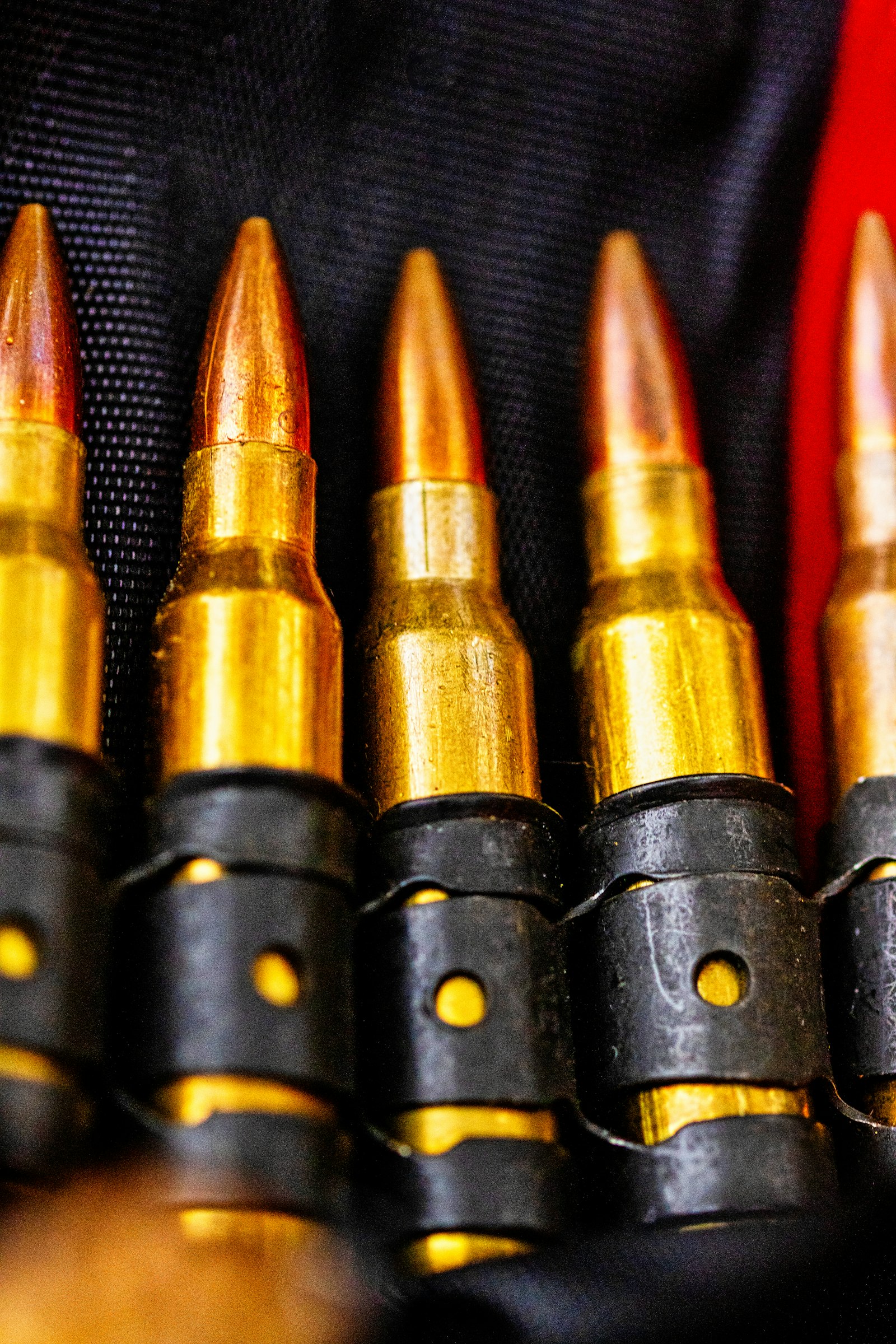
You can have the best gun in the world — but if you shoot generic ammo, you’ll get generic results. Conversely, an average rifle with Match ammunition delivers respectable groups. Learn to choose before you equip yourself.
The .22 Long Rifle
The king caliber of sport shooting: low recoil, low noise, low cost. The round is 5.7mm diameter, 28 to 40 grains of lead, velocity 320-380 m/s. Enough to punch a target at 50m with millimeter precision in capable hands.
- Eley Sport: Budget club shooting, 8 cents per round.
- SK Standard Plus: Daily driver, 10 cents.
- Lapua Center-X / Midas+: Competition, 14-22 cents. Test before buying in bulk — every gun has its lot preference.
Limitations: Not for hunting, not beyond 100m. For sport, it’s the absolute standard for progression.
The 9mm Luger (9×19)
The standard pistol sport and IPSC caliber. Typical 7.45g, velocity ~360 m/s. Manageable recoil, ammunition everywhere, reasonable price.
- GECO or Magtech FMJ: Training, 32-38 cents.
- Sellier & Bellot Match: Reasonable competition, 45 cents.
- Federal Syntech, Hornady Critical: Premium, 70-90 cents.
For 5,000 training rounds per year, budget 1,700-1,900€. That’s the cost of a serious Production IPSC season.
The .38 Special / .357 Magnum
The historical revolver caliber. Same chamber accepts both: .38 Special for training (gentle recoil), .357 Magnum for power (hotter load, same diameter, longer case).
- .38 Special Match: 50-65 cents, ideal at the club.
- .357 Magnum: 90 cents - 1.40€. Significant recoil, shoot sparingly.
The revolver remains an excellent sport choice for those who enjoy slow cadence and ritualistic technique. Double-action trigger work is a discipline unto itself.
The “heavy” pistol calibers
- .40 S&W: Middle ground, 50-70 cents. Fading from favor, poorly suited for beginners.
- .45 ACP: Honest, 65-90 cents. Heavy but slow recoil. Beautiful round, but expensive annually.
- 10mm Auto: Exotic sport round, 1-1.80€. Reserved for enthusiasts.
None of these calibers are necessary for progression. Stick with 9mm until you have a real reason not to.
Sport and precision rifle calibers
.223 Remington / 5.56 NATO
The entry-level centerfire precision caliber. Low recoil, abundant ammunition, honestly good to 600m.
- PPU or GGG FMJ 55gr: Training, 50-70 cents.
- Hornady Match 75gr or 77gr: Precision, 1.20-1.80€.
6.5 Creedmoor
The modern PRS standard. Excellent ballistics to 1,200m, moderate recoil.
- Hornady ELD-Match 140gr: 1.80-2.40€.
- Lapua Scenar 139gr: 2.80-3.50€. Top tier.
.308 Winchester
Universal, proven. Excellent to 800m, but outperformed in pure capability by the 6.5 Creedmoor.
- Sellier & Bellot Match 168gr: 1.50€.
- Federal Gold Medal 175gr SMK: 2.20€.
.338 Lapua Magnum
The extreme long range (1,500m+). Rounds at 5-9€ each. Significant recoil. Reserved for specific applications.
Understanding the markings
On the box, you’ll find:
- Bullet weight: Grains (gr) or grams. 1 grain = 0.065g. Heavier = more penetration and better BC, but lower velocity.
- Bullet type: FMJ (full metal jacket), HP (hollow point), SMK (Sierra Match King), ELD (Hornady), HPBT (hollow point boat tail). In sport: FMJ for training, Match for competition.
- Muzzle velocity: m/s or fps (1 fps = 0.3 m/s). Indicative — varies ±5% depending on barrel length.
Three classic traps
- Buying in bulk without testing. You grab 1,000 rounds, discover your gun hates that lot. You resell at a loss. Buy 50 first, shoot them, judge the grouping.
- Mixing Match lots. Lapua and Eley come in lots, and the same caliber can vary 1cm at 50m between batches. Buy by lot, mark it on the box, and log the lot in your digital shooting journal to compare groupings across lots.
- Random storage. Ammunition + humidity = enemy. Keep your rounds in closed boxes, stable room temperature, away from direct light.
FAQ
Q: How long does ammunition last? A: 30+ years in proper storage (stable temperature, dry, UV-free). Your Match lots keep as well as military lots from the 70s that still shoot very well today.
Q: Should I buy surplus .gov / .mil ammo? A: For high-volume training, yes (PMC, Igman, Magtech). For precision work, never — the spread is too large.
Q: Is it cost-effective to reload? A: Yes, above 2,000 centerfire rounds per year. Budget 600-1,500€ for initial equipment (press, dispenser, dies, primer tray). Saves 30-50% long-term. But it’s a hobby itself: expect 4-8 hours per 1,000 rounds.
What’s next?
A round is a lot, a weight, a velocity. Multiplied by 50 sessions a year and several calibers, your brain stops tracking. With PewPewLife — the digital shooting journal for sport shooters, you log the ammunition fired at every session and find with one click the average grouping for each lot on each gun. You know which Match works, which doesn’t — and you stop wasting money.
Go deeper
- .22 LR: Why it’s the only caliber you should shoot your first year
- How to choose your first sport pistol
- Understanding the reticle and basic ballistics