
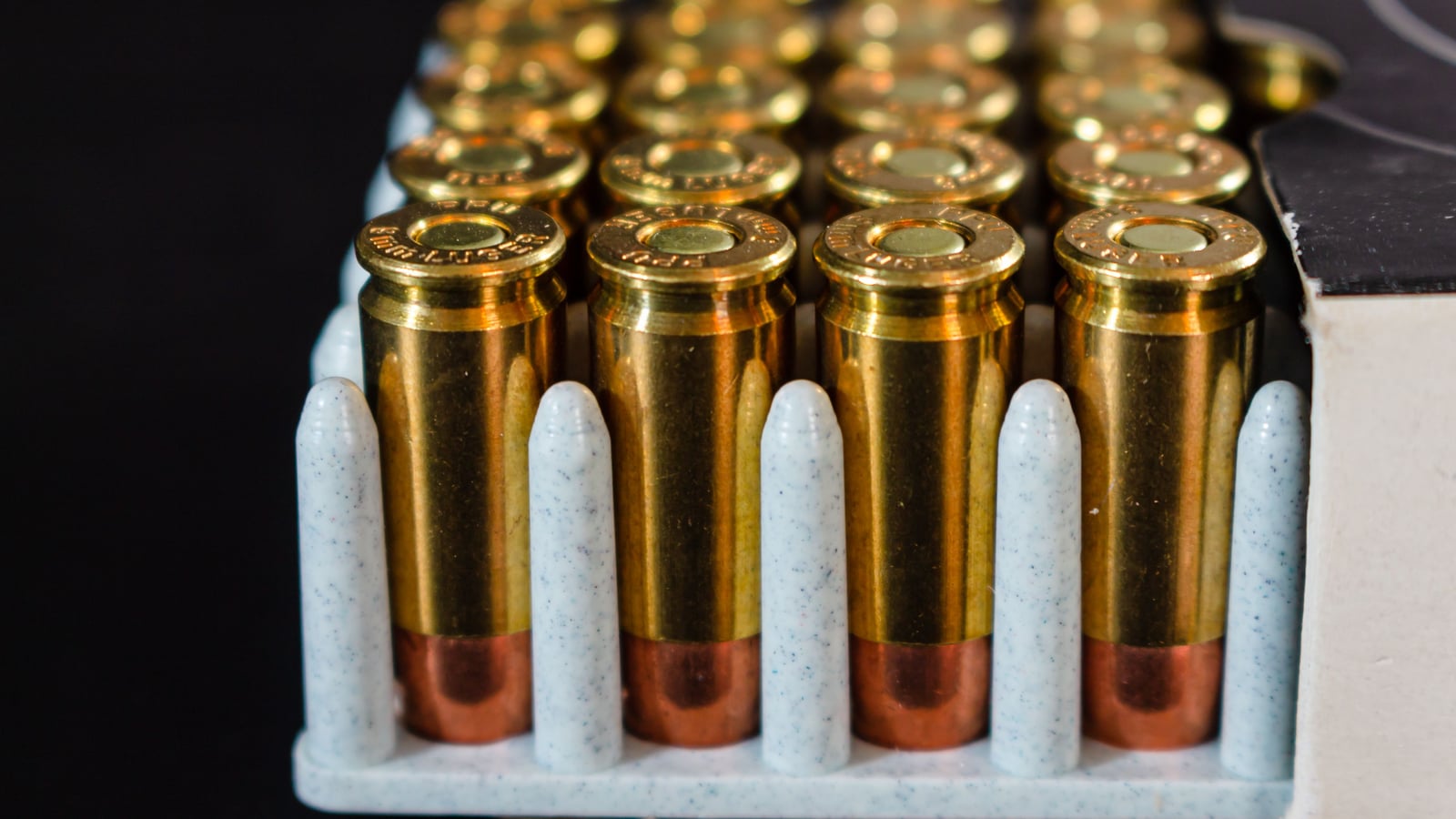
Why ammunition regularly runs short
If you’ve been shooting for a few years, you’ve already lived through at least one period where finding your usual cartridge felt like a puzzle. Empty shelves, websites permanently out of stock, prices climbing 30 to 50% in a few months. This isn’t an isolated accident, it’s a cyclical phenomenon that keeps coming back in civilian sport shooting.
The ammunition supply chain rests on a limited number of manufacturers and raw materials: lead, copper, powder, brass for cases. When global demand jumps suddenly, production can’t keep up overnight. A reloading or case-making plant has fixed capacity, and scaling up a production line takes months, sometimes years.
The sport ammunition market is also directly connected to the broader civilian and hunting ammunition market. When a wave of buying hits an entire country, every caliber category suffers, including ones used only in competition or recreational shooting. A rimfire shooter using .22LR can find themselves dry because of a tension that has nothing to do with their discipline.
Finally, international logistics play an underrated role. A lot of ammunition consumed domestically is imported or depends on components sourced abroad. A port disruption, a rise in shipping costs, a changed customs duty, and a whole caliber segment becomes scarce on gun shop shelves.
The sport shooting world has seen several waves of tension over the past decades, each with different causes. Understanding these cycles helps anticipate the next one instead of enduring it in a panic.
Some shortages are tied to spikes in general public demand, often triggered by societal events that push part of the population to acquire firearms for the first time. This new demand competes directly with the needs of regular sport shooters, who have been buying the same calibers for years.
Other tensions come from breaks in the raw materials chain, independent of shooters’ demand. A rise in copper or lead prices directly affects production costs, and manufacturers shift their priorities toward the most profitable calibers, sometimes sidelining niche cartridges favored in competition.
There are also more local tensions, specific to a given caliber or brand. A manufacturer that changes its lineup, discontinues a reference, or hits a quality issue can create a targeted shortage on a specific cartridge, even while the overall market stays stable. A shooter who depends on one precise reference for their precision rifle can end up isolated while other calibers remain widely available.
What matters most from this history is that the shortage is never truly “over.” It eases, stocks rebuild, prices partly come back down, then a new factor triggers another wave a few years later. Anticipating isn’t reacting to a one-off crisis, it’s building this cycle into your long-term shooting practice.
A less visible factor lies in the structure of distribution itself. A neighborhood gun shop doesn’t order directly from the manufacturer: it goes through one or several wholesalers who split available stock across hundreds of points of sale. In times of tension, these wholesalers sometimes prioritize their biggest clients, leaving small local gun shops completely dry while bigger chains still get a few boxes.
This mechanism explains why two shooters in the same club can have very different experiences depending on their usual gun shop. A retailer well placed in the distribution chain keeps receiving a minimal flow, while a smaller one can stay empty for several weeks on the same caliber, without this reflecting a nationwide shortage.
Telling a real shortage apart from a temporary tension
Before changing your buying habits, learn to distinguish a true structural shortage from a simple local, temporary supply tension. Confusing the two pushes many shooters into disproportionate decisions.
A temporary tension usually shows up as a stockout at one or two retailers, until a new order arrives. Prices barely move, and the caliber stays available elsewhere, sometimes with a delay of a few weeks. This kind of situation doesn’t justify any particular action, other than a bit of patience.
A real shortage is recognized by several signals combining: a price rise that lasts several months, stockouts at the majority of retailers simultaneously, and gun shops converging on the same message about restocking delays. When an entire club starts talking about it and several disciplines are affected at the same time, that’s a more reliable signal than an isolated rumor on a forum.
The right move is to cross-check several sources before drawing a conclusion: your usual gun shop, one or two online retailers, and feedback from other shooters at your club. If they all point the same way, the shortage is likely real. If only one point of sale is out, it’s often just a local stock issue.
This distinction avoids needless panic. A seasoned club shooter often recounts seeing beginners rush to buy at the first rumor of a stockout, while the situation was already stabilizing at nearby retailers. Reading the signals coolly beats reacting in the heat of the moment.
A good complementary indicator is watching the behavior of professionals themselves rather than other shooters. When a gun shop starts rationing sales, for instance by limiting quantity per customer, that’s generally a sign they themselves anticipate a real, prolonged tension on that specific caliber. Conversely, a retailer selling without particular restriction suggests the situation remains under control from their point of view.
Price still remains the most reliable indicator over time. A one-off rise of a few percent means nothing structural, but a continuous rise that holds over several consecutive quarters, confirmed by several retailers independent of one another, almost always signals a lasting tension in the supply chain rather than an isolated commercial adjustment.
The pitfalls of excessive stockpiling
Faced with the fear of running out, the natural reflex is to buy massively as soon as a shortage is announced. It’s exactly this collective reflex that worsens the shortage itself, in a vicious circle well documented in other consumer goods markets.
The first pitfall is financial. Stockpiling several thousand rounds ties up money that could serve other needs: gear, membership fees, training, gun maintenance. The opportunity cost of an oversized stock is real, even if you don’t see it right away on your bank statement.
The second pitfall concerns shelf life. Ammunition doesn’t last forever. A cartridge stored in poor humidity or temperature conditions can suffer powder degradation, affecting the consistency of muzzle velocity and therefore accuracy. An overly large stock, kept for several years, ends up containing a share of ammunition whose reliability becomes uncertain.
The third pitfall is regulatory and safety-related. Whoever holds an ammunition stock remains responsible for storing it securely, out of reach of unauthorized third parties. The bigger the stored volume, the heavier the requirements for storage, separating primers from powder, and daily vigilance weigh. A stock disproportionate to actual consumption complicates this management with no proportional benefit.
Finally, excessive individual stockpiling directly feeds the collective shortage. When a majority of shooters start buying triple their usual consumption as soon as a rumor spreads, demand explodes artificially and empties shelves faster than production can keep up. It’s a self-fulfilling shortage phenomenon, well known in economics as the panic-buying effect.
There’s also a less obvious psychological trap: the false sense of security a large stock provides. A shooter who owns several thousand rounds tucked away in a cabinet may relax their vigilance about actual consumption, shooting more freely without worrying about the restocking pace. This relaxation can, paradoxically, speed up the depletion of the stock they thought they’d built to last for years.
One last pitfall concerns reselling or informally trading excess accumulated ammunition. Outside the strict legal framework for traceability and possession, transferring or trading ammunition between private individuals outside a licensed gun shop exposes you to real legal risks. Better to adjust your purchase volume upfront than to end up with a surplus to offload under questionable conditions.
Calculating your real consumption before buying
The best defense against shortage isn’t blind accumulation, but precisely knowing your own annual consumption. This simple data point completely changes how you approach purchases.
Start by calculating how many rounds you actually use over a full year, across all disciplines if you shoot several calibers. A typical training session, a number of sessions per month, an estimate of matches and competitions: add it all up to get a reliable annual figure rather than a vague impression.
A digital shooting logbook app like PewPewLife lets you track exactly this kind of data session after session, without having to reconstruct everything from memory at year’s end. The number of rounds used per session, automatically totaled, gives a clear, objective view of your real consumption, caliber by caliber.
Once you know this annual figure, you can define a reasonable target stock, generally expressed in months of consumption rather than an absolute round count. A stock equivalent to three or four months of normal practice offers a comfortable safety margin without falling into disproportionate accumulation.
This calculation should also factor in seasonal variations in your practice. A shooter training intensively before a major competition consumes more during certain periods of the year than others. Anticipating these peaks in the target stock calculation avoids being caught off guard right before an important sporting deadline.
Also remember to distinguish training consumption from competition consumption in your calculation. Cartridges used during matches themselves often represent a minor volume compared to regular training, but they sometimes require a specific, more homogeneous lot that you need to set aside from the rest of your stock to be sure of its availability when the time comes.
A shooter running this calculation for the first time is often surprised by the gap between their intuitive estimate and their real consumption measured over several months. This gap generally comes from underestimating informal sessions or one-off drills, less memorable than a structured training session but weighing just as much in the annual total.
Once you know your real consumption, you can put in place a buying strategy that smooths out price and availability swings without falling into excess. The goal is regularity, not one-off stockpiling.
The first strategy is to buy small, regular quantities rather than large, occasional volumes. A monthly or bimonthly purchase, matched to your real consumption, naturally smooths price swings and avoids finding yourself buying only during tense periods, when prices are at their highest.
The second strategy relies on diversifying your supply sources. Having a good relationship with your local gun shop, but also knowing two or three reliable online retailers, multiplies your chances of finding your caliber at the right time. Never depend on a single buying channel.
The third strategy is to take advantage of periods of normal availability to slightly rebuild your target stock, without excess, as soon as a tension signal appears elsewhere in the market. If you see other calibers starting to become scarce, that’s the right moment to check that your own stock stays at the target level you’ve set, not to multiply it by five.
A fourth, often overlooked, avenue is reloading. For shooters equipped and trained in this practice, reloading your own ammunition reduces direct dependence on the shortage cycles affecting factory cartridges, shifting the tension solely onto raw components: powder, primers, projectiles, cases. This technical diversification requires an initial investment in equipment and learning, but it changes the game long-term for a regular shooter.
Finally, pooling certain group purchases within a club sometimes gets better conditions and collective visibility on availability. Several shooters ordering together from the same supplier often benefit from priority treatment and a better rate than an isolated purchase.
A fifth avenue is to fix a personal buying schedule in advance, independent of market news. Rather than deciding to buy in reaction to outside information, a fixed appointment, for example the first weekend of every month, removes emotion from the decision and reinforces the discipline of regularity already mentioned.
This calendar-based approach has an added benefit: it forces you to regularly check your actual stock rather than relying on an impression. A monthly check, even a quick one, is enough to spot a caliber running down faster than expected and adjust the next order accordingly, without waiting for an external warning signal.
FIFO stock rotation applied to ammunition
The FIFO principle, “first in, first out,” comes from logistics and warehouse management, but it applies perfectly to managing a personal ammunition stock. The idea is simple: the ammunition bought first must be the first fired, never the reverse.
Without particular organization, the natural reflex is to reach for the most accessible box, often the last one bought, leaving the older ones piling up at the back of a cabinet. This behavior reverses the natural aging of the stock and ends up making you fire older ammunition than necessary, with a higher risk of degradation.
To apply FIFO concretely, systematically write the purchase date on each box or carton of ammunition, with a marker or a label. Then arrange your stock by placing the oldest boxes in front or on top, so you naturally grab them first at each session.
Organizing by shelf or a dedicated bin per caliber greatly eases this rotation. A shooter practicing several disciplines with several calibers benefits from physically separating each type of ammunition, with an immediately visible date system, rather than mixing boxes in a single carton.
This regular rotation has another indirect benefit: it forces you to visualize your stock at each session, letting you spot immediately if a caliber is starting to run low, well before it’s completely out. It’s a natural warning signal built into your routine, with no extra calculation effort.
FIFO also applies to reloaded ammunition for shooters who practice this technique. A reloaded batch generally carries a date and sometimes an internal serial number corresponding to the reloading session. Respecting the chronological firing order on these batches ensures useful traceability in case of an incident, in addition to limiting the aging of the oldest components.
One last practical point concerns opened boxes. An open box of cartridges, partially used, should be placed in front of the new boxes, not behind, so it gets finished before starting a new carton. This simple detail avoids accumulating several opened boxes in parallel, which complicates precise tracking of remaining stock.
Storage and shelf life of stored ammunition
Storing your ammunition well isn’t limited to FIFO rotation. Physical storage conditions directly influence a cartridge’s actual shelf life, well beyond its purchase date.
Humidity is enemy number one. High humidity promotes oxidation of brass cases and can, over time, affect the powder itself if the cartridge’s seal is compromised. A dry, ventilated storage space, sheltered from sudden swings, significantly extends the reliability of a stock.
Extreme temperature swings also play a role. Storage in an uninsulated garage, exposed to strong summer heat and winter frost, speeds up component aging compared to storage at a stable temperature. Consistency matters as much as the absolute temperature value.
Direct light, especially UV, can also degrade certain elements over time. Storage in opaque containers, sheltered from daylight, limits this often-overlooked degradation factor for shooters who keep their boxes on an exposed shelf.
In practice, ammunition properly stored under good conditions keeps satisfactory reliability for several years. Conversely, poorly kept stock can show signs of degradation much sooner than expected. If in doubt about an old batch, testing a few cartridges at the range, paying particular attention to felt recoil and consistency, lets you check reliability before committing a whole stock to competition.
The storage container itself deserves particular attention. Original cardboard packaging, designed for normal use, isn’t always suited to long-term storage in a humid environment. An airtight storage bin or a dedicated case, paired with a humidity absorber, protects a stock meant to last several seasons better than simply stacking original boxes.
It’s also useful to periodically check the visual condition of the oldest ammunition in your stock, without waiting for a sign of malfunction on the range. Visible oxidation on the case, a deformed projectile, or an unusual smell are simple signals to spot during a quick check, well before the problem shows up on the firing line.
Adapting your strategy to your discipline
Not all sport shooting disciplines have the same relationship with ammunition consumption, and stock strategy should adapt accordingly rather than follow a one-size-fits-all model.
A precision shooter, for instance in 50m or 300m rifle, generally consumes a moderate volume per session but often depends on a specific lot of ammunition whose ballistic characteristics are stable and known. For this discipline, continuity of supply from the same lot sometimes matters more than total volume stored, since switching lots mid-season can affect the rifle’s fine-tuning.
Conversely, a shooter practicing dynamic disciplines on cardboard targets or steel plates consumes a notably larger volume per session, with more tolerance regarding the exact provenance of the lot. Here the strategy favors available volume and consistency of supply over the stability of a single lot.
A trap or clay shooter has very high round consumption per session compared to fixed-target disciplines. This discipline requires particular attention to cumulative cost and availability in bulk, with a stronger interest in group purchases through a club.
A beginner at a shooting school or on introductory color targets generally consumes less and can afford a more relaxed stock management, while they get to know their own practice pace better before defining a more structured buying strategy.
A shooter practicing several disciplines often ends up holding several different calibers, each with its own market dynamics and its own consumption pace. Without a clear method, this diversity quickly becomes a source of confusion rather than an asset.
The first rule is to treat each caliber as an independent stock, with its own alert threshold and its own buying strategy. A very common caliber, not prone to shortages, like some rimfire ammunition used for introductory shooting, doesn’t need the same vigilance as a more specific caliber used in precision competition.
The second rule is to prioritize calibers according to their importance in your competitive practice. The caliber for your main discipline, the one where you’re aiming for progress or a specific sporting deadline, deserves a wider safety margin than that of a secondary discipline practiced occasionally.
The third rule concerns physical storage space. Multiplying calibers without clear organization also multiplies the risk of mixing up boxes, which poses a real safety issue on top of inefficient management. A system of shelves or bins clearly labeled by caliber, with purchase dates visible for FIFO rotation, becomes essential once you go beyond two or three different calibers.
Finally, don’t try to apply one single stock-volume rule to all your calibers. A shooter who consumes enormously in trap and little in precision should adapt their target stock discipline by discipline, rather than aiming for an identical, arbitrary figure for each type of ammunition held.
Shooters practicing historical or black powder disciplines have an even different profile, often tied to components and cartridges rarer than common modern calibers. For this practice, the safety margin should generally be wider than average, since restocking delays for these specific references are structurally longer than for a widely distributed caliber.
Crossbow shooters or those using historical manually-operated repeating firearms have, conversely, a component consumption that’s often simpler to anticipate, with availability depending less on the tension cycles seen in modern ammunition. This diversity of profiles confirms there’s no universal target stock, only a calculation method adaptable to each practice.
The club’s role in collectively managing a shortage
A shooting club isn’t just a place to practice, it’s also a valuable collective resource in times of ammunition tension. Too many shooters underestimate this lever by managing their supply entirely on their own.
A well-organized club often centralizes some information on local availability: which gun shop has stock, which caliber is starting to run short, what alternatives exist. This information circulates naturally among members, provided you actively take part in club life instead of staying isolated.
Some clubs set up group orders with suppliers, allowing better rates and delivery priority compared to scattered individual orders. An experienced instructor can often point members toward this kind of collective organization, especially during confirmed periods of tension.
Sharing experience between shooters of different disciplines within the same club also helps spot the signals of a real shortage mentioned above more quickly. If several disciplines start reporting difficulties simultaneously on different calibers, that’s a reliable clue that a broader tension is brewing.
Finally, occasional mutual help between members of the same club, within the legal framework for possession and traceability of ammunition, remains common practice during difficult times. A shooter who temporarily has more stock than needed can help out a club mate rather than letting a batch age uselessly in their cabinet.
The instructor’s or club board’s role actually goes beyond simply circulating information. Some clubs directly negotiate annual pricing terms with a partner gun shop, in exchange for a guaranteed purchase volume over the season. This long-term trust relationship benefits all members, including those who wouldn’t have the financial standing to negotiate such a deal on their own.
Taking part in club activities, even informally, also gives access to a valuable collective memory. A club active for several decades has generally been through several shortage cycles, and its longest-standing members often retain a useful memory of the strategies that worked or failed during previous tensions.
Budget and financial trade-offs when prices rise
A shortage doesn’t only show up as a physical stockout, it also shows up as a price rise that can weigh heavily on a regular shooter’s annual budget. Anticipating financially matters as much as anticipating physically.
The first reflex is to build a variation margin into your annual shooting budget, rather than calculating it down to the wire every year. A safety provision, even a modest one, absorbs part of the increase without throwing your overall budget off balance when prices climb.
The second reflex is to trade off training volume against ammunition quality depending on the period. During tense, high-price phases, it can make sense to shift part of your training toward dry-fire drills or technical exercises that don’t consume ammunition, while reserving the available rounds for the most valuable sessions or competition deadlines.
Reloading, already mentioned as a supply strategy, also represents an interesting long-term financial trade-off for a high-volume shooter, even though the initial equipment investment needs to be paid off over several years of regular practice to actually become worthwhile.
Finally, avoiding panic buying remains the best possible financial trade-off. Buying urgently at a premium as soon as a shortage rumor circulates costs structurally more than following a regular, anticipated buying strategy throughout the year. Budget discipline directly meets stock management discipline here.
An often-overlooked trade-off concerns choosing between commercial ammunition and reloading for regular training, while reserving competition cartridges for more targeted use. This segmentation of the budget by use, rather than one undifferentiated overall budget, lets you absorb a price rise in one segment without sacrificing the other.
It’s also useful to compare the actual cost per round across different packaging sizes rather than relying solely on the box’s displayed price. A large carton sometimes comes out noticeably cheaper per unit than a small box, provided your consumption pace justifies this bulkier purchase without falling into the excessive-stockpiling trap mentioned above.
Using digital tools to manage your stock efficiently
Managing an ammunition stock manually, based on notes in a paper logbook or simple mental estimates, quickly hits its limits once several calibers and disciplines come into play. Digital tools change the game for precise, effortless tracking.
A digital shooting logbook lets you automatically record the number of rounds used at each session, caliber by caliber, without after-the-fact manual calculation. This data, totaled over several months, gives an accurate picture of real consumption, far more reliable than a rough estimate made from memory at year’s end.
This precise tracking lets you define personal alert thresholds: when the remaining stock of a caliber drops below a certain level, corresponding for example to a month of usual consumption, that’s the signal to rebuild the stock before it runs out, without waiting until the last moment.
Digital tracking also makes retrospective analysis easier. By watching how your consumption evolves over several seasons, you identify peak periods tied to your competitions, the most-consumed calibers, and adjust your buying strategy accordingly year over year, instead of starting from scratch each season.
Finally, centralizing this information in a single app avoids scattering data across several paper logbooks or loose files, especially for a shooter practicing several disciplines with different calibers. Overall, immediate visibility into stock, cross-referenced with consumption history, remains the most effective tool for calmly anticipating the market’s next tensions.
This kind of digital tracking also lets you cross-reference two pieces of information rarely compared manually: the number of rounds fired and how your grouping evolved over that period. A shooter who documents their sessions can spot whether switching ammunition lots coincides with a change in accuracy, valuable information when deciding whether to favor continuity with one supplier over another during tense periods.
Historical data also becomes a concrete argument for sizing the annual budget mentioned above. Rather than roughly estimating your future needs, you can rely on several seasons of recorded real consumption to project a realistic budget, adjusted to your actual practice rather than a hunch.
Local gun shop or online sales: choosing your channels wisely
The question of buying channel deserves genuine thought rather than a fixed habit. Each channel has its strengths and weaknesses when facing a supply tension, and combining them intelligently remains the best protection.
The local gun shop offers an often-underrated advantage: the human relationship. A gun shop owner who knows you, who knows what you shoot and at what pace, can warn you of an incoming stock delivery before it’s publicly announced, or set aside a reasonable quantity for you. This loyalty is built over time, not just in the moment you need a favor.
Online sales bring broader visibility across the whole territory and let you compare prices and availability within minutes. During tense periods, a caliber sold out in your region can remain available from a retailer on the other side of the country, provided you regularly check several sites rather than just one.
The main drawback of online buying remains delivery time and the administrative constraints tied to shipping ammunition, which vary depending on the firearm category involved and the carrier. This delay needs to be built into your planning: order online when stock hits the alert threshold, not when it’s already exhausted.
The best approach combines both channels rather than choosing one over the other. Use the local gun shop for the trust relationship and quick top-ups, and online sales for price comparison and planned rebuilding of your target stock. This dual approach limits your dependence on a single potential point of failure.
A third, often underused, channel is the network of trade shows and meetups organized by federations or regional clubs. These events sometimes bring several retailers together in one place, letting you compare prices physically and spot less common references absent from usual channels. This channel remains occasional but can prove valuable for a caliber hard to find locally.
Whatever channel you favor, systematically verifying the origin and compliance of the product remains essential. A serious shooter avoids parallel channels or deals too attractive to be honest, which pose both a safety issue and a legal traceability issue for the ammunition purchased.
The most common mistakes when a shortage is announced
Certain reactions keep coming up among shooters facing a shortage rumor, and most of them worsen the situation rather than solving it. Identifying them in advance helps keep a cool head when the moment comes.
The first mistake is panic buying at the first unconfirmed rumor, without checking whether the tension is real or local. This reflex directly feeds the collective shortage by creating artificial demand far above the actual consumption of the shooters involved.
The second mistake is buying an unusual caliber simply because it’s available, without checking its real compatibility with your firearm and your usual settings. Switching ammunition in a hurry, without testing beforehand at the range, exposes you to accuracy or function surprises at the worst possible moment, especially right before a competition.
The third mistake is completely neglecting the issue as long as no shortage is visible, only to find yourself totally caught out at the first signs of tension. Good stock management is built ahead of time, through regular and measured consumption, not in the rush of the moment when everyone scrambles at once.
The fourth mistake is underestimating the impact of storage on ammunition shelf life, accumulating a large volume without worrying about storage conditions. Poorly kept stock loses real value over time, making the anticipation effort counterproductive if the ammunition degrades before it’s used.
The fifth, subtler mistake is treating stock management as a one-off operation rather than an ongoing routine. A regional champion who manages her supply calmly generally does so through regular, discreet tracking, built into her usual practice, not through an exceptional operation triggered only in reaction to a media alert.
A sixth mistake is completely ignoring the topic with new club members, letting each one discover the tension cycles the hard way. An experienced instructor benefits from including this dimension in coaching beginners, on the same footing as safety or gear maintenance, rather than leaving it aside until a shortage happens.
Stepping back from these common mistakes helps build a calm, lasting approach to stock management, far from the impulsive reactions that collectively perpetuate the very problem they’re each trying to avoid.
FAQ
Q: How much ammunition should you keep in stock to feel secure without overdoing it? A: A stock equivalent to three or four months of usual consumption offers a comfortable margin without falling into excessive accumulation. This figure should be calculated from your real annual consumption, not a rough estimate.
Q: Is reloading a good solution to protect against shortages? A: Yes, for a regular, high-volume shooter, since it reduces direct dependence on factory cartridges by shifting the tension onto raw components. However, it requires an initial investment in equipment and training that only pays off over several seasons.
Q: How do you recognize a real shortage rather than a simple local stockout? A: Cross-check several sources: your usual gun shop, one or two online sites, and feedback from other club shooters. If the price rise lasts several months and the stockout hits several retailers at once, that’s a sign of a real rather than temporary tension.
Q: Does ammunition keep indefinitely if it’s well stored? A: No, but a stock kept dry, at a stable temperature, and away from light retains satisfactory reliability for several years. An old batch with an uncertain storage history deserves a preliminary test before being used in competition.
Q: Does a digital shooting logbook really help manage your ammunition stock? A: Yes, because it automatically records your real consumption session after session, caliber by caliber. This precise data lets you set personal alert thresholds and anticipate restocking before running out, rather than being caught off guard by it.
Q: Can a club really help with an ammunition shortage? A: Yes, through group orders, sharing information on local availability, and occasional mutual help between members within a respected legal framework. An active club offers a collective visibility that an isolated shooter doesn’t have.