
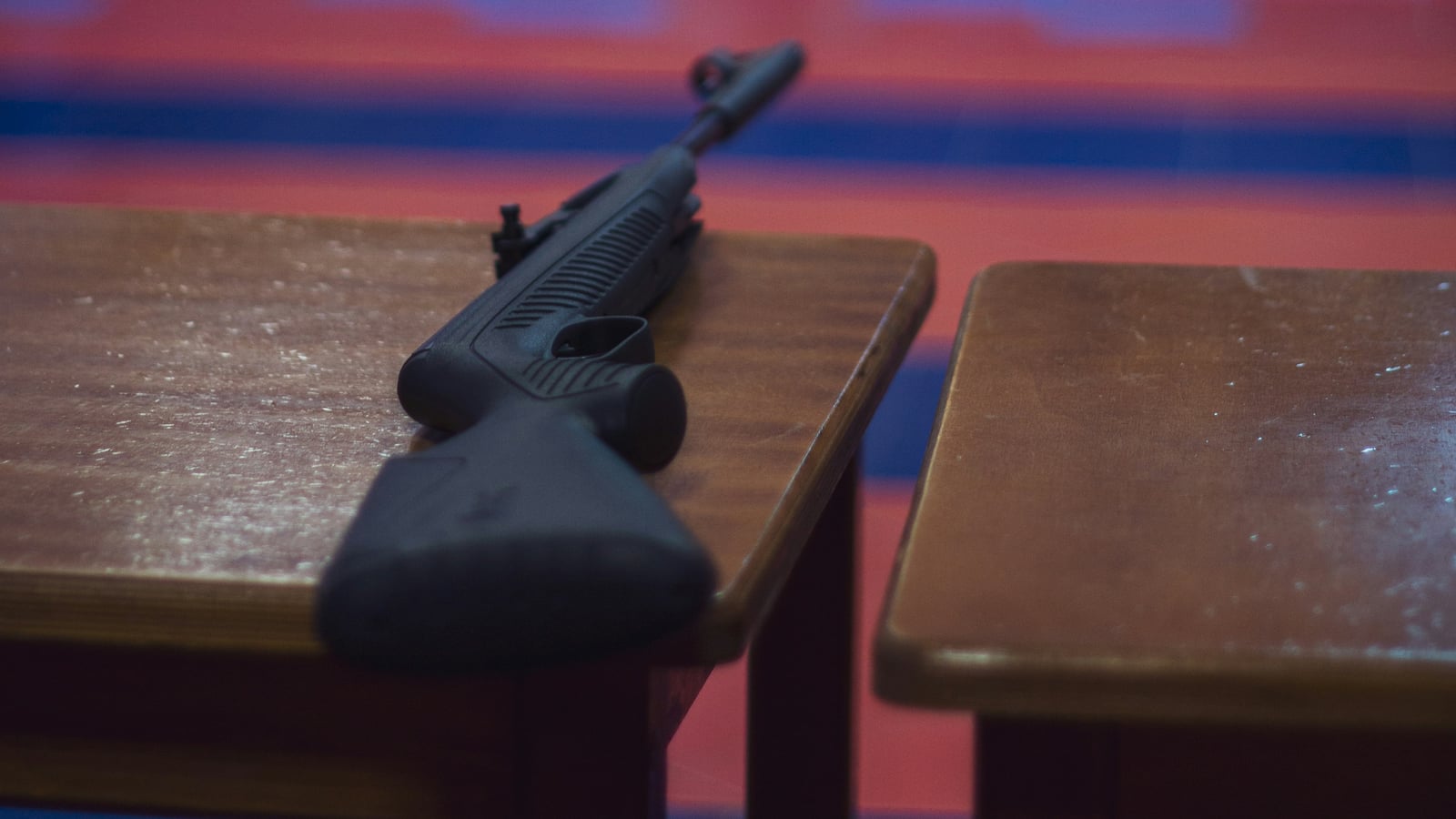
Two worlds that look alike on paper
On a spec sheet, an air rifle and a .22LR rifle look a lot alike: the same overall stance, the same prone, kneeling or standing position depending on the discipline, the same aiming logic through a sight or a scope. An untrained eye would easily mix the two up at first glance on a range.
In the day-to-day reality of a club, though, these are two fairly different learning worlds, with material, administrative and budgetary constraints that have nothing in common. The choice isn’t just a matter of the purchase price of the rifle itself: it touches on the training frequency that’s actually possible, how easy it is to get access at a club in your area, and how quickly you’ll lock in the right technical habits.
You often see the same hesitation in a beginner who walks through the door of a shooting club for the first time: “I want to learn to shoot rifle, but I don’t know where to start, and I don’t quite understand why some people begin with air rifle and others go straight to .22LR.” That question deserves a structured answer rather than a simple, one-sided opinion.
Neither option is “better” in absolute terms, and you should be wary of bar-room debates that paint one as a kids-only toy and the other as the only serious discipline. The right answer depends on your actual context: what club is available near you, what monthly budget you can realistically dedicate to practice, what discipline you’re aiming for in the medium term, and any physical build or constraints you might have. This article breaks down every comparison axis that genuinely matters for a beginner, without deciding for you but giving you everything you need to make an informed choice yourself.
We’ll go through the real cost of use over a full season, the question of noise and its impact on training frequency, actual club accessibility, the regulatory aspects tied to weapon categories, the technical transferability to other calibers and disciplines, and more practical criteria like ergonomics, equipment maintenance, and a realistic training pace given your schedule. The goal is for you to come away from this with a clear decision framework adapted to your personal situation.
The real cost of use, the true factor over time
The initial purchase price of a rifle is almost never the most decisive factor in choosing between air rifle and .22LR. What really weighs on you over time is the cost per shot, multiplied by the training volume you’re aiming for over a full season. That’s the calculation that should guide your decision, far more than the price tag at the gun shop.
An air rifle runs on pellets that cost a fraction of the price of a single .22LR round. Over a full season of regular training, this ammo budget gap becomes significant, especially if you’re shooting several times a week and trying to build up volume to lock in your fundamentals. Repetition is the key to progress in precision shooting, and it’s exactly on this point that the cost gap is felt the most.
It’s worth remembering that .22LR remains, compared to centerfire calibers used in other shooting sport disciplines, a cheap round. It’s not an “expensive” caliber in itself. But it still means a cost per shot noticeably higher than that of an air rifle pellet, and that difference adds up fast over high training volumes. A shooter aiming for 200 to 300 rounds per session, several times a week, feels the difference very concretely in their hobby budget over the course of a year.
You also need to factor in the ancillary equipment and peripheral costs that come with each discipline. For air rifle: a high-end rifle can represent a notable investment, on top of which you need a loading system (manual pump, CO2 cartridge or PCP air tank depending on the technology chosen), plus targets and a suitable backstop if you’re planning to shoot at home, wherever the terrain and local regulations allow it. For .22LR, the list is different: ammunition to keep buying, more frequent maintenance of the rifle, and above all an almost systematic trip to a supervised range, which adds session fees, lane rental, or club membership costs depending on the structure.
Over the long run, air rifle clearly lets you shoot a higher training volume for an equivalent budget. That’s a strong argument for a beginner who needs repetition to lock in the fundamentals: stability of position, breathing control, progressive trigger control without a jerk. These habits aren’t built in a few sessions: they need hundreds, even thousands, of properly supervised repetitions.
Another cost aspect not to overlook: depreciation and resale. An entry-level or mid-range air rifle generally resells more easily, with a fairly active secondhand market among beginners moving up or switching disciplines. The competition .22LR market is smaller and more specialized, which can complicate resale if you ever change direction after a few months of practice.
Finally, think about the accessories that come with practice over time: gloves, rigid shooting jackets for disciplines that require them, hearing and eye protection, a carrying bag, and possibly a club membership fee that varies by structure. These ancillary costs exist in both disciplines, but their relative weight changes depending on the practice frequency each option allows.
Noise, an underestimated factor when starting out
An air rifle under 20 joules is surprisingly quiet compared to a firearm. This level of discretion opens up training possibilities that .22LR never offers, notably practicing in a garden or a set-up space in complete safety, if the terrain layout, safety distances and local regulations actually allow it.
.22LR, even though it’s considered a modest caliber among firearms, remains a full-fledged firearm with a real report. That report requires a range with appropriate hearing protection, a supervised and certified infrastructure, and effectively rules out any improvised training outside a framework authorized by the club or hosting structure.
This noise difference has a direct and often underestimated consequence on the training frequency actually accessible to a beginner. Being able to practice your aim, your breath control and your trigger control without having to systematically book a lane at the club radically changes your rate of progress, particularly during the first months when repeating the basic movements is essential.
The relative quiet of an air rifle also makes it easier to learn in a shared environment: at home, in an enclosed garden, in a converted garage, wherever it’s legally and practically possible. That’s a real plus for locking in short exercise sequences repeated several times a week, without depending entirely on a club range’s opening hours.
There’s also a psychological dimension to noise that beginners often underestimate before their first session. The report of a firearm, even a modest one like .22LR, causes an initial apprehension in some people that can translate into slight tensing at the moment of the shot, which is exactly what hurts the clean, progressive trigger pull you’re after. Air rifle, by removing this sound and recoil component, lets you focus straight away on pure technique, without this extra stress factor to manage in parallel.
That doesn’t mean .22LR is a source of anxiety for everyone: many beginners adapt to it within a few sessions without particular difficulty, especially with reassuring supervision. But for a shooter discovering the activity, who already has to juggle a multitude of new information (position, breathing, aim, safety), removing the noise and report component can simplify the initial learning.
Noise also has an impact on your surroundings and neighbors if you’re considering practicing at home. A well set-up air rifle firing point in a garage or enclosed garden generally goes unnoticed by neighbors, whereas repeated .22LR reports, even moderate ones, get noticed and may require extra precautions or specific permits depending on your situation and location.
Club accessibility, a very concrete and often decisive criterion
Most clubs offer air rifle slots for beginners, often with club equipment available on loan, which considerably limits the starting investment for a beginner who simply wants to try before committing. This is historically the classic entry point into competitive shooting, and most clubs are well equipped to host it.
Access to .22LR at a club depends more on locally available infrastructure: some clubs have a 50-meter lane suited to rifle, others don’t, for lack of space or certification for that distance. The number of lanes equipped for this discipline is often more limited than for air rifle, which can translate into a longer wait to get a slot, or fewer available hours during the week.
Teaching supervision generally follows the same progressive logic. An experienced instructor almost always starts a new member on air rifle, taking the time to validate the fundamentals of safety, handling and posture, before possibly steering them toward other calibers if the shooter wants and their profile fits. This progression isn’t a rigid dogma, but it reflects a pedagogical reality that’s been proven on the ground for a long time.
Before choosing, the most useful reflex remains to call or visit the clubs in your area directly to find out about their active disciplines, their beginner hours, and the availability of loaner equipment. This varies a lot from one club to another and one region to another: some rural clubs have outdoor facilities allowing several rifle distances, while urban clubs, more constrained on space, sometimes focus exclusively on indoor air rifle.
The availability of a qualified instructor for each discipline also comes into play. Some clubs have solid air rifle supervision but a thinner one for .22LR, for lack of instructors specifically trained in that discipline, or the reverse depending on the club’s history and specialties. Checking this before committing saves you a disappointment a few weeks in.
The “waiting list” factor also deserves mention. In some high-demand areas, air rifle beginner slots can be full, with several weeks’ wait before a first available session. In that case, a nearby club offering .22LR with more open slots can be a better concrete entry point, even if it’s not the classically recommended route first.
Finally, the social and community dimension of the club plays a non-negligible role in how long you keep practicing. A dynamic club, with good camaraderie among members and regular events, will make you want to come back session after session, whatever the initial discipline chosen. This human factor sometimes counts as much as technical considerations for the success of your learning.
Administrative formalities and legal categories worth understanding
In France, weapons classification is organized into four well-defined categories, and it’s essential to understand them before making your choice. Category A covers weapons banned for private individuals, war materiel. Category B covers weapons requiring prefectural authorization, notably handguns and most semi-automatics. Category C covers weapons subject to simple declaration, including certain hunting weapons and manually operated repeating rifles. Category D, finally, brings together weapons freely for sale or subject to simple registration, such as air weapons under 20 joules, replicas, and certain historical weapons.
Air rifles under 20 joules fall under Category D, the least restrictive category in the classification, designed specifically for recreational and introductory activities for the general public. This classification is what explains the very easy access to this kind of equipment, without heavy administrative steps in most cases.
.22LR used in sport rifle generally falls under Category C, subject to declaration, with some nuances depending on the exact model of the rifle and its mode of operation. The associated administrative steps require a more complete file and, in the vast majority of cases, an active sports license justifying regular practice of the discipline concerned.
This difference in category isn’t just an administrative formality among others: it directly determines how quickly a beginner can get their hands on their own equipment rather than depending solely on club loans. Air rifle lets you equip yourself quickly and simply; .22LR requires more administrative time, time that varies depending on the affiliated club, the local prefecture, and the exact model of rifle targeted.
In every case, the supervising structure — your club — remains the best up-to-date source of information on the precise steps to follow. Procedures evolve over time and differ by region, so it’s better to rely on your club or a certified gunsmith rather than information picked up informally that could be outdated or inaccurate depending on your situation.
You should also keep in mind that these rules concern the personal acquisition of equipment, not practice at a club with loaned equipment. A beginner can absolutely get introduced to .22LR at a club, supervised by an instructor, without owning the rifle themselves, giving themselves time to confirm their motivation and consistency before considering a personal investment and the associated steps.
The question of transporting and storing equipment also comes into play depending on the category. Category C weapons generally require stricter storage conditions than Category D ones, which has a concrete impact on how you set up your home if you become the owner of your own equipment in the medium term.
Technical transferability to other calibers and disciplines
This is often the deciding argument for a beginner who already targets, or is considering in the medium term, a specific discipline. Air rifle teaches a universal, cross-cutting technical base: fine breath control, rigorous alignment of the sight line, progressive and jerk-free trigger control, and managing the body’s natural tremor in a static position.
These fundamentals transfer directly to .22LR, and then to more powerful calibers if the shooter later moves on to other shooting sport disciplines. An experienced club shooter who started on air rifle generally reports a smoother transition to other guns, because the basic habits are already solidly acquired even before having to manage the report and recoil component.
.22LR adds a dimension that air rifle doesn’t fully reproduce: a real report, even modest compared to other calibers, and a slight recoil to manage in the firing cycle. This component becomes particularly useful if the ultimate goal is a larger-caliber rifle discipline, where managing recoil and noise is an integral part of the overall technical mastery being sought.
Conversely, a beginner aiming solely for competitive air rifle disciplines, like the 10-meter rifle event recognized in national competition, doesn’t necessarily need to go through .22LR at any point in their journey: the air rifle discipline is self-sufficient as a complete path, from pure recreational practice all the way up to the very highest national and international level.
It’s also worth mentioning transferability to other weapon families beyond rifle. Some shooters who start with air rifle later move on to pistol, in the same weapon category or a different one depending on the model. The fundamentals of trigger control and postural stability, though adapted differently depending on whether the gun is held with one or two hands, remain largely transferable from one weapon family to another.
The air rifle discipline as practiced in clubs is also an excellent cross-training ground, combining precision and, depending on the event, sometimes speed, which prepares well for the variety of exercises found later in other rifle or pistol disciplines. An experienced instructor will know how to steer a motivated beginner toward the most formative events based on their ultimate goal.
Finally, don’t underestimate the value of dual practice. Many experienced shooters keep practicing air rifle even after moving to .22LR or other calibers, precisely because this discipline remains an excellent, less costly and more accessible tool for technical upkeep, for short sessions to maintain your level between two competitions in other calibers.
Weight and ergonomics for a beginner building their posture
Competition air rifles are often lighter and shorter than match .22LR rifles, which makes it easier for a beginner who hasn’t yet built up the core strength and endurance needed to hold an extended static position to learn proper posture.
A competition .22LR rifle, with its loading system and repeating mechanism, generally weighs more than its air rifle equivalent. That extra weight can tire a beginner over a long training session, but it also offers a real advantage: the natural stability it provides helps limit the micro-movements of the barrel caused by the body’s involuntary tremor.
The loaner equipment available at clubs is exactly what lets you test both feelings before investing in personal gear. A beginner should make full use of this trial phase to identify which rifle size best fits their build, their current physical strength, and their overall holding comfort, rather than relying solely on theoretical arguments or blanket opinions picked up on forums.
The ergonomics of the sighting system, whether a classic sight setup or a scope depending on the discipline chosen, also influences the initial learning. Both types of rifle offer broadly comparable configurations on this specific point, so this criterion shouldn’t weigh heavily in the initial choice between the two disciplines.
The question of the stock and its adjustment also deserves attention. Competition rifles, in both disciplines, generally offer stocks adjustable in length, cheek height, and sometimes angle, which allows precisely adapting the rifle to the shooter’s build. A beginner who’s still growing, notably a young member, will particularly benefit from this progressive adjustment option, available both in air rifle and .22LR depending on the model.
The balance point of the gun, meaning the weight distribution between stock and barrel, also differs by model and discipline. A rifle well-balanced for the shooter’s build reduces the muscle fatigue felt at the end of a string, regardless of the caliber used. This is a point to check concretely by trying several models rather than relying on numerical specs on a spec sheet.
A realistic training pace given your personal schedule
If your schedule only allows one or two club sessions a month, the ammo cost gap between the two options partly fades away: your total training volume stays limited by your availability anyway, and the deciding factor becomes the quality of teaching supervision more than the exact price per shot.
If, on the other hand, you can train several times a week, or combine club sessions with practice at home wherever that’s possible and legal for your situation, air rifle becomes noticeably more advantageous: the training volume accessible for a given budget is much higher, which mechanically speeds up your progress curve on the technical fundamentals.
The digital shooting logbook helps precisely to objectify this choice after the fact, rather than relying solely on a subjective impression. By systematically logging the number of sessions completed, the volume of ammo or pellets used, and the groupings obtained on each outing, you can concretely measure whether your current pace justifies an investment in one type of equipment or the other, or whether it’s better to keep going with loaner equipment for a few more months.
An experienced instructor often advises maximizing club sessions with loaner equipment first, whatever caliber is locally available, before rushing into a personal purchase. Consistency of practice matters far more than the caliber chosen at the very start of learning, and that’s a point most instructors agree on.
You also need to factor in the travel time to your club, which directly influences how frequently you can realistically train. A club right next to your home or workplace favors short but frequent sessions, a format particularly well-suited to air rifle. A club further away naturally encourages longer but more spaced-out sessions, a format that works just as well for .22LR if the access slots themselves are less frequent.
Seasonality also comes into play for clubs with outdoor facilities. Some 50-meter facilities are only accessible in good weather or during seasonal hours, which can limit the consistency of .22LR practice during certain times of year, whereas an indoor air rifle range generally remains accessible all year round without weather constraints.
Intrinsic precision and the technical demands of each discipline
In short-distance precision disciplines, like the 10-meter air rifle event recognized in competition, the demand for stability and trigger control is extremely fine: the tolerated margin of error on barrel movement is minimal, which makes it an excellent school of technical rigor for any serious beginner.
.22LR at 50 meters imposes an additional layer of technical management: a more sensitive wind reading over the distance traveled by the projectile, managing a real, though light compared to other calibers, recoil, and a different firing cycle time depending on whether the rifle operates by manual repetition or another system authorized in Category C.
Neither discipline is objectively “easier” than the other: they develop complementary skills and each demand their own level of rigor. Many experienced shooters, in fact, practice both in parallel once the basics are in place, because each discipline feeds the other technically and mentally.
For a pure beginner, air rifle is generally recommended first because it better isolates the fundamentals (position, breathing, trigger release) without adding the recoil and report component, which requires additional mental management the beginner isn’t yet used to handling alongside everything else.
The notion of grouping — the ability to cluster several hits in a small area — is worked on in both disciplines but at different scales. In air rifle at 10 meters, deviations are measured in tenths of a millimeter on the target; in .22LR at 50 meters, the same technical rigor produces groupings of a different scale, without that meaning any lesser precision demand on the shooter.
Mental management also comes into play differently. Air rifle, through the absence of report and recoil, allows for near-exclusive focus on pure technique. .22LR adds a component of managing “flinch,” that natural reflex of anticipating recoil which can throw off shot accuracy if poorly controlled. An experienced instructor will know how to spot this reflex in a beginner and suggest specific exercises to progressively correct it.
Equipment maintenance and practical everyday constraints
An air rifle requires overall simple, not very time-consuming maintenance: regular barrel cleaning, checking the propulsion system (spring, CO2 cartridge, or PCP tank depending on the model’s technology), and storage that doesn’t require the special precautions tied to powder or priming specific to classic firearms.
.22LR involves maintenance closer to that of a full-fledged classic firearm: systematic cleaning after every session to avoid fouling from powder combustion, regular checking of the repeating mechanism, and storage subject to the safety rules applicable to firearms, generally a safe or an equivalent securing device depending on current regulations.
These maintenance and storage constraints need to factor into the calculation of the real cost of regular practice over time, beyond just the price of ammunition. They vary depending on the exact rifle model and manufacturer recommendations, so it’s better to check directly with your gunsmith or club about the precise requirements applicable to your equipment before making your final choice.
The time spent on maintenance after each session also deserves consideration in your personal organization. A properly done cleaning of a .22LR rifle generally takes longer than a simple check of an air rifle, which represents a recurring time investment to build into your routine if you practice frequently.
The lifespan of the equipment also differs depending on use and maintenance. A well-maintained air rifle can accompany a shooter for many years without noticeable performance degradation. A .22LR rifle requires closer monitoring of barrel and mechanism wear over the long term, particularly for a shooter who racks up a significant shooting volume over the seasons.
The beginner’s profile: children, teens and adults
Age and the beginner’s profile also influence the choice between the two disciplines, beyond just cost and accessibility criteria. Clubs welcome young members from a relatively early age into the air rifle discipline, within an adapted teaching framework and under close supervision from an instructor specifically trained for this audience.
.22LR, being a full-fledged firearm, is generally offered to members starting from an older age, once the safety fundamentals are solidly acquired on air rifle and sufficient maturity has been demonstrated in handling and following instructions. This step-by-step progression isn’t specific to any one club: it reflects a widely shared teaching approach within the competitive shooting movement in France.
For an adult starting out with no prior experience, the age question obviously doesn’t come up the same way, but the progressive approach still holds real value. An adult perfectly capable of safely handling a firearm from their very first session can still benefit from going through air rifle first, to build up their position and trigger habits in a less stimulus-heavy setting, before adding the report and recoil component specific to .22LR.
Some adults, conversely, prefer to jump straight into .22LR from the start, notably if they already have hunting experience or other practice with firearms. In that case, the mandatory detour through air rifle is less relevant, even though the discipline remains an excellent training complement once the basics have been established elsewhere.
People with particular physical constraints, like reduced grip strength or faster postural fatigue, often find air rifle a more accessible discipline thanks to the generally lighter weight of the equipment and the absence of recoil management. An experienced instructor will know how to adapt the exercises and choice of loaner equipment based on the profile and constraints of each new member, regardless of age or physical condition.
What this concretely means for a beginner still on the fence
If you’re starting out with no specific discipline in mind and simply want to discover competitive shooting under good conditions, air rifle remains the most logical entry point and the one most widely recommended by clubs: controlled cost over time, easy club access with loaner equipment, lighter administrative formalities in Category D, and a solid technical base that later transfers to any other caliber or discipline if you want to evolve.
If you already know you want to move toward longer-distance rifle disciplines or more powerful calibers, bringing .22LR into your learning relatively early makes sense to gradually get familiar with real report and recoil, in a setting that’s still accessible in terms of cost and supervision compared to heavier calibers.
In either case, the best decision remains to concretely test the equipment available at a club before investing in anything, to talk directly with an experienced instructor about your personal profile and medium-term goals, and to let your shooting logbook objectify your real progress session after session rather than relying on theoretical assumptions or opinion debates picked up online.
Also keep in mind that this choice isn’t final or exclusive. Nothing stops you from starting with one discipline, practicing it for several months, and then opening up to the other in parallel or as a replacement depending on how your interests, budget, and the opportunities offered by your club evolve. Competitive shooting is a practice built over several years, and flexibility in your initial path in no way penalizes your future progress.
What matters most, in the end, is the consistency of your practice and the quality of the supervision you get, far more than the initial choice between air rifle and .22LR. A diligent beginner on air rifle with a good instructor will progress faster than an inconsistent beginner on .22LR left to their own devices, and vice versa. Choose the discipline that lets you come train as often as possible under good conditions, and the rest will follow naturally.
FAQ
Q: Can you progress just as fast on air rifle as on .22LR? A: Yes, the technical fundamentals (position, breathing, trigger control) build up just as well on air rifle. The difference is mainly in managing recoil and report, specific to .22LR, which is then learned fairly quickly once the basics are in place.
Q: Do you need authorization to buy an air rifle? A: Category D models, meaning under 20 joules, are freely for sale or subject to simple registration depending on the exact model. Check with your gunsmith to find out the exact status of the rifle you’re considering acquiring.
Q: Is .22LR suitable for a very first contact with competitive shooting? A: It’s possible and some clubs offer it, but most first steer new members toward air rifle to validate safety and posture before introducing a firearm with real report into their learning.
Q: Can you shoot air rifle at home? A: It depends on the rifle model, the available terrain, and the local regulations applicable to your specific situation. Systematically check these conditions before setting up a personal firing point, even a temporary one.
Q: What budget should you plan for starting in either discipline? A: This varies a lot depending on the club, the loaner equipment available, and the competition level ultimately targeted. The most reliable approach is to ask your local club directly for a cost estimate rather than relying on a general average found online.
Q: Can you switch disciplines after starting on one of the two? A: Yes, without major difficulty in the vast majority of cases. The fundamentals acquired on air rifle or .22LR transfer broadly from one rifle discipline to the other, which makes the transition natural for a motivated, consistent shooter.
Q: Can a club offer both disciplines in parallel from the start? A: It depends on the locally available infrastructure and slots. Some well-equipped clubs let you alternate between air rifle and .22LR from the first few months; check directly with your club to find out the concrete options on offer.