
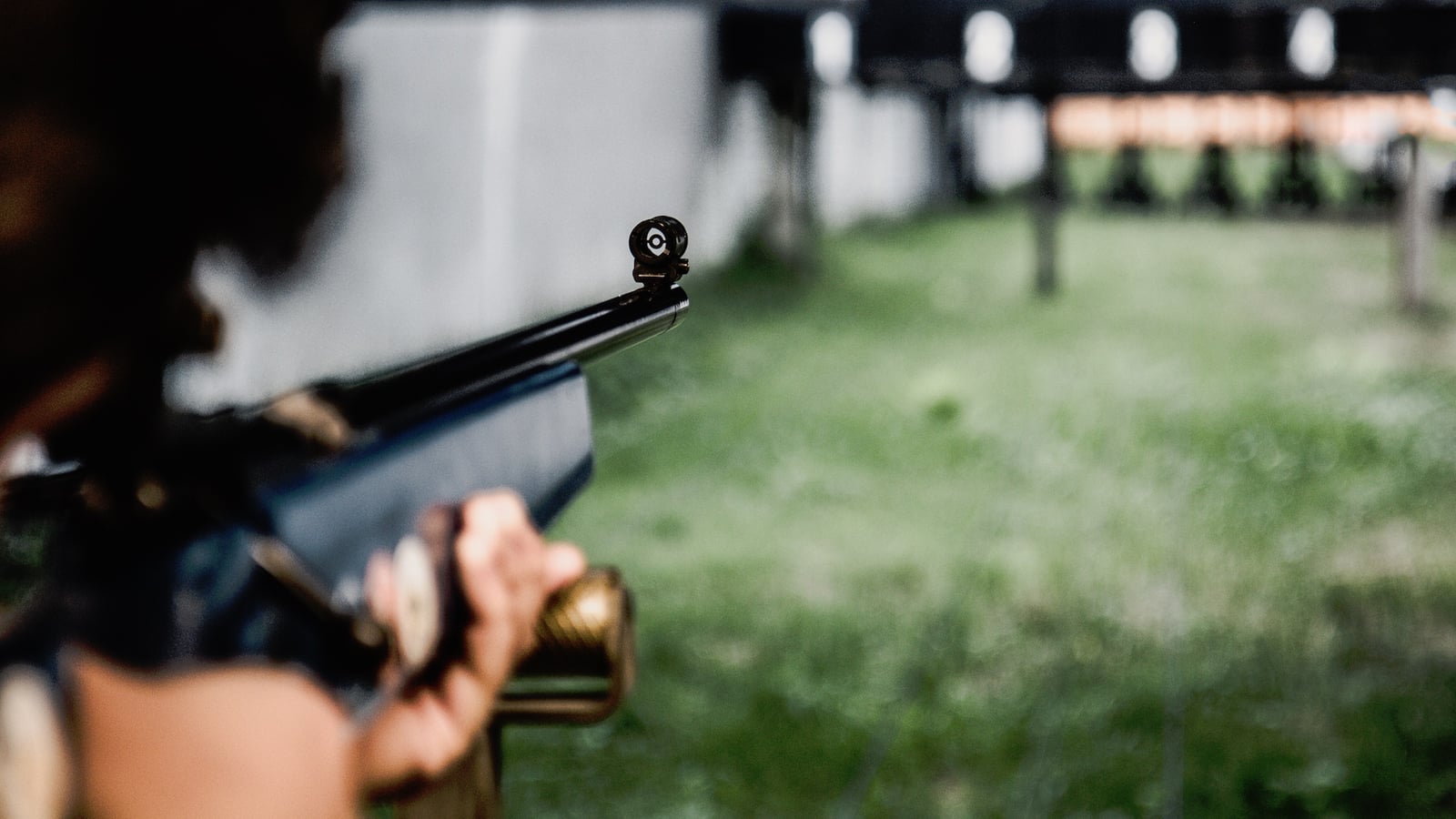
You’ve been shooting for twenty, thirty, forty years. And one day your body reminds you it’s aging: the shoulder that no longer racks the bolt as easily, the wrist that protests after a pistol string, the sights that go blurry. This isn’t the end of competitive shooting. It’s the start of a phase where you need to stop pushing through and start adapting.
This guide isn’t alarmist. It starts from a simple observation: shooting sports are one of the rare disciplines where age isn’t disqualifying. Unlike running or combat sports, precision, breath control, and experience largely compensate for the loss of raw strength. You just need to adapt your gear and your practice at the right time — not too late.
What actually changes with age for a shooter
Aging doesn’t hit everyone at the same time or in the same way. Some keep a solid grip well into their 80s, others develop hand arthritis as early as 55. You need to distinguish what actually affects your shooting from what’s merely anecdotal.
Three areas are affected first: near vision (presbyopia), weight-bearing joints (shoulders, wrists, neck), and general balance. A decline in distance vision matters little in shooting sports, since the target is often already sharp at practice distance; it’s near vision — the front sight and rear notch — that becomes a problem first.
Grip strength also declines gradually, which complicates racking a stiff slide or holding a heavy rifle standing for extended periods. This isn’t a binary fate — it’s a slider that moves slowly, and one you can manage with targeted adjustments rather than an abrupt abandonment of the sport.
Finally, recovery time between sessions gets longer. A senior shooter who stacks two courses in one weekend feels a fatigue the same person wouldn’t have felt fifteen years earlier. Adjusting training volume is just as much a part of adaptation as adjusting equipment.
Vision: the first link to watch
It’s often the first signal. The rear sight blurs, the front sight doubles slightly, reading the rear sight in precision shooting takes a focusing effort that wasn’t there before. Presbyopia affects practically everyone from their forties on, shooters or not.
The first and simplest adjustment is to have your vision correction checked specifically for your sights’ aiming distance — which is neither distance vision nor standard reading vision. An optician familiar with shooters can build a correction dedicated to shooting, sometimes via a specific lens mounted on a shooting glasses temple.
For shooting with metallic sights (rifle or pistol), many senior shooters gradually switch to optics: a red dot on a pistol, a low-magnification scope on a rifle. This shifts the focusing problem: instead of needing simultaneous sharpness on front sight, rear sight, and target, the eye only has to accommodate on a single plane — the red dot superimposed on the target. That’s objectively more comfortable with aging eyesight.
For disciplines that require regulation metallic sights, adjustment comes through better firing-line lighting, adjustable-diameter rear-sight inserts, and sometimes a simple lens tint change to boost contrast on target.
Adapting the weight and balance of the firearm
A position rifle held at arm’s length through a string of 40 or 60 shots stresses the shoulders and back in a way that becomes harder with age, especially if arthritis or an old injury is already present. The good news: a firearm’s weight isn’t fixed — it can be worked with.
Here are the concrete levers available:
- Reduce total weight by removing superfluous balance weights on a precision rifle, without degrading stability to the point of unusability.
- Reposition the balance point closer to the body to reduce the leverage felt in the shoulders.
- Move from a fixed stock to one adjustable in length and comb height, so the rifle fits your current build rather than a posture from twenty years ago.
- Add a better-distributed sling or a forearm rest for standing position to relieve the bearing shoulder.
- On a pistol, opt for a model with a lighter trigger and a slide that’s easier to rack — a criterion often overlooked until the day your wrist protests.
These adjustments aren’t shameful concessions. They’re the same principles a young shooter already applies to optimize their position; age just makes these choices a priority sooner.
Rethinking posture and shooting positions
Prone, standing, and kneeling positions stress joints differently. A creaky hip or a fragile knee makes the kneeling position difficult, even painful, well before precision itself is affected.
Some disciplines and rulebooks allow position accommodations without penalty when a documented disability or physical limitation is involved: a stool, a different support, a tolerance on torso angle. Check with your club and the rules of the discipline in question, as these vary by federation and competition.
In standing position, a slight step back with the rear foot and a more pronounced knee bend often compensate for emerging balance loss, without needing to give up the position altogether. An experienced coach can fine-tune these micro-details in a single session.
For prone shooting, a thicker mat and an adjustable arm rest reduce pressure on elbows and forearms, which are often more sensitive with age. It’s a modest investment that changes a lot over a 60-shot session.
Grip and trigger: where strength declines first
Grip strength is one of the parameters that declines earliest and most consistently with age. A shooter who racked their slide without a second thought at 40 may find themselves needing two tries at 65.
Several adaptations exist and are widely used in clubs, with no connotation of weakness whatsoever:
- Oversized grips or grips in a stickier material that reduce the squeeze effort needed to stabilize the firearm.
- Lightened recoil springs on some semi-automatics, which reduce the force needed to rack the slide — a modification to have done by a qualified gunsmith.
- A trigger set a bit lighter (within the safety and discipline rules limits), to reduce the tension needed in the final aiming phase.
- Gentle hand and forearm strengthening exercises, on a physiotherapist’s advice, that maintain the functional strength needed without overstressing the joints.
A gunsmith or coach experienced with senior shooters will know how to steer you toward adjustments suited to your discipline without ever stepping outside competition-allowed tolerances.
The ergonomics of the stock or grip also deserve regular reassessment, not just at the time of initial purchase. A grip chosen at 45 based on a given strength and flexibility may become less suitable twenty years later, even without outright pain, simply because your grip has evolved gradually. Periodically trying different grip sizes at your club, with no obligation to buy, lets you verify the original choice still holds up.
The perceived sense of recoil also changes with age, particularly on firearms with a sharper hit. What seemed negligible when younger can become a real annoyance over the course of strings, without any objective degradation of the firearm itself: it’s the body’s tolerance that’s evolving, not necessarily the equipment.
The disciplines you can practice the longest
Not all shooting sports disciplines age with the practitioner in the same way. Some place little demand on the body and rely almost entirely on technique and mental management, which explains why some clubs have active shooters well past 70.
Precision shooting at 10 meters, rifle or pistol, comes out on top: static position, slow pace, limited physical effort once the firearm is properly adapted. It’s often the discipline shooters shift to after previously practicing more dynamic ones.
Rifle shooting at 50 meters remains practicable for a very long time, provided the prone or kneeling station is adapted with good support. Speed shooting or IPSC-type disciplines, on the other hand, require movement, quick position changes, and magazine handling under time pressure, which becomes more physically demanding with age — without being impossible for a shooter who maintains good general fitness.
Black-powder and antique-firearm disciplines have an inherently slower pace, which suits a shooter looking to reduce physical load without giving up technicality. Careful reloading between each shot imposes a gentle, almost meditative rhythm.
Shooting at metallic targets or plates, in an untimed format, occupies an interesting middle ground: the action stays dynamic and stimulating without the time pressure that characterizes the fastest disciplines. Some clubs offer variants of these events without a strict timer, precisely to stay accessible to a broader range of shooters, seniors included.
Bench-rest, where the firearm rests on a dedicated support, is probably the most accessible discipline for shooters whose mobility or strength has significantly declined: most of the physical effort disappears in favor of fine-tuning and reading shooting conditions.
Managing fatigue and training volume
A senior shooter applying the same training volume as at 35 exposes themselves to avoidable chronic pain. Tendon and joint fatigue accumulates differently, and recovery takes longer.
Splitting sessions rather than concentrating them generally gives better results: two short 45-minute sessions during the week rather than a single three-hour session. The quality of each shot matters more than the total volume of ammunition fired.
Warming up before shooting becomes more important than before: a few minutes mobilizing the shoulders, wrists, and neck noticeably reduce the risk of discomfort during the session. Many senior shooters used to skip this step when younger with no consequence; that’s no longer the case over time.
Listening to warning signs — pain that persists beyond the session, stiffness that doesn’t resolve within 48 hours — avoids turning a temporary discomfort into a chronic injury, which could genuinely end your practice.
An active club almost always has experienced senior shooters in its ranks, an underused resource. A seasoned club shooter who’s already gone through this transition ten or twenty years earlier can give concrete advice no manual provides: which adjustable stock model worked for them, which local gunsmith understands these issues, how they reorganized their prone position.
An experienced coach can also objectively distinguish what’s a real physical limitation from what’s a habit to correct. It’s not uncommon for a posture adjustment to solve a problem wrongly attributed to age, or conversely for someone to keep forcing a position that’s become unsuitable out of sheer habit.
Some clubs organize time slots or groups dedicated to senior shooters, with a more relaxed shooting pace and special attention to equipment adaptation. Check with your club: this offering exists more often than you’d think, even if it’s not always advertised.
Individual equipment adaptation also has its limits if the range environment itself isn’t compatible with a senior shooter’s needs. Some clubs are better suited than others, without it always being obvious before practicing there several times. A few concrete criteria to watch when choosing or reassessing your club: the distance between the parking lot and the firing lines, the presence of an elevator or stairs to reach the different stations, the range’s overall lighting, the availability of seating and rest areas between stations. These are details that seem secondary until the day they become decisive.
Excessive heat or cold in a poorly insulated range also weighs more heavily with age. A covered, properly heated range in winter represents real comfort for joints that handle temperature swings less well, particularly for long precision-shooting sessions.
Some clubs offer weekday slots, less crowded than weekends, allowing you to shoot at your own pace without the pressure of a queue or a shared firing line. Many senior shooters, especially retirees, rediscover the comfort of practicing on weekdays, outside peak periods.
Finally, having a coach or point person available to specifically answer age-related adaptation questions makes a real difference. It’s not a criterion you’ll find in club brochures, but it’s worth asking directly during a visit or when signing up.
A practical checklist for reviewing your gear
Here’s a concrete checklist to go through once or twice a year, or as soon as new discomfort appears, to identify adaptations to consider before a minor inconvenience becomes a serious obstacle to practicing.
- Vision: does focusing on your sights or optic stay sharp effortlessly after several strings, or does it require visible, tiring accommodation?
- Grip: does racking the slide or handling the reloading mechanism happen smoothly, without jerkiness or discomfort in the wrist or fingers?
- Weight: does the firearm stay manageable in standing position for an entire string without trembling from muscle fatigue rather than from the motion itself?
- Posture: is every regulation position in your discipline (standing, kneeling, prone) sustainable over time without joint pain appearing mid-string?
- Trigger: does the travel and weight of the trigger allow a clean break without compensatory tension in the hand or wrist?
- Recovery: does the 48 hours following a session leave persistent localized discomfort, a sign an adjustment is probably needed right there?
- Transport: does carrying gear before and after the session cause more fatigue or pain than the shooting itself?
If even one of these answers gives you pause, it’s probably the right time to talk to your coach or a trusted gunsmith, before the discomfort settles in for good. This regular check-in, more than any specific piece of equipment, is the real key to shooting for a long time, without pain.
The most common mistake isn’t aging — it’s waiting until pain or discomfort becomes disabling before acting. A timely stock adjustment often prevents a tendinitis that could sideline a shooter for months. Anticipating also means accepting certain changes before they’re forced on you by pain: switching to optics before your eyesight becomes a real handicap, lightening a firearm before your shoulder gives out mid-string. Decisions made calmly, ahead of time, are always more comfortable than those made in reaction to an injury.
Transport and handling gear, a common blind spot
We almost always think about the shooting position itself, and forget the before and after: getting the case out of the trunk, carrying the ammo box, setting up the target, packing up gear at the end of the session. For a weakened back or shoulders, this invisible part of the session can hurt more than the shooting itself.
A rolling bag or a folding cart genuinely changes the game for transporting firearm, ammunition, and accessories from the parking lot to the firing line, especially at clubs with a long walk. It’s not a gadget — it’s an investment that protects your back just as much as any stock adjustment.
Splitting the weight across several light bags rather than one heavy case also reduces the load carried at once on a shoulder or arm. Some senior shooters now organize their gear into two trips instead of one full carry — a simple adaptation, but rarely anticipated.
Organizing the firing point deserves the same attention as the shooting position: a height-adjustable table, a stool close at hand for breaks between strings, a rest to set the firearm down without bending over — all of these are details that reduce the cumulative strain on the back and knees over a full session.
The stability of your shooting motion depends directly on factors that have nothing to do with the firearm itself: sleep quality, hydration, general fatigue level. These parameters weigh more and more heavily with age, and neglecting them shows up immediately in your grouping on target.
A poorly hydrated or sleep-deprived shooter sees their postural tremor increase, which translates into a wider grouping regardless of equipment quality. This link is particularly marked in senior shooters, whose balance regulation is already more sensitive to small physiological disruptions.
Some medications common with age — for blood pressure, heart rhythm, or other chronic conditions — can affect stability, alertness, or reaction times. This topic should systematically be discussed with your physician rather than assessed alone at the firing line, since effects vary enormously by drug and by person.
Gentle, regular physical activity outside the range — walking, swimming, joint mobility work — maintains the postural stability needed for shooting far more effectively than shooting alone. Many senior shooters who maintain good general fitness find their hold stays solid much longer than those who only shoot occasionally.
Cold deserves a special mention: aging joints tolerate an unheated winter range less well. Warming up longer, wearing appropriate layers, and avoiding shooting immediately after traveling outdoors in extreme cold noticeably reduces post-session joint pain.
Budget and priorities: where to start
Adapting all your gear at once isn’t necessary or realistic for most budgets. The right approach is to prioritize changes according to their actual impact on comfort and safety, rather than changing everything at the same time.
Here’s a priority order that suits most situations, to adjust based on your main discomfort:
- First, vision correction specific to shooting: it’s the least expensive adjustment and often the one with the most immediate impact on precision and comfort.
- Next, reversible, low-cost adjustments: stock height if already adjustable, an added grip, rear-sight inserts.
- Then comfort equipment at the firing point: mat, arm rest, stool, transport cart.
- Finally, the more expensive or permanent modifications: a full stock change, adding an optic, a gunsmith modifying the recoil spring.
This order isn’t an absolute rule — it depends on which discomfort is most limiting for you. A shooter whose main issue is vision would benefit more from swapping the first two steps, for example.
It’s better to try equipment before buying it when possible. Many clubs have loaner gear or fellow members willing to let you test an adjustable stock or an optic before committing to a purchase. That avoids buying equipment that looked right on paper but doesn’t actually suit your build in practice.
Mental focus and concentration, an asset that doesn’t age
While the body imposes progressive limits, mental management of shooting is an area where experience keeps improving long after physical strength has begun to decline. It’s often even the factor that explains why some senior shooters keep improving their scores.
Breath control, the timing of the trigger break between two heartbeats, the ability to ignore outside distraction: these are skills built over years of practice that don’t degrade at the same rate as muscle strength. An experienced senior shooter often has a finer read on their own physiological rhythm than a beginner, regardless of age.
The mental routine before each shot — the same breathing sequence, the same moment of shoulder release, the same position check — becomes even more valuable with age, because it compensates for small day-to-day physical variations. An experienced coach often emphasizes this point with senior shooters: the consistency of the mental ritual takes over when physical consistency becomes more variable.
Managing frustration with a body that responds differently from one session to the next is also part of this adaptation. Accepting that a session is worse because of a rough night or an aching joint, without second-guessing your technique, avoids falling into a negative spiral that would actually affect performance.
Testimonials from senior shooters: the recurring themes
Without attributing statements to a real, identifiable person, certain feedback comes up very regularly among senior shooters who’ve gone through this transition, and is worth sharing as illustration.
A seasoned club shooter, licensed for over thirty years, describes switching to a red dot on his precision pistol around age 62, after years of putting it off out of attachment to metallic sights. His main regret: not making the switch sooner, given how immediate the gain in visual comfort was.
A regional rifle champion, still active past sixty, stresses the importance of having her stock professionally fitted rather than tinkering with adjustments herself. In her view, a stock adjusted “by feel” can create compensatory tension elsewhere in the body, without you noticing right away.
A club coach who currently mentors several senior shooters observes that the main mistake he corrects isn’t equipment-related but behavioral: shooters who keep pushing themselves to a round count inherited from their most active years, when their body is asking for a more measured pace. Once that’s adjusted, most rediscover a joy in shooting they’d lost without realizing it.
Another senior shooter, practicing black-powder antique firearms since retiring from a more dynamic discipline, describes the switch as a rediscovery rather than a resignation: the slowness of reloading and the precision of the motion bring him a different, equally intense satisfaction as the speed he sought when younger.
Administrative steps not to overlook
Beyond equipment, competitive shooting comes with administrative obligations that deserve particular attention with age, notably everything related to the medical certificate required to own and use firearms.
Renewing the medical certificate follows the deadlines set by current regulations, and that doesn’t change with age per se. That said, it’s worth scheduling this appointment ahead of time rather than dealing with it under pressure, to leave room for a possible follow-up exam if the doctor deems it necessary.
Being transparent with your physician about your shooting practice, including current treatments, gets you a genuinely tailored opinion rather than a formality signed in a rush. It’s also a chance to bring up any physical discomfort that might justify the equipment adaptations discussed above.
A digital or paper shooting log proves genuinely useful here: recording your sessions, physical impressions, and equipment adjustments over time helps make visible a progression that, day to day, can seem imperceptible. Rereading six months of notes often reveals a pattern no single session would have shown.
Some insurance policies tied to shooting sports or club membership include specific clauses depending on age or declared health status. Checking these conditions with your club or federation avoids unpleasant surprises in case of an incident, even a minor one.
These administrative obligations naturally fit within a more structured approach to adaptation over time. Rather than absorbing changes one by one as discomfort appears, some senior shooters choose to build an equipment and practice evolution plan spread over several years, with their coach or a trusted gunsmith.
What others think, and the question of performance
Many senior shooters delay equipment adaptations out of a kind of modesty, as if switching to optics or lightening their firearm were an admission of decline. That’s a misreading of the situation: these same adjustments are used by shooters of all ages to optimize their comfort and consistency.
Performance in competitive shooting isn’t measured by the strength needed to handle the firearm, but by the consistency of the motion and stress management at the moment of the break. A regional champion approaching sixty who’s adapted her equipment year after year often keeps improving in precision, precisely because she’s removed the sources of discomfort that were interfering with her motion.
Civilian competitive shooting remains one of the rare sporting worlds where accumulated experience largely offsets, and sometimes surpasses, the loss of raw physical capacity. A well-equipped, well-supported senior shooter objectively has nothing to envy in a younger shooter’s score, and it’s precisely this reality that should guide every equipment-adaptation decision covered in this article.
This reality deserves to be recalled more often at clubs, because it changes how senior shooters are perceived by younger members. Far from being a category tolerated out of courtesy, experienced shooters who’ve managed to adapt their practice often become a technical benchmark that beginners watch closely, particularly for how they handle calm and consistency.
This plan generally starts from an honest assessment of your current physical condition, then anticipates likely developments rather than only reacting to symptoms. It might, for example, plan a switch to optics within a given timeframe if presbyopia keeps progressing, or a gradual shift toward a less dynamic discipline if general mobility declines.
The advantage of this approach is as much psychological as practical: it turns a series of forced resignations into a chosen, anticipated trajectory. A shooter who’s already planned to move to bench-rest in a few years experiences that change as a logical step in their practice, not as a failure imposed by the body.
This plan isn’t rigid at all: it gets readjusted over the years according to how the body actually evolves, which never exactly follows predictions. The key is having a direction rather than navigating by sight from one discomfort to the next, always keeping in mind that the ultimate goal remains the same at any age: to keep shooting with precision, without pain, and with enjoyment.
FAQ
Q: At what age should I start thinking about these adaptations? A: There’s no universal threshold — it depends entirely on your build and joint history. Many shooters start adjusting their gear at the first signs of discomfort, often between 50 and 60, but some think about it much earlier after an injury.
Q: Does switching to a red dot make you less of a “real” competitor? A: No, optics are allowed and widely used across many disciplines and categories. It’s an equipment choice like any other, driven by comfort and consistency, not an admission of weakness.
Q: Which disciplines should I avoid if I have significant joint pain? A: Dynamic disciplines requiring rapid movement and position changes under time pressure are the most physically demanding. Static precision shooting or bench-rest are notably more accessible in that case.
Q: Can a gunsmith legally modify my trigger or recoil spring? A: Yes, within the limits allowed by your discipline’s and firearm category’s regulations, a qualified gunsmith can make these adjustments. Always check compliance with competition rules if you compete.
Q: Does the medical certificate for owning and carrying a firearm get harder to obtain with age? A: Fitness criteria vary based on individual circumstances and the doctor’s assessment — there’s no general rule tied solely to age. It remains an individual evaluation to make with your physician.
Q: Do I need to switch firearm categories as I get older? A: Not necessarily — it’s mostly about adapting the model and settings within the same category (weight, stock, trigger) rather than switching regulatory categories. The category depends on the type of firearm, not the shooter’s age.