
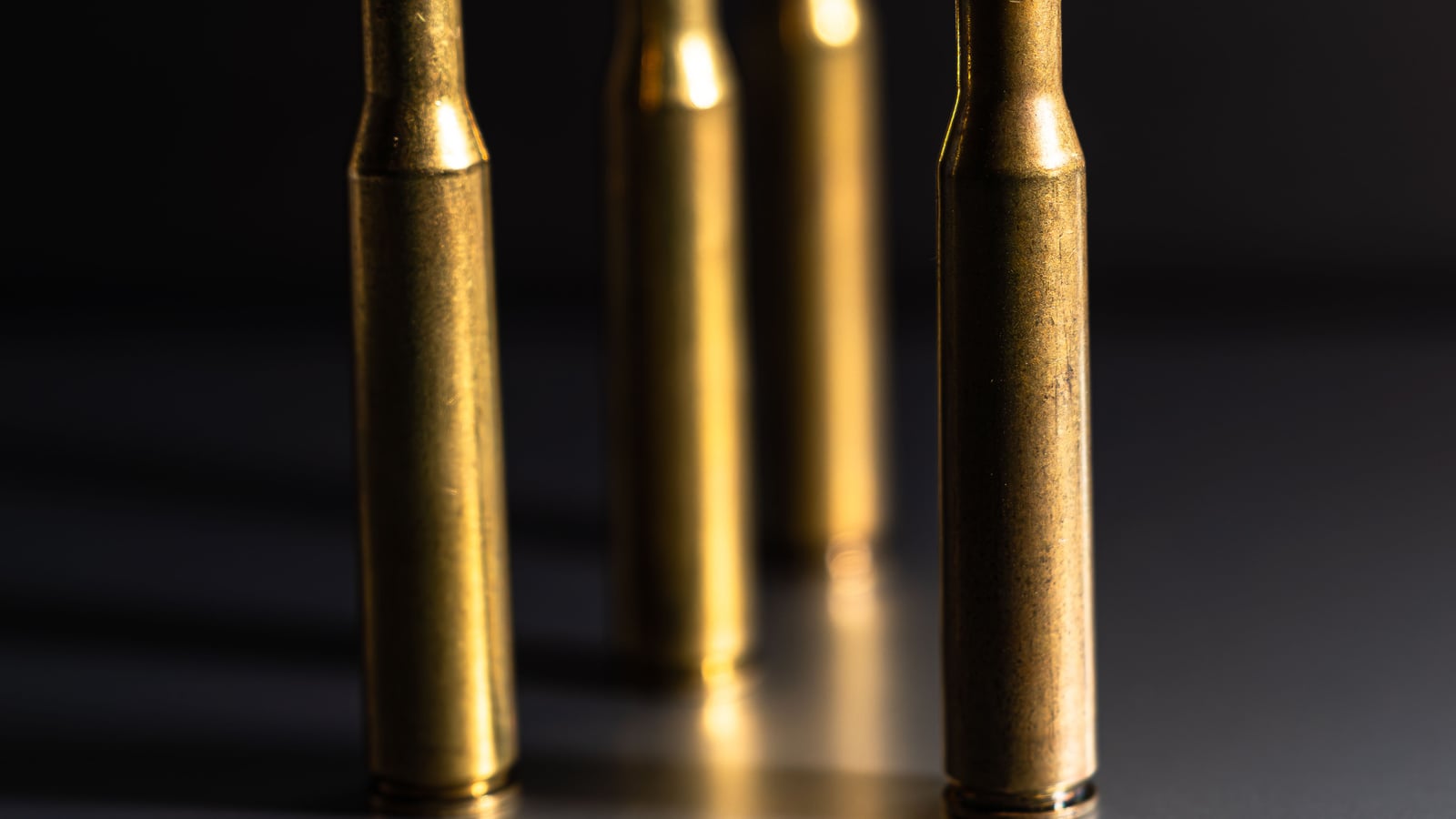
Two calibers, two philosophies
The .223 Remington versus .308 Winchester debate keeps coming back in clubs and on forums, and it deserves better than a clear-cut answer. These aren’t two rounds competing for the same job: they’re two different shooting philosophies, each optimized for a specific use.
The .223 Remington is about volume and lightness. Small caliber, low recoil, plentiful and cheap ammo, a high rate of fire without fatigue. It’s the natural choice for anyone who wants to run through cartridges in quick succession, progress fast technically, and shoot often without going broke.
The .308 Winchester is about power and reach. Heavier caliber, ballistics that hold up better past 300 meters, noticeably higher impact energy. It’s the choice for anyone chasing long-range precision or needing a round that keeps its effectiveness well downrange.
This article breaks both calibers down point by point: comparative ballistics, use at short and medium precision distance, long-range behavior, real ammo cost, availability, recoil and comfort during high-volume sessions, the rifle choice that goes with each, and maintenance. The goal isn’t to crown a universal winner, but to give you what you need to decide based on your actual practice.
One clarification before we start: in France, rifles in these calibers are most often classified as Category C (declaration) depending on the model and mode of operation, or Category B (authorization) for certain semi-automatics. The precise classification depends on the exact firearm model, not on caliber alone: always check with your dealer or federation before buying.
This comparison is aimed as much at the shooter considering their first precision rifle as at someone who already owns a gun in one of the two calibers and is wondering whether to round out their collection. Both profiles are asking the same question from a different angle: the beginner is looking for the caliber best suited to learning, the experienced shooter is looking for the one that fills a gap in their current practice.
It’s worth stating upfront that neither .223 nor .308 is a “superior” caliber in absolute terms. Civilian sport shooting — whether bench precision, prone, kneeling, or standing, or dynamic disciplines on paper or steel targets — rewards above all the shooter’s consistency and technical mastery. Caliber remains a tool in service of that mastery, never a substitute for training.
Comparative ballistics: what the physics says
The .223 Remington fires a light bullet (typically between 3.5 and 4.5 grams depending on the load) at a high muzzle velocity. This combination gives it a flat trajectory over the first few hundred meters, which makes aiming much easier without complicated bullet-drop calculations.
The .308 Winchester fires a noticeably heavier bullet (between 7 and 11 grams depending on the load) at a more modest muzzle velocity. The result: a trajectory that drops faster in absolute terms, but a bullet that holds onto its energy and wind resistance far better over distance.
The mass difference is the heart of the matter. A light bullet loses velocity faster than a heavy one because of air resistance, even though it starts out faster. That’s why the two trajectories eventually cross over in the numbers at long range: the .223, which looked “flatter” at first, becomes more wind-sensitive and loses velocity faster past a certain threshold.
In practice, this means the .223 excels when distance stays moderate and rate of fire matters more than terminal energy. The .308 takes the advantage as distance grows and residual energy on impact becomes the criterion that really counts.
Barrel bore also plays a role that’s often overlooked. The .223 uses a narrower bore (5.56mm), which wears the barrel more slowly under reasonable shooting conditions, but also makes it more sensitive to poor maintenance after copper fouling or residue buildup. The .308 (7.62mm) tolerates occasional neglect a bit better, though that’s no excuse for skipping rigorous maintenance.
The shape of the trajectory also directly affects how you set up your scope. With a .223, a base zero at 100 meters stays usable with minimal correction out to 200-250 meters depending on the load, which simplifies life for a shooter who regularly changes distance on the same range. With a .308, the drop becomes significant much sooner, which means you need to memorize or calculate elevation corrections as soon as distance exceeds a hundred meters or so.
This difference is neither an advantage nor a drawback in itself: it simply reflects two different ways of approaching scope adjustment. A shooter who enjoys reading their reticle and calculating corrections will find an interesting technical exercise in the .308. A shooter who prefers to aim and shoot without intermediate math will appreciate the simplicity of the .223 at distances where its trajectory stays flat.
Use at short and medium precision distance
At distances of 25 to 100 meters, typical of an indoor range or a club firing line, the .223 Remington is more than sufficient and often preferable. Its nearly straight-line trajectory over this range hugely simplifies aiming: no significant bullet drop to compensate for.
The .223’s low recoil also lets you watch your impact through the scope without losing the sight picture at the moment of firing, which helps enormously during the learning phase. A beginner working on position, breathing, and trigger control progresses faster with a caliber that doesn’t punish them physically with every shot.
The .308 remains perfectly usable at these same short distances, but it brings no real advantage that justifies its cost and its noticeably stronger recoil. It’s a bit like driving in fourth gear in a parking lot: it works, but it’s not the rev range the engine was designed for.
Between 100 and 300 meters, things change. The .223 keeps a trajectory that’s still manageable for a shooter who has mastered their scope adjustments, but becomes more sensitive to crosswind than the .308 starting around 200 meters. An experienced instructor will often recommend the .223 for this range only when wind conditions are stable, otherwise you’ll be correcting constantly.
These short and medium distances also match the majority of precision disciplines practiced day-to-day in clubs, whether benchrest shooting, prone shooting on a mat, or the various positions trained in practice. The .223 finds natural ground here, which explains its popularity with beginners and experienced shooters alike who simply want to train often without unnecessary ballistic complexity.
Another advantage of the .223 at these distances concerns reading your group. A well-tuned .223 rifle often produces very tight groups at 100 meters even with average-quality ammo, which gives a beginner a motivating sense of rapid progress. The .308, more demanding in terms of recoil, generally needs more sessions before reaching comparable consistency at that same distance.
Long-range use: where the .308 takes the advantage
Past 300 meters, the .308 Winchester generally becomes the more coherent choice. Its heavier bullet mass resists wind drift better, which reduces uncertainty about the point of impact — a factor that’s often more decisive than raw trajectory itself.
The .308’s residual energy at 400-500 meters also stays much higher than the .223’s at the same distances, which matters for any discipline aiming at steel targets or plates that need a minimum impact energy to “ring” properly.
The .223 can technically hit a target at 500 meters and beyond with a suitable rifle and optic, but it demands finer ballistic mastery (wind, drop, and drift compensation) and tolerates far less approximation. It’s a caliber that forgives few setup errors past a certain threshold.
A regional precision-shooting champion aiming at 600 meters and beyond will almost always choose a caliber close to the .308 or heavier still, precisely because the margin of error from wind becomes the limiting factor, well before the intrinsic precision of the rifle or the shooter.
It’s also worth noting that some FFTir long-range rifle disciplines set minimum or maximum calibers depending on the match rules. Always check with your club or federation before investing in a rifle dedicated to a specific discipline.
Wind management deserves its own discussion, since it becomes the real subject past 300 meters. A moderate crosswind can push a .223 bullet off by several tens of centimeters at 400 meters, while the same gust will only shift a .308 bullet a fraction of that distance thanks to its greater mass and better ballistic coefficient on so-called “match” or “long-range” loads.
This wind sensitivity isn’t limited to lateral drift: it also introduces uncertainty that accumulates with distance. A shooter using .223 has to read wind far more precisely to hope for a tight group at 400-500 meters, which requires field experience that few beginners yet have. An experienced instructor will generally stress this point before recommending a light caliber for regular long-range work.
The choice, however, doesn’t stop at the caliber itself: within .223 Remington and .308 Winchester alike, the ammo lineup varies enormously depending on intended use, and that variety directly affects the result on target.
In .223, you’ll typically find cheap FMJ (full metal jacket) ammo for high-volume training, hollow-point or polymer-tip ammo for better expansion on reactive targets, and so-called “match” loads with a heavier, more aerodynamic bullet, designed for precision rather than cost.
In .308, the same logic applies but with a sometimes even sharper price gap between entry-level and top-shelf match loads. Quality .308 match ammo, with a high-ballistic-coefficient bullet, can cost significantly more than standard FMJ ammo, for a real precision gain that only fully pays off past a certain shooting distance.
Choosing the right ammo within a given caliber can make a bigger precision difference than choosing between .223 and .308 themselves, at equal distance. A shooter who invests in a quality rifle but consistently shoots the cheapest ammo on the shelf artificially limits their results, whatever caliber they’ve chosen.
It’s also recommended to test several ammo references in your own rifle before settling on a given load: every barrel has its preferences, and a round that produces excellent groups in one gun can disappoint in another, even of the identical model. That’s a well-known reality among precision shooters, whatever the caliber.
Real ammo cost: the gap that changes everything
This is often the most underestimated criterion at purchase time, even though it weighs heavily on a regular shooter’s annual budget. The .223 Remington structurally costs less per round than the .308 Winchester, for several compounding reasons: less raw material (powder and lead), higher production volume, and stronger competition among manufacturers in this segment.
Over a 200-round session, the price gap between the two calibers is felt immediately at checkout. For a shooter who trains every week, that difference can add up over a year to an ammo budget sometimes twice as high in .308 as in .223, for an equivalent volume of shooting.
Reloading (loading your own cartridges) narrows the gap but doesn’t erase it: the amount of powder and weight of lead per round remain structurally greater in .308, so it’s more expensive per shot even buying components in bulk.
If your practice favors volume — stringing groups together, working on technical repetition, progressing through sheer shooting volume — the .223 represents a concrete economic advantage that lets you shoot more often on a given budget. If your practice is more occasional and long-range oriented, the cost gap matters proportionally less.
You also need to factor in the indirect cost of barrel and parts wear in the overall calculation. A barrel that wears out faster eventually means replacement or rechambering, an expense often forgotten when calculating “cost per shot.” That wear depends mostly on cumulative round count and how rigorous your maintenance is, more than on caliber itself, but it remains a factor to plan for over several years of practice.
The accessories budget follows a similar logic to ammo. A .308 rifle set up for long range often comes with a pricier scope, a sturdier bipod, and a proper shooting bag, while a .223 rifle for short-range training generally gets by with more modest gear. It’s worth weighing this upfront delta at purchase time against the recurring ammo budget to get a complete picture of total annual cost.
Availability at retailers and clubs
The .223 Remington enjoys nearly universal availability: most gun shops stock it in quantity, under multiple brands and bullet types (FMJ for training, hollow-point or match for precision). It’s also one of the most common calibers at ranges that offer gun rentals.
The .308 Winchester also remains very common and widely available, but sometimes in a slightly narrower lineup depending on the store, particularly for loads specifically aimed at long range or top-shelf match ammo, which may require ordering or a variable wait depending on the supplier.
During supply crunches (which happen periodically depending on market conditions), .223 tends to come back onto shelves faster than .308, simply because global production volumes are larger for this caliber. It’s not an absolute rule, but a trend observed by many clubs.
For a beginner who wants to be sure of finding ammo easily without planning months ahead, the .223 offers real peace of mind. For an experienced shooter who plans purchases in advance and favors specific loads, .308 availability generally isn’t a practical problem.
Availability isn’t limited to the ammo itself: it extends to empty brass for reloading, matching primers, and load data published by powder manufacturers. The .223 again benefits here from a richer ecosystem, with more reloading recipes documented and tested by the community, which makes life easier for a shooter starting out in reloading. The .308, an older caliber just as widespread among experienced reloaders, also has abundant documentation, especially for precision-oriented loads.
Recoil and comfort during high-volume sessions
Recoil is probably the most sensitive criterion for anyone planning to fire several dozen, even several hundred rounds in a single session. The .223 Remington produces light recoil, comparable to a .22 LR rifle but a bit more pronounced, which lets you fire round after round without shoulder fatigue or losing concentration.
The .308 Winchester produces noticeably more recoil, roughly three to four times the recoil energy of the .223 depending on the load and the rifle’s weight. Over a long session, that cumulative recoil tires the shoulder, progressively degrades shooting position, and can even trigger a slight flinch in some shooters, which directly hurts accuracy.
This recoil anticipation (often called “flinching”) is a well-documented phenomenon among beginner shooters: it shows up as an involuntary tensing right before the shot breaks, which pulls the shot low. An experienced instructor will see this phenomenon more often in .308 beginners than .223 beginners, simply because the stimulus is stronger.
The rifle’s weight partly offsets this recoil: a heavy .308 rifle with a good muzzle brake brings the felt recoil down to a comfortable level for most adult shooters. But that also means carrying a heavier gun to the club and to the firing line, which isn’t trivial over an extended session.
For introductory training, or for a shooter who wants to build technique through repetition (position, breathing, trigger control), the comfort of the .223 is a real pedagogical advantage: less physical fatigue means more useful repetitions before tiredness starts degrading the quality of the shot.
Felt recoil also varies with the shooter’s build and experience, which makes any generalization beyond broad trends risky. A big, experienced shooter may find .308 recoil perfectly reasonable, while a lighter or beginner shooter will find it noticeably more pronounced. One more reason to test a rifle at a club or via rental before any final purchase, rather than relying solely on theoretical recoil-energy figures.
Wearing proper hearing and eye protection remains essential whatever caliber you choose, but perceived noise level also differs between the two: the .308, with its heavier powder charge, generally produces a louder report than the .223, a factor worth considering especially on an indoor range where reverberation amplifies the sensation.
Choosing the rifle to go with it
Caliber is never chosen completely independently of the rifle that fires it. In .223 Remington, the lineup is broad and covers everything from light, affordable bolt-actions to sport-style semi-automatics, depending on classification and the authorizations required in France.
In .308 Winchester, the lineup leans more toward precision-oriented bolt-action rifles, often heavier, with match-grade barrels and adjustable stocks, designed for bench shooting and stability rather than rate of fire.
Caliber choice also drives scope choice. A scope suited to .223 for short and medium distance doesn’t need huge magnification or an elaborate adjustment turret. A scope built for .308 at long range, on the other hand, benefits from a precise adjustment turret, a graduated reticle, and higher magnification.
The total weight of the setup (rifle plus optic plus accessories) is worth considering before buying, especially if you plan to regularly haul your rifle between home and the club. A fully kitted-out .308 rifle can weigh noticeably more than an equivalent .223 setup.
An experienced club shooter who already owns both calibers often explains their choice like this: the .223 for the Wednesday-evening technical session, the .308 for the monthly long-range outing on a range that allows it. The two rifles serve different needs rather than duplicating the same use.
The used market is also worth factoring in. Since .223 is one of the most common calibers, used rifles in that caliber are easy to find and often at attractive prices, making it a good option for a first purchase without committing to a heavy budget. .308 also benefits from an active used market, with a lineup leaning toward precision models that generally hold their value well over time, provided the previous owner maintained them properly.
A point often overlooked when choosing a rifle is the availability of spare parts and after-sales support depending on the brand. The most common models in each caliber generally get better support (parts, repair, club advice) than more obscure references — a criterion not to be underestimated for a rifle you plan to keep for several years.
Maintenance and barrel life
Maintenance differs noticeably between the two calibers, mainly because of muzzle velocity and pressure generated. The .223 Remington, fired at high velocity, fouls the barrel differently than the .308: more copper deposit at close range with certain loads, which requires regular cleaning with a suitable solvent to preserve accuracy over the long haul.
The .308 Winchester generates different pressure and barrel erosion, with wear that shows up more as a gradual loss of muzzle velocity after a high round count, rather than rapid fouling.
In both cases, rigorous cleaning after every shooting session remains the best guarantee of longevity and consistent accuracy. Neglecting to clean the barrel progressively degrades accuracy, well before wear becomes critical to the rifle’s safety.
Barrel life in round count varies enormously depending on steel quality, barrel profile, firing rhythm (rapid strings of fire heat the barrel more than spaced-out deliberate shooting), and maintenance. Let’s stay general here: figures thrown around vary wildly from source to source and depend on too many factors to give a reliable universal number.
Cleaning gear itself doesn’t fundamentally differ between the two calibers: a cleaning rod sized to the bore, brushes, solvent that dissolves copper and powder residue, protective oil. The difference is mainly in recommended frequency: a .223 barrel used for rapid, repeated fire benefits from more frequent cleaning than a .308 barrel used for deliberate, spaced-out shooting, simply because round count per session tends to be higher in .223.
A shooter who neglects this maintenance usually notices a gradual degradation in their groups before even realizing it, which can skew their read on their own technical progress. Getting into the habit of cleaning your rifle after every outing, whatever the caliber, avoids this confusion between an equipment problem and a technique problem.
Which caliber for which type of shooter
If you’re starting out in precision shooting and your main goal is technical progress through frequent sessions, the .223 Remington is almost always the more coherent choice. Low recoil, controlled cost, excellent availability: everything is in place to rack up practice without budget or physical constraints.
If your practice centers on precision shooting at medium and long range, or if you’re considering disciplines that require significant impact energy, the .308 Winchester better fits that need. It demands a bigger ammo budget and tolerates high-frequency training without fatigue less well, but it holds up at distance where the .223 shows its limits.
If you’re still torn, ask yourself the average distance you actually shoot at, not the one you dream of shooting at someday. Many shooters buy a .308 for 600 meters they in reality only shoot two or three times a year, and use it the rest of the time at distances where a .223 would have sufficed for a fraction of the ammo cost.
There’s no universally wrong answer, only one that’s more or less suited to your actual practice. Some clubs run trial sessions or gear loans: take advantage of these before investing, rather than relying solely on opinions read online.
Your intended training frequency also deserves consideration. A shooter planning one outing a month doesn’t face the same budget constraints as one aiming for two or three sessions a week. At an intensive pace, the cumulative cost gap between .223 and .308 quickly becomes a decisive factor, more so than for occasional practice where the ammo budget stays marginal whatever the caliber.
Your medium-term sporting goal also matters. A shooter aiming for progress in precision competition, with a placement goal in their discipline, should steer their choice toward the caliber actually used in the matches they’re targeting, rather than personal preferences disconnected from the applicable sporting rules.
Can you have both, and in what order should you get them
Many experienced shooters end up owning both calibers, since they serve complementary rather than competing needs. The question that then arises is the order of acquisition, especially on a tight budget or for a first bolt-action or semi-automatic rifle purchase.
The order most often recommended by club instructors is to start with the .223: it lets you learn the fundamentals (position, breathing, trigger control, reading your group) at lower cost and with fewer physical constraints, before adding a more demanding caliber.
Once the fundamentals are solid, adding a .308 rifle becomes a logical complement rather than a replacement. Many shooters keep their first .223 rifle for regular training and reserve the .308 for dedicated long-range outings, which optimizes both budget and equipment wear.
This logic isn’t set in stone: a shooter who already knows from the start that their practice will be exclusively long-range oriented can perfectly well start directly with the .308. The key is aligning the choice with actual use rather than a theoretical hierarchy between calibers.
The question of storing and transporting both rifles is also worth planning ahead if you’re considering owning both calibers eventually. A gun safe spacious enough, compliant with applicable storage requirements, should be planned from the first purchase if you expect to expand your collection later, rather than having to swap it out once the second caliber is acquired.
Common mistakes to avoid
The first mistake is choosing a caliber based solely on its reputation or on what other club members own, without asking yourself about your own practice and your own budget. A caliber that suits a long-range shooter perfectly can be totally unsuited to a beginner primarily looking to rack up repetitions.
The second mistake is underestimating the cumulative cost of ammo over a year. A quick calculation of the annual budget based on intended shooting frequency avoids a lot of disappointment, especially for anyone new to the practice who doesn’t yet have a benchmark for their real cartridge consumption.
The third mistake is neglecting to test the actual recoil before buying. A caliber that looks manageable in videos or theoretical descriptions can turn out to be uncomfortable in practice depending on the shooter’s build, the rifle’s weight, and whether or not it has an effective muzzle brake.
Finally, a classic mistake is neglecting barrel maintenance on the assumption that the chosen caliber is “more forgiving.” Neither caliber excuses you from rigorous maintenance: it’s the regularity of cleaning, far more than the caliber choice, that determines a rifle’s longevity and consistent accuracy.
One last, more subtle mistake is switching calibers too quickly, thinking the gear is responsible for a lack of progress that in reality comes from technique. Many shooters stuck at a plateau in precision look for the answer in a new caliber or a new rifle, when the real lever for progress often remains work on position, breathing, and trigger control, regardless of caliber used. An experienced instructor will regularly remind students of this point before steering them toward a gear change.
FAQ
Q: Is the .223 Remington too weak for serious use at a club? A: No, it’s a perfectly serious caliber for short and medium-range precision, widely used in clubs for technical training. It simply becomes less suited past 300 meters against wind, where the .308 takes the advantage.
Q: Can you use the same rifle to shoot both calibers? A: No, the .223 Remington and .308 Winchester each need their own chamber and barrel sized to their respective dimensions. So you need two separate rifles, one per caliber.
Q: Which caliber should you choose for a first precision rifle? A: For a first purchase focused on learning, the .223 Remington is generally recommended thanks to its light recoil and controlled ammo cost, which let you train more often.
Q: Does the .308 really make a big difference past 300 meters? A: Yes, its heavier bullet mass gives it better wind resistance and more residual energy than the .223 at these distances, which reduces uncertainty about the point of impact.
Q: Does reloading really narrow the cost gap between the two calibers? A: It narrows it, but doesn’t close it completely, since the .308 structurally uses more powder and lead per round. Reloading nonetheless remains an interesting option for a regular shooter, whatever caliber they’ve chosen.
Q: What legal category do these rifles fall under in France? A: It depends on the exact model and its mode of operation, most often Category C (declaration) for manually operated repeating rifles, or Category B (authorization) for certain semi-automatics. Always check the exact classification with your dealer or prefecture before buying.