
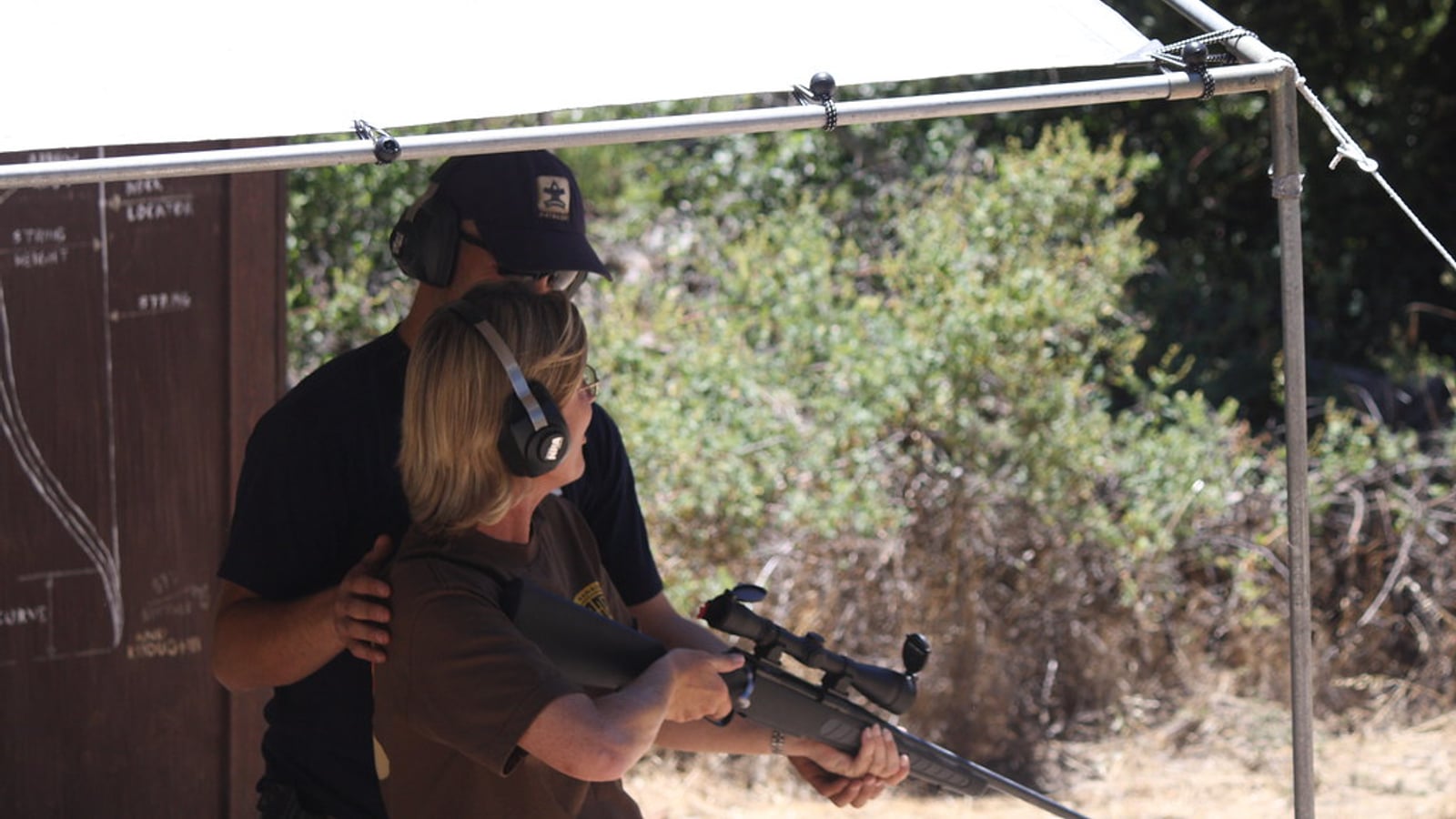
Why these mistakes keep coming back
Every instructor who coaches beginners sees the same flaws crop up again and again, session after session, shooter after shooter. It’s not a matter of intelligence or motivation: these are natural reflexes of the human body that run counter to what precision shooting demands.
The body wants to tense up in response to noise and recoil. The eye wants to look at the target rather than the front sight or the red dot. The hand wants to grip hard when it should be modulating pressure. These aren’t clumsy-beginner blunders — they’re instinctive responses that have to be consciously unlearned.
The good news is that these ten mistakes are documented, predictable, and quick to correct once you know how to spot them. A shooter who knows about them in advance often saves several months of progress compared to someone who discovers them alone, by trial and error. This article breaks down each one, the mechanism behind it, and the concrete method for fixing it.
Nearly all of these mistakes share one thing in common: a lack of objective perspective on your own practice. Without written data, a shooter repeats the same flaws without even noticing, session after session.
This isn’t unique to competitive shooting: any demanding technical discipline (golf, climbing, dance) shows the same pattern in beginners. What makes shooting particular is that the tolerated margin of error is tiny, and visual feedback (the impact on the target) arrives with a delay relative to the motion that produced it, which complicates spontaneous self-correction.
That’s exactly what makes this list a shortcut: rather than letting every shooter rediscover these ten traps alone through trial and error over several seasons, it’s better to know them in advance and use them as an active checklist from the very first sessions.
These ten mistakes almost never show up in isolation. A beginner who anticipates recoil often also has a grip that needs work, because both flaws share the same root cause: imperfect control of muscle tension at the moment of the shot. Similarly, neglecting your shooting log and wanting to progress too fast frequently go hand in hand, since one feeds the other by removing the only tool that would let you objectively measure whether the rush is justified.
Understanding these interactions helps prioritize corrective work rather than trying to fix everything at once, which is rarely effective. A shooter who identifies their main flaw among the ten and works on it as a priority over several sessions generally progresses faster than one who tries to monitor all ten points simultaneously from the start.
Mistake #1: the wrong grip
A beginner’s first instinct when picking up a handgun is often to grip it like a fragile object they don’t want to drop: either too loosely out of apprehension, or convulsively out of excessive caution. Both extremes wreck precision.
A grip that’s too loose lets the gun move freely under recoil, which makes every shot unpredictable and prevents a quick return to position for a follow-up shot. A grip that’s too tight, conversely, tenses the whole forearm and transmits micro-tremors to the barrel, visible in the vertical and horizontal spread of the group.
The right grip distributes pressure evenly between the palm and fingers, with constant, non-convulsive firmness — often described as a firm handshake, not a crushing one. The support hand (the one not on the trigger) reinforces without crushing, completing the hold without dominating it.
To correct this flaw, direct observation by an instructor or an experienced club shooter remains the best method, since they can adjust finger position in real time. Filming your own grip during a dry-fire session also helps spot tension that’s invisible from inside the movement.
A detail often overlooked concerns the repeatability of the grip from one shot to the next. A shooter who re-grips slightly differently at every reload introduces an extra variable into their group, even if each individual grip looks correct. The goal is to consistently return to the same hand position, much like a codified sporting movement you’re trying to standardize.
With a rifle, the logic is different but just as structuring: it’s the shoulder mount and cheek position on the stock that replace the pistol grip as the foundation of the shot. An unstable or inconsistently repeated shoulder mount produces exactly the same kind of spread as a bad grip in pistol shooting.
Mistake #2: anticipating recoil (the flinch)
Anticipating recoil, or “flinching” in technical jargon, is probably the most universal mistake among beginners, across every discipline. In anticipation of the noise and the push of the gun, the body contracts a split second before the shot actually breaks.
This contraction shows up concretely as a downward movement of the wrist, an involuntary closing of the eyes, or an anticipated push of the shoulder in rifle shooting. The result is an impact systematically shifted downward and sometimes sideways, a scattered group that has nothing to do with the actual capabilities of the equipment.
The classic trick for spotting this flaw is the “surprise break” drill, done with a partner who loads the gun randomly, sometimes with an empty chamber. A shooter who’s anticipating will visibly see their gun “jump” on the dry-fire trials, revealing the problem unambiguously.
The fix goes through long, repetitive dry-fire work, where the absence of a bang and recoil lets you separate the trigger motion from the fear of the noise. A gradual return to live fire, emphasizing a slow, surprising trigger break, desensitizes the reflex over several weeks.
You also have to accept that this reflex never fully disappears in some shooters, even experienced ones, but it can be brought down to a level that no longer significantly affects precision. An experienced club shooter sometimes goes back to working on this specifically, particularly after switching calibers or a long break from practice.
Properly fitted hearing and eye protection also plays an indirect but real role in managing this reflex. A beginner whose ears hurt or who’s afraid for their eyes at every bang logically develops extra apprehension; comfortable, well-fitted protective gear reduces part of that baseline anxiety.
Mistake #3: neglecting the shooting log
Many beginners treat the shooting log as an optional administrative chore, reserved for serious competitors. That’s a mistake that costs a lot of progress time, because without written data, it becomes impossible to distinguish real improvement from a mere favorable impression tied to a good day.
A well-kept shooting log notes the distance, the gun and ammunition used, the conditions (light, fatigue, stress), and above all the score or a description of the group obtained. This record lets you spot trends invisible to the naked eye: a systematic dip on certain days of the week, an improvement after a particular kind of warm-up, a degradation after a change in ammunition.
Without this tracking, a beginner tends to remember mostly their best sessions and downplay the bad ones, which completely distorts their perception of their own progress. A digital shooting log automates part of this collection and makes it easier to compare between sessions, making tracking far less tedious than a paper notebook forgotten at the bottom of a bag.
The habit to adopt from the very first session is simple: note things systematically, even when a session seems to have nothing particular to show for it. It’s often the “unremarkable” sessions accumulated over several months that reveal the most useful progress patterns.
There’s also a motivational dimension to this tracking that beginners underestimate. Seeing real progress in black and white, even modest, keeps you wanting to continue during the weeks when natural motivation flags. Conversely, having no written record at all leaves the shooter dependent solely on their in-the-moment feeling, which fluctuates far more than the reality of their progress.
The format of the log ultimately matters relatively little as long as you’re consistent: some prefer a simple notebook jotted down by hand right after each string, others a dedicated app that centralizes scores, target photos, and equipment history. What matters most is consistency in note-taking, more than the sophistication of the chosen tool.
Mistake #4: choosing the wrong starting caliber
Beginners, often influenced by what they see in movies or by the urge to “do like the experienced shooters,” sometimes choose a caliber that’s too powerful for their first sessions. The recoil and noise that come with an oversized caliber precisely reinforce the anticipation reflex described above, creating a vicious circle right from the start.
A beginner who starts directly with a high-recoil caliber develops bad tensing habits that will later be very hard to correct, even after switching to a milder gun. It’s the equivalent of learning to drive on an overpowered vehicle: the learning happens in fear rather than mastery.
Light calibers, particularly air guns or small rimfire calibers, let you learn the fundamentals (sighting, trigger control, breath management) without the interference of recoil. Once these basics are solidly acquired, the transition to a more substantial caliber happens naturally, without having to completely relearn the motion.
A serious club or a certified instructor will systematically steer a new shooter toward this kind of progressive caliber rather than toward the most impressive gun available on the rack. That’s one of the central roles of a first contact with a club: preventing the craving for strong sensations from overriding good teaching.
This choice of a progressive caliber isn’t just a matter of personal comfort — it also has a direct impact on the training volume actually achievable. A shooter who dreads every shot because of excessive recoil shoots less often and for shorter periods, which mechanically slows their progress compared to someone who fires string after string without apprehension on a suitable caliber.
Ammunition budget also factors into this initial choice. Light calibers generally allow a larger shooting volume for an equivalent budget, which permits more repetitions and therefore faster anchoring of good technical habits.
Mistake #5: unnecessary over-equipping
Opposite to the too-ambitious caliber, there’s another classic temptation for the motivated beginner: buying all the top-of-the-line gear immediately, before even knowing which discipline they’ll commit to long-term. Premium optics, competition holster, rigid belt, multiple magazines bought well ahead of need.
This early over-equipping raises two concrete problems. First, financial: competition gear is expensive, and buying it before knowing whether the discipline really suits the shooter is a risky bet. Second, pedagogical: overly sophisticated gear can mask technical flaws that the shooter should actually be learning to correct with simple equipment.
A beginner who equips themselves with a very expensive red dot right from the start, for example, never really learns to manage the alignment of mechanical sights — a skill that stays useful even once they later shoot with an optic. Similarly, overly refined gear can artificially compensate for a lack of technical rigor.
The right approach is to start with the basic equipment provided or rented by the club, try out several disciplines, then gradually invest once your affinities and the seriousness of your commitment are confirmed. Most clubs offer this kind of rental or loan during the first sessions, precisely to allow this test before you buy.
There’s one reasonable exception to this caution: some basic protective equipment (hearing protection, glasses) deserves to be bought right away rather than borrowed, for obvious reasons of hygiene and personal fit. The rule of thumb is simple: invest early in personal safety, wait to invest in competition performance or comfort.
A useful marker for knowing when to take the plunge and buy is regular practice over several consecutive months. A shooter who’s been coming consistently for six months or a year in the same discipline has enough perspective to choose equipment suited to their actual use, rather than to a theoretical idea of what they might need.
Mistake #6: underestimating equipment maintenance
A beginner who’s just acquired their first gun often neglects regular maintenance, wrongly thinking it can wait or that it’s only useful after heavy use. This neglect has direct consequences for reliability and sometimes for safety.
Fouling residue accumulated in the barrel and mechanism progressively degrades precision, increases the risk of malfunctions, and eventually accelerates wear on moving parts. Certain types of ammunition, particularly black-powder-based ones, are especially corrosive and demand quick cleaning after every use, or rust can set in within just a few hours.
The classic mistake is putting the gun back in the safe after a session “to clean later,” a later that turns into several weeks of forgetting. A basic cleaning kit (rod, brushes, patches, solvent, oil) remains a minor investment compared to the cost of repairing or replacing a poorly maintained gun.
Getting into the habit of systematically cleaning after every session, even a short one, avoids the buildup of bad practices. It’s also a chance to visually inspect the gun and spot abnormal wear before it becomes a serious problem.
The choice of cleaning products also deserves a minimum of attention from the start, rather than randomly using whatever’s lying around in a garage. A degreasing solvent, a protective oil, and a lubricating oil serve different functions, and systematically mixing them up can accelerate certain wear phenomena rather than prevent them.
For a beginner still unsure of the exact frequency to adopt, a simple rule covers most cases: clean after every outing as long as shooting volume stays moderate, then adjust according to the gun manufacturer’s recommendations and the club’s advice once practice becomes an established habit.
Mistake #7: letting safety slip out of habit
Paradoxically, safety lapses aren’t most frequent right at the very start (fear and novelty make beginners very cautious), but after a few sessions, once false confidence sets in. The shooter starts relaxing certain reflexes they initially found too constraining.
Typical lapses concern muzzle direction (pointed somewhere other than the shooting zone, even briefly), a finger resting on the trigger outside the actual moment of firing, or the systematic check that the gun is unloaded before any handling. These are simple rules, but following them must remain absolute and non-negotiable, regardless of experience level.
A serious club repeats these rules at every session, precisely because this gradual slackening is a documented, universal phenomenon among all practitioners, not just beginners. Safety at the range is never “permanently acquired” — it’s practiced consciously with every single handling.
The best reflex for avoiding this slackening is to treat every gun handling, even the hundredth one of the day, with the same rigor as the first. Experienced instructors often insist on this specific point with shooters who are starting to find their footing.
This vigilance also extends to moments not directly tied to shooting itself: putting the gun away after the session, carrying it to the vehicle, or a simple pause to chat between two strings. These are precisely the “off-range” moments that false confidence nibbles away at first, because they seem less risky in the shooter’s eyes.
A structured club often embeds this rigor through simple, non-negotiable rules, such as the requirement to present the chamber open at all times outside the firing line. These conventions, which may seem constraining at first glance, quickly become automatic habits that protect everyone without requiring any particular mental effort once they’re internalized.
Mistake #8: wanting to progress too fast
Impatience is a common trap for the motivated beginner: after a few encouraging sessions, the urge to jump straight to advanced drills, longer distances, or faster cadences takes over from consolidating the fundamentals.
This behavior creates an invisible progress wall: the shooter racks up sessions without really anchoring the technical basics (grip, trigger, breathing), which mechanically limits their future room for improvement. It’s a bit like building the floors of a house before pouring solid foundations.
Experienced instructors regularly insist on the need to repeat fundamental drills well after they seem “mastered,” because it’s this repetition that turns a conscious movement into a reliable reflex under pressure. An experienced club shooter typically keeps practicing basic drills even after several years of practice.
Patience is cultivated by accepting that progress in competitive shooting is never linear: plateau phases naturally alternate with fast progress, and trying to force this natural curve is often counterproductive. The shooting log helps precisely by making this reality visible over time, rather than relying on the impression of the moment.
A telltale sign of this rush is the temptation to constantly switch disciplines or drills as soon as a plateau appears, rather than digging into the real cause of the stagnation. This technical zapping actually prevents accumulating the repetition needed to break through a plateau, since every new drill starts from zero in terms of motor learning.
Conversely, a shooter who accepts staying on the same fundamental drill for several consecutive sessions, even if it feels redundant, builds a much sturdier base than one who constantly varies out of fear of boredom. Fast progress paradoxically comes from this discipline in repetition, more than from the diversity of drills attempted.
Mistake #9: ignoring breathing and heart rate
Many beginners focus exclusively on aiming and trigger control, completely forgetting the role breathing plays in shot stability. Yet every breathing cycle slightly moves the torso and therefore the barrel, which directly disturbs precision.
The typical mistake is holding your breath too long in a forced apnea, which causes trembling linked to oxygen deprivation, or firing right in the middle of the inhale/exhale phase when chest movement is at its maximum. The right moment to break the shot generally falls in the short natural pause that follows a normal exhale, without forcing it.
Heart rate also plays an underrated role: an elevated pulse, whether from competition stress or recent physical exertion, transmits perceptible micro-oscillations to the barrel of a precision firearm. This physiological dimension explains why some shooters try to sync their shot break with the natural gaps between heartbeats.
Learning to consciously factor in this breathing dimension from the first sessions avoids having to correct it later as an entrenched habit. Static precision disciplines in particular gain enormously from this breathing work, which is actually simple to put into practice.
General physical fatigue also plays a role that a beginner often underestimates. Showing up for a session after an exhausting day or intense physical effort degrades postural stability well before the shooter consciously notices, which explains some “no apparent reason” sessions that are worse than usual.
Noting your fatigue level and general condition in your shooting log, alongside purely technical data, lets you connect these physiological factors after the fact to the actual quality of the groups obtained that day. It’s one of the most common blind spots for beginners who only think in terms of pure technique.
Mistake #10: never analyzing your groups
The last mistake, perhaps the most damaging in the long run, is shooting without ever really analyzing what the spread of impacts on the target reveals. A beginner looks at their overall score, but rarely at the shape and direction of their group.
Yet this spread is a language in its own right: a group stretched vertically generally points to a breathing or recoil-management problem, while a horizontal spread more often betrays a grip flaw or poor trigger control. A group shifted overall in a constant direction, meanwhile, might simply indicate an optic adjustment that needs revisiting.
Without this diagnostic reading, a shooter repeats the same mistakes session after session without ever pinpointing them precisely, which considerably slows their progress curve. This is where the connection to the shooting log mentioned above takes on its full meaning: keeping a visual or photographic record of targets lets you compare how groups evolve over time.
Getting into the habit of looking at every target with a critical, analytical eye, rather than settling for the final score, turns every session into a concrete learning opportunity. It’s one of the clearest differences between a shooter who stagnates and one who progresses year after year.
This analysis benefits from being done on two distinct time scales. Immediately after each string, to adjust the movement on the spot if an obvious problem appears; then with a cool head, several days or weeks later, going back over the shooting log’s history to spot trends only visible across several cumulated sessions.
An experienced club shooter often describes this analysis work as being just as important as the time spent actually shooting, if not more so. The two complement each other: without physical repetition of the movement, analysis stays theoretical; without analysis, physical repetition risks simply entrenching flaws instead of correcting them.
How to turn these mistakes into a progress plan
Identifying these ten mistakes is one thing, but the real value comes from actively using them as a personal diagnostic checklist. After each session, a beginner can systematically ask themselves: which of these mistakes might I have made today, and what evidence am I basing that on.
This structured self-assessment approach avoids falling into vague self-criticism (“I wasn’t good today”), which provides no actionable information. It replaces that vagueness with concrete, actionable observations: “my group was spread horizontally, I need to rework my grip next time.”
A club instructor remains the most valuable resource for confirming or ruling out these self-diagnoses, since an outside eye often spots details invisible to the shooter themselves. Seeking out this outside perspective regularly, without waiting until you “really have a problem,” clearly speeds up progress.
Finally, these mistakes aren’t exclusive to beginners in the strict sense: even experienced club shooters sometimes fall back into them after an extended break or a change of equipment. The difference between a practitioner who stagnates and one who progresses steadily often comes down to this ability to regularly return to the fundamentals, whatever level has been reached.
The cross-cutting mistake: neglecting session conditions
Beyond the ten technical mistakes detailed above, there’s a cross-cutting mistake that amplifies all of them: ignoring the impact of external conditions and session context on actual performance. A beginner often compares two sessions without accounting for variables that are nonetheless decisive.
Lighting radically changes the perception of mechanical sights and the ideal intensity of a red dot. A session in bright sunlight and a session under the artificial light of an indoor range simply aren’t comparable without adjustment, and a beginner who ignores this can interpret a mere difference in conditions as a nonexistent technical regression.
Ambient temperature also affects finger dexterity and postural stability, particularly during winter outdoor sessions for clay or long-distance precision disciplines. Fingers stiffened by cold measurably degrade trigger feel, a phenomenon better anticipated than discovered in the middle of an important string.
Ambient noise and the presence of other shooters on a busy range also affect available concentration, a factor experienced competitors learn to factor into their preparation very early on. Noting these contextual elements in your shooting log, just like technical data, gives you a far more reliable read on your actual progress over time.
The club’s role in early detection of these mistakes
A beginner who trains only alone, without ever seeking an outside perspective, often takes several extra months to correct some of these ten mistakes compared to someone who practices regularly within a structured club. It’s not a matter of talent, but of access to fast, qualified feedback.
A trained certified instructor can spot, in a few minutes of observation, signs that a solo beginner would take weeks to identify on their own: a subtle wrist tension, a slight anticipated shoulder movement, breathing poorly timed to the moment of the shot. This rapid diagnostic ability alone justifies the value of coached sessions, at least during the initial learning phase.
Beyond the instructor, other club members also play a non-negligible role. An experienced shooter who regularly shares the firing line with beginners often develops, without even meaning to, an eye capable of spotting these classic flaws and offering a useful bit of advice between two strings.
This collective dimension partly explains why well-structured clubs generally produce shooters who progress faster and more solidly than those who train in isolation, even with the same amount of ammunition fired. The learning environment matters just as much as the raw training volume.
Recap checklist before every session
To summarize all these points of vigilance, here’s a checklist a beginner can go through before, during, and after every session to limit the ten mistakes detailed above:
- Check your grip or shoulder mount before the first shot, repeating it consciously rather than letting it vary from one reload to the next.
- Do a few dry-fire repetitions at the start of the session to reactivate good trigger reflexes without the interference of recoil.
- Systematically note the day’s conditions (fatigue, weather, lighting) in your shooting log, even before you start shooting.
- Choose a caliber and ammunition volume suited to your actual current level, without giving in to the urge to “do like” a more experienced club shooter.
- Observe the shape of your group after each string rather than focusing solely on the total score obtained.
- Clean your gun after the session, or at minimum plan that cleaning for the following hours rather than putting it off indefinitely.
- Stay alert on safety rules even during handling that seems trivial, especially toward the end of a session when fatigue sets in.
- Accept plateau phases as normal and keep repeating fundamental drills rather than multiplying changes of exercise out of impatience.
This checklist is neither definitive nor exhaustive: every shooter can adapt it to their discipline and their own profile as they gain experience. Its main value is turning a list of abstract mistakes into concrete reflexes applied session after session.
Keeping this list handy, in your range bag or as a photo on your phone, lets you come back to it quickly if you’re unsure during a tough session. Over time, these checks become natural and no longer require any particular conscious effort, exactly like any other technical automatism acquired through repeated practice.
FAQ
Q: How long does it take to correct anticipating recoil (the flinch)? A: It varies a lot depending on the shooter and how consistently they practice, but diligent dry-fire work over several weeks generally brings clear improvement. Full correction often takes several months of active vigilance before the reflex disappears for good.
Q: Do I absolutely need a shooting log from the very first session? A: Yes, it’s one of the most underrated tools among beginners even though it takes very little effort to set up. Even brief notes on conditions and how each session felt let you spot useful trends after a few months.
Q: Should a beginner avoid certain calibers at the start? A: It’s generally recommended to start with moderate-recoil calibers, particularly air guns or small-bore rimfire, to learn the fundamentals without the interference of recoil and noise. A club or certified instructor can guide this choice based on available equipment and the discipline you’re aiming for.
Q: How can I tell if my grip is correct without an instructor available? A: Observing the consistency of your group and filming your grip during dry-fire drills already gives good indications. Asking an experienced club shooter for their opinion remains, however, the most reliable method for fast, precise feedback.
Q: Is equipment maintenance really that important for a beginner? A: Yes, a lack of maintenance progressively degrades precision and reliability, and some fouling residue is corrosive in the short term. Getting into the habit of cleaning after every session, even modestly, avoids equipment problems that cost far more in the long run than a simple basic cleaning kit.
Q: How do I avoid wanting to progress too fast at the start? A: Accepting that progress is never linear, and relying on objective tracking like a shooting log, helps put plateau phases into perspective. Continuing to repeat fundamental drills even when they seem mastered remains the best guarantee of solid, lasting progress.